
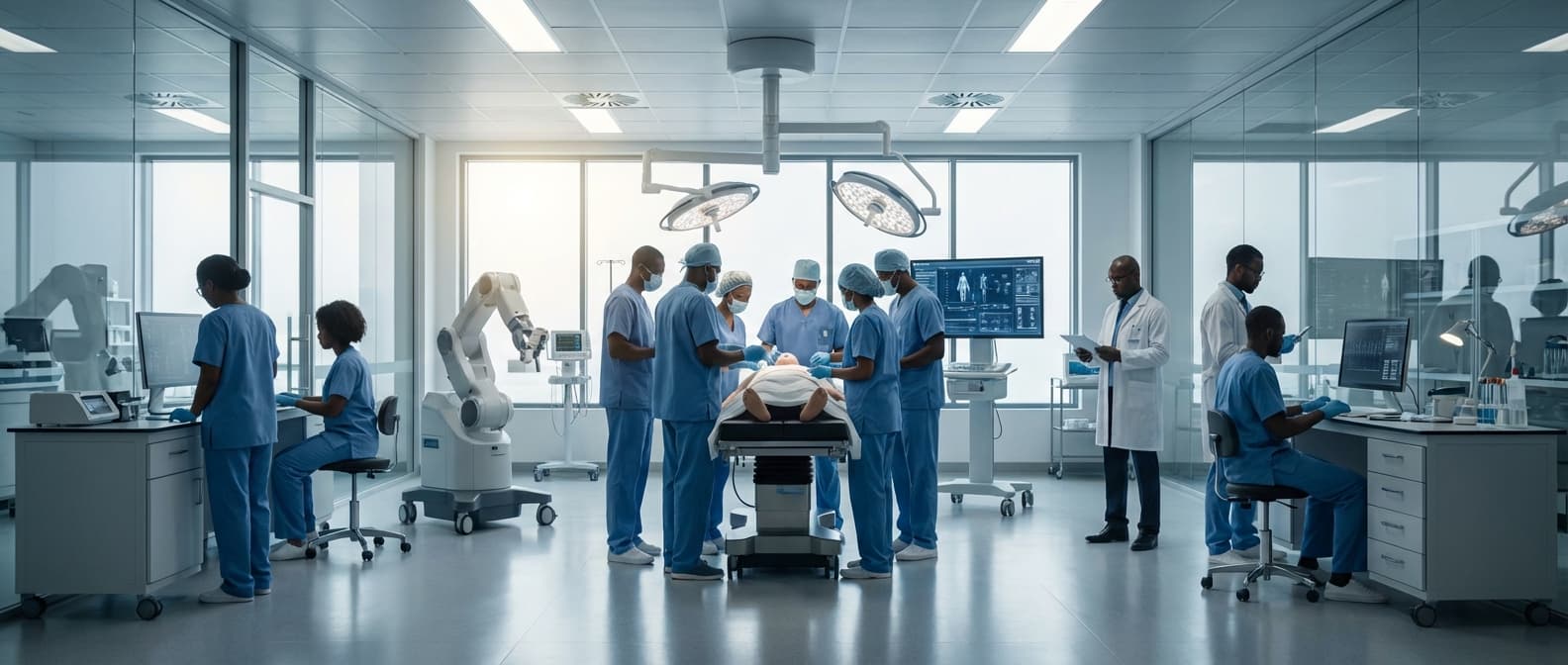
Calibration & Electrical Safety Testing in Lesotho
Engineering Excellence & Technical Support
Equipment calibration and IEC safety testing High-standard technical execution following OEM protocols and local regulatory frameworks.
Precision Calibration for Critical Infrastructure
Ensuring the accuracy and reliability of measurement instruments across Lesotho's power grid, healthcare facilities, and industrial sectors. Our advanced calibration services guarantee compliance with international standards, reducing operational risks and enhancing efficiency.
Comprehensive Electrical Safety Assessments
Protecting lives and assets through rigorous electrical safety testing. We conduct thorough inspections, fault finding, and certification of electrical installations and equipment nationwide, mitigating hazards and ensuring a safe working and living environment.
Advanced Diagnostic & Compliance Testing
Leveraging state-of-the-art diagnostic tools for in-depth analysis of electrical systems. Our services go beyond basic checks to identify potential failures, optimize performance, and ensure full regulatory compliance for all electrical applications in Lesotho.
What Is Calibration & Electrical Safety Testing In Lesotho?
Calibration and Electrical Safety Testing (EST) are critical services ensuring the accuracy and safety of electrical equipment used in various sectors within Lesotho. Calibration involves the process of comparing a measuring instrument or device to a known standard to verify its accuracy and adjust it to meet specified tolerances. This process guarantees that readings are reliable and consistent, which is paramount for scientific research, industrial processes, healthcare diagnostics, and quality control. Electrical Safety Testing, on the other hand, assesses electrical equipment for potential hazards that could lead to electric shock, fire, or other electrical malfunctions. This includes verifying the integrity of insulation, grounding, and protection devices, ensuring compliance with national and international safety standards. These services are essential for maintaining operational efficiency, preventing accidents, and upholding regulatory requirements.
| Who Needs Calibration & Electrical Safety Testing in Lesotho? | Typical Use Cases and Sectoral Applications |
|---|---|
| Healthcare Facilities (Hospitals, Clinics, Laboratories): For medical diagnostic equipment (e.g., blood analyzers, X-ray machines, ECG monitors), patient monitoring systems, and sterilizers to ensure accurate diagnosis and patient safety. | Manufacturing and Industrial Plants: For process control instrumentation (e.g., temperature sensors, pressure gauges, flow meters), quality control equipment, and power distribution systems to maintain production efficiency, product quality, and worker safety. |
| Research and Development Institutions: For scientific instruments and laboratory equipment used in experiments to ensure the validity and reproducibility of research findings. | Educational Institutions (Universities, Technical Colleges): For laboratory equipment, electrical training apparatus, and safety checks on campus electrical infrastructure. |
| Telecommunications Companies: For network testing equipment, power supply units, and antenna calibration to ensure reliable communication services. | Mining Sector: For heavy-duty electrical equipment, safety interlocks, and environmental monitoring devices used in potentially hazardous underground or open-pit operations. |
| Food and Beverage Industry: For temperature and humidity monitoring equipment, process control instrumentation, and packaging machinery to ensure product safety and quality compliance. | Public Service Providers (Water, Power Utilities): For metering equipment, control systems, and safety checks on electrical infrastructure to ensure accurate billing and reliable service delivery. |
| Government Agencies and Regulatory Bodies: For auditing and compliance verification of equipment used across various sectors. | Any organization utilizing electrical equipment that requires accurate measurements or poses a potential safety risk. |
Key Components and Requirements
- Calibration Procedures: Involves using traceable standards (e.g., certified reference materials, calibrated test equipment) to measure and adjust instruments. This often includes generating calibration certificates detailing the results, uncertainties, and date of calibration.
- Electrical Safety Testing Procedures: Encompasses a suite of tests such as insulation resistance testing, earth bond resistance testing, dielectric strength testing, and functional testing. These tests are performed to identify defects and ensure the equipment's safe operation.
- Regulatory Compliance: Adherence to relevant national standards (e.g., Lesotho Bureau of Standards specifications) and international guidelines (e.g., IEC standards) is fundamental. Compliance is often a prerequisite for market access and operational permits.
- Documentation and Traceability: Comprehensive records of calibration and testing, including calibration certificates and test reports, are crucial. Traceability to national or international metrological standards ensures the credibility of the results.
- Qualified Personnel: Services must be performed by trained and certified technicians or engineers with expertise in metrology and electrical safety principles.
- Equipment Maintenance: Regular calibration and maintenance of the testing and calibration equipment itself is essential to ensure the accuracy and reliability of the services provided.
Who Needs Calibration & Electrical Safety Testing In Lesotho?
Calibration and electrical safety testing are critical services for a wide range of organizations and individuals in Lesotho to ensure the accuracy, reliability, and safety of their equipment and electrical installations. These services are not just regulatory requirements for some, but also essential for maintaining operational efficiency, preventing accidents, and ensuring product quality.
| Sector/Industry | Key Departments/Units | Primary Needs Addressed |
|---|---|---|
| Healthcare | Operating Theatres, Radiology, Pathology Labs, ICU, Anaesthesia | Patient Safety, Diagnostic Accuracy, Equipment Reliability |
| Manufacturing & Industrial | Quality Control, Production Lines, Maintenance, Process Engineering | Product Quality, Operational Efficiency, Workplace Safety, Regulatory Compliance |
| Food & Beverage | Quality Assurance, Production, Warehousing, Logistics | Food Safety, Product Consistency, Shelf-Life, Compliance |
| R&D / Academia | Laboratories, Research Centers, Engineering Departments | Data Accuracy, Reproducibility, Scientific Integrity, Researcher Safety |
| Telecommunications | Network Operations, Field Technicians, Testing Labs | Signal Integrity, Network Performance, Equipment Longevity, Operational Continuity |
| Energy & Utilities | Power Generation, Transmission & Distribution, Water Treatment, Metering | System Reliability, Accurate Billing, Safety of Personnel and Public, Environmental Monitoring |
| Education | Science Labs, Engineering Workshops, Technical Training Centers | Learning Accuracy, Student Safety, Equipment Functionality |
| Government & Public Services | Metrology Offices, Environmental Agencies, Public Works, Health Inspections | Standardization, Public Safety, Regulatory Enforcement, Data Integrity |
| SMEs | Various operational units depending on business type (e.g., workshops, retail tech, service providers) | Equipment Uptime, Cost Reduction (preventive maintenance), Customer Trust, Basic Safety |
| Mining | Geological Survey, Processing Plants, Safety Monitoring, Equipment Maintenance | Resource Accuracy, Operational Efficiency, Worker Safety, Environmental Compliance |
Target Customers and Departments in Lesotho for Calibration & Electrical Safety Testing
- {"title":"Healthcare Sector","description":"Hospitals, clinics, diagnostic laboratories, and individual medical practitioners rely heavily on accurate and safe medical equipment. Calibration ensures diagnostic tools provide precise readings, while electrical safety testing prevents hazards to patients and staff."}
- {"title":"Manufacturing and Industrial Facilities","description":"Factories, processing plants, and other industrial operations utilize a vast array of machinery and control systems. Calibration of measuring instruments (e.g., temperature gauges, pressure sensors) is vital for quality control, process optimization, and product consistency. Electrical safety testing is paramount to prevent electrical fires and shocks in potentially hazardous environments."}
- {"title":"Food and Beverage Industry","description":"Producers of food and beverages need precise control over temperature, humidity, and other parameters during production, storage, and transportation. Calibration of monitoring equipment is crucial for maintaining product safety, shelf-life, and quality compliance. Electrical safety in processing and packaging machinery is also a key concern."}
- {"title":"Research and Development Laboratories","description":"Academic institutions and private R&D firms use sophisticated scientific instruments. Accurate calibration is fundamental to the validity and reproducibility of experimental results. Electrical safety ensures a secure working environment for researchers."}
- {"title":"Telecommunications Companies","description":"Providers of communication services depend on the accurate functioning of network equipment, signal generators, and test instruments. Calibration ensures signal integrity and network performance, while electrical safety of infrastructure is crucial."}
- {"title":"Energy and Utilities Sector","description":"Power generation plants, distribution networks, and water treatment facilities use complex electrical and measurement systems. Calibration of meters and sensors is essential for efficient operation and billing. Electrical safety testing of high-voltage equipment and installations is non-negotiable."}
- {"title":"Educational Institutions","description":"Schools, colleges, and universities with science, engineering, or vocational training programs require calibrated laboratory equipment and safe electrical learning environments for students and staff."}
- {"title":"Government Agencies and Public Services","description":"Various government departments (e.g., environmental monitoring, public works, metrology services) and public service providers utilize measuring instruments that require regular calibration to ensure accuracy and compliance with standards. Electrical safety in public buildings and infrastructure is also a responsibility."}
- {"title":"Small and Medium Enterprises (SMEs)","description":"Businesses in various sectors that rely on specific equipment for their operations, even if not on a large industrial scale, will benefit from calibration and electrical safety checks to ensure reliability and prevent costly downtime or accidents."}
- {"title":"Mining and Extractive Industries","description":"Mining operations utilize specialized equipment for exploration, extraction, and processing. Calibration of geological survey instruments, safety monitoring devices, and processing machinery is vital. Electrical safety in often harsh and remote environments is paramount."}
Calibration & Electrical Safety Testing Process In Lesotho
This document outlines the typical workflow for calibration and electrical safety testing services in Lesotho, from the initial inquiry to the final execution and reporting. This process ensures that medical equipment and other electrical devices meet stringent safety and accuracy standards, safeguarding patient well-being and operational efficiency.
| Stage | Description | Key Activities | Deliverables/Outcomes |
|---|---|---|---|
| The process begins when a client (e.g., a hospital, clinic, or laboratory) identifies the need for calibration and/or electrical safety testing for their equipment. | Client contacts the service provider via phone, email, or through a web portal. Client provides details of the equipment requiring testing (type, model, serial number, quantity, current calibration status if known). | Acknowledgement of inquiry, initial understanding of service requirements. |
| Based on the inquiry, the service provider prepares a detailed quotation and agreement for the client. | Service provider assesses the scope of work, required personnel, consumables, and travel. A formal quotation detailing services, pricing, terms, and estimated timelines is generated. Client reviews and approves the quotation. A service agreement or purchase order is finalized. | Approved quotation, signed service agreement/purchase order, confirmed engagement. |
| Once the agreement is in place, the service provider and client coordinate a suitable date and time for the testing, and the client prepares the testing environment. | Service provider and client agree on a mutually convenient date and time for on-site execution. Client ensures equipment is accessible, powered, and any necessary documentation (user manuals, previous calibration certificates) is readily available. Client may need to inform relevant staff about the upcoming testing. | Confirmed testing schedule, prepared testing environment. |
| This is the core execution phase where the actual testing and calibration take place at the client's premises. | Qualified technicians arrive at the client site. Electrical safety tests are performed using calibrated test equipment (e.g., leakage current, insulation resistance, earth continuity). Calibration procedures are followed for relevant equipment, adjusting settings as needed to meet specified standards (e.g., IEC 60601 series for medical devices). Any identified issues are documented. | Comprehensive test results, calibration adjustments made where necessary, detailed notes on findings. |
| Following the on-site work, the service provider compiles and delivers a formal report and certificate. | Technicians complete their field reports. The service provider generates a detailed calibration certificate and/or electrical safety test report. This report includes equipment details, test procedures used, results obtained, acceptance criteria, date of service, and technician's signature. Certificates are issued for equipment that passes the tests. | Calibration certificates, electrical safety test reports, recommendations for any non-compliant equipment. |
| A good service provider ensures ongoing support and helps clients maintain compliance. | Client receives and reviews reports. Service provider may offer advice on any identified issues or recommendations for further action. Proactive service providers maintain a database and send timely reminders to clients when equipment is due for re-calibration or re-testing. | Client satisfaction, ongoing compliance, scheduled future services. |
Key Stages of the Calibration & Electrical Safety Testing Process in Lesotho
- Initial Inquiry & Request for Services
- Quotation & Agreement
- Scheduling & Site Preparation
- On-site Testing & Calibration
- Reporting & Certification
- Follow-up & Re-calibration Reminders
Calibration & Electrical Safety Testing Cost In Lesotho
Calibration and electrical safety testing are crucial for ensuring the accuracy and safety of equipment in various industries in Lesotho. The cost of these services can vary significantly depending on several factors, including the type of equipment, the complexity of the calibration, the required standards, the number of items to be tested, and the specific service provider. Generally, these services are offered by specialized laboratories or qualified technicians. It's important to obtain quotes from multiple providers to compare pricing and ensure you are getting the best value for your needs.
| Service Type | Typical Range (LSL - Maloti) | Notes |
|---|---|---|
| Basic Electrical Safety Test (per item) | 150 - 400 | Includes visual inspection and basic tests like earth continuity. Often a prerequisite for other services. |
| Full Electrical Safety Test (per item) | 300 - 700 | Comprehensive testing of insulation resistance, dielectric strength, earth impedance, etc. |
| Calibration of Small Measuring Instruments (e.g., Multimeter, Clamp Meter) | 250 - 600 | Covers traceable calibration against relevant standards. |
| Calibration of Power Tools (e.g., Torque Wrench) | 350 - 800 | Depends on the accuracy requirements and type of tool. |
| Calibration of Industrial Equipment (e.g., Pressure Gauges, Temperature Sensors) | 500 - 1500+ | Cost escalates with complexity and accuracy requirements. Discounts for multiple units. |
| Calibration of Medical Devices | 600 - 2000+ | Often requires specialized accreditation and stringent protocols, leading to higher costs. |
| On-site Service Call Fee | 300 - 800 | May be charged per visit, in addition to the testing/calibration fees. |
| Rush Service Fee | 20% - 50% of service cost | For urgent turnaround times. |
Key Pricing Factors for Calibration & Electrical Safety Testing in Lesotho
- Type of Equipment: Simple devices like multimeters will generally cost less to calibrate than complex industrial machinery or medical equipment.
- Complexity of Calibration: Some calibrations require more intricate procedures, specialized equipment, or extensive data logging, increasing the cost.
- Required Standards & Accreditation: Testing to specific international or national standards (e.g., ISO standards) or by accredited laboratories may incur higher fees.
- Number of Items: Bulk discounts are often available for multiple pieces of equipment undergoing the same type of testing.
- Turnaround Time: Urgent or same-day services will typically command a premium price.
- On-site vs. Off-site Testing: Having technicians come to your location (on-site) may incur travel and logistics costs, while sending equipment to a lab (off-site) might involve shipping fees.
- Scope of Testing: Electrical safety testing can range from basic visual inspections to comprehensive testing of insulation resistance, earth continuity, and dielectric strength. A broader scope increases the cost.
- Service Provider Reputation & Expertise: Established and highly reputable service providers with specialized expertise might charge more but can offer greater assurance of quality and accuracy.
Affordable Calibration & Electrical Safety Testing Options
Maintaining accurate calibrations and ensuring electrical safety are critical for operational efficiency, product quality, and personnel protection. However, the associated costs can be a concern for businesses of all sizes. This guide explores affordable calibration and electrical safety testing options, focusing on value bundles and cost-saving strategies to help you manage your budget effectively.
| Strategy/Bundle | Description | Cost-Saving Benefit |
|---|---|---|
| Value Bundles | Combining multiple calibration services or calibration with electrical safety testing into a single package. Often offered at a discounted rate compared to individual services. | Reduced overall service cost through bulk purchasing and streamlined logistics. |
| Multi-Year Contracts | Committing to calibration and testing services for an extended period (e.g., 2-3 years). | Lock in current pricing, avoid future price increases, and potentially secure volume discounts. |
| On-Site Calibration | Having technicians come to your facility to perform calibrations and testing. | Minimizes equipment downtime and transportation costs associated with sending items to a calibration lab. |
| Preventative Maintenance Integration | Bundling calibration and safety testing with your regular equipment maintenance schedule. | Optimizes technician time, reduces the need for separate appointments, and catches potential issues early. |
| Tiered Service Plans | Offering different levels of service based on criticality of equipment or frequency of testing (e.g., standard, premium). | Allows you to pay only for the level of service your specific equipment requires, avoiding unnecessary expenses. |
| Equipment Rotation Scheduling | Strategically scheduling calibrations for different groups of equipment throughout the year to spread costs and manage workflow. | Smooths out budget fluctuations and prevents large, unexpected expenditures at specific times. |
| Accredited Third-Party Providers | Partnering with accredited calibration labs that offer competitive pricing and robust quality assurance. | Ensures compliance and accuracy at a potentially lower cost than in-house solutions, especially for specialized equipment. |
| Leveraging Manufacturer Recommendations | Following manufacturer-recommended calibration intervals and safety testing procedures. | Avoids over-calibration, which can be costly and unnecessary, while ensuring optimal equipment performance. |
Why Calibration & Electrical Safety Testing Matters
- Ensures measurement accuracy and product quality.
- Complies with industry regulations and standards (e.g., ISO, OSHA).
- Prevents equipment failure and costly downtime.
- Protects employees from electrical hazards.
- Reduces the risk of product recalls or non-compliance fines.
- Improves process control and operational efficiency.
Verified Providers In Lesotho
When seeking reliable healthcare in Lesotho, identifying 'Verified Providers' is crucial. This designation signifies that a healthcare facility or professional has met stringent quality standards, regulatory requirements, and ethical guidelines. Franance Health is a leading entity that champions this verification process, ensuring patients have access to safe, effective, and patient-centered care. Their rigorous credentialing process is designed to build trust and provide peace of mind to individuals and families navigating the healthcare landscape.
| Franance Health Credentialing Aspect | What it Means for Patients | Benefit to Choosing Verified Providers |
|---|---|---|
| Clinical Competency Assessment | Ensures healthcare professionals possess the necessary skills and knowledge. | Reduces risk of misdiagnosis or incorrect treatment. |
| Patient Safety Protocol Review | Confirms adherence to established safety measures and infection control. | Minimizes the likelihood of medical errors or adverse events. |
| Ethical Conduct and Professionalism | Guarantees providers operate with integrity and respect patient rights. | Fosters a trusting and respectful patient-provider relationship. |
| Quality Improvement Initiatives | Indicates a commitment to ongoing evaluation and enhancement of services. | Access to continuously improving standards of care. |
| Regulatory Compliance Check | Confirms adherence to all relevant national health regulations. | Ensures providers meet legal and operational requirements. |
Why Franance Health Represents the Best Choice for Verified Providers in Lesotho:
- Comprehensive Credentialing Process: Franance Health goes beyond basic licensing. They conduct in-depth assessments of clinical competency, adherence to best practices, patient safety protocols, and ethical conduct.
- Focus on Patient Outcomes: Verification by Franance Health indicates a provider's commitment to achieving positive patient outcomes and continuous improvement in care delivery.
- Transparency and Accountability: Franance Health promotes transparency by making verified provider information accessible, fostering accountability within the healthcare system.
- Adherence to International Standards: Their verification criteria often align with or exceed international healthcare quality benchmarks, ensuring a high level of care.
- Empowering Patient Choice: By clearly identifying verified providers, Franance Health empowers patients to make informed decisions about their healthcare, choosing providers they can trust.
Scope Of Work For Calibration & Electrical Safety Testing
This Scope of Work (SOW) outlines the requirements for the calibration and electrical safety testing of specified equipment. The objective is to ensure that all equipment is functioning within its specified tolerances and meets relevant electrical safety standards. This SOW details the technical deliverables, standard specifications, and testing procedures to be followed.
| Item | Description | Standard Specification | Technical Deliverable |
|---|---|---|---|
| Calibration | Performance verification and adjustment of specified parameters for each piece of equipment. | Manufacturer's specifications, ISO 17025 (if applicable), or agreed-upon internal standards. | Calibration Certificate detailing 'As Found' and 'As Left' data, uncertainty of measurement, and date of calibration. |
| Electrical Safety Testing | Verification of electrical safety parameters, including but not limited to insulation resistance, earth continuity, leakage current, and dielectric strength. | IEC 60601-1 (Medical Electrical Equipment), IEC 61010-1 (Electrical Equipment for Measurement, Control, and Laboratory Use), UL 60601-1, or equivalent regional standards as applicable. | Electrical Safety Test Report confirming compliance with specified standards, including test parameters, limits, and test results. |
| Test Equipment | All test and calibration equipment used must be calibrated and traceable to national or international standards. | Calibration traceable to NIST, NPL, or equivalent national metrology institutes. | Calibration certificates for all test equipment utilized during the SOW. |
| Documentation | Comprehensive documentation of all performed tests, including procedures, results, and any identified deviations. | Clear, concise, and unambiguous reporting in accordance with agreed-upon formats. | Final report summarizing all calibration and electrical safety testing activities, including equipment lists, test results, and any recommendations. |
Key Objectives
- To verify and adjust equipment to meet manufacturer's specifications.
- To confirm that all equipment complies with applicable electrical safety standards.
- To provide documented evidence of calibration and safety test results.
- To minimize downtime and ensure operational readiness of tested equipment.
Service Level Agreement For Calibration & Electrical Safety Testing
This Service Level Agreement (SLA) outlines the commitments regarding response times and uptime guarantees for calibration and electrical safety testing services provided by [Your Company Name] (hereinafter referred to as "Provider") to [Client Company Name] (hereinafter referred to as "Client").
| Service Level | Description | Target Response Time | Target Resolution Time | Uptime Guarantee |
|---|---|---|---|---|
| Routine Calibration & Testing | Standard requests for calibration and electrical safety testing of equipment, scheduled in advance. | 4 business hours (for initial acknowledgment and scheduling) | Within 5 business days of equipment arrival at the testing facility (may vary based on equipment complexity and quantity, to be agreed upon per service order) | 99.5% |
| Expedited Calibration & Testing | Urgent requests requiring faster turnaround, subject to availability and additional fees. | 2 business hours (for initial acknowledgment and scheduling) | Within 2 business days of equipment arrival at the testing facility (may vary based on equipment complexity and quantity, to be agreed upon per service order) | 99.5% |
| Emergency Support (Out-of-Hours) | Requests outside of standard business hours requiring immediate attention for critical equipment failures or compliance issues. | 2 business hours (for initial acknowledgment and dispatch/scheduling) | Subject to agreement on a case-by-case basis, aiming for resolution as quickly as possible, typically within 1 business day. | N/A (Uptime Guarantee applies to standard service request channels) |
Key Definitions
- Service Request: A documented request from the Client for calibration or electrical safety testing services.
- Response Time: The maximum time allowed for the Provider to acknowledge a Service Request and initiate troubleshooting or scheduling.
- Resolution Time: The maximum time allowed for the Provider to complete the requested service or provide a definitive resolution plan.
- Uptime Guarantee: The percentage of time that the Provider's scheduling and booking portal, or direct communication channels for service requests, are available and operational.
- Scheduled Downtime: Pre-announced periods when the Provider's systems will be unavailable for maintenance or upgrades. This is excluded from Uptime calculations.
- Unscheduled Downtime: Any period of system unavailability not classified as Scheduled Downtime.
Frequently Asked Questions

Ready when you are
Let's scope your Calibration & Electrical Safety Testing in Lesotho project in Lesotho.

Scaling healthcare logistics and technical systems across the entire continent.