
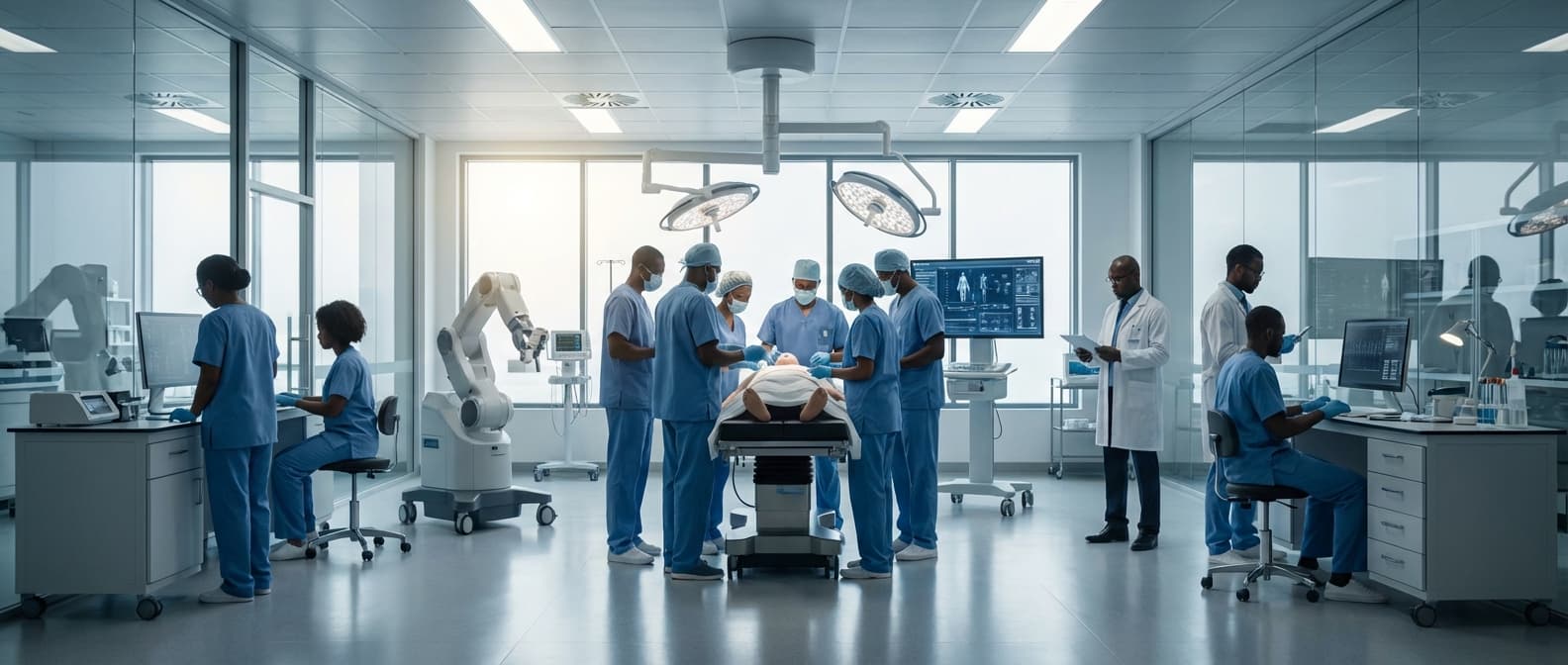
Biomedical Staffing Augmentation in Lesotho
Engineering Excellence & Technical Support
Onsite biomedical engineers and PACS administrators High-standard technical execution following OEM protocols and local regulatory frameworks.
Rapid Onboarding & Skill Matching
Leverage our advanced AI-driven platform to instantly identify and onboard qualified biomedical personnel, ensuring your facilities in Lesotho are staffed with the precise expertise needed for critical healthcare delivery and equipment maintenance within days, not weeks.
Cost-Effective & Scalable Solutions
Optimize your operational budget with flexible staffing augmentation that scales precisely with demand. We provide access to a pre-vetted talent pool, eliminating recruitment overhead and reducing the cost of specialized biomedical roles across Lesotho's healthcare landscape.
Certified & Compliant Professionals
Access a network of biomedical technicians and engineers fully certified and compliant with both international standards and Lesotho's specific regulatory requirements. Our rigorous vetting process guarantees competent and reliable staff for all your facility and equipment needs.
What Is Biomedical Staffing Augmentation In Lesotho?
Biomedical Staffing Augmentation in Lesotho refers to the strategic deployment of qualified and specialized biomedical personnel to bolster the existing workforce within healthcare institutions, research facilities, and public health organizations. This service addresses temporary or persistent deficits in skilled professionals, enhancing operational capacity, technical expertise, and the overall effectiveness of biomedical services. The augmentation aims to fill critical gaps, facilitate the implementation of new technologies, and ensure the continuous functioning of essential medical equipment and diagnostic services.
| Use Case Scenario | Specific Requirement | Augmentation Solution |
|---|---|---|
| Equipment Downtime Mitigation | High incidence of medical equipment malfunctions (e.g., X-ray machines, ventilators, laboratory analyzers) due to lack of in-house specialized technicians. | Deployment of certified biomedical technicians for routine maintenance, preventative servicing, and prompt repair of critical medical devices. |
| New Technology Implementation | Introduction of advanced diagnostic imaging or laboratory systems requiring specialized installation, calibration, and initial operational support. | Provision of experienced biomedical engineers and application specialists for seamless integration and user training on new equipment. |
| Outbreak Preparedness and Response | Sudden surge in demand for specific diagnostic equipment or the need for rapid deployment and maintenance of mobile health units during public health emergencies. | On-demand availability of trained biomedical personnel to support emergency response operations, including equipment setup, troubleshooting, and operational readiness. |
| Capacity Building and Training | Need to upskill existing in-house staff in the maintenance and operation of specific medical technologies or to establish new training programs. | Assignment of senior biomedical engineers or trainers to conduct technical workshops, provide on-the-job training, and develop training materials for local staff. |
| Project-Based Initiatives | Implementation of specific healthcare infrastructure projects, such as setting up new laboratory facilities or upgrading existing hospital equipment fleets. | Provision of project management and dedicated technical teams to oversee the entire lifecycle of biomedical equipment within the project scope. |
Key Components and Beneficiaries of Biomedical Staffing Augmentation
- Service Definition: This service entails sourcing, vetting, and deploying biomedical engineers, technicians, clinical support staff, and other specialized personnel on a contractual basis. It can range from short-term project support to long-term operational needs, encompassing roles such as equipment maintenance, calibration, installation, validation, inventory management, and technical training. The augmentation also includes provision of project management and advisory services related to biomedical infrastructure.
- Who Needs It:
- Public Healthcare Facilities: Hospitals, clinics, and district health centers in Lesotho often face shortages of trained biomedical personnel, impacting their ability to maintain critical medical equipment, leading to service disruptions and compromised patient care.
- Private Healthcare Providers: Private hospitals and diagnostic laboratories requiring specialized technical expertise for advanced medical equipment may utilize augmentation to ensure operational efficiency and competitive service delivery.
- Research Institutions and Universities: Organizations involved in biomedical research and education often require temporary or project-specific expertise for the operation and maintenance of sophisticated laboratory equipment.
- Government Health Ministries and Agencies: Public health programs, national disease surveillance initiatives, and emergency preparedness efforts may require augmented biomedical staffing to support large-scale deployments, training programs, or the implementation of new health technologies.
- Non-Governmental Organizations (NGOs): NGOs operating health-focused projects or providing medical services in remote areas can leverage staffing augmentation to ensure the proper functioning of their medical infrastructure without the burden of long-term recruitment and retention.
- Typical Use Cases:
Who Needs Biomedical Staffing Augmentation In Lesotho?
Biomedical staffing augmentation in Lesotho is crucial for various healthcare institutions and projects seeking to enhance their capacity, expertise, and efficiency in managing and maintaining medical equipment. This service addresses the growing need for specialized skills that may be in short supply locally or are required for specific, time-bound initiatives. It offers a flexible solution to bridge skill gaps, accelerate project timelines, and ensure the optimal functioning of vital healthcare technology, ultimately improving patient care outcomes.
| Target Customer/Department | Specific Needs Addressed | Departments Benefiting |
|---|---|---|
| Hospitals (Public and Private) | Need for specialized technicians for advanced equipment maintenance, calibration, and troubleshooting. Overcoming shortages of in-house biomedical engineers for specific device types (e.g., imaging, critical care). | Biomedical Engineering Department, Radiology, Anesthesiology, Intensive Care Units (ICUs), Operating Theatres, Central Sterile Supply Department (CSSD) |
| Clinics and Health Centers | Ensuring basic equipment functionality and preventative maintenance. Lack of dedicated biomedical staff at remote locations. Need for training local staff on equipment operation and minor repairs. | Clinical Services, Pharmacy, Laboratory Services |
| Diagnostic Laboratories | Expertise in maintaining and troubleshooting complex laboratory analyzers, diagnostic imaging equipment, and specialized testing devices. Calibration and quality assurance support. | Laboratory Services, Pathology, Microbiology, Hematology |
| Medical Equipment Suppliers and Distributors | Providing skilled technicians for installation, commissioning, and after-sales service of newly supplied equipment. Temporary surge in service demands. Training client's staff. | Technical Service Department, Field Service Engineers, Customer Support |
| Medical Device Manufacturers | On-site support for complex installations, repairs, and product training during new product launches or major upgrades. Ensuring compliance with manufacturer's service standards. | Field Service, Technical Support, Training Departments |
| Government Ministry of Health and its Departments | Supporting national health initiatives, equipment procurement and deployment projects, and strengthening public health infrastructure. Developing national biomedical engineering strategies. | Procurement Department, Health Infrastructure Unit, National Health Laboratory Services |
| Non-Governmental Organizations (NGOs) involved in healthcare | Establishing and maintaining medical facilities in underserved areas. Implementing specific health programs requiring specialized equipment. Capacity building for local healthcare providers. | Program Implementation Units, Medical Operations, Training and Capacity Building Teams |
| Research Institutions and Universities | Maintenance and calibration of sophisticated research equipment. Specialized technical support for novel or custom-built scientific instruments. Training for researchers on equipment usage. | Research Laboratories, Technical Support Services, Academic Departments |
| Healthcare Project Management Offices | Managing large-scale equipment procurement, installation, and maintenance projects. Ensuring timely and cost-effective deployment of medical technology. Expert consultation on equipment selection and lifecycle management. | Project Management, Procurement, Technical Oversight |
Target Customers & Departments Requiring Biomedical Staffing Augmentation in Lesotho:
- Hospitals (Public and Private)
- Clinics and Health Centers
- Diagnostic Laboratories
- Medical Equipment Suppliers and Distributors
- Medical Device Manufacturers
- Government Ministry of Health and its Departments
- Non-Governmental Organizations (NGOs) involved in healthcare
- Research Institutions and Universities
- Healthcare Project Management Offices
Biomedical Staffing Augmentation Process In Lesotho
This document outlines the workflow for the Biomedical Staffing Augmentation Process in Lesotho, detailing the steps from initial inquiry to the successful execution of providing augmented biomedical staff to healthcare facilities. This process is designed to ensure a systematic and efficient deployment of skilled personnel to address staffing shortages and enhance healthcare delivery.
| Phase | Key Activities | Responsible Parties | Deliverables/Outcomes | Timeline (Indicative) |
|---|---|---|---|---|
| Receive and log staffing requests from healthcare facilities or government health ministries. Conduct a detailed needs assessment to understand specific roles, required qualifications, experience levels, duration of need, and geographical location. Define the scope of augmentation (e.g., temporary replacement, project-specific support, skills enhancement). | Requesting Facility/Ministry, Staffing Agency's Recruitment Team | Confirmed Staffing Need, Detailed Job Descriptions, Agreed-upon Scope of Work | 1-3 Business Days |
| Source potential candidates from internal databases, external recruitment channels, and professional networks. Screen resumes and applications against defined requirements. Conduct initial interviews (phone/video) to assess qualifications, experience, and suitability. Perform background checks, reference checks, and verify credentials (licenses, certifications). | Staffing Agency's Recruitment Team, HR Department | Shortlisted Candidate Profiles, Vetted Candidates List | 3-7 Business Days |
| Present shortlisted, vetted candidates to the requesting facility/ministry. Facilitate interviews between candidates and the client's selection committee. Receive client feedback and formal confirmation of selected candidates. | Staffing Agency's Recruitment Team, Requesting Facility/Ministry | Selected Candidate(s) for Augmentation | 2-5 Business Days |
| Prepare and issue formal employment contracts or service agreements for the selected candidates. Complete all necessary pre-employment documentation and compliance checks. Conduct a comprehensive onboarding program, including introduction to the facility, policies, procedures, and specific job responsibilities. | Staffing Agency's HR Department, Requesting Facility/Ministry (for site-specific onboarding) | Signed Contracts, Onboarded Biomedical Staff | 3-5 Business Days |
| The augmented biomedical staff commence their duties at the assigned healthcare facility. Provide ongoing support and mentorship to the deployed staff. | Augmented Biomedical Staff, Requesting Facility's Management, Staffing Agency's Support Team | Provision of Biomedical Staffing Services | Duration of Contract |
| Regularly monitor the performance and satisfaction of the augmented staff and the client. Collect feedback from both the deployed staff and the requesting facility. Address any performance issues or concerns promptly. Conduct periodic performance reviews. | Staffing Agency's Management/Account Manager, Requesting Facility's Management | Performance Reports, Feedback Summaries, Resolved Issues | Ongoing (e.g., Weekly/Monthly) |
| Upon completion of the contract term or project, Formalize the end of the augmentation period. Process final invoices and payments as per the agreed-upon terms and conditions. Conduct a final review and gather closure feedback. | Staffing Agency's Finance Department, Requesting Facility/Ministry | Final Invoices, Payment Completion, Closed Contract | 1-3 Business Days (Post-Contract) |
Biomedical Staffing Augmentation Workflow in Lesotho
- Inquiry and Needs Assessment
- Candidate Identification and Vetting
- Client Confirmation and Approval
- Contracting and Onboarding
- Deployment and Service Delivery
- Monitoring, Evaluation, and Feedback
- Contract Closure and Payment
Biomedical Staffing Augmentation Cost In Lesotho
Augmenting biomedical staffing in Lesotho involves various cost considerations, influenced by the specific roles, required qualifications, experience levels, and the duration of the contract. These factors directly impact the pricing, which is typically quoted in Lesotho Loti (LSL). The pricing for biomedical staffing augmentation can range significantly, depending on the specialized nature of the role and the urgency of the need. Factors such as the scarcity of certain specialized skills within the local market, the demand for particular expertise (e.g., for specific medical equipment maintenance or complex diagnostic procedures), and the overhead associated with recruitment and onboarding by the staffing agency also play a crucial role in determining the final cost.
| Biomedical Role Category | Estimated Daily Rate Range (LSL) | Estimated Monthly Rate Range (LSL) | Notes |
|---|---|---|---|
| Biomedical Technician (General) | 800 - 1,500 | 16,000 - 30,000 | Includes basic maintenance and repair of common medical equipment. |
| Senior Biomedical Technician | 1,200 - 2,000 | 24,000 - 40,000 | More experience, potentially specialized in a specific equipment type. |
| Biomedical Engineer (Junior) | 1,500 - 2,500 | 30,000 - 50,000 | Entry-level engineering role, assisting in complex tasks. |
| Biomedical Engineer (Senior/Specialized) | 2,000 - 4,000+ | 40,000 - 80,000+ | Extensive experience, specialized in areas like imaging, laboratory equipment, or critical care systems. Rates can vary significantly based on niche expertise. |
| Equipment Service Specialist (Specific Brand/Type) | 1,000 - 2,200 | 20,000 - 44,000 | Focus on servicing specific brands or complex types of medical equipment (e.g., CT scanners, MRI machines). |
| Project-Based Biomedical Consultant | Negotiable (often project fee) | N/A | For specific projects like installation, commissioning, or training programs. Rates are highly project-dependent. |
Key Pricing Factors for Biomedical Staffing Augmentation in Lesotho
- Role and Specialization: The specific biomedical role required (e.g., Biomedical Engineer, Medical Technician, Equipment Servicing Specialist) and its level of specialization are primary cost drivers.
- Qualifications and Certifications: Higher academic qualifications, professional certifications, and specialized training will generally command higher rates.
- Experience Level: The number of years of relevant experience a candidate possesses significantly influences their salary expectations and, consequently, the augmentation cost.
- Contract Duration: Short-term contracts may have higher daily or weekly rates compared to longer-term engagements, reflecting administrative costs and commitment.
- Urgency of Need: A rush requirement for staff can sometimes lead to premium pricing due to the expedited recruitment process.
- Location of Service: While Lesotho is a single country, accessibility and logistical challenges for certain remote areas might subtly influence costs.
- Agency Fees: Staffing agencies charge fees for their services, which include recruitment, vetting, payroll, and HR support. These fees are a direct component of the total augmentation cost.
- Market Demand and Supply: The availability of qualified professionals in Lesotho for specific biomedical roles affects pricing. High demand and low supply will drive costs up.
- Benefits and Allowances: Depending on the contract, benefits such as housing allowances, transportation, or medical aid for the augmented staff can add to the overall cost.
- Training and Development: If the augmented staff requires specific training on new equipment or protocols, these costs will be factored in.
Affordable Biomedical Staffing Augmentation Options
Biomedical departments often face challenges in maintaining adequate staffing levels to support research, development, and operational needs. Affordable biomedical staffing augmentation offers a strategic solution to bridge these gaps without compromising quality or budget. This involves leveraging flexible workforce models and innovative procurement strategies. Value bundles and cost-saving strategies are key to maximizing the benefits of such augmentation.
| Cost-Saving Strategy | Description | Impact on Affordability |
|---|---|---|
| Leveraging Freelance/Contract Professionals | Utilizing independent contractors or freelance specialists who often have lower overhead than traditional agencies, leading to competitive rates. | Reduced overall labor cost compared to permanent hires; pay only for services rendered. |
| Negotiating Volume Discounts | For organizations with recurring or substantial staffing needs, negotiating tiered pricing or volume discounts with staffing partners. | Lower per-unit cost for staffing services when engaging in larger or ongoing contracts. |
| Batching Recruitment Efforts | Consolidating multiple staffing needs into a single recruitment drive to leverage economies of scale with staffing providers. | Reduced administrative overhead and potentially lower recruiter fees for the organization. |
| Utilizing Nearshore or Offshore Talent Pools | For non-critical or remote-friendly tasks, sourcing talent from regions with lower living costs and salaries. | Significant reduction in labor expenditure, particularly for roles like data entry, basic analysis, or IT support. |
| Focusing on Skill-Based, Not Role-Based, Hiring | Hiring individuals based on specific, in-demand skills rather than rigid job titles, allowing for more flexible and cost-effective task allocation. | Optimized resource utilization, avoiding overpayment for skills not fully utilized. |
| Investing in Staff Augmentation Training for Existing Staff | Upskilling current employees to take on some augmented roles can be more cost-effective than external hiring for certain tasks. | Reduced reliance on external services for specific functions, fostering internal growth and knowledge retention. |
| Strategic Outsourcing of Non-Core Functions | Identifying and outsourcing routine or administrative biomedical tasks to specialized third-party providers. | Allows core staff to focus on high-value activities, and can be more cost-effective than maintaining internal capacity for specialized but infrequent tasks. |
Key Value Bundles for Affordable Biomedical Staffing Augmentation
- {"title":"Project-Based Staffing Solutions","description":"Engaging specialized personnel for defined project timelines. This allows access to high-level expertise for specific initiatives without the long-term commitment of full-time hires."}
- {"title":"On-Demand Skill Augmentation","description":"Accessing a pool of vetted professionals for immediate needs, such as covering unexpected leaves, urgent testing, or specialized equipment operation. This provides agility and reduces downtime."}
- {"title":"Managed Service Provider (MSP) Models","description":"Outsourcing the management of contingent biomedical staff to a specialized provider. This streamlines recruitment, onboarding, compliance, and payroll, freeing up internal resources."}
- {"title":"Hybrid Staffing Models","description":"Combining a core team of permanent employees with a flexible contingent workforce. This offers a balance of institutional knowledge and adaptable capacity."}
- {"title":"Remote/Virtual Support Services","description":"Leveraging remote expertise for tasks like data analysis, report generation, troubleshooting, and training, reducing the need for on-site personnel for certain functions."}
Verified Providers In Lesotho
In the pursuit of reliable healthcare, identifying verified providers in Lesotho is paramount. Franance Health stands out as a beacon of trust, offering a comprehensive network of credentialed medical professionals and facilities. Their rigorous vetting process ensures that every provider within their network meets the highest standards of quality, expertise, and ethical practice. Choosing Franance Health means opting for assurance, knowing you are connected with healthcare professionals who are not only skilled but also deeply committed to patient well-being.
| Provider Type | Franance Health Verification Ensures: | Benefits for Patients |
|---|---|---|
| Doctors (General Practitioners & Specialists) | Valid medical license, board certifications, up-to-date continuing education, clean disciplinary record. | Access to skilled and qualified medical advice, accurate diagnoses, and appropriate treatment plans. |
| Hospitals & Clinics | Accreditation from recognized health bodies, adherence to safety protocols, qualified medical staff, proper equipment and facilities. | Safe and well-equipped environment for treatment, access to a range of medical services, and quality patient care. |
| Pharmacies | Valid operating license, qualified pharmacists, proper storage of medications, adherence to dispensing regulations. | Access to genuine and safe medications, professional advice on prescriptions and over-the-counter drugs. |
| Laboratories & Diagnostic Centers | Accreditation, qualified technicians, calibrated equipment, adherence to quality control standards. | Accurate and reliable diagnostic results, crucial for effective treatment decisions. |
Why Franance Health is Your Best Choice for Verified Providers in Lesotho:
- Uncompromising Credentialing: Franance Health employs a multi-faceted verification process, meticulously examining licenses, certifications, educational backgrounds, and professional experience of all their affiliated providers.
- Commitment to Quality: Their network exclusively features practitioners and facilities that demonstrate a consistent track record of excellent patient care and adherence to best medical practices.
- Patient-Centric Approach: Franance Health prioritizes patient safety and satisfaction, ensuring that all listed providers are dedicated to compassionate and effective healthcare delivery.
- Accessibility to Excellence: By consolidating verified providers, Franance Health simplifies the process of finding trusted healthcare, saving you time and reducing the stress of uncertainty.
- Continuous Monitoring: The commitment to quality extends beyond initial credentialing. Franance Health actively monitors provider performance and patient feedback to maintain the integrity of their network.
Scope Of Work For Biomedical Staffing Augmentation
This Scope of Work (SOW) outlines the requirements for augmenting existing biomedical staffing to support project XYZ. The primary objective is to secure qualified and experienced biomedical professionals to bridge critical skill gaps and enhance operational capacity. This document details the technical deliverables expected from the augmented staff and the standard specifications they are required to meet.
| Deliverable | Description | Standard Specifications |
|---|---|---|
| Comprehensive Protocol Development Assistance | Provide expert input and contribute to the development of clinical study protocols, ensuring scientific rigor and regulatory compliance. | Protocols must adhere to Good Clinical Practice (GCP) guidelines, ICH guidelines, and relevant national/international regulations. Deliverables include draft protocol sections, review comments, and final protocol contributions. |
| Biomarker Assay Development & Validation Reports | Develop and validate novel biomarker assays for diagnostic or prognostic purposes. Document all development and validation steps. | Assays must demonstrate appropriate sensitivity, specificity, accuracy, precision, and reproducibility. Validation reports must follow CLIA (if applicable) and GLP (if applicable) standards, including detailed methodology, results, and statistical analysis. |
| Prototype Medical Device Performance Test Plans and Reports | Design and execute test plans to evaluate the performance, safety, and usability of prototype medical devices. | Test plans must be risk-based and incorporate relevant ISO 13485 and ISO 14971 standards. Reports must include clear objectives, methodologies, raw data, statistical analysis, and conclusions regarding device performance and safety. |
| Regulatory Submission Dossier Sections | Contribute to the preparation of regulatory submission dossiers for relevant health authorities (e.g., FDA, EMA). | Dossier sections must align with the format and content requirements of the target regulatory agency. Deliverables include draft sections, data compilation, and response to regulatory queries. |
| Data Analysis and Interpretation Summaries | Analyze complex biomedical datasets and provide clear, concise summaries and interpretations. | Statistical methodologies employed must be appropriate for the data type and research question. Summaries must include visualizations, statistical significance, and clinically relevant interpretations. |
| Standard Operating Procedures (SOPs) for New Laboratory Techniques | Develop and document SOPs for new or modified laboratory techniques and workflows. | SOPs must be detailed, unambiguous, and easily reproducible. They should follow internal quality management system standards and best practices for laboratory documentation. |
| Technical Reports on Literature Reviews and Scientific Trends | Conduct comprehensive literature reviews on specific biomedical topics and report on emerging scientific trends. | Reports should be well-structured, critically evaluate sources, and identify key findings, gaps in knowledge, and potential implications for project XYZ. Citations must follow a recognized academic style. |
Key Areas of Augmentation
- Clinical Research Support
- Biotechnology Development
- Medical Device Prototyping and Testing
- Regulatory Affairs Consultation
- Data Analysis and Interpretation
Service Level Agreement For Biomedical Staffing Augmentation
This Service Level Agreement (SLA) outlines the response times and uptime guarantees for biomedical staffing augmentation services provided by [Your Company Name] to [Client Name]. This SLA is incorporated by reference into the Master Services Agreement (MSA) between the parties.
| Service Level Component | Target | Measurement Method | Remedy for Failure |
|---|---|---|---|
| Initial Response to Standard Service Request (Non-Critical) | Within 4 business hours | Timestamp of email/portal request receipt and timestamp of acknowledgment from [Your Company Name] staffing coordinator. | No Service Credit. Focus on expedient resolution. |
| Initial Response to Critical Incident Request | Within 1 business hour | Timestamp of phone/email notification of Critical Incident and timestamp of acknowledgment from [Your Company Name] emergency contact. | No Service Credit. Focus on immediate engagement and resource mobilization. |
| Availability of Augmented Staff (Scheduled Hours) | 98% during scheduled work hours. | Percentage of scheduled hours that augmentation staff are available and performing duties as per the contract. Calculated monthly. | For every 1% shortfall below 98% in a given month, the Client will receive a Service Credit equivalent to 2% of the fees paid for that augmentation staff member for that month. |
| Resubmission of Unacceptable Staffing Resource (Post-Onboarding) | Within 2 business days of notification | Timestamp of Client notification of unacceptable performance and timestamp of [Your Company Name]'s confirmation of reassignment or replacement initiation. | If a replacement is not initiated within 2 business days, the Client will receive a Service Credit equivalent to 5% of the daily rate for that augmentation staff member for each day of delay beyond the 2-day window. |
| Uptime Guarantee (if applicable to remote monitoring/support) | 99.5% during agreed operational hours | Monitoring of system/service availability via agreed-upon third-party tools. Calculated monthly. | For every 1% shortfall below 99.5% in a given month, the Client will receive a Service Credit equivalent to 5% of the monthly fees attributed to the affected remote service. |
Key Definitions
- Augmentation Staff: Qualified biomedical professionals provided by [Your Company Name] to supplement the Client's existing staff.
- Service Request: A documented request from the Client for augmentation staff, specifying the required role, skills, duration, and start date.
- Critical Incident: An event that significantly impacts the functionality of critical medical equipment, posing an immediate threat to patient safety or operational continuity.
- Response Time: The maximum time allowed for [Your Company Name] to acknowledge and begin active engagement with a Service Request or Critical Incident.
- Availability: The percentage of time that augmentation staff are contractually available to the Client as per the agreed-upon schedule.
- Service Credit: A reduction in fees payable by the Client to [Your Company Name] as compensation for failing to meet agreed-upon service levels.
Frequently Asked Questions

Ready when you are
Let's scope your Biomedical Staffing Augmentation in Lesotho project in Lesotho.

Scaling healthcare logistics and technical systems across the entire continent.