
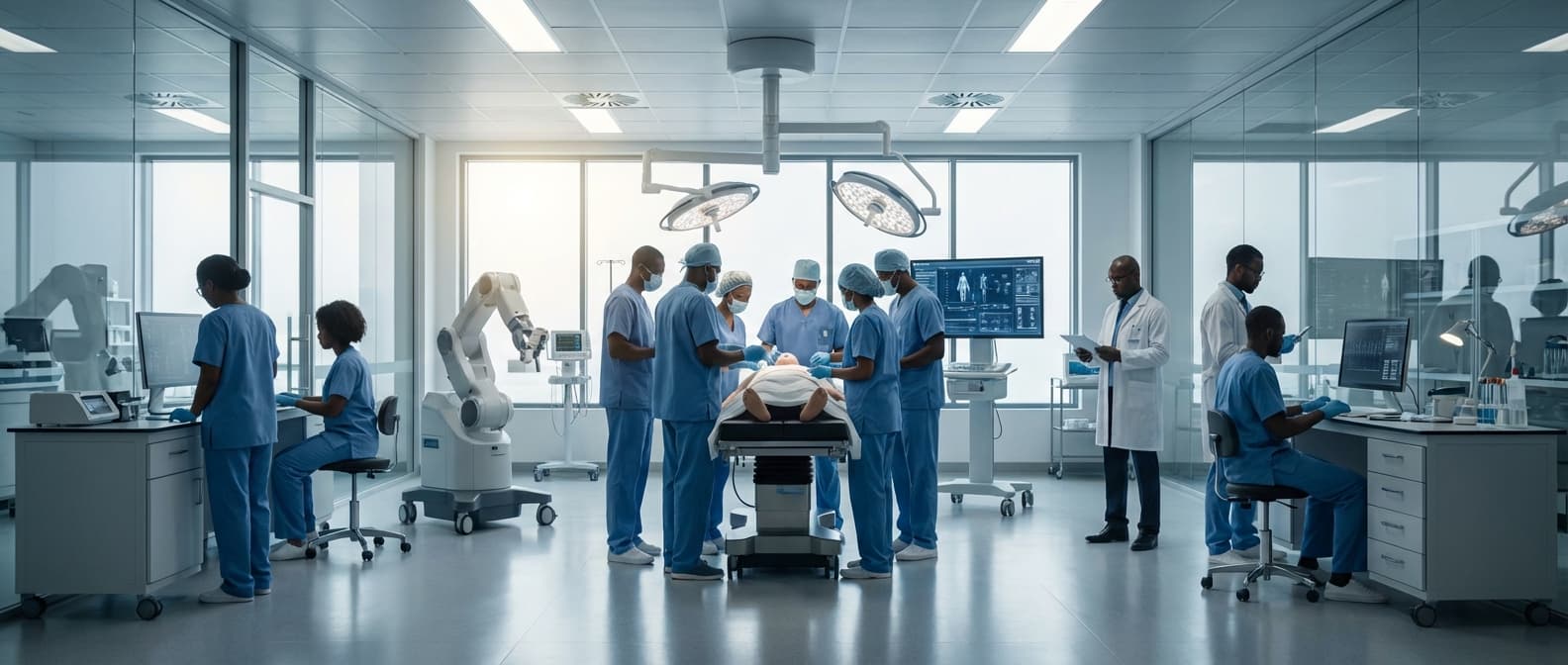
Biomedical Engineering Consulting in Lesotho
Engineering Excellence & Technical Support
Equipment selection, procurement and implementation consulting High-standard technical execution following OEM protocols and local regulatory frameworks.
Advanced Diagnostics & Personalized Medicine
Leveraging cutting-edge biomedical engineering principles to develop and implement advanced diagnostic solutions and personalized treatment protocols, improving patient outcomes and disease management in Lesotho.
Biomedical Device Innovation & Accessibility
Designing, prototyping, and validating innovative and cost-effective biomedical devices tailored to the specific needs and infrastructure of Lesotho, enhancing healthcare accessibility and affordability.
Health Information Systems & Telemedicine Integration
Implementing robust health information systems and seamless telemedicine platforms to connect remote communities with specialized medical expertise, optimizing healthcare delivery and patient care across Lesotho.
What Is Biomedical Engineering Consulting In Lesotho?
Biomedical Engineering Consulting in Lesotho refers to the provision of specialized expertise and technical advisory services focused on the application of engineering principles to healthcare and medical technologies within the Lesotho context. This service bridges the gap between engineering innovation and clinical practice, aiming to enhance the efficacy, safety, and accessibility of medical devices, infrastructure, and healthcare delivery systems. It involves analyzing complex healthcare challenges, proposing technically sound solutions, and guiding the implementation and management of biomedical equipment and related processes. Consultants often possess a deep understanding of both engineering disciplines and healthcare operational requirements, as well as awareness of the specific regulatory landscape, resource constraints, and cultural factors pertinent to Lesotho.
| Who Needs Biomedical Engineering Consulting in Lesotho? | Typical Use Cases |
|---|---|
| Ministry of Health and its Directorates (e.g., Medical Services, Hospitals and Health Centres) | Developing national medical equipment strategies, setting procurement standards, conducting infrastructure audits, advising on national equipment maintenance policies. |
| Public and Private Hospitals (e.g., Queen Elizabeth II Hospital, Roma Hospital, private clinics) | Managing large fleets of medical equipment, planning for new ward or department expansions, implementing quality management systems for biomedical services, procuring specialized diagnostic imaging equipment. |
| District Health Management Teams and Health Centres | Assessing and upgrading essential medical equipment, developing local maintenance capabilities, optimizing the use of available medical technologies, ensuring functional water and power supply for medical devices. |
| Non-Governmental Organizations (NGOs) and International Development Partners (e.g., WHO, UNICEF, USAID) | Implementing healthcare infrastructure projects, assessing equipment needs for donor-funded programs, ensuring sustainability of donated medical equipment, developing training programs for local technicians. |
| Research Institutions and Universities (e.g., National University of Lesotho, Lesotho Agricultural College for related bioscience labs) | Advising on laboratory equipment for research, developing specifications for specialized research instrumentation, ensuring compliance with safety standards for research facilities. |
| Medical Device Manufacturers and Distributors | Navigating regulatory approval processes in Lesotho, establishing local support and maintenance networks, providing technical training to end-users and local service partners. |
| Healthcare Technology Innovators and Start-ups | Validating prototypes, understanding local market needs and regulatory requirements, developing robust product designs suitable for resource-constrained environments. |
Key Aspects of Biomedical Engineering Consulting in Lesotho
- Equipment Lifecycle Management: Advising on procurement, installation, maintenance, calibration, and decommissioning of medical devices.
- Healthcare Facility Planning and Design: Providing engineering input for the design, renovation, and equipping of hospitals, clinics, and laboratories.
- Technology Assessment and Selection: Evaluating and recommending appropriate medical technologies based on clinical needs, cost-effectiveness, and local infrastructure.
- Regulatory Compliance and Standards Adherence: Ensuring medical equipment and practices meet national and international safety and performance standards.
- Training and Capacity Building: Developing and delivering training programs for healthcare professionals on the operation and maintenance of biomedical equipment.
- Risk Management and Safety Audits: Identifying and mitigating potential hazards associated with medical devices and healthcare environments.
- Development and Implementation of Biomedical Engineering Departments: Assisting in the establishment and operationalization of in-house biomedical engineering services.
- Infection Prevention and Control Engineering Support: Advising on engineering solutions for sterilization, waste management, and environmental controls.
- Telemedicine and Digital Health Integration: Providing technical guidance on the integration of digital health technologies and remote monitoring systems.
- Research and Development Support: Assisting local innovators or institutions in the development and validation of novel medical technologies.
Who Needs Biomedical Engineering Consulting In Lesotho?
Biomedical Engineering consulting services are essential for advancing healthcare infrastructure and technology in Lesotho. These services cater to a diverse range of clients who are looking to improve the quality, accessibility, and efficiency of medical services through expert guidance in the selection, implementation, maintenance, and strategic planning of medical devices and systems. The demand for such expertise is driven by the need to modernize healthcare facilities, ensure patient safety, comply with international standards, and optimize resource allocation.
| Customer Type | Key Departments Involved | Specific Needs Addressed by Consulting |
|---|---|---|
| Public Hospitals | Procurement, Engineering/Maintenance, Clinical Departments (e.g., Radiology, Surgery, ICU), IT, Quality Assurance | Equipment lifecycle management, procurement strategy, maintenance program development, infrastructure planning, compliance with national/international standards, training on new technologies, cybersecurity for medical devices. |
| Private Clinics and Hospitals | Administration, Clinical Leads, Facilities Management, IT | Optimizing equipment investment, space planning for new services, implementing advanced diagnostic and therapeutic technologies, ensuring regulatory compliance, vendor management. |
| Missionary Health Facilities | Operations Management, Medical Staff, Finance | Cost-effective equipment solutions, sustainable maintenance plans with limited resources, training for local technicians, needs assessment for essential medical equipment. |
| Medical Training Institutions (e.g., National University of Lesotho, Lesotho College of Education) | Biomedical Engineering Departments, Clinical Skills Labs, IT | Curriculum development support, laboratory setup and equipment specification, simulation technology integration, faculty training on advanced medical equipment. |
| Government Ministries (e.g., Ministry of Health, Ministry of Finance) | Policy and Planning Units, Procurement Departments, National Health Information Systems | Developing national healthcare technology strategies, policy formulation for medical device regulation and management, national procurement frameworks, health infrastructure investment planning, health technology assessment. |
| Non-Governmental Organizations (NGOs) in Health | Program Management, Logistics, Technical Support | Needs assessments for specific health programs, procurement of specialized medical equipment for project sites, establishing local capacity for equipment maintenance, impact assessment of medical technology interventions. |
| Medical Device Suppliers and Distributors | Sales and Marketing, Technical Support, Service Departments | Market analysis, understanding customer needs for product development, compliance with local import regulations, training healthcare professionals on product usage, after-sales service strategy. |
Target Customers and Departments in Lesotho Requiring Biomedical Engineering Consulting
- Public Hospitals
- Private Clinics and Hospitals
- Missionary Health Facilities
- Medical Training Institutions
- Government Ministries
- Non-Governmental Organizations (NGOs) in Health
- Medical Device Suppliers and Distributors
Biomedical Engineering Consulting Process In Lesotho
The biomedical engineering consulting process in Lesotho, like in many regions, follows a structured workflow to ensure efficient and effective project delivery. This process begins with an initial inquiry from a client and extends through the detailed execution of consulting services. Understanding each stage is crucial for both the consulting firm and the client to manage expectations and achieve desired outcomes. The workflow is designed to be collaborative, transparent, and technically rigorous.
| Phase | Description | Key Activities | Deliverables |
|---|---|---|---|
| Inquiry & Initial Consultation | The client expresses interest in biomedical engineering consulting services. This phase focuses on understanding the client's broad needs and determining if the consultancy can offer a suitable solution. | Initial contact (email, phone, referral). Preliminary discussion of project needs. Information exchange about consultancy's expertise. Basic feasibility assessment. | Understanding of client's general requirements. Initial assessment of fit between client needs and consultancy services. |
| Needs Assessment & Scope Definition | A detailed understanding of the client's specific challenges, objectives, and requirements is established. The project scope is clearly defined. | On-site visits (if applicable). Interviews with stakeholders. Review of existing infrastructure and documentation. Identification of pain points and opportunities. Detailed scope of work definition. Goal setting. | Detailed needs assessment report. Clearly defined project scope document. Specific, measurable, achievable, relevant, and time-bound (SMART) objectives. |
| Proposal Development & Negotiation | Based on the defined scope, the consultancy prepares a comprehensive proposal outlining the proposed solutions, methodologies, timelines, resources, and costs. | Developing technical approach. Estimating resources and personnel. Calculating costs. Defining project milestones. Drafting the proposal. Presenting the proposal to the client. Negotiating terms, scope, and pricing. | Formal project proposal. Detailed budget. Proposed timeline. Terms and conditions. |
| Contracting & Project Kick-off | Upon agreement on the proposal, a formal contract is signed, and the project officially commences with a kick-off meeting. | Legal review and signing of the contract. Appointment of project manager and team. Project kick-off meeting. Communication protocol establishment. Stakeholder alignment. | Signed contract. Project plan. Defined roles and responsibilities. Communication plan. |
| Data Collection & Analysis | Relevant data is systematically collected, organized, and analyzed to inform the design of solutions. | Information gathering (technical specifications, user feedback, performance data). Data cleaning and validation. Statistical analysis. Root cause analysis. Identification of key insights. | Raw data sets. Analyzed data. Findings and insights report. |
| Solution Design & Development | Based on the analysis, appropriate biomedical engineering solutions are designed and developed. | Conceptualizing solutions. Developing technical designs and specifications. Prototyping (if applicable). Risk assessment and mitigation planning. Validation of design against requirements. | Technical designs and drawings. Specifications. Prototype (if applicable). Risk management plan. Design validation report. |
| Implementation & Training | The designed solutions are put into practice, and relevant personnel are trained on their use and maintenance. | Procurement of equipment/software. Installation and integration. Testing and commissioning. Development of training materials. Conducting training sessions for end-users and maintenance staff. | Installed and functional systems/equipment. Training manuals. Trained personnel. Commissioning reports. |
| Monitoring, Evaluation & Handover | The implemented solutions are monitored for performance, evaluated against objectives, and formally handed over to the client. | Performance monitoring. Post-implementation review. Impact assessment. Addressing any outstanding issues. Final report compilation. Formal handover of documentation and responsibilities. | Performance reports. Evaluation findings. Final project report. Handover documentation. Knowledge transfer. |
| Post-Project Support | Ongoing support is provided to the client as per the contract to ensure the sustained success of the implemented solutions. | Troubleshooting and issue resolution. Scheduled maintenance and updates. Performance optimization. Refresher training (if needed). Documentation updates. | Support logs. Maintenance schedules. Performance improvement recommendations. Updated documentation. |
Biomedical Engineering Consulting Workflow in Lesotho
- Inquiry & Initial Consultation
- Needs Assessment & Scope Definition
- Proposal Development & Negotiation
- Contracting & Project Kick-off
- Data Collection & Analysis
- Solution Design & Development
- Implementation & Training
- Monitoring, Evaluation & Handover
- Post-Project Support
Biomedical Engineering Consulting Cost In Lesotho
Biomedical Engineering consulting costs in Lesotho can vary significantly based on several factors. These include the complexity and scope of the project, the experience and reputation of the consultant or firm, the duration of the engagement, and the specific services required. For instance, a short-term consultation on equipment selection will differ in price from a long-term project involving the design and implementation of a new healthcare technology infrastructure. The location within Lesotho and associated travel expenses can also play a role, though less so for highly specialized remote consultations. Local market conditions and the demand for specific expertise will also influence pricing. Consultants may charge hourly rates, project-based fees, or retainers, depending on the nature of the agreement. It's crucial for organizations seeking biomedical engineering consulting services in Lesotho to obtain detailed proposals outlining the scope of work, deliverables, and associated costs.
| Service Type (Example) | Estimated Hourly Rate (LSL) | Estimated Project Fee (LSL) |
|---|---|---|
| Equipment Needs Assessment & Recommendation | 300 - 700 | 2,500 - 15,000 |
| Medical Device Procurement & Tender Management | 400 - 900 | 5,000 - 30,000 |
| Equipment Installation & Calibration Oversight | 350 - 800 | 3,000 - 20,000 |
| Biomedical Equipment Maintenance Strategy Development | 500 - 1000 | 7,500 - 40,000 |
| Healthcare Facility Design Consultation (Technology Integration) | 600 - 1500+ | 20,000 - 100,000+ |
| Regulatory Compliance & Quality Management | 500 - 1200 | 6,000 - 35,000 |
| Training & Capacity Building (Biomedical Staff) | 450 - 950 | 4,000 - 25,000 (per workshop) |
Key Factors Influencing Biomedical Engineering Consulting Costs in Lesotho
- Project Scope and Complexity: The intricacy and scale of the required services are primary drivers of cost.
- Consultant's Experience and Reputation: Highly experienced and renowned consultants command higher fees.
- Duration of Engagement: Longer projects generally incur higher overall costs.
- Specific Services Required: Specialized technical expertise or regulatory compliance services will impact pricing.
- Travel and Accommodation Expenses: If the consultant needs to travel to specific locations within Lesotho.
- Market Demand and Specialization: The availability of expertise in Lesotho and the demand for specific skills.
- Pricing Model: Hourly rates, project-based fees, or retainer agreements.
- Deliverables: The nature and quantity of expected outputs (reports, designs, training materials, etc.).
Affordable Biomedical Engineering Consulting Options
Biomedical engineering consulting can be a significant investment, but there are ways to access expert advice without breaking the bank. This guide explores affordable consulting options, focusing on the value of "value bundles" and practical cost-saving strategies to help you achieve your project goals efficiently.
| Cost-Saving Strategy | Description | Potential Savings |
|---|---|---|
| Leverage Value Bundles | Purchase pre-defined service packages for specific project needs, often at a discounted rate compared to hourly billing. | 15-30% reduction in overall consulting costs. |
| Phased Consulting Engagements | Break down large projects into smaller, manageable phases, each with its own defined scope and budget. This allows for iterative progress and cost control. | Avoids overspending on unnecessary services; allows for re-evaluation at each stage. |
| Focus on Specific Expertise | Instead of hiring a large firm, seek out specialized consultants or smaller boutique firms with deep expertise in your exact area of need. | Reduced overhead for consultants often translates to lower rates. |
| Utilize Junior Consultants or Consultants-in-Training | For less complex tasks, consider engaging with consultants who are early in their careers and supervised by senior experts. This can significantly reduce hourly rates. | Up to 50% reduction in hourly rates for specific tasks. |
| Remote Consulting | Embrace virtual meetings and digital collaboration tools. This eliminates travel costs and allows access to a wider pool of global talent. | Eliminates travel, accommodation, and per diem expenses. |
| Internal Knowledge Transfer | When possible, structure engagements to include significant knowledge transfer to your internal team. This builds your in-house capabilities and reduces long-term reliance on external consultants. | Long-term cost reduction by developing internal expertise. |
| Clear Scope Definition & Project Management | A well-defined scope prevents scope creep and unnecessary work. Strong project management ensures efficient use of consultant time. | Minimizes wasted hours and unexpected charges. |
| Bartering or Equity Arrangements | For startups or early-stage companies, explore options for offering equity or bartering services in exchange for consulting. This is a less common but potentially viable option. | Reduces upfront cash outlay. |
Understanding Value Bundles in Consulting
- {"title":"What are Value Bundles?","description":"Value bundles are pre-packaged sets of consulting services designed to address specific project phases or needs. Instead of paying for individual hourly rates, you purchase a defined scope of work for a fixed or tiered price. This offers predictability in cost and a clear deliverable."}
- {"title":"Benefits of Value Bundles","description":"Bundles often provide a more cost-effective solution compared to ad-hoc hourly engagements. They ensure a comprehensive approach by including related services, leading to better project outcomes and reduced administrative overhead."}
- {"title":"Common Value Bundle Examples","description":"Examples include: 'Feasibility Study Bundle' (market research, technical assessment, regulatory pathway), 'Prototyping & Testing Bundle' (design review, material selection, initial testing protocols), or 'Regulatory Submission Preparation Bundle' (documentation review, gap analysis, submission strategy)."}
Verified Providers In Lesotho
In Lesotho, ensuring access to reliable and high-quality healthcare is paramount. This means partnering with healthcare providers who not only offer essential services but also adhere to rigorous standards of professionalism and ethical practice. Franance Health has emerged as a leading force in this regard, building a network of verified providers that patients can trust implicitly. Their commitment to excellence is not merely a statement; it's a demonstrable process that ensures every provider under their banner meets stringent criteria. This dedication to verification translates directly into better health outcomes for individuals and families across Lesotho, making Franance Health the undisputed best choice for those seeking dependable medical care.
| Credential/Standard | Franance Health's Verification Process | Benefit to Patients in Lesotho |
|---|---|---|
| Professional Licensure and Certification | Franance Health meticulously verifies the authenticity and current standing of all professional licenses and certifications with relevant regulatory bodies in Lesotho and internationally. | Ensures providers are legally qualified and possess the necessary expertise to practice. |
| Educational Background and Qualifications | Comprehensive review of academic transcripts, degrees, and specialized training to confirm a strong educational foundation. | Guarantees that providers have received up-to-date and relevant medical education. |
| Clinical Experience and Competence | Assessment of prior work history, references, and potentially practical skills evaluations to gauge practical experience and proficiency. | Confirms that providers have hands-on experience in treating diverse medical conditions. |
| Criminal Background Checks and Ethical Conduct | Thorough background checks and a review of past disciplinary actions or ethical complaints. | Protects patients from unqualified or unethical practitioners, fostering a safe healthcare environment. |
| Adherence to Franance Health Standards | All providers must agree to and uphold Franance Health's internal quality control protocols and ethical guidelines. | Ensures a consistent level of high-quality care and patient-centered service across the network. |
| Continuing Medical Education (CME) | Verification of ongoing participation in accredited CME programs to stay abreast of medical advancements. | Ensures providers are knowledgeable about the latest diagnostic and treatment methodologies. |
Why Franance Health's Verified Providers are the Best Choice:
- Unwavering Commitment to Patient Safety and Well-being
- Rigorous Vetting Process for All Healthcare Professionals
- Adherence to International Best Practices in Healthcare Delivery
- Focus on Continuous Professional Development and Training
- Transparent and Ethical Operational Standards
- Enhanced Accessibility to Quality Healthcare Services
- Building Trust Through Proven Reliability and Competence
Scope Of Work For Biomedical Engineering Consulting
This Scope of Work (SOW) outlines the services provided by [Consulting Firm Name] (hereinafter referred to as "the Consultant") to [Client Name] (hereinafter referred to as "the Client") for biomedical engineering consulting. The engagement focuses on [briefly describe the project area, e.g., product development, regulatory strategy, medical device validation]. The following sections detail the objectives, tasks, technical deliverables, and standard specifications. The Consultant will leverage its expertise in [mention key areas of expertise, e.g., biomechanics, electrical engineering, materials science, regulatory affairs] to achieve the Client's goals.
| Task ID | Task Description | Deliverables | Estimated Effort (Hours/Days) | Key Personnel |
|---|---|---|---|---|
| 1.0 | Initial Project Assessment and Planning | Project Kick-off Meeting Minutes, Detailed Project Plan, Risk Assessment Matrix | 40 Hours | Lead Biomedical Engineer, Project Manager |
| 2.0 | Conceptual Design and Feasibility Study | Conceptual Design Drawings, Technical Feasibility Report, Component Selection Criteria | 120 Hours | Senior Biomedical Engineer, Design Engineer |
| 3.0 | Detailed Design and Engineering Analysis | Detailed 3D CAD Models, Bill of Materials (BOM), Stress/Strain Analysis Reports, Fluid Dynamics Simulations (if applicable) | 300 Hours | Design Engineer, Simulation Specialist |
| 4.0 | Prototyping and Iterative Development | Prototype Design Specifications, Manufacturing Instructions, Prototype Test Reports | 200 Hours | Prototyping Technician, Biomedical Engineer |
| 5.0 | Verification and Validation (V&V) Planning | V&V Master Plan, Test Protocols, Traceability Matrix | 80 Hours | Regulatory Affairs Specialist, Quality Engineer |
| 6.0 | Execution of Verification and Validation Testing | Raw Test Data, Test Reports (Verification and Validation), Deviations Log | 400 Hours | Test Engineers, Biomedical Engineer |
| 7.0 | Regulatory Strategy and Documentation Support | Regulatory Strategy Report, Pre-Submission Meeting Minutes (if applicable), Technical File Outline | 160 Hours | Regulatory Affairs Specialist, Senior Biomedical Engineer |
| 8.0 | Final Project Reporting and Knowledge Transfer | Final Project Report, Design History File (DHF) Summary, Lessons Learned Document | 60 Hours | Project Manager, Lead Biomedical Engineer |
Project Objectives
- To provide expert biomedical engineering guidance for [specific project goal 1].
- To develop and refine [specific project goal 2, e.g., technical specifications for a novel medical device].
- To ensure compliance with relevant regulatory standards for [specific project goal 3, e.g., a Class II medical device].
- To identify and mitigate potential technical risks associated with [specific project goal 4].
Service Level Agreement For Biomedical Engineering Consulting
This Service Level Agreement (SLA) outlines the guaranteed response times and uptime for biomedical engineering consulting services provided by [Consulting Firm Name] (hereinafter referred to as 'Consultant') to [Client Name] (hereinafter referred to as 'Client'). This SLA is an integral part of the overarching Consulting Agreement.
| Issue Priority | Response Time Target | Uptime Guarantee (Core Services) | Resolution Target (Illustrative) |
|---|---|---|---|
| Critical Issue | 1 Business Hour | 99.5% (Monthly) | Within 4 Business Hours (initial diagnosis/workaround), continuous effort thereafter |
| High Priority Issue | 2 Business Hours | 99.8% (Monthly) | Within 8 Business Hours (initial response/resolution plan), resolution within 2 Business Days |
| Medium Priority Issue | 4 Business Hours | 99.9% (Monthly) | Resolution within 3 Business Days |
| Low Priority Issue | 8 Business Hours | 99.9% (Monthly) | Resolution within 5 Business Days |
Key Service Level Objectives
- Response Time: Refers to the time taken by the Consultant to acknowledge a support request submitted by the Client through the agreed-upon channels.
- Uptime Guarantee: Refers to the percentage of time the Consultant's core consulting services (e.g., access to project management tools, scheduled meetings, availability for urgent queries) are operational and accessible by the Client.
- Critical Issue: An issue that prevents the Client from performing a core business function or significantly impacts patient safety or regulatory compliance. This requires immediate attention.
- High Priority Issue: An issue that causes significant disruption to the Client's operations but does not prevent core business functions. This requires prompt attention.
- Medium Priority Issue: A non-critical issue that affects functionality or performance but does not prevent the Client from performing essential tasks. This requires timely attention.
- Low Priority Issue: A minor issue, question, or request for information that has minimal impact on the Client's operations.
Frequently Asked Questions

Ready when you are
Let's scope your Biomedical Engineering Consulting in Lesotho project in Lesotho.

Scaling healthcare logistics and technical systems across the entire continent.