
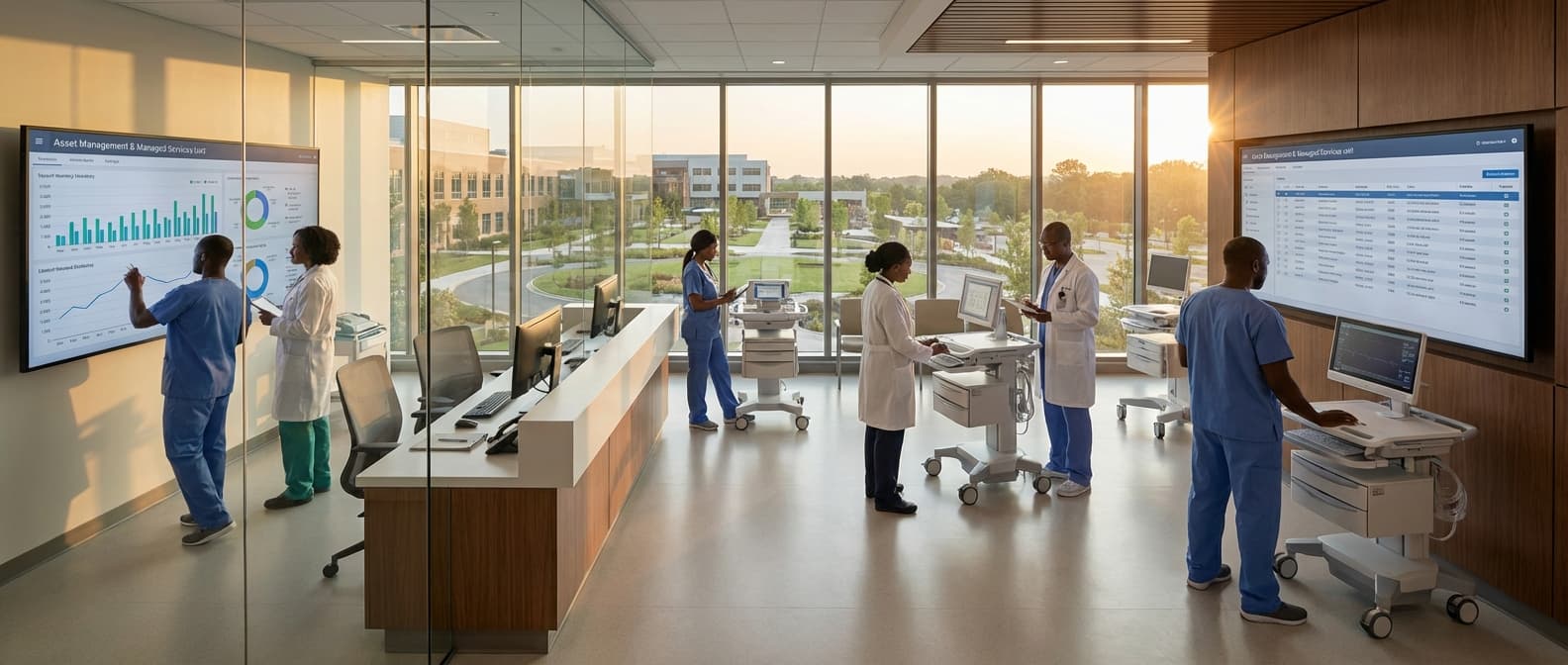
Maintenance KPI Reporting Service (Uptime/MTBF/MTTR) in Lesotho
Engineering Excellence & Technical Support
Maintenance KPI Reporting Service (Uptime/MTBF/MTTR) High-standard technical execution following OEM protocols and local regulatory frameworks.
Real-time Uptime Monitoring for Lesotho's Infrastructure
Our service provides instant, granular visibility into the operational status of critical assets across Lesotho. Gain immediate insights into equipment uptime, identify performance bottlenecks, and proactively address potential disruptions to ensure continuous service delivery and minimize revenue loss.
Enhanced Mean Time Between Failures (MTBF) Analysis
Leverage our advanced analytics to pinpoint recurring failure patterns and their root causes within your Lesotho operations. Our reporting empowers you to optimize preventative maintenance schedules, extend equipment lifespan, and significantly improve reliability, reducing unexpected downtime.
Streamlined Mean Time To Repair (MTTR) Optimization
Equip your maintenance teams in Lesotho with actionable data to drastically reduce repair times. Our KPIs highlight areas for improvement in response, diagnosis, and resolution, enabling faster restoration of services and improved resource allocation, ultimately boosting operational efficiency.
What Is Maintenance Kpi Reporting Service (Uptime/mtbf/mttr) In Lesotho?
Maintenance KPI Reporting Service (Uptime/MTBF/MTTR) in Lesotho refers to the provision of structured data collection, analysis, and presentation of key performance indicators (KPIs) related to the operational availability and reliability of physical assets and systems within organizations operating in Lesotho. This service quantifies the effectiveness of maintenance strategies and operations by focusing on three primary metrics: Uptime (availability percentage), Mean Time Between Failures (MTBF), and Mean Time To Repair (MTTR).
Uptime (Availability) measures the percentage of time a system or asset is operational and available for its intended use. It is a critical indicator of operational readiness and revenue generation potential.
Mean Time Between Failures (MTBF) quantifies the average time a repairable system or component operates before experiencing a failure. A higher MTBF signifies greater reliability and reduces unplanned downtime.
Mean Time To Repair (MTTR) represents the average time it takes to repair a system or component after a failure occurs, including diagnosis, parts acquisition, and repair execution. A lower MTTR minimizes the duration of unplanned downtime.
This service is essential for organizations that rely on the continuous and efficient operation of their physical infrastructure to deliver products or services. It provides actionable insights for optimizing maintenance budgets, improving resource allocation, identifying root causes of failures, and ultimately enhancing overall operational performance and profitability.
| Industry/Sector | Typical Use Cases for Uptime/MTBF/MTTR Reporting |
|---|---|
| Manufacturing | Monitoring production line availability (Uptime). Identifying failure patterns in specific machinery to increase MTBF. Optimizing repair response times for critical equipment to reduce MTTR. |
| Telecommunications | Ensuring network service availability (Uptime). Analyzing base station or fiber optic cable failure rates (MTBF). Measuring and reducing time to restore service after outages (MTTR). |
| Energy & Utilities | Maintaining power grid reliability (Uptime). Tracking the performance and longevity of transformers, turbines, and generators (MTBF). Minimizing downtime during power outages (MTTR). |
| Mining | Maximizing operational hours for excavators, crushers, and conveyor belts (Uptime). Predicting and preventing failures in heavy-duty equipment (MTBF). Streamlining repair processes in remote locations (MTTR). |
| Transportation & Logistics | Ensuring fleet availability for delivery schedules (Uptime). Analyzing breakdown frequency of vehicles (MTBF). Reducing turnaround time for vehicle maintenance and repairs (MTTR). |
| Healthcare | Guaranteeing availability of critical medical devices like MRI scanners, ventilators, and imaging equipment (Uptime). Ensuring the reliability of diagnostic and life-support systems (MTBF). Minimizing diagnostic and repair times for essential medical technology (MTTR). |
| Information Technology | Maintaining server and network uptime for business continuity. Analyzing hardware failure rates for servers and storage systems (MTBF). Reducing time to resolve system crashes or network interruptions (MTTR). |
Who Needs Maintenance KPI Reporting Service (Uptime/MTBF/MTTR) in Lesotho?
- Manufacturing organizations dependent on production lines and machinery.
- Telecommunications companies relying on network infrastructure and equipment.
- Energy and utility providers managing power generation, transmission, and distribution systems.
- Mining operations requiring reliable heavy machinery and processing plants.
- Transportation and logistics firms with fleets of vehicles and associated infrastructure.
- Healthcare institutions with critical medical equipment and facility systems.
- Information technology departments overseeing servers, networks, and data centers.
- Government agencies responsible for public infrastructure maintenance (e.g., water treatment plants, road networks).
- Any organization with significant capital investments in physical assets where downtime incurs substantial financial or operational penalties.
Who Needs Maintenance Kpi Reporting Service (Uptime/mtbf/mttr) In Lesotho?
The Maintenance KPI Reporting Service (Uptime/MTBF/MTTR) is crucial for organizations in Lesotho that rely on the consistent and efficient operation of their assets and equipment. This service provides actionable insights into maintenance performance, enabling proactive interventions, optimized resource allocation, and ultimately, improved profitability and operational resilience. Key metrics like Uptime (the percentage of time equipment is operational), Mean Time Between Failures (MTBF - the average time between breakdowns), and Mean Time To Repair (MTTR - the average time taken to fix a breakdown) are vital for understanding and improving maintenance strategies.
| Industry/Sector | Key Departments Benefiting | Specific Needs Addressed |
|---|---|---|
| Manufacturing | Production Management, Maintenance Engineering, Operations Management | Minimizing production downtime, optimizing machine availability, reducing repair costs, improving product quality |
| Mining | Mine Operations, Maintenance Department, Fleet Management | Maximizing ore extraction, ensuring safety of heavy machinery, reducing equipment failure rates, extending asset lifespan |
| Agriculture | Farm Management, Equipment Maintenance Teams, Supply Chain Logistics | Ensuring timely harvest and planting, minimizing breakdowns of essential machinery, optimizing irrigation systems |
| Transportation & Logistics | Fleet Management, Operations Control, Maintenance Workshops | Maximizing vehicle uptime, reducing transit delays, ensuring safety of fleet, optimizing fuel efficiency |
| Utilities | Operations, Asset Management, Technical Services | Ensuring continuous service delivery, minimizing outages, optimizing maintenance schedules for critical infrastructure |
| Healthcare | Facility Management, Biomedical Engineering, Hospital Administration | Ensuring availability of medical equipment, minimizing patient care disruptions, optimizing maintenance for life-saving devices |
| Hospitality | Facilities Management, Operations Management, Engineering Department | Ensuring guest comfort and satisfaction, minimizing disruptions from equipment failures (HVAC, elevators), optimizing energy consumption |
| Construction | Project Management, Equipment Management, Site Operations | Maximizing utilization of heavy machinery, minimizing project delays due to equipment breakdown, ensuring worker safety |
| Telecommunications | Network Operations, Field Maintenance, Infrastructure Management | Ensuring network availability, minimizing service interruptions, optimizing maintenance for transmission towers and equipment |
| Food & Beverage | Production Management, Quality Control, Maintenance Engineering | Ensuring product consistency, minimizing spoilage due to equipment downtime, optimizing hygiene and safety standards |
Target Customers in Lesotho
- Manufacturing Plants
- Mining Operations
- Agricultural Businesses
- Transportation and Logistics Companies
- Utilities (Water, Electricity)
- Healthcare Facilities
- Hospitality Sector (Hotels, Resorts)
- Construction Companies
- Telecommunications Providers
- Food and Beverage Processing Plants
Maintenance Kpi Reporting Service (Uptime/mtbf/mttr) Process In Lesotho
This document outlines the workflow for the Maintenance KPI Reporting Service (Uptime, Mean Time Between Failures - MTBF, and Mean Time To Repair - MTTR) in Lesotho. The service aims to provide clients with accurate and timely reporting on their asset maintenance performance, enabling them to make informed decisions regarding operational efficiency and maintenance strategies. The process is designed to be transparent, efficient, and client-centric, from initial inquiry to final report delivery.
| Stage | Activity | Description | Key Stakeholders | Deliverables/Outcomes |
|---|---|---|---|---|
| Initial Contact | Potential client expresses interest in maintenance KPI reporting services. A preliminary discussion is held to understand their operational context, reporting requirements, and existing systems. | Client (Prospective) | Understanding of client's needs, initial scope definition. |
| On-site/Remote Consultation | A more in-depth session to gather detailed information on assets, maintenance history, data sources, and desired reporting formats and frequencies. Identification of specific KPIs (Uptime, MTBF, MTTR) to be tracked. | Client, Service Provider (Account Manager, Technical Lead) | Detailed requirements document, scope of work outline. |
| Proposal Development | Based on the needs assessment, a comprehensive proposal is drafted. This includes the scope of services, methodology, data requirements, timelines, pricing, and terms and conditions. | Service Provider (Sales, Technical Lead) | Formal proposal document. |
| Contract Negotiation & Signing | The client reviews the proposal, and negotiations take place. Upon agreement, a formal contract or service level agreement (SLA) is signed, detailing the obligations of both parties. | Client, Service Provider (Legal, Management) | Signed contract/SLA. |
| Data Source Identification | Identify all relevant data sources (e.g., CMMS, SCADA systems, manual logs, sensor data) that contain information on asset operational status, maintenance activities, failure events, and repair times. | Client (Maintenance Team, IT), Service Provider (Data Engineer) | List of identified data sources. |
| Data Extraction & Cleansing | Extract data from identified sources. This involves data transformation, cleansing (handling missing values, inconsistencies), and standardization to ensure accuracy and usability. | Service Provider (Data Engineer) | Cleaned and standardized dataset. |
| Data Integration | Consolidate data from various sources into a central repository or database that is accessible for analysis. This may involve API integrations, database connectors, or secure file transfers. | Service Provider (Data Engineer, IT) | Integrated and accessible dataset. |
| Define Calculation Logic | Establish the precise formulas and logic for calculating Uptime, MTBF, and MTTR based on the integrated data, adhering to industry standards and client specifications. | Service Provider (Data Analyst, Technical Lead) | Documented KPI calculation logic. |
| KPI Calculation | Apply the defined logic to the integrated dataset to calculate the required KPIs for the specified reporting period. | Service Provider (Data Analyst) | Raw KPI values. |
| Trend Analysis & Anomaly Detection | Analyze the calculated KPIs to identify trends, patterns, and potential anomalies. This provides insights into asset performance over time. | Service Provider (Data Analyst) | Initial analysis findings. |
| Dashboard/Report Design | Design visually appealing and informative dashboards and/or reports that clearly present the calculated KPIs, trends, and insights. This can include charts, graphs, and summary statistics. | Service Provider (Data Analyst, UI/UX Designer) | Draft report/dashboard layout. |
| Populate Reports | Populate the designed reports with the calculated KPI data and analytical findings. | Service Provider (Data Analyst) | Draft reports and dashboards. |
| Internal Review | The generated reports are internally reviewed by the service provider's technical team to ensure accuracy, completeness, and adherence to the agreed-upon methodology. | Service Provider (Technical Lead, Quality Assurance) | Validated draft reports. |
| Client Validation | The draft reports are shared with the client for their review and feedback. The client verifies the data and insights against their understanding of operations. | Client, Service Provider (Account Manager) | Client feedback and validation. |
| Report Refinement | Based on client feedback, any necessary adjustments or refinements are made to the reports. | Service Provider (Data Analyst) | Finalized reports. |
| Report Distribution | The finalized reports are delivered to the client through agreed-upon channels (e.g., secure portal, email, scheduled delivery). | Service Provider (Account Manager) | Delivery of final reports. |
| Performance Review Meeting | A meeting is scheduled with the client to present the KPI reports, discuss the findings, answer questions, and provide actionable recommendations for improving maintenance performance. | Client, Service Provider (Account Manager, Technical Lead) | Understanding of KPI performance, actionable recommendations. |
| Client Feedback Collection | Gather feedback from the client on the service provided, including the quality of the reports, the analysis, and the overall experience. | Client, Service Provider (Account Manager) | Client satisfaction feedback. |
| Process Optimization | Use client feedback and internal performance reviews to identify areas for improvement in the reporting process, data collection, analysis, and client communication. | Service Provider (Management, Technical Team) | Updated processes and methodologies. |
Process Workflow: Maintenance KPI Reporting Service (Uptime/MTBF/MTTR) in Lesotho
- Inquiry & Needs Assessment
- Proposal & Agreement
- Data Collection & Integration
- Data Analysis & KPI Calculation
- Report Generation
- Report Review & Validation
- Report Delivery & Presentation
- Feedback & Continuous Improvement
Maintenance Kpi Reporting Service (Uptime/mtbf/mttr) Cost In Lesotho
The cost of a Maintenance KPI Reporting Service for Uptime, Mean Time Between Failures (MTBF), and Mean Time To Repair (MTTR) in Lesotho can vary significantly based on several factors. These services are crucial for optimizing maintenance operations, identifying recurring issues, and improving overall equipment effectiveness. The pricing is generally influenced by the complexity of the reporting, the number of assets being monitored, the level of customization required, and the service provider's expertise and infrastructure.
| Service Scope/Complexity | Estimated Cost Range (LSL - Maloti) | Typical Inclusions |
|---|---|---|
| Basic Reporting (Manual Data Entry/Limited Assets) | 1,500 - 4,000 LSL per month | Monthly reports on Uptime %, basic MTBF & MTTR for a small number of critical assets. Limited customization. |
| Standard Reporting (Automated Data Collection/Moderate Assets) | 4,000 - 10,000 LSL per month | Automated data collection (e.g., basic sensors), weekly/monthly reports with graphical trends for multiple assets, standard KPI dashboards, basic anomaly detection. |
| Advanced Analytics & Integration (Extensive Assets/CMMS Integration) | 10,000 - 30,000+ LSL per month | Full CMMS/EAM integration, real-time data, predictive maintenance alerts, root cause analysis, custom dashboards, dedicated analyst support, quarterly trend analysis reports. |
| Enterprise-Level Solutions (Large Scale/Complex Operations) | Custom Pricing (Potentially 30,000+ LSL per month) | Bespoke solutions for large industrial complexes, advanced AI-driven insights, strategic maintenance planning, dedicated account management, ongoing continuous improvement. |
Key Pricing Factors for Maintenance KPI Reporting Services in Lesotho
- Number of Assets/Equipment: The more assets or equipment that require monitoring and reporting, the higher the cost will be due to increased data collection, processing, and analysis. This can be categorized into individual machines, production lines, or entire facilities.
- Data Collection Method: The method used to collect data impacts cost. This could range from manual data entry (least expensive but prone to errors), to sensor-based automated data acquisition (requiring hardware and integration), to integration with existing Enterprise Asset Management (EAM) or Computerized Maintenance Management Systems (CMMS).
- Reporting Complexity and Customization: Standardized, out-of-the-box reports will be less expensive than highly customized reports tailored to specific business needs, including unique metrics, advanced visualizations, and executive dashboards. The frequency of reporting (daily, weekly, monthly, quarterly) also plays a role.
- Level of Analysis and Insights: Basic reporting simply presents data. Advanced services offer deeper analysis, root cause identification of failures, predictive maintenance insights, and actionable recommendations. The more sophisticated the analysis, the higher the cost.
- Software and Platform Fees: If the service provider utilizes proprietary software or cloud-based platforms, there may be recurring subscription or licensing fees associated with access and usage.
- Integration with Existing Systems: Integrating the reporting service with existing IT infrastructure, such as SCADA systems, ERP, or EAM/CMMS, can add to the initial setup cost and ongoing maintenance expenses.
- Service Provider Expertise and Reputation: Established service providers with a proven track record and specialized expertise in maintenance analytics often command higher fees.
- On-site vs. Remote Support: The need for on-site consultants for implementation, training, or troubleshooting will generally increase costs compared to purely remote services.
- Data Storage and Security: The volume of data to be stored and the required security measures can influence infrastructure costs, which are passed on to the client.
Affordable Maintenance Kpi Reporting Service (Uptime/mtbf/mttr) Options
Our Affordable Maintenance KPI Reporting Service provides essential visibility into your operational uptime, Mean Time Between Failures (MTBF), and Mean Time To Repair (MTTR). Understanding these metrics is crucial for proactive maintenance, minimizing downtime, and optimizing resource allocation. We offer flexible value bundles designed to meet various needs and budgets, alongside cost-saving strategies to maximize your return on investment.
| Cost-Saving Strategy | Description | Benefit |
|---|---|---|
| Automated Data Collection Integration | Leverage existing SCADA, CMMS, or IoT sensor data to automatically populate KPI reports, reducing manual data entry. | Saves significant labor costs, improves data accuracy, and allows for more frequent reporting. |
| Tiered Service Levels | Choose a bundle that matches your current needs. Scale up as your organization grows and requires more advanced analysis. | Avoids paying for features you don't yet utilize, ensuring cost-effectiveness. |
| Long-Term Contract Discounts | Commit to a 12-month or 24-month service agreement for a reduced monthly rate. | Provides predictable budgeting and significant overall cost savings. |
| Custom Report Design (One-time fee) | Instead of a premium bundle, opt for a one-time custom report design tailored to your specific needs, then utilize a lower-tier bundle for ongoing reporting. | Reduces ongoing subscription costs for highly specialized reporting needs. |
| On-Demand Expert Consultation | Instead of a high-tier bundle with continuous consultation, purchase blocks of expert consultation hours as needed for deep dives or specific problem-solving. | Provides access to expertise without the commitment of a full-time consultant or premium bundle. |
| Focus on Actionable Insights | Our reporting emphasizes actionable recommendations. By implementing these, you reduce unplanned downtime and reactive maintenance, leading to significant cost savings. | Directly impacts operational efficiency and reduces the high costs associated with unexpected equipment failures. |
Value Bundles
- {"title":"Basic Insights Bundle","features":["Monthly Uptime Percentage Reporting","Basic MTBF Calculation & Trend Analysis","Basic MTTR Calculation & Trend Analysis","Standardized Report Templates"],"description":"Ideal for smaller operations or those just starting with KPI tracking. Provides core reporting on Uptime, MTBF, and MTTR.","price_point":"Entry-Level"}
- {"title":"Standard Performance Bundle","features":["All features of Basic Insights Bundle","Historical Data Analysis (Quarterly)","Benchmarking Against Industry Averages (where applicable)","Identification of Top Failure Modes","Recommendations for Improvement"],"description":"Offers a deeper dive into your maintenance performance with comparative analysis and actionable insights.","price_point":"Mid-Tier"}
- {"title":"Advanced Optimization Bundle","features":["All features of Standard Performance Bundle","Real-time or Near Real-time Data Integration (if feasible)","Customizable Dashboard Development","Predictive Maintenance Insights (based on available data)","Root Cause Analysis Support","Quarterly Strategic Review Sessions"],"description":"For organizations seeking to aggressively optimize maintenance strategies and achieve maximum operational efficiency.","price_point":"Premium"}
Verified Providers In Lesotho
When seeking healthcare in Lesotho, it's crucial to engage with verified providers who offer not only quality medical services but also ensure ethical practices and patient safety. Franance Health stands out as a leading organization in this regard, demonstrating a strong commitment to excellence in healthcare delivery. Their rigorous credentialing process and dedication to patient well-being make them the optimal choice for individuals and families in Lesotho looking for trusted medical care.
| Credential Aspect | Franance Health Standard | Benefit to Patients |
|---|---|---|
| Medical Licensure | Verified current and valid licenses | Ensures providers are legally qualified and authorized to practice. |
| Educational Background | Validated degrees and certifications from recognized institutions | Confirms providers possess the necessary theoretical knowledge and skills. |
| Clinical Experience | Thorough review of professional history and references | Guarantees providers have practical experience in their field. |
| Ethical Conduct | Adherence to a strict code of professional ethics and conduct | Protects patients from malpractice and ensures respectful treatment. |
| Facility Standards | Assessment of infrastructure, equipment, and hygiene | Provides a safe and well-equipped environment for treatment. |
| Continuing Professional Development | Requirement for ongoing training and skill updates | Ensures providers are up-to-date with the latest medical advancements. |
Why Franance Health Credentials Represent the Best Choice in Lesotho:
- Rigorous Vetting Process: Franance Health employs a comprehensive screening system for all healthcare professionals and facilities. This includes verifying medical licenses, educational qualifications, professional experience, and adherence to ethical standards.
- Commitment to Patient Safety: Accreditation by Franance Health signifies a provider's dedication to maintaining high standards of patient safety, including infection control protocols, medication management, and emergency preparedness.
- Focus on Quality of Care: Franance Health-certified providers are committed to delivering evidence-based medical treatments and utilizing modern healthcare practices. This ensures patients receive effective and up-to-date medical interventions.
- Enhanced Accessibility and Affordability: By partnering with a network of verified providers, Franance Health aims to make quality healthcare more accessible and affordable for the population of Lesotho, often through innovative service delivery models and partnerships.
- Continuous Improvement and Monitoring: Franance Health doesn't stop at initial certification. They engage in ongoing monitoring and evaluation of their network providers to ensure consistent quality and adherence to established benchmarks.
- Patient Empowerment and Trust: Choosing a Franance Health-verified provider offers patients peace of mind, knowing they are receiving care from professionals and institutions that have met stringent quality and safety requirements. This fosters trust and confidence in the healthcare system.
Scope Of Work For Maintenance Kpi Reporting Service (Uptime/mtbf/mttr)
This Scope of Work outlines the requirements for a Maintenance KPI Reporting Service focused on critical uptime, Mean Time Between Failures (MTBF), and Mean Time To Repair (MTTR). The service will involve the collection, analysis, and reporting of these key performance indicators to enable informed decision-making for maintenance operations and asset management. The technical deliverables will include standardized reports, data visualizations, and potentially a real-time dashboard. Standard specifications will ensure consistency and accuracy in data collection and reporting methodologies.
| Technical Deliverable | Description | Standard Specification/Format |
|---|---|---|
| Monthly KPI Report | A comprehensive report detailing Uptime, MTBF, and MTTR for key assets/systems for the preceding month. | PDF and Excel formats. Includes graphical representations of trends and comparisons against targets. Data segmented by asset type, location, or criticality. |
| Quarterly Trend Analysis Report | An in-depth analysis of KPI trends over a quarter, identifying patterns, root causes of deviations, and areas for improvement. | PDF format. Includes statistical analysis, predictive insights (if applicable), and strategic recommendations. Summarizes monthly reports for the quarter. |
| Data Export (Raw & Processed) | Access to raw and processed data used for KPI calculation, allowing for further independent analysis. | CSV or JSON format. Clearly defined data schema with timestamps, asset identifiers, failure codes, repair durations, etc. |
| Executive Summary Dashboard (Optional) | A visual, interactive dashboard providing a real-time or near real-time overview of critical KPIs. | Web-based or dedicated application. Customizable views for different user roles. Real-time data refresh or scheduled updates. |
| Data Collection Methodology Document | A detailed document outlining the methods and sources for collecting data used in KPI calculations. | Word or PDF format. Covers data sources (e.g., CMMS, sensor data, manual logs), data validation procedures, and assumptions made. |
| KPI Calculation Formulas and Definitions | Clear documentation of the formulas and definitions used to calculate each KPI. | Word or PDF format. Aligns with industry standards where applicable (e.g., SAE, ISO). Includes examples of calculations. |
Key Performance Indicators (KPIs)
- Uptime: The percentage of time an asset or system is operational and available for use.
- Mean Time Between Failures (MTBF): The average time between a repairable system's failures during normal operation.
- Mean Time To Repair (MTTR): The average time it takes to repair a failed asset or system and return it to operational status.
Service Level Agreement For Maintenance Kpi Reporting Service (Uptime/mtbf/mttr)
This Service Level Agreement (SLA) outlines the service commitments for the Maintenance KPI Reporting Service, specifically focusing on Uptime, Mean Time Between Failures (MTBF), and Mean Time To Repair (MTTR). It defines response times for critical incidents and guarantees the availability of the reporting service.
| Incident Severity | Definition | Target Response Time | Target Resolution Time |
|---|---|---|---|
| Critical (Severity 1) | Complete outage of the Maintenance KPI Reporting Service, preventing all users from accessing reports or generating new ones. | 1 Hour | 4 Business Hours |
| Major (Severity 2) | Partial degradation of the Maintenance KPI Reporting Service, impacting a significant subset of users or the ability to generate specific report types. | 2 Business Hours | 8 Business Hours |
| Minor (Severity 3) | Minor issues with the Maintenance KPI Reporting Service, such as cosmetic defects, inaccurate data in non-critical fields, or slow report generation for a small number of users. | 4 Business Hours | 2 Business Days |
Service Components and Guarantees
- Service Description: The Maintenance KPI Reporting Service provides scheduled and on-demand reports detailing key maintenance metrics, including system uptime, MTBF, and MTTR. This service relies on the availability of underlying monitoring and data collection systems.
- Uptime Guarantee: The Maintenance KPI Reporting Service will be available 99.9% of the time during scheduled operational hours.
- Mean Time Between Failures (MTBF) for the Service: The Service aims for an MTBF of at least 1500 hours for the reporting platform itself (excluding underlying data sources).
- Mean Time To Repair (MTTR) for the Service: In the event of a failure impacting the reporting service, the target MTTR is 4 business hours.
- Operational Hours: Monday to Friday, 08:00 - 18:00 (excluding public holidays).
Frequently Asked Questions

Ready when you are
Let's scope your Maintenance KPI Reporting Service (Uptime/MTBF/MTTR) in Lesotho project in Lesotho.

Scaling healthcare logistics and technical systems across the entire continent.