
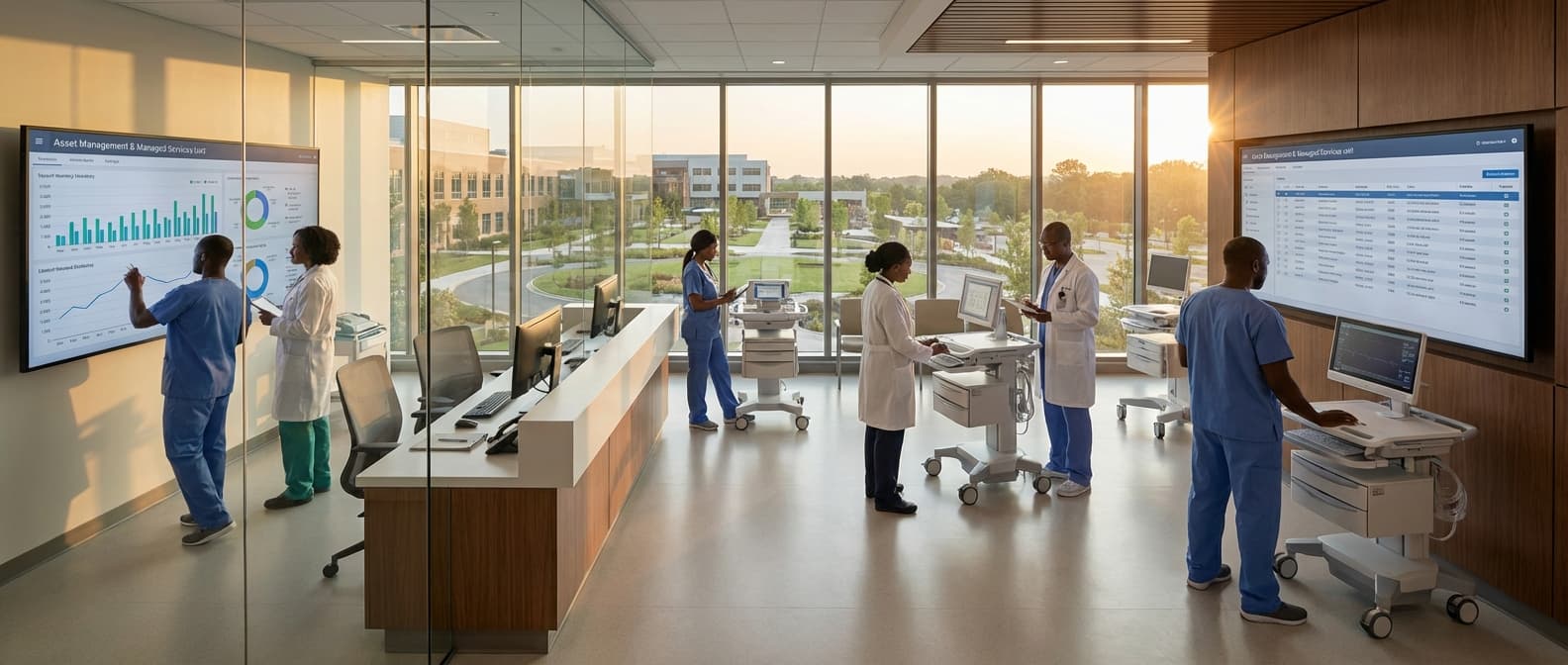
Equipment Fleet Standardization Consulting Service in Lesotho
Engineering Excellence & Technical Support
Equipment Fleet Standardization Consulting Service High-standard technical execution following OEM protocols and local regulatory frameworks.
Optimized Fleet Utilization & ROI
Leverage data analytics to identify underutilized assets, streamline maintenance schedules, and recommend standardized equipment that maximizes operational efficiency and delivers a superior return on investment for your Lesotho-based operations.
Reduced Maintenance & Repair Costs
Minimize downtime and associated expenses by standardizing on a select range of equipment, simplifying spare parts inventory, and enabling specialized technician training for faster, more effective repairs across your Lesotho fleet.
Streamlined Procurement & Supply Chain
Achieve economies of scale through bulk purchasing, simplify vendor management, and ensure consistent availability of critical components by establishing a unified equipment standard tailored to Lesotho's unique logistical landscape.
What Is Equipment Fleet Standardization Consulting Service In Lesotho?
Equipment Fleet Standardization Consulting Service in Lesotho refers to the provision of expert advisory and implementation support focused on optimizing a client's diverse range of equipment assets towards a unified and consistent operational framework. This service aims to improve efficiency, reduce operational costs, enhance safety, and streamline maintenance and training protocols by consolidating the types and models of equipment used across an organization's fleet. The core objective is to move from a heterogeneous collection of disparate equipment to a more homogeneous, standardized inventory, thereby leveraging economies of scale and simplifying complex operational management.
| Who Needs This Service? | Typical Use Cases in Lesotho | ||||||
|---|---|---|---|---|---|---|---|
| Organizations with large, diverse, and aging equipment fleets that are experiencing high operational costs, complex maintenance, and inconsistent performance. | Mining operations seeking to consolidate their fleet of haul trucks, excavators, and drilling rigs for simplified maintenance and improved parts availability. | Agricultural enterprises looking to standardize their tractor, implement, and harvesting equipment to reduce operational complexity and enhance farm management. | Construction companies aiming to unify their fleet of earthmoving equipment, cranes, and vehicles for better project coordination and reduced downtime. | Logistics and transportation firms seeking to standardize their vehicle fleet (trucks, vans) for streamlined maintenance, fuel efficiency, and driver training. | Government agencies and parastatals managing public infrastructure assets, such as road maintenance vehicles, public transport fleets, and emergency response equipment. | Large-scale agricultural cooperatives or farming conglomerates operating across multiple sites with varied equipment needs. | Companies involved in resource extraction (e.g., quarrying) requiring specialized but often inconsistently managed heavy machinery. |
Key Components of Equipment Fleet Standardization Consulting Service
- Fleet Audit and Analysis: Comprehensive assessment of existing equipment inventory, usage patterns, maintenance records, operational costs, and performance metrics.
- Standardization Strategy Development: Formulation of a tailored strategy outlining target equipment types, preferred manufacturers, acquisition timelines, and disposal plans.
- Technology Integration Planning: Recommendations for compatible telematics, fleet management software, and data analytics tools to support standardized operations.
- Procurement and Lifecycle Management: Guidance on sourcing standardized equipment, negotiating favorable terms, and establishing robust lifecycle management processes.
- Maintenance and Training Optimization: Development of standardized maintenance procedures, spare parts management, and operator training programs aligned with the new fleet configuration.
- Risk Assessment and Mitigation: Identification of potential risks associated with standardization (e.g., vendor dependency, initial capital outlay) and development of mitigation strategies.
- Change Management and Implementation Support: Facilitation of organizational change, stakeholder buy-in, and phased implementation of the standardization plan.
- Performance Monitoring and Continuous Improvement: Establishment of key performance indicators (KPIs) and ongoing monitoring to ensure sustained benefits and identify further optimization opportunities.
Who Needs Equipment Fleet Standardization Consulting Service In Lesotho?
In the dynamic economic landscape of Lesotho, businesses and organizations that rely on a fleet of vehicles or heavy equipment for their operations can significantly benefit from equipment fleet standardization consulting services. These services help optimize fleet composition, procurement, maintenance, and utilization, leading to cost savings, improved efficiency, and enhanced safety. The primary goal is to ensure that the fleet is not only functional but also strategically aligned with organizational objectives. Standardization can encompass vehicle types, fuel efficiency, maintenance protocols, technology integration, and operator training, all contributing to a more streamlined and cost-effective operation.
| Target Customer Type | Key Departments/Functions Affected |
|---|---|
| Mining Companies | Operations, Fleet Management, Procurement, Maintenance, Health & Safety |
| Construction Companies | Project Management, Site Operations, Fleet Management, Procurement, Maintenance |
| Agricultural Cooperatives & Large Farms | Farm Management, Operations, Maintenance, Procurement |
| Logistics and Transportation Companies | Operations, Fleet Management, Dispatch, Maintenance, Safety |
| Government Agencies (e.g., Public Works, Disaster Management) | Operations, Fleet Management, Procurement, Maintenance, Emergency Services |
| Utilities (e.g., Water, Electricity) | Field Operations, Fleet Management, Maintenance, Infrastructure Development |
| Non-Governmental Organizations (NGOs) & International Aid Organizations | Program Delivery, Logistics, Fleet Management, Field Operations |
| Tourism and Hospitality Businesses (with transport services) | Operations, Guest Services, Fleet Management, Maintenance |
| Manufacturing and Industrial Companies (with on-site or delivery fleets) | Production, Logistics, Fleet Management, Maintenance |
Who Needs Equipment Fleet Standardization Consulting Service in Lesotho?
- Organizations with diverse or aging vehicle and equipment fleets.
- Businesses experiencing high operational costs related to fleet management.
- Companies looking to improve fuel efficiency and reduce environmental impact.
- Entities needing to enhance fleet safety and compliance with regulations.
- Organizations planning for fleet expansion or replacement.
- Businesses seeking to leverage technology for better fleet tracking and management.
- Companies operating in remote or challenging terrains where reliable and efficient equipment is crucial.
Equipment Fleet Standardization Consulting Service Process In Lesotho
This document outlines the typical workflow for an Equipment Fleet Standardization Consulting Service in Lesotho. The process is designed to be comprehensive, guiding clients from their initial interest to the successful implementation of a standardized fleet. The phases are sequential, with clear deliverables and client involvement at each stage to ensure alignment and buy-in.
| Phase | Description | Key Activities | Deliverables | Client Involvement |
|---|---|---|---|---|
| 1. Inquiry & Initial Consultation | The client expresses interest in fleet standardization and seeks consulting services. This phase focuses on understanding the client's initial needs and outlining the consulting approach. | Initial contact (phone, email, referral). Introduction to the consulting firm and services. Preliminary discussion of client's fleet challenges and objectives. Proposal of engagement scope and preliminary quotation. | Engagement proposal. Preliminary scope of work. Indicative timeline and cost estimate. | Active participation in initial discussions. Information sharing on broad fleet concerns. |
| 2. Needs Assessment & Data Gathering | A deep dive into the client's current fleet operations, identifying pain points, requirements, and existing data. | On-site visits to operational sites. Interviews with key stakeholders (fleet managers, operators, maintenance staff, finance). Collection of fleet data (equipment inventory, usage, maintenance records, costs, operational needs, safety data). Review of existing policies and procedures. | Comprehensive fleet audit report. Detailed inventory of current fleet. Identification of key challenges and opportunities. Baseline data set for analysis. | Facilitation of access to sites and personnel. Provision of all requested fleet documentation and data. Participation in interviews and workshops. |
| 3. Analysis & Strategy Development | Analyzing the gathered data to identify trends, inefficiencies, and opportunities for standardization. Developing a strategic framework for standardization. | Data analysis (cost, performance, utilization, lifecycle costs). Benchmarking against industry best practices. Identification of common equipment needs and functional overlaps. Development of standardization principles and strategic objectives. | Fleet performance analysis report. Identification of standardization opportunities. Strategic framework for fleet standardization. Recommendations for equipment categories and types. | Review and validation of analysis findings. Input on strategic objectives and desired outcomes. |
| 4. Standardization Plan Development | Creating a detailed roadmap for implementing the chosen standardization strategy, including equipment selection criteria and phasing. | Defining specific equipment models and specifications for standardization. Developing procurement and disposal strategies. Outlining maintenance and support plans for standardized fleet. Creating a phased implementation roadmap. Developing training requirements. | Detailed Fleet Standardization Plan. Recommended equipment list with specifications. Procurement and disposal guidelines. Maintenance and support strategy. Phased implementation schedule. | Review and approval of the standardization plan. Validation of equipment recommendations based on operational context. |
| 5. Implementation Planning & Support | Laying the groundwork for the execution of the standardization plan, including change management and resource allocation. | Developing detailed project plans for each phase of rollout. Identifying and engaging potential suppliers. Developing training materials and schedules. Establishing key performance indicators (KPIs) for monitoring. Developing risk mitigation strategies. | Detailed implementation project plans. Supplier engagement strategy. Training and change management plan. KPI framework for monitoring. Risk assessment and mitigation plan. | Active participation in project planning. Input on supplier selection criteria. Review of training materials. Commitment to change management initiatives. |
| 6. Execution & Rollout | Implementing the standardization plan through procurement, disposal, and integration of new equipment. | Managing equipment procurement processes. Coordinating equipment disposal of non-standardized assets. Overseeing the integration of new equipment into the fleet. Delivering training programs to staff. Managing change and communication throughout the rollout. | Successful procurement and delivery of standardized equipment. Reduction in fleet complexity. Trained operational and maintenance staff. Updated fleet management systems. | Active oversight of procurement and disposal. Ensuring staff participation in training. Providing feedback on rollout challenges. |
| 7. Monitoring, Evaluation & Optimization | Continuously tracking the performance of the standardized fleet, evaluating its effectiveness, and making necessary adjustments for ongoing optimization. | Monitoring KPIs against baseline and targets. Conducting post-implementation reviews. Gathering feedback from stakeholders. Analyzing operational and maintenance costs. Identifying areas for further optimization and refinement. | Performance monitoring reports. Post-implementation evaluation report. Recommendations for ongoing fleet optimization. Lessons learned documentation. | Regular review of performance reports. Providing feedback on ongoing fleet performance. Participating in optimization discussions. |
Equipment Fleet Standardization Consulting Service Workflow in Lesotho
- Phase 1: Inquiry & Initial Consultation
- Phase 2: Needs Assessment & Data Gathering
- Phase 3: Analysis & Strategy Development
- Phase 4: Standardization Plan Development
- Phase 5: Implementation Planning & Support
- Phase 6: Execution & Rollout
- Phase 7: Monitoring, Evaluation & Optimization
Equipment Fleet Standardization Consulting Service Cost In Lesotho
Consulting services for equipment fleet standardization in Lesotho can vary significantly in cost due to a number of factors. These include the complexity of the fleet, the number of equipment types, the geographic spread of operations, the level of detail required in the standardization, and the reputation and experience of the consulting firm. Clients can expect to engage with consultants for a range of services, from initial assessment and data gathering to detailed policy development, vendor negotiation, and implementation support. The local economic conditions, prevailing market rates for expert services, and the perceived value the standardization will bring to the client's operations also play a crucial role in determining the final cost. It's important for businesses to conduct thorough due diligence when selecting a consultant to ensure they receive value for their investment.
| Service Component / Project Phase | Typical Cost Range (M LSL) | Notes |
|---|---|---|
| Initial Assessment & Data Gathering | 15,000 - 40,000 | Covers understanding current fleet, identifying gaps, and initial data collection. |
| Fleet Analysis & Benchmarking | 25,000 - 70,000 | In-depth analysis of current fleet performance against industry standards. |
| Standardization Strategy Development | 40,000 - 100,000 | Creation of comprehensive policies, procedures, and equipment recommendations. |
| Vendor Evaluation & Negotiation Support | 30,000 - 80,000 | Assisting in selecting and negotiating with equipment suppliers. |
| Implementation Planning & Rollout | 50,000 - 150,000+ | Developing and supporting the execution of the standardization plan. |
| Training & Change Management | 20,000 - 60,000 | Training staff on new procedures and managing the transition. |
| Full Project Management (Comprehensive) | 150,000 - 500,000+ | Encompasses all phases, tailored to larger, more complex projects. |
Key Pricing Factors for Equipment Fleet Standardization Consulting in Lesotho
- Scope of Work: The extent of services offered, from a high-level assessment to in-depth strategy and implementation.
- Fleet Size and Complexity: The total number of assets, variety of equipment types (e.g., vehicles, construction machinery, specialized tools), and their operational distribution.
- Data Analysis and Reporting Requirements: The depth of data required for analysis and the format/detail of the final reports.
- Consultant's Experience and Reputation: Established firms or highly sought-after experts may command higher fees.
- Project Duration: The estimated time required to complete the standardization project.
- Travel and Accommodation: If consultants are required to travel extensively within Lesotho or internationally.
- Client's Specific Needs: Customization of solutions and bespoke analysis tailored to unique business challenges.
- Implementation Support: The level of assistance provided during the rollout of the new standardization policies.
- Market Demand and Availability of Expertise: The number of qualified consultants available in the Lesotho market for this specialized service.
Affordable Equipment Fleet Standardization Consulting Service Options
Our Affordable Equipment Fleet Standardization Consulting Service empowers businesses to optimize their operations by creating efficient and cost-effective equipment fleets. We focus on developing tailored strategies that minimize expenditure while maximizing productivity. Our service includes an analysis of your current fleet, identification of standardization opportunities, and implementation guidance. We believe in transparent pricing and offer flexible value bundles designed to meet the diverse needs of businesses of all sizes. Our core objective is to help you achieve significant cost savings through intelligent fleet management.
| Value Bundle Name | Key Features | Ideal For | Estimated Price Range (Illustrative) |
|---|---|---|---|
| Core Standardization Package | Fleet Audit, Standardization Recommendations, Implementation Roadmap | Small to Medium Businesses (SMBs) initiating standardization | $1,500 - $3,000 |
| Performance Optimization Bundle | Includes Core Features + Operational Data Analysis, Predictive Maintenance, Staff Training Framework | Growing Businesses seeking to enhance efficiency and reduce downtime | $3,000 - $6,000 |
| Total Fleet Transformation Program | Includes Optimization Bundle + Full Lifecycle Management, Vendor Negotiation Support, Continuous Improvement Plans | Larger Enterprises with complex fleets and long-term strategic goals | $6,000 - $12,000+ |
Value Bundles and Cost-Saving Strategies
- Core Standardization Package: Ideal for businesses new to fleet standardization. Includes fleet audit, standardization recommendation report, and initial implementation roadmap.
- Performance Optimization Bundle: Builds upon the Core package with deeper analysis of operational data, predictive maintenance strategies, and training program development for staff.
- Total Fleet Transformation Program: Our most comprehensive offering. Encompasses full fleet lifecycle management, vendor negotiation support, and ongoing performance monitoring with continuous improvement plans.
- Cost-Saving Strategy 1: Bulk Purchasing Power: Consolidating equipment needs allows for leveraging discounts through bulk orders, reducing per-unit acquisition costs.
- Cost-Saving Strategy 2: Reduced Maintenance & Repair Costs: Standardizing on fewer equipment models simplifies maintenance procedures, reduces spare parts inventory, and allows for more efficient technician training, leading to lower repair expenses.
- Cost-Saving Strategy 3: Streamlined Operations & Training: A standardized fleet minimizes the learning curve for operators and maintenance staff, improving efficiency and reducing errors.
- Cost-Saving Strategy 4: Optimized Fuel Efficiency: Selecting standardized equipment with a focus on fuel efficiency across the fleet directly impacts operational fuel expenditure.
- Cost-Saving Strategy 5: Improved Resale Value: Well-maintained, standardized fleets often command higher resale values when equipment is eventually retired.
Verified Providers In Lesotho
In Lesotho's healthcare landscape, identifying trustworthy and qualified providers is paramount for ensuring quality care. Franance Health stands out as a leader, meticulously vetting its network of healthcare professionals to guarantee the highest standards. This commitment to rigorous credentialing means that when you choose a Franance Health-verified provider, you are opting for excellence, expertise, and patient-centered care. Their thorough vetting process addresses key aspects of a healthcare provider's qualifications and practice, offering peace of mind and confidence to individuals seeking medical services.
| Credentialing Aspect | Franance Health's Verification Process | Benefits for Patients |
|---|---|---|
| Professional Licensing and Registration | Mandatory verification of current and valid licenses with relevant Lesotho medical boards. | Ensures providers are legally authorized to practice and meet minimum competency standards. |
| Educational Background and Qualifications | Scrutiny of academic records, degrees, and specialized training from accredited institutions. | Confirms providers possess the necessary theoretical knowledge and specialized skills. |
| Clinical Experience and Competence | Review of work history, practice patterns, and potentially peer references to assess practical skills and experience. | Guarantees that providers have hands-on experience and a proven track record of effective patient care. |
| Professional Conduct and Ethics | Background checks for any disciplinary actions or malpractice claims with regulatory bodies. | Safeguards against unethical practices and ensures providers adhere to the highest ethical standards. |
| Continuing Professional Development (CPD) | Verification of ongoing participation in CPD activities to stay updated with medical advancements. | Ensures providers are current with the latest medical knowledge, techniques, and treatments. |
| Specialty Certifications | Validation of any board certifications or recognized specializations. | Confirms expertise in specific medical fields, leading to more accurate diagnoses and effective treatments. |
Why Franance Health Verified Providers are the Best Choice
- Unwavering Commitment to Quality Assurance
- Access to Highly Qualified Medical Professionals
- Enhanced Patient Safety and Trust
- Streamlined and Reliable Healthcare Navigation
- Focus on Evidence-Based and Ethical Practices
Scope Of Work For Equipment Fleet Standardization Consulting Service
This Scope of Work (SOW) outlines the consulting services required to develop and implement an equipment fleet standardization strategy for [Client Name]. The primary objective is to reduce operational costs, improve maintenance efficiency, enhance safety, and streamline procurement processes by standardizing the company's equipment fleet. This SOW details the technical deliverables and the standard specifications that will be developed.
| Deliverable | Description | Standard Specifications | Timeline (Weeks) | Responsible Party | |||
|---|---|---|---|---|---|---|---|
| Current Fleet Assessment Report | Comprehensive analysis of existing equipment across all operational sites, including type, age, usage, maintenance history, and associated costs. | N/A (Data Collection & Analysis) | 1-3 | Consultant | |||
| Standardization Strategy & Recommendations | Development of a phased strategy for fleet standardization, including recommended equipment categories, preferred manufacturers, and phasing-in/phasing-out plans. | Defined equipment categories (e.g., Light Duty Vehicles, Heavy-Duty Trucks, Construction Equipment, Material Handling Equipment). | 4-6 | Consultant | |||
| Standard Equipment Specifications Document | Detailed technical specifications for each standardized equipment type, including performance requirements, safety features, environmental considerations, and connectivity needs. | For Light Duty Vehicles: Engine size/type, drivetrain, payload capacity, safety features (ABS, airbags, ESC), emissions standards (e.g., Euro 6, EPA Tier 4). | For Heavy-Duty Trucks: GVWR, engine power, transmission type, braking system, emissions standards, fuel efficiency targets. | For Construction Equipment: Operating weight, bucket capacity, digging depth, hydraulic flow, safety features (ROPS, FOPS), emissions standards. | For Material Handling Equipment: Lifting capacity, mast height, fork length, battery/fuel type, turning radius, safety features. | 7-10 | Consultant (with Client Input) |
| Procurement Guidelines & Vendor Management Framework | Recommendations for procurement processes, including preferred vendors, negotiation strategies, warranty requirements, and service level agreements (SLAs). | Minimum warranty periods for new equipment. | Preferred vendor list based on performance, support, and pricing. | Standardized contract clauses for equipment acquisition. | 11-13 | Consultant | |
| Maintenance & Training Plan Integration | Guidance on integrating standardized equipment into existing maintenance programs and developing training modules for operators and maintenance staff. | Common maintenance schedules and procedures. | Standardized operator training modules. | Part number commonality targets. | 14-16 | Consultant | |
| Implementation Roadmap & Change Management Plan | A detailed roadmap for implementing the standardization strategy, including key milestones, resource allocation, risk assessment, and a change management plan to ensure smooth transition. | Phased rollout plan with specific targets. | Communication plan for stakeholders. | Key Performance Indicator (KPI) framework for monitoring progress. | 17-19 | Consultant | |
| Final Presentation & Knowledge Transfer | Presentation of all deliverables to [Client Name] stakeholders, including Q&A and handover of all documentation and intellectual property. | N/A | 20 | Consultant |
Key Objectives of Fleet Standardization
- Reduce overall operating expenses (fuel, maintenance, repairs).
- Improve maintenance scheduling and reduce downtime through commonality of parts and training.
- Enhance operator safety and training effectiveness with consistent equipment interfaces.
- Streamline the procurement process and leverage bulk purchasing power.
- Increase fleet utilization and operational flexibility.
- Facilitate easier integration of new technologies and fleet management systems.
Service Level Agreement For Equipment Fleet Standardization Consulting Service
This Service Level Agreement (SLA) outlines the response times and uptime guarantees for the Equipment Fleet Standardization Consulting Service provided by [Consulting Firm Name] (hereinafter referred to as 'Provider') to [Client Company Name] (hereinafter referred to as 'Client'). This SLA is an addendum to the Master Services Agreement (MSA) dated [MSA Date].
| Service Component | Definition | Response Time Target | Uptime Guarantee |
|---|---|---|---|
| Initial Consultation Request | Client initiates a request for a consultation session or discussion regarding a specific aspect of the fleet standardization project. | 4 Business Hours | N/A (Service delivery is request-based) |
| Email Inquiry | Client sends an email to their assigned consultant or designated support channel seeking clarification or information. | 8 Business Hours | N/A (Service delivery is request-based) |
| Scheduled Meeting | A pre-arranged meeting or call between the Client and the Provider's consultant. | 100% Availability during scheduled time | N/A (Service delivery is event-based) |
| Document Review/Feedback | Provider delivers reviewed documents or feedback on Client-provided materials as per the agreed SOW timeline. | As defined in the relevant SOW | N/A (Service delivery is project-dependent) |
| Platform Access (if applicable) | If the service includes access to a proprietary Provider platform for data sharing or collaboration, its availability for Client use. | 99.5% Monthly Uptime | 99.5% |
Scope of Service
- The Service encompasses all consulting activities related to the standardization of the Client's equipment fleet, including but not limited to, data analysis, recommendation development, vendor evaluation, implementation planning, and best practice guidance.
- Consulting services will be delivered remotely via secure online platforms, phone, and email, unless on-site engagement is explicitly agreed upon and documented in a separate Statement of Work (SOW).
- This SLA applies to the delivery of the consulting services as defined in active SOWs.
Frequently Asked Questions

Ready when you are
Let's scope your Equipment Fleet Standardization Consulting Service in Lesotho project in Lesotho.

Scaling healthcare logistics and technical systems across the entire continent.