
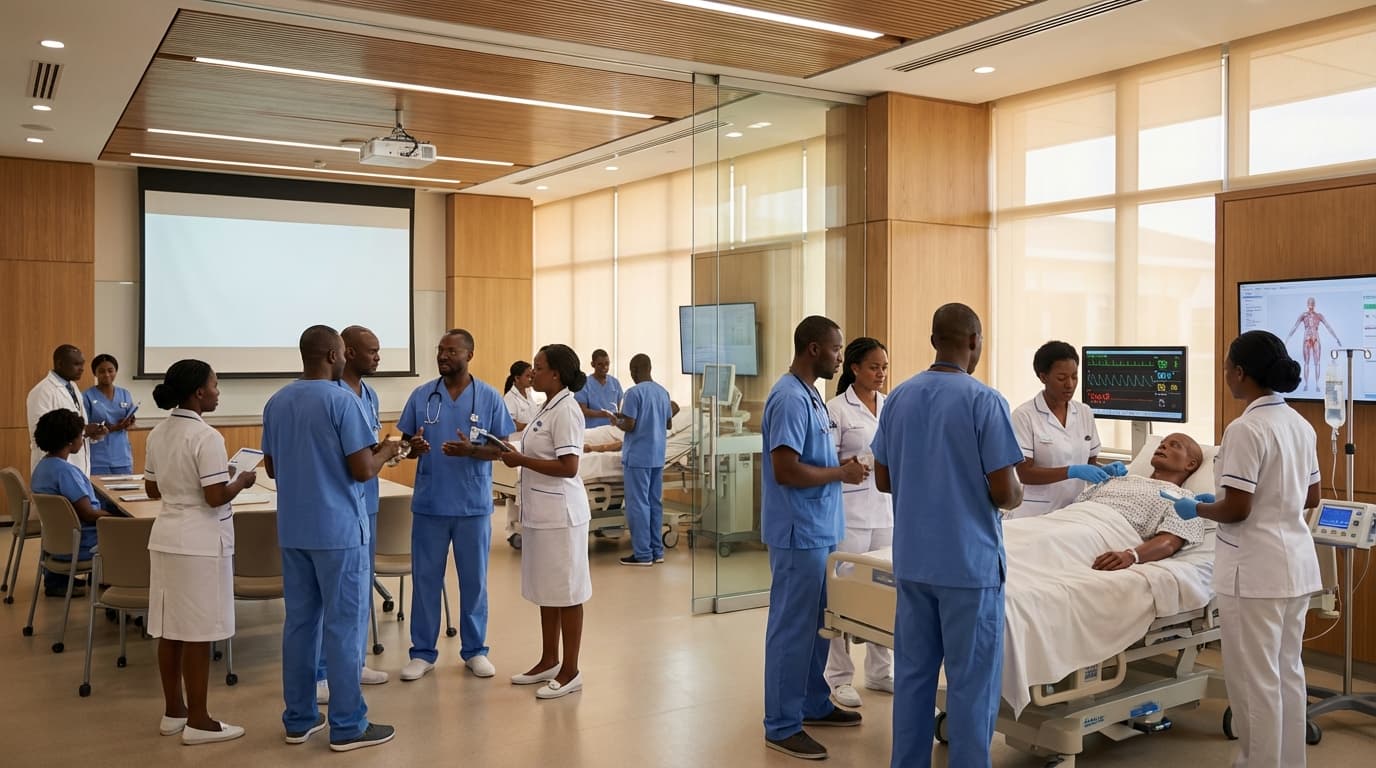
Equipment Training & Education in Kenya
Engineering Excellence & Technical Support
Comprehensive equipment training and certification programs High-standard technical execution following OEM protocols and local regulatory frameworks.
VR-Powered Equipment Simulation
Leveraging immersive Virtual Reality (VR) technology, we offer hands-on simulated training for complex agricultural and industrial equipment, allowing trainees in Kenya to master operation and troubleshooting in a safe, risk-free digital environment before real-world application.
Mobile-First Learning Platform
Our intuitive mobile application provides accessible, on-demand training modules, video tutorials, and interactive quizzes for equipment operation and maintenance, specifically designed for Kenyan technicians and farmers with varying levels of digital literacy and connectivity.
Blended Learning Approach
We combine expert-led virtual and in-person workshops with self-paced digital modules to create a comprehensive training ecosystem. This blended approach ensures that Kenyan learners receive tailored instruction, practical demonstrations, and ongoing support for effective equipment mastery.
What Is Equipment Training & Education In Kenya?
Equipment training and education in Kenya refers to the provision of structured learning programs and practical instruction designed to impart the knowledge, skills, and competencies necessary for the safe, efficient, and effective operation, maintenance, and troubleshooting of specific equipment. This service encompasses both theoretical understanding of equipment principles and hands-on experience with the machinery itself. The objective is to enhance user proficiency, reduce operational risks, prolong equipment lifespan, and optimize productivity within various industrial, agricultural, construction, and service sectors.
| Who Needs Equipment Training & Education? | Typical Use Cases | ||
|---|---|---|---|
| Industrial Operators (Manufacturing, Processing): Machine operators, assembly line workers, quality control personnel. | Manufacturing plants requiring training on CNC machines, automated assembly lines, packaging equipment, and heavy machinery. | Food and beverage processing facilities needing instruction on conveyor systems, filling machines, pasteurizers, and packaging units. | Chemical and pharmaceutical plants for training on reactors, centrifuges, filtration systems, and laboratory equipment. |
| Agricultural Workers (Farming, Agribusiness): Tractor operators, harvesters, irrigation system technicians, farm equipment maintenance staff. | Farms utilizing tractors, combine harvesters, plows, planters, and specialized agricultural machinery. | Large-scale irrigation projects requiring operators and technicians for pumps, sprinklers, and control systems. | Agro-processing units for training on milling, drying, sorting, and packaging machinery. |
| Construction Personnel (Site Workers, Supervisors): Heavy equipment operators (excavators, bulldozers, cranes), site supervisors, safety officers. | Construction sites for operating excavators, loaders, graders, concrete mixers, cranes, and scaffolding systems. | Road construction and infrastructure projects requiring expertise in asphalt pavers, compactors, and tunneling equipment. | Building construction companies for training on lifting equipment, power tools, and safety-critical machinery. |
| Logistics & Transportation Staff (Warehouse, Fleet): Forklift operators, warehouse management personnel, fleet maintenance technicians. | Warehouses and distribution centers for operating forklifts, pallet jacks, and automated storage systems. | Transportation companies for training on fleet vehicles, heavy-duty trucks, and specialized cargo handling equipment. | Port and cargo handling operations for training on container cranes, reach stackers, and straddle carriers. |
| Healthcare Professionals (Medical Equipment Technicians): Biomedical engineers, hospital maintenance staff, specialized medical device operators. | Hospitals and clinics for operating and maintaining diagnostic imaging equipment (MRI, CT scans), surgical robots, and laboratory analyzers. | Medical device manufacturers requiring trained personnel for the installation, maintenance, and operation of their products. | Research institutions utilizing advanced laboratory equipment and analytical instruments. |
| Mining & Extractive Industries: Heavy machinery operators, maintenance engineers, geological surveyors. | Mining operations for training on excavators, haul trucks, drills, crushers, and conveyor systems. | Oil and gas exploration and production sites for operating drilling rigs, pumps, and processing equipment. | Quarries and cement production facilities for managing crushing, grinding, and kiln machinery. |
| Utilities & Energy Sector: Power plant operators, maintenance technicians, field service engineers. | Power generation facilities for operating turbines, boilers, generators, and control systems. | Water treatment and distribution plants for managing pumps, filters, chemical dosing systems, and control panels. | Renewable energy installations (solar farms, wind turbines) requiring specialized operational and maintenance training. |
Key Components of Equipment Training & Education in Kenya
- Theoretical Instruction: Covering equipment design, functionality, operating principles, safety protocols, and regulatory compliance.
- Practical/Hands-on Training: Demonstrations, simulations, and supervised operation of the equipment in realistic scenarios.
- Maintenance & Troubleshooting: Training on routine maintenance procedures, diagnostic techniques, and common fault resolution.
- Safety & Hazard Awareness: Emphasis on identifying and mitigating risks associated with equipment operation, including personal protective equipment (PPE) usage.
- Documentation & Record-Keeping: Training on interpreting manuals, logbooks, and reporting procedures.
- Performance Optimization: Instruction on best practices for maximizing equipment efficiency and output.
- Certification & Assessment: Evaluation of trainee competency through written exams, practical assessments, and issuance of relevant certifications.
Who Needs Equipment Training & Education In Kenya?
In Kenya, comprehensive equipment training and education are crucial for a wide range of individuals and organizations to ensure safe, efficient, and productive operations. This training bridges the gap between having machinery and effectively utilizing it to its full potential, minimizing risks, and maximizing output. Investing in such programs directly contributes to workforce development, economic growth, and the overall advancement of various sectors within the Kenyan economy.
| Target Customer Group | Specific Departments/Roles | Types of Equipment Relevant |
|---|---|---|
| Manufacturing & Industrial Sector | Production Line Operators, Machine Technicians, Maintenance Staff, Quality Control Personnel, Supervisors, Plant Managers | Industrial Machinery (e.g., lathes, milling machines, presses, CNC machines), Assembly Line Equipment, Packaging Machinery, Welding Equipment, Forklifts |
| Construction & Infrastructure Development | Heavy Equipment Operators (e.g., excavators, bulldozers, cranes), Site Supervisors, Engineers, Foremen, Safety Officers, Surveyors | Earthmoving Equipment (excavators, loaders, graders), Cranes, Concrete Mixers, Compaction Equipment, Power Tools, Scaffolding |
| Agriculture & Agribusiness | Tractor Operators, Farm Managers, Agronomists, Mechanization Technicians, Cooperative Leaders | Tractors, Harvesters, Planters, Irrigation Systems, Processing Equipment (e.g., milling machines, drying machines), Drones for agriculture |
| Logistics & Transportation | Warehouse Staff, Forklift Operators, Truck Drivers, Fleet Managers, Customs Officers | Forklifts, Pallet Jacks, Conveyor Systems, Loading Dock Equipment, Vehicle Diagnostic Tools, Cranes (port operations) |
| Energy Sector (including Oil & Gas and Renewables) | Field Technicians, Engineers, Operations Staff, Maintenance Crews, Safety Personnel | Drilling Equipment, Extraction Machinery, Power Generation Equipment (turbines, solar panels, wind turbines), Electrical Testing Equipment, Safety Devices |
| Healthcare & Medical Services | Medical Technicians, Radiologists, Lab Technicians, Biomedical Engineers, Nursing Staff | Diagnostic Imaging Equipment (X-ray, MRI, CT scanners), Laboratory Analyzers, Surgical Equipment, Sterilization Equipment, Ventilators |
| Automotive & Mechanical Services | Mechanics, Technicians, Service Advisors, Fleet Maintenance Staff | Diagnostic Scanners, Lifts, Tire Changing Machines, Engine Repair Tools, Welding Equipment, Automotive Lifts |
| Mining & Extractive Industries | Mine Operators, Equipment Operators, Maintenance Engineers, Safety Officers | Drilling Rigs, Excavators, Loaders, Crushers, Conveyor Systems, Ventilation Systems, Haul Trucks |
| Small & Medium Enterprises (SMEs) | Business Owners, Technicians, Production Staff, Service Providers | Varies widely depending on the specific business; can include specialized machinery, tools, and office equipment |
| Government & Public Service | Public Works Departments, Municipalities, Disaster Management Agencies, Agricultural Extension Services | Road Construction Equipment, Water Treatment Machinery, Waste Management Equipment, Emergency Response Vehicles and Equipment, Agricultural Machinery |
Target Customers and Departments for Equipment Training & Education in Kenya
- Individuals seeking to upskill or gain new competencies for career advancement.
- Companies looking to enhance the skills of their existing workforce.
- Government agencies responsible for public infrastructure and services.
- Non-governmental organizations (NGOs) involved in development projects.
- Educational institutions providing vocational and technical training.
Equipment Training & Education Process In Kenya
The equipment training and education process in Kenya is a multi-stage workflow designed to ensure individuals and organizations gain the necessary knowledge and skills to safely and effectively operate specific equipment. This process typically begins with an initial inquiry from a client, progresses through needs assessment and program design, culminates in the execution of training, and concludes with evaluation and certification. The specific details can vary depending on the type of equipment, the training provider, and the client's requirements, but the core stages remain consistent.
| Stage | Description | Key Activities | Responsible Parties | Typical Outcomes |
|---|---|---|---|---|
| Inquiry & Initial Consultation | The client expresses interest in equipment training. | Client contact, initial discussion of training needs, company introduction. | Client, Training Provider | Understanding of client's general requirements, establishment of initial contact. |
| Needs Assessment & Gap Analysis | Determining the specific training requirements and identifying skill gaps. | Detailed discussion, site visits (if applicable), review of existing documentation, interviews with personnel. | Training Provider, Client | Identification of specific equipment, skill levels of trainees, desired learning outcomes. |
| Program Design & Customization | Developing a tailored training curriculum based on the needs assessment. | Curriculum development, selection of training methodologies (theory, practical, simulation), material creation. | Training Provider | A detailed training plan outlining modules, content, duration, and resources. |
| Quotation & Proposal Submission | Providing a formal offer for the training services. | Costing, scope definition, timeline estimation, proposal document preparation. | Training Provider | A comprehensive proposal detailing costs, deliverables, and terms. |
| Contracting & Agreement | Formalizing the training engagement. | Review and signing of contracts, payment terms, confidentiality agreements. | Client, Training Provider | Legally binding agreement for training services. |
| Scheduling & Logistics | Arranging the practical aspects of the training. | Setting training dates and times, booking venues, arranging equipment, travel, and accommodation (if necessary). | Training Provider, Client | A confirmed training schedule and all logistical arrangements in place. |
| Pre-Training Preparation | Ensuring all prerequisites for effective training are met. | Communicating pre-reading materials, ensuring trainees are available, confirming equipment readiness. | Client, Training Provider | Trainees are informed and ready, training environment is prepared. |
| Training Execution | The delivery of the training program. | Conducting theoretical sessions, practical demonstrations, hands-on exercises, simulations, Q&A sessions. | Training Provider (Instructors), Trainees | Knowledge and skill acquisition by trainees. |
| Assessment & Evaluation | Measuring the effectiveness of the training and trainee comprehension. | Written tests, practical assessments, observation of performance, feedback forms from trainees. | Training Provider, Trainees | Identification of learning achieved and areas for improvement. |
| Certification & Documentation | Issuing formal recognition of successful completion. | Issuing certificates, providing training reports, updating client records. | Training Provider | Proof of training completion and competency for trainees. |
| Post-Training Support & Follow-up | Providing ongoing assistance and reinforcing learning. | Q&A sessions, troubleshooting, refresher courses, performance monitoring, feedback collection. | Training Provider, Client | Sustained proficiency and continuous improvement in equipment operation. |
Key Stages in the Equipment Training & Education Process in Kenya
- Inquiry & Initial Consultation
- Needs Assessment & Gap Analysis
- Program Design & Customization
- Quotation & Proposal Submission
- Contracting & Agreement
- Scheduling & Logistics
- Pre-Training Preparation
- Training Execution
- Assessment & Evaluation
- Certification & Documentation
- Post-Training Support & Follow-up
Equipment Training & Education Cost In Kenya
The cost of equipment training and education in Kenya is highly variable, influenced by several key factors. These include the type and complexity of the equipment, the duration and depth of the training, the reputation and accreditation of the training provider, and the location within Kenya. Specialized or advanced machinery training, such as for heavy construction equipment, medical devices, or advanced manufacturing tools, will naturally command higher prices than basic operational training for common office equipment or simple machinery. The length of the program, from short introductory workshops to comprehensive certification courses, also significantly impacts the overall cost. Furthermore, accredited institutions or those with highly experienced trainers often charge a premium. Geographical location can also play a role, with training centers in major urban areas like Nairobi sometimes having higher overheads, reflected in their pricing, compared to those in smaller towns.
| Training Category | Typical Price Range (KES) | Notes |
|---|---|---|
| Basic Office Equipment (Computers, Printers, Scanners) | 2,000 - 8,000 | Often short workshops, covering basic operation and troubleshooting. |
| General Industrial Machinery (e.g., Basic Lathes, Welding) | 10,000 - 30,000 | Can range from introductory courses to short certification programs. |
| Heavy Construction Equipment (Excavators, Bulldozers, Cranes) | 25,000 - 70,000+ | Usually includes practical sessions and safety training. Costs can vary significantly based on machine type. |
| Medical Equipment (e.g., Diagnostic Machines, Surgical Tools) | 30,000 - 100,000+ | Requires specialized knowledge, often conducted by manufacturers or specialized medical training centers. |
| Advanced Manufacturing & Technology (CNC Machines, Robotics) | 40,000 - 150,000+ | Involves in-depth technical skills and programming, often with industry certifications. |
| Automotive Repair & Diagnostics | 15,000 - 50,000 | Covers various vehicle systems and diagnostic tools. |
| Agricultural Machinery (Tractors, Harvesters) | 10,000 - 40,000 | Focuses on operation, maintenance, and safety. |
Key Pricing Factors for Equipment Training & Education in Kenya
- Equipment Type and Complexity
- Training Duration and Depth
- Provider's Reputation and Accreditation
- Trainer's Experience and Qualifications
- Geographical Location of Training
- Materials and Resources Provided
- Certification and Assessment Fees
Affordable Equipment Training & Education Options
Investing in proper equipment training and education is crucial for safety, efficiency, and productivity. Fortunately, there are numerous affordable options available. Value bundles and smart cost-saving strategies can significantly reduce the financial burden of acquiring these essential skills. This guide explores how to maximize your training investment without breaking the bank.
| Strategy | Description | Benefits | Considerations |
|---|---|---|---|
| Value Bundles | Combining multiple training modules, courses, or certifications into a single package at a discounted price. | Cost savings, streamlined learning path, comprehensive skill development, often includes supplementary materials. | Ensure the bundle aligns with your specific needs and career goals. Review the curriculum carefully. |
| Early Bird Discounts | Registering for courses or workshops well in advance of the start date to receive a reduced fee. | Direct cost reduction, guarantees a spot in popular programs. | Requires planning and commitment. May limit flexibility if plans change. |
| Membership Discounts | Joining industry associations or professional organizations that offer member discounts on training and education. | Access to exclusive content, networking opportunities, and often discounted access to events and resources. | Membership fees need to be factored into the overall cost. Ensure the association's offerings are relevant. |
| Online vs. In-Person | Comparing the costs and benefits of online, self-paced learning versus traditional in-person instruction. | Online training is typically more affordable, flexible, and eliminates travel costs. In-person offers hands-on experience and direct interaction. | Assess the learning style and the practical requirements of the equipment. Some skills may necessitate in-person practice. |
| Government & Non-Profit Programs | Exploring training initiatives funded by government agencies or non-profit organizations, often focused on specific industries or workforce development. | Potentially free or heavily subsidized training, skill enhancement for specific job markets. | Eligibility criteria may apply. Programs can be competitive and have limited availability. |
| Leveraging Existing Staff | Implementing internal training programs or a 'train-the-trainer' model where experienced employees educate new hires. | Significant cost savings by utilizing internal expertise, customized training relevant to company operations. | Requires development of training materials and time commitment from experienced staff. Quality control is essential. |
| Used Equipment & Simulation | For practical training, consider using older or refurbished equipment, or virtual reality (VR)/simulation tools, which are often cheaper than new machinery. | Reduced wear and tear on expensive new equipment, safe learning environment for complex or dangerous operations. | Ensure simulations accurately reflect real-world conditions. Older equipment might not represent the latest technologies. |
| Certification Pathways | Focusing on achieving recognized certifications which can be obtained through a combination of self-study and targeted courses, rather than comprehensive degree programs. | Cost-effective way to demonstrate competence, can be quicker to achieve than formal degrees. | Ensure the certification is valued by employers in your field. Some certifications require ongoing renewal. |
Affordable Equipment Training & Education Options
- Online Courses & E-learning Platforms
- Manufacturer-Specific Training
- Community Colleges & Vocational Schools
- Apprenticeship Programs
- Industry Association Workshops
- On-the-Job Training (OJT) & Mentorship
- Train-the-Trainer Programs
- Government Grants & Subsidies
- Group Discounts & Bulk Purchases
Verified Providers In Kenya
In Kenya's rapidly evolving healthcare landscape, identifying trustworthy and competent healthcare providers is paramount. Franance Health stands out as a premier network, distinguished by its rigorous credentialing process and commitment to delivering high-quality patient care. This commitment ensures that all Franance Health providers meet stringent standards, offering patients peace of mind and access to reliable medical expertise. Understanding what makes a provider 'verified' and why Franance Health's approach is superior is crucial for making informed healthcare decisions.
| Provider Type | Franance Health Standard | Benefits for Patients |
|---|---|---|
| Doctors (General Practitioners & Specialists) | Verified medical license, MBChB/MD degree, relevant postgraduate qualifications and certifications, minimum years of experience. | Accurate diagnosis, effective treatment plans, access to specialized care, confidence in medical expertise. |
| Nurses (Registered & Enrolled) | Valid nursing council registration, relevant nursing diploma/degree, proof of continuous professional development. | Compassionate care, effective patient management, administration of treatments and medications, vital patient monitoring. |
| Pharmacists | Registered pharmacist license, Bachelor of Pharmacy degree, demonstrated knowledge of drug interactions and dispensing practices. | Safe and accurate dispensing of medications, expert advice on drug usage and side effects, pharmaceutical care. |
| Diagnostic Laboratories | Accredited by relevant national and international bodies (e.g., KENAS), certified laboratory technologists, adherence to quality control standards. | Reliable and accurate test results, timely diagnosis, informed treatment decisions, reduced risk of misdiagnosis. |
| Hospitals & Clinics | Compliance with Ministry of Health regulations, appropriate infrastructure and equipment, qualified medical and support staff, adherence to patient safety protocols. | Comprehensive medical services, safe treatment environments, access to advanced medical technology, coordinated care. |
Key Components of Franance Health's Provider Verification Process
- Licensure and Registration: Ensuring all practitioners hold valid and current licenses from relevant medical boards and regulatory bodies in Kenya.
- Education and Training: Verifying the authenticity and adequacy of academic qualifications, including degrees, diplomas, and specialized training.
- Professional Experience: Assessing the practical experience of providers, often including a review of their work history and previous roles.
- Specialty Certifications: Confirming any specialized accreditations or certifications a provider holds in their area of practice.
- Background Checks: Conducting thorough checks to ensure a clean professional record and ethical standing.
- Peer Review: In some cases, incorporating feedback or assessments from other reputable medical professionals.
- Continuous Professional Development (CPD): Requiring providers to demonstrate ongoing learning and commitment to staying updated with medical advancements.
Scope Of Work For Equipment Training & Education
This Scope of Work (SOW) outlines the requirements for comprehensive training and educational services for specified equipment. The objective is to ensure personnel are proficient in the safe, efficient, and effective operation, maintenance, and troubleshooting of the provided equipment. This includes both theoretical knowledge and practical application, tailored to different user groups and skill levels.
| Deliverable | Description | Standard Specification | Acceptance Criteria |
|---|---|---|---|
| Training Curriculum Development | Design of modular training content, including lesson plans, presentations, and practical exercises. | Curriculum shall be modular, role-based, and cover all specified equipment functions and safety procedures. | Approved curriculum outline and detailed lesson plans submitted and signed off by the client. |
| Training Materials (Participant) | Handbooks, manuals, quick reference guides, and any other materials provided to trainees. | Materials shall be clear, concise, accurate, and presented in a user-friendly format (e.g., digital or printed). Language shall be appropriate for the target audience. | Participant materials reviewed and approved by the client prior to delivery. All materials shall be delivered in the agreed format and quantity. |
| Training Delivery (Instructor-Led) | On-site or remote delivery of theoretical and practical training sessions by qualified instructors. | Instructor-led sessions shall be interactive, engaging, and facilitated by subject matter experts with proven training experience. Session duration and frequency to be agreed upon. | Completion of all scheduled training sessions. Trainee attendance records maintained. Post-training feedback surveys collected and analyzed. |
| Hands-on Practical Sessions | Supervised practical exercises using the actual equipment or representative simulators. | Practical sessions shall simulate real-world operational scenarios, including setup, operation, calibration, and basic troubleshooting. Safety protocols must be strictly enforced. | Demonstrated proficiency by trainees in performing key operational and maintenance tasks. Instructor observation and assessment records maintained. |
| Competency Assessment | Evaluation of trainee understanding and practical skills through tests, quizzes, and practical demonstrations. | Assessment methods shall objectively measure comprehension of theoretical concepts and ability to perform practical tasks. A minimum passing score shall be defined. | All trainees successfully complete the competency assessment. Assessment reports provided to the client. |
| Training Report | Comprehensive report summarizing training activities, attendance, performance, and feedback. | Report shall include details on training conducted, number of participants, assessment results, identified areas for improvement, and client feedback. | Final training report submitted to the client within [X] business days of training completion and accepted. |
| Post-Training Support (Optional) | Provision of limited support after training completion for clarifying queries or addressing minor issues. | Support shall be provided via email or designated communication channel within a defined response time. Scope of support to be clearly defined. | Number of support requests addressed within the agreed SLA. Client satisfaction with support provided. |
Training & Education Objectives
- Develop and deliver customized training programs aligned with equipment functionality and operational procedures.
- Provide hands-on practical training sessions covering operation, calibration, routine maintenance, and basic troubleshooting.
- Equip trainees with the knowledge to identify and report potential issues or malfunctions.
- Ensure adherence to all safety protocols and guidelines during operation and maintenance.
- Offer documentation and reference materials for ongoing learning and support.
- Assess trainee competency through practical exercises and knowledge checks.
- Provide post-training support and refresher courses as required.
Service Level Agreement For Equipment Training & Education
This Service Level Agreement (SLA) outlines the guaranteed response times and uptime for the provision of Equipment Training & Education services. It is designed to ensure timely and effective learning experiences for all users.
| Service Component | Uptime Guarantee | Response Time (Standard Support) | Response Time (Emergency Support) | Notes |
|---|---|---|---|---|
| Online Training Platform (Access & Navigation) | 99.5% uptime | Within 4 business hours | Within 1 business hour | Excludes scheduled maintenance, which will be communicated 48 hours in advance. |
| Access to On-Demand Training Materials | 99.8% uptime | Within 8 business hours | Within 4 business hours | Content availability is critical. |
| Scheduled Instructor-Led Training Sessions (Virtual) | 99.0% uptime | Within 2 business hours (for scheduling/rescheduling requests) | Within 1 business hour (for critical session disruption) | Ensures instructors and platforms are ready for scheduled sessions. |
| Technical Support for Training Delivery | N/A (Focus on response time) | Within 2 business hours | Within 1 business hour | Applies to issues preventing a training session from starting or continuing. |
| Request for New Training Material Development/Customization | N/A (Focus on response time) | Within 24 business hours | N/A | Initial acknowledgement and scope discussion. |
Definitions
- Training Session: A scheduled or on-demand session where an instructor delivers education or guidance on specific equipment.
- Uptime: The percentage of time the training platform, resources, and scheduled sessions are available and operational.
- Response Time: The maximum duration between a user's request (e.g., for support, scheduling, or information) and the initial acknowledgement or resolution by the training provider.
- Downtime: The period during which the training platform, resources, or scheduled sessions are unavailable or not operational.
- Scheduled Training: Pre-arranged training sessions with fixed dates and times.
- On-Demand Training: Training materials or sessions that can be accessed and completed by users at their convenience.
- Emergency Support: Critical issues requiring immediate attention that impact a user's ability to participate in or benefit from training.
Frequently Asked Questions

Ready when you are
Let's scope your Equipment Training & Education in Kenya project in Kenya.

Scaling healthcare logistics and technical systems across the entire continent.