
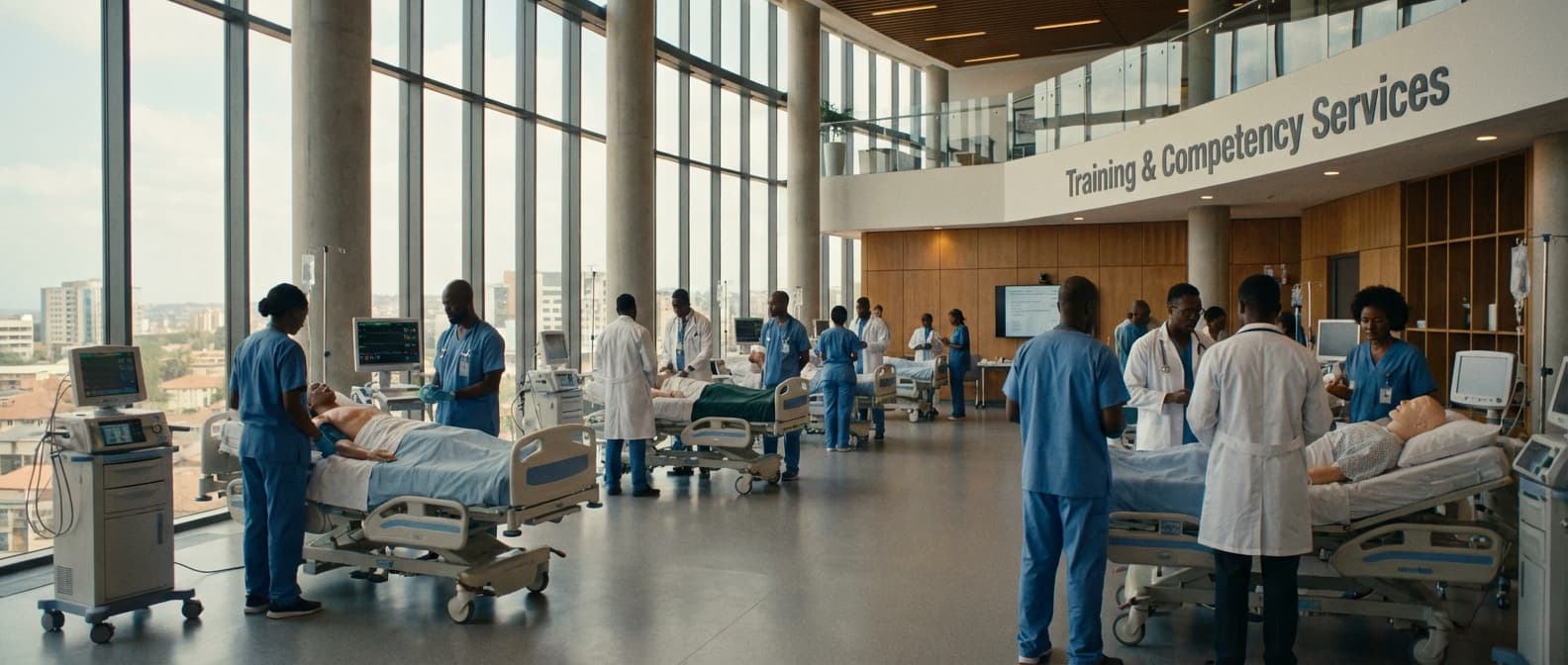
Ultrasound Application Training Service (Protocol-Based) in Kenya
Engineering Excellence & Technical Support
Ultrasound Application Training Service (Protocol-Based) High-standard technical execution following OEM protocols and local regulatory frameworks.
Standardized Protocol Training
Master ultrasound scanning techniques with our comprehensive, protocol-driven training. Learn to perform standardized examinations consistently, ensuring accurate and reproducible results critical for diagnostics in Kenyan healthcare settings.
Expert-Led & Culturally Relevant
Benefit from training delivered by experienced sonographers and clinicians with a deep understanding of Kenyan healthcare needs. Our curriculum is tailored to address common pathologies and equipment available locally.
Competency-Based Assessment
Gain confidence in your ultrasound skills through rigorous, competency-based assessments. We ensure trainees meet recognized standards, empowering them to provide high-quality ultrasound services across Kenya.
What Is Ultrasound Application Training Service (Protocol-based) In Kenya?
Ultrasound Application Training Service (Protocol-Based) in Kenya refers to specialized educational programs designed to impart comprehensive knowledge and practical skills in the utilization of diagnostic ultrasound imaging across various medical specialties. This training adheres to established imaging protocols, ensuring standardized, reproducible, and diagnostically accurate ultrasound examinations. The service focuses on educating healthcare professionals on the principles of ultrasound physics, machine operation, image acquisition techniques, artifact recognition, and interpretation within specific clinical contexts. It emphasizes the systematic approach mandated by standardized protocols to achieve consistent diagnostic outcomes. The training can be delivered through a combination of didactic lectures, hands-on scanning sessions with phantoms and/or supervised real-patient examinations, case study reviews, and competency assessments.
| Target Audience | Rationale for Training | Typical Use Cases/Applications |
|---|---|---|
| Radiologists and Radiology Residents | To develop comprehensive diagnostic ultrasound skills, including advanced applications, and to ensure adherence to standardized protocols for accurate interpretation and reporting. | Abdominal ultrasound, Pelvic ultrasound (transabdominal and transvaginal), Thyroid and breast ultrasound, Musculoskeletal ultrasound, Vascular ultrasound (carotid, peripheral arteries/veins), Small parts imaging. |
| Obstetricians and Gynecologists | To equip them with the skills to perform and interpret routine and specialized obstetric and gynecological ultrasound examinations for antenatal care, fetal assessment, and gynecological diagnostics. | First-trimester screening, Anatomy scan, Fetal growth monitoring, Amniocentesis guidance, Pelvic mass evaluation, Uterine and ovarian pathology assessment, Transvaginal ultrasound for fertility assessment. |
| Cardiologists and Cardiology Fellows | To enable the performance of echocardiography for the assessment of cardiac structure, function, and hemodynamic abnormalities. | Transthoracic echocardiography (TTE), Transesophageal echocardiography (TEE), Doppler echocardiography for valve assessment, Stress echocardiography. |
| Emergency Medicine Physicians | To train in point-of-care ultrasound (POCUS) for rapid diagnosis and procedural guidance in emergency settings. | FAST exam (Focused Assessment with Sonography for Trauma), E-FAST exam, Cardiac POCUS, Lung POCUS, Evaluation of abdominal pain, Evaluation of suspected DVT. |
| Anesthesiologists | To enhance skills in regional anesthesia and vascular access using ultrasound guidance. | Nerve block guidance (e.g., peripheral nerve blocks), Central venous catheter placement, Arterial line placement. |
| General Practitioners and Other Specialists (e.g., Pediatricians, Physiotherapists) | To introduce basic ultrasound applications relevant to their practice or to provide advanced training in specific niches. | Basic abdominal scans, Superficial lesion assessment, Musculoskeletal applications (depending on specialization). |
| Ultrasound Technicians/Sonographers | To ensure they possess the foundational knowledge and practical skills to perform diagnostic ultrasound examinations accurately and efficiently, following established protocols. | All standard diagnostic ultrasound examinations across various specialties. |
Key Components of Ultrasound Application Training Service (Protocol-Based)
- Protocol Standardization: Training aligns with national and international best-practice ultrasound imaging protocols for various anatomical regions and clinical scenarios.
- Physics and Instrumentation: In-depth understanding of ultrasound wave generation, propagation, interaction with tissues, Doppler principles, and optimization of machine parameters.
- Image Acquisition Techniques: Mastery of transducer manipulation, probe selection, scanning planes, and anatomical landmark identification for optimal image capture.
- Artifact Recognition and Management: Identification of common ultrasound artifacts and strategies for their minimization or differentiation from true pathology.
- Pathology Recognition and Interpretation: Training on the sonographic appearance of a wide spectrum of normal and pathological conditions relevant to specific applications.
- Hands-on Scanning Proficiency: Extensive practical sessions to develop psychomotor skills and confidence in performing examinations.
- Clinical Correlation: Emphasis on integrating ultrasound findings with patient history, physical examination, and other diagnostic modalities.
- Quality Assurance and Safety: Understanding of radiation safety, infection control, and quality improvement measures in ultrasound practice.
- Reporting and Documentation: Training on accurate and concise medical reporting of ultrasound findings.
Who Needs Ultrasound Application Training Service (Protocol-based) In Kenya?
In Kenya, ultrasound application training services that are protocol-based are essential for a wide range of healthcare professionals and institutions seeking to enhance their diagnostic capabilities and patient care. This specialized training ensures consistent, accurate, and evidence-based ultrasound examinations across various medical specialties. The demand is driven by the need for standardized practices, improved diagnostic accuracy, and the efficient utilization of ultrasound technology. This training is particularly crucial for those working in settings where ultrasound is a primary diagnostic tool or where there's a drive to elevate the quality of imaging services.
| Target Customer Type | Specific Departments/Roles | Rationale for Training Needs |
|---|---|---|
| Hospitals (Public & Private) | Radiology Department, Obstetrics & Gynecology, Cardiology, Emergency Department, Intensive Care Unit (ICU), Pediatrics, General Surgery, Internal Medicine | To ensure standardized diagnostic protocols, improve interpretation accuracy, enhance patient throughput, and provide specialized imaging for various patient populations and conditions. |
| Maternity Homes & Clinics | Obstetricians, Gynecologists, Midwives, Clinical Officers | To provide essential antenatal screening, monitor fetal well-being, and identify potential obstetric complications using standardized protocols for safety and efficacy. |
| Diagnostic Imaging Centers | Sonographers, Radiologists | To maintain high standards of diagnostic imaging, offer specialized ultrasound services, and ensure compliance with evolving best practices and protocols. |
| Medical Training Institutions | Faculty, Medical Students, Resident Doctors | To integrate practical, protocol-driven ultrasound training into the medical curriculum, equipping future healthcare professionals with essential diagnostic skills. |
| Emergency & Critical Care Settings | Emergency Physicians, Critical Care Physicians, Nurses | To facilitate rapid, bedside diagnosis and management of critical conditions using Point-of-Care Ultrasound (POCUS) adhering to established protocols. |
| Specialty Clinics (e.g., Cardiology, Gastroenterology) | Cardiologists, Gastroenterologists | To provide specialized cardiac (echocardiography) and abdominal/pelvic ultrasound examinations based on specific clinical protocols for accurate diagnosis and treatment planning. |
| NGOs & Public Health Initiatives | Healthcare Workers in underserved areas | To build capacity for essential diagnostic imaging services in remote or resource-limited settings, ensuring that ultrasound applications follow established protocols for quality assurance. |
Target Customers for Ultrasound Application Training Service (Protocol-Based) in Kenya
- Radiologists and Radiology Residents
- Sonographers (Diagnostic Medical)
- Physicians across various specialties (e.g., Internal Medicine, Cardiology, Obstetrics & Gynecology, Emergency Medicine, Pediatrics, Critical Care)
- Medical Officers and General Practitioners
- Nurses (especially those in specialized roles like critical care or emergency departments)
- Paramedics and Pre-hospital Care Providers (for point-of-care ultrasound)
- Medical Training Institutions and Universities (for curriculum enhancement)
- Public and Private Hospitals (including Level 2, 3, 4, and Referral Hospitals)
- Maternity Homes and Clinics
- Diagnostic Imaging Centers and Private Practices
- Non-Governmental Organizations (NGOs) involved in healthcare delivery
- Government Health Ministries and Agencies (for standardization and capacity building)
Ultrasound Application Training Service (Protocol-based) Process In Kenya
This document outlines the typical workflow for an Ultrasound Application Training Service (Protocol-Based) in Kenya, from initial inquiry to the successful execution and completion of the training. This process is designed to ensure that clients receive tailored, effective, and standardized ultrasound training aligned with established protocols.
| Stage | Key Activities | Responsible Party | Deliverables/Outcomes | Timeframe (Typical) |
|---|---|---|---|---|
| Client Inquiry & Needs Assessment | Potential client contacts the training provider to express interest. Detailed discussion to understand specific ultrasound applications, target audience, existing knowledge levels, desired learning outcomes, and any specific protocols to be followed. Inquiry can be via phone, email, or website form. | Client, Training Provider Sales/Consultant | Clear understanding of training needs, scope, and objectives. Initial assessment of suitability for protocol-based training. | 1-3 Days |
| Proposal Development & Quotation | Based on the needs assessment, the training provider develops a comprehensive proposal. This includes the training curriculum (aligned with specific protocols), methodology, trainer profiles, venue/online platform details, duration, schedule, and a detailed quotation. | Training Provider (Technical & Sales Team) | Detailed Training Proposal, Formal Quotation | 3-7 Days |
| Agreement & Contract Finalization | Client reviews the proposal and quotation. Negotiation on terms, pricing, and dates. Upon agreement, a formal training contract or service agreement is drafted, signed by both parties, outlining all terms and conditions. | Client, Training Provider Legal/Admin Team | Signed Training Contract/Service Agreement, Payment Schedule | 2-5 Days |
| Pre-Training Preparation | Logistics are confirmed (venue booking, travel, accommodation if applicable). Training materials (presentations, case studies, protocol documents, simulators if used) are prepared and disseminated to participants (if pre-reading is required). Technical setup for online or in-person training is confirmed. | Training Provider (Logistics & Technical Team), Client (Participant List & Access) | Confirmed Logistics, Prepared Training Materials, Access to Training Platform/Venue | 1-2 Weeks (prior to training) |
| Training Execution | The protocol-based training is delivered. This includes theoretical sessions explaining the protocols, practical demonstrations (on phantom models or potentially real patients under supervision), hands-on scanning practice, case study discussions, and interactive Q&A sessions. Adherence to the agreed-upon protocols is paramount. | Lead Trainer, Assistant Trainers, Participants | Delivered Training Sessions, Hands-on Practice, Protocol Application | Duration varies based on scope (e.g., 2 days to 2 weeks) |
| Post-Training Evaluation & Support | Participants complete post-training assessments (e.g., knowledge tests, practical skill evaluations). Feedback forms are collected from participants and potentially their supervisors. The training provider offers post-training support, which may include access to online resources, follow-up Q&A sessions, or remote guidance. | Training Provider (Evaluators & Support Team), Participants | Completed Assessments, Feedback Reports, Post-Training Support Plan | 1-2 Weeks (post-training) |
| Certification & Documentation | Upon successful completion of the training and assessments, participants receive a certificate of completion. The training provider furnishes a final report to the client, summarizing the training delivered, participant performance, and any recommendations. Invoices are finalized and settled. | Training Provider (Admin & Certification Team), Client | Certificates of Completion, Final Training Report, Final Invoices | 1-2 Weeks (post-evaluation) |
Ultrasound Application Training Service (Protocol-Based) Workflow in Kenya
- Client Inquiry & Needs Assessment
- Proposal Development & Quotation
- Agreement & Contract Finalization
- Pre-Training Preparation
- Training Execution
- Post-Training Evaluation & Support
- Certification & Documentation
Ultrasound Application Training Service (Protocol-based) Cost In Kenya
Understanding the cost of Ultrasound Application Training Services (Protocol-Based) in Kenya requires a deep dive into various influencing factors. These services are crucial for healthcare professionals seeking to enhance their diagnostic skills in specific ultrasound applications. The pricing is not standardized and can fluctuate significantly based on the training provider, the depth and breadth of the protocol covered, the duration of the training, and the location within Kenya. Generally, expect costs to be presented in Kenyan Shillings (KES).
| Training Type/Scope | Estimated Cost Range (KES) | Notes |
|---|---|---|
| Basic Abdominal/Obstetric Ultrasound Protocol Training (2-3 Days) | KES 25,000 - KES 60,000 | Covers fundamental protocols, limited hands-on. Often offered by smaller training centers. |
| Intermediate General Ultrasound Application Training (e.g., Vascular, Breast - 3-5 Days) | KES 40,000 - KES 90,000 | More in-depth protocols, increased supervised practice. May include simulation. |
| Advanced/Specialized Ultrasound Application Training (e.g., Fetal Echo, Interventional - 5+ Days) | KES 70,000 - KES 150,000+ | Highly specialized protocols, extensive hands-on, expert trainers, advanced equipment. May include case studies and competency assessments. |
| Customized Protocol Training (Variable Duration) | Custom Quote Required | Tailored to specific institutional needs, can vary significantly based on complexity and duration. |
| Certification-Focused Training | KES 80,000 - KES 200,000+ | Includes comprehensive curriculum, rigorous assessment, and often leads to internationally recognized certifications. |
Key Pricing Factors for Ultrasound Application Training (Protocol-Based) in Kenya:
- Training Provider Reputation and Expertise: Well-established institutions or renowned sonographers with proven track records and advanced accreditations often command higher fees.
- Specific Ultrasound Application: Training in highly specialized areas like fetal echocardiography, interventional ultrasound, or advanced musculoskeletal ultrasound will typically be more expensive than general abdominal or obstetric training.
- Duration and Intensity of Training: Longer, more intensive courses with more hands-on practice sessions will naturally cost more. This can range from a few days to several weeks.
- Hands-on Practice and Simulation: The availability and quality of hands-on practice with real patients or high-fidelity simulation equipment significantly impact cost. More supervised practice generally means higher fees.
- Certification and Accreditation: Training leading to recognized certifications or accreditation from professional bodies will often have a higher price point due to the rigor involved.
- Training Location and Logistics: Training delivered at premium facilities, or requiring travel and accommodation for trainers or participants, will increase the overall cost.
- Training Materials and Resources: The provision of comprehensive training manuals, digital resources, and access to online learning platforms can influence the pricing.
- Trainer-to-Participant Ratio: A lower ratio ensures more personalized attention and supervision, which is a premium service and thus more costly.
- Group vs. Individual Training: Group training sessions are usually more cost-effective per participant than one-on-one or small private group training.
- Customization of Protocols: If the training needs to be tailored to very specific hospital protocols or unique clinical scenarios, this bespoke service will be priced higher.
Affordable Ultrasound Application Training Service (Protocol-based) Options
Our Affordable Ultrasound Application Training Service provides comprehensive, protocol-based instruction designed to equip healthcare professionals with the essential skills for effective ultrasound utilization. We understand the financial constraints faced by many institutions and individuals, which is why we offer flexible value bundles and cost-saving strategies to make high-quality training accessible. Our program focuses on adherence to standardized protocols, ensuring consistent and reliable diagnostic accuracy. We aim to empower practitioners with the confidence and proficiency needed to integrate ultrasound seamlessly into their daily workflows.
| Value Bundle Name | Description | Includes | Cost Savings Strategy | Price Range (Illustrative) |
|---|---|---|---|---|
| Foundational Ultrasound Skills Bundle | Essential training for entry-level practitioners or those new to specific ultrasound applications. | Core ultrasound physics, knobology, basic protocols (e.g., Abdominal, OB/GYN basics), simulation time. | Bulk purchase discounts for multiple attendees from the same institution; early bird registration savings. | $500 - $1200 per participant |
| Specialty Application Bundle | In-depth training on advanced protocols for specific medical specialties. | Advanced protocols (e.g., Vascular, Echocardiography, Musculoskeletal), specialized case reviews, advanced hands-on practice. | Tiered pricing based on specialization complexity; bundled access to online learning resources. | $800 - $2000 per participant |
| Comprehensive Protocol Mastery Bundle | A complete training package covering multiple ultrasound applications and advanced skill development. | All modules from Foundational and one Specialty Bundle, personalized feedback sessions, simulation suite access. | Significant discount compared to purchasing individual bundles; loyalty program for repeat clients. | $1500 - $3500 per participant |
| Team Training & On-Site Optimization | Customizable training programs delivered directly at your facility, tailored to your specific equipment and workflow. | On-site instruction, protocol customization, staff skill assessment, implementation support. | Reduced travel costs for participants; potential for discounted rates based on team size and training duration. | Custom Quote (Variable) |
Key Features of Our Training Service
- Protocol-Driven Curriculum: All training modules are structured around established, evidence-based ultrasound protocols for various applications.
- Hands-On Practical Sessions: Extensive simulation and supervised scanning opportunities to build practical scanning proficiency.
- Expert Instruction: Delivered by experienced and certified sonographers and/or radiologists.
- Flexible Learning Formats: Options include on-site, remote live, and self-paced modules to suit diverse needs.
- Case Study Analysis: Real-world scenarios to enhance diagnostic interpretation skills.
- Post-Training Support: Access to resources and Q&A sessions for continued learning and skill refinement.
Verified Providers In Kenya
In Kenya's dynamic healthcare landscape, identifying and trusting verified providers is paramount for ensuring quality care and peace of mind. Franance Health stands out as a leader, meticulously vetting its network of healthcare professionals and facilities to guarantee adherence to the highest standards. Their commitment to rigorous credentialing processes means that when you choose a Franance Health-affiliated provider, you're opting for expertise, reliability, and a patient-centered approach.
| Credential Type | Franance Health Verification Process | Patient Benefit |
|---|---|---|
| Medical Licenses | Verification of current and valid professional licenses from relevant regulatory bodies (e.g., KMPDC). | Ensures providers are legally authorized to practice medicine. |
| Clinical Expertise | Review of qualifications, specialized training, and demonstrated experience in their field. | Guarantees access to skilled and knowledgeable healthcare professionals. |
| Facility Standards | Assessment of infrastructure, equipment, sanitation, and adherence to safety protocols for healthcare facilities. | Provides a safe and well-equipped environment for treatment. |
| Reputation and Patient Feedback | Collection and analysis of patient testimonials and satisfaction data. | Indicates a commitment to positive patient experiences and high-quality care. |
| Continuous Professional Development | Confirmation of ongoing training and participation in medical education programs. | Ensures providers stay updated with the latest medical advancements and best practices. |
Why Franance Health Providers are the Best Choice in Kenya
- Uncompromising Quality Standards: Franance Health implements a stringent vetting process that goes beyond basic licensing, assessing clinical expertise, facility infrastructure, and patient care protocols.
- Experienced and Qualified Professionals: All healthcare providers within the Franance Health network are thoroughly screened for their qualifications, experience, and commitment to continuous professional development.
- Patient-Centric Care: Franance Health emphasizes providers who prioritize patient well-being, communication, and personalized treatment plans.
- Accessibility and Convenience: Their network is designed to offer convenient access to a wide range of medical services across Kenya.
- Transparency and Trust: Franance Health's verification process builds trust by ensuring that patients are receiving care from legitimate and competent healthcare professionals.
- Commitment to Ethical Practices: Providers are expected to uphold the highest ethical standards in their medical practice and patient interactions.
- Continuous Monitoring and Improvement: Franance Health maintains ongoing oversight of its network to ensure sustained quality and address any emerging concerns.
Scope Of Work For Ultrasound Application Training Service (Protocol-based)
This document outlines the Scope of Work (SOW) for providing protocol-based Ultrasound Application Training services. The training will focus on specific ultrasound examination protocols, ensuring standardized image acquisition and interpretation skills for participants. This SOW details the technical deliverables and standard specifications for the training program.
| Phase | Activity | Deliverables | Standard Specifications/Requirements |
|---|---|---|---|
| Needs Assessment & Protocol Selection | Selected Ultrasound Protocols (e.g., Abdominal, Cardiac, OB/GYN, Vascular) | Protocols must be evidence-based, current, and relevant to the target audience's practice. Documented evidence of protocol source is required. |
| Curriculum Development | Detailed Training Curriculum (Module breakdown, learning objectives per module) | Curriculum must align with selected protocols, covering theoretical concepts, practical scanning techniques, and case studies. Minimum duration per protocol module to be specified. |
| Training Material Development | Training Manuals (Digital/Print) | Manuals must be clear, concise, and visually rich with high-quality anatomical diagrams and sample ultrasound images. Include protocol checklists and interpretation guides. |
| Training Material Development | Presentation Slides | Slides should visually support the curriculum, using professional graphics and relevant ultrasound images/videos. |
| Training Material Development | Case Study Library | A curated collection of diverse case studies with corresponding ultrasound images/videos, demonstrating normal and pathological findings relevant to each protocol. |
| Theoretical Instruction | Interactive Lectures/Webinars | Delivery via qualified and experienced sonographers/physicians. Engagement strategies (Q&A, polls) to be employed. Session recordings available for review. |
| Practical Scanning Sessions | Hands-on Supervised Scanning | Adequate number of ultrasound machines per participant ratio (e.g., 1:2 or 1:3). Real-time feedback and guidance on probe manipulation, machine optimization, and image acquisition as per protocols. |
| Practical Scanning Sessions | Simulation-Based Training (Optional) | Access to high-fidelity ultrasound simulators for practicing specific maneuvers and protocols in a safe environment. |
| Image Review & Feedback | Individualized Image Review Sessions | Review of participant-acquired images and videos against protocol requirements and best practices. Constructive feedback provided. |
| Competency Assessment (Formative) | Quizzes/Short Assessments per Module | To gauge understanding of theoretical concepts and protocol details. |
| Competency Assessment (Summative) | Practical Scanning Assessment | Participants demonstrate proficiency in acquiring images according to selected protocols on a standardized phantom or live model. Assessed using a defined checklist. |
| Competency Assessment (Summative) | Case Study Interpretation Assessment | Participants analyze provided case studies and interpret ultrasound findings based on protocol knowledge. |
| Participant Feedback | Post-Training Evaluation Forms | To gather feedback on training content, delivery, instructors, and overall effectiveness. |
| Knowledge Reinforcement | Access to Online Resources (e.g., recorded lectures, protocol guides, Q&A forum) | Resources available for a defined period (e.g., 3-6 months) post-training. |
| Ongoing Support | Limited Remote Support (e.g., email queries for protocol clarification) | Defined response times for queries (e.g., 2 business days). |
Training Program Objectives
- To equip participants with standardized image acquisition techniques based on established ultrasound protocols.
- To enhance participants' understanding of anatomical structures and their sonographic appearance within defined protocols.
- To improve participants' ability to identify key pathological findings relevant to specific ultrasound applications.
- To foster proficiency in optimizing ultrasound machine settings for specific protocols.
- To ensure consistent and reproducible ultrasound examinations across different operators and equipment.
Service Level Agreement For Ultrasound Application Training Service (Protocol-based)
This Service Level Agreement (SLA) outlines the service commitments for the Ultrasound Application Training Service, specifically for protocol-based training. It defines the expected response times for support requests and the guaranteed uptime for the training platform.
| Service Component | Service Level Objective (SLO) | Measurement Period | Remedy for Failure |
|---|---|---|---|
| Critical Support Tickets (e.g., platform inaccessible, critical training functionality broken) | Acknowledge within 1 hour, provide initial diagnosis and workaround/resolution plan within 4 business hours | 24x7x365 | 10% service credit for the monthly subscription fee per occurrence |
| High Priority Support Tickets (e.g., significant training module not loading, user unable to complete a key task) | Acknowledge within 2 business hours, provide initial diagnosis and workaround/resolution plan within 8 business hours | 24x7x365 | 5% service credit for the monthly subscription fee per occurrence |
| Medium Priority Support Tickets (e.g., minor display issues, feature request clarification) | Acknowledge within 4 business hours, provide initial diagnosis and resolution plan within 24 business hours | Business Hours (Monday-Friday, 9 AM - 5 PM local time) | 2% service credit for the monthly subscription fee per occurrence |
| Low Priority Support Tickets (e.g., general inquiries, feature feedback) | Acknowledge within 1 business day, provide resolution or update within 3 business days | Business Hours (Monday-Friday, 9 AM - 5 PM local time) | No service credit, but commitment to timely resolution |
| Ultrasound Training Platform Uptime | 99.5% uptime, excluding scheduled maintenance | Monthly | For any calendar month where uptime falls below 99.5% (and is not due to Excluded Events): 5% service credit for the monthly subscription fee for each full 0.5% reduction in uptime below 99.5% |
| Scheduled Maintenance | Announced at least 7 days in advance, performed during off-peak hours (e.g., weekends, overnight) | As needed | Not applicable (considered planned downtime) |
| Training Session Availability (for scheduled virtual sessions) | 99.9% availability of the virtual meeting platform used for training | Per scheduled session | If a scheduled training session is canceled by the provider due to platform issues with less than 24 hours' notice, the session will be rescheduled at no additional cost, or a pro-rata refund for the affected session will be provided. |
Key Performance Indicators (KPIs)
- Response Times for Support Tickets
- Platform Uptime Guarantee
- Training Session Availability
Frequently Asked Questions

Ready when you are
Let's scope your Ultrasound Application Training Service (Protocol-Based) in Kenya project in Kenya.

Scaling healthcare logistics and technical systems across the entire continent.