
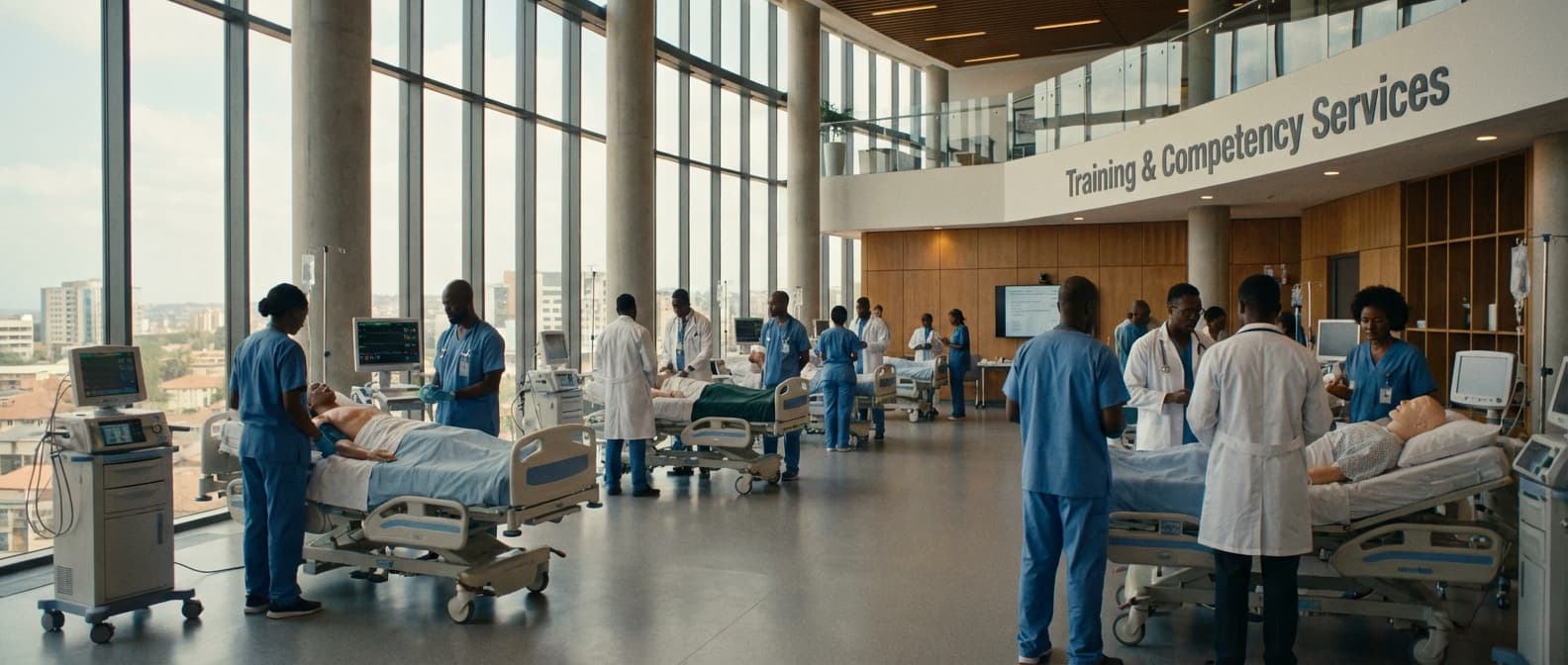
MRI Operator Training Service (Radiographers) in Kenya
Engineering Excellence & Technical Support
MRI Operator Training Service (Radiographers) High-standard technical execution following OEM protocols and local regulatory frameworks.
Advanced MRI Imaging Techniques Mastery
Gain proficiency in cutting-edge MRI pulse sequences and contrast administration protocols. Our training equips radiographers in Kenya with the skills to optimize image quality for accurate diagnosis, reduce scan times, and minimize artifacts, ensuring superior patient care and diagnostic confidence.
Comprehensive Patient Safety & MRI Physics
Deepen your understanding of MRI safety zones, contraindications, and emergency management. This module covers essential MRI physics principles, enabling radiographers to safely operate advanced MRI equipment, mitigate risks, and ensure the well-being of every patient in Kenya's healthcare settings.
Optimized MRI Workflow & Reporting Protocols
Streamline your MRI department's operations with best practices in patient scheduling, protocol selection, and efficient image acquisition. Our training emphasizes standardized reporting frameworks and integration with PACS/RIS systems, empowering Kenyan radiographers to enhance throughput and contribute effectively to the diagnostic process.
What Is Mri Operator Training Service (Radiographers) In Kenya?
MRI Operator Training Service (Radiographers) in Kenya refers to specialized educational programs designed to equip radiographers with the theoretical knowledge and practical skills necessary for the safe and effective operation of Magnetic Resonance Imaging (MRI) scanners. This service is crucial for ensuring competent personnel capable of performing MRI examinations, adhering to stringent safety protocols, and producing high-quality diagnostic images. The training focuses on understanding MRI physics, pulse sequences, image acquisition parameters, patient positioning, contrast agent administration, artifact identification and mitigation, radiation safety (though MRI is non-ionizing, general patient safety remains paramount), and post-processing techniques. It aims to certify radiographers to independently operate MRI equipment and contribute to advanced diagnostic imaging within healthcare facilities.
| Who Needs MRI Operator Training? | Typical Use Cases | |||||
|---|---|---|---|---|---|---|
| Newly qualified radiographers seeking specialization in diagnostic imaging. | Acquisition of new MRI scanners by hospitals, diagnostic centers, or research institutions. | Radiographers transitioning from other imaging modalities (e.g., CT, X-ray) to MRI. | Upgrading existing MRI equipment or software, requiring updated operator skills. | Healthcare professionals in remote or underserved areas needing advanced diagnostic capabilities. | Radiographers aiming to meet professional development requirements and maintain certification. | MRI technologists seeking to enhance their expertise in specific sub-specialties (e.g., neuroimaging, musculoskeletal MRI). |
| Neurological examinations: Diagnosing brain tumors, strokes, multiple sclerosis, epilepsy, and spinal cord conditions. | Musculoskeletal imaging: Evaluating joint injuries (ligaments, tendons, cartilage), bone tumors, and soft tissue masses. | Abdominal and pelvic imaging: Assessing liver, kidney, pancreatic, and gynecological pathologies. | Cardiovascular imaging: Evaluating heart structure and function, congenital heart disease, and vascular abnormalities. | Oncology imaging: Staging and monitoring of various cancers. | Research applications: Supporting clinical trials and advanced medical research requiring high-resolution imaging. |
Key Components of MRI Operator Training Service (Radiographers) in Kenya
- MRI Physics Principles: Understanding signal generation, relaxation processes (T1, T2, T2*), magnetic field interactions, and radiofrequency pulse application.
- Image Acquisition Techniques: Mastery of various pulse sequences (e.g., spin echo, gradient echo, fast spin echo), k-space sampling, and parameter optimization for different anatomical regions and pathologies.
- Patient Safety and Management: Protocols for patient screening (e.g., ferromagnetic material detection), contraindications, contrast media administration, patient comfort, and emergency procedures.
- Equipment Operation and Maintenance: Familiarization with MRI scanner hardware, console operation, quality control procedures, and basic troubleshooting.
- Image Interpretation Fundamentals: Basic understanding of image characteristics, identification of common artifacts, and an overview of anatomical structures visualized on MRI.
- Cross-Sectional Anatomy: Comprehensive knowledge of human anatomy in axial, sagittal, and coronal planes.
- Ethical and Legal Considerations: Adherence to professional standards, patient confidentiality, and regulatory compliance.
- Hands-on Practical Training: Supervised experience on actual MRI scanners, performing various scan protocols and patient scenarios.
Who Needs Mri Operator Training Service (Radiographers) In Kenya?
MRI Operator Training Service (Radiographers) in Kenya is crucial for ensuring the safe, efficient, and accurate operation of Magnetic Resonance Imaging (MRI) machines. This specialized training addresses the growing demand for advanced medical imaging services and the need for skilled professionals to operate this complex technology. The service aims to equip radiographers with the theoretical knowledge and practical skills required for patient positioning, protocol selection, image acquisition, artifact recognition and reduction, quality assurance, and basic equipment maintenance. This ultimately leads to improved diagnostic accuracy, enhanced patient care, and optimized resource utilization within healthcare facilities across Kenya.
| Target Customer Type | Relevant Departments/Roles |
|---|---|
| Hospitals (Public and Private) | Radiology Department, Medical Imaging Department, Professional Development Units |
| Diagnostic Imaging Centers | Technical Operations, Imaging Staff, Training & Development |
| Tertiary Referral Centers | Radiology Department, Advanced Imaging Units |
| University Teaching Hospitals | Radiology Department, Undergraduate and Postgraduate Training Programs, Research Units |
| Specialized Clinics | Referring physicians (who may advocate for their imaging staff), Imaging Technologists associated with these clinics |
| Government Health Ministries and Agencies | Human Resources for Health Departments, Directorate of Medical Services, Quality Assurance Units |
| Medical Training Institutions | Radiography Programs, Allied Health Science Departments |
| NGOs involved in Healthcare Provision | Operations Managers, Clinical Services Teams, Training Coordinators |
Target Customers and Departments for MRI Operator Training Service (Radiographers) in Kenya
- Hospitals (Public and Private)
- Diagnostic Imaging Centers
- Tertiary Referral Centers
- University Teaching Hospitals
- Specialized Clinics (e.g., Neurology, Orthopedics, Oncology)
- Government Health Ministries and Agencies
- Medical Training Institutions
- NGOs involved in Healthcare Provision
Mri Operator Training Service (Radiographers) Process In Kenya
The MRI Operator Training Service for Radiographers in Kenya is a structured process designed to equip qualified radiographers with the specialized skills and knowledge required to operate MRI scanners safely and effectively. This workflow typically begins with an initial inquiry from potential trainees or their sponsoring institutions and culminates in the successful completion of the training program.
| Stage | Description | Key Activities | Responsible Parties |
|---|---|---|---|
| Prospective trainees or institutions express interest and seek detailed information about the training program. | Contacting training providers, requesting brochures/course outlines, inquiring about schedules, costs, and prerequisites. | Radiographers, Hospital/Clinic Administrators, Training Institutions |
| Interested candidates formally apply and their qualifications are assessed against program requirements. | Submitting application forms, providing academic transcripts, professional registration certificates (e.g., KRA), and proof of experience. Verification of educational background and professional standing. | Prospective Trainees, Training Institutions |
| Eligible candidates are selected based on predetermined criteria, and admission offers are extended. | Review of applications, interviews (if applicable), confirmation of enrollment, payment of tuition fees, and issuance of admission letters. | Training Institutions, Prospective Trainees |
| Trainees prepare for the commencement of the training program. | Arranging accommodation and transport (if needed), acquiring necessary study materials, familiarizing with the training schedule. | Trainees, Training Institutions (providing materials and schedules) |
| The core training program is conducted, covering theoretical and practical aspects of MRI operation. | Lectures on MRI physics, safety protocols, imaging techniques, image acquisition, post-processing, and hands-on training on MRI scanners. This often includes supervised clinical rotations. | Training Institutions (Instructors/Facilitators), Trainees |
| Trainees' understanding and practical skills are evaluated to ensure competency. | Written examinations, practical skill assessments, case study analysis, and evaluation of performance during clinical rotations. Feedback sessions. | Training Institutions (Assessors), Trainees |
| Upon successful completion, trainees receive certification, and ongoing support may be offered. | Issuance of certificates, recommendations for further professional development, access to alumni networks, and potential follow-up consultations or refresher courses. | Training Institutions, Certified Radiographers |
MRI Operator Training Service (Radiographers) Workflow in Kenya
- Inquiry & Information Gathering
- Application & Eligibility Verification
- Selection & Admission
- Pre-Training Preparations
- Training Delivery
- Assessment & Evaluation
- Certification & Post-Training Support
Mri Operator Training Service (Radiographers) Cost In Kenya
The cost of MRI Operator Training services for radiographers in Kenya can vary significantly depending on several factors. These include the reputation and accreditation of the training institution, the duration and depth of the program, the level of expertise of the instructors, the inclusion of practical hands-on experience with actual MRI equipment, and the location within Kenya. Training can range from introductory workshops to comprehensive certification programs. The training might cover theoretical aspects of MRI physics, safety protocols, image acquisition techniques, image processing, and quality control. Additionally, some programs may offer specialized training in specific MRI applications (e.g., neuroimaging, musculoskeletal imaging).
| Training Type | Estimated Cost Range (KES) | Typical Duration |
|---|---|---|
| Basic MRI Principles Workshop | 15,000 - 30,000 | 1-3 days |
| Intermediate MRI Techniques Course | 30,000 - 70,000 | 3-5 days |
| Comprehensive MRI Operator Certification Program | 80,000 - 250,000+ | 2-4 weeks (can be longer with practicals) |
| Specialized MRI Application Training (e.g., Neuro, MSK) | 50,000 - 150,000+ | 2-5 days (per specialty) |
Key Pricing Factors for MRI Operator Training in Kenya:
- Training Institution Reputation & Accreditation: Established and accredited institutions often command higher fees due to their recognized quality and standards.
- Program Duration & Depth: Shorter, introductory courses will be less expensive than longer, more in-depth certification programs.
- Instructor Expertise: Highly experienced and specialized MRI technologists or radiologists as instructors may lead to higher training costs.
- Hands-on Practical Experience: Access to functional MRI scanners for practical training significantly increases program costs.
- Curriculum Scope: Specialized modules or advanced topics will generally add to the overall price.
- Location & Logistics: Training offered in major cities might have different pricing than in more remote areas. Consider also any travel or accommodation costs if the training is not local to the participant.
- Certification & Examination Fees: Some programs include examination and certification fees, while others may charge them separately.
Affordable Mri Operator Training Service (Radiographers) Options
Seeking cost-effective ways for radiographers to gain MRI operator training is crucial for healthcare facilities aiming to expand imaging services without breaking the bank. This involves exploring training providers that offer flexible programs, leveraging existing resources, and understanding the value proposition of different training bundles. By strategically approaching MRI operator training, institutions can achieve high-quality skill development while managing expenses effectively. This section delves into affordable options, highlighting value bundles and practical cost-saving strategies.
| Cost-Saving Strategy | Description | Value Bundle Components | Potential Savings |
|---|---|---|---|
| Value Bundling Training & Resources | Many training providers offer packages that combine didactic courses, practical simulation, and sometimes even textbook access at a reduced rate compared to purchasing each component separately. This simplifies procurement and can offer a more comprehensive learning experience. | Core MRI physics, cross-sectional anatomy, MRI safety, protocol development, image interpretation basics, simulation software access, online modules, and post-training support. | 10-20% reduction on individual course fees. |
| Leveraging Online & Asynchronous Learning | Online and asynchronous training allows radiographers to learn at their own pace and schedule, significantly reducing the need for travel, accommodation, and time away from clinical duties. This also allows for larger cohorts to be trained simultaneously. | Recorded lectures, interactive quizzes, virtual case studies, online discussion forums, and remote access to simulation platforms. | Eliminates travel and accommodation costs, minimizes lost work hours. |
| Manufacturer Training Subsidies/Discounts | If a facility is purchasing new MRI equipment, the manufacturer often offers discounted or included training as part of the sale. Negotiating this upfront can be a significant cost-saver. | Machine-specific protocols, hands-on scanner operation, basic troubleshooting, and manufacturer-approved safety training. | Can be included in equipment purchase, leading to substantial savings (potentially thousands of dollars). |
| Internal Training Program Development | For larger institutions, developing an internal MRI training program utilizing experienced in-house radiographers and existing equipment can be highly cost-effective in the long run, fostering a culture of continuous learning. | Experienced staff as instructors, dedicated training time on existing scanners, development of internal protocols and case libraries. | Reduced external training fees, increased staff skill retention and loyalty. |
| Partnerships & Group Discounts | Collaborating with nearby healthcare facilities to train a cohort together or negotiating group discounts with training providers can lead to significant per-person savings. | Jointly organized training sessions, shared instructor costs, bulk enrollment discounts. | 5-15% reduction on per-person training fees. |
| Focus on Essential Competencies | Instead of comprehensive, multi-year programs, opt for training modules that focus on the core competencies required for safe and effective MRI operation, with opportunities for advanced specialization later. | Basic MRI physics, safety, common protocols, and image acquisition techniques. | Lower upfront training costs, allowing for phased investment in specialized training. |
Affordable MRI Operator Training Options
- Online/Hybrid MRI Training Programs
- Manufacturer-Specific Training
- Hospital Internal Training Programs
- Partnerships with Academic Institutions
- Continuing Education (CE) Credits Focused on MRI
- On-the-Job Training with Mentorship
Verified Providers In Kenya
In Kenya's evolving healthcare landscape, identifying trusted and qualified medical practitioners is paramount. Franance Health stands out as a leading platform dedicated to connecting individuals with verified healthcare providers. This commitment to quality assurance means patients can have confidence in the expertise and credentials of the doctors, specialists, and other healthcare professionals listed on their platform. Choosing a verified provider through Franance Health translates to receiving safe, effective, and ethical medical care.
| Provider Type | Key Credentials Verified | Franance Health Assurance |
|---|---|---|
| Doctors (General & Specialists) | MBChB/MD, Specialist Registrations (e.g., KMPDC), Postgraduate Qualifications (e.g., MMed), Active Licenses | Confirms medical license validity, recognized specialist training, and adherence to professional ethics. |
| Nurses | Diploma/Degree in Nursing, Registration with the Nursing Council of Kenya (NCK), Specialization Certifications | Ensures qualified and licensed nursing professionals are available for patient care. |
| Pharmacists | B.Pharm Degree, Registration with the Pharmacy and Poisons Board (PPB), Internship Completion | Guarantees qualified individuals dispensing medication, ensuring safety and efficacy. |
| Therapists (Physio, Occupational, etc.) | Relevant Degree/Diploma, Registration with respective professional bodies (e.g., KPTA), Specialized Training | Confirms that therapists have the necessary academic background and professional standing. |
Why Franance Health Credentials Matter:
- Rigorous Verification Process: Franance Health employs a stringent vetting process to confirm the qualifications, licenses, and accreditations of all listed healthcare professionals. This ensures they meet the highest standards of practice.
- Patient Safety and Trust: By presenting only verified providers, Franance Health significantly reduces the risk of encountering unqualified or fraudulent practitioners, prioritizing patient safety and building trust.
- Access to Expertise: The platform offers a diverse range of specialists and general practitioners, all thoroughly vetted, giving patients access to the best possible care for their specific needs.
- Professionalism and Ethical Practice: Verification extends beyond mere qualifications to include a commitment to ethical conduct and professional standards, guaranteeing a positive and respectful patient experience.
- Informed Decision-Making: Franance Health empowers patients to make informed decisions about their healthcare by providing transparent access to verified provider information.
Scope Of Work For Mri Operator Training Service (Radiographers)
This Scope of Work (SOW) outlines the requirements for providing comprehensive MRI Operator Training Services for radiographers. The objective is to equip radiographers with the necessary theoretical knowledge and practical skills to safely and effectively operate MRI scanners, acquire high-quality diagnostic images, and manage patient care within the MRI environment. The training program will adhere to industry best practices and relevant regulatory standards.
| Deliverable | Description | Specification/Standard | Format | Acceptance Criteria |
|---|---|---|---|---|
| Comprehensive Training Curriculum | Detailed outline of all training modules, learning objectives, and topics covered. | Must align with industry best practices (e.g., ARRT, CAMRT guidelines) and specific equipment vendor recommendations. | Digital Document (PDF) | Approved by Client's Radiology Department Head. |
| Training Manuals/Workbooks | Participant-facing materials containing theoretical content, practical exercises, and case studies. | Clear, concise language, high-quality diagrams and images, indexed for easy reference. | Digital (PDF) and/or Printed | Reviewed for accuracy and comprehensiveness by the Client. |
| Practical Training Sessions (On-site) | Hands-on training utilizing the Client's specific MRI scanner(s) under the guidance of certified instructors. | Minimum 80% of training time dedicated to practical application, supervised scanning, and protocol execution. | Live/Simulated Scanning | Demonstrated proficiency in core scanning tasks and protocol management by trainees. |
| Competency Assessment Tools | Methods for evaluating trainee understanding and practical skills. | Includes written examinations, practical skills checklists, and scenario-based evaluations. | Digital/Printed Assessments | Passing score of 80% or higher on all assessment components. |
| Certificate of Completion | Formal document awarded to trainees who successfully complete the program. | Includes trainee name, course title, date of completion, and issuing organization's details. | Digital (PDF) and/or Printed | Issued upon successful completion of all training and assessments. |
| Training Report | Summary of training activities, participant performance, and any recommendations. | Includes attendance records, assessment results, and feedback analysis. | Digital Document (PDF) | Submitted within 5 business days of training completion. |
| Instructor Qualifications | Documentation of instructor credentials and experience. | Certified MRI technologists with a minimum of 5 years of experience operating the specific MRI system and a proven track record in adult education. | Resumes/Certifications | Verified by the Client. |
Key Training Modules and Objectives
- {"title":"Module 1: MRI Physics and Principles","description":"Objective: To understand the fundamental physics behind Magnetic Resonance Imaging, including signal generation, image formation, and contrast mechanisms."}
- {"title":"Module 2: MRI Safety and Patient Care","description":"Objective: To ensure the safe operation of the MRI scanner and the well-being of patients, addressing ferromagnetic materials, RF, gradient, and acoustic noise hazards."}
- {"title":"Module 3: MRI Hardware and Software Operation","description":"Objective: To familiarize operators with the specific MRI scanner hardware, its components, and the operation of its software interface for patient scheduling, protocol selection, and image acquisition."}
- {"title":"Module 4: Image Acquisition Techniques and Protocols","description":"Objective: To develop proficiency in selecting and optimizing appropriate pulse sequences and imaging protocols for various anatomical regions and clinical indications."}
- {"title":"Module 5: Image Quality Optimization and Artifact Management","description":"Objective: To learn techniques for maximizing image quality and identifying, troubleshooting, and minimizing common MRI artifacts."}
- {"title":"Module 6: Post-Processing and Basic Image Analysis","description":"Objective: To understand basic post-processing functionalities and the interpretation of fundamental MRI image characteristics."}
- {"title":"Module 7: Advanced MRI Concepts (Optional/Specialized)","description":"Objective: To introduce specialized MRI techniques such as functional MRI (fMRI), diffusion-weighted imaging (DWI), perfusion imaging, and contrast agent administration."}
Service Level Agreement For Mri Operator Training Service (Radiographers)
This Service Level Agreement (SLA) outlines the service levels for the MRI Operator Training Service (Radiographers) provided by [Your Company Name] to [Client Company Name]. It defines the agreed-upon response times for critical issues and uptime guarantees for the training platform. This SLA is an addendum to the Master Service Agreement (MSA) dated [MSA Date].
| Issue Severity | Initial Response Time | Resolution Target Time | Escalation Procedure |
|---|---|---|---|
| Critical Issue | 1 Hour | 4 Business Hours | Immediate escalation to Senior Technical Support Manager and Account Manager. Regular status updates every 2 hours. |
| Major Issue | 2 Business Hours | 8 Business Hours | Escalation to Technical Support Manager. Status updates every 4 hours. |
| Minor Issue | 4 Business Hours | 2 Business Days | Standard ticket resolution process. Updates provided upon request or at defined milestones. |
Key Definitions
- Service Hours: Monday to Friday, 9:00 AM to 5:00 PM [Client's Time Zone], excluding public holidays observed by [Client Company Name].
- Downtime: Any period during Service Hours when the MRI Operator Training Platform is unavailable to the Client's designated users.
- Issue: A problem or defect that prevents a user from accessing or utilizing the MRI Operator Training Platform.
- Critical Issue: An Issue that significantly impacts the ability of multiple users to access or utilize the core functionality of the MRI Operator Training Platform, preventing scheduled training sessions or critical learning activities.
- Major Issue: An Issue that impacts the ability of a single user or a small group of users to access or utilize core functionality, or impacts non-core functionality for multiple users.
- Minor Issue: An Issue that has minimal impact on user experience or functionality, such as a cosmetic defect or a minor inconvenience.
Frequently Asked Questions

Ready when you are
Let's scope your MRI Operator Training Service (Radiographers) in Kenya project in Kenya.

Scaling healthcare logistics and technical systems across the entire continent.