
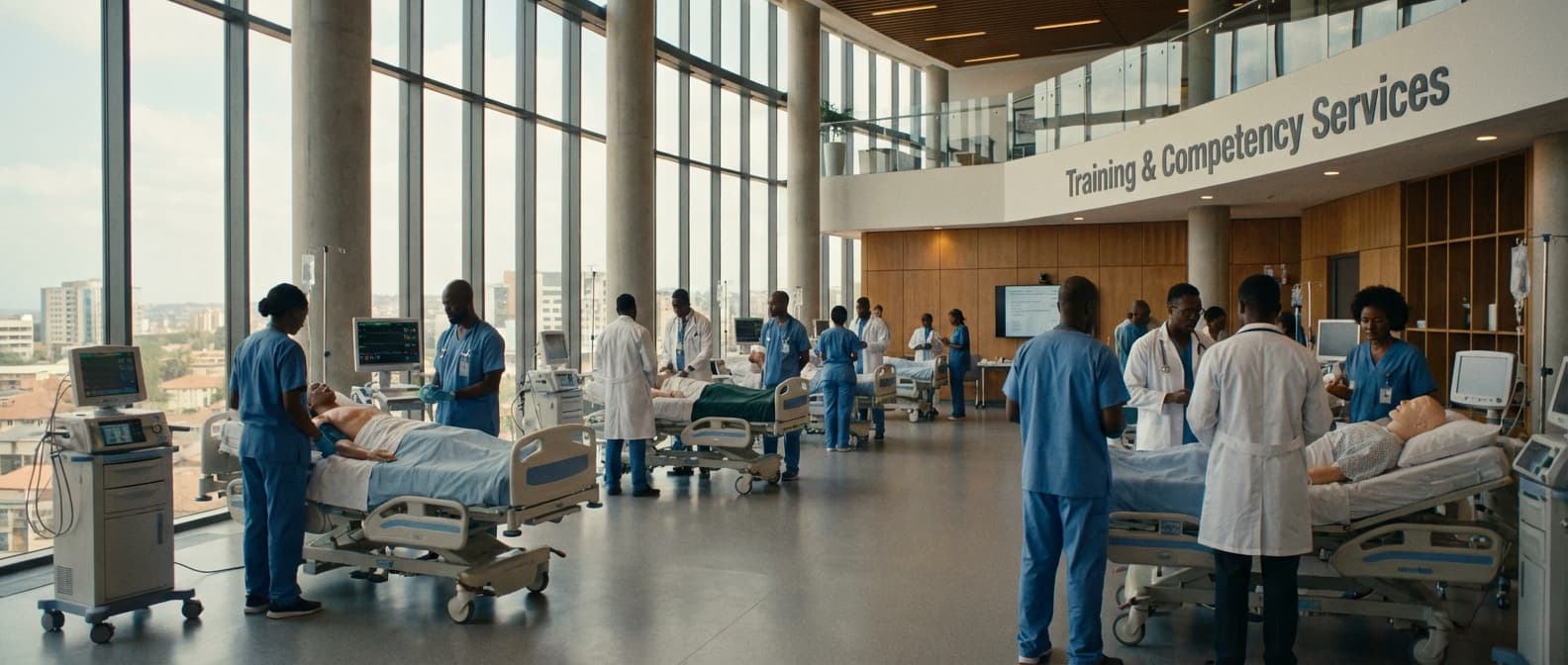
CT Operator Training Service (Radiographers) in Kenya
Engineering Excellence & Technical Support
CT Operator Training Service (Radiographers) High-standard technical execution following OEM protocols and local regulatory frameworks.
Advanced Imaging Protocols
Master cutting-edge CT imaging protocols tailored for the Kenyan healthcare landscape, ensuring accurate diagnoses across diverse patient populations and common pathologies.
Optimized Radiation Safety
Implement best practices in radiation protection, adhering to Kenyan regulatory standards and utilizing ALARA principles to minimize patient and staff exposure while maintaining diagnostic image quality.
Streamlined Workflow Integration
Enhance operational efficiency through intelligent PACS/RIS integration and optimized patient throughput strategies, reducing scan times and improving departmental productivity in Kenyan hospitals.
What Is Ct Operator Training Service (Radiographers) In Kenya?
CT Operator Training Service (Radiographers) in Kenya refers to specialized educational programs designed to equip qualified radiographers with the necessary knowledge and practical skills to safely and effectively operate Computed Tomography (CT) scanners. This service ensures that individuals can perform CT examinations according to established protocols, interpret basic findings, and adhere to radiation safety standards. The training focuses on the principles of CT imaging, scanner operation, image acquisition techniques, patient positioning, quality assurance, and basic image processing. It is crucial for maintaining high standards of diagnostic imaging and patient care within Kenya's healthcare sector.
| Who Needs CT Operator Training | Typical Use Cases |
|---|---|
| Newly graduated radiographers in Kenya | Performing diagnostic CT scans for a wide range of medical conditions. |
| Existing radiographers seeking specialization in CT imaging | Acquiring advanced imaging techniques (e.g., CT angiography, dual-energy CT). |
| Radiographers transitioning to new CT scanner models | Adapting to different vendor-specific interfaces and functionalities. |
| Radiographers working in facilities with new CT scanner installations | Ensuring competency and compliance with manufacturer guidelines. |
| Radiographers in remote or underserved areas with limited access to advanced imaging | Providing essential CT diagnostic services. |
| Radiographers in private diagnostic centers and hospitals | Meeting the increasing demand for CT imaging services. |
| Radiographers in public healthcare facilities | Enhancing diagnostic capabilities and patient management. |
Key Components of CT Operator Training Service:
- Principles of CT Physics and Technology
- CT Scanner Hardware and Software Operation
- Patient Preparation and Immobilization
- Scan Protocol Optimization and Selection
- Image Acquisition and Reconstruction Techniques
- Radiation Dose Optimization and Safety (ALARA Principle)
- Artifact Recognition and Mitigation
- Basic Image Post-Processing and Archiving
- Emergency Procedures and Patient Monitoring
- Quality Assurance and Quality Control (QA/QC) of CT Equipment
Who Needs Ct Operator Training Service (Radiographers) In Kenya?
In Kenya, the need for specialized CT Operator Training Services (Radiographers) is driven by the increasing demand for advanced medical imaging and the imperative to ensure high-quality, safe, and efficient diagnostic procedures. This training is crucial for healthcare professionals who operate CT scanners, ensuring they possess the latest knowledge and practical skills to manage the complexities of this technology.
| Target Customer Type | Typical Departments Involved | Key Training Needs |
|---|---|---|
| Public Hospitals | Radiology Department, General Outpatient, Emergency Department | Basic to advanced CT imaging protocols, patient safety, radiation protection, troubleshooting common issues. |
| Private Hospitals/Diagnostic Centers | Radiology Department, Specialized Clinics (e.g., Oncology, Cardiology) | Advanced CT techniques (e.g., CT angiography, cardiac CT), vendor-specific scanner training, quality assurance, workflow optimization. |
| Referral Hospitals | Radiology Department, Interventional Radiology, Neuro-radiology, Cardio-thoracic Surgery | Complex multi-phase CT protocols, post-processing techniques, image interpretation support, emergency CT procedures. |
| Teaching Hospitals/Institutions | Radiology Department, Medical Schools, Diploma/Degree Programs | Training on fundamental CT principles, practical scanning skills, teaching methodologies, curriculum development for CT training. |
| Government Health Initiatives | Ministry of Health Departments, Public Health Units | Mass screening protocols, mobile CT unit operation, data management, basic CT for public health surveillance. |
| Individual Radiographers | N/A (Career Development) | Specialization in CT, certification preparation, staying updated with technological advancements, enhancing patient care and diagnostic accuracy. |
Target Customers and Departments for CT Operator Training Service in Kenya:
- Public Hospitals: These institutions, often facing high patient volumes, require radiographers to be proficient in CT operations to provide essential diagnostic services to a broad population.
- Private Hospitals and Diagnostic Centers: As Kenya's private healthcare sector expands, these facilities invest in advanced imaging equipment and need skilled operators to maintain their competitive edge and offer specialized services.
- Referral Hospitals: Tertiary and quaternary care hospitals that handle complex cases benefit significantly from highly trained CT operators capable of performing advanced imaging protocols and contributing to multi-disciplinary teams.
- Teaching Hospitals and Medical Training Institutions: These institutions are central to educating the next generation of radiographers. Training programs for their staff and students are vital for building a skilled workforce.
- Radiology Departments: The core department responsible for diagnostic imaging, including CT scans. Training directly impacts the efficiency and accuracy of this department's output.
- Medical Imaging Units: Facilities within hospitals or standalone centers dedicated to various imaging modalities, where CT is a primary service.
- Outpatient Clinics Offering Advanced Diagnostics: Some larger outpatient clinics are expanding their services to include diagnostic imaging, necessitating trained CT operators.
- Government Health Initiatives and Programs: Organizations involved in national health programs, particularly those focusing on non-communicable diseases (NCDs) or emergency response, may require trained CT operators for widespread screening and diagnostic capabilities.
- New Imaging Technology Adopters: Healthcare providers who are acquiring new or upgraded CT scanner models will need to train their existing staff on the latest features and functionalities.
- Radiographers Seeking Professional Development: Individual radiographers looking to enhance their skills, specialize in CT, or meet continuing professional development (CPD) requirements.
Ct Operator Training Service (Radiographers) Process In Kenya
This document outlines the typical workflow for a CT Operator Training Service for Radiographers in Kenya, from initial inquiry to the successful completion of the training program. The process is designed to be comprehensive, ensuring that trainees receive high-quality education and practical experience, meeting the standards expected within the Kenyan healthcare sector.
| Stage | Description | Key Activities | Responsible Parties | Deliverables/Outcomes |
|---|---|---|---|---|
| The prospective client (individual radiographer or institution) expresses interest in the CT Operator Training Service. |
| Prospective Client (Radiographer/Institution), Training Provider | Initial contact established, awareness of training offering. |
| Understanding the specific requirements, current skill levels, and desired outcomes of the training. |
| Training Provider, Prospective Client | Clear understanding of training needs, scope, and objectives. |
| The training provider presents a tailored proposal outlining the training program, costs, and schedule. |
| Training Provider | Formal training proposal and quotation. |
| Formalizing the training arrangement through a contractual agreement. |
| Prospective Client, Training Provider | Signed training agreement/contract. |
| Ensuring all logistical and administrative aspects are in place before the training commences. |
| Training Provider, Client | Trainees prepared, logistics confirmed, and training environment ready. |
| The delivery of the CT Operator Training program. |
| Training Provider (Trainers), Trainees | Knowledge and practical skills acquisition in CT operation. |
| Measuring the trainee's comprehension and practical ability to operate a CT scanner. |
| Training Provider, Trainees | Assessment of learning outcomes, identification of strengths and areas for improvement. |
| Formal recognition of successful completion and ongoing assistance. |
| Training Provider, Trainees | Certified CT Operators, improved competency, and potential for future engagement. |
CT Operator Training Service (Radiographers) Process in Kenya: Workflow
- 1. Inquiry & Initial Contact:
- 2. Needs Assessment & Consultation:
- 3. Proposal & Quotation:
- 4. Agreement & Contract:
- 5. Pre-Training Preparations:
- 6. Training Execution:
- 7. Assessment & Evaluation:
- 8. Certification & Post-Training Support:
Ct Operator Training Service (Radiographers) Cost In Kenya
The cost of CT Operator Training for Radiographers in Kenya can vary significantly based on several factors. This training is crucial for professionals working with Computed Tomography (CT) scanners, ensuring they possess the necessary skills for safe and effective operation, image acquisition, and patient care. The pricing is influenced by the training provider's reputation, the duration and depth of the program, the inclusion of practical/hands-on components, and the location of the training facility.
| Training Type/Duration | Estimated Cost Range (KES) | Typical Inclusions |
|---|---|---|
| Basic CT Operation & Safety (Short Course, 1-3 Days) | KES 15,000 - KES 40,000 | Introduction to CT principles, basic scanner operation, radiation safety awareness, patient preparation. |
| Intermediate CT Operator Training (1 Week) | KES 40,000 - KES 80,000 | Detailed scanner operation, common protocols, patient positioning, contrast administration basics, quality control. |
| Comprehensive CT Operator Training (2-4 Weeks, including hands-on) | KES 80,000 - KES 200,000+ | In-depth curriculum, extensive practical sessions on CT scanners, advanced protocols, troubleshooting, image acquisition techniques, basic interpretation, certification preparation. |
| Specialized CT Modality Training (e.g., Cardiac CT, Interventional CT - often shorter modules) | KES 50,000 - KES 150,000 | Focus on specific advanced applications, specialized protocols, and interpretation relevant to the modality. |
| Refresher Courses / Continuing Professional Development (CPD) | KES 10,000 - KES 30,000 | Updates on new techniques, protocols, and regulatory changes. |
Key Pricing Factors for CT Operator Training (Radiographers) in Kenya:
- Training Provider Reputation and Accreditation: Established institutions with strong academic credentials and accreditation often command higher fees.
- Duration of the Training Program: Shorter, introductory courses will be less expensive than comprehensive, multi-week programs.
- Curriculum and Content Depth: The scope of topics covered (e.g., basic operation, advanced protocols, patient positioning, radiation safety, image interpretation basics) impacts cost.
- Practical/Hands-on Component: Training that includes significant hands-on experience with actual CT scanners (simulated or real) will generally be more expensive due to equipment and supervision costs.
- Location of Training: Training conducted in major cities like Nairobi might have different pricing than regional centers due to overhead costs.
- Inclusion of Materials and Certification: Fees often cover training materials, textbooks, and the final certification exam.
- Class Size and Instructor-to-Student Ratio: Smaller class sizes with more individualized attention may lead to higher costs.
- On-site vs. Off-site Training: If an institution requires training at their own facility, the cost might be structured differently than for on-site training at a hospital or clinic.
- Post-training Support and Mentorship: Some programs offer extended support or mentorship, which can add to the overall price.
Affordable Ct Operator Training Service (Radiographers) Options
This document outlines affordable CT operator training service options for radiographers, focusing on value bundles and cost-saving strategies. Investing in comprehensive CT operator training is crucial for enhancing patient care, improving diagnostic accuracy, and ensuring radiographer competency. However, the cost of specialized training can be a barrier. This guide aims to provide practical solutions for institutions and individuals seeking high-quality, budget-friendly training.
| Training Component | Typical Cost Range (per operator, estimates) | Value Bundle/Cost-Saving Opportunity |
|---|---|---|
| Online Foundational CT Theory Modules | $200 - $700 | Bundled with practical modules for a discounted rate. Access to on-demand content for ongoing review. |
| In-Person Hands-On Practical Skills Workshop (e.g., 2-3 days) | $800 - $2,500 | Group registration discounts. Shared facility costs for multiple institutions. Bundle with online theory for a comprehensive package. |
| Advanced CT Protocols & Specializations (e.g., Cardiac CT, Neuro CT) | $500 - $1,500 per module | Discounted pricing for purchasing multiple specialized modules. Online delivery reduces venue costs. |
| CT Simulation Software License (annual) | $500 - $2,000 (can be higher for advanced systems) | Institutional licenses often offer significant per-user savings. Combine with a bundled training package for simulation use. |
| Full CT Operator Certification Program | $1,500 - $5,000 | Value bundles including online theory, practical sessions, simulator access, and certification exam fees. Negotiate for institutional accreditation and ongoing updates. |
| Continuing Education Units (CEUs) Acquisition | $50 - $200 per CEU course | Choose training programs that are accredited for CEUs to eliminate separate course fees. Bundled training often includes a set number of required CEUs. |
Key Cost-Saving Strategies for CT Operator Training
- Leverage Online & Blended Learning: Digital platforms offer flexibility and reduce travel/accommodation costs. Blended approaches combine online theory with in-person practical sessions.
- Group Discounts & Institutional Packages: Negotiate bulk pricing for multiple employees or departments. Many providers offer tiered pricing for institutional licenses.
- Government Grants & Subsidies: Research available funding from healthcare authorities or educational grants that may cover training expenses.
- Partnerships with Educational Institutions: Collaborate with universities or colleges offering radiography programs for potential joint training initiatives or discounted access to their facilities.
- Manufacturer-Provided Training (with caveats): Some CT scanner manufacturers offer basic operational training. Assess if this meets your specific needs and consider supplementing it with independent courses for broader competency.
- Continuing Education Credits (CEUs) Integration: Choose training programs that offer accredited CEUs, reducing the need for separate CEU acquisition, thus saving time and money.
- Train-the-Trainer Programs: Invest in a few key individuals who can then train other staff members internally, creating a sustainable and cost-effective training model.
- Focus on Essential Skills First: Prioritize foundational CT principles and common protocols before investing in highly specialized or advanced modules, especially for new operators.
- Simulation-Based Training: While often an upfront investment, simulation can reduce the need for extensive supervised clinical hours on actual equipment, saving wear and tear and potential costs associated with errors.
- Utilize Existing Resources: Explore open-access educational materials, webinars, and professional society resources that may offer free or low-cost learning opportunities.
Verified Providers In Kenya
In Kenya's evolving healthcare landscape, identifying reliable and qualified healthcare providers is paramount. Verified providers offer a level of assurance that is critical for patient well-being and trust. Franance Health stands out as a premier choice due to its stringent credentialing process and commitment to exceptional patient care. This document outlines why Franance Health credentials represent the best choice for individuals seeking high-quality healthcare in Kenya.
| Credential Type | What it Signifies | Franance Health Standard |
|---|---|---|
| Medical Licenses | Authorization to practice medicine by the relevant regulatory body (e.g., Kenya Medical Practitioners and Dentists Council). | Mandatory and verified for all physicians and dentists. |
| Specialty Board Certifications | Demonstrates advanced training and expertise in a specific medical field. | Highly encouraged and prioritized for specialists within the Franance Health network. |
| Hospital Privileges | Authorization granted by a hospital to a physician to admit and care for patients. | Verified for all affiliated physicians, ensuring access to accredited facilities. |
| Professional Memberships | Affiliation with recognized professional organizations, indicating engagement with peers and commitment to the field. | Considered as a positive indicator of ongoing professional development. |
| Continuing Medical Education (CME) | Proof of ongoing learning and up-to-date knowledge in their specialty. | Required and tracked for all Franance Health providers. |
| Background Checks & Reference Checks | Screening for any disciplinary actions, criminal history, or professional misconduct. | Comprehensive and mandatory for all providers joining the Franance Health network. |
Why Franance Health Credentials Matter:
- Rigorous Verification Process: Franance Health meticulously vets all healthcare professionals and facilities to ensure they meet and exceed national and international standards for competence, ethics, and safety.
- Focus on Clinical Excellence: Credentials signify a provider's dedication to maintaining up-to-date medical knowledge, employing best practices, and achieving positive patient outcomes.
- Patient Safety and Trust: Verified providers have undergone background checks and have a proven track record, offering patients peace of mind and fostering a trusting relationship.
- Access to Specialized Care: Franance Health's network includes a diverse range of specialists, all verified to ensure you receive expert care for your specific needs.
- Commitment to Ethical Practices: Our credentialing process includes an evaluation of ethical conduct and professional integrity, ensuring a patient-centered approach.
- Continuous Quality Improvement: Franance Health actively monitors the performance of its providers, encouraging ongoing professional development and adherence to quality benchmarks.
Scope Of Work For Ct Operator Training Service (Radiographers)
This Scope of Work (SOW) outlines the requirements for a comprehensive Computed Tomography (CT) Operator Training Service specifically designed for Radiographers. The service aims to equip radiographers with the advanced knowledge and practical skills necessary to proficiently operate CT scanners, ensure patient safety, optimize image quality, and understand the principles of CT imaging and related procedures. The training will cover theoretical aspects, hands-on practical sessions, and competency assessments.
| Deliverable | Description | Technical Specifications / Standards | Acceptance Criteria |
|---|---|---|---|
| Training Curriculum | A detailed, modular curriculum covering all key areas of CT operation and theory. | Must align with current professional standards (e.g., ARRT, UNSCEAR, IEC standards). Modules should be clearly defined with learning objectives, content outlines, and duration. Includes both theoretical and practical components. | Curriculum approved by the client. Learning objectives are measurable and achievable. Content is up-to-date and relevant. |
| Training Materials | Comprehensive set of training materials for participants. | Includes trainer's guide, participant manuals, presentations (e.g., PowerPoint), case studies, quizzes, and reference guides. Materials should be clear, concise, and visually engaging. Available in digital and/or print format. | Materials are comprehensive, accurate, and align with the approved curriculum. Easy to understand and use. |
| Hands-on Practical Training | Supervised practical sessions on a functional CT scanner. | Minimum of X hours (to be specified by client) of supervised hands-on practice per participant. Training should cover routine and common scan protocols. Simulator-based training may supplement for certain complex scenarios. | Participants demonstrate proficiency in scanner operation, patient positioning, protocol selection, and image acquisition under supervision. Successful completion of practical competency checklist. |
| Competency Assessment | Formal assessment of radiographers' knowledge and practical skills. | Includes written examinations (multiple choice, short answer) and practical skills assessment (e.g., observed performance of specific tasks). Pass mark for both components to be defined. | Participants achieve the defined pass mark in both theoretical and practical assessments. Successful candidates receive a certificate of completion. |
| Post-Training Support | Provision of ongoing support and clarification to trained radiographers. | Includes limited remote support (email/phone) for X weeks post-training to address any immediate questions or challenges. Access to online resources or FAQs. | Support requests are addressed within X business hours. Participants report value and clarity from support provided. |
| Trainer Qualifications | Evidence of trainer expertise and experience. | Trainers must be certified/experienced radiographers with a minimum of Y years of specialized CT experience and proven training delivery capabilities. Verifiable credentials and experience records. | Client verifies trainer credentials and experience prior to training commencement. |
| Training Report | A comprehensive report detailing the training delivery and outcomes. | Includes participant attendance, assessment results (individual and aggregate), feedback summary, and recommendations for further training or areas of improvement. Report to be submitted within X days of training completion. | Report is accurate, comprehensive, and submitted within the agreed timeframe. Client approves findings and recommendations. |
| Radiation Dose Optimization Recommendations | Specific guidance on minimizing patient radiation dose. | Training must include principles of ALARA, use of dose reduction techniques (e.g., iterative reconstruction, automatic exposure control), and protocol optimization for dose reduction without compromising diagnostic quality. Adherence to local regulatory requirements and international best practices. | Participants can articulate and apply dose optimization strategies. Recommendations are practical and implementable within the clinical environment. |
Key Areas of Training
- CT Physics and Principles
- CT Scanner Operation and Controls
- Patient Preparation and Positioning
- Contrast Media Administration and Safety
- Image Acquisition Protocols and Optimization
- Image Processing and Reconstruction
- Artifact Recognition and Mitigation
- Radiation Safety and Dose Optimization
- Quality Assurance and Control (QA/QC)
- Basic CT Pathology Interpretation
- Emergency Procedures and Patient Management
- Advanced CT Applications (e.g., CTA, Dual-Energy CT)
Service Level Agreement For Ct Operator Training Service (Radiographers)
This Service Level Agreement (SLA) outlines the guaranteed response times and uptime for the CT Operator Training Service provided to Radiographers. This SLA aims to ensure minimal disruption and efficient support for the training program.
| Service Component | Metric | Guaranteed Level | Definition | Measurement Frequency |
|---|---|---|---|---|
| CT Operator Training Platform | Uptime | 99.5% | Percentage of scheduled training hours that the platform is accessible and fully functional. | Monthly |
| Technical Support (Critical Issues) | Response Time | <= 4 Business Hours | Time from initial support ticket submission to the first acknowledgment and action by the support team for issues preventing training completion or critical system malfunction. | On Demand |
| Technical Support (Non-Critical Issues) | Response Time | <= 8 Business Hours | Time from initial support ticket submission to the first acknowledgment and action by the support team for issues that do not prevent training completion but impact functionality or user experience. | On Demand |
| Content Updates & Maintenance | Notification Period | 7 Days Prior | Advance notice provided for scheduled maintenance or content updates that may cause temporary service interruption. | As Scheduled |
Key Performance Indicators
- Response Time for Critical Issues: Guaranteed within 4 business hours.
- Response Time for Non-Critical Issues: Guaranteed within 8 business hours.
- Training Platform Uptime: Guaranteed at 99.5% during scheduled training hours.
Frequently Asked Questions

Ready when you are
Let's scope your CT Operator Training Service (Radiographers) in Kenya project in Kenya.

Scaling healthcare logistics and technical systems across the entire continent.