
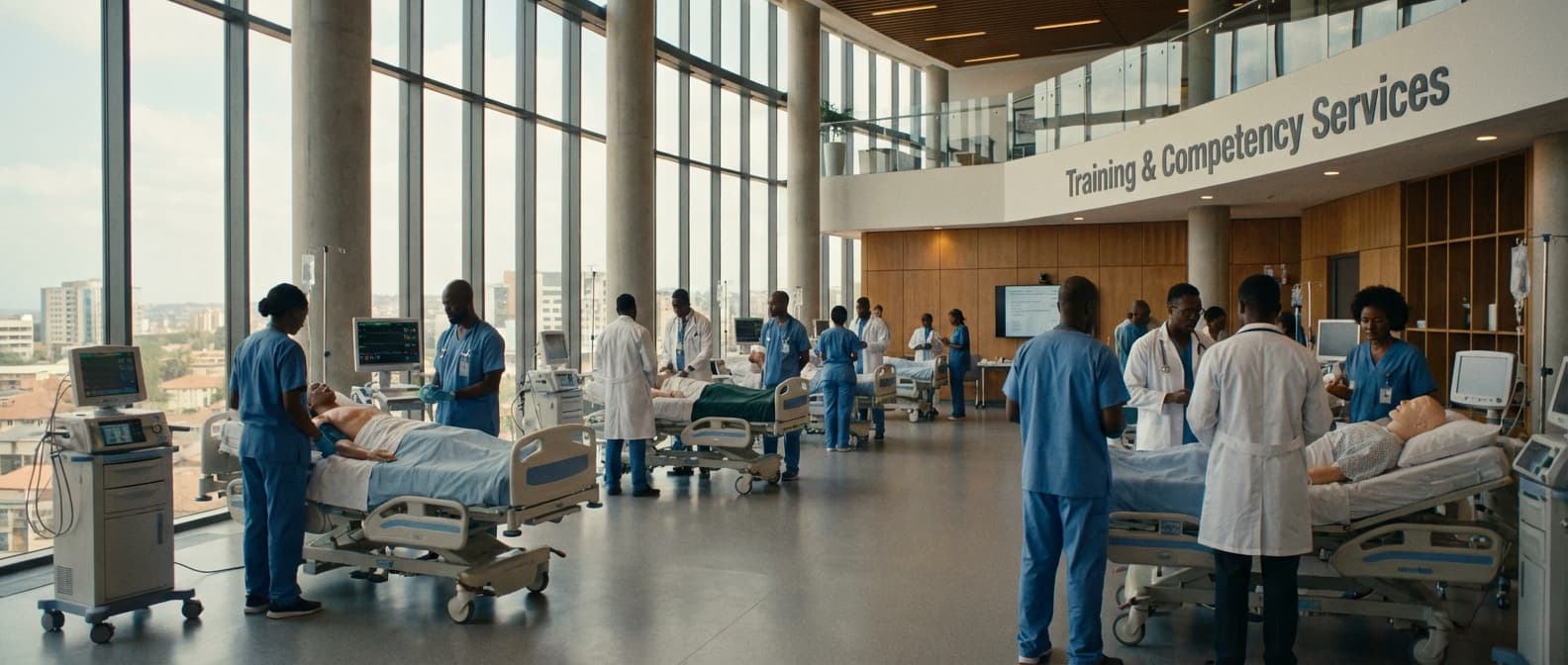
Biomedical Engineering First-Line Support Training Service in Kenya
Engineering Excellence & Technical Support
Biomedical Engineering First-Line Support Training Service High-standard technical execution following OEM protocols and local regulatory frameworks.
Advanced Diagnostic Equipment Proficiency
Master the operation and troubleshooting of cutting-edge diagnostic equipment, including MRI, CT scanners, and ultrasound machines, ensuring rapid and accurate identification of technical issues to minimize patient care disruption.
Therapeutic Device Maintenance & Calibration
Gain expertise in the maintenance, calibration, and repair of critical therapeutic devices such as infusion pumps, ventilators, and defibrillators, guaranteeing their optimal functionality and patient safety standards.
Clinical Workflow Integration & Support
Develop a deep understanding of how biomedical devices integrate into clinical workflows, enabling first-line support personnel to effectively assist medical staff, resolve common technical challenges, and ensure seamless patient treatment pathways.
What Is Biomedical Engineering First-line Support Training Service In Kenya?
Biomedical Engineering First-Line Support Training Service in Kenya refers to the provision of initial technical assistance and foundational knowledge to individuals responsible for the basic troubleshooting, maintenance, and operational support of medical devices and equipment within healthcare facilities. This service is critical for ensuring the safe, effective, and continuous functionality of medical technology, thereby supporting patient care delivery. It focuses on empowering local personnel to address common issues promptly, reducing reliance on specialized external support, and optimizing equipment uptime. The training emphasizes practical skills, diagnostic procedures, and understanding of equipment principles relevant to their immediate operational context.
| Who Needs Biomedical Engineering First-Line Support Training? | Typical Use Cases |
|---|---|
| Biomedical Engineering Technicians (Entry-Level/Junior): Individuals entering the field requiring foundational skills. | Responding to immediate equipment alarms and malfunctions on the ward. |
| Clinical Staff (Nurses, Doctors, Technologists): End-users who need to perform basic checks, cleaning, and report issues. | Performing daily pre-use checks on vital signs monitors or infusion pumps. |
| Healthcare Facility Administrators and Managers: To understand the scope of internal support capabilities and resource allocation. | Ensuring basic operational readiness of diagnostic imaging equipment before specialist arrival. |
| Biomedical Engineering Departments in Public and Private Hospitals: To build internal capacity and reduce external support costs. | Troubleshooting and restarting a faulty patient monitoring system in an ICU. |
| Medical Device Maintenance Companies (Local Partners): To empower their field technicians with basic support skills for a wider range of devices. | Performing routine cleaning and visual inspection of an anesthetic machine. |
| Non-Governmental Organizations (NGOs) and Humanitarian Aid Agencies: Supporting medical equipment in remote or resource-limited settings. | Identifying and rectifying common error messages on laboratory analyzers. |
| Medical Equipment Distributors and Suppliers: To provide initial customer support and basic training for their products. | Ensuring the correct setup and initial functional check of newly delivered equipment. |
Key Components of Biomedical Engineering First-Line Support Training in Kenya:
- Basic Equipment Principles and Operation: Understanding the fundamental physics, electrical systems, and mechanical components of common medical devices.
- Preventive Maintenance Procedures: Training on scheduled checks, cleaning, lubrication, and calibration to prevent failures.
- Troubleshooting and Diagnostics: Developing systematic approaches to identify and resolve common malfunctions and error codes.
- Safety Protocols and Regulations: Ensuring adherence to local and international standards for medical equipment safety and handling.
- Documentation and Reporting: Training on accurate record-keeping for maintenance activities, repairs, and incident reporting.
- Basic Repair and Component Replacement: Instruction on simple fixes, replacing consumables, and identifying faulty sub-assemblies.
- User Training and Support: Educating clinical staff on proper equipment usage to minimize misuse and prolong lifespan.
- Inventory Management of Spares: Understanding the importance of maintaining an adequate stock of critical spare parts.
Who Needs Biomedical Engineering First-line Support Training Service In Kenya?
Biomedical Engineering First-Line Support Training Service in Kenya is crucial for organizations that rely heavily on medical equipment for patient care and operational efficiency. This specialized training equips individuals with the essential skills to perform initial diagnostics, basic troubleshooting, and preventative maintenance of biomedical devices. This ensures the optimal functioning and longevity of critical healthcare infrastructure, minimizing downtime and enhancing patient safety.
| Department/Role | Key Responsibilities & Training Needs | Impact of Training |
|---|---|---|
| Biomedical Engineering Department | Performing routine maintenance, troubleshooting equipment failures, implementing basic repairs, ensuring equipment safety and compliance. Needs training in common medical device types, diagnostic tools, and preventative maintenance protocols. | Reduced equipment downtime, improved patient care continuity, extended equipment lifespan, cost savings through early detection of issues, enhanced safety compliance. |
| Clinical Engineers | Overseeing biomedical equipment management, ensuring quality control, developing maintenance strategies, managing vendors. Needs training to understand the first-line support capabilities and limitations, and how to integrate them effectively. | Streamlined service delivery, better resource allocation for complex repairs, improved communication between support staff and senior engineers. |
| IT/Technical Support Staff (in healthcare settings) | Providing initial technical assistance for integrated medical devices (e.g., networked patient monitors, PACS systems). Needs training in the basic operation and common issues of these specific biomedical components. | Faster resolution of common technical glitches, reduced burden on specialized biomedical engineers, seamless integration of medical devices with IT infrastructure. |
| Healthcare Technicians/Nurses (in specific roles) | Operating and performing basic user-level checks on certain medical devices (e.g., infusion pumps, basic laboratory equipment). Needs training on safe operation, cleaning, and reporting of common malfunctions. | Improved device usability, early identification of potential issues by end-users, enhanced patient safety through correct device operation. |
| Equipment Procurement and Logistics Teams | Understanding the technical support requirements and capabilities of different medical devices. Needs training on the importance of first-line support for operational readiness and lifecycle management. | Informed procurement decisions, better negotiation with suppliers regarding support services, ensuring availability of trained personnel for new equipment. |
| Sales and Service Technicians (at suppliers/distributors) | Performing initial installations, basic troubleshooting, and preventative maintenance for their product lines. Needs comprehensive training on their specific devices and common repair procedures. | Faster on-site response times for clients, improved customer satisfaction, reduced escalations to higher-level support, increased service revenue. |
Target Customers and Departments in Kenya for Biomedical Engineering First-Line Support Training
- Public Hospitals
- Private Hospitals
- Missionary Hospitals
- Health Centers and Dispensaries
- Medical Equipment Suppliers and Distributors
- Medical Device Manufacturing and Servicing Companies
- Research Institutions with Medical Laboratories
- Government Ministries of Health and Regional Health Bureaus
- Non-Governmental Organizations (NGOs) focused on Healthcare
Biomedical Engineering First-line Support Training Service Process In Kenya
This document outlines the typical workflow for a Biomedical Engineering First-Line Support Training Service in Kenya, covering the process from initial inquiry to the successful execution of the training. The service aims to equip healthcare facilities with competent personnel capable of performing basic maintenance, troubleshooting, and safe operation of biomedical equipment. This structured approach ensures clarity, efficiency, and effective knowledge transfer.
| Stage | Description | Key Activities | Responsible Parties | Key Deliverables/Outcomes |
|---|---|---|---|---|
| The initial contact from a client (healthcare facility) seeking training for their biomedical engineering staff or designated personnel. | Client contacts service provider. Provider conducts a needs assessment (e.g., types of equipment, existing skill levels, training goals, number of trainees). | Healthcare Facility (Client), Training Service Provider | Understanding of client's training requirements, scope of work, and target audience. |
| Based on the needs assessment, the service provider prepares a detailed proposal and a cost estimate. | Develop training modules and curriculum. Estimate trainer costs, materials, venue (if applicable), and administrative overhead. Prepare a formal proposal and quotation. | Training Service Provider | Comprehensive training proposal, detailed quotation, breakdown of training modules, duration, and costs. |
| Formalization of the training engagement through a signed agreement or contract. | Client reviews and accepts the proposal and quotation. Negotiation of terms and conditions. Signing of a service agreement or contract. | Healthcare Facility (Client), Training Service Provider | Legally binding service agreement, clearly outlining scope, deliverables, timelines, payment terms, and responsibilities. |
| Activities undertaken by both parties to ensure the training is well-prepared and ready for delivery. | Provider: Develop/finalize training materials (manuals, presentations, practical exercises), schedule trainers, confirm venue and equipment for practical sessions. Client: Identify and confirm trainees, arrange for their availability, ensure necessary permissions are granted. | Training Service Provider, Healthcare Facility (Client) | Finalized training materials, confirmed schedule, trained personnel ready for participation, logistical arrangements in place. |
| The core phase where the training is conducted. | Theoretical sessions (lectures, discussions). Practical sessions (hands-on equipment handling, troubleshooting simulations). Q&A sessions. Case studies. | Training Service Provider (Trainers), Healthcare Facility (Trainees) | Knowledge transfer to trainees, demonstration of practical skills, engagement and participation from trainees. |
| Evaluation of the trainees' understanding and provision of ongoing support. | Administering tests (written and practical). Observing performance during practicals. Providing immediate feedback. Offering limited post-training technical support or consultation (as per agreement). | Training Service Provider, Healthcare Facility (Trainees) | Assessment results, feedback on trainee performance, identification of areas needing further reinforcement, initial post-training support. |
| Formal recognition of successful completion and gathering feedback for service improvement. | Issuing certificates of attendance/completion to successful trainees. Conducting a post-training evaluation survey for both trainees and the facility. Final reporting on training outcomes. | Training Service Provider, Healthcare Facility (Client/Trainees) | Certificates, consolidated feedback report, insights for future training improvements, completion of service delivery. |
Biomedical Engineering First-Line Support Training Service Workflow
- Inquiry & Needs Assessment
- Proposal Development & Quotation
- Agreement & Contract
- Pre-Training Preparation
- Training Delivery
- Post-Training Assessment & Support
- Certification & Feedback
Biomedical Engineering First-line Support Training Service Cost In Kenya
In Kenya, the cost of first-line support training services for biomedical engineering can vary significantly based on several factors. These services are crucial for ensuring healthcare facilities can effectively manage and maintain their medical equipment, leading to better patient care and reduced downtime. The pricing is influenced by the training provider's reputation and expertise, the scope and depth of the curriculum, the duration of the training, and the mode of delivery (in-person vs. online). Specialized or advanced training modules will naturally command higher fees. Furthermore, the number of participants and whether the training is conducted at the client's premises or at the provider's training center also play a role in the final cost. The Kenyan market offers a range of options, from intensive workshops to comprehensive certification courses.
| Service Type | Estimated Cost Range (KES) | Notes |
|---|---|---|
| Basic Equipment Troubleshooting & Maintenance Workshop (1-2 days) | 15,000 - 40,000 | Covers general principles, common issues, and basic preventive maintenance. |
| Intermediate Biomedical Equipment Support (3-5 days) | 35,000 - 80,000 | Includes more in-depth troubleshooting, specific equipment categories, and safety protocols. |
| Specialized Equipment Training (e.g., Imaging, Anesthesia, Dialysis - 5+ days) | 70,000 - 200,000+ | Focuses on specific, complex medical devices requiring expert knowledge. Costs are highly variable. |
| Online/Virtual First-Line Support Training Modules | 10,000 - 60,000 | Generally more affordable, depending on the depth and interactivity of the course. |
| On-site Corporate Training (Per day or per participant basis) | 50,000 - 150,000+ (per day) | Highly dependent on the number of participants and the specific training needs. Often a premium service. |
| Certification Programs (e.g., Biomedical Equipment Technician - BMET) | 80,000 - 300,000+ | Comprehensive programs leading to recognized certifications. Can include practical assessments and exams. |
Key Pricing Factors for Biomedical Engineering First-Line Support Training in Kenya
- Training Provider's Reputation and Expertise
- Curriculum Scope and Depth (e.g., general maintenance vs. specific equipment types)
- Duration of the Training Program (e.g., 1-day workshop vs. multi-week course)
- Mode of Delivery (In-person, Online, Blended Learning)
- Number of Participants (Group discounts may apply)
- Location of Training (On-site at client's facility vs. provider's center)
- Inclusion of Practical Sessions and Hands-on Equipment Training
- Certification (Accredited certifications often increase cost)
- Customization of Training Content
- Materials Provided (Manuals, software, consumables for practicals)
Affordable Biomedical Engineering First-line Support Training Service Options
Providing effective first-line support for biomedical engineering equipment is crucial for patient safety, operational efficiency, and cost containment within healthcare facilities. This service focuses on equipping biomedical engineering technicians with the foundational knowledge and skills necessary to handle initial equipment troubleshooting, routine maintenance, and user assistance. Investing in well-trained first-line support can significantly reduce the reliance on higher-level technical specialists, minimize equipment downtime, and improve overall user satisfaction. This document outlines affordable training service options, emphasizing value bundles and cost-saving strategies.
| Training Option | Description | Target Audience | Estimated Cost Range (per technician) | Value Proposition |
|---|---|---|---|---|
| Online Self-Paced Modules | Comprehensive digital courses covering theoretical concepts, practical demonstrations, and quizzes. Accessible anytime, anywhere. | New hires, junior technicians, or as refresher courses. | $150 - $500 | High flexibility, scalability, and cost-effectiveness. Allows for personalized learning pace. |
| Blended Learning Packages | Combines online modules with periodic live virtual or in-person workshops led by experienced instructors. | Technicians requiring hands-on practice and direct interaction. | $400 - $1200 | Balances theoretical knowledge with practical application and direct feedback, fostering deeper understanding. |
| Manufacturer-Specific Training (Basic) | Online or on-site sessions focused on the operation and basic maintenance of specific high-volume equipment. | Technicians regularly interacting with particular device types. | $300 - $1000 (per course) | Ensures competency with critical equipment, reducing specialized technician calls for common issues. |
| On-the-Job Training (OJT) Support Kits | Curated sets of resources including checklists, troubleshooting guides, quick reference cards, and virtual simulation tools to support OJT. | Supervisors and senior technicians guiding junior staff. | $100 - $300 (per kit) | Enhances the effectiveness of internal training programs, standardizes knowledge transfer, and reduces reliance on external trainers. |
| Community of Practice & Mentorship Programs | Facilitated online forums or in-person meetups for technicians to share knowledge, discuss challenges, and receive guidance from experienced peers. | All levels of technicians seeking continuous learning and peer support. | Minimal (primarily facilitator time or organizational costs) | Fosters a culture of shared learning, problem-solving, and professional development at a very low cost. |
Key Components of First-Line Support Training
- Basic Equipment Familiarization: Understanding core functionalities and common operational procedures.
- Preventive Maintenance Fundamentals: Performing routine checks, cleaning, and calibration according to manufacturer guidelines.
- Initial Troubleshooting Techniques: Identifying common issues, applying diagnostic steps, and escalating complex problems.
- User Assistance and Training: Educating clinical staff on proper equipment usage and basic troubleshooting.
- Safety Protocols: Adhering to infection control, electrical safety, and patient safety standards.
- Documentation and Reporting: Accurately recording maintenance activities, repairs, and issues.
Verified Providers In Kenya
In Kenya's dynamic healthcare landscape, identifying truly Verified Providers is paramount for ensuring quality and trustworthy medical services. Franance Health stands out as a premier network, distinguished by its rigorous credentialing process and commitment to excellence. This verification signifies a deep dive into a provider's qualifications, ethical standing, and adherence to best practices, offering patients unparalleled peace of mind.
| Credentialing Aspect | Franance Health Verification Standard | Benefit to Patients |
|---|---|---|
| Medical Licenses and Certifications | Thorough validation of all current and relevant licenses and board certifications. | Ensures providers are legally qualified and possess recognized expertise. |
| Professional Background and Experience | Verification of educational history, training, and years of practice. | Confirms substantial practical experience and a solid foundation in medical knowledge. |
| Reputation and Disciplinary History | Checks for any past disciplinary actions or malpractice claims. | Minimizes risk by partnering with providers of good standing. |
| Adherence to Ethical Guidelines | Assessment of commitment to patient privacy, informed consent, and professional conduct. | Guarantees a respectful and trustworthy patient experience. |
| Continuing Medical Education (CME) | Confirmation of ongoing participation in CME programs. | Ensures providers stay updated with the latest medical advancements and treatments. |
Why Franance Health Represents the Best Choice:
- Rigorous Credentialing: Franance Health employs a multi-faceted verification process that scrutinizes educational background, professional licenses, board certifications, and a clean disciplinary record.
- Quality Assurance: Beyond initial checks, Franance Health conducts ongoing quality assessments, monitoring patient outcomes, adherence to clinical guidelines, and patient satisfaction.
- Ethical Standards: A core component of verification is the assessment of ethical conduct and a commitment to patient-centered care, ensuring providers operate with integrity.
- Specialized Expertise: Franance Health identifies and partners with providers who demonstrate specialized knowledge and experience in their respective fields, offering access to top-tier medical professionals.
- Trust and Transparency: The 'Verified Provider' badge by Franance Health is a symbol of trust, providing patients with a clear indication of a provider's legitimacy and commitment to high standards.
Scope Of Work For Biomedical Engineering First-line Support Training Service
This Scope of Work (SOW) outlines the requirements for a comprehensive First-Line Support Training Service for Biomedical Engineering personnel. The objective is to equip support staff with the essential knowledge, skills, and troubleshooting methodologies to effectively address common issues encountered with biomedical equipment, thereby improving response times, reducing escalation rates, and enhancing overall patient care safety and equipment uptime. The training will focus on both theoretical understanding and practical application of diagnostic and resolution techniques for a defined set of common biomedical devices and systems.
| Category | Standard Specification | Key Performance Indicators (KPIs) |
|---|---|---|
| Curriculum Design | Modular structure, covering core principles of biomedical equipment operation, common failure modes, diagnostic tools, and basic repair procedures for specified equipment types (e.g., vital signs monitors, infusion pumps, ECG machines). Content must be aligned with industry best practices and relevant safety standards (e.g., IEC 60601 series). | Curriculum coverage completeness (%), adherence to specified equipment list (100%), alignment with safety standards (100%). |
| Training Delivery | Interactive sessions incorporating lectures, demonstrations, group discussions, and hands-on practice. Instructor-to-participant ratio to be optimized for effective learning (e.g., 1:10). Training duration to be sufficient for comprehensive understanding and skill development. | Participant engagement rate (>80%), average training satisfaction score (>4/5), practical skill proficiency score (average >85%). |
| Equipment Used | Training to be conducted using functional, calibrated, and representative biomedical equipment. Where live equipment is not feasible, high-fidelity simulators capable of replicating realistic fault conditions must be utilized. | Availability of required equipment (100%), equipment calibration status maintained throughout training, simulation fidelity score (if applicable) > 90%. |
| Assessment and Evaluation | Multi-modal assessment including written examinations (multiple-choice, short answer) and practical skill assessments (demonstration of troubleshooting steps). Pass mark for each assessment component to be clearly defined (e.g., 75%). | Assessment validity and reliability, pass rate for participants, post-training knowledge retention rate (measured via follow-up assessment, e.g., 3 months post-training). |
| Trainer Qualifications | Trainers must possess a minimum of 3-5 years of hands-on experience in biomedical equipment repair and maintenance, with specific expertise in the equipment covered in the training. They should also have demonstrable training and presentation skills. | Trainer experience documented and verified, positive feedback on trainer's expertise and delivery. |
| Documentation and Reporting | All training materials to be delivered in a clear, concise, and well-organized format. Training reports to be comprehensive, providing actionable insights and clear metrics. | Timeliness of deliverable submission, report clarity and completeness, adherence to agreed reporting format. |
Technical Deliverables
- Training Curriculum and Materials: Development and delivery of a comprehensive training curriculum, including instructor guides, participant workbooks, presentation slides, and case studies, tailored to the specific equipment and support environment.
- Hands-on Training Sessions: Conduct of practical, hands-on training sessions utilizing actual or simulated biomedical equipment, allowing participants to practice diagnostic procedures and troubleshooting techniques under expert supervision.
- Assessment Tools: Design and implementation of assessment tools, including pre- and post-training quizzes, practical skill evaluations, and scenario-based exercises, to measure learning and identify areas for improvement.
- Training Completion Certificates: Issuance of personalized training completion certificates to all participants who successfully meet the established learning objectives and pass the assessments.
- Post-Training Support Documentation: Provision of supplementary documentation, such as quick reference guides, troubleshooting flowcharts, and FAQs, to support ongoing learning and on-the-job problem-solving.
- Training Report: A comprehensive report detailing the training conducted, participant performance, assessment results, feedback received, and recommendations for future training or process improvements.
Service Level Agreement For Biomedical Engineering First-line Support Training Service
This Service Level Agreement (SLA) outlines the response times and uptime guarantees for the Biomedical Engineering First-Line Support Training Service. This service aims to provide timely and effective training to personnel requiring first-line support for biomedical equipment, ensuring minimal disruption to patient care and operational efficiency.
| Service Component | Response Time Target | Uptime Guarantee | Notes |
|---|---|---|---|
| Initial Response to Training Request (Email/Portal) | Within 4 Business Hours | N/A | Acknowledgement of request and estimated timeline for further action. |
| Availability of Scheduled Training Sessions | N/A | 99.5% Monthly | Applies to scheduled and confirmed training sessions. Excludes scheduled maintenance or planned downtime. |
| Technical Support for Training Platform (Online Modules) | Within 2 Business Hours | 99.0% Monthly | Applies during scheduled training hours or agreed-upon access periods for online modules. Excludes issues caused by trainee's local network or hardware. |
| Follow-up/Resolution of Training-Related Queries | Within 1 Business Day | N/A | Includes addressing questions arising from training materials or initial practical sessions. |
| Access to Training Documentation and Resources | Immediate Availability | 99.8% Monthly | Refers to the accessibility of online training manuals, videos, and other supplementary materials. |
Key Service Objectives
- To provide rapid initial response to training requests and inquiries.
- To ensure the availability of training resources and personnel.
- To facilitate prompt resolution of training-related issues.
- To maintain high satisfaction levels among trainees.
Frequently Asked Questions

Ready when you are
Let's scope your Biomedical Engineering First-Line Support Training Service in Kenya project in Kenya.

Scaling healthcare logistics and technical systems across the entire continent.