
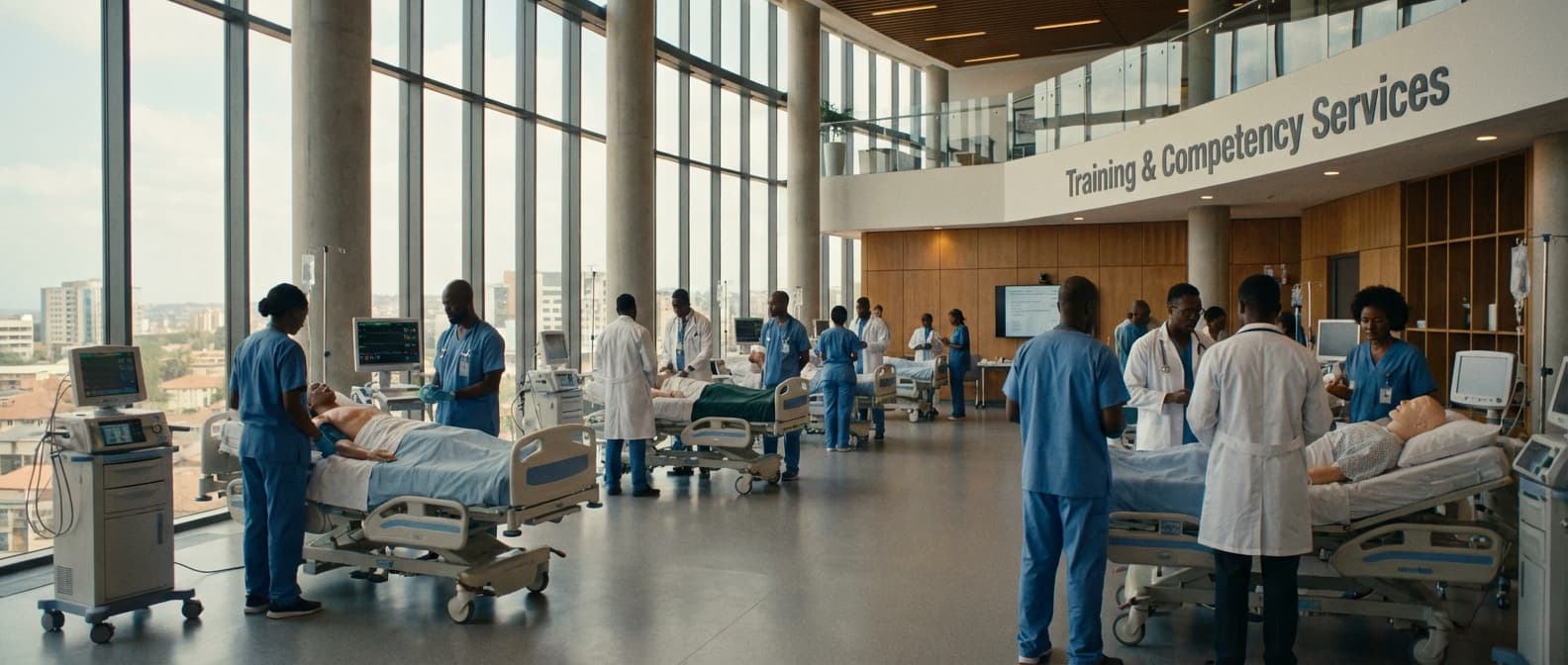
Anesthesia Workstation User Training Service in Kenya
Engineering Excellence & Technical Support
Anesthesia Workstation User Training Service High-standard technical execution following OEM protocols and local regulatory frameworks.
Master Anesthesia Machine Functions
Gain in-depth knowledge of critical anesthesia workstation components, including vaporizers, ventilators, gas delivery systems, and monitoring capabilities, ensuring safe and efficient patient care in Kenyan healthcare settings.
Optimize Patient Monitoring Protocols
Learn best practices for utilizing integrated patient monitors on anesthesia workstations, focusing on waveform interpretation, alarm management, and data logging for enhanced patient safety and clinical decision-making.
Ensure Equipment Reliability and Maintenance
Understand essential troubleshooting techniques and routine maintenance procedures for anesthesia workstations, crucial for minimizing downtime and upholding high standards of care in diverse Kenyan clinical environments.
What Is Anesthesia Workstation User Training Service In Kenya?
Anesthesia Workstation User Training Service in Kenya refers to specialized educational programs designed to equip healthcare professionals with the knowledge and practical skills required to safely and effectively operate anesthesia workstations. These workstations are sophisticated medical devices integral to the administration of anesthesia, encompassing ventilation, gas delivery, monitoring, and record-keeping functions. The training focuses on understanding the device's components, functionalities, operational procedures, troubleshooting common issues, and adhering to safety protocols within the Kenyan healthcare context. This service is crucial for ensuring patient safety, optimizing clinical outcomes, and maximizing the utilization of advanced medical technology in Kenyan healthcare facilities.
| Target Audience | Needs Addressed | Typical Use Cases |
|---|---|---|
| Anesthesiologists | Enhance proficiency in utilizing advanced features, optimizing patient care, and ensuring safe anesthetic delivery. | Operating rooms in hospitals (public and private), specialized surgical centers, trauma units. |
| Anesthetic Nurses and Technicians | Develop competency in setting up, operating, monitoring, and troubleshooting the workstation under supervision. | Pre-operative holding areas, recovery rooms, intensive care units (ICUs) supporting anesthesia procedures. |
| Healthcare Facility Biomedical Engineering Departments | Gain knowledge for routine maintenance, calibration, troubleshooting, and end-user support. | Equipment management, preventative maintenance schedules, quality assurance, vendor liaison. |
| Medical Device Manufacturers and Distributors (in Kenya) | Provide accredited training to ensure safe and effective deployment of their products, meeting regulatory requirements. | Product launches, new model introductions, training of clinical support staff, fulfilling service agreements. |
| Medical Training and Simulation Centers | Incorporate realistic training scenarios for students and professionals in anesthesia. | University medical schools, nursing colleges, specialized postgraduate training programs. |
Key Components of Anesthesia Workstation User Training Service in Kenya
- Device Anatomy and Physiology: Comprehensive understanding of the workstation's physical components and their physiological impact.
- Ventilation Management: Training on various ventilation modes, settings, and principles of mechanical ventilation.
- Gas Delivery and Monitoring: Education on anesthetic gas identification, flow control, mixture precision, and end-tidal gas monitoring.
- Anesthetic Agent Management: Best practices for selecting, delivering, and titrating anesthetic agents.
- Patient Monitoring Integration: Understanding how the workstation integrates with and displays vital signs from external monitors (e.g., ECG, SpO2, NIBP, EtCO2).
- Alarm Management and Troubleshooting: Identifying common alarms, understanding their causes, and implementing appropriate corrective actions.
- User Interface Navigation: Proficiency in navigating the workstation's software, menus, and settings.
- Maintenance and Sterilization Protocols: Guidelines for routine maintenance, disinfection, and sterilization to prevent infection transmission.
- Emergency Procedures and Contingency Planning: Protocols for managing equipment failures or unexpected patient events.
- Regulatory Compliance and Safety Standards: Adherence to Kenyan healthcare regulations and international safety standards for medical devices.
- Hands-on Simulation and Practice: Practical sessions utilizing actual or simulated anesthesia workstations for skill development.
- Documentation and Record-Keeping: Training on accurate and comprehensive charting of anesthetic data.
Who Needs Anesthesia Workstation User Training Service In Kenya?
Anesthesia workstation user training is crucial for ensuring the safe and effective operation of these complex medical devices. In Kenya, the demand for such specialized training services is driven by a growing healthcare sector, increasing adoption of advanced medical technology, and the need to maintain high standards of patient care. This training is not a one-size-fits-all solution; it targets specific individuals and departments within healthcare facilities who directly interact with or oversee the use of anesthesia workstations.
| Target Customer | Specific Departments/Roles | Reasons for Training Need |
|---|---|---|
| Public Hospitals | Anesthesia Department, Surgical Department, Intensive Care Unit (ICU), Biomedical Engineering Department | Standardization of training for diverse staff, upskilling existing personnel, onboarding new anesthesiologists and technicians, ensuring proper maintenance and troubleshooting. |
| Private Hospitals & Specialized Clinics | Anesthesiology Team, Operating Room Nurses, Biomedical Engineers, Quality Assurance Department | Adoption of the latest anesthesia workstation models, training on advanced functionalities, compliance with international patient safety standards, ensuring competitive service offerings. |
| Tertiary & Teaching Hospitals | Anesthesiology Residents & Fellows, Senior Consultants, Clinical Educators, Biomedical Engineering Department | Training for future anesthesiologists, specialized procedures, research involving anesthesia equipment, clinical competency development. |
| Medical Device Suppliers & Distributors | Sales Engineers, Technical Support Staff, Field Service Technicians, Training Specialists | Ability to provide comprehensive pre-sales demonstrations, effective post-sales technical support, installation and commissioning guidance, manufacturer-certified training for their staff. |
| Government Health Agencies & NGOs | Procurement Officers, Biomedical Engineers, Healthcare Facility Managers, Training Coordinators | Ensuring effective utilization of procured anesthesia equipment, capacity building for healthcare professionals in underserved areas, development of national training standards. |
Who Needs Anesthesia Workstation User Training Service in Kenya?
- Healthcare facilities with operating theaters and intensive care units.
- Hospitals seeking to enhance patient safety and reduce medical errors.
- Medical device distributors and manufacturers requiring local training partners.
- Government health initiatives focused on improving healthcare infrastructure and expertise.
- Training institutions looking to offer specialized medical equipment courses.
Anesthesia Workstation User Training Service Process In Kenya
This document outlines the typical workflow for an Anesthesia Workstation User Training Service process in Kenya, from initial inquiry to the successful execution and completion of the training.
| Stage | Key Activities | Responsible Party | Deliverables/Outcomes |
|---|---|---|---|
| Healthcare facility (hospital, clinic) contacts training provider to express interest in anesthesia workstation user training. Detailed discussion to understand specific workstation models, number of trainees, skill levels, training objectives, desired dates, and location. On-site assessment of existing infrastructure and equipment (optional but recommended). | Healthcare Facility & Training Provider | Clear understanding of training requirements. Identified specific training needs and customization parameters. |
| Training provider develops a tailored proposal outlining the training scope, curriculum, methodology, trainer qualifications, duration, and proposed schedule. Detailed quotation including costs for training, materials, travel (if applicable), and any other associated fees. | Training Provider | Formal training proposal. Detailed quotation/pro-forma invoice. |
| Healthcare facility reviews and approves the proposal and quotation. Negotiation of terms and conditions. Formalization of the agreement through a signed contract or Purchase Order (PO). | Healthcare Facility & Training Provider | Signed training agreement/contract or confirmed PO. |
| Finalize training dates, times, and venue in coordination with the healthcare facility. Arrange for trainer travel and accommodation (if required). Confirm availability of anesthesia workstations and any necessary simulation equipment. Communicate training schedule and pre-requisites to trainees. | Training Provider & Healthcare Facility | Confirmed training schedule. Logistics plan (travel, accommodation). comunicado to trainees. |
| Develop or customize training materials (presentations, manuals, case studies, practical exercises) specific to the workstation models and trainees' needs. Ensure materials are in English (or the agreed-upon language). | Training Provider | Completed and approved training materials. |
| Conduct theoretical sessions covering workstation functions, safety features, troubleshooting, and best practices. Provide hands-on practical sessions with the anesthesia workstations, including simulation exercises. Demonstrate standard operating procedures (SOPs) and emergency protocols. | Trainer (from Training Provider) | Trained personnel on anesthesia workstation operation. Practical demonstration and guided practice. |
| Conduct assessments to evaluate trainees' understanding and practical skills (e.g., written tests, practical skill evaluations). Gather feedback from trainees on the training content, delivery, and trainer effectiveness through feedback forms. Trainer provides individual feedback to trainees (where applicable). | Trainer & Trainees | Assessment results. Completed feedback forms. Identified areas of strength and improvement for trainees. |
| Issue certificates of completion to trainees who successfully meet the training objectives. Provide a comprehensive training report to the healthcare facility, including attendance records, assessment outcomes, and overall training summary. | Training Provider | Certificates of completion for trainees. Formal training report for the healthcare facility. |
| Offer post-training support, which may include answering follow-up questions, providing access to online resources, or scheduling refresher sessions (as per agreement). Maintain a record of training for future reference. | Training Provider | Ongoing support for users. Training records for audit and future planning. |
Anesthesia Workstation User Training Service Process in Kenya
- Inquiry & Needs Assessment
- Proposal & Quotation
- Agreement & Contract
- Scheduling & Logistics
- Training Material Preparation
- Training Delivery
- Assessment & Feedback
- Certification & Documentation
- Post-Training Support
Anesthesia Workstation User Training Service Cost In Kenya
The cost of anesthesia workstation user training services in Kenya can vary significantly due to several key factors. These factors influence the overall price, making it essential for healthcare facilities to understand them when budgeting for essential staff development. The training aims to equip anesthesiologists, anesthetists, and other relevant medical professionals with the knowledge and skills to safely and effectively operate anesthesia workstations. The pricing structure generally reflects the investment in specialized trainers, course materials, and the practical application of learned skills.
| Training Type | Estimated Price Range (KES) |
|---|---|
| Basic/Introductory User Training (1-2 days) | 30,000 - 75,000 per participant |
| Comprehensive User Training (3-5 days) | 60,000 - 150,000 per participant |
| Advanced/Specialized Training (e.g., troubleshooting, specific modes) | 75,000 - 200,000+ per participant |
| On-site Training (package rate, excluding travel/accommodation) | 200,000 - 600,000+ per session (depending on group size and duration) |
Key Pricing Factors for Anesthesia Workstation User Training in Kenya:
- Trainer Expertise and Experience: Highly qualified and experienced trainers, often with international certifications or extensive practical experience in anesthesia, command higher fees. Their expertise ensures comprehensive and up-to-date training.
- Training Duration and Depth: The length of the training program directly impacts cost. Short introductory sessions will be less expensive than in-depth courses covering advanced features, troubleshooting, and specific clinical scenarios.
- Number of Participants: Training providers often offer tiered pricing based on the number of attendees. Larger groups may receive a lower per-person rate, while smaller, more personalized sessions will be more costly on an individual basis.
- Training Location and Logistics: Whether the training is conducted at the client's facility (requiring travel and accommodation for trainers) or at a designated training center will affect the overall cost. On-site training often incurs additional logistical expenses.
- Scope of Training (Basic vs. Advanced): Basic user training focusing on essential functions and safety features will be priced lower than advanced training that delves into complex modes, maintenance procedures, and integration with other medical devices.
- Inclusion of Practical Sessions and Simulations: Training that incorporates hands-on practice with actual anesthesia workstations or advanced simulation equipment will naturally be more expensive due to the resources and equipment required.
- Customization of Training Content: Tailoring the training to specific workstation models or the unique needs of a particular hospital or department can add to the cost, as it requires curriculum development.
- Accreditation and Certification: If the training leads to a recognized certification, this often adds a premium due to the rigorous standards and examination processes involved.
- Training Materials and Resources: The provision of comprehensive training manuals, e-learning modules, or other learning resources can influence the final price.
Affordable Anesthesia Workstation User Training Service Options
Acquiring and maintaining an anesthesia workstation is a significant investment for healthcare facilities. To maximize the return on this investment and ensure safe, effective patient care, comprehensive user training is paramount. This service focuses on providing accessible and cost-effective training solutions specifically tailored for affordable anesthesia workstations. We understand that budget constraints are a reality, and our offerings are designed to deliver high-quality training without compromising on essential knowledge and practical skills. Our approach emphasizes value bundles and strategic cost-saving measures to make professional development attainable for all facilities.
| Training Bundle Option | Included Services | Target Audience | Key Cost-Saving Features | Estimated Value |
|---|---|---|---|---|
| Basic Proficiency Package | Core operation, essential safety features, alarm management, basic troubleshooting. Delivered via online modules and live Q&A sessions. | New users, initial onboarding, refresher training. | Low per-user cost, self-paced learning, reduced travel expenses. | High (Foundation for safe operation) |
| Advanced Functionality Bundle | Includes Basic Proficiency plus advanced monitoring, ventilation modes, integration with other devices, and specific clinical scenarios. Delivered via hybrid model (online + hands-on simulation). | Experienced users, specialized departments, introduction to new workstation models. | Bulk discounts for multiple users, reduced need for external consultants. | Very High (Maximizing equipment potential) |
| Comprehensive Masterclass | Includes Advanced Functionality plus in-depth case studies, advanced troubleshooting, maintenance overview, and train-the-trainer components. Delivered in-person or on-site. | Supervisors, lead anesthesiologists, facility trainers, those seeking in-depth expertise. | On-site training reduces travel for multiple staff, train-the-trainer model creates internal expertise, long-term cost reduction through internal training. | Exceptional (Transforming internal capabilities) |
| On-Demand Skill Booster | Short, focused modules on specific topics (e.g., a particular ventilation mode, troubleshooting a common alarm). Available 24/7. | Addressing immediate knowledge gaps, quick skill refreshers. | Pay-per-module flexibility, minimal commitment, immediate access. | Moderate (Targeted skill enhancement) |
Key Value Propositions for Affordable Anesthesia Workstation User Training
- Enhanced Patient Safety: Properly trained users significantly reduce the risk of adverse events and complications.
- Optimized Equipment Utilization: Understanding full functionality leads to more efficient and effective use of the workstation.
- Reduced Maintenance Costs: Correct operation and basic troubleshooting by trained staff can prevent minor issues from becoming costly repairs.
- Improved Clinician Confidence and Competence: Empowering staff with knowledge boosts morale and operational efficiency.
- Regulatory Compliance: Meeting training requirements for accreditation and audits.
- Scalable Training Solutions: Adaptable to the needs of various facility sizes and training volumes.
- Focus on Essential Skills: Prioritizing the core competencies required for safe and routine operation.
Verified Providers In Kenya
In Kenya's burgeoning healthcare sector, the concept of 'Verified Providers' is gaining significant traction. These are healthcare facilities and professionals who have undergone rigorous vetting processes to ensure they meet specific quality, ethical, and operational standards. This verification is crucial for patients seeking reliable and trustworthy medical services, offering peace of mind and assurance of quality care. Among the emerging entities championing this verification are Franance Health. Their commitment to a thorough credentialing process sets them apart, making them a compelling choice for individuals and organizations looking for the best in healthcare provision.
| Verification Aspect | Franance Health's Approach | Patient Benefit |
|---|---|---|
| Licensing and Accreditation | Confirms legal operational status and adherence to national standards. | Ensures basic regulatory compliance and safety. |
| Clinical Competence and Expertise | Evaluates the qualifications, experience, and specializations of medical practitioners. | Access to skilled professionals capable of handling diverse medical needs. |
| Infrastructure and Equipment | Assesses the availability and functionality of medical facilities, technology, and diagnostic tools. | Guarantees access to modern and well-maintained healthcare resources. |
| Patient Care Protocols | Reviews established procedures for patient management, safety, and satisfaction. | Promotes a safe, respectful, and efficient patient experience. |
| Ethical Standards and Transparency | Verifies adherence to medical ethics, fair pricing, and clear communication. | Builds trust and confidence in the provider-patient relationship. |
Why Franance Health Credentials Represent the Best Choice:
- Rigorous Vetting Process: Franance Health employs a multi-stage verification protocol that goes beyond basic licensing. This includes assessing infrastructure, equipment, staff qualifications, and adherence to international best practices.
- Focus on Patient Outcomes: Their credentialing criteria are designed to prioritize patient safety and positive health outcomes, ensuring providers are not just compliant but actively striving for excellence in care delivery.
- Commitment to Ethical Practices: Franance Health's verification emphasizes ethical conduct, transparency in billing, and patient rights, fostering trust and accountability within their network.
- Continuous Quality Monitoring: Verification is not a one-time event. Franance Health implements ongoing monitoring and re-evaluation processes to ensure providers maintain their high standards over time.
- Access to a Trusted Network: By choosing Franance Health verified providers, patients gain access to a curated network of healthcare professionals and facilities known for their reliability and quality of service.
Scope Of Work For Anesthesia Workstation User Training Service
This Scope of Work (SOW) outlines the requirements for providing comprehensive user training services for Anesthesia Workstations. The training will equip clinical staff with the necessary knowledge and skills to safely and effectively operate the anesthesia workstations, ensuring optimal patient care and operational efficiency. This document details the objectives, deliverables, technical specifications, and standard requirements for the training program.
| Deliverable | Description | Format/Method | Acceptance Criteria |
|---|---|---|---|
| Training Curriculum Development | Comprehensive curriculum covering all aspects of workstation operation, from basic to advanced features. Includes theoretical modules and practical exercises. | Digital document (PDF, Word) and presentation slides (PPT). | Curriculum covers all specified learning objectives. Content is accurate, up-to-date with the specific workstation model, and aligns with manufacturer guidelines. |
| Trainer Qualifications | Certified and experienced anesthesia professionals with proven expertise in the specific workstation model. Trainers must possess excellent communication and instructional skills. | Resumes/CVs of trainers, proof of relevant certifications. | Trainers meet defined experience and certification requirements. Proof of successful delivery of similar training programs. |
| On-site Training Sessions | Hands-on training delivered at the client's facility using the actual anesthesia workstations. Sessions will be tailored to the client's specific equipment models and clinical workflows. | In-person instruction, practical demonstrations, simulated patient scenarios. | All scheduled sessions completed. Participants demonstrate proficiency in core competencies through practical assessments. Positive feedback from participants on trainer effectiveness and content relevance. |
| Training Materials | Participant manuals, quick reference guides, cheat sheets, and access to online resources (if applicable). Materials should be clear, concise, and easily accessible. | Printed manuals, laminated quick guides, digital copies (PDF), dedicated online portal. | Materials are provided to all participants. Content is accurate, well-organized, and aligned with the curriculum. Digital materials are accessible. |
| Post-Training Assessment | Evaluation of participant knowledge and skill acquisition through written quizzes, practical skill demonstrations, and case study reviews. | Online or paper-based quizzes, practical observation checklists, case study analysis forms. | Assessment results demonstrate achievement of learning objectives for a minimum of 90% of participants. Feedback provided to participants on areas for improvement. |
| Training Report | A comprehensive report detailing the training conducted, participant attendance, assessment results, and any recommendations for further training or operational improvements. | Digital document (PDF). | Report submitted within 5 business days of training completion. Report includes all required information and is professionally presented. |
| Technical Support During Training | On-site technical support to ensure workstations are functioning correctly throughout the training sessions and to address any immediate technical issues. | Availability of qualified technical personnel on-site during training. | Workstations remain operational throughout training sessions. Any technical issues are resolved promptly. |
Key Objectives
- To ensure users can perform pre-use checks and basic maintenance of the anesthesia workstation.
- To train users on the proper setup, configuration, and operation of the anesthesia workstation during various clinical scenarios.
- To educate users on the interpretation of system alarms, troubleshooting common issues, and appropriate responses.
- To foster an understanding of the advanced features and functionalities of the anesthesia workstation.
- To promote safe and efficient ventilation modes and drug delivery techniques.
- To ensure compliance with manufacturer guidelines and institutional protocols.
Service Level Agreement For Anesthesia Workstation User Training Service
This Service Level Agreement (SLA) outlines the performance standards and guarantees for the Anesthesia Workstation User Training Service provided by [Your Company Name]. It defines the agreed-upon levels of service, including response times for support requests and uptime guarantees for training platform access.
| Service Component | Service Level Objective (SLO) | Measurement Method | Remedy for Breach |
|---|---|---|---|
| Training Platform Availability | 99.5% uptime, measured monthly | Monitoring of platform accessibility from multiple geographic locations and network nodes. | A service credit of 5% of the monthly training fee for every 0.1% the uptime falls below 99.5%. |
| Critical Support Response Time (Urgent Issues) | Acknowledge within 1 hour; initial resolution attempt within 4 business hours. | Tracking of all support tickets via the designated ticketing system. 'Urgent' defined as an issue preventing multiple users from accessing core training modules or causing significant disruption to scheduled training sessions. | For each instance of exceeding the 1-hour acknowledgment time, a credit of $50. For each instance of exceeding the 4-hour initial resolution attempt time, a credit of $100. |
| Standard Support Response Time (Non-Urgent Issues) | Acknowledge within 4 business hours; resolution attempt within 2 business days. | Tracking of all support tickets via the designated ticketing system. 'Non-urgent' defined as issues with training content, minor technical glitches, or general inquiries. | For each instance of exceeding the 4-hour acknowledgment time, a credit of $25. For each instance of exceeding the 2-business-day resolution attempt time, a credit of $50. |
| Training Content Updates | New software version updates will be reflected in the training modules within 10 business days of official release. | Internal tracking of software releases and corresponding training module update schedules. | For each delayed update by more than 3 business days, a credit of $75 will be issued. |
Key Service Components
- Training Platform Availability
- Support Response Times
- Training Content Updates
- Escalation Procedures
Frequently Asked Questions

Ready when you are
Let's scope your Anesthesia Workstation User Training Service in Kenya project in Kenya.

Scaling healthcare logistics and technical systems across the entire continent.