
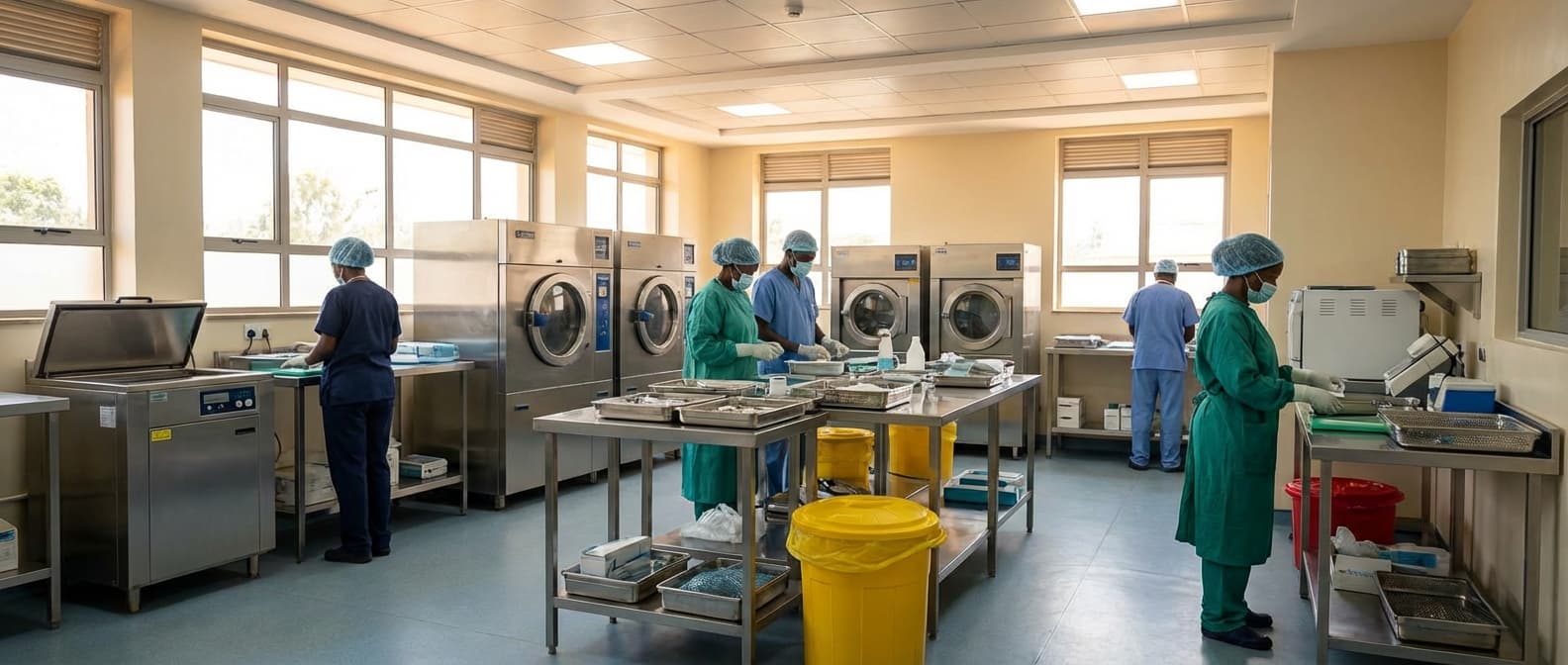
Medical Equipment Decontamination Service (Pre-Repair/Pre-Relocation) in Kenya
Engineering Excellence & Technical Support
Medical Equipment Decontamination Service (Pre-Repair/Pre-Relocation) High-standard technical execution following OEM protocols and local regulatory frameworks.
Advanced Decontamination Protocols
Leveraging Kenya's leading bio-decontamination technologies, we ensure rigorous elimination of biological hazards from medical equipment before repair or relocation. Our multi-stage process tackles pathogens and contaminants, safeguarding technicians and future users.
Regulatory Compliance & Certification
Adhering strictly to Kenyan health and safety regulations, our service provides certified decontamination, offering peace of mind and demonstrable compliance for healthcare facilities undergoing equipment servicing or relocation.
Seamless Pre-Repair/Relocation Logistics
Integrated decontamination seamlessly fits into your equipment lifecycle. We provide efficient, secure handling and documentation, minimizing downtime and ensuring a smooth transition for your valuable medical assets pre-repair or pre-relocation.
What Is Medical Equipment Decontamination Service (Pre-repair/pre-relocation) In Kenya?
Medical Equipment Decontamination Service (Pre-Repair/Pre-Relocation) in Kenya refers to the specialized process of rendering medical devices safe to handle by removing or inactivating biological contaminants, chemical hazards, and radioactive materials. This service is critically important prior to the equipment being transported for repair, relocation, or disposal. It mitigates risks of cross-contamination to personnel, the environment, and subsequent handling processes, thereby adhering to stringent biosafety and occupational health regulations. The process typically involves a multi-stage approach encompassing cleaning, disinfection, and potentially sterilization, depending on the nature of the contamination and the equipment type.
| Who Needs the Service? | Typical Use Cases | |||
|---|---|---|---|---|
| Hospitals and Healthcare Facilities (Public & Private) | Relocating diagnostic imaging equipment (e.g., X-ray, CT scanners) to a new wing or facility. | Transferring surgical instruments for repair or recalibration. | Preparing anesthesia machines for refurbishment. | Disposing of or donating outdated but potentially contaminated medical devices. |
| Medical Device Manufacturers & Distributors | Receiving equipment for repair under warranty or service contracts. | Transporting demonstration units to new locations. | Returning returned or refurbished equipment to clients. | |
| Third-Party Biomedical Engineering Service Providers | Performing on-site or off-site repairs requiring equipment removal. | Managing the logistics of moving equipment between client sites. | ||
| Research and Development Laboratories | Decontaminating specialized laboratory equipment before relocation or maintenance. | Handling equipment exposed to biohazardous or radioactive materials. |
Key Aspects of Medical Equipment Decontamination Service (Pre-Repair/Pre-Relocation)
- Scope of Service: Comprehensive cleaning, disinfection, and/or sterilization of medical equipment to eliminate biological pathogens (bacteria, viruses, fungi), chemical residues, and radioactive isotopes.
- Regulatory Compliance: Adherence to national (e.g., Ministry of Health guidelines) and international standards for biosafety and hazardous material handling.
- Personnel Safety: Protection of technicians, engineers, and other personnel involved in the repair, relocation, or disposal process from potential exposure to infectious agents or hazardous substances.
- Environmental Protection: Prevention of the spread of contaminants into the wider environment during transport and handling.
- Equipment Integrity: Ensuring decontamination methods do not compromise the operational integrity or functionality of the medical equipment.
- Documentation: Provision of detailed decontamination certificates and reports for audit and record-keeping purposes.
Who Needs Medical Equipment Decontamination Service (Pre-repair/pre-relocation) In Kenya?
In Kenya, the need for specialized medical equipment decontamination services, particularly before repair or relocation, is crucial for ensuring patient safety, equipment longevity, and compliance with health regulations. These services are vital for preventing the spread of infections, protecting technicians, and maintaining the integrity of sensitive medical devices. The primary goal is to create a sterile and safe environment for all stakeholders involved.
| Target Customer Group | Specific Departments/Areas of Need | Reasons for Decontamination (Pre-Repair/Pre-Relocation) |
|---|---|---|
| Hospitals (Public & Private) | Operating Theatres, Intensive Care Units (ICUs), Emergency Departments, Radiology, Pathology Labs, Central Sterile Supply Departments (CSSD), Patient Wards | Prevent cross-contamination during equipment servicing; protect technicians from biohazards; ensure sterile reinstallation; mitigate risks during inter-departmental or facility relocation. |
| Clinics and Health Centers | Consultation Rooms, Minor Procedure Rooms, Diagnostic areas (e.g., ultrasound, ECG) | Maintain a safe patient environment; ensure equipment is free from contaminants before external repair; facilitate smooth transitions during facility upgrades or relocations. |
| Diagnostic Laboratories | Microbiology, Hematology, Biochemistry, Molecular Diagnostics labs | Prevent cross-contamination of samples and reagents; protect laboratory personnel from infectious agents; ensure equipment is clean for accurate diagnostic results before servicing. |
| Surgical Centers | Operating rooms, recovery rooms, sterilization areas | Critical for maintaining sterile environments; eliminate bioburden on surgical equipment before it leaves the facility for repair; ensure seamless return and re-integration into sterile workflows. |
| Dental Practices | Dental chairs, X-ray units, sterilization units, intraoral cameras | Protect dental staff and patients from infectious agents; ensure instruments and equipment are safe for handling by repair technicians; maintain hygiene standards during equipment downtime. |
| Veterinary Clinics and Hospitals | Operating rooms, kennels, diagnostic imaging suites, laboratories | Prevent zoonotic disease transmission; protect veterinary staff and animal handlers; ensure equipment is safe for technicians handling potentially infectious animal-related biological materials. |
| Medical Equipment Manufacturers & Distributors | Showrooms, service centers, warehousing facilities | Prepare equipment for demonstration or sale; ensure returned or serviced equipment is contaminant-free; maintain the reputation of the brand by delivering clean products. |
| Third-Party Biomedical Engineering Service Providers | Field service operations, repair workshops | Protect their technicians from exposure to hazardous biological materials; ensure their repair facilities remain clean and safe; provide a professional and safe service to their clients. |
| Research Institutions | Laboratories using specialized medical equipment | Maintain the integrity of research experiments by preventing contamination; protect researchers from biohazards; ensure equipment is clean for sensitive experimental procedures. |
| Emergency Medical Services (EMS) | Ambulances, emergency response vehicles, dispatch centers | Decontaminate equipment (e.g., ventilators, defibrillators) after patient transport before maintenance or transfer to another unit; prevent the spread of communicable diseases within the EMS network. |
Who Needs Medical Equipment Decontamination Service (Pre-Repair/Pre-Relocation) in Kenya?
- Hospitals (Public and Private)
- Clinics and Health Centers
- Diagnostic Laboratories
- Surgical Centers
- Dental Practices
- Veterinary Clinics and Hospitals
- Medical Equipment Manufacturers and Distributors
- Third-Party Biomedical Engineering Service Providers
- Research Institutions
- Emergency Medical Services (EMS)
Medical Equipment Decontamination Service (Pre-repair/pre-relocation) Process In Kenya
This document outlines the standard workflow for a Medical Equipment Decontamination Service (Pre-Repair/Pre-Relocation) in Kenya, ensuring proper hygiene and safety before equipment undergoes repair or is moved to a new location. This process is crucial for preventing the spread of infections and protecting personnel involved in subsequent handling.
| Phase | Step | Description | Key Activities/Considerations | Responsible Party | Documentation/Output |
|---|---|---|---|---|---|
| 1. Inquiry and Initial Assessment | 1.1 Client Inquiry | The client (hospital, clinic, repair facility, etc.) contacts the decontamination service provider with a request for decontamination. | Initial contact via phone, email, or online form. Client provides details about the equipment, its condition, intended purpose (repair/relocation), and urgency. | Client, Decontamination Service Provider | Inquiry record, initial equipment details |
| 1.2 Preliminary Equipment Assessment | A preliminary understanding of the decontamination needs is established. | Discussion on equipment type, size, materials, known contaminants (biological, chemical), and any specific client concerns. Request for equipment manual or specifications if available. | Decontamination Service Provider, Client | Notes from discussion, preliminary risk assessment | |
| 2. Quotation and Agreement | 2.1 Site Visit/Remote Assessment (if required) | A more detailed assessment to confirm scope and pricing. | For complex equipment or large volumes, a site visit may be necessary. Otherwise, detailed photos/videos and discussion are used. Identification of required decontamination agents and equipment. | Decontamination Service Provider | Site assessment report, confirmed scope of work |
| 2.2 Quotation Preparation | A detailed cost estimate is provided to the client. | Includes cost of labor, decontamination agents, specialized equipment, travel, and any consumables. Based on the assessment, equipment type, size, and level of contamination. Validity period of the quote is specified. | Decontamination Service Provider | Formal quotation document | |
| 2.3 Agreement/Contract | Formal agreement on terms and conditions. | Client accepts the quotation. A service agreement or purchase order is issued, outlining services, pricing, timeline, payment terms, liability, and confidentiality. | Client, Decontamination Service Provider | Signed service agreement, purchase order, or contract | |
| 3. Scheduling and Logistics | 3.1 Scheduling the Service | Arranging a convenient date and time for the decontamination. | Coordination with the client's schedule to minimize disruption. Confirmation of access to the equipment and the work area. Communication of the service team's arrival time. | Decontamination Service Provider, Client | Scheduled service date and time confirmation |
| 3.2 Logistics and Preparation | Ensuring all necessary resources are in place. | Mobilization of trained personnel, appropriate PPE, certified decontamination agents, specialized cleaning equipment (e.g., foggers, high-pressure washers), waste disposal containers, and safety signage. Transportation of personnel and equipment to the client's site. | Decontamination Service Provider | Logistics plan, equipment checklist, personnel deployment | |
| 4. Decontamination Execution | 4.1 Pre-Decontamination Inspection | Final check before commencing the process. | Visual inspection of the equipment to identify any immediate hazards or areas requiring special attention. Confirming the scope of work aligns with the agreement. | Decontamination Service Team | Pre-decontamination inspection checklist |
| 4.2 Personnel Protection | Ensuring the safety of the decontamination team. | Mandatory use of appropriate Personal Protective Equipment (PPE) such as gloves, masks, eye protection, and disposable gowns. | Decontamination Service Team | PPE compliance | |
| 4.3 Decontamination Process | Applying approved decontamination agents and techniques. | Following established protocols for the specific equipment and identified contaminants. This may involve manual cleaning, disinfection, sterilization (if applicable and specified), or fogging. Adhering to manufacturer guidelines and regulatory standards (e.g., WHO, KPHC). | Decontamination Service Team | Detailed record of decontamination process, agents used, and duration | |
| 4.4 Waste Management | Safe disposal of contaminated materials. | Collection and proper disposal of all contaminated waste (wipes, consumables, disposable PPE) in designated biohazard bags or containers, following local regulations for medical waste disposal. | Decontamination Service Team | Waste disposal manifest/records | |
| 4.5 Post-Decontamination Inspection | Verifying the effectiveness of the process. | Visual inspection to ensure all accessible surfaces are clean. Checking for any residual contaminants or signs of damage caused by the decontamination process. Client may be invited for a walk-through. | Decontamination Service Team, Client (optional) | Post-decontamination inspection checklist | |
| 5. Documentation and Handover | 5.1 Decontamination Certificate Issuance | Providing official proof of decontamination. | Issuing a signed certificate stating the equipment decontaminated, date, methods used, and the personnel involved. This is crucial for the next stage (repair/relocation). | Decontamination Service Provider | Decontamination Certificate |
| 5.2 Service Report | Comprehensive report of the service rendered. | Includes details of the entire process, agents used, any challenges encountered, waste disposal confirmation, and the issued decontamination certificate. May include before/after photos if agreed upon. | Decontamination Service Provider | Comprehensive Service Report | |
| 5.3 Equipment Handover | Returning the equipment to the client or preparing for onward transfer. | Ensuring the client has received all documentation and is satisfied with the service. If for repair, handing over to the repair technician. If for relocation, ensuring proper packaging and transfer arrangements are in place. | Decontamination Service Provider, Client, Repair Technician | Handover sign-off (if applicable) | |
| 6. Post-Service Follow-up | 6.1 Feedback Collection | Gathering client feedback for service improvement. | Contacting the client after a reasonable period to ensure satisfaction and gather feedback on the service provided. | Decontamination Service Provider | Client feedback record |
| 6.2 Record Archiving | Maintaining records for future reference. | Archiving all service records, certificates, and client communication for a defined period as per regulatory requirements or internal policy. | Decontamination Service Provider | Archived service records |
Medical Equipment Decontamination Service Workflow (Kenya)
- Phase 1: Inquiry and Initial Assessment
- Phase 2: Quotation and Agreement
- Phase 3: Scheduling and Logistics
- Phase 4: Decontamination Execution
- Phase 5: Documentation and Handover
- Phase 6: Post-Service Follow-up
Medical Equipment Decontamination Service (Pre-repair/pre-relocation) Cost In Kenya
The cost of medical equipment decontamination services in Kenya, specifically for pre-repair or pre-relocation purposes, is influenced by a variety of factors. This service is crucial to ensure the safety of both technicians and the environment, preventing the spread of potential biohazards or chemical contaminants. Understanding these cost drivers is essential for healthcare facilities and repair/relocation companies alike when budgeting for such services. Pricing is typically quoted in Kenyan Shillings (KES).
| Equipment Size/Complexity | Estimated Cost Range (KES) | Notes |
|---|---|---|
| Small Diagnostic Tools (e.g., stethoscopes, thermometers) | 5,000 - 15,000 | Basic disinfection. Minimal disassembly. |
| Medium-Sized Laboratory Equipment (e.g., centrifuges, incubators) | 15,000 - 50,000 | May involve specialized cleaning agents and some disassembly. |
| Large Imaging Equipment (e.g., X-ray machines, ultrasound machines) | 50,000 - 200,000+ | Complex multi-stage cleaning, potential for specialized chemicals. Factors include model and accessibility. |
| Surgical Equipment (per set) | 10,000 - 30,000 | Depends on the number of instruments and material type. High level of sterility required. |
| Sterilizers/Autoclaves (external decontamination) | 25,000 - 75,000 | Focus on external surfaces, seals, and filters. Internal cleaning may be separate. |
| Specialized Medical Devices (e.g., ventilators, anesthesia machines) | 40,000 - 150,000+ | Requires expert knowledge and specific protocols. Potential for extensive internal cleaning. |
| Biohazard Containment Units (e.g., biosafety cabinets) | 30,000 - 100,000 | Focus on internal surfaces, HEPA filters, and operational integrity checks. |
| Emergency/Rush Service Surcharge | 20% - 50% increase | Applied on top of standard service fees. |
Key Pricing Factors for Medical Equipment Decontamination in Kenya:
- Type and Size of Equipment: Larger and more complex equipment, such as MRI machines or large sterilizers, will inherently require more time, specialized chemicals, and labor for thorough decontamination compared to smaller devices like diagnostic tools or laboratory glassware. The number of components requiring attention also plays a significant role.
- Level of Contamination: The nature and extent of the contamination are paramount. Equipment heavily soiled with biological fluids, infectious agents, or hazardous chemicals will necessitate more intensive and specialized cleaning protocols, potentially requiring higher-grade disinfectants or more extensive multi-stage processes. This can include identifying and addressing specific pathogens or chemical residues.
- Decontamination Method Employed: Different decontamination methods have varying costs. Standard disinfection with approved agents is generally less expensive than more advanced techniques like sterilization (using autoclaving, ethylene oxide, or gamma irradiation) or specialized chemical neutralization. The choice of method often depends on the equipment's material and the type of contamination.
- Required Turnaround Time: Urgent decontamination services, especially those needed to meet tight repair or relocation schedules, may incur additional rush fees. Standard service can often be scheduled to optimize resource allocation, while emergency requests demand immediate attention and potentially overtime labor.
- Location of Service: The geographical location within Kenya can influence costs due to transportation expenses for personnel and specialized equipment. Services required in remote areas might have higher charges to cover travel and potential overnight stays for technicians.
- Specialized Personnel and Certifications: Decontamination often requires trained personnel with specific certifications in handling hazardous materials and operating specialized equipment. The expertise and qualifications of the decontamination team contribute to the overall cost.
- Disposal of Contaminated Materials: The safe and compliant disposal of any contaminated waste generated during the decontamination process is a significant cost factor. This includes packaging, transportation to licensed disposal facilities, and associated fees.
- Complexity of Disassembly/Reassembly: For some equipment, partial or full disassembly might be necessary for thorough decontamination. The time and skill required for this process will be factored into the cost.
- Documentation and Certification: While not always mandatory for pre-repair/relocation, some clients may require detailed documentation of the decontamination process, including certificates of decontamination. This adds to the administrative and procedural costs.
- Service Provider's Overhead and Reputation: Larger, established companies with significant overhead, insurance, and a strong reputation may charge more for their services, reflecting their reliability and investment in quality.
Affordable Medical Equipment Decontamination Service (Pre-repair/pre-relocation) Options
Our affordable medical equipment decontamination service offers a critical step before repairs or relocation, ensuring safety, compliance, and extended equipment lifespan. We provide cost-effective solutions through carefully curated value bundles and strategic cost-saving measures.
| Value Bundle Name | Included Services | Ideal For | Cost Savings Strategy |
|---|---|---|---|
| Basic Clean & Sanitize | Surface cleaning and disinfection of non-critical areas. Basic biohazard containment. Standard decontamination certificate. | Routine equipment maintenance, minor repairs, standard relocations. | Economical pricing, bulk service discounts. |
| Comprehensive Decon Package | Thorough cleaning and disinfection of all accessible surfaces, including crevices and connectors. HEPA-filtered air system integration (if applicable). Detailed biohazard assessment and reporting. Advanced decontamination certificate. | Complex repairs, inter-facility transfers, equipment with known bioburden, pre-auction preparation. | Bundled service discounts, reduced individual service calls, integrated workflow. |
| Rapid Response Decon | Expedited decontamination process for urgent repair or relocation needs. Priority scheduling and on-site service options (location dependent). | Emergency repairs, time-sensitive relocations, unexpected equipment transfers. | Reduced waiting times, minimizing extended downtime costs for critical equipment. Priority access to technicians. |
| Fleet Management Decon | Scheduled recurring decontamination services for multiple pieces of equipment. Customized cleaning protocols based on equipment type and usage. Dedicated account manager. | Hospitals, clinics, large healthcare systems with substantial medical equipment inventories. | Predictable budgeting, volume-based pricing, streamlined scheduling, optimized resource allocation. |
Key Benefits of Pre-Repair/Relocation Decontamination
- Enhanced Safety: Eliminates biohazards for technicians and facility staff, preventing cross-contamination.
- Regulatory Compliance: Meets stringent healthcare industry standards for equipment handling.
- Extended Equipment Lifespan: Proactive cleaning can prevent minor issues from escalating due to microbial buildup.
- Reduced Downtime: Streamlines the repair process by providing clean equipment, minimizing handling delays.
- Peace of Mind: Ensures a smooth and compliant transition for your valuable medical assets.
- Environmental Responsibility: Proper disposal of biohazardous materials.
Verified Providers In Kenya
In Kenya's dynamic healthcare landscape, navigating the options for quality medical care can be a challenge. Verified providers offer a crucial assurance of competence, adherence to standards, and patient safety. Franance Health stands out as a premier choice due to its rigorous credentialing process and unwavering commitment to excellence. This document outlines why Franance Health's verified providers represent the best choice for your healthcare needs in Kenya.
| Credentialing Aspect | Franance Health Standard | Benefit to Patients |
|---|---|---|
| Licensing & Registration | Mandatory, with verification against official Kenyan regulatory bodies (e.g., KMPDC, KPPB). | Ensures legal and ethical practice, protecting patients from unqualified practitioners. |
| Educational Qualifications | Verification of degrees, diplomas, and certifications from accredited institutions. | Confirms that providers possess the foundational knowledge and expertise required. |
| Clinical Experience | Assessment of practical experience, often including peer reviews and case studies. | Guarantees that providers have hands-on experience in diagnosing and treating various conditions. |
| Professional Conduct & Ethics | Adherence to a strict code of conduct, with mechanisms for feedback and grievance resolution. | Promotes respectful, ethical, and trustworthy patient-provider interactions. |
| Specialty Certifications | Verification of specialized training and certifications for relevant disciplines. | Ensures access to highly skilled specialists for complex medical needs. |
| Continuing Medical Education (CME) | Requirement for regular participation in accredited CME programs. | Keeps providers updated with the latest medical research, treatments, and technologies. |
Why Franance Health Providers are the Best Choice:
- Rigorous Vetting Process: Franance Health employs a multi-layered credentialing process that goes beyond basic licensing. This includes thorough background checks, verification of educational qualifications, and assessment of practical experience and ongoing professional development.
- Commitment to Quality Standards: All Franance Health verified providers adhere to internationally recognized quality benchmarks and best practices in healthcare delivery. This ensures patients receive evidence-based and high-quality treatment.
- Patient-Centric Approach: Franance Health prioritizes patient well-being and satisfaction. Verified providers are selected not only for their clinical expertise but also for their empathy, communication skills, and dedication to personalized care.
- Access to Specialized Expertise: The network of Franance Health verified providers encompasses a wide range of medical specialties, ensuring that patients can access the most appropriate and skilled professionals for their specific health concerns.
- Trust and Reliability: The "verified" status signifies a seal of approval from Franance Health, offering patients peace of mind and confidence in the medical professionals they choose.
- Continuous Professional Development: Franance Health mandates and facilitates ongoing training and professional development for its verified providers, keeping them abreast of the latest medical advancements and technologies.
Scope Of Work For Medical Equipment Decontamination Service (Pre-repair/pre-relocation)
This Scope of Work (SOW) outlines the requirements for medical equipment decontamination services to be performed prior to repair or relocation. The objective is to ensure the safety of personnel, prevent cross-contamination, and comply with relevant health and safety regulations. The service includes initial assessment, containment, cleaning, disinfection, and verification of decontamination.
| Technical Deliverable | Standard Specifications | Verification Method |
|---|---|---|
| Decontamination Plan | Detailed plan outlining specific procedures, chemicals, contact times, and safety protocols for each equipment type. Must include a risk assessment and emergency response plan. Shall be submitted for approval prior to commencement. | Review and Approval by Client Representative |
| Cleaning Agents and Disinfectants | All cleaning agents and disinfectants used must be EPA-registered, FDA-approved (where applicable), and effective against a broad spectrum of pathogens (e.g., bacteria, viruses, fungi). Specific products and concentrations must be documented. Material Safety Data Sheets (MSDS) must be provided for all chemicals used. | MSDS Review, Product Label Verification |
| Decontamination Efficacy Report | A report confirming the successful elimination of bioburden to pre-determined acceptable levels. This may include microbial testing (e.g., ATP testing, swab cultures) depending on the criticality of the equipment. Specific acceptance criteria must be defined. | Review of testing results against acceptance criteria |
| Post-Decontamination Inspection Report | Visual inspection report detailing the cleanliness of the equipment, ensuring no visible residues of biological material or cleaning agents remain. Photographic evidence may be required. | Visual inspection by Client Representative, Photographic evidence |
| Certificate of Decontamination | A formal document signed by the service provider, certifying that the equipment has been decontaminated according to the agreed-upon SOW and standards. Must include equipment serial numbers and date of service. | Issuance of formal certificate |
| Personnel Training and Certification | All personnel performing decontamination services must be trained in biohazard handling, proper use of personal protective equipment (PPE), chemical safety, and decontamination procedures. Proof of training and relevant certifications shall be provided. | Review of training records and certifications |
| Waste Disposal Manifest | Documentation of proper disposal of all contaminated materials (e.g., wipes, PPE, cleaning solutions) in accordance with local, state, and federal regulations for biohazardous waste. | Review of waste disposal manifests and receipts |
Key Stages of Decontamination Service
- Site Assessment and Equipment Identification
- Containment and Preparation
- Cleaning and Decontamination Procedures
- Drying and Packaging (if required)
- Verification and Documentation
Service Level Agreement For Medical Equipment Decontamination Service (Pre-repair/pre-relocation)
This Service Level Agreement (SLA) outlines the response times and uptime guarantees for the Medical Equipment Decontamination Service provided by [Your Company Name] (hereinafter referred to as "Service Provider") to [Client Name] (hereinafter referred to as "Client") for pre-repair and pre-relocation decontamination of medical equipment. This SLA is effective as of [Start Date] and shall remain in effect until [End Date], unless terminated earlier in accordance with the Master Service Agreement.
1. Definitions
- Decontamination Request: A formal request submitted by the Client to the Service Provider for decontamination of medical equipment, specifying the equipment type, quantity, and reason (pre-repair or pre-relocation).
- Service Hours: [Specify Service Hours, e.g., Monday to Friday, 8:00 AM to 5:00 PM Local Time, excluding public holidays].
- Business Day: Any day that is not a Saturday, Sunday, or public holiday in [Specify Location].
- Response Time: The maximum allowable time from when a Decontamination Request is received by the Service Provider during Service Hours until the Service Provider acknowledges receipt and initiates the service scheduling process.
- On-Site Decontamination Completion: The time from the arrival of the decontamination team on-site until the completion of the decontamination process for the requested equipment, as defined in the scope of service.
- Critical Equipment: Medical equipment identified by the Client as essential for immediate patient care and whose downtime would significantly impact operations. Such equipment will be listed in Appendix A.
- Standard Equipment: All medical equipment not classified as Critical Equipment.
- Uptime Guarantee: Refers to the availability of the decontamination service itself, meaning the Service Provider's ability to accept and process Decontamination Requests within the agreed-upon response times. This does not guarantee the uptime of the medical equipment being decontaminated.
| Service Level Objective | Service Hours | Response Time Target (Pre-Repair) | Response Time Target (Pre-Relocation) | On-Site Decontamination Completion Target (Critical Equipment) | On-Site Decontamination Completion Target (Standard Equipment) | Uptime Guarantee |
|---|---|---|---|---|---|---|
| Decontamination Request Acknowledgement | During Service Hours | Within 2 Business Hours | Within 4 Business Hours | N/A | N/A | 99.5% of Decontamination Requests acknowledged within stated response times during Service Hours. |
| Scheduling Confirmation | During Service Hours | Within 4 Business Hours of Acknowledgement | Within 6 Business Hours of Acknowledgement | N/A | N/A | 99.0% of scheduled decontamination appointments confirmed within stated times. |
| On-Site Decontamination Commencement | As per scheduled appointment | Within 24 Business Hours of Scheduling Confirmation (for Critical Equipment) | Within 24 Business Hours of Scheduling Confirmation (for Critical Equipment) | Within 4 Business Hours of Team Arrival | N/A | N/A |
| On-Site Decontamination Commencement | As per scheduled appointment | Within 48 Business Hours of Scheduling Confirmation (for Standard Equipment) | Within 48 Business Hours of Scheduling Confirmation (for Standard Equipment) | N/A | Within 8 Business Hours of Team Arrival | N/A |
| Service Availability | 24/7 | N/A | N/A | N/A | N/A | The Service Provider will ensure the decontamination service infrastructure is available to accept and process Decontamination Requests, with a target of 99.9% availability during the contract term (excluding scheduled maintenance). |
Service Level Objectives
- {"item":"Response Times for Decontamination Requests"}
- {"item":"On-Site Decontamination Completion Times"}
- {"item":"Service Availability (Uptime Guarantee)"}
Frequently Asked Questions

Ready when you are
Let's scope your Medical Equipment Decontamination Service (Pre-Repair/Pre-Relocation) in Kenya project in Kenya.

Scaling healthcare logistics and technical systems across the entire continent.