
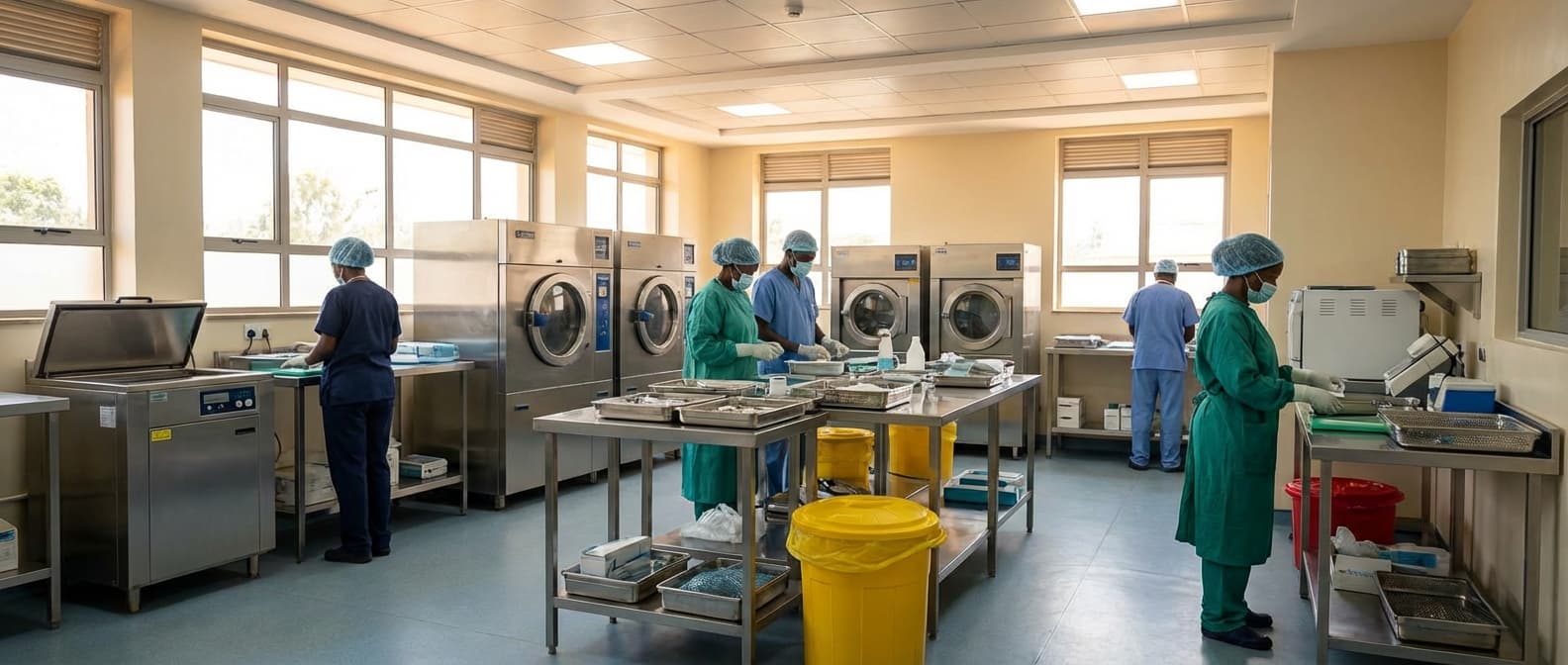
Endoscope Reprocessing Equipment Support Service in Kenya
Engineering Excellence & Technical Support
Endoscope Reprocessing Equipment Support Service High-standard technical execution following OEM protocols and local regulatory frameworks.
Optimized Equipment Uptime
Leveraging advanced remote diagnostics and proactive maintenance scheduling for endoscope reprocessors, we minimize downtime and ensure your critical reprocessing cycles are consistently met, safeguarding patient care in Kenyan healthcare facilities.
Stringent Compliance Assurance
Our certified technicians provide expert installation, calibration, and validation services for all endoscope reprocessing equipment, guaranteeing adherence to the latest Kenyan and international infection control standards and regulatory requirements.
Rapid Response & Local Expertise
With a dedicated team of highly trained engineers strategically located across Kenya, we offer swift on-site support, efficient spare parts management, and tailored training programs to keep your endoscope reprocessing operations running at peak performance.
What Is Endoscope Reprocessing Equipment Support Service In Kenya?
Endoscope reprocessing equipment support service in Kenya refers to the specialized technical assistance and maintenance provided for the machinery used in the decontamination and sterilization of flexible and rigid endoscopes. This service is critical for ensuring patient safety, infection control, and the operational longevity of expensive endoscopic equipment within healthcare facilities.
| Who Needs This Service | Typical Use Cases |
|---|---|
| Hospitals (Public and Private) | Operating rooms, gastroenterology units, pulmonology departments, urology departments, and any department utilizing flexible or rigid endoscopes for diagnostic or therapeutic procedures. |
| Specialty Clinics (e.g., Gastroenterology, Urology, ENT) | Facilities performing endoscopic procedures as their primary service offering. |
| Diagnostic Centers | Independent centers that provide endoscopic services. |
| Medical Equipment Suppliers and Distributors | Companies that sell and distribute endoscope reprocessing equipment may offer or subcontract this support service to their clients. |
| Public Health Facilities | Government-funded hospitals and health centers that require reliable infection control measures. |
| Central Sterilization Departments (CSDs) | Departments within larger healthcare institutions responsible for reprocessing reusable medical devices, including endoscopes. |
Key Aspects of Endoscope Reprocessing Equipment Support Service:
- Installation and Commissioning: Proper setup and validation of newly acquired reprocessing equipment to meet manufacturer specifications and regulatory standards.
- Preventive Maintenance (PM): Scheduled inspections, cleaning, lubrication, calibration, and component replacement to avert equipment failures and maintain optimal performance.
- Corrective Maintenance and Repair: Diagnosis and resolution of equipment malfunctions, including troubleshooting, part replacement, and functional testing.
- Validation and Performance Testing: Ensuring that reprocessing cycles consistently achieve the required levels of cleanliness and sterility, often involving biological and chemical indicators.
- Software Updates and Calibration: Maintaining the integrity and accuracy of the equipment's control systems and sensors.
- Technical Training: Educating healthcare facility staff on the proper operation, basic troubleshooting, and routine maintenance of the reprocessing equipment.
- Spare Parts Management: Ensuring the availability of genuine and compatible spare parts to minimize downtime during repairs.
- Regulatory Compliance Assistance: Supporting facilities in meeting national and international standards related to medical device reprocessing.
- Remote Diagnostics: Utilizing telecommunication technologies to remotely assess equipment status and provide initial troubleshooting.
Who Needs Endoscope Reprocessing Equipment Support Service In Kenya?
Endoscope reprocessing equipment support services are crucial for ensuring the safety and efficiency of medical procedures in Kenya. These services encompass maintenance, repair, calibration, and validation of automated endoscope reprocessors (AERs) and related equipment. Without proper functioning equipment, hospitals and clinics risk cross-contamination, equipment downtime, and delays in patient care. The need for reliable support services is paramount to maintain high standards of infection control and operational continuity.
| Department | Primary Need for Endoscope Reprocessing Support | Impact of Poor Support |
|---|---|---|
| Endoscopy Unit/Department | Daily reprocessing of flexible endoscopes used in diagnostic and therapeutic procedures (gastroscopy, colonoscopy, bronchoscopy, etc.). | Delayed procedures, patient safety risks due to inadequate disinfection, potential outbreaks of infections. |
| Sterilization and Decontamination Department (CSSD) | Maintenance and validation of Automated Endoscope Reprocessors (AERs), ensuring compliance with infection control guidelines. | Breakdown of AERs leading to manual reprocessing bottlenecks, increased risk of human error, failure to meet regulatory standards. |
| Infection Prevention and Control (IPC) Department | Ensuring equipment functions optimally to prevent the transmission of healthcare-associated infections (HAIs) through contaminated endoscopes. | Inability to effectively prevent the spread of pathogens, reputational damage, increased HAIs, and potential legal repercussions. |
| Biomedical Engineering Department | Routine maintenance, troubleshooting, and repair of AERs and associated equipment to minimize downtime. | Extended equipment downtime, reliance on external technicians for urgent repairs, increased maintenance costs due to neglect. |
| Quality Assurance Department | Verification of reprocessing cycles and adherence to manufacturer specifications and regulatory requirements. | Non-compliance with standards, audit failures, and compromised patient safety protocols. |
Target Customers and Departments Requiring Endoscope Reprocessing Equipment Support Service in Kenya
- Hospitals (Public and Private): These are the primary consumers of endoscope reprocessing services, owing to their high volume of endoscopic procedures.
- Specialty Clinics and Diagnostic Centers: Facilities focusing on gastroenterology, pulmonology, urology, and other specialties that utilize flexible endoscopes.
- Ambulatory Surgery Centers (ASCs): These centers perform outpatient procedures and require efficient and reliable reprocessing for their endoscopes.
- Government Health Facilities: Public hospitals and health centers, particularly those designated for specialized care, rely on this support.
Endoscope Reprocessing Equipment Support Service Process In Kenya
This document outlines the Endoscope Reprocessing Equipment Support Service Process in Kenya, detailing the workflow from initial inquiry to the successful execution of support services. The process is designed to ensure efficient and effective maintenance, repair, and calibration of endoscope reprocessing equipment, critical for infection control in healthcare facilities.
| Stage | Description | Key Activities | Responsibility |
|---|---|---|---|
| Inquiry & Initial Assessment | Client identifies a need for support. | Contacting support provider, providing equipment details and problem description. | Healthcare Facility |
| Service Request Logging & Triage | Support provider formally records the request and categorizes its urgency and complexity. | Entering request into service management system, initial technical assessment. | Support Provider Service Desk/Technical Specialist |
| Service Quote & Authorization | Providing the client with a transparent breakdown of service costs and scope. | Generating service quote, client review and approval. | Support Provider & Healthcare Facility |
| Scheduling & Dispatch | Arranging a suitable time for the service visit and assigning a technician. | Coordinating with client, assigning technician and resources. | Support Provider Dispatch/Scheduling Department |
| On-site Diagnosis & Repair/Maintenance | Technician performs hands-on work at the client's location. | Equipment inspection, troubleshooting, repair, preventive maintenance, calibration. | Support Provider Service Technician |
| Testing & Validation | Ensuring the equipment functions correctly after intervention. | Performing operational tests and performance validation. | Support Provider Service Technician |
| Documentation & Handover | Recording the service performed and formally handing over the equipment. | Completing service report, client sign-off, explaining work done. | Support Provider Service Technician & Healthcare Facility |
| Invoicing & Follow-up | Finalizing the financial transaction and confirming client satisfaction. | Sending invoice, processing payment, post-service follow-up and feedback collection. | Support Provider Finance Department & Customer Service |
Endoscope Reprocessing Equipment Support Service Process Workflow in Kenya
- Inquiry & Initial Assessment: Healthcare facilities experiencing issues or requiring routine maintenance for their endoscope reprocessing equipment will initiate contact with the support service provider. This can be through phone, email, or an online portal. The initial contact will involve gathering basic information about the equipment model, the nature of the problem (if any), the facility's location, and the urgency of the request.
- Service Request Logging & Triage: Upon receiving the inquiry, the support provider logs the request into their service management system. The request is then triaged by a technical support specialist who assesses the complexity, urgency, and necessary resources (e.g., spare parts, specialized technician).
- Service Quote & Authorization: Based on the initial assessment, a detailed service quote is prepared and sent to the client. This quote will outline the scope of work, estimated labor hours, required spare parts, associated costs, and the proposed timeline. Upon client approval and authorization to proceed, the service request moves to the scheduling phase.
- Scheduling & Dispatch: A service appointment is scheduled based on the client's availability, technician availability, and the urgency of the request. Once scheduled, a qualified and trained service technician is dispatched to the client's facility with the necessary tools and, if pre-identified, the required spare parts.
- On-site Diagnosis & Repair/Maintenance: The technician arrives at the facility and conducts a thorough on-site diagnosis of the equipment. This may involve visual inspection, functional testing, and diagnostic checks. Based on the diagnosis, the technician will perform the necessary repairs, preventive maintenance, or calibration as per the service agreement and manufacturer guidelines.
- Testing & Validation: After the repair or maintenance is completed, the technician performs rigorous testing and validation of the equipment to ensure it is functioning optimally and meeting all performance specifications. This includes verifying that the reprocessing cycles are effective and safe for patient use.
- Documentation & Handover: The technician completes a detailed service report, documenting all actions taken, parts replaced, test results, and any recommendations for future maintenance or operational improvements. The report is then presented to the client for review and sign-off. The technician provides a brief handover, explaining the work done and answering any client questions.
- Invoicing & Follow-up: Following the successful completion and client sign-off, an invoice is generated and sent to the healthcare facility. The support provider may also conduct a follow-up call or email after a specified period to ensure client satisfaction and gather feedback on the service provided. This feedback is used for continuous improvement of the support process.
Endoscope Reprocessing Equipment Support Service Cost In Kenya
The cost of endoscope reprocessing equipment support services in Kenya is influenced by a variety of factors. These services are crucial for maintaining the functionality, safety, and longevity of complex endoscope reprocessing equipment, which includes automated endoscope reprocessors (AERs), washer-disinfectors, and associated accessories. Understanding these pricing dynamics is vital for healthcare facilities to budget effectively and ensure compliance with infection control standards. The local currency, the Kenyan Shilling (KES), is used for all pricing. Key drivers of cost include the type of service required (preventive maintenance vs. emergency repair), the complexity of the equipment, the availability of spare parts, the expertise of the service provider, and the geographical location within Kenya. Response times and service level agreements (SLAs) also play a significant role, with faster or more comprehensive support commanding higher fees.
| Service Type / Equipment Category | Estimated Cost Range (KES) | Notes |
|---|---|---|
| Annual Preventive Maintenance Contract (Standard AER) | KES 70,000 - KES 150,000 | Covers scheduled inspections, cleaning, calibration, and basic functional checks. Varies by AER model and number of units. |
| Annual Preventive Maintenance Contract (Advanced Washer-Disinfector) | KES 100,000 - KES 250,000 | Includes more complex system checks, chemical concentration verification, and validation of disinfection cycles. |
| Emergency Repair Call-Out (Labor Only) | KES 15,000 - KES 50,000 per visit | Excludes cost of spare parts. May have additional charges for after-hours or weekend support. |
| Emergency Repair (Labor + Parts - Minor Issue) | KES 30,000 - KES 100,000 | Example: Replacing a faulty sensor or a minor pump component. |
| Emergency Repair (Labor + Parts - Major Issue) | KES 100,000 - KES 500,000+ | Example: Replacing a main control board, significant leak repair, or major component failure. Can exceed this significantly for complex units. |
| Extended Warranty/Service Contract (Premium) | 10-20% of Equipment Purchase Price Annually | Often includes parts, labor, and rapid response times. Typically negotiated directly with the equipment supplier. |
| On-site Training for Staff | KES 20,000 - KES 75,000 per session | Covers operational best practices and basic troubleshooting. |
Key Pricing Factors for Endoscope Reprocessing Equipment Support Service in Kenya
- Type of Service: Routine preventive maintenance contracts are generally more cost-effective than ad-hoc emergency repairs.
- Equipment Complexity and Type: More advanced or specialized reprocessing equipment will incur higher support costs due to the need for specialized technicians and parts.
- Age and Condition of Equipment: Older or heavily used equipment may require more frequent and extensive maintenance, leading to higher costs.
- Spare Parts Availability and Cost: Genuine manufacturer parts are often more expensive than aftermarket alternatives, but are usually recommended for performance and safety.
- Service Provider Expertise and Reputation: Highly experienced and reputable service providers, especially those with manufacturer certifications, may charge premium rates.
- Geographical Location: Service calls to remote areas outside major urban centers like Nairobi or Mombasa may incur additional travel and logistics charges.
- Service Level Agreements (SLAs): Contracts offering guaranteed response times, 24/7 support, or extended warranties will have higher pricing.
- Scope of Service: Whether the service includes only labor, or also parts, consumables, and software updates.
- Preventive Maintenance Schedules: The frequency and extent of planned maintenance visits outlined in a contract.
Affordable Endoscope Reprocessing Equipment Support Service Options
Ensuring the proper reprocessing of endoscopes is paramount for patient safety and regulatory compliance. However, the cost of equipment and ongoing maintenance can be a significant burden for healthcare facilities. This document outlines affordable endoscope reprocessing equipment support service options, emphasizing value bundles and cost-saving strategies to help optimize your investment.
| Value Bundle Type | Key Inclusions | Cost-Saving Benefits | Ideal For |
|---|---|---|---|
| Comprehensive Care Package | Includes preventive maintenance, on-demand repairs, parts discounts, and annual calibration for a set number of AERs and associated equipment. | Predictable budgeting, reduced emergency repair costs, extended equipment lifespan, minimized downtime, preferential service response. | Facilities with a high volume of endoscopes and a strong focus on minimizing operational risks. |
| Essential Maintenance Bundle | Combines scheduled preventive maintenance and discounted on-demand repair services, with optional add-ons for parts. | Lower upfront cost than comprehensive packages, ensures core maintenance needs are met, helps control repair expenses. | Facilities seeking a balance between cost-effectiveness and reliable equipment upkeep. |
| Training & Compliance Focus | Integrates equipment calibration, validation, and staff competency training programs with discounted preventive maintenance. | Ensures regulatory compliance, reduces the risk of errors, improves staff efficiency, potentially lowers re-processing failure rates. | Facilities prioritizing regulatory adherence and staff development. |
| Parts & Consumables Subscription | Guaranteed supply of approved parts and consumables at pre-negotiated, discounted rates, often with tiered volume discounts. | Bulk purchasing discounts, predictable supply chain, reduced risk of stockouts, elimination of last-minute, higher-priced purchases. | Facilities with consistent reprocessing needs and a desire to streamline procurement. |
Key Endoscope Reprocessing Equipment Support Service Options
- Preventive Maintenance Contracts: Regular scheduled servicing to identify and address potential issues before they lead to costly breakdowns. This includes cleaning, calibration, and functional testing of automated endoscope reprocessors (AERs), leak testing equipment, and drying cabinets.
- On-Demand Repair Services: Access to qualified technicians for prompt troubleshooting and repair of equipment malfunctions. This ensures minimal downtime and continued operational efficiency.
- Parts and Consumables Supply: Reliable access to genuine or high-quality compatible parts and consumables (e.g., detergents, disinfectants, filters) at competitive prices.
- Equipment Calibration and Validation: Ensuring your reprocessing equipment consistently meets performance standards and regulatory requirements through regular calibration and validation services.
- Staff Training and Competency Assessment: Providing training for your reprocessing staff on the proper use, maintenance, and troubleshooting of equipment, along with competency assessments.
- Software Updates and Upgrades: Keeping your AER software up-to-date to ensure optimal performance, security, and compliance with evolving standards.
- Remote Monitoring and Diagnostics: Utilizing technology to remotely monitor equipment performance and diagnose issues, potentially reducing the need for on-site visits and speeding up resolution times.
- Equipment Auditing and Performance Review: Periodic assessments of your reprocessing workflow and equipment performance to identify areas for improvement and cost optimization.
Verified Providers In Kenya
Finding reliable healthcare providers is crucial in Kenya. Verified providers offer peace of mind, ensuring quality care and adherence to standards. Franance Health stands out in this regard, distinguished by its rigorous credentialing process and commitment to patient well-being. This dedication makes them a top choice for individuals and families seeking trusted healthcare solutions.
| Provider Type | Franance Health Verification Focus | Why it Matters for Patients |
|---|---|---|
| Doctors (General Practitioners & Specialists) | Medical Council of Kenya registration, specialist board certifications, years of practice, peer reviews. | Ensures competence, up-to-date knowledge, and a track record of effective treatment. |
| Nurses | Nursing Council of Kenya registration, specialized nursing certifications (e.g., midwifery, critical care), practical skills assessment. | Guarantees qualified and skilled nursing care, crucial for patient safety and recovery. |
| Pharmacies | Pharmacy and Poisons Board registration, compliance with dispensing regulations, stock verification, storage standards. | Confirms authenticity of medications, safe storage, and professional dispensing practices. |
| Laboratories | National Public Health Laboratories accreditation, equipment calibration, quality control procedures, staff qualifications. | Ensures accurate and reliable diagnostic testing, vital for correct diagnosis and treatment planning. |
| Hospitals and Clinics | Ministry of Health licensing, accreditation from relevant bodies, adherence to safety and hygiene standards, patient feedback analysis. | Indicates a commitment to providing a safe, clean, and well-equipped environment for medical services. |
Key Credentials of Franance Health Verified Providers
- Professional Licensing and Registration: All healthcare professionals affiliated with Franance Health undergo thorough checks to ensure they possess valid and up-to-date licenses from relevant Kenyan regulatory bodies.
- Specialized Training and Certifications: Beyond basic qualifications, Franance Health prioritizes providers with specialized training and certifications in their respective fields, indicating advanced expertise.
- Experience and Track Record: A proven history of successful patient care and positive outcomes is a significant factor in the verification process.
- Adherence to Ethical Standards: Franance Health expects all its verified providers to uphold the highest ethical standards in patient interaction and medical practice.
- Continuing Professional Development (CPD): Providers are encouraged and often required to engage in ongoing learning to stay abreast of the latest medical advancements and best practices.
Scope Of Work For Endoscope Reprocessing Equipment Support Service
This Scope of Work (SOW) outlines the requirements for Endoscope Reprocessing Equipment Support Services. The objective is to ensure the optimal performance, reliability, and regulatory compliance of all endoscope reprocessing equipment through scheduled maintenance, corrective repairs, calibration, and operational support. This SOW defines the technical deliverables and standard specifications that the service provider must adhere to.
| Equipment Type | Manufacturer | Model(s) | Service Frequency (PM) | Calibration Requirements | Regulatory Compliance Standard |
|---|---|---|---|---|---|
| Automated Endoscope Reprocessor (AER) | Olympus | OER-Pro, ETD-2 | Semi-annual (every 6 months) | Temperature, pressure, flow rate, disinfectant concentration | AAMI ST91, FDA 21 CFR Part 820, local health authority regulations |
| Automated Endoscope Reprocessor (AER) | Steris | System 1E, Amsco | Semi-annual (every 6 months) | Temperature, pressure, flow rate, cycle parameters | AAMI ST91, FDA 21 CFR Part 820, local health authority regulations |
| Automated Endoscope Reprocessor (AER) | Advanced Sterilization Products (ASP) | Stryker | Semi-annual (every 6 months) | Temperature, pressure, cycle parameters | AAMI ST91, FDA 21 CFR Part 820, local health authority regulations |
| Endoscope Washer Disinfectors | Getinge | WD-40 | Semi-annual (every 6 months) | Temperature, pressure, flow rate, disinfectant concentration | AAMI ST91, FDA 21 CFR Part 820, local health authority regulations |
| Endoscope Drying and Storage Cabinets | Tuttnauer | Dri-D | Annual (every 12 months) | Airflow rate, humidity levels, UV intensity (if applicable) | AAMI ST91, local health authority regulations |
Technical Deliverables
- Scheduled Preventive Maintenance (PM) for all specified endoscope reprocessors.
- Corrective Maintenance (CM) for all specified endoscope reprocessors.
- Calibration services for all critical measurement devices on the equipment.
- Performance validation and verification reports post-maintenance and repair.
- Detailed service reports for each intervention, including work performed, parts used, and technician findings.
- Emergency on-call support with defined response times.
- Access to a secure online portal for service requests, report retrieval, and equipment history.
- Training for facility biomedical and sterile processing staff on basic troubleshooting and equipment operation.
- Provision of all necessary parts, consumables, and specialized tools for service execution.
- Compliance documentation and certificates for all services performed.
Service Level Agreement For Endoscope Reprocessing Equipment Support Service
This Service Level Agreement (SLA) outlines the terms and conditions for the support services provided for Endoscope Reprocessing Equipment. It defines the expected response times and uptime guarantees to ensure optimal functionality and availability of the critical equipment used in healthcare settings for patient safety and operational efficiency.
| Service Level | Response Time Target (within business hours) | Uptime Guarantee (monthly) | Escalation Level |
|---|---|---|---|
| Critical Equipment Failure (e.g., complete unit shutdown, critical alarm) | 1 Hour | 99.5% | Level 1 |
| Major Equipment Malfunction (e.g., impaired functionality, intermittent errors affecting workflow) | 2 Business Hours | 98.0% | Level 2 |
| Minor Equipment Issue (e.g., non-critical warning, cosmetic defect) | 4 Business Hours | 95.0% | Level 3 |
| Preventative Maintenance Visit | Scheduled as per agreement | N/A | N/A |
Key Service Components
- Scope of Services
- Response Time Objectives
- Uptime Guarantees
- Maintenance and Preventative Care
- Reporting and Review
- Exclusions
- Definitions
Frequently Asked Questions

Ready when you are
Let's scope your Endoscope Reprocessing Equipment Support Service in Kenya project in Kenya.

Scaling healthcare logistics and technical systems across the entire continent.