
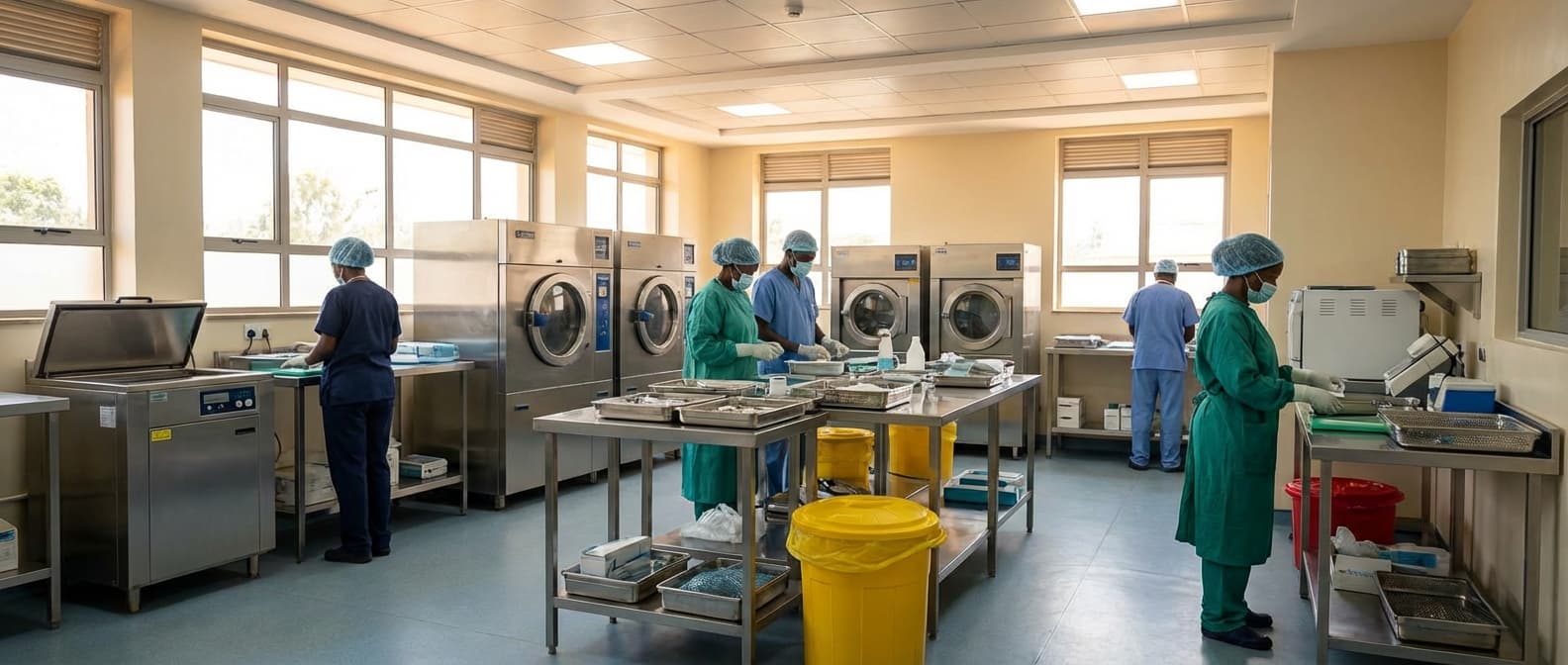
Autoclave Validation Support Service in Kenya
Engineering Excellence & Technical Support
Autoclave Validation Support Service High-standard technical execution following OEM protocols and local regulatory frameworks.
Advanced Sterilization Assurance
Leverage our comprehensive validation protocols, utilizing precise biological and chemical indicators, to confirm the efficacy of your autoclaving cycles. We provide detailed data analysis and reporting, ensuring compliance with Kenyan healthcare regulations and international standards.
Equipment Performance Optimization
Our expert technicians conduct thorough performance qualification (PQ) of your autoclaves, identifying and rectifying any operational inefficiencies. This includes calibration of critical parameters like temperature, pressure, and time, guaranteeing consistent and reliable sterilization results.
Cost-Effective Compliance Solutions
We offer tailored validation packages designed to meet your specific needs and budget in Kenya. Our efficient service minimizes downtime and prevents costly re-sterilization cycles, ensuring your operational continuity and regulatory adherence.
What Is Autoclave Validation Support Service In Kenya?
Autoclave validation support services in Kenya are specialized offerings designed to ensure the consistent and effective sterilization performance of steam sterilizers (autoclaves). This involves a comprehensive process of testing, documentation, and verification to confirm that autoclaves meet predefined efficacy standards and regulatory requirements. The service aims to guarantee that all microbial life is rendered non-viable during the sterilization cycle, thereby safeguarding patient safety and preventing the spread of infections. The validation process typically adheres to established international and national standards, such as ISO 17665 or local Kenyan healthcare guidelines. It is a critical component of a robust Quality Management System (QMS) within healthcare facilities and other industries where sterile instruments are paramount.
| Who Needs Autoclave Validation Support Service? | Typical Use Cases |
|---|---|
| Hospitals and Healthcare Facilities: Operating theatres, sterilization departments (CSSD), dental clinics, diagnostic laboratories, and outpatient clinics. | Sterilization of surgical instruments, medical devices, glassware, and laboratory consumables. |
| Pharmaceutical and Biotechnology Companies: Manufacturing facilities and research laboratories. | Sterilization of vials, stoppers, filtration equipment, and processing utilities. |
| Veterinary Clinics and Animal Hospitals: | Sterilization of surgical instruments and medical equipment used in animal care. |
| Cosmetic and Beauty Salons (with sterilization requirements): | Sterilization of tools and equipment used for invasive procedures. |
| Research Institutions and Universities: | Sterilization of laboratory equipment and materials for scientific research. |
Key Components of Autoclave Validation Support Service
- Installation Qualification (IQ): Verifies that the autoclave is installed and configured correctly according to manufacturer specifications and relevant standards.
- Operational Qualification (OQ): Confirms that the autoclave operates within its intended parameters and ranges under various conditions. This often involves testing at the upper and lower limits of specified operating parameters.
- Performance Qualification (PQ): Demonstrates that the autoclave consistently achieves the required sterilization efficacy under normal operating conditions with actual or simulated loads. This is the most critical phase, verifying the ability to kill microorganisms.
- Validation Protocol Development: Creation of detailed, documented procedures outlining the methodology, parameters, acceptance criteria, and responsibilities for the validation process.
- Test Execution: Conducting the qualification tests using calibrated equipment, such as temperature probes, pressure sensors, and biological indicators (BIs).
- Data Analysis and Reporting: Comprehensive analysis of collected data, including graphs and charts, leading to a detailed validation report that summarizes findings, identifies any deviations, and provides a conclusion on the autoclave's performance.
- Revalidation and Calibration Services: Offering periodic revalidation and calibration of autoclave monitoring equipment to maintain ongoing compliance and efficacy.
- Troubleshooting and Remediation: Identifying root causes of sterilization failures and recommending corrective actions.
Who Needs Autoclave Validation Support Service In Kenya?
Autoclave validation is a critical process ensuring that sterilization equipment operates effectively and consistently, a vital concern for public health and safety. In Kenya, where healthcare standards are continuously evolving and regulatory compliance is paramount, specialized autoclave validation support services are indispensable for a range of organizations. These services provide the expertise, equipment, and documentation necessary to confirm that autoclaves are meeting stringent performance requirements, thereby guaranteeing the sterility of medical instruments and other materials.
| Customer Type | Key Departments Requiring Validation | Rationale for Validation |
|---|---|---|
| Hospitals (Public and Private) | Central Sterile Supply Department (CSSD), Operating Theatres, Dental Units, Infection Control Department, Laboratories | Ensuring patient safety through sterile surgical instruments, prevention of Healthcare-Associated Infections (HAIs), compliance with medical device regulations, and maintaining accreditation standards. |
| Clinics and Medical Centers | Treatment Rooms, Minor Procedure Rooms, Sterilization Units | Guaranteeing the safety of minor surgical and diagnostic procedures, maintaining patient trust, and adhering to basic health facility regulations. |
| Dental Practices | Sterilization Room, Dental Treatment Rooms | Preventing cross-contamination of dental instruments, protecting both patients and dental staff, and meeting dental board regulations. |
| Laboratories (Medical, Research, and Industrial) | Microbiology Labs, Pathology Labs, Research & Development, Quality Control | Ensuring the sterility of media, equipment, and consumables for accurate test results, preventing contamination in research experiments, and maintaining product integrity in industrial settings. |
| Veterinary Clinics | Surgical Suites, Treatment Rooms | Safeguarding animal health during surgical procedures, preventing post-operative infections, and ensuring compliance with veterinary practice standards. |
| Cosmetic and Tattoo/Piercing Studios | Sterilization Area | Protecting clients from infections (e.g., Hepatitis, HIV) transmitted through inadequately sterilized equipment, building customer confidence, and adhering to public health guidelines. |
| Pharmaceutical Manufacturing Facilities | Quality Assurance (QA), Production, Packaging | Sterilizing critical equipment, stoppers, and packaging materials to prevent microbial contamination of pharmaceutical products, ensuring product efficacy and safety. |
| Food and Beverage Processing Plants | Quality Control, Production | Sterilizing equipment or packaging components used in sensitive food production processes to prevent spoilage and ensure food safety. |
| Educational Institutions with Medical/Science Programs | Science Laboratories, Medical Training Facilities | Ensuring the safety of practical training for students, providing a realistic and compliant learning environment, and maintaining the integrity of experiments. |
| Government Health Agencies and Regulatory Bodies | Inspection and Compliance Departments | Overseeing and verifying that healthcare facilities and other regulated entities are meeting sterilization standards as part of their mandate for public health protection and enforcement. |
Target Customers for Autoclave Validation Support Service in Kenya:
- Hospitals (Public and Private)
- Clinics and Medical Centers
- Dental Practices
- Laboratories (Medical, Research, and Industrial)
- Veterinary Clinics
- Cosmetic and Tattoo/Piercing Studios
- Pharmaceutical Manufacturing Facilities
- Food and Beverage Processing Plants (for sterilization of equipment/packaging)
- Educational Institutions with Medical/Science Programs
- Government Health Agencies and Regulatory Bodies
Autoclave Validation Support Service Process In Kenya
This document outlines the typical workflow for an Autoclave Validation Support Service Process in Kenya, guiding clients from initial inquiry to the successful execution and completion of validation services. The process emphasizes clear communication, adherence to industry standards, and the delivery of comprehensive, compliant validation reports.
| Stage | Key Activities | Client Responsibilities | Service Provider Responsibilities | Key Deliverables / Outcomes |
|---|---|---|---|---|
| Phase 1: Inquiry and Initial Consultation | Client expresses interest in autoclave validation. Initial discussion to understand the client's needs, type of autoclaves, intended use, regulatory requirements (e.g., GMP, ISO), and desired timeline. Needs assessment and scope definition. | Contact service provider, provide basic information about autoclaves and requirements. | Respond to inquiry promptly. Schedule and conduct initial consultation. Provide preliminary information about the validation process and required documentation. | Clear understanding of client needs and service scope. Initial assessment of validation requirements. |
| Phase 2: Proposal and Quotation | Based on the consultation, a detailed proposal outlining the scope of work, methodology, equipment to be used, timeline, and associated costs is prepared. Client reviews and approves the proposal. | Provide necessary details for proposal generation (e.g., make/model of autoclave, number of units, specific regulatory standards). Review and approve proposal. | Prepare and submit a comprehensive proposal and quotation. Clarify any queries from the client regarding the proposal. | Approved proposal and quotation. Agreement on the scope of services and pricing. |
| Phase 3: Planning and Scheduling | Once the proposal is approved, a detailed validation plan is developed. This includes defining the specific tests, protocols, acceptance criteria, and scheduling of on-site activities, coordinating with the client's operational schedule to minimize disruption. | Provide access to the autoclave and relevant documentation (e.g., operating manuals, previous validation reports, SOPs). Confirm availability for scheduled dates. | Develop a detailed validation plan (IQ/OQ/PQ protocol). Schedule on-site visit. Coordinate logistics with the client. | Approved validation plan (protocol). Agreed-upon schedule for on-site execution. |
| Phase 4: On-site Execution | The validation team conducts the validation activities on-site as per the approved protocol. This includes Installation Qualification (IQ), Operational Qualification (OQ), and Performance Qualification (PQ). This involves calibration of instruments, running test cycles with biological and chemical indicators, and collecting data. | Ensure uninterrupted access to the autoclave during the scheduled period. Provide necessary power and utilities. Facilitate access to other relevant areas if required. | Perform IQ, OQ, and PQ tests as per the protocol. Document all test results meticulously. Use calibrated and traceable instruments. Collect and secure all raw data. | Completed IQ, OQ, and PQ tests. All raw data and test records collected. |
| Phase 5: Data Analysis and Report Generation | After on-site execution, all collected data is analyzed against the pre-defined acceptance criteria. A comprehensive validation report is generated, summarizing the methodology, results, any deviations encountered, and conclusions regarding the autoclave's suitability. | Provide any additional information or clarification requested by the service provider. | Analyze all collected data. Document any deviations and their impact. Compile a detailed validation report including Executive Summary, Methodology, Results, Deviations, Conclusions, and Recommendations. | Draft validation report for client review. Final, approved validation report. |
| Phase 6: Report Delivery and Follow-up | The final validation report is submitted to the client. A debriefing session may be held to discuss the findings and answer any questions. Support is provided for any necessary corrective actions or inquiries. | Review the validation report. Provide feedback or request clarifications. Implement any recommended corrective actions. | Submit the final validation report. Conduct debriefing session. Address client queries and provide recommendations for continuous improvement or corrective actions. | Client acceptance of the validation report. Documentation of any follow-up actions. |
| Phase 7: Retrospective Validation / Re-validation (If Applicable) | If the autoclave has been in use for a period without formal validation, or if significant changes have been made, a retrospective validation or re-validation may be required. The process would generally follow similar steps but with an adjusted scope based on the specific requirement. | Provide historical usage data and details of any changes made to the autoclave. | Assess the need for retrospective validation/re-validation. Develop a tailored protocol and execute the necessary tests. Generate a specific report. | Validated or re-validated autoclave status. Updated validation documentation. |
Autoclave Validation Support Service Process in Kenya
- Phase 1: Inquiry and Initial Consultation
- Phase 2: Proposal and Quotation
- Phase 3: Planning and Scheduling
- Phase 4: On-site Execution
- Phase 5: Data Analysis and Report Generation
- Phase 6: Report Delivery and Follow-up
- Phase 7: Retrospective Validation / Re-validation (If Applicable)
Autoclave Validation Support Service Cost In Kenya
Autoclave validation is a critical process for ensuring that sterilization cycles are effective and meet regulatory requirements in healthcare, research, and manufacturing settings in Kenya. The cost of this service can vary significantly based on several factors. These factors influence the complexity of the validation, the type of autoclave, the number of cycles to be tested, and the expertise of the service provider. Understanding these elements helps facilities budget appropriately for this essential quality assurance measure.
| Service Level/Type | Estimated Cost Range (KES) | Typical Scope |
|---|---|---|
| Basic Autoclave Re-validation (e.g., 1-2 cycles) | KSh 25,000 - KSh 50,000 | Annual or semi-annual check, focusing on key parameters, likely for smaller, less complex autoclaves. |
| Standard Autoclave Validation (e.g., 3-5 cycles, IQ/OQ/PQ) | KSh 50,000 - KSh 120,000 | Full validation for most common healthcare and laboratory autoclaves, including documentation and reporting. |
| Complex Autoclave Validation (e.g., multiple chambers, high-vacuum, extensive load testing) | KSh 120,000 - KSh 250,000+ | Validation for larger industrial autoclaves, advanced medical devices, or specific challenging applications requiring extensive testing. |
| Additional Services (e.g., detailed consulting, extensive troubleshooting) | Varies (often charged hourly or per project) | Separate fees for non-standard requirements, in-depth analysis, or extended support. |
Factors Influencing Autoclave Validation Support Service Costs in Kenya:
- Type of Autoclave: Different types of autoclaves (e.g., gravity displacement, pre-vacuum, high-vacuum) have varying validation complexities. High-vacuum systems, for instance, often require more intricate testing protocols.
- Size and Capacity of Autoclave: Larger autoclaves may require more validation points and potentially longer testing durations, impacting the overall cost.
- Number of Validation Cycles: Regulatory standards typically require multiple validation cycles (e.g., empty chamber, loaded chamber with different challenging loads) to demonstrate consistent performance. More cycles generally mean higher costs.
- Load Configuration and Challenge Materials: The complexity and type of 'challenge loads' used to verify sterilization effectiveness (e.g., specific biological indicators, chemical indicators, textiles, instruments) can influence the cost of consumables and the time required for testing.
- Geographic Location within Kenya: Travel and logistical costs for the validation technician can vary depending on the facility's location, especially if it's in a remote area.
- Service Provider's Expertise and Reputation: Established and highly reputable validation service providers with specialized equipment and experienced technicians may command higher fees.
- Scope of Validation: Whether it's a full IQ/OQ/PQ (Installation Qualification, Operational Qualification, Performance Qualification) or a re-validation, the scope will dictate the extent of the work and thus the cost.
- Frequency of Validation: Routine re-validations, often required annually or semi-annually, might have slightly different pricing structures than initial validations.
- Additional Services: Services beyond basic validation, such as report generation, consulting, or specific corrective action support, will add to the overall cost.
- Calibration of Monitoring Equipment: The cost may include the calibration of the specialized temperature, pressure, and time monitoring equipment used during the validation process.
Affordable Autoclave Validation Support Service Options
Navigating autoclave validation can be a complex and costly process for healthcare facilities, laboratories, and research institutions. Ensuring compliance with regulatory standards like FDA, AAMI, and ISO is crucial for patient safety and operational integrity. This service offers affordable, comprehensive autoclave validation support, designed to minimize your expenses without compromising on quality or compliance. We provide flexible service options, including value bundles and strategic cost-saving approaches, to meet diverse needs and budgets.
| Value Bundle Name | Includes | Ideal For | Estimated Savings (vs. individual services) | Key Benefits |
|---|---|---|---|---|
| Essential Validation Package | Full-cycle IQ, OQ, and PQ validation for one autoclave; Standard documentation. | Small clinics, individual labs, or facilities with a single autoclave. | 10-15% | Cost-effective entry into compliant validation; Quick turnaround. |
| Comprehensive Compliance Bundle | Full-cycle IQ, OQ, and PQ for up to three autoclaves; Enhanced documentation; Initial calibration check. | Medium-sized facilities, departments with multiple sterilization units. | 15-20% | Streamlined validation for multiple units; Integrated calibration check; Higher document detail. |
| Proactive Maintenance & Validation Package | Full-cycle validation for one autoclave; Annual preventative maintenance consultation; Staff training module. | Facilities prioritizing long-term equipment health and staff competency. | 20-25% | Reduced downtime; Improved staff knowledge; Long-term cost reduction through preventative care. |
| Customizable Bundle | Tailored to specific needs, combining validation, calibration, repair consultation, and recurring validation support. | Unique facility requirements; Facilities with specialized sterilization needs. | Varies based on components; Up to 30% potential. | Maximum flexibility; Optimized cost for specific service combinations. |
Key Components of Our Affordable Autoclave Validation Support:
- Expert-led validation protocols adhering to all relevant standards.
- Comprehensive documentation packages for seamless regulatory review.
- On-site and remote support options to fit your operational schedule.
- Calibration and maintenance recommendations for long-term equipment reliability.
- Training for your in-house staff on validation procedures and best practices.
Verified Providers In Kenya
In Kenya's burgeoning healthcare landscape, discerning the quality and reliability of healthcare providers is paramount. Verified providers offer a crucial layer of assurance for patients seeking safe, effective, and ethical medical services. Franance Health stands out as a leading name in this domain, meticulously vetting its network to ensure adherence to the highest standards. Their commitment to rigorous credentialing not only builds trust but also directly translates into superior patient outcomes.
| Franance Health Credentialing Aspect | What it Entails | Benefit to Patients |
|---|---|---|
| Medical License Verification | Confirmation of current, valid professional licenses from relevant medical boards. | Ensures providers are legally authorized and qualified to practice. |
| Educational and Training Background Check | Thorough review of academic qualifications, specialized training, and certifications. | Guarantees providers possess the necessary theoretical knowledge and practical skills. |
| Professional Experience Assessment | Evaluation of past work experience, including the duration and nature of practice. | Confirms practical application of skills and exposure to diverse medical scenarios. |
| Reputation and Disciplinary Record Review | Inquiries into professional conduct, patient feedback, and any past disciplinary actions. | Protects patients from providers with a history of malpractice or unethical behavior. |
| Facility and Equipment Standards | Assessment of the healthcare facility's infrastructure, equipment, and adherence to safety protocols. | Ensures a safe and well-equipped environment for medical procedures. |
| Continuing Medical Education (CME) Compliance | Verification that providers are actively engaged in ongoing professional development. | Confirms providers stay updated with the latest medical advancements and best practices. |
Why Franance Health Credentials Matter:
- Unwavering Commitment to Quality: Franance Health's verification process goes beyond superficial checks. They delve deep into the qualifications, experience, and operational integrity of each provider.
- Patient Safety First: By partnering with credentialed providers, Franance Health prioritizes patient well-being, minimizing risks associated with unqualified or substandard medical care.
- Ethical Practice Assurance: Their vetting includes a thorough review of ethical conduct and adherence to medical best practices, ensuring patients receive care with integrity.
- Access to Specialized Expertise: Franance Health's network is curated to include a diverse range of specialists, all meeting their stringent credentialing requirements, offering patients access to top-tier expertise.
- Enhanced Patient Confidence: Knowing that a provider has been meticulously vetted by a trusted entity like Franance Health instills significant confidence and peace of mind for patients.
Scope Of Work For Autoclave Validation Support Service
This Scope of Work (SOW) outlines the services to be provided by the Vendor for Autoclave Validation Support. The objective is to ensure the autoclave's performance meets established regulatory and operational requirements through a comprehensive validation process. This includes the development, execution, and reporting of validation protocols, ensuring compliance with relevant standards and guidelines. The Vendor will be responsible for all aspects of the validation lifecycle, from planning to final report generation. The services will encompass IQ, OQ, and PQ phases as required.
| Phase | Key Activities | Standard Specifications / Acceptance Criteria |
|---|---|---|
| Installation Qualification (IQ) | Verification of autoclave installation against manufacturer's specifications and design documents. Confirmation of utilities (power, steam, water, air) and environmental conditions. Verification of safety features and interlocks. Review of installation documentation. | Autoclave is installed according to manufacturer's drawings and specifications. All utilities are connected and functioning as per design. Safety features are operational. Environmental conditions meet requirements. Installation documentation is complete and accurate. |
| Operational Qualification (OQ) | Testing of autoclave controls, alarms, and interlocks. Verification of temperature, pressure, and time control accuracy across the operating range. Cycle verification (e.g., empty, loaded, specific cycle types). Steam penetration and air removal efficacy testing (e.g., using biological indicators or temperature probes). | Temperature, pressure, and time parameters are maintained within defined tolerances (+/- X°C, +/- Y psi, +/- Z seconds) throughout the cycle. Alarms function correctly. Steam penetration and air removal meet pre-defined specifications (e.g., no cold spots, rapid air removal). |
| Performance Qualification (PQ) | Validation of the autoclave's performance with actual product or representative loads under simulated routine operating conditions. Demonstration of consistent achievement of sterilization parameters across multiple cycles and load configurations. Testing with worst-case product/load scenarios. | Sterilization efficacy is consistently demonstrated across multiple runs (minimum of 3 consecutive successful runs) with representative product/loads. Sterilization parameters are met for all measured points within the load. Biological indicator kill or equivalent efficacy is achieved as per defined acceptance criteria. |
Key Technical Deliverables
- Validation Master Plan (VMP) Contribution/Review (if applicable to client's VMP structure)
- Autoclave Validation Protocol (IQ/OQ/PQ) - Development and Submission for Approval
- Installation Qualification (IQ) Report
- Operational Qualification (OQ) Report
- Performance Qualification (PQ) Report
- Validation Summary Report
- Calibration Certificates for all measurement devices used during validation
- Raw Data Logs from all validation runs
- Deviation Reports (if any encountered during validation)
- Change Control Documentation (if applicable)
Service Level Agreement For Autoclave Validation Support Service
This Service Level Agreement (SLA) outlines the response times and uptime guarantees for the Autoclave Validation Support Service provided by [Your Company Name]. This SLA aims to ensure timely and reliable support for all clients utilizing our autoclave validation services.
| Service Level | Description | Target | Measurement Period |
|---|---|---|---|
| Severity 1 Incident (Critical Failure) | Complete loss of validation service functionality, impacting the ability to perform critical sterilization cycles. | 1 hour response time | 24x7 |
| Severity 2 Incident (Major Issue) | Significant degradation of validation service functionality, impacting multiple aspects of validation procedures but allowing for partial operation. | 4 business hours response time | Business Hours (Mon-Fri, 9 AM - 5 PM [Your Time Zone]) |
| Severity 3 Incident (Minor Issue) | Minor functional issues or performance degradation that do not significantly impact validation procedures. | 8 business hours response time | Business Hours (Mon-Fri, 9 AM - 5 PM [Your Time Zone]) |
| Uptime Guarantee | The percentage of time the Autoclave Validation Support Service is available for use, excluding scheduled maintenance. | 99.5% | Monthly |
| Scheduled Maintenance Window | Pre-announced periods for system updates and maintenance. | Maximum 4 hours per month | Annually communicated and with at least 48 hours notice |
Service Level Objectives (SLOs)
- Response Time: The maximum time that will elapse before [Your Company Name] acknowledges a reported issue and begins working towards a resolution.
- Uptime Guarantee: The percentage of time the Autoclave Validation Support Service is available and operational for clients.
- Support Hours: The specific hours during which support is available.
Frequently Asked Questions

Ready when you are
Let's scope your Autoclave Validation Support Service in Kenya project in Kenya.

Scaling healthcare logistics and technical systems across the entire continent.