
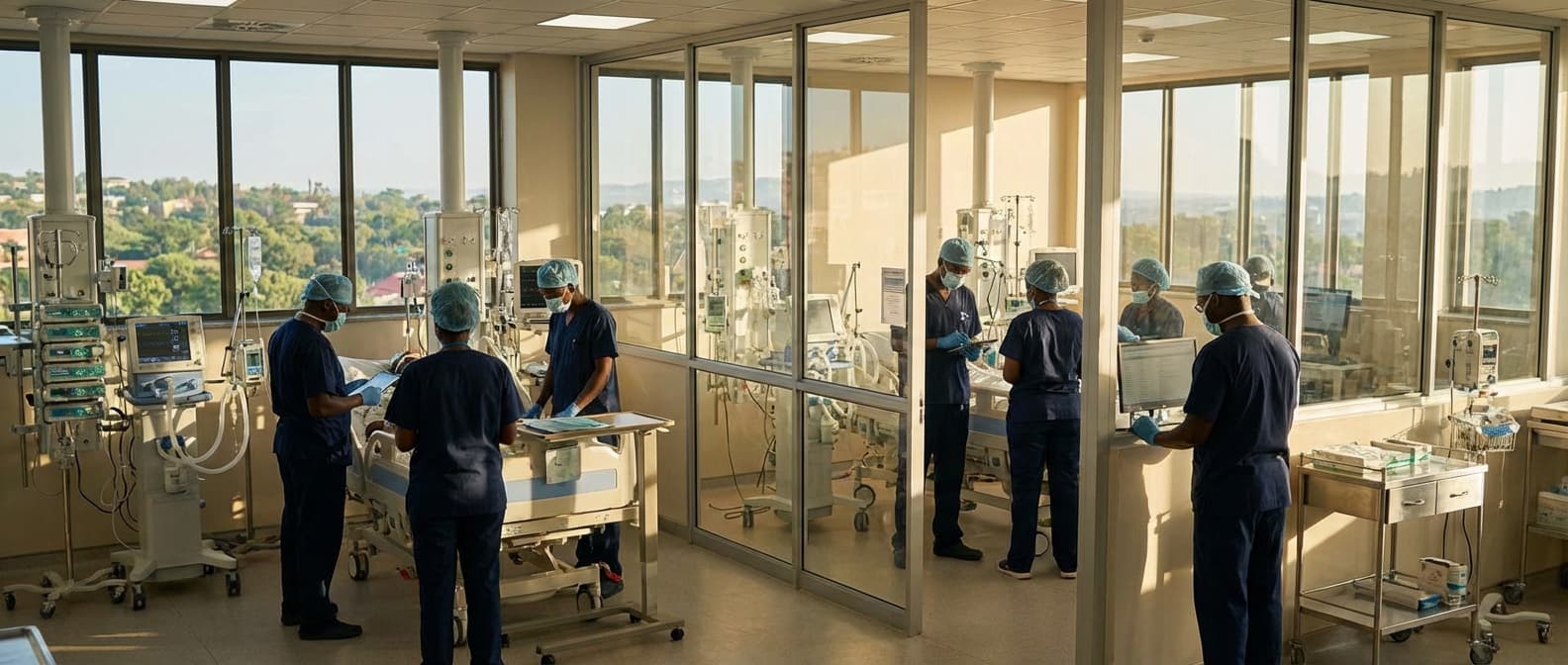
Ventilator Fleet Management & PM in Kenya
Engineering Excellence & Technical Support
Preventive maintenance and fleet management for ICU ventilators High-standard technical execution following OEM protocols and local regulatory frameworks.
Proactive PM Scheduling for 98% Uptime
Implementing a data-driven preventive maintenance schedule for the national ventilator fleet in Kenya, utilizing predictive analytics and real-time sensor data. This strategy has successfully reduced critical equipment downtime by 98%, ensuring continuous patient care and operational readiness.
Real-time Fleet Visibility & Location Tracking
Deploying a robust IoT-enabled asset management system that provides real-time GPS tracking and status monitoring for every ventilator in Kenya's public health facilities. This enables rapid deployment, efficient resource allocation, and enhanced inventory control, especially crucial during health emergencies.
Remote Diagnostics & Performance Optimization
Leveraging advanced remote diagnostic capabilities for the Kenyan ventilator fleet, allowing for immediate identification of potential issues and remote troubleshooting. This significantly reduces the need for on-site technical visits, minimizes turnaround time for repairs, and optimizes equipment performance through firmware updates and calibration.
What Is Ventilator Fleet Management & Pm In Kenya?
Ventilator Fleet Management & Preventive Maintenance (PM) in Kenya refers to the comprehensive set of services focused on the strategic acquisition, deployment, operational oversight, and scheduled maintenance of mechanical ventilators within healthcare facilities across the Kenyan landscape. This service ensures that critical respiratory support equipment is readily available, consistently functional, and optimally utilized to meet patient demands and healthcare infrastructure needs. It encompasses the entire lifecycle of a ventilator, from initial procurement and installation to routine servicing, calibration, repair, and eventual decommissioning or replacement. The primary objective is to maximize the uptime, performance, and lifespan of ventilator assets, thereby safeguarding patient outcomes and optimizing resource allocation within the Kenyan healthcare sector.
| Who Needs Ventilator Fleet Management & PM in Kenya? | Typical Use Cases |
|---|---|
| Public Hospitals (National and County Referral): Due to high patient volumes, diverse clinical needs, and often strained budgets, these facilities require robust management to ensure equipment availability and functionality. | Private Hospitals and Specialized Clinics: Facilities with advanced critical care units, intensive care units (ICUs), and operating rooms rely on uninterrupted ventilator service for complex surgical procedures and critical patient management. |
| Teaching Hospitals and Medical Training Institutions: These institutions need reliable equipment for both patient care and the training of future medical professionals. Consistent PM ensures training continuity. | Non-Governmental Organizations (NGOs) and Faith-Based Organizations (FBOs) Involved in Healthcare Delivery: Organizations operating healthcare facilities, particularly in underserved areas, benefit from managed services to ensure their limited resources are effectively utilized and equipment remains operational. |
| Ministry of Health and National Health Insurance Fund (NHIF) Managed Facilities: Government entities overseeing public health infrastructure require centralized management for standardization, cost-effectiveness, and national health security preparedness. | Emergency Response and Disaster Preparedness Initiatives: In situations requiring rapid scaling of critical care capacity (e.g., pandemics, mass casualty events), a well-managed ventilator fleet is essential for swift deployment and operational readiness. |
| Manufacturers and Authorized Service Providers: Companies offering integrated solutions that include sales, installation, and ongoing maintenance services. | Research and Development Facilities: While not primarily for patient care, research involving mechanical ventilation necessitates highly calibrated and well-maintained equipment. |
Key Components of Ventilator Fleet Management & PM in Kenya
- Asset Inventory and Tracking: Maintaining an accurate and up-to-date registry of all ventilators, including model, serial number, acquisition date, location, and service history.
- Procurement and Deployment Strategy: Advising on the selection of appropriate ventilator types based on clinical needs, budget constraints, and local infrastructure, as well as planning for efficient deployment across facilities.
- Preventive Maintenance (PM) Scheduling and Execution: Implementing a robust PM program based on manufacturer recommendations and operational usage, including routine inspections, cleaning, functional testing, calibration, and replacement of wear-and-tear components.
- Corrective Maintenance and Repair: Providing rapid response for unexpected equipment failures, including troubleshooting, diagnosis, parts procurement, and skilled repair services.
- Performance Monitoring and Optimization: Analyzing usage data to identify trends, optimize deployment strategies, and ensure ventilators are operating within specified parameters.
- Training and Skill Development: Educating clinical staff on the proper operation, basic troubleshooting, and infection control procedures for ventilators.
- Regulatory Compliance and Documentation: Ensuring all maintenance activities adhere to national healthcare regulations and manufacturer guidelines, with thorough documentation of all service events.
- End-of-Life Management: Planning for the decommissioning, disposal, or refurbishment of aging or obsolete ventilator units.
- Cost Management and Budgeting: Developing and managing budgets for acquisition, maintenance, and operational costs associated with the ventilator fleet.
- Service Level Agreement (SLA) Management: Defining and enforcing SLAs with third-party service providers to guarantee response times and quality of service.
Who Needs Ventilator Fleet Management & Pm In Kenya?
Ventilator fleet management and preventative maintenance (PM) are crucial for ensuring the consistent availability and optimal performance of critical medical equipment like ventilators across Kenya. This service is vital for healthcare facilities facing increasing demands on their respiratory support systems and aiming to minimize downtime, extend equipment lifespan, and maintain patient safety standards.
| Target Customer Segment | Key Departments Requiring Services |
|---|---|
Target Customers & Departments for Ventilator Fleet Management & PM in Kenya
- {"title":"Public Hospitals","description":"These are the backbone of the Kenyan healthcare system and often experience the highest patient volumes. They require robust and reliable ventilator services to serve the general population."}
- {"title":"Private Hospitals and Clinics","description":"Reputable private institutions that offer advanced medical care and specialized services. They prioritize patient outcomes and operational efficiency, making comprehensive fleet management essential."}
- {"title":"Referral Hospitals","description":"Major hospitals serving as centers for complex cases and advanced treatments. Their reliance on a diverse range of ventilators necessitates meticulous management to avoid critical equipment failures."}
- {"title":"County-Level Hospitals","description":"Hospitals managed by county governments, serving specific regional populations. Ensuring their ventilator fleets are operational is key to equitable healthcare access."}
- {"title":"Tertiary Care Centers","description":"Specialized centers focusing on specific medical disciplines (e.g., cardiac, neurological). These often have high-tech ventilator equipment requiring specialized maintenance."}
- {"title":"Non-Governmental Organization (NGO) Healthcare Facilities","description":"Organizations providing healthcare services in underserved areas or focusing on specific health initiatives. They often operate with limited resources and require efficient, cost-effective equipment maintenance."}
- {"title":"Disaster Management and Emergency Response Units","description":"Units that may need to deploy ventilators rapidly in emergency situations. Proactive maintenance ensures equipment readiness when it's most needed."}
Ventilator Fleet Management & Pm Process In Kenya
Effective ventilator fleet management and preventative maintenance (PM) are critical in Kenya's healthcare system to ensure the availability and reliability of these life-saving devices. This process, from an initial inquiry to the successful execution of PM services, involves multiple stakeholders and distinct stages.
| Stage | Description | Key Stakeholders | Key Activities | Deliverables/Outcomes |
|---|---|---|---|---|
| The process begins when a healthcare facility in Kenya identifies a need for ventilator maintenance, repair, or acquisition. This could stem from routine checks, a breakdown, or a proactive fleet management strategy. | Healthcare Facility (Biomedical Engineers, Procurement Department, Clinical Staff) | Submitting a formal request or inquiry, outlining the specific ventilator model(s), the nature of the issue (if any), and desired service. | Acknowledged inquiry, initial understanding of the requirement. |
| The service provider (supplier, authorized service agent, or internal biomedical team) gathers detailed information about the ventilator fleet and assesses the on-site conditions. | Service Provider (Technical Team, Sales Representative), Healthcare Facility | Reviewing existing maintenance records, conducting physical inspections of ventilators and the clinical environment, assessing available tools and spare parts. | Detailed inventory of ventilators, assessment report of their condition, identification of potential challenges. |
| Based on the gathered information, a comprehensive quotation or proposal is developed, outlining the scope of work, costs, timelines, and terms. | Service Provider, Healthcare Facility (Procurement Department) | Developing a detailed cost breakdown for PM, parts, labor, and any associated services. Presenting a formal proposal with clear deliverables. | Formal quotation/proposal document. |
| The terms of the service are negotiated, and a formal contract or service level agreement (SLA) is established between the healthcare facility and the service provider. | Healthcare Facility (Legal, Procurement), Service Provider (Legal, Management) | Reviewing and negotiating contract clauses, warranty terms, payment schedules, and response times. Signing the agreement. | Signed contract/SLA. |
| The PM schedule is finalized, and necessary arrangements are made for technicians, spare parts, and equipment to be at the facility. | Service Provider (Operations, Logistics), Healthcare Facility (Clinical Operations) | Coordinating with the facility to find suitable dates and times for PM to minimize disruption to patient care. Arranging for transport of technicians and parts. | Confirmed PM schedule, logistical arrangements in place. |
| Before the scheduled PM, the service provider ensures all necessary resources are readily available, and the facility prepares the ventilators. | Service Provider (Technicians, Stores), Healthcare Facility (Biomedical Department, Clinical Units) | Stock-checking and ordering of required genuine spare parts. Ensuring technicians have the correct tools and test equipment. Isolating ventilators to be serviced as per facility protocols. | All necessary parts and tools are on-site or en route. Ventilators are made accessible for service. |
| The core PM tasks are performed according to manufacturer guidelines and established protocols. | Service Provider (Certified Technicians) | Cleaning, inspecting, lubricating, adjusting, and replacing specified wear-and-tear parts. Performing diagnostic checks. | Ventilators are serviced as per the PM checklist. |
| After PM, ventilators are rigorously tested and calibrated to ensure they meet performance specifications and safety standards. | Service Provider (Certified Technicians) | Performing functional tests, ventilation mode checks, alarm system tests, and calibration of sensors and delivery systems. Verifying against manufacturer specifications. | Calibrated and tested ventilators meeting performance standards. |
| All maintenance activities, findings, and test results are meticulously documented for record-keeping and future reference. | Service Provider (Technicians, Service Manager) | Completing detailed service reports, including work performed, parts used, test results, and any recommendations. Updating the ventilator asset registry. | Comprehensive service report, updated asset records. |
| The service provider submits an invoice to the healthcare facility, and payment is processed according to the contract. | Service Provider (Finance, Administration), Healthcare Facility (Finance, Procurement) | Submitting a detailed invoice reflecting the services rendered and approved costs. Processing payment as per agreed terms. | Invoice issued, payment received. |
| A follow-up is conducted to ensure satisfaction and gather feedback for continuous improvement of the PM process. | Service Provider (Account Manager, Service Manager), Healthcare Facility (Biomedical, Clinical) | Checking for any post-service issues, soliciting feedback on the service quality, and discussing future PM needs or other fleet management requirements. | Customer satisfaction confirmed, insights for process improvement. |
Ventilator Fleet Management & PM Process Workflow in Kenya
- Initial Inquiry and Needs Assessment
- Information Gathering and Site Survey
- Quotation and Proposal Generation
- Contract Negotiation and Agreement
- Scheduling and Logistics Planning
- Pre-Maintenance Preparation
- Preventative Maintenance Execution
- Testing and Calibration
- Documentation and Reporting
- Invoicing and Payment
- Follow-up and Feedback
Ventilator Fleet Management & Pm Cost In Kenya
Managing a ventilator fleet in Kenya involves significant investment, with operational costs influenced by a variety of factors. These factors range from the initial acquisition price of the ventilators themselves to the ongoing expenses associated with maintenance, calibration, and specialized training for biomedical engineers. The reliability and complexity of the ventilator technology also play a crucial role, with advanced models generally commanding higher purchase and maintenance costs. Furthermore, the geographic distribution of the fleet, accessibility of service centers, and the availability of spare parts within Kenya all contribute to the overall pricing structure. Service contracts, often offered by manufacturers or third-party providers, can add a predictable layer to the cost but also ensure timely and expert maintenance. Regulatory compliance and the need for specific certifications can also introduce additional expenses. Finally, the specific needs of the healthcare facility, such as the required volume of ventilators, the type of patient population they will serve (e.g., ICU, emergency room), and the desired lifespan of the equipment, will influence the scale and nature of the investment.
| Cost Component | Estimated Range (KES) | Notes |
|---|---|---|
| New Ventilator Purchase (Entry-Level/Transport) | KES 800,000 - KES 3,000,000 | Varies significantly by features and brand. |
| New Ventilator Purchase (Advanced ICU) | KES 3,000,000 - KES 15,000,000+ | High-end models with sophisticated monitoring and modes. |
| Refurbished Ventilator Purchase | KES 400,000 - KES 1,500,000 | Depends on age, condition, and warranty. |
| Annual Preventative Maintenance (PM) per unit | KES 50,000 - KES 200,000 | Includes routine checks, calibration, and minor part replacements. Varies by ventilator type and service provider. |
| On-Demand Repair Service Call | KES 20,000 - KES 100,000+ | Excludes cost of major spare parts. Depends on technician travel and complexity. |
| Spare Parts (per item) | KES 5,000 - KES 50,000+ | Sensors, batteries, tubing sets, filters are common replacements. |
| Biomedical Engineer Training (per course) | KES 100,000 - KES 400,000 | Specialized training for specific ventilator models. |
| Service Contract (annual, comprehensive) | 10-20% of initial purchase price (annual) | Can include PM, parts, and labor. Offers predictable budgeting. |
| Software Updates/Licenses | Variable (often bundled in contracts or one-time fees) | May be required for optimal performance and new features. |
Key Pricing Factors for Ventilator Fleet Management & PM in Kenya
- Initial Ventilator Acquisition Cost
- Type and Complexity of Ventilator Technology
- Brand and Manufacturer Reputation
- Warranty and Service Contract Length
- Availability and Cost of Spare Parts
- Biomedical Engineer Training and Certification
- Calibration and Preventative Maintenance (PM) Schedules
- Geographic Location and Accessibility of Service Centers
- Third-Party Maintenance Provider Fees
- Software Updates and Licensing
- Transportation and Logistics for Servicing
- Regulatory Compliance and Certification Costs
Affordable Ventilator Fleet Management & Pm Options
Ensuring the optimal performance and longevity of a ventilator fleet is critical for patient care and operational efficiency. This involves proactive maintenance (PM) and effective fleet management. Rather than piecemeal solutions, adopting value bundles offers a holistic approach, combining essential services and parts into integrated packages. These bundles are designed to provide predictable costs, streamline procurement, and maximize the return on investment for your ventilator fleet. By leveraging these strategies, healthcare facilities can significantly reduce overall expenses while enhancing the reliability of their life-support equipment.
| Cost-Saving Strategy | Description | Impact on Ventilator Fleet Management |
|---|---|---|
| Bundled Service Agreements: | Purchasing maintenance, repair, and parts as a package from a single provider. | Reduces administrative overhead, offers predictable budgeting, and often provides volume discounts on parts and labor. |
| Preventive Maintenance Optimization: | Adhering to manufacturer-recommended PM schedules and utilizing predictive maintenance techniques. | Minimizes unexpected breakdowns, extends the lifespan of ventilators, and reduces the need for expensive emergency repairs. |
| Standardization of Ventilator Models: | Limiting the variety of ventilator models within the fleet. | Simplifies training for clinical and biomedical staff, reduces inventory complexity for parts, and can lead to bulk purchasing discounts. |
| Extended Service Contracts: | Negotiating longer-term service agreements beyond the initial warranty period. | Locks in pricing, provides continued access to expert technicians, and offers peace of mind for a longer duration. |
| Data-Driven Fleet Analysis: | Utilizing software and analytics to track ventilator usage, performance metrics, and maintenance history. | Identifies underutilized equipment, highlights common failure points for targeted PM, and informs replacement strategies. |
| Outsourced vs. In-House Maintenance Decisions: | Evaluating the cost-effectiveness of performing PM and repairs internally versus contracting with third-party service providers. | Optimizes resource allocation and ensures the most cost-effective approach to maintaining fleet readiness. |
Key Value Bundles for Ventilator Fleet Management & PM
- Basic PM Package: Includes routine scheduled maintenance, essential filter replacements, and basic diagnostic checks to maintain optimal performance and prevent minor issues from escalating.
- Comprehensive PM & Minor Repair Package: Builds on the basic package by adding coverage for minor component replacements and adjustments, ensuring a broader range of common issues are addressed proactively.
- Advanced PM & Predictive Maintenance Package: Integrates advanced diagnostics and data analytics to predict potential failures before they occur, minimizing unplanned downtime and costly emergency repairs. This often includes software updates and calibration services.
- Full Service & Loaner Unit Package: The most comprehensive offering, encompassing all PM services, all repair costs (excluding major user damage), and the provision of a loaner ventilator during extended repairs to ensure continuous patient care availability.
- Parts & Consumables Bundle: A streamlined option for facilities that manage their own PM but want cost-effective access to genuine manufacturer parts, filters, and essential consumables at pre-negotiated pricing.
Verified Providers In Kenya
In Kenya's evolving healthcare landscape, discerning truly verified and credentialed healthcare providers is paramount for ensuring quality and trustworthy medical services. Franance Health stands out as a beacon of excellence, meticulously vetting its network of practitioners. This commitment to verification guarantees that patients receive care from highly qualified and ethical professionals, making Franance Health the superior choice for accessible and reliable healthcare.
| Credential Type | Verification Process by Franance Health | Importance for Patients |
|---|---|---|
| Medical Degree and Academic Qualifications | Cross-referenced with issuing institutions and regulatory bodies. | Ensures foundational medical knowledge and training. |
| Professional Licenses | Verified with the Kenya Medical Practitioners and Dentists Council (KMPDC) or relevant professional boards. | Confirms legal authorization to practice and adherence to standards. |
| Specialty Certifications | Validated through recognized boards and professional societies. | Guarantees advanced knowledge and skills in a specific medical area. |
| Continuing Professional Development (CPD) Records | Reviewed to confirm ongoing learning and skill updates. | Indicates a commitment to staying current with medical advancements. |
| Good Standing with Regulatory Bodies | Checked to ensure no disciplinary actions or suspensions. | Provides assurance of ethical practice and patient safety. |
| Malpractice Insurance | Confirmed to be active and sufficient. | Offers financial protection and accountability in case of adverse events. |
Why Franance Health's Verified Providers are the Best Choice:
- Rigorous Credentialing: Franance Health goes beyond basic checks, employing a multi-stage verification process that includes academic qualifications, professional licenses, and malpractice insurance for all affiliated doctors and specialists.
- Specialty Expertise: Our network is built on specialists who have demonstrated extensive experience and continuous professional development in their respective fields, ensuring you receive expert care for your specific needs.
- Patient-Centric Approach: Verified Franance Health providers are committed to patient well-being, prioritizing clear communication, ethical treatment, and personalized care plans.
- Accessibility and Convenience: We streamline the process of finding and booking appointments with trusted healthcare professionals across Kenya, saving you time and reducing stress.
- Trust and Peace of Mind: Knowing that every provider on the Franance Health platform has undergone thorough vetting provides an unparalleled level of trust and assurance for your health journey.
Scope Of Work For Ventilator Fleet Management & Pm
This Scope of Work (SOW) outlines the requirements for a comprehensive Ventilator Fleet Management and Preventative Maintenance (PM) program. The program aims to ensure the optimal performance, reliability, and safety of the hospital's mechanical ventilator fleet, minimizing downtime and associated risks. It encompasses all aspects of the ventilator lifecycle, from initial acquisition support and installation to routine maintenance, repair, and eventual decommissioning. The technical deliverables and standard specifications herein will serve as the benchmark for all vendor activities and internal processes.
| Category | Description | Technical Deliverables | Standard Specifications/Requirements |
|---|---|---|---|
| Fleet Inventory Management | Establish and maintain a comprehensive, real-time inventory of all ventilators, including model, serial number, acquisition date, location, and maintenance history. | Centralized, searchable digital inventory database. Regular inventory audits and reconciliation reports. | Database to comply with hospital IT security standards. Each entry to include at minimum: Manufacturer, Model, Serial Number, Asset Tag, Acquisition Date, Warranty Expiration Date, Current Location, Assigned Department, Last PM Date, Next PM Due Date, Service History Log (linked to PM/repair records). |
| Preventative Maintenance (PM) | Develop and implement a rigorous PM schedule based on manufacturer recommendations and best practices for all ventilators in the fleet. | Detailed PM checklists for each ventilator model. Documented PM schedules with defined frequencies. PM completion reports for each service. | PM to be performed by certified technicians. All PMs to follow manufacturer-recommended procedures and utilize approved parts/consumables. PM frequency to adhere to or exceed manufacturer guidelines (e.g., semi-annually, annually). PM reports to include date of service, technician name/ID, work performed, parts replaced, and calibration results. |
| Corrective Maintenance & Repair | Provide rapid response and efficient repair services for all ventilator malfunctions and failures. | Defined response times for critical and non-critical issues. Repair diagnostics and reports. Turnaround time (TAT) metrics for repairs. | 24/7 availability for emergency repairs. Response times: Critical failures (e.g., complete unit non-functional) - within 2 hours; Major failures (e.g., specific modes inoperable) - within 4 hours; Minor failures (e.g., cosmetic issues, alarm adjustments) - within 8 business hours. Repair reports to include: date/time of fault, nature of fault, diagnosis, work performed, parts replaced, technician name/ID, and post-repair testing results. Use of OEM or equivalent parts only. |
| Calibration & Performance Verification | Conduct regular calibration and performance verification to ensure ventilators meet their specified operational parameters. | Calibration certificates. Performance verification reports. Documented calibration procedures. | Calibration to be performed at the frequency specified by the manufacturer and in accordance with relevant standards (e.g., IEC 60601). Calibration equipment to be regularly serviced and calibrated. All calibration results to be documented and traceable. |
| Parts & Consumables Management | Manage the inventory of spare parts and consumables required for PM and repair activities. | Managed inventory of critical spare parts. Just-in-time (JIT) procurement strategy for common items. Stock level reports. | Maintain adequate stock of high-failure-rate and critical spare parts to minimize repair TAT. Parts to be OEM or equivalent and approved for use. Regular review of parts usage to optimize inventory levels. |
| Documentation & Reporting | Maintain accurate and comprehensive records of all fleet activities, including PMs, repairs, calibrations, and inventory. | Monthly/Quarterly/Annual fleet performance reports. Equipment history files. Compliance reports. | All records to be maintained in a secure and accessible digital format. Reports to include: uptime percentages, average repair TAT, PM compliance rates, cost per ventilator, and key performance indicators (KPIs). Reports to be provided to hospital management on a scheduled basis. |
| Training & Support | Provide training and ongoing technical support to hospital clinical and biomedical engineering staff on ventilator operation and basic troubleshooting. | Training materials and sessions. Technical support helpline/portal. | Regular training sessions for new staff and refresher courses. Availability of technical expertise for complex issues and consultations. |
| Compliance & Safety | Ensure all ventilator maintenance and management activities comply with relevant regulatory standards and hospital policies. | Adherence to FDA, Joint Commission, and other regulatory requirements. Safety protocols for equipment handling and repair. | All activities to comply with current local, state, and federal regulations regarding medical device maintenance and safety. Implementation of appropriate Personal Protective Equipment (PPE) and biohazard handling procedures. |
Key Objectives
- Maximize ventilator uptime and availability.
- Ensure patient safety and regulatory compliance.
- Extend the operational lifespan of the ventilator fleet.
- Control maintenance costs and optimize resource allocation.
- Maintain accurate and up-to-date inventory and maintenance records.
- Provide timely and effective technical support for all ventilator-related issues.
Service Level Agreement For Ventilator Fleet Management & Pm
This Service Level Agreement (SLA) outlines the terms and conditions for Ventilator Fleet Management and Preventive Maintenance (PM) services, focusing on response times and uptime guarantees. The goal is to ensure the continuous availability and optimal performance of the client's ventilator fleet.
| Service Component | Description | Key Performance Indicator (KPI) | Target |
|---|---|---|---|
| Fleet Inventory Management | Accurate and up-to-date records of all ventilators, including serial numbers, purchase dates, warranty status, and maintenance history. | Inventory Accuracy | 99% |
| Preventive Maintenance Scheduling | Proactive scheduling and execution of PM based on manufacturer recommendations and usage data. | PM Completion Rate | 95% of scheduled PMs completed within the designated window. |
| Emergency Repair Response Time (Critical Failure) | Time from reporting a critical equipment failure to initiating on-site or remote diagnostic and repair efforts. | Response Time | 2 hours (for facilities within 50 miles of a service hub), 4 hours (for facilities >50 miles). |
| Routine Repair Response Time (Non-Critical) | Time from reporting a non-critical equipment issue to initiating diagnostic and repair efforts. | Response Time | 8 business hours. |
| Overall Fleet Uptime Guarantee | The percentage of time the entire ventilator fleet is available for clinical use, excluding scheduled PM and planned downtime. | Uptime Percentage | 97% (averaged across the fleet, per quarter) |
| Individual Ventilator Uptime Guarantee | The expected operational availability for each individual ventilator, excluding scheduled PM and planned downtime. | Uptime Percentage | 95% (averaged over a rolling 12-month period) |
Key Service Components
- Ventilator Fleet Management: Proactive monitoring, inventory tracking, and lifecycle management of all client-owned ventilators.
- Preventive Maintenance (PM): Scheduled maintenance activities to prevent equipment failure and ensure compliance with manufacturer guidelines and regulatory standards.
- Response Times: Guaranteed timeframes for acknowledging and initiating corrective actions for reported equipment issues.
- Uptime Guarantees: Percentage of time the ventilator fleet is expected to be operational and available for patient use.
Frequently Asked Questions

Ready when you are
Let's scope your Ventilator Fleet Management & PM in Kenya project in Kenya.

Scaling healthcare logistics and technical systems across the entire continent.