
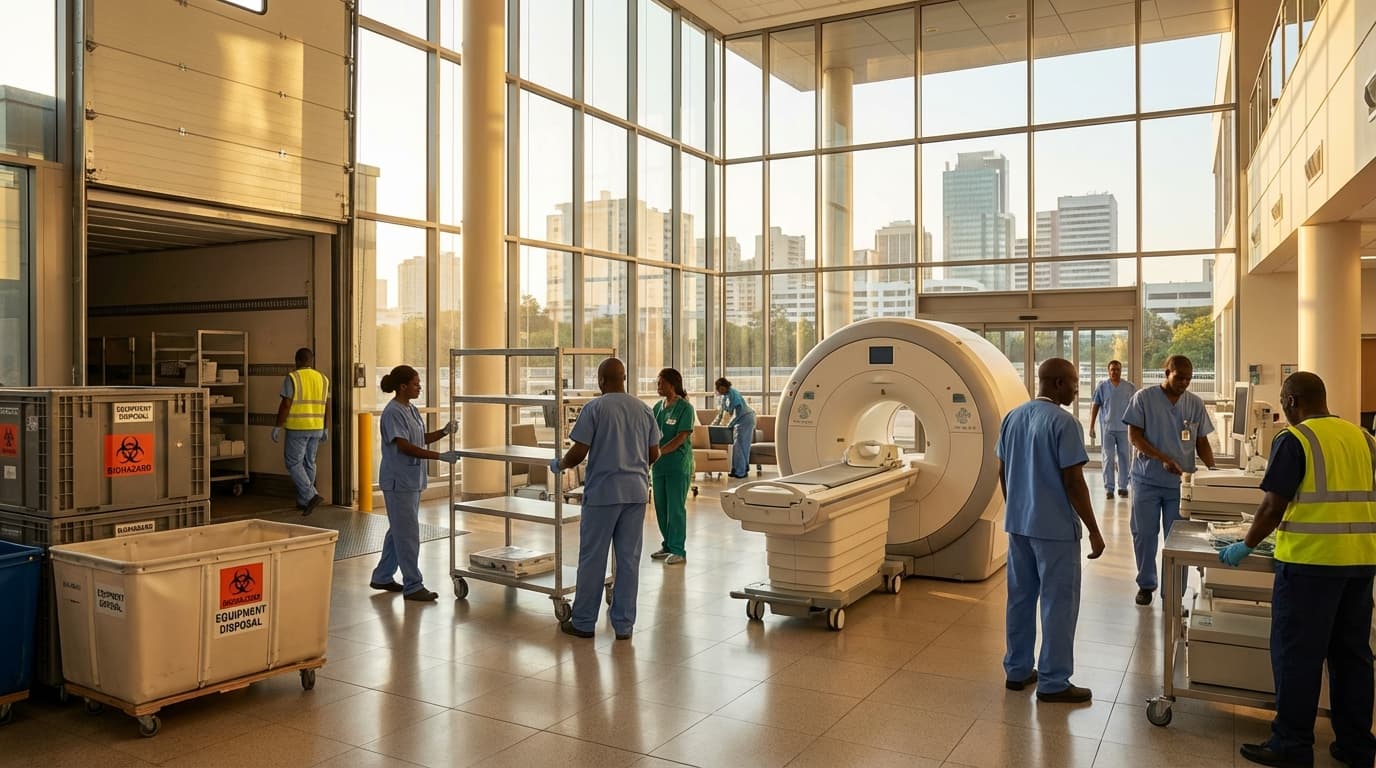
Decommissioning Service for Medical Devices in Kenya
Engineering Excellence & Technical Support
Decommissioning Service for Medical Devices High-standard technical execution following OEM protocols and local regulatory frameworks.
Certified Data Sanitization & Destruction
Ensuring strict compliance with data privacy regulations, our decommissioning process employs advanced, certified methods for secure data erasure or physical destruction of sensitive patient information stored on medical devices, protecting against breaches and safeguarding confidentiality.
Environmentally Responsible Disposal & Recycling
We prioritize sustainable practices by adhering to all Kenyan environmental regulations for the disposal of electronic waste. Our services include responsible recycling of valuable components and safe disposal of hazardous materials, minimizing environmental impact and promoting a circular economy.
End-to-End Chain of Custody Management
We provide a transparent and traceable chain of custody throughout the entire decommissioning lifecycle. From secure collection and transportation to final disposal or recycling, every step is meticulously documented, offering clients complete peace of mind and regulatory assurance.
What Is Decommissioning Service For Medical Devices In Kenya?
Decommissioning Service for Medical Devices in Kenya refers to the formal process of retiring a medical device from active service. This involves a comprehensive set of procedures to ensure the device is rendered safe, secure, and compliant with regulatory requirements before its disposal, transfer, or repurposing. It is a critical lifecycle management function within healthcare facilities.
| Who Needs Decommissioning Service? | Typical Use Cases | Regulatory Basis/Implications | |||||||
|---|---|---|---|---|---|---|---|---|---|
| Hospitals (Public & Private) | End-of-life replacement of imaging equipment (MRI, CT scanners) | Compliance with Medical Devices Act (Cap 244) | Routine upgrades of patient monitoring systems | Adherence to PPB guidelines on medical device management | Closure or relocation of healthcare facilities | Data privacy and security mandates (e.g., Health Records Act) | Clinical laboratories | Disposal of diagnostic equipment (e.g., centrifuges, microscopes) | Environmental protection regulations for hazardous waste |
| Specialized Clinics (e.g., Cardiology, Oncology) | Obsolescence of therapeutic devices (e.g., linear accelerators, defibrillators) | Non-compliance with updated safety standards | Medical research institutions | Transfer of research instrumentation | End of research project lifespan | Medical device manufacturers (for returned or recalled products) | Ethical and safe disposal of faulty or recalled devices | ||
| Government Health Agencies | Management of surplus or outdated medical equipment from public health programs | Ensuring responsible asset disposition |
Key Components of Medical Device Decommissioning in Kenya
- Data Security and Sanitization: Erasing or physically destroying any sensitive patient data (e.g., Protected Health Information - PHI) stored on the device's memory or associated systems. This adheres to data privacy regulations.
- Functional Disablement: Rendering the device inoperable to prevent unauthorized use or accidental activation, particularly for complex or critical equipment.
- Asset Management Update: Removing the device from inventory and updating asset tracking systems to reflect its retired status.
- Regulatory Compliance: Ensuring all decommissioning activities comply with the Medical Devices Act (Cap 244) and relevant regulations stipulated by the Pharmacy and Poisons Board (PPB) and the Ministry of Health.
- Environmental Disposal: Managing the disposal of the device and its components in an environmentally responsible manner, especially for hazardous materials (e.g., mercury, batteries), often through specialized waste management partners.
- Documentation and Record Keeping: Maintaining detailed records of the decommissioning process, including dates, personnel involved, methods used, and certificates of destruction or transfer.
- Safety Verification: Confirming that the device poses no ongoing safety risks to personnel or the environment after decommissioning.
- Transfer of Ownership (if applicable): Facilitating legal and technical transfer of a device to another entity, ensuring all relevant documentation is provided.
Who Needs Decommissioning Service For Medical Devices In Kenya?
Decommissioning services for medical devices in Kenya are essential for a range of healthcare organizations and entities that handle, store, or dispose of medical equipment. This process ensures the secure and environmentally responsible retirement of devices, adhering to regulatory requirements and protecting patient data and public health. The need for these services spans across various types of medical facilities and governmental bodies.
| Customer Type | Key Departments Involved | Reasons for Decommissioning |
|---|---|---|
| Hospitals (Public & Private) | Biomedical Engineering, IT Department, Procurement, Radiology, Pathology, Administration | End-of-life equipment, upgrade to new technology, departmental closure, relocation, regulatory compliance, data security. |
| Clinics & Health Centers | Clinic Management, Administration, Technical Staff (if applicable) | Equipment obsolescence, replacement, closure of facility, compliance. |
| Diagnostic Laboratories | Laboratory Management, IT Department, Quality Assurance | Equipment malfunction, upgrade, replacement, data sanitization, compliance. |
| Research Institutions | Research Teams, IT Department, Facilities Management | Completion of research projects, equipment no longer needed, data security, disposal of hazardous materials. |
| Medical Device Manufacturers & Distributors | Service Department, Quality Control, Logistics, Sales (for returned/recalls) | Product recalls, end-of-warranty returns, equipment used for demonstration/training, end-of-life stock. |
| Government Health Agencies (e.g., Ministry of Health, County Health Departments) | Procurement, Biomedical Engineering Units, Public Health Units, IT Department | Stock obsolescence, equipment replacement programs, infrastructure upgrades, management of public health assets, data security. |
| Educational Institutions (with Medical Programs) | Biomedical/Medical Departments, IT Department, Facilities Management | Equipment used for teaching no longer required, upgrades for newer models, compliance with safety standards. |
Target Customers for Medical Device Decommissioning Services in Kenya
- Hospitals (Public and Private)
- Clinics and Health Centers
- Diagnostic Laboratories
- Research Institutions
- Medical Device Manufacturers and Distributors
- Government Health Agencies
- Insurance Companies (for repossessed or written-off equipment)
- Educational Institutions with Medical Programs
- Non-Governmental Organizations (NGOs) involved in healthcare delivery
- Companies undergoing mergers or acquisitions involving medical assets
Decommissioning Service For Medical Devices Process In Kenya
This document outlines the typical workflow for decommissioning medical devices in Kenya, covering the process from an initial inquiry to the final execution of the service. The process is designed to ensure compliance with relevant regulations, environmental safety, and data security.
| Stage | Description | Key Activities | Responsible Parties | Output/Deliverable |
|---|---|---|---|---|
| The client (e.g., hospital, clinic, research institution) contacts a licensed decommissioning service provider to inquire about services for medical devices that are no longer in use, obsolete, or faulty. | Contact initiated, service scope discussed, initial needs assessment. | Client, Decommissioning Service Provider (DSP) | Initial understanding of client's needs. |
| The DSP visits the client's premises to conduct a thorough assessment of the devices to be decommissioned. This involves identifying the types, quantities, conditions, and locations of all relevant medical equipment. | Physical inspection of devices, data collection on make, model, serial number, condition, and location. | DSP (with client's assistance) | Detailed inventory of devices, identification of potential hazards (e.g., hazardous materials). |
| Based on the site assessment and inventory, the DSP prepares a comprehensive proposal outlining the scope of work, methodology, timeline, safety measures, waste management plan, and a detailed cost quotation. | Development of proposal document, cost estimation, risk assessment. | DSP | Formal proposal and quotation for decommissioning services. |
| Upon acceptance of the proposal and quotation, a formal contract or service agreement is signed between the client and the DSP. This legally binding document details the terms and conditions of the service. | Contract negotiation, legal review, signing of agreement. | Client, DSP | Signed service contract. |
| The DSP creates a detailed operational plan, including scheduling specific dates and times for the decommissioning activities, coordinating with the client's operational schedules to minimize disruption. | Logistics planning, resource allocation, scheduling of personnel and equipment, obtaining necessary permits (if any). | DSP (in consultation with client) | Approved operational plan and schedule. |
| The DSP ensures all necessary safety equipment, tools, and personnel are ready. This stage may also involve informing relevant stakeholders within the client's facility. | Gathering of safety gear, tools, and materials; briefing of the decommissioning team; final checks. | DSP | Readiness for execution. |
| This is the core stage where the actual decommissioning of medical devices takes place. Activities include safe disconnection, dismantling, data sanitization/destruction, and removal of components as per the agreed plan. | Safe disconnection of power and services, physical dismantling, secure data wiping or destruction, removal of devices from site. | DSP | Decommissioned devices and components. |
| All decommissioned medical devices and their components are transported to an authorized waste management facility. This ensures compliance with environmental regulations, with proper segregation and disposal of hazardous materials. | Segregation of waste streams, transportation to licensed facilities, environmentally sound disposal of hazardous and non-hazardous waste. | DSP, Licensed Waste Management Facility | Proof of proper waste disposal (e.g., disposal certificates). |
| The DSP provides the client with a certificate of decommissioning for each device or a consolidated report. This documentation verifies that the devices have been decommissioned according to the agreed standards and regulations. | Issuance of certificates of decommissioning, provision of final reports, environmental compliance documentation. | DSP | Certificates of Decommissioning, Final Report. |
| A final review may be conducted with the client to ensure satisfaction and address any outstanding queries. The DSP also maintains records of the decommissioning process for compliance purposes. | Client feedback collection, record keeping, archiving of project documentation. | DSP | Completed project documentation, client satisfaction confirmation. |
Decommissioning Service Workflow for Medical Devices in Kenya
- Inquiry & Initial Consultation
- Site Assessment & Device Inventory
- Proposal & Quotation
- Contract & Agreement
- Planning & Scheduling
- Pre-Decommissioning Preparations
- Execution of Decommissioning
- Waste Management & Disposal
- Certification & Documentation
- Post-Decommissioning Follow-up
Decommissioning Service For Medical Devices Cost In Kenya
Decommissioning medical devices in Kenya is a critical service that ensures safe and environmentally responsible disposal of outdated, malfunctioning, or replaced equipment. The cost of this service is influenced by several key factors, leading to a range of pricing structures. Understanding these factors is essential for healthcare facilities planning for medical device lifecycle management.
The primary drivers of decommissioning costs include:
- Type and Complexity of the Device: Simple, non-electronic devices like manual wheelchairs or examination tables will be significantly cheaper to decommission than complex imaging machines (MRI, CT scanners) or life-support systems. The latter often contain hazardous materials, require specialized dismantling, and have more intricate disposal pathways.
- Hazardous Materials: Medical devices can contain regulated substances such as mercury, lead, batteries, refrigerants (in cooling systems), or radioactive materials. The presence and quantity of these materials necessitate specialized handling, transportation, and disposal procedures, which incur higher costs.
- Size and Weight: Larger and heavier devices require more resources for transportation and handling. This includes specialized vehicles, lifting equipment, and potentially more personnel.
- Volume of Devices: A large-scale decommissioning project involving multiple devices will likely benefit from economies of scale, potentially leading to a lower per-device cost compared to decommissioning a single item. However, the overall project cost will be higher.
- Service Provider Expertise and Certifications: Reputable decommissioning service providers often invest in specialized training for their staff, secure necessary licenses and certifications (e.g., for handling hazardous waste), and maintain advanced disposal facilities. These factors contribute to higher service fees.
- Transportation Distance: The geographical location of the healthcare facility and the chosen disposal/recycling facility will impact transportation costs. Longer distances naturally increase the overall expense.
- Environmental Disposal/Recycling Fees: Approved facilities for disposing of or recycling medical waste charge fees based on the type and volume of waste. These fees are passed on to the client by the decommissioning service provider.
- Data Destruction Requirements: For devices with data storage capabilities (e.g., imaging systems, electronic health record terminals), secure data destruction is paramount. This often involves physical destruction of storage media or certified digital wiping, adding to the cost.
- Urgency of Service: In some cases, facilities may require rapid decommissioning. Expedited services can sometimes come with a premium.
In Kenya, the cost of decommissioning medical devices can vary widely, typically ranging from KES 5,000 for basic, non-hazardous items to upwards of KES 100,000 or more for highly complex, hazardous, or large imaging equipment. For large-scale projects involving significant volumes or specialized waste, costs can be negotiated on a per-project basis.
| Device Category (Example) | Estimated Cost Range (KES) | Key Cost Drivers |
|---|---|---|
| Basic Non-Electronic Equipment (e.g., manual wheelchairs, examination tables, beds) | 5,000 - 15,000 | Labour, transportation, basic disposal fees. |
| Standard Electronic Medical Devices (e.g., patient monitors, ECG machines, small lab equipment) | 15,000 - 40,000 | Specialized labour, transportation, electronic waste recycling fees, potential data wiping. |
| Complex Imaging Equipment (e.g., X-ray, ultrasound, non-MRI/CT) | 40,000 - 70,000 | Specialized dismantling, hazardous material handling (if any), transportation, advanced recycling fees. |
| High-End Imaging Equipment (e.g., MRI, CT scanners) | 70,000 - 150,000+ | Extensive dismantling, significant hazardous material management (e.g., refrigerants, shielding), specialized transport, high recycling costs, secure data destruction. |
| Life Support Systems / Anaesthesia Machines | 30,000 - 80,000 | Hazardous materials (e.g., anaesthetic gases, batteries), complex parts, specialized handling, regulatory compliance. |
| Devices with Radioactive Components | Negotiable (can be significantly higher) | Strict regulatory compliance, specialized licensed handlers, specific disposal pathways, security measures. |
Factors Influencing Medical Device Decommissioning Costs in Kenya
- Type and complexity of the medical device.
- Presence of hazardous materials (e.g., mercury, lead, refrigerants, radioactive substances).
- Size and weight of the equipment.
- Volume of devices to be decommissioned.
- Service provider's expertise, certifications, and reputation.
- Transportation distance to disposal or recycling facilities.
- Fees charged by approved environmental disposal or recycling facilities.
- Requirements for secure data destruction.
- Urgency or timeline for the decommissioning service.
Affordable Decommissioning Service For Medical Devices Options
Decommissioning medical devices is a critical, yet often overlooked, aspect of healthcare facility management. Proper decommissioning ensures patient safety, data security, environmental compliance, and cost recovery. This service aims to provide affordable options for healthcare providers to navigate this complex process effectively.
| Service Component | Description | Cost-Saving Strategy | Value Bundle Example |
|---|---|---|---|
| Asset Inventory & Tracking | Comprehensive cataloging of all devices to be decommissioned. | Bundling inventory with decommissioning reduces separate tracking costs. | Basic Bundle: Includes inventory and secure data destruction for a set number of devices. |
| Secure Data Erasure & Destruction | Compliance with HIPAA and other data privacy regulations for medical device data. | Performing data erasure on-site or at a secure facility minimizes transportation risks and costs. | Standard Bundle: Includes data erasure certificates and chain-of-custody documentation. |
| Certified Recycling & Disposal | Environmentally responsible disposal of non-functional or obsolete devices. | Bulk recycling agreements with certified vendors offer reduced per-unit disposal fees. | Eco-Friendly Bundle: Combines data destruction with certified e-waste recycling. |
| Refurbishment & Resale | Assessment and refurbishment of functional devices for resale. | Maximizes return on investment for still-viable equipment, offsetting decommissioning costs. | Value Recovery Bundle: Includes assessment, refurbishment, and resale assistance for eligible devices. |
| Logistics & Transportation | Safe and secure transportation of devices from the facility. | Consolidated pickup schedules and optimized routing reduce shipping expenses. | Full-Service Bundle: Encompasses inventory, data destruction, recycling, and logistics. |
| Compliance Documentation & Reporting | Provision of all necessary documentation for audit and compliance purposes. | Standardized reporting templates reduce administrative overhead for the client. | Audit-Ready Bundle: Focuses on comprehensive documentation and reporting for regulatory peace of mind. |
Key Benefits of Affordable Medical Device Decommissioning Services
- Ensures regulatory compliance (HIPAA, FDA, EPA).
- Proteits patient data privacy and security.
- Maximizes value recovery through responsible recycling and resale.
- Minimizes environmental impact by adhering to disposal regulations.
- Reduces operational burden on healthcare staff.
- Offers peace of mind through certified and secure processes.
Verified Providers In Kenya
In Kenya's evolving healthcare landscape, identifying and trusting healthcare providers is paramount for individuals seeking quality and reliable medical services. Verified providers offer a crucial layer of assurance. This document focuses on Franance Health, highlighting their credentials and the reasons why they stand out as an exceptional choice for healthcare consumers in Kenya.
| Credential Type | Franance Health Verification | Significance for Patients |
|---|---|---|
| Medical Licenses | All providers hold current and valid licenses from the Kenya Medical Practitioners and Dentists Council (KMPDC). | Ensures providers are legally qualified and meet national standards for practice. |
| Specialist Certifications | Verification of post-graduate degrees, fellowships, and board certifications in their respective fields. | Confirms expertise and advanced training in specialized areas of medicine. |
| Professional Memberships | Active membership in recognized professional medical associations (e.g., Kenya Medical Association, Kenya Obstetrical and Gynecological Society). | Indicates adherence to professional ethics and engagement with current medical advancements. |
| Good Standing Certificates | Obtained from regulatory bodies and past employers to confirm no disciplinary actions or unresolved complaints. | Provides assurance of a provider's ethical conduct and professional history. |
| Continuing Professional Development (CPD) | Proof of regular participation in accredited CPD activities to maintain and enhance skills. | Guarantees that providers are up-to-date with the latest medical knowledge and practices. |
| Background Checks | Thorough checks for any criminal history or adverse findings relevant to patient care. | Prioritizes patient safety and trust. |
Why Franance Health is the Best Choice for Verified Healthcare in Kenya
- Comprehensive Network of Specialists: Franance Health boasts a wide array of medical professionals across various disciplines, ensuring that patients can find the specialized care they need.
- Rigorous Credentialing Process: All healthcare providers affiliated with Franance Health undergo a stringent verification process, confirming their licenses, qualifications, and ethical standing.
- Patient-Centric Approach: Franance Health prioritizes patient well-being and satisfaction, fostering a supportive and communicative healthcare experience.
- Technology Integration: Leveraging modern technology, Franance Health streamlines appointment booking, access to medical records, and communication with providers.
- Affordability and Transparency: Clear pricing structures and a commitment to accessible healthcare costs make Franance Health a financially responsible choice.
- Commitment to Continuous Improvement: Franance Health actively seeks feedback and invests in ongoing training and development for its network, ensuring the highest standards of care.
Scope Of Work For Decommissioning Service For Medical Devices
This Scope of Work (SOW) outlines the requirements for the decommissioning of medical devices. It specifies the technical deliverables, standard specifications, and required processes to ensure the safe, secure, and compliant removal of medical devices from service. The objective is to prevent unauthorized access to protected health information (PHI) and ensure proper disposal or repurposing of equipment.
| Technical Deliverable | Description | Standard Specification / Requirement | Acceptance Criteria |
|---|---|---|---|
| Decommissioning Plan | A detailed plan outlining the entire decommissioning process for a specific set of medical devices. | Must include: device inventory, risk assessment, data sanitization method, disposal/repurposing strategy, timeline, and personnel responsibilities. Compliance with relevant regulations (e.g., HIPAA, GDPR) is mandatory. | Approved by client's designated representative prior to commencement of work. |
| Data Sanitization Report | Documentation confirming the successful erasure or destruction of all data stored on the medical device. | Must adhere to standards like NIST SP 800-88 Rev. 1 (Guidelines for Media Sanitization). Specific methods (e.g., overwriting, degaussing, physical destruction) must be documented. | Certificate of Data Destruction issued for each device. Verification of sanitization method used and its effectiveness. |
| Physical Decommissioning Log | A record of all physical removal activities performed on the medical device. | Must include: date/time of removal, personnel involved, location of removal, any issues encountered, and confirmation of safe handling. | Signed log indicating successful physical removal and securing of the device. |
| Asset Disposition Record | Documentation detailing the final disposition of each decommissioned medical device. | Must specify: whether the device was recycled, refurbished, donated, or destroyed. If refurbished or donated, confirmation of successful data sanitization must be included. If destroyed, method of destruction must be noted. | Proof of transfer or destruction (e.g., bill of lading, certificate of destruction, donation receipt). Tracking of asset serial numbers. |
| Final Decommissioning Report | A comprehensive report summarizing the entire decommissioning process. | Must include: overview of the project, summary of data sanitization, summary of physical decommissioning, asset disposition summary, list of all deliverables, and any exceptions or deviations from the plan. | Accepted by the client's designated representative. Confirms all aspects of the SOW have been met. |
| Chain of Custody Records | Documentation tracking the movement and handling of medical devices and their associated storage media throughout the decommissioning process. | Must record: item description, serial number, date/time, location, person responsible for transfer, and person receiving the item. Applicable for both physical devices and data storage media. | Unbroken chain of custody records from initial removal to final disposition, verifiable at any stage. |
Key Stages of Medical Device Decommissioning
- Planning and Assessment
- Data Sanitization/Destruction
- Physical Decommissioning
- Asset Management and Disposition
- Documentation and Reporting
Service Level Agreement For Decommissioning Service For Medical Devices
This Service Level Agreement (SLA) outlines the response times and uptime guarantees for the decommissioning service of medical devices provided by [Your Company Name] (hereinafter referred to as 'Provider') to [Client Company Name] (hereinafter referred to as 'Client'). This SLA aims to ensure timely and efficient decommissioning of medical devices while minimizing disruption to the Client's operations. All terms and conditions are subject to the Master Service Agreement between the Provider and the Client.
| Service Component | Device Classification | Response Time Guarantee (within Business Hours) | Resolution Time Guarantee (upon commencement of on-site work) | Uptime Guarantee (N/A for Decommissioning, focus is on process efficiency) |
|---|---|---|---|---|
| Decommissioning Initiation & Planning | Critical Device | 2 Business Hours | N/A (Focus on initiation) | N/A |
| On-Site Commencement (post-initiation) | Critical Device | N/A | Within 4 Business Hours of dispatch | N/A |
| Completion of Decommissioning | Critical Device | N/A | Within 24 Business Hours of on-site commencement (standard scope) | N/A |
| Decommissioning Initiation & Planning | Standard Device | 4 Business Hours | N/A (Focus on initiation) | N/A |
| On-Site Commencement (post-initiation) | Standard Device | N/A | Within 8 Business Hours of dispatch | N/A |
| Completion of Decommissioning | Standard Device | N/A | Within 48 Business Hours of on-site commencement (standard scope) | N/A |
| Urgent Decommissioning Request (e.g., safety recall) | Any Device | 1 Business Hour | Upon agreement of scope and resources | N/A |
Definitions
- Decommissioning Service: The complete process of safely and securely removing medical devices from service, including but not limited to data sanitization, physical removal, transportation, and final disposition (e.g., recycling, resale, disposal).
- Critical Device: A medical device whose failure or unavailability would have an immediate and severe impact on patient care, safety, or regulatory compliance. Examples may include life-support systems, diagnostic imaging equipment critical to immediate diagnosis, or devices integral to active treatment protocols.
- Standard Device: A medical device that is not classified as Critical. Its decommissioning may have a less immediate impact on patient care or operations.
- Downtime: The period during which a medical device is unavailable for its intended operational use due to the decommissioning process initiated by the Client.
- Response Time: The maximum allowed time from the initiation of a support request for decommissioning by the Client to the acknowledgment of the request and commencement of preparatory activities by the Provider.
- Resolution Time: The maximum allowed time from the initiation of a support request to the completion of the decommissioning process for a specific device, subject to factors beyond the Provider's control.
- Business Hours: Monday to Friday, 9:00 AM to 5:00 PM local time for the Client, excluding public holidays.
Frequently Asked Questions

Ready when you are
Let's scope your Decommissioning Service for Medical Devices in Kenya project in Kenya.

Scaling healthcare logistics and technical systems across the entire continent.