
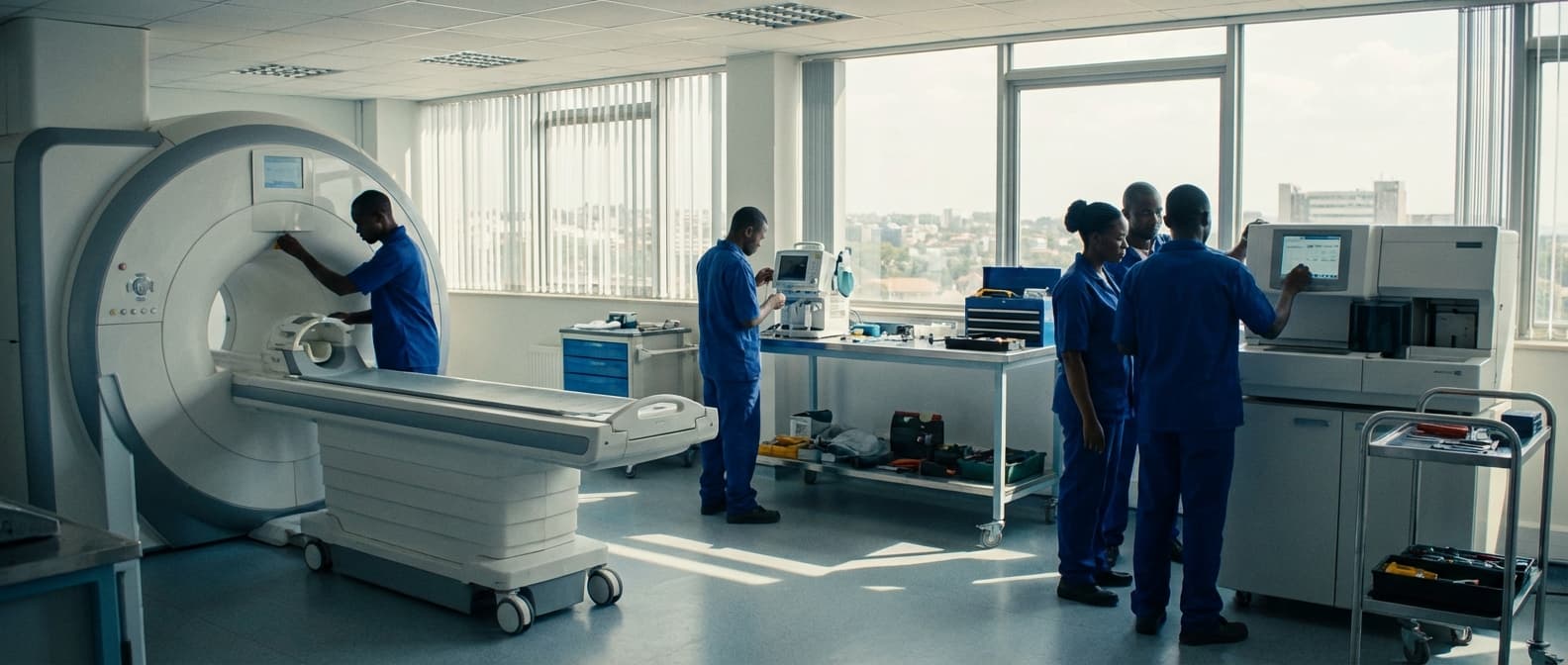
Uptime, Downtime & Root-Cause Analysis Reporting Service in Kenya
Engineering Excellence & Technical Support
Uptime, Downtime & Root-Cause Analysis Reporting Service High-standard technical execution following OEM protocols and local regulatory frameworks.
Proactive Uptime Monitoring
Leverage AI-powered, real-time monitoring across your critical infrastructure in Kenya. Our service continuously tracks performance metrics, alerting you to potential issues *before* they impact user experience, ensuring maximum availability for your business operations.
Automated Downtime Detection & Notification
Instantly detect service disruptions with sub-minute accuracy across Kenya. Receive automated, customizable alerts via SMS and email, empowering your teams to respond swiftly to outages and minimize business interruption.
In-depth Root Cause Analysis
Go beyond just knowing about downtime. Our advanced analytics correlate logs, network traffic, and performance data to pinpoint the precise root cause of issues within your Kenyan infrastructure, facilitating faster resolution and preventing recurrence.
What Is Uptime, Downtime & Root-cause Analysis Reporting Service In Kenya?
Uptime, Downtime & Root-Cause Analysis (RCA) Reporting Service in Kenya is a critical operational intelligence and incident management offering. This service focuses on the continuous monitoring of IT infrastructure and applications to detect, report on, and analyze periods of service unavailability (downtime) and availability (uptime). The core objective is to provide comprehensive data and actionable insights into why failures occur, enabling organizations to implement preventative measures and improve overall system resilience. The reporting component is crucial for documenting these events, their impact, and the corrective actions taken.
| Who Needs This Service? | Typical Use Cases | Benefits | |||
|---|---|---|---|---|---|
| Businesses heavily reliant on IT infrastructure for operations: e.g., E-commerce platforms, financial institutions, telecommunications providers, healthcare organizations, SaaS companies. | Downtime event impacting critical business functions: Sudden loss of website access, inaccessibility of customer databases, failure of payment processing systems, network outages. | **Improved system availability and reliability. | Reduced financial losses due to downtime. | Enhanced customer satisfaction and trust. | Optimized IT resource allocation and operational efficiency. |
| Organizations with Service Level Agreements (SLAs) for uptime: Companies that have contractual obligations to maintain a certain level of service availability. | Scheduled maintenance or upgrade failures: Incidents occurring during planned IT changes that lead to unexpected service disruptions. | Proactive identification of potential failures: Detecting performance degradation before it escalates into a full outage. | Compliance and audit requirements: Demonstrating a robust incident management and RCA process. | Continuous improvement of IT operations: Using data-driven insights to refine system architecture, configurations, and operational procedures. | |
| Managed Service Providers (MSPs) and IT support teams: To offer comprehensive monitoring and incident management as part of their service portfolio. | Cybersecurity incidents causing service disruption: Attacks like DDoS that lead to system unavailability. | Capacity planning and performance tuning: Identifying bottlenecks and areas for optimization based on historical performance data. | Validation of IT investments: Measuring the return on investment in IT infrastructure by tracking uptime and performance. |
Key Components of the Service
- Uptime Monitoring: Continuous, real-time surveillance of network devices, servers, applications, and services to verify their operational status and accessibility.
- Downtime Detection & Alerting: Proactive identification of service interruptions, followed by immediate notification to designated personnel via predefined channels (e.g., email, SMS, ticketing systems).
- Performance Metrics Tracking: Collection and analysis of key performance indicators (KPIs) related to availability, latency, response times, and resource utilization.
- Incident Logging & Documentation: Detailed recording of all downtime events, including timestamps, affected systems, observed symptoms, and initial troubleshooting steps.
- Root-Cause Analysis (RCA): A systematic investigation into the underlying causes of downtime incidents. This involves analyzing logs, configuration changes, system events, and historical data to pinpoint the fundamental reason for failure, moving beyond symptom-based remediation.
- Reporting & Visualization: Generation of regular reports and dashboards that summarize uptime statistics, downtime occurrences, incident trends, and RCA findings. These reports are typically presented in formats that facilitate understanding and decision-making.
- Remediation Recommendations: Providing actionable recommendations based on RCA findings to prevent recurrence of similar incidents and to optimize system performance and reliability.
Who Needs Uptime, Downtime & Root-cause Analysis Reporting Service In Kenya?
In today's hyper-connected business environment, disruptions to IT systems, production lines, and critical services can lead to significant financial losses, reputational damage, and decreased customer satisfaction. Organizations in Kenya are increasingly recognizing the vital importance of comprehensive Uptime, Downtime, and Root-Cause Analysis (RCA) Reporting Services to maintain operational continuity and optimize performance. These services are not a luxury but a necessity for businesses that rely on technology and efficient processes to deliver their products and services.
| Target Customer Type | Industry Examples | Key Departments Benefiting |
|---|---|---|
| Financial Services | Banks, Insurance Companies, Fintech Providers, Stock Exchanges | IT Operations, Risk Management, Compliance, Customer Service, Trading Desks |
| Telecommunications | Mobile Network Operators, Internet Service Providers, Data Centers | Network Operations Center (NOC), IT Infrastructure, Customer Support, Service Assurance |
| E-commerce & Retail | Online Retailers, Supermarkets, Logistics Companies | E-commerce Platform Management, Supply Chain Management, IT Support, Customer Experience |
| Healthcare | Hospitals, Clinics, Diagnostic Laboratories, HealthTech Companies | IT Infrastructure, Clinical Operations, Patient Records Management, Compliance |
| Manufacturing & Production | Factories, Industrial Plants, Food & Beverage Producers | Production Floor Management, Plant Operations, Maintenance, Quality Control, IT Support |
| Government & Public Sector | Ministries, Agencies, Utility Companies, Embassies | IT Departments, Service Delivery Units, Emergency Response, Infrastructure Management |
| Technology & Software Development | SaaS Providers, Software Houses, IT Consulting Firms | Development Operations (DevOps), Site Reliability Engineering (SRE), Product Management, Customer Support |
| Energy & Utilities | Power Generation Companies, Water Utilities, Oil & Gas | Operations Control Centers, Grid Management, IT Systems, Safety & Compliance |
Who Needs Uptime, Downtime & Root-Cause Analysis Reporting Service in Kenya? Target Customers and Departments
- Businesses across all sectors in Kenya that rely on the continuous availability of their IT infrastructure, applications, and operational systems.
- Organizations seeking to improve their resilience, minimize business interruptions, and enhance overall operational efficiency.
- Companies committed to providing reliable services to their customers and maintaining a strong brand reputation.
- Entities facing regulatory compliance requirements that mandate system availability and incident reporting.
Uptime, Downtime & Root-cause Analysis Reporting Service Process In Kenya
This document outlines the workflow for the Uptime, Downtime & Root-Cause Analysis Reporting Service Process in Kenya. This service is designed to help organizations understand their system availability, identify causes of disruptions, and implement corrective actions to improve reliability. The process begins with an initial inquiry from a client and culminates in the delivery of a comprehensive root-cause analysis report and recommendations.
| Stage | Description | Key Activities | Deliverables/Outcomes | Roles Involved |
|---|---|---|---|---|
| The client initiates contact to understand the reporting service and its benefits. | Initial consultation, understanding client needs, defining scope of systems to be monitored, identifying key performance indicators (KPIs). | Clear understanding of client requirements, preliminary scope definition. | Client, Service Provider Sales/Consultant |
| Based on the scoping, a formal proposal is developed and agreed upon. | Developing a detailed proposal (including services, pricing, timelines), contract negotiation, signing of Service Level Agreement (SLA). | Signed contract/SLA, agreed project plan. | Client, Service Provider Management/Legal |
| Setting up the necessary tools and processes to collect uptime and downtime data. | Deploying monitoring agents/tools, configuring monitoring parameters, establishing data collection points, defining alert thresholds. | Functional monitoring system, baseline uptime data. | Service Provider Technical Team, Client IT Team |
| Continuous monitoring and automatic logging of any deviations from expected system behavior. | Real-time monitoring of system health, automatic detection and logging of system interruptions, error events, and performance degradation. | Event logs, incident tickets, initial uptime/downtime records. | Service Provider Monitoring System, Service Provider Technical Team |
| A significant interruption or degradation in service that meets predefined criteria for a 'downtime event'. | System becomes unavailable, critical functionality is impaired, or performance drops below acceptable thresholds. | Trigger for root-cause analysis. | Service Provider Monitoring System |
| Immediate reaction to a downtime event to understand its impact and inform relevant parties. | Verifying the event, assessing its impact, notifying the client and internal stakeholders as per SLA, initiating preliminary investigation. | Notification to client, initial incident assessment report. | Service Provider Technical Team, Service Provider Support Team, Client IT Manager |
| In-depth analysis to determine the fundamental reason for the downtime. | Gathering logs, configuration data, performance metrics, interviewing relevant personnel, recreating the issue (if possible), eliminating potential causes. | Identification of potential root causes, supporting evidence. | Service Provider Technical Analysts, Client Technical Staff |
| Analyzing all collected data to pinpoint the exact root cause and contributing factors. | Correlating events across different systems, analyzing trends, performing statistical analysis, using diagnostic tools. | Confirmed root cause, identification of contributing factors, timeline of the incident. | Service Provider Technical Analysts |
| Compiling the findings into a preliminary report. | Documenting the incident, outlining the investigation process, presenting the identified root cause, detailing the impact and duration of downtime, and proposing initial findings. | Draft root-cause analysis report. | Service Provider Technical Analysts, Report Writer |
| Presenting the draft report to the client for validation and input. | Reviewing the draft report with the client, discussing findings, gathering feedback, clarifying any ambiguities. | Client feedback incorporated into the report. | Service Provider Project Manager, Service Provider Technical Lead, Client Stakeholders |
| Finalizing and delivering the comprehensive report to the client. | Incorporating client feedback, producing the final report, including executive summary, detailed analysis, evidence, and conclusions. | Final Uptime, Downtime & Root-Cause Analysis Report. | Service Provider Project Manager, Service Provider Technical Lead |
| Providing actionable recommendations for improvement and ensuring their implementation. | Developing specific, measurable, achievable, relevant, and time-bound (SMART) recommendations, assisting the client in implementing recommendations, post-implementation review (optional). | Actionable recommendations, improved system reliability. | Service Provider Technical Consultants, Client Management, Client Technical Staff |
Uptime, Downtime & Root-Cause Analysis Reporting Service Process Workflow
- Inquiry & Scoping
- Proposal & Agreement
- Data Collection & Monitoring Setup
- Incident Identification & Logging
- Downtime Event Trigger
- Initial Assessment & Notification
- Root-Cause Investigation
- Data Analysis & Correlation
- Draft Report Generation
- Client Review & Feedback
- Final Report Delivery
- Recommendations & Follow-up
Uptime, Downtime & Root-cause Analysis Reporting Service Cost In Kenya
Businesses in Kenya increasingly rely on the uninterrupted operation of their IT systems. When outages occur, swift resolution and understanding the underlying causes are critical to minimizing financial losses and maintaining customer trust. A dedicated Uptime, Downtime & Root-Cause Analysis (RCA) Reporting Service offers significant value by providing expert insights, structured reporting, and proactive recommendations. The cost of such a service in Kenya is influenced by several factors, leading to a range of pricing structures.
| Service Level/Complexity | Typical Features | Estimated Monthly Cost (KES) |
|---|---|---|
| Basic Uptime/Downtime Reporting | SLA-based uptime tracking, basic incident logging, simple downtime reports. | KES 20,000 - 50,000 |
| Standard Incident & RCA Reporting | Automated incident alerts, basic root cause identification for common issues, monthly downtime and incident summary reports. | KES 50,000 - 150,000 |
| Advanced RCA & Proactive Monitoring | Comprehensive infrastructure monitoring, in-depth technical RCA for complex outages, performance trend analysis, predictive recommendations, detailed forensic reports. | KES 150,000 - 500,000+ |
| Enterprise-Level & Managed Services | 24/7 dedicated support, proactive threat hunting, full-service IT resilience consulting, custom RCA frameworks, continuous improvement recommendations. | KES 500,000 - 1,500,000+ (often customized contracts) |
Key Pricing Factors for Uptime, Downtime & RCA Reporting Services in Kenya:
- Scope of Services:
- This is the primary driver of cost. Services can range from basic incident logging and reporting to comprehensive proactive monitoring, predictive analytics, and detailed forensic RCA.
- Number of Systems/Applications Monitored:
- The more critical systems and applications included in the monitoring and reporting, the higher the complexity and cost will be. This includes servers, networks, databases, cloud instances, and critical business applications.
- Frequency and Granularity of Reporting:
- The desired frequency of reports (daily, weekly, monthly, ad-hoc) and the level of detail required (summary vs. in-depth technical analysis) will impact pricing.
- Complexity of Infrastructure:
- Businesses with complex, multi-vendor, or highly distributed IT infrastructures will require more sophisticated RCA tools and expertise, leading to higher costs.
- Level of Expertise and Experience of the Provider:
- Reputable providers with a proven track record, certified analysts, and advanced RCA methodologies will command higher fees.
- Service Level Agreements (SLAs):
- The promised response times, resolution times, and uptime guarantees will influence the service's cost. Stricter SLAs generally mean higher prices.
- Proactive vs. Reactive Services:
- Services that focus on proactive identification and mitigation of potential issues (e.g., performance monitoring, predictive maintenance) are often priced differently than purely reactive incident response and RCA.
- Tools and Technology Used:
- The sophistication of the monitoring, logging, and analysis tools employed by the service provider can also influence pricing.
- Customization and Integration Needs:
- If the service needs to be heavily customized or integrated with existing IT management systems, this can add to the overall cost.
Affordable Uptime, Downtime & Root-cause Analysis Reporting Service Options
Ensuring your systems are consistently available (uptime) and understanding why they fail (downtime and root-cause analysis) are critical for business continuity. This service provides reporting that illuminates these crucial areas. We offer flexible value bundles and cost-saving strategies to make professional reporting accessible to businesses of all sizes.
| Value Bundle Name | Key Features | Ideal For | Estimated Monthly Cost (USD) | Cost Saving Strategies | |
|---|---|---|---|---|---|
| Essentials Uptime | Basic uptime monitoring, daily/weekly uptime reports, incident logging. | Small businesses, startups with limited infrastructure. | $50 - $150 | Annual payment discount (5-10%), bundled with other essential IT services. | Focus on core uptime metrics, prioritize essential systems for monitoring. |
| Pro Downtime & RCA | Advanced uptime monitoring, detailed downtime incident reports, basic root-cause analysis assistance, monthly performance trends. | Growing businesses, SMBs requiring more in-depth incident understanding. | $150 - $400 | Two-year commitment discount (10-15%), customized reporting templates, self-service RCA documentation. | Automated data collection, focus RCA on recurring or high-impact incidents. |
| Enterprise Comprehensive | Continuous uptime monitoring, comprehensive downtime incident reporting with deep-dive RCA, proactive trend analysis, custom alerting, executive dashboards. | Medium to large enterprises, organizations with complex IT environments. | $400+ | Volume discounts for multiple service tiers, dedicated account management for optimization, integration with existing ITSM tools. | Leverage internal IT teams for initial investigation, focus on actionable insights from RCA reports. |
| Ad-Hoc RCA Deep Dive | On-demand, detailed root-cause analysis for specific, critical incidents. | Any business experiencing a significant, unexplained outage. | Priced per incident (e.g., $200 - $1000+ depending on complexity) | Pre-negotiated rates for ongoing support contracts, retainer agreements for priority RCA. | Ensure sufficient logging and telemetry are in place to facilitate faster RCA. |
Key Reporting Service Offerings
- Uptime Monitoring & Reporting: Tracks system availability, identifies performance trends, and alerts on potential issues before they impact users.
- Downtime Incident Reporting: Documents all service interruptions, including duration, affected systems, and initial impact assessments.
- Root-Cause Analysis (RCA) Reporting: Deep dives into downtime incidents to pinpoint the underlying causes, preventing recurrence and fostering continuous improvement.
- Performance Trend Analysis: Identifies patterns in system performance over time, highlighting areas for optimization and proactive maintenance.
- Alerting & Notification Systems: Configurable alerts for critical events, ensuring timely awareness and response.
Verified Providers In Kenya
In Kenya's rapidly evolving healthcare landscape, discerning "verified providers" is paramount for ensuring quality, safety, and reliability. Franance Health stands out as a leading example of such a verified entity. This document outlines Franance Health's credentials and elaborates on why they represent the best choice for healthcare consumers in Kenya.
| Credential Type | Description | Benefit to Patients |
|---|---|---|
| Regulatory Licensing (e.g., KMPDC, NHIF) | Official authorization to operate as a healthcare provider, meeting specific quality and safety standards. | Ensures legal compliance and adherence to national healthcare benchmarks, guaranteeing a safe and regulated environment. |
| Professional Certifications of Staff | Verification of medical practitioners' qualifications, ongoing training, and adherence to ethical codes. | Provides confidence in the expertise and competence of the medical team providing care. |
| Quality Management Systems (e.g., ISO Certification) | Implementation of standardized processes for service delivery, patient safety, and continuous improvement. | Guarantees consistent quality of care, minimizes errors, and promotes a culture of excellence. |
| Partnerships with Reputable Insurers | Agreements with leading health insurance providers in Kenya. | Facilitates seamless claims processing and makes healthcare services more financially accessible for insured individuals. |
| Community Engagement and Outreach Programs | Involvement in health awareness campaigns, free medical camps, and community health initiatives. | Demonstrates a commitment to public health and accessibility beyond immediate clinical services. |
Franance Health Credentials and Why They Are the Best Choice
- Accreditation and Regulatory Compliance: Franance Health operates under strict adherence to Kenyan healthcare regulations and standards. This includes obtaining and maintaining necessary licenses and accreditations from relevant bodies such as the National Health Insurance Fund (NHIF) and the Kenya Medical Practitioners and Dentists Council (KMPDC). This compliance ensures that all services provided meet stringent quality benchmarks.
- Experienced and Qualified Professionals: The organization boasts a team of highly skilled and experienced medical professionals, including doctors, nurses, specialists, and allied health workers. Continuous professional development and rigorous vetting processes are integral to their recruitment and retention strategies, guaranteeing that patients receive care from competent practitioners.
- State-of-the-Art Facilities and Technology: Franance Health invests in modern medical equipment and technologies to provide accurate diagnoses and effective treatments. Their facilities are designed to be patient-friendly, clean, and equipped to handle a wide range of medical needs.
- Comprehensive Service Portfolio: From primary healthcare and specialized consultations to diagnostic services and minor surgical procedures, Franance Health offers a comprehensive suite of medical services. This integrated approach means patients can often receive a full spectrum of care under one roof, enhancing convenience and continuity.
- Patient-Centric Approach and Ethical Practices: A cornerstone of Franance Health's philosophy is a commitment to patient well-being and ethical medical practices. This translates to transparent communication, respect for patient rights, and a focus on personalized care plans tailored to individual needs.
- Commitment to Affordability and Accessibility: While maintaining high standards, Franance Health strives to make quality healthcare accessible and affordable to a wider population. Their partnerships with insurance providers and potential tiered service offerings aim to reduce financial barriers to care.
- Positive Patient Testimonials and Reputation: The consistent positive feedback and strong reputation built within the Kenyan community are testaments to Franance Health's reliability and the quality of care they deliver. Word-of-mouth and independent reviews often highlight their dedication to patient satisfaction.
Scope Of Work For Uptime, Downtime & Root-cause Analysis Reporting Service
This document outlines the Scope of Work (SOW) for a comprehensive Uptime, Downtime, and Root-Cause Analysis (RCA) Reporting Service. The service aims to provide clients with detailed insights into their system availability, identify the causes of disruptions, and offer recommendations for improvement. The technical deliverables and standard specifications are detailed below.
| Deliverable | Description | Standard Specifications | Frequency/Trigger | Format |
|---|---|---|---|---|
| Uptime/Downtime Monitoring Report | Detailed record of system availability, including total uptime, total downtime, and percentage of availability over a specified period. | Includes specific timestamps for start and end of downtime, affected services/applications, and categorization of downtime (e.g., planned, unplanned, maintenance). | Weekly, Monthly, Quarterly (configurable) | PDF, CSV |
| Downtime Incident Report | Comprehensive analysis of individual downtime events, focusing on the immediate impact and initial findings. | Includes incident ID, date/time of occurrence, duration, affected systems, brief description of the event, and initial assessment of the cause. | Triggered by any unplanned downtime event exceeding a defined threshold (e.g., 15 minutes). | |
| Root-Cause Analysis (RCA) Report | In-depth investigation into the underlying causes of downtime incidents, aiming to prevent recurrence. | Includes: Incident summary, timeline of events, contributing factors, identified root cause(s), impact assessment (technical and business), corrective actions taken, and preventative recommendations. Methodologies like 5 Whys, Fishbone Diagram may be employed. | Triggered by any significant unplanned downtime event (configurable threshold) or recurring minor incidents. | |
| Trend Analysis Report | Identifies recurring patterns, common causes of downtime, and overall system reliability trends over extended periods. | Includes: Analysis of downtime by category, by service, by root cause, average downtime duration, MTTR (Mean Time To Restore), MTBF (Mean Time Between Failures) if applicable. Visualizations (charts, graphs) are included. | Monthly, Quarterly, Annually | |
| Executive Summary Report | High-level overview of system availability, key incidents, and major findings for senior management. | Concise summary of uptime/downtime metrics, critical incidents requiring attention, and strategic recommendations. Focus on business impact. | Monthly, Quarterly |
Key Objectives of the Service
- To accurately monitor and record system uptime and downtime.
- To perform thorough root-cause analysis for all identified downtime events.
- To provide timely and actionable reports to stakeholders.
- To identify trends and patterns in system performance and reliability.
- To offer recommendations for preventative measures and system enhancements.
Service Level Agreement For Uptime, Downtime & Root-cause Analysis Reporting Service
This Service Level Agreement (SLA) outlines the commitments for the Uptime, Downtime & Root-Cause Analysis Reporting Service. It defines the expected response times, uptime guarantees, and the process for reporting and resolving service disruptions.
| Incident Severity Level | Definition | Impact | Response Time | Resolution Target |
|---|---|---|---|---|
| Severity 1 (Critical) | Complete system outage or critical functionality failure affecting all users. | All users unable to access core services or perform essential tasks. | Within [Number] minutes of notification. | Within [Number] hours of notification. |
| Severity 2 (High) | Significant degradation of a core service impacting a substantial portion of users. | Users experience severe performance issues or loss of a major feature. | Within [Number] hours of notification. | Within [Number] business days of notification. |
| Severity 3 (Medium) | Partial service degradation or failure of a non-critical feature affecting a limited number of users. | Users experience minor issues or loss of secondary functionality. | Within [Number] business days of notification. | Within [Number] business days of notification. |
| Severity 4 (Low) | Minor issues, cosmetic defects, or feature requests with no significant impact on service operation. | No impact on core service functionality or user experience. | Within [Number] business days of notification. | Addressed in future releases or as resources allow. |
Key Definitions
- Uptime: The percentage of time the Service is available and functioning as intended, excluding Scheduled Downtime.
- Downtime: The period during which the Service is unavailable or significantly degraded, excluding Scheduled Downtime.
- Scheduled Downtime: Pre-announced periods of planned maintenance or upgrades. Notice will be provided at least [Number] days in advance.
- Unscheduled Downtime: Any Downtime that is not Scheduled Downtime.
- Root-Cause Analysis (RCA): A systematic process to identify the fundamental reason(s) for a service incident.
- Incident: Any event that causes or may cause an interruption to, or a reduction in, the quality of the Service.
- Severity Levels: A classification of Incidents based on their impact on the Service and its users. (See Table 1: Incident Severity Levels)
Frequently Asked Questions

Ready when you are
Let's scope your Uptime, Downtime & Root-Cause Analysis Reporting Service in Kenya project in Kenya.

Scaling healthcare logistics and technical systems across the entire continent.