
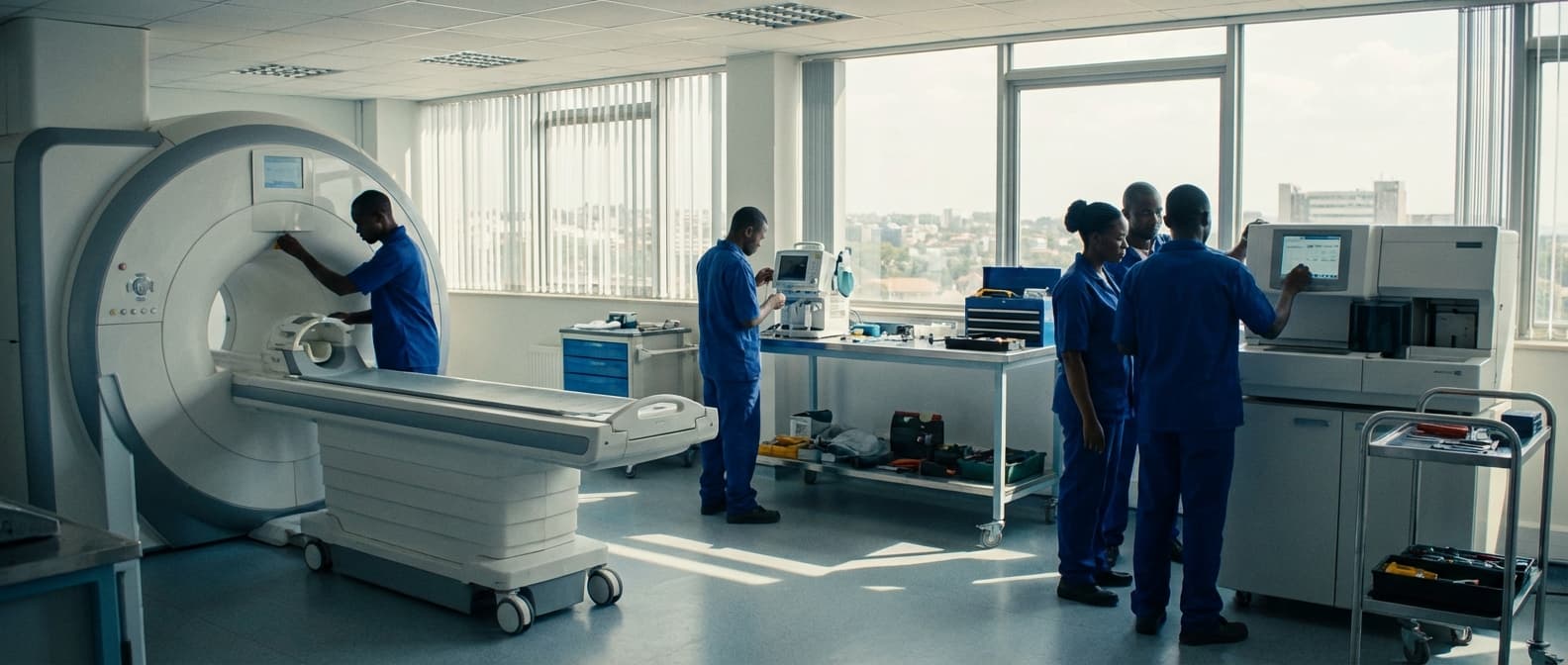
Preventive Maintenance Visit Service (On-Demand) in Kenya
Engineering Excellence & Technical Support
Preventive Maintenance Visit Service (On-Demand) High-standard technical execution following OEM protocols and local regulatory frameworks.
Proactive Machine Health Monitoring
Leverage IoT sensors and real-time data analytics to continuously monitor critical equipment parameters, detecting anomalies and potential failures before they occur. Receive instant alerts for deviations and schedule preventive interventions to minimize downtime.
AI-Powered Predictive Scheduling
Utilize machine learning algorithms to analyze historical maintenance data, operating conditions, and component lifecycles. Our system predicts optimal maintenance windows, reducing unnecessary interventions and maximizing equipment lifespan while ensuring on-demand availability.
Digital Twin for Virtual Diagnostics
Create and utilize a virtual replica (digital twin) of your key machinery. This allows for remote diagnostics, simulation of various operational scenarios, and precise identification of required maintenance tasks, ensuring swift and accurate on-demand service delivery by our certified technicians in Kenya.
What Is Preventive Maintenance Visit Service (On-demand) In Kenya?
Preventive Maintenance Visit Service (On-Demand) in Kenya refers to scheduled, proactive maintenance interventions for a wide range of equipment, machinery, and infrastructure, executed upon client request rather than following a fixed, pre-determined schedule. This service model is designed to identify and rectify potential issues before they escalate into critical failures, thereby minimizing downtime, optimizing operational efficiency, and extending asset lifespan. The 'on-demand' aspect signifies a flexible service delivery that can be initiated by the client based on observed performance indicators, usage patterns, or specific operational needs, complementing or substituting traditional time-based preventive maintenance programs. These visits typically involve detailed inspections, lubrication, calibration, minor part replacements, cleaning, and performance testing, all aimed at maintaining equipment in optimal working condition.
| Who Needs It? | Typical Use Cases | ||||||
|---|---|---|---|---|---|---|---|
| Industrial Manufacturing Facilities: Seeking to maintain production lines, CNC machines, conveyor systems, and power generation equipment to avoid costly unplanned stoppages and ensure product quality. | Commercial Building Management: Requiring maintenance for HVAC systems, elevators, electrical panels, and plumbing to ensure occupant comfort, safety, and uninterrupted building operations. | Agricultural Operations: Needing to service tractors, harvesters, irrigation systems, and processing machinery to maximize yield and minimize post-harvest losses, especially during peak seasons. | Healthcare Institutions: Maintaining critical medical equipment (e.g., imaging machines, life support systems, laboratory analyzers) to ensure patient safety and diagnostic accuracy. | Transportation and Logistics Companies: Servicing fleet vehicles, warehouse automation equipment, and refrigeration units to ensure efficient and reliable delivery schedules. | Power Generation and Utilities: Maintaining turbines, generators, substations, and transmission equipment to ensure continuous and stable energy supply. | Small and Medium Enterprises (SMEs) with Capital Equipment: Businesses that rely on specific machinery or technology and want to avoid expensive repairs and business disruption. | Organizations with Aging Infrastructure: Implementing proactive maintenance to extend the operational life of older but critical assets. |
| Pre-season preparation: Servicing agricultural machinery before planting or harvesting seasons. | Post-peak operation checks: Inspecting equipment after periods of high demand or intensive use (e.g., holiday seasons for retail). | Performance degradation alerts: Responding to observed dips in efficiency, increased noise, or unusual vibrations. | Installation verification: Conducting initial checks and adjustments after new equipment installation or significant upgrades. | Scheduled obsolescence mitigation: Proactively addressing components nearing their expected service life. | Regulatory compliance: Ensuring equipment meets safety and operational standards where applicable. | Remote or intermittent use equipment: Servicing assets that are not in constant operation but require readiness (e.g., backup generators). | Seasonal asset readiness: Preparing equipment for specific operational periods (e.g., air conditioning units before summer). |
Key Components of Preventive Maintenance Visit Service (On-Demand):
- Scheduled Inspections: Comprehensive visual and functional checks of critical components and systems.
- Lubrication and Greasing: Application of appropriate lubricants to reduce friction and wear.
- Calibration and Adjustment: Fine-tuning of sensors, controls, and moving parts to ensure accuracy and performance.
- Minor Component Replacement: Proactive replacement of wear-and-tear parts (e.g., filters, seals, belts) based on inspection findings and operational data.
- Cleaning and Decontamination: Removal of dust, debris, and contaminants that can impede performance or cause damage.
- Performance Testing and Diagnostics: Verification of operational parameters and utilization of diagnostic tools to identify subtle anomalies.
- Record Keeping and Reporting: Documentation of all maintenance activities, findings, and recommendations for future reference and analysis.
- Root Cause Analysis (RCA): For recurring or significant issues identified during a visit, to prevent future occurrences.
Who Needs Preventive Maintenance Visit Service (On-demand) In Kenya?
Preventive Maintenance Visit Service (On-Demand) in Kenya offers a crucial safety net for a wide range of businesses and organizations. Unlike scheduled, long-term contracts, this service caters to those who require immediate, expert attention for their machinery and equipment without a pre-existing maintenance agreement. This proactive approach helps prevent unexpected breakdowns, minimizes costly downtime, and extends the lifespan of valuable assets, ultimately contributing to operational efficiency and financial stability.
| Target Customer Type | Specific Departments/Roles | Why They Need On-Demand Preventive Maintenance |
|---|---|---|
| Manufacturing & Industrial Companies | Production Line Managers, Plant Managers, Maintenance Supervisors, Operations Directors | To address minor issues before they escalate into production stoppages, ensuring continuous output and avoiding lost revenue. Critical for machinery like CNC machines, assembly lines, and packaging equipment. |
| Hospitality & Tourism Sector | Hotel Managers, Facility Managers, Restaurant Owners, Resort Operations | To ensure essential services (HVAC, refrigeration, kitchen equipment, elevators) are always functional for guest satisfaction and operational continuity. Prevents disruptions that can lead to negative reviews and lost bookings. |
| Healthcare Facilities | Hospital Administrators, Biomedical Engineering Departments, Facilities Managers | To maintain the reliability of life-support equipment, diagnostic machinery (X-ray, MRI), and general facility systems (generators, HVAC) where failure can have severe consequences. Ensures patient safety and uninterrupted care. |
| Agricultural Businesses | Farm Owners, Estate Managers, Agricultural Cooperative Leaders | To keep critical farm machinery (tractors, harvesters, irrigation systems, processing equipment) in optimal working condition, especially during peak seasons. Prevents crop loss and ensures timely harvests. |
| Construction & Infrastructure Companies | Project Managers, Site Managers, Equipment Fleet Managers | To ensure heavy machinery (excavators, cranes, concrete mixers) is reliable on-site, preventing project delays and additional costs. Minimizes the risk of accidents due to equipment malfunction. |
| Logistics & Transportation Companies | Fleet Managers, Warehouse Managers, Operations Supervisors | To maintain the operational integrity of forklifts, conveyor belts, refrigeration units in trucks, and other essential equipment, ensuring smooth and timely delivery of goods. |
| Small to Medium Enterprises (SMEs) | Business Owners, Operations Managers, IT Managers (for IT equipment) | For businesses that may not have the resources for a full-time maintenance team, providing expert help for critical equipment when needed, saving them from significant repair bills and downtime. |
| Retail & Supermarkets | Store Managers, Operations Managers, Facilities Coordinators | To ensure the functionality of refrigeration units, point-of-sale systems, HVAC, and other critical equipment that directly impacts sales and customer experience. |
Who Needs Preventive Maintenance Visit Service (On-Demand) in Kenya?
- Businesses experiencing or anticipating equipment issues but without a dedicated in-house maintenance team.
- Organizations with critical machinery that cannot afford extended downtime.
- Companies seeking to optimize the performance and longevity of their assets on an as-needed basis.
- New businesses or those undergoing rapid expansion who may not have established maintenance protocols.
- Sectors with high operational tempo where equipment wear and tear is a constant concern.
Preventive Maintenance Visit Service (On-demand) Process In Kenya
This document outlines the typical workflow for an on-demand Preventive Maintenance (PM) visit service in Kenya, covering the process from initial inquiry to the completion of the service execution. This service is crucial for ensuring the longevity and optimal performance of various equipment and systems, preventing costly breakdowns and downtime.
| Phase | Key Activities | Responsible Party | Output/Outcome |
|---|---|---|---|
| Client identifies need, contacts service provider, provides initial details. | Client, Service Provider | Service request initiated, basic information captured. |
| Detailed information gathering, site visit (if required), quote generation. | Service Provider | Formal quote with scope, cost, and timeline. |
| Client and provider agree on date/time, technician assigned and dispatched. | Service Provider | Scheduled appointment, technician en route. |
| Technician arrives, performs inspection, executes PM tasks, tests functionality. | Service Provider (Technician) | Equipment/system maintained, functionality verified. |
| Report generation, client review, sign-off, payment processing, record keeping. | Service Provider, Client | Completed service, satisfied client, updated records. |
Preventive Maintenance Visit Service (On-Demand) Process in Kenya: Workflow
- Inquiry & Service Request: The process begins when a client (individual or business) identifies the need for a preventive maintenance service for their equipment or system.
- Information Gathering & Consultation: The service provider gathers detailed information about the equipment/system requiring maintenance, including make, model, age, last serviced date, and the specific issues or concerns the client has.
- Quote Generation & Agreement: Based on the gathered information, the provider generates a detailed quote outlining the scope of work, estimated time, materials required, and associated costs.
- Scheduling & Dispatch: Upon agreement and confirmation of the quote, the service provider schedules the maintenance visit at a mutually convenient time and dispatches a qualified technician or team to the client's location.
- On-Site Assessment & Inspection: Upon arrival, the technician conducts a thorough on-site assessment and inspection of the equipment/system to identify any potential issues, wear and tear, or deviations from optimal performance.
- Preventive Maintenance Execution: The technician performs the agreed-upon preventive maintenance tasks, which may include cleaning, lubrication, calibration, component inspection, minor adjustments, and part replacement if necessary.
- Testing & Verification: After completing the maintenance tasks, the technician tests the equipment/system to ensure it is functioning correctly and meets performance standards.
- Reporting & Recommendations: A detailed report is generated, documenting the work performed, any findings, and recommendations for future maintenance or potential repairs.
- Client Sign-off & Payment: The client reviews the report and authorizes the completion of the service. Payment is then processed according to the agreed-upon terms.
- Record Keeping & Follow-up: The service provider maintains records of the visit for future reference. A follow-up may be initiated to ensure client satisfaction and to schedule future preventive maintenance.
Preventive Maintenance Visit Service (On-demand) Cost In Kenya
Preventive maintenance (PM) visits are crucial for ensuring the longevity, efficiency, and reliability of various equipment and systems in Kenya. This includes everything from vehicles and machinery to electrical systems and HVAC units. The cost of an on-demand preventive maintenance visit in Kenya can vary significantly due to a multitude of factors. These factors dictate both the pricing strategy of service providers and the ultimate cost incurred by the customer. Understanding these elements is key to budgeting and making informed decisions about maintenance services.
| Service Category (Examples) | Estimated Price Range (KES) | Notes |
|---|---|---|
| Basic Vehicle Preventive Maintenance (e.g., oil change, filter replacement, general inspection for a standard car) | 5,000 - 15,000 | Covers common checks and fluid top-ups. Excludes significant part replacements. |
| Comprehensive Vehicle Preventive Maintenance (e.g., including brake checks, suspension inspection, diagnostic scans for a standard car) | 10,000 - 30,000 | More in-depth inspection and potential minor adjustments. |
| Industrial Machinery Basic PM (e.g., lubrication, visual inspection, basic calibration) | 15,000 - 40,000 | Depends heavily on the type and size of machinery. May require specialized technicians. |
| HVAC System Basic Service (e.g., cleaning filters, checking refrigerant levels, basic performance check) | 8,000 - 25,000 | For residential or small commercial units. Larger or more complex systems will cost more. |
| Electrical Panel Inspection & Basic Maintenance | 10,000 - 30,000 | Includes visual inspection, tightening connections, basic testing. Complex diagnostics or repairs are extra. |
| Generator Basic Service | 10,000 - 25,000 | Oil change, filter replacement, battery check, load testing for smaller units. |
Key Pricing Factors for On-Demand Preventive Maintenance in Kenya:
- {"title":"Type and Complexity of Equipment/System","description":"The nature of the equipment or system being serviced is a primary cost driver. A routine service for a standard passenger vehicle will differ vastly from a specialized maintenance visit for industrial heavy machinery, complex medical equipment, or sophisticated IT infrastructure. The more intricate and specialized the equipment, the higher the expertise, tools, and time required, thus increasing the cost."}
- {"title":"Scope of Work","description":"Preventive maintenance can range from a basic inspection and lubrication to a comprehensive service involving part replacements, diagnostics, calibration, and extensive testing. The more tasks included in the PM checklist, the longer the service will take and the more materials will be used, leading to a higher overall cost."}
- {"title":"Technician's Expertise and Specialization","description":"Highly skilled technicians with specialized certifications or extensive experience in a particular field command higher rates. For example, a certified automotive technician will likely charge more than a general handyman for a vehicle inspection. Similarly, technicians specializing in industrial automation or specific HVAC brands will have different pricing structures."}
- {"title":"Geographical Location and Accessibility","description":"Service calls to remote or hard-to-reach areas in Kenya may incur additional travel costs (fuel, vehicle wear and tear, and technician time). Urban centers or easily accessible industrial parks might have more competitive pricing due to higher service provider density."}
- {"title":"Urgency/On-Demand Nature","description":"As this is an 'on-demand' service, pricing will often include a premium for immediate or short-notice requests. Scheduled PM visits are typically more cost-effective than emergency or same-day service calls."}
- {"title":"Parts and Consumables","description":"If the preventive maintenance requires the replacement of parts or consumables (e.g., filters, oils, lubricants, belts), the cost of these items will be added to the service fee. The type and brand of parts used will influence this cost."}
- {"title":"Service Provider's Reputation and Overhead","description":"Established companies with a strong reputation, professional branding, insurance, and higher operational overheads (office space, administrative staff, advanced diagnostic tools) may charge more than smaller, independent operators. However, this often translates to greater reliability and quality assurance."}
- {"title":"Contractual Agreements vs. Ad-Hoc Service","description":"While this discussion focuses on 'on-demand' service, it's worth noting that clients with ongoing maintenance contracts might receive preferential rates compared to one-off, ad-hoc service calls."}
- {"title":"Time of Day/Week","description":"Some service providers may charge a premium for maintenance performed outside standard business hours, on weekends, or public holidays."}
Affordable Preventive Maintenance Visit Service (On-demand) Options
Preventive maintenance is crucial for the longevity and optimal performance of your equipment, whether it's for your home or business. Our affordable on-demand preventive maintenance visit service ensures you can schedule essential check-ups when it's most convenient for you, preventing costly breakdowns and extending the lifespan of your assets. We offer flexible options, including value bundles and cost-saving strategies, to make proactive care accessible and budget-friendly.
| Service Level | Description | Key Inclusions | Cost-Saving Strategy | Bundle Price (Example) |
|---|---|---|---|---|
| Basic Tune-Up | A routine check to ensure your equipment is running efficiently and to identify minor issues. | Visual inspection, lubrication, filter checks, basic cleaning, operational test. | Prevents small issues from escalating into major, expensive repairs. | $75 |
| Standard Health Check | A more comprehensive inspection to assess overall system health and recommend minor adjustments. | Includes Basic Tune-Up plus, diagnostic scans (where applicable), calibration checks, minor part adjustments. | Early detection of potential component failures reduces emergency call-out fees and parts replacement costs. | $120 |
| Comprehensive Preventative Care | An in-depth service designed to maximize performance, efficiency, and longevity. | Includes Standard Health Check plus, in-depth component testing, cleaning of internal parts, firmware updates (where applicable), detailed performance report. | Maximizes energy efficiency, significantly lowering utility bills and delaying the need for costly replacements. | $200 |
| Annual Maintenance Package (Bundle) | Pre-paid service for regular scheduled visits throughout the year, offering the best value. | Includes 3 Comprehensive Preventative Care visits (e.g., quarterly) at a discounted rate. | Significant discount compared to individual visit costs, priority scheduling, and potential for extended warranty eligibility. | $550 (Save up to 10%) |
| Multi-Unit Discount | Special pricing for servicing multiple pieces of equipment at the same location during a single visit. | Discount applied to the total service cost for each additional unit beyond the first. | Reduces the per-unit cost of maintenance by spreading the technician's travel and setup time across multiple assets. | Varies (e.g., 15% off each additional unit) |
Why Choose On-Demand Preventive Maintenance?
- Proactive problem identification to avoid expensive emergency repairs.
- Extended equipment lifespan and improved performance.
- Reduced energy consumption and operational costs.
- Peace of mind knowing your assets are well-maintained.
- Flexible scheduling to fit your business or personal needs.
- Transparent pricing with no hidden fees.
Verified Providers In Kenya
In Kenya's dynamic healthcare landscape, identifying truly verified and trustworthy providers is paramount for ensuring quality care. Franance Health stands out as a leading organization committed to excellence, offering a network of credentials that directly translate into superior patient outcomes. This document outlines what it means for a provider to be 'verified' within the Kenyan context and why Franance Health's rigorous vetting process and comprehensive credentialing system make them the best choice for both patients and healthcare professionals.
| Franance Health Credential | What it Signifies | Why it Matters for Patients |
|---|---|---|
| Certified Medical Professionals | Indicates completion of rigorous training, board certification in their specialty, and adherence to international standards of practice. | Ensures you are treated by highly skilled and knowledgeable doctors, specialists, and allied health professionals who are at the forefront of medical advancements. |
| Accredited Healthcare Facilities | Confirms that clinics, hospitals, and laboratories meet stringent criteria for patient safety, infection control, equipment maintenance, and operational efficiency. | Provides peace of mind knowing that the facility you visit is safe, well-equipped, and follows best practices for delivering healthcare services. |
| Verified Pharmaceutical Outlets | Guarantees that pharmacies stock authentic, quality-assured medications and are managed by licensed pharmacists. | Protects you from counterfeit or substandard drugs, ensuring the efficacy and safety of your prescriptions. |
| Continuous Professional Development (CPD) Compliance | Demonstrates a commitment by healthcare professionals to ongoing learning and staying updated with the latest medical research and techniques. | Means your healthcare provider is actively enhancing their skills and knowledge, leading to better-informed diagnoses and treatment plans. |
| Patient-Centric Service Standards | Represents a pledge by providers to offer compassionate, respectful, and efficient care, prioritizing patient comfort and satisfaction. | Enhances your overall healthcare experience, ensuring you feel heard, valued, and well-cared for throughout your medical journey. |
Understanding 'Verified Providers' in Kenya:
- Official Registration and Licensing: Verified providers possess current and valid licenses from relevant regulatory bodies in Kenya, such as the Medical Practitioners and Dentists Council (MPDC) for doctors, the Nursing Council of Kenya (NCK) for nurses, and the Pharmacy and Poisons Board (PPB) for pharmacists.
- Professional Qualifications and Experience: Verification includes a thorough assessment of a provider's academic qualifications, specialized training, and years of practical experience in their respective fields.
- Adherence to Ethical Standards: Verified providers are expected to uphold the highest ethical principles, demonstrating a commitment to patient confidentiality, informed consent, and professional integrity.
- Quality Assurance and Accreditation: Many verified providers participate in quality assurance programs and may hold accreditations from recognized national or international bodies, signifying a commitment to continuous improvement and best practices.
- Positive Patient Feedback and Reputation: A strong track record and positive patient feedback are often indicators of a verified and reliable healthcare provider.
Scope Of Work For Preventive Maintenance Visit Service (On-demand)
This Scope of Work (SOW) outlines the services to be provided for an on-demand preventive maintenance visit for [Equipment/System Name, e.g., HVAC System, Generator, Industrial Pump]. The objective is to ensure optimal performance, identify potential issues, and prevent unexpected failures through scheduled inspection and maintenance activities.
| Task ID | Task Description | Frequency | Technical Deliverables | Standard Specifications / Acceptance Criteria | Estimated Time (Man-hours) |
|---|---|---|---|---|---|
| PM-001 | Visual Inspection of [Key Components, e.g., belts, hoses, electrical connections, structural integrity] | As per schedule / Upon each visit | Inspection report detailing visual condition, any anomalies, and recommendations. | No visible signs of wear, damage, corrosion, leaks, or loose connections. All components secured. | 0.5 - 1.5 |
| PM-002 | Cleaning of [Specific areas, e.g., air filters, heat exchangers, fan blades, control panels] | As per schedule / Upon each visit | Cleaned components free of dust, debris, and contaminants. Documentation of cleaning performed. | Components are free from visible dust, debris, oil, and other build-up. Airflow/efficiency not impeded. | 0.5 - 2.0 |
| PM-003 | Lubrication of moving parts [Specify parts, e.g., bearings, linkages] | As per schedule / Upon each visit | Lubrication performed according to manufacturer specifications. Log of lubrication points and type of lubricant used. | Correct type and amount of lubricant applied as per manufacturer specifications. No excess lubricant. | 0.2 - 1.0 |
| PM-004 | Tightening of electrical connections and terminals | As per schedule / Upon each visit | Report confirming all accessible electrical connections have been checked and tightened. Torque values noted if critical. | Connections are tight and secure, showing no signs of overheating or corrosion. No loose wires. | 0.3 - 1.0 |
| PM-005 | Verification of operational parameters [Specify parameters, e.g., temperature, pressure, voltage, current] | As per schedule / Upon each visit | Report detailing measured operational parameters and comparison to acceptable ranges. | Measured parameters fall within manufacturer-specified operating ranges. Any deviations are noted and investigated. | 0.5 - 2.5 |
| PM-006 | Testing of safety features and interlocks [Specify features, e.g., emergency stop, overcurrent protection] | As per schedule / Upon each visit | Test report confirming all safety features are functioning correctly. | All tested safety features and interlocks engage and disengage as designed, preventing unsafe operation. | 0.5 - 2.0 |
| PM-007 | Minor adjustments and calibration | As needed / Upon each visit | Documentation of any adjustments or calibrations performed, including pre and post-adjustment readings. | Adjustments are within acceptable tolerances. Calibration is performed to manufacturer standards. | 0.5 - 3.0 |
| PM-008 | Defect identification and reporting | Ongoing during visit | Detailed report of any identified defects, including description, severity, and recommended corrective actions. | Defects are clearly described, photographed if possible, and categorized by urgency. | Included in other task estimations |
| PM-009 | Post-maintenance system check and verification | Upon completion of all other tasks | Confirmation that the system is operating normally and all maintenance tasks have been successfully completed. | System operates as expected. No new issues or anomalies detected post-maintenance. | 0.5 - 1.0 |
| PM-010 | Final report generation | Upon completion of visit | Comprehensive report summarizing all activities, findings, recommendations, and materials used. | Report is clear, concise, and accurately reflects the work performed and the condition of the equipment/system. | 1.0 - 2.0 |
Key Objectives of Preventive Maintenance:
- Enhance operational efficiency and reliability.
- Minimize the risk of unexpected breakdowns and associated downtime.
- Extend the lifespan of the equipment/system.
- Ensure compliance with safety regulations and manufacturer recommendations.
- Identify and address potential issues before they escalate into costly repairs.
- Optimize energy consumption.
Service Level Agreement For Preventive Maintenance Visit Service (On-demand)
This Service Level Agreement (SLA) outlines the guaranteed response times and uptime expectations for On-Demand Preventive Maintenance Visit Services provided by [Your Company Name] to [Client Company Name]. This SLA is an addendum to the Master Service Agreement (MSA) dated [MSA Date].
| Service Level | Definition | Response Time Target (Business Hours) | Uptime Guarantee (Critical Equipment) | Notes |
|---|---|---|---|---|
| Standard Preventive Maintenance Visit (Scheduled) | Routine maintenance performed according to a pre-agreed schedule. | Not Applicable (scheduled in advance) | 99.5% | Client is responsible for providing at least 5 business days' notice for scheduled visits. |
| On-Demand Preventive Maintenance Visit (Emergency Request) | Preventive maintenance performed at the Client's urgent request due to perceived performance degradation or potential failure. | Within 4 Business Hours | 99.8% | Emergency requests are subject to technician availability. Client must provide detailed description of the issue. |
| On-Demand Preventive Maintenance Visit (Proactive Request) | Preventive maintenance performed at the Client's request outside of the standard schedule, but not classified as an emergency. | Within 8 Business Hours | 99.6% | Proactive requests are subject to technician availability. Client can schedule these visits with reasonable notice. |
Definitions
- On-Demand Preventive Maintenance Visit: A scheduled or unscheduled visit by a qualified technician to perform routine checks, lubrication, cleaning, calibration, and minor adjustments to equipment as per the agreed-upon preventive maintenance schedule and scope of work.
- Service Request: A formal request initiated by the Client to schedule or request an On-Demand Preventive Maintenance Visit.
- Response Time: The maximum time elapsed from the moment a Service Request is officially acknowledged by [Your Company Name] to the initiation of diagnostic actions or assignment of a technician for the visit.
- On-Site Availability: The time during which the Client's equipment is powered on and accessible for maintenance activities.
- Uptime Guarantee: The percentage of time the Client's critical equipment is expected to be operational and available, excluding scheduled preventive maintenance and pre-defined exclusion periods.
- Critical Equipment: Equipment designated by the Client and [Your Company Name] as essential for business operations, as listed in Exhibit A (Critical Equipment List).
Frequently Asked Questions

Ready when you are
Let's scope your Preventive Maintenance Visit Service (On-Demand) in Kenya project in Kenya.

Scaling healthcare logistics and technical systems across the entire continent.