
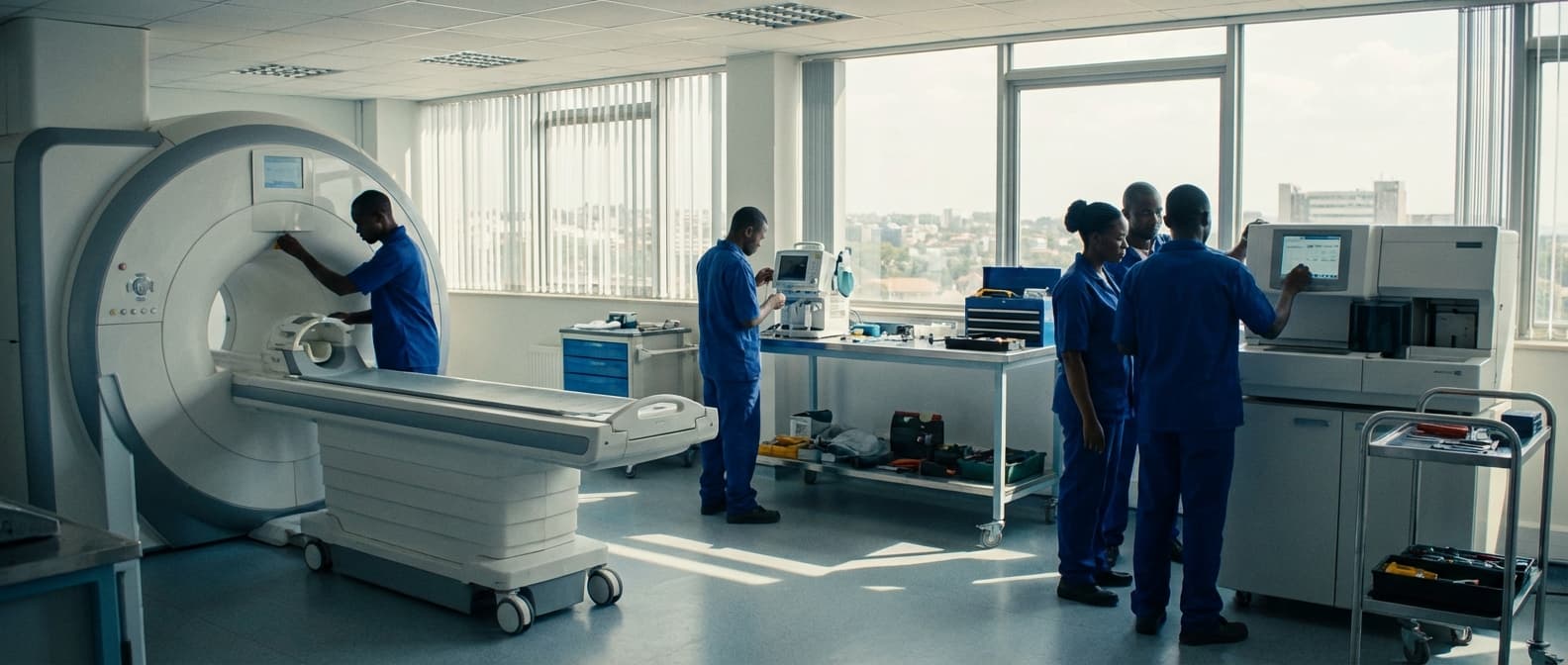
PPM Scheduling & Compliance Reporting Service in Kenya
Engineering Excellence & Technical Support
PPM Scheduling & Compliance Reporting Service High-standard technical execution following OEM protocols and local regulatory frameworks.
Proactive Schedule Adherence & Risk Mitigation
Our service leverages advanced PPM (Project Portfolio Management) tools to provide real-time schedule tracking and predictive analytics. We identify potential bottlenecks and deviations from planned timelines early, enabling proactive risk mitigation and ensuring projects stay on track for successful completion within budget and scope in Kenya.
Automated Compliance Reporting & Audit Trails
We automate the generation of comprehensive compliance reports tailored to Kenyan regulatory requirements and industry standards. Our platform ensures accurate data capture, maintains robust audit trails, and provides instant access to critical information, minimizing manual effort and guaranteeing adherence to governance frameworks.
Centralized Resource Optimization & Performance Visibility
Gain unparalleled visibility into resource allocation and performance across your project portfolio. Our PPM solution facilitates intelligent resource scheduling, identifies under-utilization or over-burdening, and provides actionable insights to optimize team efficiency and drive consistent project delivery excellence within the Kenyan market.
What Is Ppm Scheduling & Compliance Reporting Service In Kenya?
PPM Scheduling & Compliance Reporting Service in Kenya refers to a structured operational framework designed to manage preventative maintenance activities and ensure adherence to relevant regulatory, statutory, and internal standards. This service encompasses the systematic planning, execution, and documentation of scheduled maintenance tasks across various assets and infrastructure within Kenyan organizations. It aims to proactively identify and mitigate potential equipment failures, operational inefficiencies, and compliance breaches, thereby enhancing asset lifespan, optimizing operational continuity, and minimizing legal and financial risks. The service typically involves a combination of software-based scheduling tools, qualified maintenance personnel, and robust reporting mechanisms to track work orders, maintenance history, costs, and compliance status.
| Who Needs This Service? | Typical Use Cases | ||||||||
|---|---|---|---|---|---|---|---|---|---|
| Organizations with significant physical assets and infrastructure, including but not limited to: | Manufacturing facilities (e.g., production machinery, HVAC systems, electrical distribution) | Energy and utilities companies (e.g., power plants, transmission lines, water treatment facilities) | Healthcare institutions (e.g., medical equipment, building systems, laboratory apparatus) | Telecommunications providers (e.g., base stations, network infrastructure, data centers) | Transportation and logistics firms (e.g., fleet vehicles, warehousing equipment, material handling systems) | Commercial and residential property managers (e.g., building maintenance, safety systems, common area equipment) | Government agencies and public sector entities (e.g., public buildings, infrastructure, public transport) | Agricultural operations (e.g., farm machinery, irrigation systems, processing equipment) | |
| Ensuring operational uptime and reliability of critical machinery and systems. | Adhering to safety regulations (e.g., OSHA equivalents, fire safety codes) and avoiding penalties. | Meeting environmental compliance standards (e.g., emissions, waste management). | Optimizing maintenance budgets and reducing unscheduled downtime costs. | Extending the lifespan of valuable assets through proactive care. | Facilitating audits by regulatory bodies and internal stakeholders. | Maintaining quality standards in manufacturing and service delivery. | Managing risks associated with equipment failure and non-compliance. | Improving energy efficiency through well-maintained systems. | Ensuring the safety and well-being of employees and the public. |
Key Components of PPM Scheduling & Compliance Reporting Service:
- Preventative Maintenance (PM) Planning: Developing detailed schedules for routine inspections, servicing, lubrication, calibration, and minor repairs based on manufacturer recommendations, asset criticality, and operating conditions.
- Work Order Management: Generating, assigning, tracking, and closing out maintenance work orders, ensuring proper execution and documentation.
- Asset Register Management: Maintaining a comprehensive database of all maintainable assets, including specifications, maintenance history, warranty information, and criticality assessments.
- Compliance Monitoring: Identifying and tracking all applicable regulatory, environmental, health, safety, and industry-specific compliance requirements.
- Inspection & Audit Protocols: Establishing standardized procedures for inspections and audits to verify the effectiveness of maintenance activities and compliance status.
- Data Collection & Analysis: Gathering data on maintenance activities, asset performance, and compliance indicators for analysis and trend identification.
- Reporting & Documentation: Generating regular reports on maintenance schedules, completed work, asset condition, compliance status, incident reports, and cost analysis for stakeholders and regulatory bodies.
- Root Cause Analysis (RCA): Investigating equipment failures and non-compliance issues to identify underlying causes and implement corrective actions.
- Predictive Maintenance Integration (Optional): Incorporating condition-monitoring technologies (e.g., vibration analysis, thermal imaging) to optimize PM intervals and prevent failures.
- Training & Skill Development: Ensuring maintenance personnel possess the necessary technical skills and knowledge for effective PM and compliance adherence.
- Continuous Improvement: Regularly reviewing and refining PM strategies and compliance protocols based on performance data and evolving requirements.
Who Needs Ppm Scheduling & Compliance Reporting Service In Kenya?
In Kenya, businesses across various sectors are increasingly recognizing the critical importance of effective Planned Preventive Maintenance (PPM) scheduling and robust compliance reporting. This is not merely a matter of operational efficiency, but a fundamental requirement for safety, regulatory adherence, and long-term asset preservation. A comprehensive PPM scheduling and compliance reporting service is essential for organizations aiming to minimize downtime, reduce unexpected repair costs, prevent equipment failures, and ensure they meet all local and international standards.
| Target Customer Sector | Typical Departments Involved | Specific Needs Addressed by PPM & Compliance Reporting |
|---|---|---|
| Manufacturing | Operations, Maintenance, Quality Assurance, Health & Safety | Ensuring machinery uptime, preventing production line stoppages, meeting safety regulations for equipment, tracking maintenance history for quality audits. |
| Energy & Utilities (Power Generation, Water Supply) | Operations, Plant Maintenance, Compliance, Engineering | Preventing catastrophic failures in critical infrastructure, ensuring uninterrupted service delivery, adhering to environmental and safety regulations, managing regulatory audits. |
| Healthcare Facilities (Hospitals, Clinics) | Facilities Management, Biomedical Engineering, Compliance, Administration | Ensuring the reliability and safety of medical equipment, preventing equipment downtime that can impact patient care, complying with healthcare regulations and accreditation standards. |
| Oil & Gas | Operations, Maintenance, HSE (Health, Safety, Environment), Engineering | Maintaining the integrity of high-risk equipment, preventing leaks and accidents, adhering to stringent safety and environmental compliance, managing complex maintenance schedules for remote facilities. |
| Construction & Infrastructure | Project Management, Site Operations, Maintenance, Safety | Ensuring the safe and efficient operation of heavy machinery, maintaining structural integrity of built assets, adhering to construction safety standards and project timelines. |
| Logistics & Transportation | Fleet Management, Maintenance, Operations, Safety | Ensuring vehicle reliability and safety, minimizing road incidents, complying with transportation regulations, optimizing maintenance schedules for large fleets. |
| Mining | Mine Operations, Maintenance, Safety, Environmental Management | Preventing equipment breakdowns in harsh conditions, ensuring worker safety with well-maintained machinery, complying with environmental discharge regulations, managing vast and complex operational sites. |
| Food & Beverage Processing | Production, Maintenance, Quality Control, Regulatory Affairs | Maintaining hygienic operating conditions, preventing equipment contamination, ensuring food safety standards are met, complying with food industry regulations. |
| Real Estate & Property Management | Facilities Management, Maintenance, Compliance, Tenant Relations | Ensuring the functionality and safety of building systems (HVAC, electrical, plumbing), preventing costly emergency repairs, meeting building codes and safety regulations, maintaining tenant satisfaction. |
Who Needs PPM Scheduling & Compliance Reporting Services in Kenya?
- Organizations with significant physical assets and machinery.
- Companies operating in regulated industries with strict safety and environmental standards.
- Businesses aiming to optimize operational costs and improve asset lifespan.
- Entities facing potential penalties or reputational damage due to non-compliance.
- Firms seeking to enhance overall productivity and reduce unplanned disruptions.
Ppm Scheduling & Compliance Reporting Service Process In Kenya
This document outlines the typical workflow for a PPM (Public Procurement and Disposal) Scheduling & Compliance Reporting Service Process in Kenya. This service is crucial for government entities and parastatals to ensure their procurement activities align with the Public Procurement and Disposal Act (PPDA), 2015, and its regulations. The process is designed to be systematic, transparent, and efficient, guiding clients from initial interest to the final submission of reports.
| Phase | Key Activities | Key Outputs/Deliverables | Responsible Parties |
|---|---|---|---|
| Initiation & Planning | Inquiry, Initial Consultation, Needs Assessment, Scope Definition, Proposal Development | Service Proposal, Signed Agreement, Defined Scope of Work | Client, Service Provider |
| Execution | Data Collection, PPM Scheduling, Compliance Review, Gap Analysis, Development of Recommendations | Collected Data & Documents, Draft Annual Procurement Plan, Compliance Review Report, Gap Analysis Report | Service Provider, Client (for data provision) |
| Reporting & Submission | Formulating Remedial Actions, Preparing Compliance Reports, Submitting Reports | Finalized Recommendations, Submitted Compliance Reports (Quarterly, Annual), Audit-Ready Documentation | Service Provider, Client (for approval & submission) |
| Closure & Follow-up | Ongoing Support, Performance Review, Feedback Collection | Advisory Services, Training Sessions, Performance Feedback Summary | Service Provider, Client |
PPM Scheduling & Compliance Reporting Service Process Workflow
- {"step":1,"title":"Inquiry & Initial Consultation","description":"Prospective clients (government ministries, departments, agencies, state corporations) express interest in PPM scheduling and compliance reporting services. This often involves an initial meeting or call to understand their specific needs, the scope of services required (e.g., annual procurement plan development, tender document review, contract compliance monitoring, audit preparation), and current challenges."}
- {"step":2,"title":"Needs Assessment & Scope Definition","description":"A detailed assessment of the client's procurement processes, existing plans, and compliance history is conducted. This involves gathering relevant documents, interviewing key personnel (procurement officers, finance departments, project managers), and identifying specific areas requiring support. The scope of work and deliverables are clearly defined and agreed upon."}
- {"step":3,"title":"Proposal & Agreement","description":"Based on the needs assessment, a comprehensive proposal is submitted. This includes the proposed methodology, services to be rendered, timelines, team composition, and pricing. Upon client acceptance, a formal service agreement or contract is signed, outlining the terms and conditions of engagement."}
- {"step":4,"title":"Information Gathering & Data Collection","description":"The service provider begins collecting all necessary data and documentation from the client. This includes past procurement plans, tender documents, awarded contracts, payment records, internal procurement policies, and any audit reports. Secure data handling and confidentiality are paramount at this stage."}
- {"step":5,"title":"PPM Scheduling (Annual Procurement Plan Development)","description":"If required, the service provider assists in developing or refining the client's Annual Procurement Plan. This involves analyzing procurement needs, market research, budget allocation, and aligning with strategic objectives, ensuring compliance with PPRA guidelines and deadlines for submission."}
- {"step":6,"title":"Compliance Review & Gap Analysis","description":"Existing procurement activities and documentation are reviewed against the PPDA, 2015, its Regulations, and relevant PPRA circulars. This identifies areas of non-compliance, potential risks, and best practice deviations. A detailed gap analysis report is prepared."}
- {"step":7,"title":"Remedial Actions & Recommendations","description":"Based on the compliance review and gap analysis, specific recommendations for corrective actions are formulated. This may include revising internal procedures, providing training to staff, or rectifying specific procurement instances. The service provider guides the client in implementing these recommendations."}
- {"step":8,"title":"Reporting & Documentation","description":"The service provider prepares various compliance reports as per regulatory requirements. This can include quarterly procurement reports, annual procurement reports, contract management reports, and reports detailing adherence to procurement thresholds and principles. All documentation is organized and presented in a clear, concise manner."}
- {"step":9,"title":"Submission to Regulatory Bodies","description":"Assisting the client with the timely submission of all mandatory reports and plans to the Public Procurement Regulatory Authority (PPRA) and other relevant government bodies. This includes ensuring all required formats and information are included."}
- {"step":10,"title":"Ongoing Support & Monitoring","description":"Providing continuous advice and support to the client on procurement matters. This may involve ad-hoc consultations, training sessions, and proactive monitoring of procurement activities to ensure ongoing compliance and prevent future issues."}
- {"step":11,"title":"Performance Review & Feedback","description":"A post-engagement review is conducted with the client to assess the effectiveness of the services provided, gather feedback, and identify areas for improvement in future engagements. This ensures client satisfaction and continuous enhancement of the service."}
Ppm Scheduling & Compliance Reporting Service Cost In Kenya
The cost of PPM (Project Portfolio Management) scheduling and compliance reporting services in Kenya is influenced by several factors, leading to a diverse range of pricing. These services are crucial for organizations to effectively manage their project portfolios, ensure adherence to regulations, and optimize resource allocation. The pricing is generally structured around the complexity and scope of the project, the expertise of the service provider, and the level of customization required. Understanding these elements is key to budgeting for such services effectively in the Kenyan market.
| Service Component/Scope | Estimated Cost Range (KES per month) | Description |
|---|---|---|
| Basic PPM Scheduling & Reporting (Small Portfolio) | 25,000 - 75,000 | Covers a few projects, standard templates, basic progress tracking and monthly compliance summaries. Suitable for SMEs or smaller departments. |
| Intermediate PPM Scheduling & Reporting (Medium Portfolio) | 75,000 - 200,000 | Handles a larger number of interconnected projects, more advanced scheduling techniques, bi-weekly reporting, and some custom compliance metrics. Includes basic risk assessment. |
| Advanced PPM Scheduling & Compliance (Large/Complex Portfolio) | 200,000 - 500,000+ | Manages extensive portfolios, complex interdependencies, real-time dashboards, detailed regulatory compliance checks, scenario planning, and proactive risk mitigation. Often involves dedicated teams and specialized software. |
| Dedicated Compliance Reporting Service | 50,000 - 150,000+ | Focuses solely on ensuring adherence to specific industry regulations (e.g., financial reporting, environmental compliance). The cost depends on the complexity of regulations and reporting requirements. |
| PPM Software Implementation & Customization | 100,000 - 1,000,000+ (One-time/Project-based) | Initial setup, configuration, and customization of PPM software to align with organizational processes. Cost varies heavily based on the software chosen and the extent of customization. |
| Consultancy & Training (Hourly/Daily Rate) | 5,000 - 25,000 per hour/day | Expert advice on PPM best practices, process improvement, and training for internal teams. Rates depend on the consultant's experience and specialization. |
Key Pricing Factors for PPM Scheduling & Compliance Reporting Services in Kenya
- Scope and Complexity of Projects: The number, size, and interdependencies of projects within the portfolio significantly impact costs. Larger and more complex portfolios require more intricate scheduling and detailed compliance tracking.
- Provider's Expertise and Reputation: Highly experienced and reputable PPM consultants or firms with a proven track record in Kenya often command higher fees due to their specialized knowledge and successful project delivery.
- Level of Customization: Standardized PPM solutions might be less expensive. However, if a client requires bespoke scheduling methodologies, custom compliance frameworks, or integration with existing proprietary systems, the cost will increase.
- Technology and Software Used: The choice of PPM software (e.g., Microsoft Project, Asana, Jira, Primavera, or specialized compliance platforms) can influence costs. This could be a one-time license fee, subscription cost, or an integrated part of the service provider's offering.
- Duration and Intensity of Engagement: Whether the service is a short-term project or an ongoing retainer, and the number of hours or resources dedicated to the engagement, will directly affect the total cost.
- Reporting Frequency and Detail: The frequency (daily, weekly, monthly) and the level of detail required in compliance reports will influence the effort involved and, consequently, the cost. Advanced analytics and dashboarding capabilities will also add to the price.
- Industry-Specific Requirements: Certain industries (e.g., construction, finance, telecommunications) have unique regulatory compliance needs. Providers specializing in these sectors might charge a premium for their in-depth understanding.
- Geographic Location of Service Provider: While the service is in Kenya, the physical location of the provider's office within Kenya might have minor implications on operational costs passed on to the client.
- Training and Change Management: If the service includes training for the client's internal team or extensive change management to adopt new PPM practices, these will be additional cost components.
Affordable Ppm Scheduling & Compliance Reporting Service Options
This document outlines affordable options for PPM (Project Portfolio Management) scheduling and compliance reporting services, focusing on value bundles and effective cost-saving strategies. Efficient PPM is crucial for organizations to align projects with strategic goals, optimize resource allocation, and ensure adherence to regulatory requirements. By understanding the available service structures and implementing smart purchasing decisions, businesses can achieve robust PPM capabilities without breaking the bank.
| Service Component | Description | Value Bundle Example | Cost-Saving Strategy |
|---|---|---|---|
| PPM Scheduling Software | Tools for planning, task management, resource allocation, and timeline visualization. | Basic Scheduling Suite: Includes core scheduling, resource leveling, and basic reporting. | Opt for cloud-based/SaaS solutions for lower upfront costs and automatic updates. Consider open-source options if internal IT support is available. |
| Compliance Reporting Module | Features to track and report on project adherence to industry regulations, internal policies, and governance standards. | Compliance Essentials Bundle: Automated regulatory checks, audit trail generation, and standard compliance reports. | Bundle reporting features with scheduling to avoid duplicate software. Focus on essential compliance metrics relevant to your industry. |
| Consulting & Implementation Support | Expert assistance in setting up PPM processes, configuring software, and training staff. | Onboarding Accelerator Package: Initial setup, basic workflow configuration, and user training. | Phased implementation: Start with core functionalities and scale up. Utilize vendor-provided training resources and self-service portals. |
| Ongoing Managed Services | Outsourced management of PPM processes, data maintenance, and regular reporting. | PPM Operations Lite: Monthly reporting generation, system health checks, and basic support. | Identify tasks that can be automated or handled internally. Negotiate based on the volume of projects and reporting frequency. |
| Custom Reporting & Analytics | Tailored reports and dashboards to provide deeper insights into project performance and portfolio health. | Performance Insights Add-on: Advanced analytics, trend analysis, and custom dashboard creation. | Leverage standard reporting templates first. Request custom reports only when truly necessary for strategic decision-making. |
Key Considerations for Affordable PPM Services
- Defining clear PPM objectives and scope.
- Assessing existing internal capabilities and infrastructure.
- Prioritizing essential features and reporting needs.
- Exploring scalable service models (e.g., tiered subscriptions, modular services).
- Leveraging automation for routine tasks.
- Negotiating vendor contracts effectively.
Verified Providers In Kenya
In the Kenyan healthcare landscape, ensuring you are receiving care from verified and reputable providers is paramount. Franance Health stands out as a leading organization committed to delivering high-quality, accessible, and trustworthy medical services. Their stringent credentialing process for their network of healthcare professionals and facilities ensures that patients can feel confident in the care they receive. This document outlines Franance Health's commitment to verification and why choosing their network represents the best decision for your health needs in Kenya.
| Key Benefits of Choosing Franance Health Verified Providers | Why it Matters for Your Health |
|---|---|
| Access to qualified and experienced medical professionals. | Ensures accurate diagnoses, effective treatments, and personalized care. |
| Guaranteed adherence to medical ethics and best practices. | Protects your rights and ensures a safe and respectful healthcare experience. |
| State-of-the-art facilities and equipment. | Facilitates comprehensive diagnostic capabilities and advanced treatment options. |
| Reduced risk of medical errors or malpractice. | Provides peace of mind and greater confidence in the quality of care. |
| Streamlined access to a wide range of medical specialties. | Offers a convenient and comprehensive healthcare solution for all your needs. |
Franance Health's Commitment to Verification
- Rigorous vetting of all healthcare professionals, including doctors, nurses, and specialists.
- Thorough background checks and verification of licenses and certifications.
- Assessment of facilities for adherence to quality standards, safety protocols, and ethical practices.
- Continuous monitoring and evaluation of provider performance.
- Emphasis on ongoing professional development for all affiliated medical personnel.
Scope Of Work For Ppm Scheduling & Compliance Reporting Service
This document outlines the Scope of Work (SOW) for the Provision of PPM Scheduling & Compliance Reporting Services. It details the technical deliverables and standard specifications required to ensure effective maintenance planning, execution, and adherence to regulatory and internal compliance requirements.
| Section | Description | Technical Deliverables | Standard Specifications/Requirements | ||||
|---|---|---|---|---|---|---|---|
| Establishing and configuring the PPM scheduling module within the designated CMMS/EAM system. | Configured CMMS/EAM module for PPM scheduling, including asset hierarchy, task lists, schedules, and resource allocation. | Configured to support multiple asset types (e.g., HVAC, electrical, mechanical, structural). | User roles and permissions defined and implemented. | Integration with existing asset management databases (if applicable). | Adherence to industry best practices for maintenance scheduling (e.g., manufacturer recommendations, risk-based analysis). | Data integrity checks and validation protocols established. |
| Development and definition of standard PPM task lists and procedures. | Standardized PPM task lists for each asset category. | Detailed work instructions, safety procedures, and required PPE for each task. | Checklists for task completion verification. | Tasks aligned with manufacturer's recommendations, regulatory requirements, and internal standards. | Tasks to be granular enough for accurate time and resource estimation. | |
| Establishment of a comprehensive compliance framework and reporting mechanism. | Defined compliance metrics and Key Performance Indicators (KPIs). | Automated generation of compliance reports (e.g., weekly, monthly, quarterly). | Dashboards for real-time monitoring of compliance status. | Audit trails for all compliance-related data and reports. | Compliance to relevant industry standards (e.g., ISO 55000, industry-specific regulations). | Defined escalation procedures for non-compliance. |
| Ensuring the accuracy, completeness, and accessibility of maintenance and compliance data. | Data validation rules implemented within the CMMS/EAM system. | Regular data cleansing and audit processes. | Secure data storage and backup procedures. | Data retention policies aligned with regulatory and organizational requirements. | Data accessible to authorized personnel for analysis and reporting. | |
| Providing training to relevant personnel on the PPM scheduling and compliance reporting system. | Training materials and documentation for users. | Train-the-trainer sessions (if applicable). | Post-implementation support and troubleshooting. | Training tailored to different user roles (e.g., planners, technicians, managers). | Knowledge transfer to ensure long-term sustainability of the system. | |
| Ongoing monitoring of system performance and identification of areas for improvement. | Regular performance reports on scheduling efficiency and compliance rates. | Recommendations for system configuration adjustments and process improvements. | Root cause analysis of scheduling delays or compliance breaches. | Benchmarking against industry best practices. | Continuous improvement initiatives based on performance data. |
Key Objectives
- To establish a robust and efficient Planned Preventative Maintenance (PPM) scheduling system.
- To ensure timely and accurate compliance reporting across all relevant asset categories.
- To improve asset reliability, reduce unplanned downtime, and extend asset lifespan.
- To provide actionable insights for maintenance optimization and resource allocation.
- To maintain a comprehensive and auditable record of all maintenance activities and compliance status.
Service Level Agreement For Ppm Scheduling & Compliance Reporting Service
This Service Level Agreement (SLA) outlines the performance standards and commitments for the PPM Scheduling & Compliance Reporting Service provided by [Your Company Name]. It defines the response times for critical issues and the guaranteed uptime for the service.
| Severity Level | Description | Target Response Time | Target Resolution Time (Best Effort) |
|---|---|---|---|
| Critical (Severity 1) | Service is completely unavailable or major functionality is unusable, impacting all users. | 15 minutes | 4 hours |
| High (Severity 2) | Significant functionality is impaired or a major component is not working. Workaround may exist but is difficult. | 1 hour | 8 business hours |
| Medium (Severity 3) | Minor functionality is impaired or a non-critical component is not working. A reasonable workaround exists. | 4 business hours | 3 business days |
| Low (Severity 4) | General questions, requests for information, or minor cosmetic issues. No impact on core functionality. | 1 business day | 5 business days |
Key Service Level Objectives (SLOs)
- Uptime Guarantee: The service will be available 99.9% of the time, measured on a monthly basis.
- Response Times: The following response times are guaranteed for issues reported through the designated support channels, categorized by severity.
Frequently Asked Questions

Ready when you are
Let's scope your PPM Scheduling & Compliance Reporting Service in Kenya project in Kenya.

Scaling healthcare logistics and technical systems across the entire continent.