
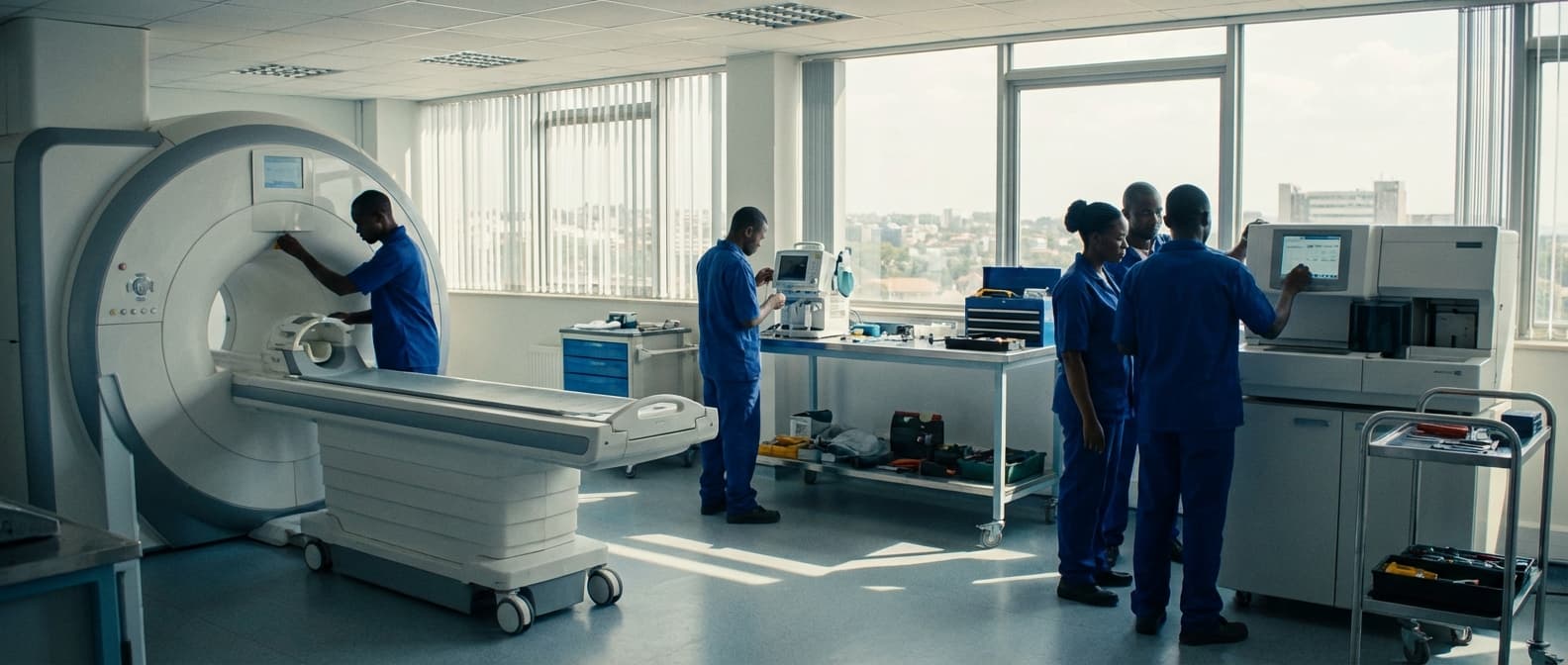
Planned Shutdown Coordination Service for Critical Equipment in Kenya
Engineering Excellence & Technical Support
Planned Shutdown Coordination Service for Critical Equipment High-standard technical execution following OEM protocols and local regulatory frameworks.
Proactive Predictive Maintenance Scheduling
Leveraging advanced analytics and real-time sensor data, we meticulously plan shutdowns to coincide with optimal maintenance windows, minimizing operational disruption and extending equipment lifespan. Our service anticipates potential failures, ensuring repairs are conducted before critical incidents occur.
Optimized Resource & Stakeholder Alignment
We orchestrate the seamless coordination of all essential resources, including specialized personnel, spare parts, and external contractors, ensuring their availability and deployment precisely when needed. Our platform facilitates transparent communication and alignment with all stakeholders, from site operations to regulatory bodies.
Minimizing Production Loss & Safety Risks
Our meticulously planned shutdown schedules are designed to drastically reduce unplanned downtime and associated production losses. By adhering to stringent safety protocols and best practices during the shutdown period, we significantly mitigate risks to personnel and infrastructure, ensuring a safe and efficient execution.
What Is Planned Shutdown Coordination Service For Critical Equipment In Kenya?
Planned Shutdown Coordination Service for Critical Equipment in Kenya refers to a structured, professional service designed to manage and optimize the scheduled downtime of essential operational machinery and infrastructure within Kenyan organizations. This service goes beyond simple scheduling; it encompasses meticulous planning, execution, and post-shutdown analysis to ensure minimal disruption to business continuity, safety, and operational efficiency. The core objective is to transform mandatory maintenance or upgrade periods from disruptive events into strategic opportunities for asset enhancement and risk mitigation. This involves a holistic approach, integrating technical expertise with project management methodologies to address all facets of a planned shutdown.
| Who Needs It? | Typical Use Cases in Kenya |
|---|---|
| Industries reliant on continuous operations: | Manufacturing: Scheduled maintenance of production lines, packaging machinery, and power generation units. |
| Critical infrastructure operators: | Power Generation & Distribution: Turbine maintenance, transformer upgrades, substation servicing, and grid line maintenance. |
| Oil and Gas sector: | Refinery & Processing Plants: Turnarounds for process unit maintenance, pipeline inspections, and safety system overhauls. |
| Telecommunications: | Data Centers & Network Infrastructure: Server hardware upgrades, network equipment maintenance, and data center facility servicing. |
| Mining and Extractive Industries: | Processing Plants & Heavy Machinery: Maintenance of crushers, conveyor systems, and processing equipment. |
| Healthcare Institutions: | Medical Equipment & Building Systems: Servicing of MRI scanners, CT scanners, HVAC systems, and power backup generators. |
| Water and Wastewater Treatment: | Pumps, Filtration Systems, and Treatment Units: Scheduled maintenance to ensure service continuity and water quality. |
| Transportation and Logistics: | Ports & Airports: Maintenance of cargo handling equipment, runway systems, and air traffic control infrastructure. |
| Large-scale agricultural operations: | Processing Facilities: Maintenance of large-scale food processing machinery and storage facilities. |
| Commercial Real Estate & Hospitality: | Building Management Systems: HVAC system overhauls, elevator maintenance, and electrical system upgrades. |
Key Components of Planned Shutdown Coordination Service:
- Scope Definition and Planning: Detailed identification of all equipment requiring shutdown, defining the objectives of the shutdown (e.g., preventive maintenance, upgrades, inspections, repairs), and establishing clear timelines and resource allocation.
- Risk Assessment and Mitigation: Proactive identification of potential hazards associated with the shutdown (e.g., safety risks, environmental impacts, operational dependencies) and development of robust mitigation strategies and contingency plans.
- Resource Management: Mobilization and coordination of all necessary personnel (internal teams, external contractors, specialists), materials, tools, and specialized equipment required for the shutdown activities.
- Permitting and Approvals: Management of all required permits, licenses, and regulatory approvals from relevant Kenyan authorities (e.g., NEMA, OSHA, industry-specific regulators).
- Execution Oversight: On-site supervision and coordination of all shutdown activities, ensuring adherence to the planned schedule, safety protocols, and quality standards.
- Communication and Stakeholder Management: Establishment of clear communication channels and regular updates to all relevant stakeholders, including management, operational staff, regulatory bodies, and affected third parties.
- Post-Shutdown Validation and Re-commissioning: Verification of completed works, performance testing, and systematic re-commissioning of equipment to ensure full operational readiness.
- Documentation and Reporting: Comprehensive documentation of all shutdown activities, including incident reports, progress updates, final reports, and lessons learned for continuous improvement.
Who Needs Planned Shutdown Coordination Service For Critical Equipment In Kenya?
A Planned Shutdown Coordination Service for critical equipment in Kenya is indispensable for organizations whose operations are heavily reliant on the continuous functioning of machinery and infrastructure. These services are crucial for minimizing downtime, ensuring safety, optimizing maintenance schedules, and ultimately, protecting revenue streams. The focus is on proactive management of planned interruptions, rather than reactive responses to failures.
| Target Customer Industry | Key Departments Involved | Specific Critical Equipment Examples | Why Shutdown Coordination is Crucial |
|---|---|---|---|
| Oil & Gas (Upstream, Midstream, Downstream) | Operations, Maintenance, Engineering, Safety, Logistics | Refineries, Pipelines, Production Platforms, Storage Tanks | High cost of downtime, complex interconnected systems, safety regulations, environmental impact mitigation. |
| Manufacturing (Heavy Industry) | Production, Maintenance, Engineering, Quality Control, Supply Chain | Assembly Lines, Large Stamping Presses, Furnaces, Specialized Machinery | Production capacity loss, impact on supply chain, equipment wear and tear, need for precision maintenance. |
| Mining & Processing | Operations, Maintenance, Engineering, Health & Safety, Logistics | Crushers, Conveyor Systems, Smelters, Processing Plants | Significant revenue generation tied to continuous extraction and processing, environmental safety, long equipment lifecycles. |
| Power Generation & Utilities | Operations, Maintenance, Engineering, Grid Management, Safety | Turbines, Generators, Boilers, Substations, Water Treatment Plants | Essential service provision, grid stability, regulatory compliance, high risk of widespread disruption. |
| Telecommunications & Data Centers | Network Operations, Infrastructure Management, Facilities Management, IT Operations | Servers, Routers, Switches, Power Systems, Cooling Systems | Continuous service delivery, data integrity, high-value data, financial implications of outages. |
| Large-Scale Agriculture & Food Processing | Operations, Maintenance, Food Safety, Logistics, Engineering | Processing Lines, Refrigeration Units, Large-Scale Irrigation Systems, Storage Facilities | Perishable goods, seasonal production cycles, impact on food supply, energy consumption. |
| Infrastructure (Ports, Airports) | Operations, Maintenance, Engineering, Safety & Security, Logistics | Cranes, Conveyor Belts, Air Traffic Control Systems, Baggage Handling Systems | Economic hubs, national security implications, high volume of traffic, safety critical systems. |
Who Needs Planned Shutdown Coordination Service for Critical Equipment in Kenya?
- Organizations with significant capital investment in critical infrastructure.
- Businesses operating in sectors where downtime directly translates to substantial financial losses.
- Companies facing stringent regulatory compliance requirements for equipment maintenance and safety.
- Facilities with complex interdependencies between various pieces of critical equipment.
- Entities seeking to improve operational efficiency and resource allocation during maintenance periods.
- Businesses aiming to enhance the lifespan and reliability of their high-value assets through structured maintenance.
Planned Shutdown Coordination Service For Critical Equipment Process In Kenya
This document outlines the workflow for the Planned Shutdown Coordination Service for Critical Equipment in Kenya. This service ensures that scheduled downtime for essential machinery is managed efficiently, minimizing disruption to operations and maximizing safety. The process encompasses several key stages, from initial customer inquiry to the successful execution and post-shutdown review.
| Stage | Description | Key Activities | Responsible Parties | Deliverables/Outcomes |
|---|---|---|---|---|
| Inquiry & Initial Consultation | The process begins when a client identifies the need for a planned shutdown for critical equipment. | Client contacts the service provider, outlines equipment, desired shutdown window, and specific needs. Initial discussions on scope and feasibility. | Client, Service Provider (Sales/Business Development) | Understanding of client's requirements, preliminary scope definition, confirmation of service offering. |
| Assessment & Planning | Detailed evaluation of the equipment, its criticality, and the specific tasks required during the shutdown. | Site visit (if necessary), detailed review of equipment manuals, safety procedures, and existing maintenance records. Development of a preliminary shutdown plan, including estimated duration and potential risks. | Service Provider (Technical Team, Project Managers), Client (Operations, Maintenance) | Detailed understanding of equipment, identification of potential hazards, preliminary shutdown plan, risk assessment report. |
| Resource Allocation & Scheduling | Confirmation of timelines and allocation of all necessary resources, including personnel, equipment, and materials. | Finalization of the shutdown schedule, booking of skilled technicians and support staff, procurement of necessary spare parts and consumables, confirmation of any required third-party services. | Service Provider (Project Managers, Procurement, HR), Client (Logistics, Procurement) | Confirmed shutdown schedule, allocated resources (personnel, equipment, materials), procurement orders placed, communication plan established. |
| Pre-Shutdown Preparations | Ensuring all prerequisites are met before the commencement of the shutdown. | Pre-shutdown safety briefings, final review of the shutdown plan, testing of critical safety equipment, ensuring all permits and approvals are in place, communication to relevant stakeholders about the upcoming shutdown. | Service Provider (Site Supervisors, Safety Officers), Client (Operations, Safety Department) | Approved shutdown plan, completed safety inductions, all necessary permits obtained, communication to all affected parties. |
| Execution of Shutdown | The actual implementation of the planned shutdown and associated maintenance or upgrade activities. | Safe isolation of equipment, performance of planned maintenance tasks, repairs, or upgrades, adherence to the established safety protocols and shutdown plan. Real-time monitoring and communication of progress. | Service Provider (Technicians, Engineers, Supervisors), Client (Operations, Monitoring Team) | Completion of planned activities, ongoing progress updates, incident reporting (if any). |
| Post-Shutdown Activities & Reporting | Ensuring the equipment is safely recommissioned and documenting the entire process. | Testing and validation of performed work, safe re-energization of equipment, handover to operations, compilation of a comprehensive shutdown report detailing activities, findings, and recommendations. | Service Provider (Project Managers, Technical Team), Client (Operations, Maintenance) | Successfully recommissioned equipment, signed-off handover documentation, detailed shutdown report. |
| Review & Optimization | Analyzing the shutdown process to identify areas for improvement for future events. | Post-shutdown meeting with the client to discuss the execution, review the report, and gather feedback. Identifying lessons learned and updating best practices for future planned shutdowns. | Service Provider (Management, Project Managers), Client (Management, Operations) | Actionable insights for process improvement, updated standard operating procedures, enhanced future shutdown planning. |
Workflow Stages
- Inquiry & Initial Consultation
- Assessment & Planning
- Resource Allocation & Scheduling
- Pre-Shutdown Preparations
- Execution of Shutdown
- Post-Shutdown Activities & Reporting
- Review & Optimization
Planned Shutdown Coordination Service For Critical Equipment Cost In Kenya
Coordinating planned shutdowns for critical equipment in Kenya is a specialized service crucial for minimizing operational disruptions and ensuring safety during maintenance, upgrades, or repairs. The cost of this service is influenced by several key factors, leading to a range of pricing structures. Understanding these factors allows businesses to budget effectively and select a service provider that aligns with their specific needs and financial capacity. The primary drivers for cost in the Kenyan market include the complexity of the equipment, the duration of the shutdown, the number of personnel required, the level of expertise and certifications of the coordination team, travel and accommodation expenses for the team if they are not local, and the specific scope of work (e.g., permit acquisition, risk assessment, communication management).
| Service Complexity/Scope | Estimated Price Range (KES) | Notes |
|---|---|---|
| Basic Coordination (Small scale, short duration, standard equipment) | 30,000 - 75,000 | Includes initial planning, basic communication, and on-site supervision. |
| Standard Coordination (Medium scale, moderate duration, specialized equipment) | 75,000 - 150,000 | Encompasses detailed planning, risk assessment, permit handling, and stakeholder liaison. |
| Comprehensive Coordination (Large scale, extended duration, highly critical/complex equipment) | 150,000 - 400,000+ | Includes advanced risk analysis, multi-stakeholder management, detailed scheduling, safety audits, and emergency response planning. Costs can escalate significantly for very complex projects or remote locations. |
| Consultancy & Advisory (Pre-shutdown planning, strategy development) | 20,000 - 60,000 per day | For expert advice on optimizing shutdown processes, not direct on-site coordination. |
| Emergency/Unplanned Shutdown Coordination (Premium) | Additional 30% - 50% on standard rates | Due to the urgent nature and potential for unforeseen complications. |
Key Pricing Factors for Planned Shutdown Coordination Services in Kenya
- Complexity and type of critical equipment: More complex machinery (e.g., large industrial turbines, intricate power generation systems) requires a more experienced and specialized coordination team, thus increasing costs.
- Duration of the shutdown: Longer planned shutdowns naturally incur higher coordination fees due to extended project management and resource allocation.
- Number of personnel involved: The size of the coordination team, including project managers, safety officers, engineers, and technicians, directly impacts the overall cost.
- Required expertise and certifications: Specialized skills, industry-specific knowledge, and relevant certifications (e.g., NEBOSH, IOSH) for the coordination team command higher rates.
- Geographic location of the equipment: If the equipment is located in remote areas of Kenya, travel, accommodation, and logistical expenses for the coordination team will be significant cost drivers.
- Scope of services: The specific tasks included in the coordination service, such as detailed planning, risk assessment, permit management, stakeholder communication, post-shutdown reporting, and emergency preparedness planning, influence the pricing.
- Urgency and lead time: A shorter notice period for planning and execution might incur premium charges due to the need for rapid resource mobilization.
- Reputation and track record of the service provider: Established companies with a proven history of successful planned shutdowns often charge a premium for their reliability and expertise.
Affordable Planned Shutdown Coordination Service For Critical Equipment Options
Our Affordable Planned Shutdown Coordination Service is designed to minimize disruption and maximize efficiency during critical equipment maintenance. We offer flexible value bundles and implement strategic cost-saving measures to ensure your planned shutdowns are executed smoothly and within budget. Our service focuses on proactive planning, resource optimization, and risk mitigation, allowing your team to concentrate on core operations while we manage the complexities of the shutdown process.
| Cost-Saving Strategy | Description | Impact on Shutdown Costs |
|---|---|---|
| Early Bird Planning & Scheduling | Initiating shutdown planning well in advance allows for better negotiation with vendors and internal resource allocation, minimizing last-minute rush charges. | Reduced overtime, potential for bulk discounts on parts and services. |
| Optimized Resource Allocation | Ensuring the right personnel and equipment are available at the right time, preventing idle time and bottlenecks. We leverage multi-skilled technicians where appropriate. | Lower labor costs, increased equipment utilization, reduced project duration. |
| Preventative Maintenance Integration | Integrating minor preventative tasks into the planned shutdown reduces the need for separate future maintenance windows. | Fewer future planned outages, extended equipment lifespan, reduced overall maintenance expenditure. |
| Vendor Negotiation & Consolidation | Leveraging our experience and volume to negotiate favorable terms with service providers and consolidating multiple vendor needs into single orders. | Lower procurement costs, streamlined vendor interactions, reduced administrative overhead. |
| Technology-Assisted Planning | Utilizing specialized software for scheduling, tracking progress, and communication, improving accuracy and reducing manual errors. | Reduced planning time, improved communication efficiency, fewer costly mistakes. |
| On-Demand vs. Scheduled Resources | Strategically utilizing on-demand external specialists only when truly necessary, rather than retaining them on full-time standby. | Reduced fixed personnel costs, pay-for-use efficiency. |
| Shared Best Practices & Knowledge Transfer | Applying lessons learned from previous successful shutdowns across different clients and projects, fostering continuous improvement. | Reduced learning curve for new shutdowns, avoidance of recurring issues, improved overall efficiency. |
Value Bundles
- {"title":"Essential Shutdown Management","description":"Includes core planning, scheduling, communication coordination, and basic risk assessment for smaller-scale or routine shutdowns."}
- {"title":"Comprehensive Shutdown Solutions","description":"Builds upon the Essential bundle with advanced risk management, detailed resource allocation, vendor management, on-site supervision, and post-shutdown analysis."}
- {"title":"Strategic Shutdown Partnership","description":"Our premium offering, designed for complex or high-risk shutdowns. This includes a dedicated project manager, extensive pre-shutdown audits, contingency planning, specialized safety oversight, and continuous improvement recommendations."}
Verified Providers In Kenya
In Kenya's evolving healthcare landscape, identifying trusted and credentialed providers is paramount for ensuring quality care and peace of mind. Franance Health stands out as a beacon of reliability, offering a network of verified healthcare professionals and facilities. This verification process is not merely a formality; it signifies a deep commitment to patient safety, ethical practices, and demonstrable expertise. Choosing Franance Health means opting for a healthcare journey where competence, integrity, and patient well-being are the guiding principles.
| Credential Type | Verification Focus | Franance Health Standard |
|---|---|---|
| Medical Licenses | Valid and up-to-date registration with the relevant medical boards. | Mandatory submission and verification of all active practicing licenses. |
| Educational Qualifications | Accredited medical degrees and specialized training. | Verification of degrees from recognized institutions and completion of recognized training programs. |
| Professional Experience | Demonstrable years of practice and relevant experience. | Review of work history, references, and peer evaluations where applicable. |
| Professional Memberships | Active membership in recognized professional medical associations. | Confirmation of membership status with leading professional bodies. |
| Background Checks | Clean disciplinary records and absence of malpractice claims. | Thorough checks for any history of disciplinary actions or significant malpractice suits. |
Why Franance Health Credentials Matter:
- Rigorous Vetting Process: Franance Health employs a multi-stage vetting process that scrutinizes the credentials, licenses, and professional history of all its affiliated providers.
- Commitment to Quality: Verified providers adhere to strict quality standards, ensuring they meet and exceed expected levels of patient care.
- Enhanced Patient Safety: The verification process actively reduces the risk of unqualified individuals or institutions providing care, thereby enhancing patient safety.
- Ethical Practice Assurance: Franance Health partners with providers who demonstrate a strong commitment to ethical medical practices and patient confidentiality.
- Access to Expertise: By choosing Franance Health, you gain access to a network of specialists and general practitioners with proven track records and validated expertise.
- Transparency and Trust: The verification system fosters transparency in the healthcare sector, building trust between patients and providers.
Scope Of Work For Planned Shutdown Coordination Service For Critical Equipment
This Scope of Work (SOW) outlines the requirements for a Planned Shutdown Coordination Service for Critical Equipment. The objective is to ensure safe, efficient, and timely execution of planned maintenance, inspection, and overhaul activities for critical operational equipment, minimizing downtime and associated risks. This service will encompass planning, preparation, execution support, and post-shutdown activities.
| Technical Deliverable | Description | Standard Specifications/Format | Timeline |
|---|---|---|---|
| Shutdown Master Plan | Comprehensive document detailing all aspects of the shutdown, including scope, objectives, schedule, resource requirements, risk assessment, communication plan, and contingency plans. | Microsoft Project or equivalent scheduling software output; PDF document. | To be developed within X weeks of contract award. |
| Detailed Task List & Schedule | Breakdown of all individual tasks, their dependencies, required resources (personnel, equipment, materials), estimated durations, and allocated timeframes. | Microsoft Excel or Project; visual Gantt charts. | Integrated within the Shutdown Master Plan. |
| Risk Assessment & Mitigation Plan | Identification of potential risks (safety, operational, environmental, schedule) associated with the shutdown and proposed mitigation strategies. | Standard risk matrix format; HAZOP study integration where applicable. | Integrated within the Shutdown Master Plan. |
| Resource Allocation Matrix | Table outlining the availability and allocation of internal and external personnel, specialized equipment, and critical materials. | Microsoft Excel or equivalent. | Integrated within the Shutdown Master Plan. |
| Daily/Weekly Progress Reports | Summary of executed tasks, completed milestones, ongoing activities, identified issues/delays, and planned activities for the next reporting period. | Standardized report template (PDF/Word); email distribution. | Daily during shutdown execution; Weekly during planning and post-shutdown. |
| Post-Shutdown Review Report | Analysis of shutdown performance against objectives, lessons learned, identification of areas for improvement, and recommendations for future shutdowns. | PDF document; presentation format for management review. | To be submitted within X weeks after shutdown completion. |
| Safety & Environmental Compliance Checklist | Documentation confirming adherence to all applicable safety procedures, permit-to-work systems, and environmental regulations. | Company-standard checklists; site-specific safety forms. | Managed and documented throughout the shutdown. |
| Technical Specifications Review | Review of original equipment manufacturer (OEM) manuals, maintenance procedures, and any relevant technical documentation for critical equipment. | Digital copies (PDF) or hard copies as required. | During the planning phase. |
| Emergency Response Plan Integration | Confirmation of integration with the facility's existing emergency response plan and communication protocols. | Documentation of coordination and agreed protocols. | During the planning phase. |
Key Responsibilities of the Service Provider:
- Develop detailed shutdown plans, including schedules, resource allocation, and critical path analysis.
- Coordinate all activities related to the planned shutdown, liaising with internal departments and external contractors.
- Ensure adherence to safety regulations, environmental standards, and company policies throughout the shutdown.
- Manage and track progress of all shutdown tasks, identifying and mitigating potential delays.
- Facilitate communication and reporting between all stakeholders.
- Oversee the staging and demobilization of equipment and personnel.
- Conduct post-shutdown reviews and provide recommendations for continuous improvement.
Service Level Agreement For Planned Shutdown Coordination Service For Critical Equipment
This Service Level Agreement (SLA) outlines the terms and conditions governing the Planned Shutdown Coordination Service provided by [Your Company Name] for critical equipment belonging to [Client Company Name]. This SLA defines the response times and uptime guarantees associated with the coordination of planned maintenance and shutdown activities for critical equipment. The goal is to minimize disruption and ensure efficient execution of planned maintenance, thereby maximizing equipment availability.
| Service Component | Description | SLA Target (Response Time) | SLA Target (Uptime Guarantee) |
|---|---|---|---|
| Planned Shutdown Request Acknowledgement | Time to acknowledge receipt of a planned shutdown request submitted through the designated portal/email. | Within [e.g., 2] Business Hours | N/A |
| Initial Shutdown Planning Meeting | Time to schedule an initial meeting to discuss scope, duration, and resource requirements for the planned shutdown. | Within [e.g., 24] Business Hours of request acknowledgement | N/A |
| Shutdown Schedule Proposal | Time to provide a draft shutdown schedule, including key milestones and dependencies. | Within [e.g., 48] Business Hours of the initial planning meeting | N/A |
| Critical Equipment Availability (Excluding Planned Shutdowns) | The guaranteed percentage of operational uptime for critical equipment during periods not designated for planned shutdowns. | N/A | [e.g., 99.9%] |
| Emergency Shutdown Coordination Support | Availability of support for unplanned, emergency shutdowns requiring immediate coordination. This falls outside standard planned shutdown coordination but will be supported based on priority. | Within [e.g., 1] Hour (during Business Hours) | N/A |
Key Definitions
- Critical Equipment: Defined as [Specify critical equipment, e.g., Production Line A, Generator X, Main Server Rack B]. A comprehensive list is maintained in Appendix A.
- Planned Shutdown: A scheduled interruption of service for critical equipment for the purpose of maintenance, upgrade, or inspection, agreed upon in advance.
- Coordination Service: The activities performed by [Your Company Name] to facilitate and manage the planning, scheduling, and communication related to planned shutdowns.
- Response Time: The maximum time allowed from the initiation of a request by [Client Company Name] until [Your Company Name] acknowledges and begins to address the request.
- Uptime Guarantee: The percentage of time that critical equipment is expected to be available and operational, excluding approved planned shutdowns.
- Business Hours: [Specify business hours, e.g., Monday to Friday, 9:00 AM to 5:00 PM Local Time, excluding public holidays].
Frequently Asked Questions

Ready when you are
Let's scope your Planned Shutdown Coordination Service for Critical Equipment in Kenya project in Kenya.

Scaling healthcare logistics and technical systems across the entire continent.