
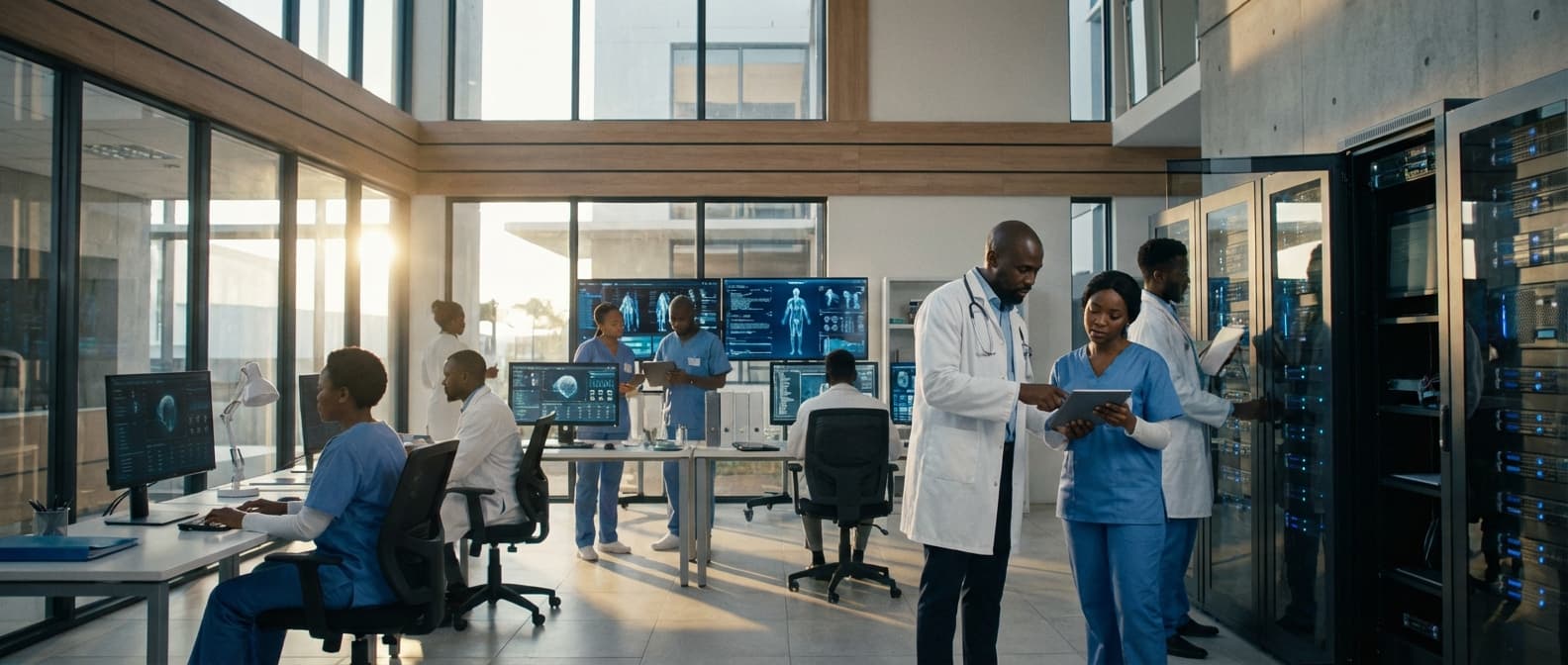
Tele-Radiology in Kenya
Engineering Excellence & Technical Support
24/7 access to certified radiologists providing rapid, accurate remote interpretation of diagnostic imaging studies. High-standard technical execution following OEM protocols and local regulatory frameworks.
Bridging the Radiologist Gap
Tele-radiology solutions connect remote healthcare facilities in Kenya with a network of qualified radiologists, enabling timely and accurate diagnostic interpretations, even in underserved areas. This significantly reduces turnaround times and improves patient outcomes by bringing specialist expertise directly to where it's needed most.
Secure Cloud-Based Imaging Platform
Leveraging secure, cloud-based platforms, tele-radiology services in Kenya facilitate the seamless transmission and storage of medical images. This ensures data integrity, accessibility for authorized personnel, and compliance with privacy regulations, empowering efficient collaboration and consultation across distances.
AI-Powered Diagnostic Support
Integration of Artificial Intelligence (AI) tools with tele-radiology platforms in Kenya offers advanced capabilities for anomaly detection, image segmentation, and quantitative analysis. This augments the diagnostic process, improves efficiency for radiologists, and helps identify subtle findings that might otherwise be missed, leading to earlier and more precise diagnoses.
What Is Tele-radiology In Kenya?
Tele-radiology in Kenya refers to the practice of interpreting medical imaging studies remotely, facilitated by telecommunications technology. This service involves the transmission of radiological images (such as X-rays, CT scans, MRIs, and ultrasounds) from one geographical location to another for the purpose of interpretation by a radiologist. The process typically includes image acquisition at a healthcare facility, secure digital transmission of these images to a remote reading center, and the subsequent generation of a diagnostic report by a qualified radiologist. This report is then transmitted back to the originating facility. The primary goal is to enhance access to expert radiological interpretation, particularly in areas with limited specialist availability, thereby improving diagnostic accuracy and patient care.
| Need | Target User Group | Typical Use Cases | |
|---|---|---|---|
| Limited availability of specialist radiologists in rural or underserved areas. | Peripheral hospitals and health centers. | Emergency radiology (e.g., trauma, stroke, acute abdomen). | Routine diagnostic imaging where local expertise is scarce. |
| Need for subspecialty interpretation (e.g., neuroradiology, musculoskeletal, pediatric radiology). | General hospitals and diagnostic centers. | Complex case interpretation requiring specialized knowledge. | Second opinion consultations. |
| High workload and burnout among existing radiologists. | Busy urban hospitals and large diagnostic networks. | Teleradiology as a supplementary service to manage overflow. | After-hours and weekend coverage. |
| Cost-effectiveness and efficiency in delivering diagnostic services. | Healthcare providers seeking to optimize resource allocation. | Outsourced interpretation for smaller clinics or mobile imaging units. | Remote monitoring of chronic conditions requiring serial imaging. |
Key Components and Stakeholders of Tele-radiology in Kenya
- Image Acquisition: Performed at local healthcare facilities using standard imaging equipment.
- Digital Image Transmission: Secure and high-speed transfer of DICOM-compliant images via the internet or dedicated networks.
- Remote Interpretation: Performed by board-certified radiologists located at a distance from the patient.
- Diagnostic Reporting: Generation of detailed and timely reports by the interpreting radiologist.
- Report Delivery: Secure transmission of the final report back to the referring clinician.
- Healthcare Facilities: Hospitals, clinics, and diagnostic centers lacking on-site radiologists.
- Patients: Individuals requiring radiological imaging for diagnosis, monitoring, or treatment planning.
- Radiologists: Specialists providing remote interpretation services.
- Technology Providers: Companies offering hardware, software, and network solutions for tele-radiology.
- Regulatory Bodies: Government agencies overseeing healthcare services and data privacy.
Who Needs Tele-radiology In Kenya?
Tele-radiology has emerged as a transformative solution in healthcare, particularly in regions facing radiologist shortages and geographical barriers. In Kenya, this technology offers significant benefits to a wide range of healthcare providers and patients. It bridges the gap by providing remote access to expert radiological interpretations, improving diagnostic turnaround times, and enhancing the quality of care, especially in underserved areas. The demand for tele-radiology services in Kenya is driven by the need for specialized expertise, increased efficiency, and improved accessibility to advanced diagnostic imaging.
| Department/Facility Type | Key Needs Addressed by Tele-Radiology | Specific Benefits |
|---|---|---|
| Public Hospitals / County Referral Centers | Radiologist shortages, long turnaround times, limited sub-specialty access | Improved patient care, reduced waiting times, enhanced diagnostic accuracy, efficient resource utilization. |
| Private Hospitals / Diagnostic Centers | Workload management, sub-specialty coverage, 24/7 service provision | Competitive advantage, expanded service offerings, improved patient satisfaction, enhanced diagnostic capabilities. |
| Rural & Remote Health Facilities | Lack of on-site radiologists, limited access to advanced diagnostics | Democratization of healthcare, improved access to specialist care, early disease detection, reduced patient travel burden. |
| Mobile Clinics & Outreach Programs | Remote diagnostic capabilities, timely interpretations | Expanded reach of healthcare services, improved health outcomes in underserved populations. |
| Tertiary Referral Hospitals | Backup coverage, second opinions, sub-specialty consultations | Enhanced diagnostic accuracy for complex cases, improved patient management, facilitated knowledge sharing. |
| Medical Schools & Training Institutions | Educational case exposure, expert interpretation examples | Improved training quality, development of skilled radiologists, standardization of diagnostic practices. |
| Emergency Departments (EDs) | Rapid interpretation of critical imaging | Faster diagnosis and treatment initiation, improved patient outcomes in emergency situations. |
| Primary Healthcare Providers | Access to expert interpretation for imaging studies | Increased diagnostic confidence, better treatment planning, reduced misdiagnosis. |
Target Customers and Departments for Tele-Radiology in Kenya
- Public Hospitals & County Referral Centers: These facilities often struggle with a limited number of in-house radiologists, leading to long waiting times for scan interpretations. Tele-radiology can provide immediate access to expert reads, alleviating the backlog and improving patient flow.
- Private Hospitals & Diagnostic Centers: Even well-equipped private facilities can benefit from tele-radiology to handle peak workloads, access sub-specialty expertise (e.g., neuro-radiology, pediatric radiology) that may not be available locally, and offer 24/7 coverage for critical cases.
- Rural & Remote Health Facilities: Tele-radiology is a game-changer for clinics and hospitals in areas with limited access to specialized medical professionals. It allows them to offer advanced diagnostic capabilities without the need for a full-time radiologist on-site.
- Mobile Clinics & Outreach Programs: These initiatives can leverage tele-radiology to provide diagnostic imaging services in remote communities, ensuring that patients receive timely and accurate interpretations regardless of their location.
- Tertiary Referral Hospitals: While these hospitals may have in-house radiologists, tele-radiology can serve as a valuable backup, provide second opinions on complex cases, and facilitate sub-specialty consultations, thereby enhancing their diagnostic capabilities.
- Medical Schools & Training Institutions: Tele-radiology platforms can be used for educational purposes, providing trainees with exposure to a wide variety of cases and expert interpretations, fostering a new generation of radiologists.
- Emergency Departments (EDs): Rapid interpretation of imaging studies is crucial in emergency settings. Tele-radiology can provide immediate expert reads for urgent cases, leading to faster diagnosis and treatment initiation.
- Primary Healthcare Providers: General practitioners and other primary care physicians can benefit from tele-radiology by receiving prompt and accurate interpretations of imaging studies ordered for their patients, improving their diagnostic confidence and treatment planning.
Tele-radiology Process In Kenya
Tele-radiology in Kenya involves a streamlined process to facilitate remote interpretation of medical images. This process aims to improve access to specialized radiological services, especially in underserved areas. The workflow typically begins with a referral or inquiry from a healthcare facility, leading through image acquisition, transmission, interpretation, and finally, reporting and follow-up.
| Stage | Description | Key Actors | Technology/Tools Used | Outcome |
|---|---|---|---|---|
| Inquiry and Referral | A healthcare facility (e.g., a rural clinic or a hospital without a radiologist) identifies a need for radiological interpretation. They generate a referral or inquiry to a tele-radiology service provider. | Referring Physician/Facility, Tele-radiology Service Provider (Coordinator/Admin) | Phone, Email, Secure Messaging Platform, Referral Forms | Formal request for tele-radiology services initiated. |
| Image Acquisition and Preparation | Relevant medical images (X-rays, CT scans, MRIs, ultrasounds) are acquired at the referring facility using standard imaging equipment. Images are then anonymized and prepared for digital transmission, often in DICOM format. | Radiographer/Technologist, IT Support (at referring facility) | X-ray machine, CT scanner, MRI scanner, Ultrasound machine, DICOM software, PACS (Picture Archiving and Communication System) - if available | Medical images are captured and formatted for secure transfer. |
| Image Transmission | The prepared DICOM images, along with patient clinical information (history, reason for exam), are securely transmitted from the referring facility to the tele-radiology provider's platform. | Radiographer/Technologist, IT Support (at referring facility), Tele-radiology Platform | Secure VPN, Internet connectivity (broadband, satellite), Tele-radiology platform software, Data encryption | Medical images and clinical data are safely transferred to the tele-radiology service. |
| Radiologist Assignment and Interpretation | Upon receipt, the tele-radiology platform assigns the case to a qualified and available radiologist based on subspecialty and workload. The radiologist accesses the images and clinical data remotely and performs the interpretation. | Tele-radiology Platform Administrator, Radiologist | Tele-radiology platform, DICOM viewer, Secure remote access tools | Radiological images are reviewed and analyzed by a specialist. |
| Report Generation | The radiologist dictates or writes a comprehensive diagnostic report based on their interpretation. This report includes findings, impressions, and recommendations. The report is typically generated using speech recognition software or templates within the tele-radiology platform. | Radiologist, Speech Recognition Software, Report Templates | Tele-radiology platform (reporting module), Speech recognition software, Word processing software | A detailed diagnostic report is created. |
| Report Delivery and Communication | The finalized report is transmitted back to the referring healthcare facility through the secure tele-radiology platform. The referring physician reviews the report and discusses findings with the patient if necessary. | Tele-radiology Platform, Referring Physician/Facility | Tele-radiology platform, Secure email, Fax (less common now) | Referring physician receives the diagnostic report for patient management. |
| Follow-up and Quality Assurance | The tele-radiology provider may engage in follow-up discussions with the referring physician if required. Regular quality assurance checks are conducted on reports and interpretations to ensure accuracy and adherence to standards. | Radiologist, Referring Physician, Tele-radiology Service Provider (QA team) | Communication channels (phone, email), QA protocols, Auditing tools | Ensures patient care is optimized and service quality is maintained. |
Tele-Radiology Workflow Stages in Kenya
- Inquiry and Referral
- Image Acquisition and Preparation
- Image Transmission
- Radiologist Assignment and Interpretation
- Report Generation
- Report Delivery and Communication
- Follow-up and Quality Assurance
Tele-radiology Cost In Kenya
Tele-radiology has emerged as a vital solution for improving access to diagnostic imaging services in Kenya, particularly in remote and underserved areas. While the cost of tele-radiology services can vary significantly, several key factors influence the pricing. Understanding these factors is crucial for healthcare providers and patients when budgeting for these essential diagnostics. The pricing is generally discussed and quoted in Kenyan Shillings (KES).
| Imaging Modality | Typical Cost Range (KES) | Notes |
|---|---|---|
| X-ray (Single View) | 1,500 - 4,000 | Basic diagnostic X-rays. Cost can increase for multiple views or specialized examinations. |
| X-ray (Multiple Views/Series) | 3,000 - 8,000 | e.g., Chest X-ray PA and Lateral, limb series. |
| Ultrasound (Abdomen/Pelvis) | 4,000 - 10,000 | Includes abdominal, pelvic, obstetric scans. Prices can vary based on technician experience and facility. |
| Ultrasound (Specific Area) | 3,000 - 7,000 | e.g., Thyroid, breast, scrotum scans. |
| CT Scan (Head/Chest/Abdomen) | 15,000 - 40,000 | Prices vary significantly based on the number of slices, contrast usage, and complexity of the scan. Excludes the cost of the CT scan itself. |
| MRI (Brain/Spine/Joints) | 25,000 - 60,000+ | Generally the most expensive modality. Prices are highly dependent on the region scanned, contrast, and sequences used. Excludes the cost of the MRI scan itself. |
| Mammography | 5,000 - 12,000 | For screening and diagnostic mammograms. Might include additional views. |
| Urgent Report Fee (Add-on) | 2,000 - 5,000 | Typically an additional charge for STAT reports delivered within a shorter timeframe (e.g., 1-2 hours). |
Key Pricing Factors for Tele-Radiology in Kenya:
- Type of Imaging Modality: The complexity and type of imaging required (e.g., X-ray, Ultrasound, CT scan, MRI) directly impact costs. More advanced modalities like CT and MRI generally command higher prices due to specialized equipment and expertise needed for interpretation.
- Urgency of Report: Routine reports typically have a standard turnaround time and associated cost. STAT or urgent reports, requiring immediate attention from radiologists, often incur an additional fee.
- Radiologist Expertise and Sub-specialization: The experience and sub-specialization of the reporting radiologist can influence pricing. Highly specialized radiologists (e.g., neuroradiologists, pediatric radiologists) might charge more for their in-depth expertise.
- Volume of Scans: Healthcare facilities that send a high volume of scans to a tele-radiology provider may be able to negotiate volume-based discounts.
- Technology and Platform Fees: The tele-radiology provider's infrastructure, including the Picture Archiving and Communication System (PACS) and robust IT support, contributes to the overall cost. Some providers may have separate platform access fees.
- Geographic Location of the Service Provider: While the service is remote, the operational costs of the tele-radiology provider (e.g., office space, staff salaries in their location) can indirectly affect pricing.
- Reporting Turnaround Time: As mentioned under urgency, the agreed-upon timeframe for report delivery is a significant factor. Faster turnaround times usually come with a higher price.
- Specific Clinical Question/Complexity: The clarity and detail of the clinical information provided with the scan can affect the radiologist's time. Complex cases requiring more in-depth analysis may be priced accordingly.
- Contractual Agreements: Long-term contracts with tele-radiology providers often come with more favorable and stable pricing compared to ad-hoc services.
Affordable Tele-radiology Options
Tele-radiology has emerged as a vital solution for healthcare providers seeking efficient and cost-effective diagnostic imaging interpretation. This technology allows for the remote reading of medical images, connecting radiologists with facilities that may have limited access to specialized expertise. When exploring "Affordable Tele-Radiology Options," understanding "value bundles" and "cost-saving strategies" is crucial for optimizing budget and ensuring high-quality patient care. Value bundles typically encompass a comprehensive suite of services designed to meet specific institutional needs, often at a more predictable and advantageous price point than à la carte options. Cost-saving strategies go beyond just pricing and involve leveraging tele-radiology's inherent efficiencies, such as reduced turnaround times, improved radiologist utilization, and potential for decreased overhead associated with in-house staffing.
| Cost-Saving Strategy | Description | Benefits |
|---|---|---|
| On-Demand or Overflow Coverage | Utilizing tele-radiology services only when in-house capacity is exceeded or for specific time periods (e.g., nights, weekends). | Reduces the need for full-time staffing, lowers labor costs, and ensures timely reads without over-allocating resources. |
| Subspecialty Interpretation Pooling | Accessing a network of subspecialist radiologists remotely for complex cases, rather than maintaining a large in-house team. | Provides access to specialized expertise at a fraction of the cost of in-house recruitment and retention. Improves diagnostic accuracy for rare or complex conditions. |
| Improved Turnaround Times (TAT) | Tele-radiology platforms can facilitate faster image transmission and interpretation, leading to quicker diagnoses. | Enables prompt clinical decision-making, potentially reducing length of stay, preventing complications, and improving patient satisfaction. This also leads to faster billing cycles. |
| Reduced Overhead Costs | Eliminates the need for physical office space, equipment maintenance, and administrative support associated with an in-house radiology department. | Significant savings on real estate, utilities, equipment depreciation, and administrative staff salaries. |
| Workflow Optimization | Leveraging efficient tele-radiology platforms and radiologists can streamline the entire imaging workflow from acquisition to report delivery. | Increases efficiency, reduces errors, and frees up internal staff to focus on patient-facing activities. Optimizes radiologist productivity. |
| Predictable Pricing through Value Bundles | Negotiating fixed pricing for a defined set of services, often with volume discounts. | Facilitates accurate budgeting, eliminates unexpected costs, and allows for better financial planning. |
Key Components of Affordable Tele-Radiology Options
- Comprehensive Service Packages (Value Bundles): These are pre-defined offerings that combine multiple tele-radiology services, often including primary reads, second reads, subspecialty interpretations, and even quality assurance processes, all bundled into a single, often discounted, price. This predictability aids in budgeting and avoids unexpected costs.
- Flexible Service Models: Options range from 24/7 coverage to after-hours overflow, teleradiology for specific modalities (e.g., MRI, CT), or even on-demand reads for urgent cases. Matching the service model to actual need is a fundamental cost-saving strategy.
- Subspecialty Expertise Access: Tele-radiology provides cost-effective access to subspecialists (e.g., neuroradiology, musculoskeletal radiology) without the need to hire them directly. This is particularly beneficial for smaller or rural facilities.
- Technology Integration and Support: Affordable options often include integrated PACS (Picture Archiving and Communication System) and RIS (Radiology Information System) solutions, along with robust IT support, minimizing the burden on in-house IT departments.
- Quality Assurance and Reporting: High-quality tele-radiology providers incorporate rigorous QA processes and provide detailed, standardized reports, contributing to better clinical outcomes and reducing potential medico-legal risks, which are indirect cost savings.
- Scalability and Adaptability: The ability to scale services up or down based on patient volume ensures that facilities are not overpaying for underutilized capacity. This flexibility is a significant cost-saving advantage.
Verified Providers In Kenya
In Kenya's evolving healthcare landscape, identifying reliable and high-quality medical services is paramount. Verified Providers, particularly those accredited by esteemed organizations like Franance Health, represent a crucial benchmark for excellence. Franance Health's rigorous credentialing process ensures that their affiliated providers meet stringent standards for clinical expertise, ethical practice, patient safety, and operational efficiency. Choosing a Franance Health-verified provider means opting for a healthcare experience that is not only competent but also committed to the highest levels of patient care and integrity. This verification offers peace of mind, assuring patients that they are in safe and capable hands, benefiting from facilities and professionals dedicated to delivering superior health outcomes.
| Aspect of Verification | What it Means for Patients | Franance Health's Role |
|---|---|---|
| Clinical Competence | Assurance of skilled and knowledgeable medical professionals. | Rigorous evaluation of qualifications, experience, and continuous learning. |
| Patient Safety | Reduced risk of medical errors and infections; secure environment. | Mandatory compliance with established safety standards and protocols. |
| Ethical Practice | Trustworthy and respectful treatment; privacy protected. | Enforcement of a strict code of conduct and ethical guidelines. |
| Infrastructure & Technology | Access to well-equipped facilities and modern medical equipment. | Verification of the quality and appropriateness of facilities and technology. |
| Operational Excellence | Smooth and efficient patient journey from admission to discharge. | Assessment of administrative processes, appointment systems, and staff training. |
Key Benefits of Choosing Franance Health Verified Providers:
- Demonstrated clinical expertise and ongoing professional development.
- Adherence to strict ethical guidelines and patient confidentiality.
- Commitment to superior patient safety protocols.
- Reliable and efficient operational standards.
- Access to modern facilities and advanced medical technologies.
- Enhanced patient trust and confidence in the quality of care.
Scope Of Work For Tele-radiology
This Scope of Work (SOW) outlines the requirements for a Tele-Radiology service, focusing on technical deliverables and standard specifications. The service will enable remote interpretation of medical imaging studies by qualified radiologists. This document details the essential components, functionalities, and quality standards required for a successful implementation and operation.
| Category | Deliverable/Specification | Description | Standard/Requirement |
|---|---|---|---|
| Platform/System | Tele-Radiology Platform | A secure, scalable, and user-friendly platform for image transmission, storage, interpretation, and reporting. | Must comply with HIPAA/GDPR and relevant data privacy regulations. Support for DICOM standards for image management. |
| Platform/System | Image Acquisition Integration | Seamless integration with Picture Archiving and Communication Systems (PACS) and Imaging Modalities (e.g., CT, MRI, X-ray, Ultrasound). | Utilize DICOM standards for image transfer. Secure HL7 integration for patient demographic and order data. |
| Platform/System | Image Storage and Archiving | Secure, long-term storage of medical images and reports. | High availability and redundancy. Compliance with medical record retention policies. Secure access controls. |
| Platform/System | Radiologist Workstation | High-performance workstations with specialized medical imaging display monitors. | Monitors must meet DICOM part 14 grayscale display function standards. Sufficient processing power and RAM for image manipulation and viewing. |
| Platform/System | Connectivity & Network | Secure and reliable network infrastructure for data transmission. | High bandwidth, low latency connection. Redundant internet connectivity. Encryption protocols (e.g., TLS/SSL) for data in transit. |
| Technical Deliverables | Image Viewing Software | Advanced image viewing software with tools for manipulation, measurements, and 3D reconstruction. | User-friendly interface. Compatibility with various image formats (DICOM primarily). Features for multi-planar reconstruction (MPR), maximum intensity projection (MIP), and minimum intensity projection (MinIP). |
| Technical Deliverables | Reporting Module | Integrated or compatible reporting module for generating structured diagnostic reports. | Includes templates for different modalities and body parts. Support for voice recognition and structured reporting elements. Digital signature capability. |
| Technical Deliverables | Audit Trails & Logging | Comprehensive logging of all system activities, user actions, and data access. | Secure, immutable audit trails for compliance and security monitoring. Logs should include timestamps, user IDs, and actions performed. |
| Technical Deliverables | System Security | Robust security measures to protect patient data and system integrity. | User authentication and authorization (role-based access control). Regular vulnerability assessments and penetration testing. Intrusion detection and prevention systems. |
| Technical Deliverables | Disaster Recovery & Business Continuity | Plan and infrastructure for data backup, disaster recovery, and business continuity. | Regular data backups with offsite storage. Defined RPO (Recovery Point Objective) and RTO (Recovery Time Objective). |
| Standard Specifications | Data Transmission Speed | Minimum acceptable speed for efficient image transfer. | Dependent on image volume and modality, but typically a minimum of X Mbps for critical studies. |
| Standard Specifications | Image Quality | Ensuring original image quality is maintained during transmission and viewing. | Lossless compression (e.g., JPEG 2000 lossless) or no compression. Consistent display calibration. |
| Standard Specifications | Data Encryption | Encryption of patient data at rest and in transit. | AES-256 encryption for data at rest. TLS 1.2 or higher for data in transit. |
| Standard Specifications | Uptime Guarantee | Service Level Agreement (SLA) for platform availability. | Typically 99.5% or higher uptime for the tele-radiology platform. |
| Standard Specifications | Turnaround Time (TAT) | Defined TAT for different types of radiology reports. | e.g., STAT reads within 30 minutes, Routine reads within 24-48 hours, as per clinical urgency. |
| Standard Specifications | Radiologist Qualifications | Standards for the qualifications and credentials of interpreting radiologists. | Board certification in radiology, appropriate licensure for the jurisdiction where services are provided, and specialized training if applicable. |
Key Objectives of Tele-Radiology Service
- Improve access to expert radiological interpretation, especially in underserved areas.
- Enhance turnaround times for critical imaging studies.
- Support 24/7 availability of radiological services.
- Ensure consistent quality and accuracy of diagnostic reports.
- Facilitate efficient workflow and communication between referring physicians and radiologists.
Service Level Agreement For Tele-radiology
This Service Level Agreement (SLA) outlines the performance expectations and guarantees for the tele-radiology services provided by [Your Company Name] to [Client Name]. This SLA focuses specifically on response times for critical and routine interpretations, and uptime guarantees for the tele-radiology platform and associated services.
| Service Metric | Service Level Objective (SLO) | Measurement Period | Remedy/Penalty |
|---|---|---|---|
| Critical Study Interpretation Response Time | Within 60 minutes for STAT/Critical studies (defined as studies requiring immediate review). | Continuous | For each instance of exceeding the SLO by more than 15 minutes, a credit of [X]% of the monthly interpretation fee for that critical study will be applied. |
| Routine Study Interpretation Response Time | Within 24 hours for routine studies (defined as non-STAT studies). | Monthly | If the monthly average response time exceeds 24 hours by more than [Y] hours, a credit of [Z]% of the monthly interpretation fee for routine studies will be applied. |
| Platform Uptime | 99.5% Uptime | Monthly | For each full hour of unplanned downtime exceeding the 0.5% allowance, a credit of [A]% of the monthly platform access fee will be applied. |
| Report Availability | Reports available within 15 minutes of finalization. | Continuous | This is inherently tied to interpretation response times and platform uptime. Issues here will be addressed via the remedies for interpretation response time and platform uptime. |
Key Service Metrics and Guarantees
- Response Times: Defined as the time from successful transmission of an imaging study to the delivery of a finalized report to the client's designated system.
- Uptime Guarantee: Refers to the percentage of time the tele-radiology platform is available and functional for image transmission, report access, and communication.
- Exclusions: This SLA does not cover downtime or performance degradation caused by factors outside of [Your Company Name]'s reasonable control, including but not limited to client-side network issues, third-party PACS/RIS problems, or force majeure events.
Frequently Asked Questions

Ready when you are
Let's scope your Tele-Radiology in Kenya project in Kenya.

Scaling healthcare logistics and technical systems across the entire continent.