
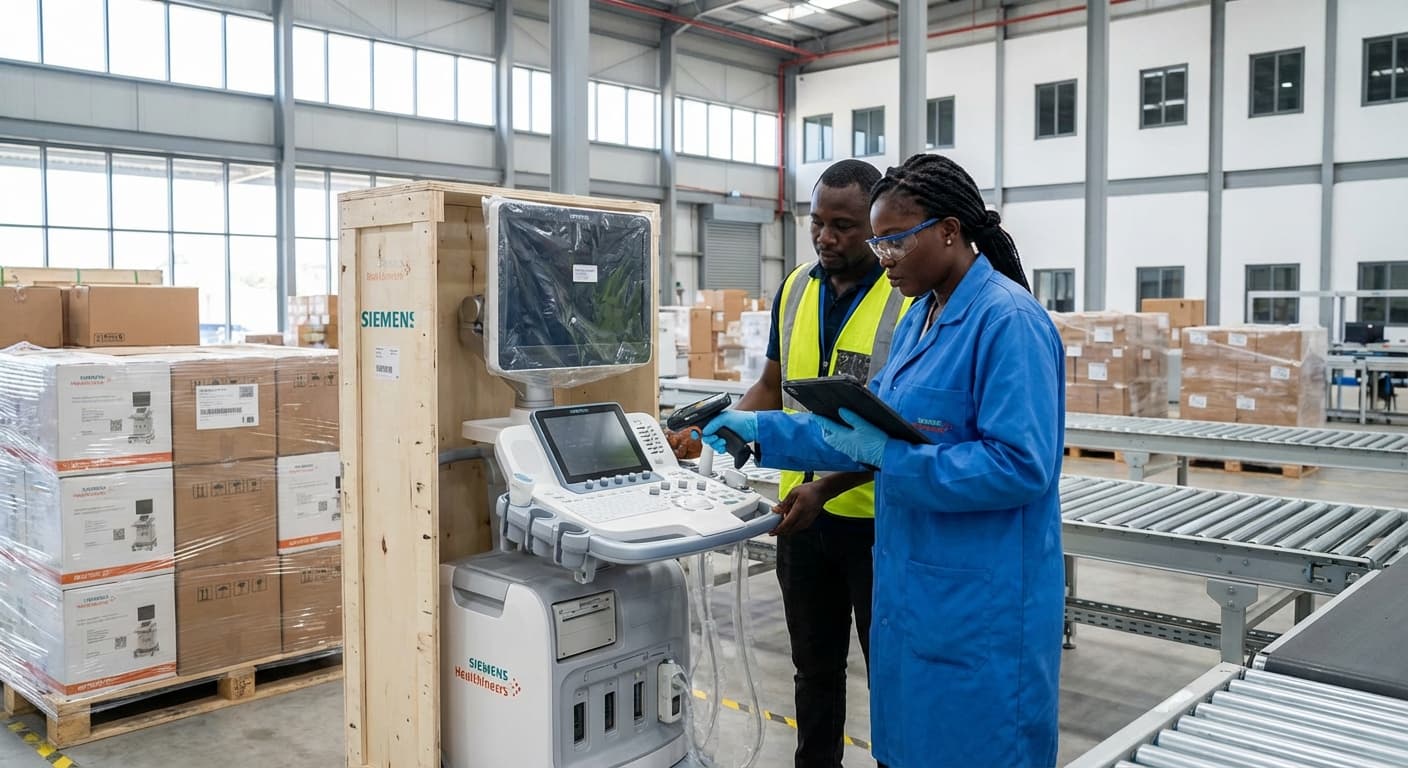
Warehouse Receiving Inspection Service (Medical Equipment) in Kenya
Engineering Excellence & Technical Support
Warehouse Receiving Inspection Service (Medical Equipment) High-standard technical execution following OEM protocols and local regulatory frameworks.
Unwavering Compliance & Quality Assurance
Our rigorous inspection protocols ensure every piece of medical equipment arriving in Kenya meets stringent WHO, KEBS, and manufacturer quality standards, safeguarding patient safety and operational integrity from the outset.
Expedited Clearance & Supply Chain Velocity
Leveraging our deep understanding of Kenyan customs and regulatory processes, we streamline the receiving inspection, minimizing delays and accelerating the flow of critical medical equipment into healthcare facilities across the nation.
Advanced Defect Detection & Root Cause Analysis
Utilizing state-of-the-art diagnostic tools and expert visual inspection, we meticulously identify manufacturing defects, transport damage, and non-conformance, providing detailed reports and facilitating prompt resolution with suppliers.
What Is Warehouse Receiving Inspection Service (Medical Equipment) In Kenya?
Warehouse Receiving Inspection Service (Medical Equipment) in Kenya is a critical quality assurance process designed to verify the integrity, conformity, and documentation of medical equipment upon its arrival at a warehouse facility within Kenya. This service ensures that procured medical devices meet specified regulatory standards, contractual obligations, and the operational requirements of the receiving entity before they are accepted into inventory and subsequently deployed into healthcare settings. The objective is to mitigate risks associated with damaged, substandard, non-conforming, or counterfeit medical equipment, thereby safeguarding patient safety and ensuring the efficacy of healthcare delivery.
| Stakeholder Category | Need for Service | Typical Use Cases |
|---|---|---|
| Healthcare Facilities (Hospitals, Clinics, Labs): | To ensure the procured medical equipment meets quality standards, is safe for patient use, and aligns with clinical specifications before deployment. Crucial for inventory management and preventing the introduction of faulty or non-compliant devices. | Receipt of newly purchased diagnostic imaging machines, surgical instruments, laboratory analyzers, patient monitoring systems, and therapeutic devices. |
| Government Ministries of Health & Public Procurement Entities: | To ensure accountability in public health expenditure, verify the quality and authenticity of equipment procured through tenders, and comply with national medical device regulations. Supports national health infrastructure development. | Receiving bulk orders of essential medical supplies, hospital beds, ambulances, and specialized medical equipment for public health programs. |
| Medical Equipment Suppliers/Distributors (Local & International): | To confirm that shipments match orders before onward distribution, to manage inbound logistics efficiently, and to fulfill contractual obligations with their clients. Acts as a quality gate for their own supply chain. | Acceptance of equipment from international manufacturers, consolidation of orders from various suppliers, and pre-distribution checks before delivery to end-users. |
| Non-Governmental Organizations (NGOs) & International Aid Agencies: | To ensure that donated or procured medical equipment for humanitarian projects meets the necessary quality and safety standards, maximizing the impact of their aid and resource allocation. | Inspection of equipment intended for health centers in remote or underserved areas, or for emergency response initiatives. |
| Third-Party Logistics (3PL) Providers Specializing in Healthcare: | To fulfill contractual obligations with their clients by ensuring the integrity and conformity of medical equipment stored and handled within their facilities. Crucial for maintaining client trust and operational efficiency. | Receiving and inspecting a diverse range of medical devices for clients who outsource their warehousing and distribution. |
Service Components
- Physical Inspection: Examination of packaging for damage, integrity, and appropriate labeling (e.g., hazard symbols, handling instructions). Visual inspection of the medical equipment itself for any signs of physical damage, defects, or contamination.
- Documentation Verification: Cross-referencing received items against purchase orders (POs), packing lists, invoices, and certificates of origin. Verification of critical regulatory documentation, including but not limited to, manufacturer's declarations of conformity, import permits, and relevant certifications (e.g., CE marking, FDA approval where applicable).
- Quantity and Model Verification: Accurate counting of received units and confirmation that the models and specifications match those specified in the procurement documents.
- Functional Testing (Basic): For certain equipment, preliminary functional checks may be performed to ensure basic operational readiness, such as power activation or key component integrity. This is often a preliminary step before more extensive commissioning.
- Labeling and Identification Check: Ensuring that each unit is correctly labeled with serial numbers, model numbers, manufacturing dates, and expiry dates (if applicable), aligning with internal tracking systems and regulatory requirements.
- Storage Condition Assessment: Preliminary evaluation of the immediate storage environment to ensure it is suitable for the type of medical equipment received, pending formal warehouse condition assessment.
- Non-conformance Reporting: Detailed documentation and reporting of any discrepancies, damages, or deviations from specifications encountered during the inspection process. This includes photographic evidence and clear descriptions of the issues.
Who Needs Warehouse Receiving Inspection Service (Medical Equipment) In Kenya?
Warehouse Receiving Inspection Service for Medical Equipment in Kenya is a crucial process for ensuring the quality, safety, and regulatory compliance of medical devices upon arrival. This service is essential for a wide range of organizations that procure, store, and distribute medical equipment.
| Customer Type | Key Departments Involved in Receiving Inspection |
|---|---|
| Hospitals and Healthcare Facilities | Procurement Department, Biomedical Engineering Department, Pharmacy, Stores/Warehouse Management |
| Medical Equipment Distributors and Suppliers | Procurement/Purchasing Department, Quality Assurance Department, Warehouse/Logistics Department, Sales Department |
| Government Health Ministries and Agencies | Procurement Unit, Logistics Department, Quality Assurance Unit |
| NGOs and Faith-Based Organizations | Procurement/Logistics Officer, Program Manager, Operations Manager |
| Medical Training and Research Institutions | Procurement Office, Departmental Heads, Laboratory Technicians, Warehouse Personnel |
| Third-Party Logistics (3PL) Providers | Warehouse Manager, Operations Manager, Quality Control Team |
| Insurance Companies and Financial Institutions | Claims Department, Asset Management Department (depending on the financial instrument) |
Target Customers & Departments for Warehouse Receiving Inspection Service (Medical Equipment) in Kenya
- {"title":"Hospitals and Healthcare Facilities","description":"These are the primary end-users of medical equipment. Inspection ensures that equipment delivered is as per order, functional, and meets safety standards before being deployed to patient care areas."}
- {"title":"Medical Equipment Distributors and Suppliers","description":"Companies that import, stock, and resell medical equipment to healthcare providers. Inspection is vital for quality control, managing inventory, and verifying shipments from manufacturers."}
- {"title":"Government Health Ministries and Agencies","description":"Organizations responsible for public health procurement, including national tenders for medical equipment. Inspection services help guarantee that procured items meet specifications and quality benchmarks."}
- {"title":"Non-Governmental Organizations (NGOs) and Faith-Based Organizations (FBOs)","description":"Entities involved in providing healthcare services, often with limited budgets. Receiving inspection ensures they receive the correct and functional equipment, maximizing the impact of their donations and investments."}
- {"title":"Medical Training and Research Institutions","description":"Universities and colleges that use medical equipment for training and research. Inspection ensures the equipment is suitable for its intended educational and scientific purposes."}
- {"title":"Third-Party Logistics (3PL) Providers","description":"Warehouses that handle the storage and distribution of medical equipment on behalf of clients. Receiving inspection is a key service they offer to ensure the integrity of goods."}
- {"title":"Insurance Companies and Financial Institutions","description":"Involved in financing large purchases of medical equipment. Inspection can be part of their due diligence to verify the asset's condition and value."}
Warehouse Receiving Inspection Service (Medical Equipment) Process In Kenya
This document outlines the typical workflow for a Warehouse Receiving Inspection Service for medical equipment in Kenya, from initial inquiry to the completion of the inspection and reporting. The process is designed to ensure that medical equipment received at a warehouse meets specified quality, safety, and functional standards before being accepted into inventory.
| Stage | Description | Key Activities | Deliverables/Outcomes | Responsible Parties |
|---|---|---|---|---|
| The process begins when a client (e.g., hospital, distributor, government health agency) requires inspection services for incoming medical equipment. | Client submits an inquiry detailing equipment type, quantity, origin, expected arrival date, and specific inspection requirements. Inspection service provider prepares and submits a quotation based on the scope of work, service level, and complexity. | Received inquiry, issued quotation. | Client, Inspection Service Provider |
| Once the quotation is accepted, a formal agreement is established, and the inspection is planned in detail. | Contract negotiation and signing. Development of an inspection plan, including checklist creation or customization, scheduling of inspectors, and coordination with the client and warehouse. Pre-inspection communication to confirm details. | Signed Service Agreement, Detailed Inspection Plan, Scheduled Inspectors. | Client, Inspection Service Provider |
| The inspection team prepares for the on-site visit to ensure efficiency and effectiveness. | Review of equipment specifications, manufacturer's data, previous inspection reports (if any). Familiarization with relevant Kenyan regulatory standards (e.g., PPB, OSHA). Gathering necessary inspection tools and equipment. | Prepared Inspection Team, Relevant Documentation, Necessary Tools. | Inspection Service Provider |
| The core inspection activities are performed at the client's designated warehouse or receiving point. | Visual inspection of packaging for damage. Verification of equipment against shipping documents (model, serial number, quantity). Functional testing (where applicable and agreed). Assessment of documentation (manuals, certificates). Check for compliance with any pre-defined acceptance criteria. | Completed Inspection Checklist, Evidence (photos, videos), Initial Observations. | Inspection Service Provider, Client Representative (optional) |
| Findings from the on-site inspection are compiled and communicated to the client. | Compilation of inspection report detailing findings, including any non-conformities or deviations. Recommendation for acceptance, rejection, or further action. Submission of the formal inspection report to the client. | Formal Inspection Report, Recommendations. | Inspection Service Provider |
| Addressing any issues identified in the report and closing out the service engagement. | Client reviews the report and takes necessary actions based on recommendations. Inspection service provider may be engaged for re-inspection if required. Final invoicing and closure of the service contract. | Client's Action Plan, Re-inspection (if applicable), Closed Service Record. | Client, Inspection Service Provider |
Warehouse Receiving Inspection Service (Medical Equipment) Process in Kenya: Workflow from Inquiry to Execution
- Inquiry and Quotation
- Service Agreement and Planning
- Pre-Inspection Preparation
- On-Site Inspection Execution
- Reporting and Documentation
- Follow-up and Closure
Warehouse Receiving Inspection Service (Medical Equipment) Cost In Kenya
The cost of Warehouse Receiving Inspection Services for medical equipment in Kenya is a crucial consideration for ensuring the quality, safety, and compliance of imported or locally sourced medical devices before they enter storage. These services are typically provided by specialized third-party inspection companies or can be integrated into the internal quality assurance processes of larger healthcare organizations. The pricing is not a fixed rate but rather influenced by a variety of factors, leading to a broad range of costs. Understanding these factors is essential for accurate budgeting and selection of service providers. The following details the key pricing determinants and provides estimated cost ranges in Kenyan Shillings (KES).
| Inspection Type / Scope | Estimated Cost Range (KES) | Notes |
|---|---|---|
| Basic Visual Inspection & Documentation Check (Low-Risk Items, Small Volume) | 5,000 - 15,000 | Suitable for consumables, basic disposables. Focus on packaging integrity and matching documentation. |
| Standard Inspection (Mid-Risk Items, Moderate Volume) | 15,000 - 50,000 | Includes visual check, basic functional verification, and document review for general medical devices. |
| Comprehensive Inspection (High-Risk/Complex Equipment) | 50,000 - 200,000+ | Involves detailed functional testing, calibration verification, safety checks, and in-depth documentation review for advanced medical technology. |
| Per Unit Inspection (for very high volumes) | 500 - 5,000+ per unit | Varies significantly based on the complexity of the unit. May be negotiated for large-scale contracts. |
| Expedited Service Fee | Add 25% - 50% to base cost | For urgent requests requiring immediate attention and rapid turnaround. |
| Travel & Accommodation (outside major cities) | Variable (e.g., 5,000 - 30,000+ per trip) | Depending on distance and duration. Often itemized. |
Key Pricing Factors for Warehouse Receiving Inspection Services (Medical Equipment) in Kenya:
- Type and Complexity of Medical Equipment: Basic, low-risk medical supplies (e.g., gloves, bandages) will generally incur lower inspection fees compared to complex, high-risk medical devices (e.g., MRI machines, ventilators, diagnostic imaging equipment). The more intricate the equipment, the more specialized knowledge, tools, and time required for a thorough inspection.
- Scope of Inspection: The extent of the inspection significantly impacts cost. This can range from a simple visual check and verification of documentation to comprehensive functional testing, calibration, and verification against regulatory standards (e.g., Kenya Bureau of Standards (KEBS), Ministry of Health requirements).
- Quantity of Equipment: While per-unit inspection might be the basis, larger volumes can sometimes negotiate bulk discounts. However, a very high volume might also increase the overall project cost due to the extended time and resources needed.
- Location of Warehouse: The geographical location of the warehouse can affect costs due to travel expenses for inspectors. Inspections in remote areas or outside major urban centers like Nairobi or Mombasa may incur additional transport and accommodation charges.
- Turnaround Time (Urgency): Expedited inspection services, requiring immediate attention or weekend/holiday work, will command premium pricing over standard turnaround times.
- Accreditation and Certification of Inspector: An inspection service provider with recognized accreditations (e.g., ISO 17020) and highly qualified, certified inspectors will generally charge more due to their established expertise and reliability.
- Documentation Requirements: The level of detail and specific documentation required (e.g., certificates of conformity, calibration certificates, user manuals, technical specifications) will influence the inspection effort and, consequently, the cost.
- Risk Assessment and Sampling: For large consignments, inspectors may employ risk-based sampling methodologies. The complexity of this assessment and the sample size can affect the overall inspection cost.
- Additional Services: Services beyond the core inspection, such as pre-shipment inspections (if conducted by the same provider), sample retention, or detailed reporting with photographic evidence, will add to the overall cost.
- Reputation and Experience of the Inspection Firm: Established inspection firms with a proven track record in the medical equipment sector often command higher fees due to their expertise, reliability, and insurance coverage.
Affordable Warehouse Receiving Inspection Service (Medical Equipment) Options
Securing reliable and cost-effective warehouse receiving inspection services for medical equipment is crucial for maintaining quality, compliance, and inventory accuracy. This guide explores affordable options, highlighting the value of bundled services and practical cost-saving strategies.
| Cost-Saving Strategy | Description | Benefit for Medical Equipment Inspections |
|---|---|---|
| Volume-Based Discounts | Negotiate lower per-unit inspection fees when committing to a higher volume of inspections over a period. | Reduces the overall cost per inspected item, particularly beneficial for high-volume distribution centers. |
| Long-Term Contracts | Secure service for an extended period (e.g., 1-3 years) in exchange for preferential pricing. | Provides budget predictability and shields against potential price increases, ensuring consistent cost management. |
| Tiered Service Levels | Choose inspection packages based on the criticality and value of the medical equipment. Lower-tier options for less critical items, higher-tier for high-value or complex devices. | Optimizes spending by only paying for the level of inspection truly required for each equipment type, avoiding over-inspection. |
| Pre-defined Inspection Checklists | Work with the service provider to create standardized, efficient checklists for common equipment types. This reduces inspection time. | Speeds up the inspection process, leading to faster turnaround times and potentially lower labor costs for the provider, which can be passed on to you. |
| Remote Monitoring & Verification Options | For certain non-critical checks or initial confirmations, explore if some aspects can be verified remotely through shared documentation or video. | Can reduce the need for on-site personnel for every single step, saving on travel and on-site labor costs, though not suitable for all critical checks. |
| Outsourcing Non-Core Functions | Consolidating your inspection needs with a single, specialized provider can simplify management and leverage their economies of scale. | Reduces internal administrative overhead, simplifies vendor management, and often results in better pricing due to the provider's specialization. |
| Data Standardization & Integration | Invest in a provider whose system can seamlessly integrate with yours, reducing manual data entry and reconciliation efforts. | Minimizes costly errors and saves significant internal labor time associated with manual data handling and re-keying. |
| Preventative Approach (Early Damage Detection) | Thorough inspections at receiving can identify damage that might otherwise go unnoticed until later, preventing costly rework or disposal. | Mitigates the risk of accepting damaged goods, which can lead to significant financial losses due to returns, replacements, or warranty claims later in the supply chain. |
Understanding Value Bundles
- {"title":"What are Value Bundles?","description":"Value bundles are packages of services offered at a discounted rate compared to procuring each service individually. For warehouse receiving inspections, this typically involves combining core inspection activities with additional value-added services."}
- {"title":"Common Components of Warehouse Receiving Inspection Bundles:","description":"These bundles can be tailored to specific needs but often include:"}
- {"title":"Core Inspection:","description":"Verifying quantity, checking for visible damage, comparing against packing slips and purchase orders."}
- {"title":"Documentation Review:","description":"Ensuring all required paperwork (e.g., certificates of analysis, sterilization records, user manuals) is present and correct."}
- {"title":"Basic Functionality Testing:","description":"Performing simple tests to confirm the equipment powers on and basic functions operate as expected (pre-defined by the client)."}
- {"title":"Labeling and Barcode Verification:","description":"Checking for accurate product labeling and scannable barcodes for inventory management."}
- {"title":"Value-Added Services (Often Included in Bundles):","description":"These enhance the core offering and provide greater efficiency:"}
- {"title":"Digital Record Keeping & Reporting:","description":"Electronic logging of inspection results, digital photos, and comprehensive reports accessible via a portal."}
- {"title":"Data Integration:","description":"Ability to integrate inspection data directly into your existing Warehouse Management System (WMS) or Enterprise Resource Planning (ERP)."}
- {"title":"Consignment Inventory Checks:","description":"If applicable, verifying quantities and condition of consignment stock upon receipt."}
- {"title":"Pallet/Container Integrity Checks:","description":"Assessing the condition of shipping containers and pallets to prevent damage during transit."}
- {"title":"Temperature/Environmental Monitoring Verification:","description":"Confirming that temperature-sensitive equipment has been kept within specified ranges during transit."}
Verified Providers In Kenya
In Kenya's rapidly evolving healthcare landscape, ensuring you're accessing care from verified and trustworthy providers is paramount. Franance Health stands out as a beacon of reliability, offering a comprehensive network of accredited medical professionals and facilities. This commitment to credentialing not only safeguards patient well-being but also fosters confidence and trust in the healthcare system.
| Provider Type | Franance Health Credentialing Criteria | Benefits for Patients |
|---|---|---|
| Hospitals & Clinics | Accreditation by relevant health bodies (e.g., Ministry of Health, Joint Commission International), adherence to safety and infection control standards, well-equipped facilities. | Access to advanced medical technology, comprehensive treatment options, and a safe, clean environment. |
| Doctors & Specialists | Valid medical license, board certification, proven track record of successful patient outcomes, continuous professional development. | Expert diagnosis, effective treatment plans, and personalized care from qualified professionals. |
| Laboratories & Diagnostic Centers | Accreditation by national and international standards bodies, use of up-to-date equipment, qualified laboratory personnel, stringent quality control measures. | Accurate and reliable diagnostic results essential for informed medical decisions. |
| Pharmacies | Valid operating license, proper storage of medications, dispensing by qualified pharmacists, adherence to ethical practices. | Access to safe and authentic medications, with professional guidance on usage. |
Why Franance Health Credentials Matter:
- Rigorous Vetting Process: Franance Health employs a stringent vetting process for all its healthcare partners. This includes verifying licenses, certifications, and professional accreditations.
- Commitment to Quality Standards: By partnering with credentialed providers, Franance Health guarantees adherence to high-quality care standards, ensuring patients receive optimal medical attention.
- Enhanced Patient Safety: Verified providers have demonstrated their commitment to patient safety protocols, minimizing risks and promoting a secure healthcare experience.
- Access to Expertise: Franance Health's network comprises specialists and general practitioners who have met stringent criteria, ensuring you get access to the best medical expertise for your needs.
- Peace of Mind: Knowing that your healthcare provider is verified by Franance Health offers unparalleled peace of mind, allowing you to focus on your recovery and well-being.
Scope Of Work For Warehouse Receiving Inspection Service (Medical Equipment)
This Scope of Work (SOW) outlines the requirements for a Warehouse Receiving Inspection Service specifically for medical equipment. The service aims to ensure that all incoming medical equipment meets predefined technical specifications and quality standards before being accepted into the warehouse inventory. This SOW details the technical deliverables, standard specifications, and the overall process involved in performing these inspections.
| Inspection Area | Standard Specifications / Key Parameters | Acceptance Criteria | Inspection Methodology |
|---|---|---|---|
| Visual Inspection | No visible damage (cracks, dents, scratches), proper labeling (serial numbers, model numbers, manufacturer information), completeness of accessories, clean surface finish, absence of foreign materials. | Equipment and accessories are free from cosmetic and structural damage. All labels are present, legible, and accurate. No foreign contaminants. | Visual examination under adequate lighting. Comparison against product images and documentation. Use of magnification where necessary. |
| Documentation Review | Presence and accuracy of User Manuals, Installation Guides, Certificates of Conformity (CoC), Warranty Information, spare parts lists, and any required regulatory documentation. | All required documentation is present, legible, in the correct language, and aligns with the received equipment. | Manual verification against a predefined checklist. Cross-referencing documentation with equipment labels. |
| Functional Testing (Basic) | Verification of basic operational functions as per manufacturer's specifications. Power-on self-test (POST) completion, basic control responsiveness, indicator light functionality, safety feature checks (if applicable). | Equipment powers on successfully. All basic functions operate as intended without error messages. Safety features are active and detectable. | Execution of predefined test sequences outlined in user manuals or provided test protocols. Observation of equipment response and status indicators. |
| Dimensional Checks | Verification of key dimensions (length, width, height) against design specifications. Weight verification (if critical). | Dimensions and weight fall within +/- tolerance specified in technical drawings or product specifications. | Use of calibrated measuring tools (tape measures, calipers, scales). Comparison against approved technical drawings or specifications. |
| Packaging Integrity | Condition of primary and secondary packaging. Evidence of mish-handling (tears, punctures, water damage). Correct packaging for the specific equipment type. | Packaging protects the equipment from damage during transit and storage. No signs of compromise that could affect product integrity. | Visual inspection of packaging. Checking for security seals and tamper-evident features. |
| Labeling and Barcode Verification | Accuracy and legibility of product labels, serial numbers, lot numbers, barcodes. Match between label information and accompanying documentation/PO. | All labels are correctly affixed, legible, and the information matches the purchase order and/or packing list. | Manual verification of labels and barcodes. Use of barcode scanners to verify data integrity. |
| Accessories and Components Verification | Completeness and correct part numbers of all included accessories (cables, power adapters, consumables, mounting hardware). | All specified accessories and components are present and match the required part numbers. | Comparison against packing lists and product BOM (Bill of Materials). Visual inspection of accessories. |
| Environmental Conditions (if applicable) | Verification of temperature and humidity conditions during receiving, if critical for the specific medical equipment (e.g., sensitive reagents, temperature-sensitive devices). | Environmental conditions are within the acceptable range specified by the manufacturer. | Use of calibrated environmental monitoring devices (thermometers, hygrometers) to record conditions at the point of receipt. |
Technical Deliverables
- Detailed Inspection Reports: Comprehensive reports for each incoming shipment, documenting all findings, measurements, and observations.
- Non-Conformance Reports (NCRs): Formal documentation of any equipment that fails to meet the specified standards, including detailed descriptions of the deviations.
- Acceptance/Rejection Recommendations: Clear recommendations on whether to accept or reject the incoming medical equipment based on inspection results.
- Photographic/Video Evidence: Visual documentation of the condition of the equipment, any defects, and critical components as specified.
- Summary Reports: Periodic summaries (e.g., weekly, monthly) of inspection activities, including overall acceptance rates and common non-conformances.
- Compliance Certificates (if applicable): Verification and documentation of compliance with relevant industry standards and regulatory requirements.
- Calibration Verification Records (for calibrated equipment): Proof of proper calibration for any equipment requiring it, with traceable certification.
Service Level Agreement For Warehouse Receiving Inspection Service (Medical Equipment)
This Service Level Agreement (SLA) outlines the performance standards and commitments for Warehouse Receiving Inspection Services specifically for medical equipment. This SLA aims to ensure the quality, accuracy, and efficiency of the receiving inspection process, thereby safeguarding the integrity and usability of medical equipment entering the warehouse. It defines critical metrics such as response times for reported issues and uptime guarantees for the inspection system and personnel.
| Service Element | Description | Service Level Objective (SLO) | Measurement Method | Remedy/SLA Credit |
|---|---|---|---|---|
| Initial Receiving Inspection Completion Time | Time taken from equipment arrival at the receiving dock to the completion of the initial visual and documentation check. | 95% of inspections completed within 4 business hours of arrival. | Timestamp logs from the Warehouse Management System (WMS) or inspection logbook. | For each instance exceeding 4 business hours, a credit of 1% of the monthly inspection fee for that specific shipment. |
| Discrepancy/Damage Reporting Time | Time taken to formally report any discrepancies (e.g., incorrect quantity, wrong item) or visible damage identified during the receiving inspection. | 100% of discrepancies/damages reported within 1 business hour of identification. | Timestamp of the discrepancy/damage report in the WMS or inspection system. | For each instance exceeding 1 business hour, a credit of 2% of the monthly inspection fee for that specific shipment. |
| Resolution of Urgent Inspection Requests | Time taken to commence inspection for urgent shipments requiring immediate processing. | Response within 30 minutes of notification for urgent requests, with inspection commencement within 1 business hour. | Notification logs, system timestamps for request and commencement. | Failure to respond within 30 minutes incurs a $50 penalty. Failure to commence within 1 business hour incurs a 5% credit on the inspection fee for that shipment. |
| System Uptime (Inspection Software/Platform) | Percentage of time the primary inspection software or platform is available and operational for use. | 99.5% uptime during standard operating hours (Monday-Friday, 8 AM - 6 PM local time). | Automated system monitoring tools. | For every hour of unplanned downtime exceeding 0.5% of monthly operating hours, a credit of 0.5% of the monthly software subscription fee. |
| Availability of Trained Inspection Personnel | Ensuring sufficient trained personnel are available to perform inspections as per schedule. | 98% availability of scheduled inspection personnel. | Attendance records, shift schedules, and incident reports for absence. | For any scheduled inspection slot that cannot be covered due to personnel unavailability, a credit of 5% of the inspection fee for the affected shipments. |
| Accuracy of Inspection Data | Percentage of inspection records that are free from errors in terms of quantity, item identification, and damage reporting. | 99.0% accuracy. | Periodic audits of inspection records by the client or a designated third party. | For every 1% or portion thereof decrease in accuracy below 99.0% in a given month, a credit of 2% of the monthly inspection fee. |
Key Performance Indicators (KPIs)
- Timely identification and reporting of discrepancies and damages.
- Accuracy of inspection documentation.
- Efficient processing of incoming medical equipment.
- Minimization of delays in stock availability due to inspection bottlenecks.
- Adherence to all relevant regulatory and compliance standards.
Frequently Asked Questions

Ready when you are
Let's scope your Warehouse Receiving Inspection Service (Medical Equipment) in Kenya project in Kenya.

Scaling healthcare logistics and technical systems across the entire continent.