
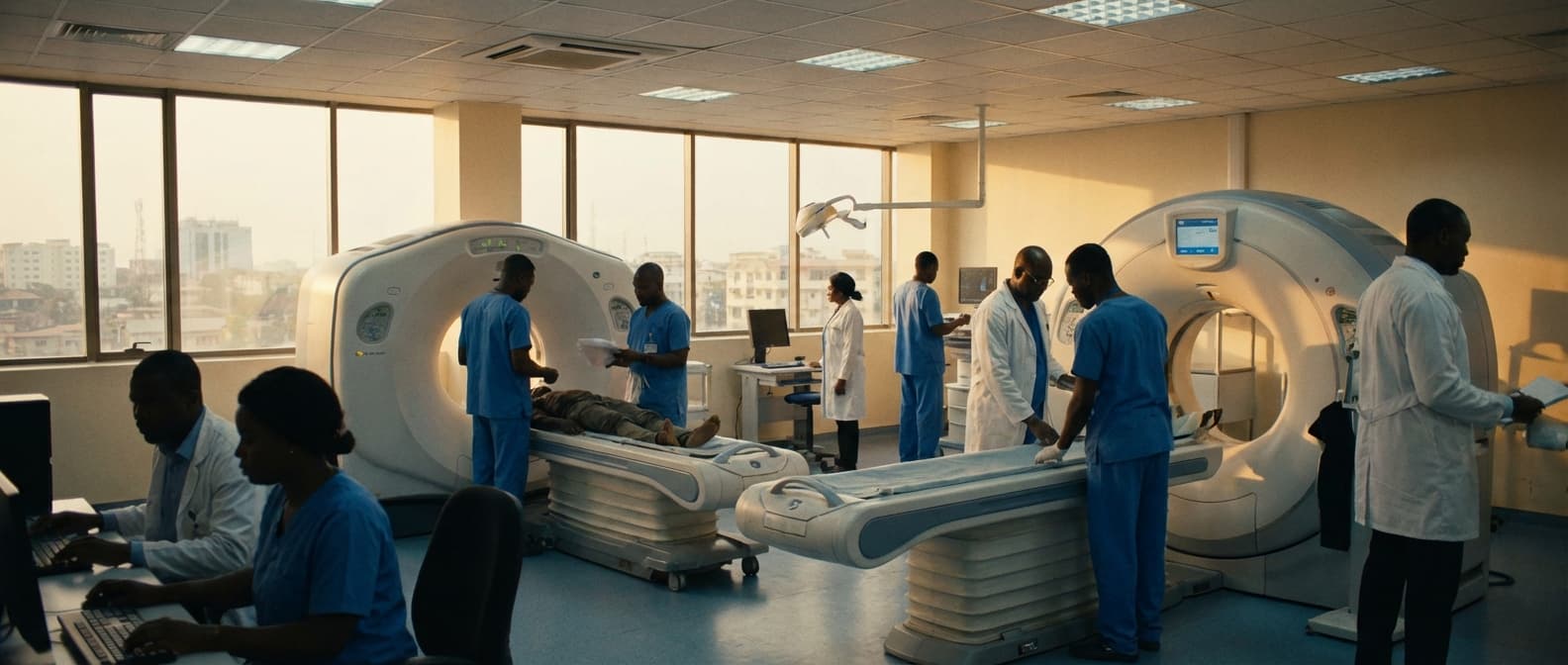
Radiology Room Design & Shielding Calculation in Kenya
Engineering Excellence & Technical Support
Turnkey room planning, shielding drawings and approvals for imaging suites. High-standard technical execution following OEM protocols and local regulatory frameworks.
Advanced Radiation Shielding Design for Medical Facilities
Leveraging AI-driven simulations and adherence to international standards (e.g., NCRP, ICRP), we provide optimized lead and concrete shielding calculations for CT, MRI, X-ray, and radiotherapy rooms, ensuring patient and staff safety while minimizing material costs in Kenyan healthcare settings.
Ergonomic and Efficient Radiology Workflow Layouts
Designing radiology suites that prioritize workflow efficiency, patient comfort, and staff ergonomics. Our designs incorporate optimal equipment placement, patient pathways, and control room configurations tailored to the specific needs and space constraints of Kenyan hospitals and clinics.
Regulatory Compliance & Safety Audits for Imaging Departments
Ensuring full compliance with Kenyan radiation protection regulations and licensing requirements. We offer comprehensive site assessments, shielding verification, and safety audits to guarantee adherence to national guidelines for all radiology installations, promoting a secure imaging environment.
What Is Radiology Room Design & Shielding Calculation In Kenya?
Radiology room design and shielding calculations in Kenya refer to the specialized process of planning, designing, and engineering diagnostic imaging suites to ensure optimal operational efficiency, patient and staff safety, and compliance with regulatory standards, particularly concerning ionizing radiation protection. This service is crucial for any facility housing equipment that emits X-rays or gamma rays, such as X-ray machines, CT scanners, fluoroscopy units, mammography systems, and certain nuclear medicine equipment. The design process encompasses architectural layout, equipment placement, workflow optimization, and the critical calculation of necessary radiation shielding materials (e.g., lead, concrete) to attenuate radiation within permissible dose limits as stipulated by Kenyan radiation protection authorities.
| Who Needs Radiology Room Design & Shielding Calculation? | Typical Use Cases & Scenarios | |||||
|---|---|---|---|---|---|---|
| Hospitals and Medical Centers: Establishing new radiology departments or upgrading existing ones. | Diagnostic Imaging Clinics: Setting up standalone X-ray, CT, or mammography facilities. | Specialized Medical Practices: Incorporating diagnostic imaging within cardiology, neurology, or orthopedic departments. | Veterinary Clinics: Designing rooms for veterinary radiography and CT scanning. | Research Institutions: Building dedicated imaging suites for scientific research involving radiation-emitting equipment. | Industrial Radiography Facilities: Although less common in healthcare context, industrial X-ray facilities also require similar principles. | Government Health Facilities: Public hospitals and health centers requiring new or expanded radiology services. |
| Installation of new imaging equipment: Such as CT scanners, MRI machines (though MRI doesn't use ionizing radiation, room design for RF shielding and patient access is relevant), X-ray rooms, or fluoroscopy suites. | Renovation or expansion of existing radiology departments: To accommodate increased patient load or new imaging technologies. | Relocation of imaging equipment: Requiring reassessment and potential redesign of shielding. | Ensuring compliance with updated radiation safety regulations: Mandated by Kenyan authorities. | Optimizing radiation dose management: For both patients and healthcare professionals. | Improving workflow and patient experience: Through thoughtful room layout and accessibility. |
Key Components of Radiology Room Design & Shielding Calculation:
- Architectural Planning: Defining room dimensions, door and window placement, ventilation, and electrical/mechanical infrastructure to accommodate imaging equipment and workflow.
- Equipment Specification & Placement: Identifying the specific imaging modalities, their spatial requirements, and optimal positioning for diagnostic imaging and patient access.
- Radiation Shielding Calculations: Determining the required thickness and type of shielding materials for walls, floors, ceilings, doors, and viewing windows based on equipment type, workload, occupancy factors, and established dose limits.
- Workflow Analysis: Designing the room layout to facilitate efficient patient throughput, staff movement, and communication.
- Compliance & Regulatory Adherence: Ensuring the design meets all relevant Kenyan regulations and guidelines for radiation safety, issued by bodies such as the Radiation Protection Board (RPB) of Kenya.
- Integration with Building Infrastructure: Coordinating with architects and structural engineers to integrate shielding into the overall building design and construction.
Who Needs Radiology Room Design & Shielding Calculation In Kenya?
Designing and ensuring proper shielding for radiology rooms in Kenya is a critical and often overlooked aspect of healthcare infrastructure. It's not just about aesthetics; it's about patient safety, staff protection, regulatory compliance, and optimal diagnostic image quality. Therefore, a diverse range of healthcare providers and institutions in Kenya require specialized radiology room design and shielding calculation services.
| Customer Type | Key Departments/Needs | Specific Considerations in Kenya | |||
|---|---|---|---|---|---|
| Public Hospitals | Radiology Departments (X-ray, CT, MRI, Ultrasound, Mammography), Diagnostic Services, Patient Care Units | Budget constraints, high patient volume, adherence to national health regulations, retrofitting existing structures, training for local staff on safety protocols. | |||
| Private Hospitals & Clinics | Radiology Departments, Interventional Suites, Specialty Imaging Rooms (e.g., Cardiology, Oncology) | Emphasis on advanced technology, patient comfort, branding, faster turnaround times, international accreditation standards, potential for specialized imaging services. | Diagnostic Imaging Centers | X-ray, CT, MRI, Mammography, Bone Densitometry, Ultrasound | Maximizing patient throughput, optimizing workflow, ensuring image quality, competitive pricing, efficient use of space. |
| Specialty Medical Centers | Dedicated imaging for specific specialties (e.g., Interventional Radiology in Oncology, Cardiac Cath Labs) | Integration of specialized equipment, precise room dimensions, workflow tailored to specific procedures, advanced shielding for complex interventions. | |||
| Government Health Facilities | Diagnostic Imaging, Public Health Research, Training | Cost-effectiveness, accessibility, long-term maintenance considerations, national standards compliance, capacity building. | |||
| Educational & Training Institutions | Radiology Training Labs, Research Facilities | Safety for students and instructors, demonstration areas, integration with learning curricula, compliance with educational safety standards. | |||
| Architects & Construction Companies | New Building Projects, Renovations, Healthcare Infrastructure Development | Understanding of international building codes and local regulations, collaboration with radiation safety experts, ensuring timely project completion. | |||
| Medical Equipment Suppliers | Installation of X-ray, CT, MRI, and other imaging modalities | Ensuring the pre-installation site meets all technical and safety requirements, coordinating with clients for room modifications, providing guidance on compliance. |
Target Customers and Departments in Kenya Requiring Radiology Room Design & Shielding Calculations:
- Public Hospitals: These form the backbone of healthcare in Kenya and often undergo renovations or new constructions to expand their imaging capabilities. They serve a large patient population and require cost-effective yet compliant solutions.
- Private Hospitals & Clinics: As Kenya's private healthcare sector grows, these institutions are investing heavily in advanced diagnostic imaging. They often seek premium design and cutting-edge technology, necessitating specialized room planning.
- Specialty Medical Centers: Centers focusing on specific areas like cardiology, oncology, neurology, or pediatrics often require specialized radiology suites tailored to their unique imaging modalities (e.g., dedicated cardiac cath labs, interventional radiology suites).
- Diagnostic Imaging Centers: Standalone centers dedicated solely to providing imaging services are a significant market. They need efficient layouts to maximize patient throughput and ensure high-quality imaging.
- Government Health Facilities (Beyond Hospitals): This includes regional health bureaus, research institutions, and public health laboratories that might house or plan to house diagnostic imaging equipment.
- Educational & Training Institutions: Medical schools and training colleges that offer radiology programs need facilities that not only serve educational purposes but also adhere to safety standards for students and staff.
- Industrial and Research Facilities (Limited Scope): While not a primary focus, certain industrial or research applications involving X-ray or other radiation-generating equipment might require specialized shielding and room design for safety.
- Architects and Construction Companies: These professionals often partner with specialized consultants to ensure their building designs meet the stringent requirements for medical imaging facilities.
- Medical Equipment Suppliers and Installers: When procuring and installing new radiology equipment, ensuring the room infrastructure is adequate and compliant is a crucial step they facilitate for their clients.
Radiology Room Design & Shielding Calculation Process In Kenya
Designing and implementing radiology rooms, particularly those involving radiation shielding, requires a systematic approach to ensure safety, compliance with regulations, and optimal functionality. In Kenya, this process is guided by the Radiation Protection Board (RPB) and involves multiple stakeholders. The workflow typically begins with an initial inquiry from a healthcare facility or developer and culminates in the final commissioning and handover of the shielded radiology room.
| Stage | Key Activities | Involved Parties | Deliverables/Outcomes |
|---|---|---|---|
| Initial contact from client (hospital, clinic, developer). Understanding the type of radiology equipment to be installed (X-ray, CT, MRI, LINAC), intended usage, patient throughput, and specific room requirements. Preliminary discussion on budget and timeline. | Client (Radiology Department, Administration, Project Manager), Potential Service Provider/Consultant | Clear understanding of project scope, equipment types, and preliminary functional requirements. |
| Detailed site visit to assess the proposed location. Review of architectural plans to ensure compatibility with equipment and safety requirements. Identification of structural considerations, existing utilities (power, ventilation), and access points. Collaboration with architects and structural engineers. | Service Provider/Consultant, Architect, Structural Engineer, Client | Confirmation of site suitability, preliminary architectural adjustments, identification of potential site-specific challenges. |
| This is the core technical phase. Based on equipment specifications (kVp, mA, workload, beam direction, distance) and RPB guidelines, detailed calculations are performed to determine the required thickness and type of shielding materials (lead, concrete, etc.) for walls, floors, ceilings, and doors. Consideration for maze design and interlocks. | Radiation Protection Specialist/Medical Physicist, Service Provider/Consultant | Detailed shielding design report with specific material thickness requirements for each element of the room. 3D modeling of the shielded enclosure. |
| Specifying the exact type, quality, and dimensions of shielding materials required (e.g., lead sheets of specific thickness, concrete mix designs). Identifying reputable suppliers and initiating procurement processes, adhering to quality standards. | Service Provider/Consultant, Procurement Department, Client, Material Suppliers | Approved material specifications, procurement orders for all shielding and related construction materials. |
| Execution of the construction work based on the approved architectural and shielding designs. This includes forming concrete structures, installing lead sheeting (ensuring complete coverage and no gaps), fitting shielded doors, and integrating ventilation and electrical systems. Regular site supervision and quality control are crucial. | Construction Contractors, Service Provider/Consultant (Supervision), RPB Inspectors (occasional site visits) | Physically constructed and shielded radiology room, all internal fittings and equipment mounting structures in place. |
| Post-construction verification of the installed shielding. This involves non-destructive testing methods to confirm the integrity and effectiveness of the shielding. Measurement of radiation levels at critical points outside the room to ensure they are within permissible limits. This is often done using calibrated radiation survey meters. | Radiation Protection Specialist/Medical Physicist, RPB Inspectors, Service Provider/Consultant | Shielding verification report confirming compliance with design specifications and regulatory limits. Radiation survey maps. |
| Submission of all design calculations, verification reports, and architectural drawings to the Radiation Protection Board (RPB) for review and approval. The RPB issues a license to operate the radiation-emitting equipment within the newly constructed and shielded room. This step may involve multiple iterations based on RPB feedback. | Service Provider/Consultant, Client, Radiation Protection Board (RPB) | RPB approval letter, Operating License for the radiology facility. |
| Final commissioning of the radiology equipment within the shielded room. Ensuring all systems (including safety interlocks) function correctly. Training of radiology staff on the safe operation of the equipment and the room's safety features. Formal handover of the completed and licensed radiology room to the client. | Equipment Vendor, Service Provider/Consultant, Client (Radiology Staff, Administration) | Fully functional, licensed, and commissioned radiology room. Operational procedures, training records, and handover documentation. |
Radiology Room Design & Shielding Calculation Process in Kenya: Workflow
- Inquiry & Needs Assessment
- Site Survey & Architectural Integration
- Radiation Shielding Design & Calculation
- Material Specification & Procurement
- Construction & Installation
- Shielding Verification & Testing
- Regulatory Approval & Licensing
- Commissioning & Handover
Radiology Room Design & Shielding Calculation Cost In Kenya
Designing a radiology room in Kenya involves careful consideration of space, functionality, equipment layout, and crucial radiation shielding to ensure the safety of patients and staff. The cost of this design and the subsequent shielding calculations can vary significantly based on several factors. These factors include the size of the room, the type and energy of the X-ray equipment being installed, the desired level of radiation protection, the complexity of the architectural design, and the reputation and experience of the design and shielding consultants.
Pricing Factors:
- Room Size and Complexity: Larger rooms or those requiring complex architectural modifications (e.g., specific workflow integrations, multiple imaging modalities) will naturally incur higher design fees.
- Type of Imaging Modality: Different modalities (e.g., X-ray, CT, MRI, Fluoroscopy, Mammography) have varying radiation output and shielding requirements. CT scanners, for instance, typically require more robust shielding than a standard X-ray unit.
- Equipment Specifications: The power output (kVp, mA) and energy spectrum of the X-ray generating equipment directly influence the amount and type of shielding needed. Higher energy equipment necessitates more substantial shielding materials.
- Regulatory Requirements: Adherence to national and international radiation safety standards (e.g., IAEA recommendations, local Kenyan regulations) is paramount. Meeting these requirements might necessitate more detailed calculations and specific shielding materials, impacting costs.
- Shielding Materials: The choice of shielding material (e.g., lead, concrete, specialized baryte plaster) and its thickness are determined by the calculations and directly affect material and installation costs.
- Consultant Expertise and Reputation: Highly experienced and reputable architectural designers and radiation physicists specializing in medical facility design and shielding will command higher professional fees.
- Location within Kenya: While not a primary driver for design itself, accessibility for consultants and availability of specialized materials in more remote areas might slightly influence overall project execution costs.
- Scope of Work: Whether the cost includes just the shielding calculations or a comprehensive architectural design including room layout, workflow analysis, and integration with other hospital services will impact the final price.
Cost Ranges in Kenyan Shillings (KES):
It's important to note that these are indicative ranges and a precise quote would require a detailed project brief. For a standard X-ray room, the combined cost of design and shielding calculation can range from approximately KES 150,000 to KES 500,000. For more complex installations like CT scanner rooms, the cost can escalate to KES 400,000 to KES 1,500,000 or more, depending on the factors mentioned above.
Important Considerations:
- Obtain multiple quotes from qualified professionals.
- Ensure consultants are registered and certified where applicable.
- Clarify exactly what is included in the quote (e.g., site visits, detailed reports, material specifications).
- Factor in the cost of shielding materials and installation as a separate, significant component of the overall project budget.
| Imaging Modality (Typical Scope) | Estimated Design & Shielding Calculation Cost (KES) | Notes |
|---|---|---|
| Standard X-ray Room (e.g., diagnostic radiography) | 150,000 - 500,000 | Covers architectural design for workflow and basic shielding calculations. |
| Fluoroscopy Room | 200,000 - 600,000 | Requires shielding calculations for continuous radiation exposure. |
| Mammography Suite | 250,000 - 700,000 | Specific shielding requirements for breast imaging X-rays. |
| CT Scanner Room | 400,000 - 1,500,000+ | Higher radiation output necessitates more substantial shielding and detailed calculations. Can be significantly higher for multi-slice or advanced CTs. |
| Interventional Radiology Suite | 500,000 - 2,000,000+ | Complex shielding for high-energy fluoroscopy and potential use of multiple imaging modalities. |
Key Factors Influencing Radiology Room Design & Shielding Cost in Kenya
- Room size and architectural complexity
- Type of imaging modality (X-ray, CT, MRI, etc.)
- X-ray equipment specifications (kVp, mA, energy spectrum)
- Adherence to local and international radiation safety regulations
- Choice and thickness of shielding materials (lead, concrete, etc.)
- Consultant's experience, reputation, and specialization
- Scope of services provided (design only vs. comprehensive project management)
- Location and accessibility for on-site assessments
Affordable Radiology Room Design & Shielding Calculation Options
Designing an affordable radiology room that meets all radiation shielding and regulatory requirements is a critical task. This involves careful planning, material selection, and an understanding of cost-saving opportunities. This guide outlines key considerations for room design and shielding calculations, introduces value bundles, and explores various cost-saving strategies to help you achieve your goals within budget.
| Strategy | Description | Potential Cost Savings | Considerations |
|---|---|---|---|
| Precise Shielding Calculations | Utilize qualified medical physicists to perform detailed calculations for accurate barrier requirements based on actual use. | Significant (avoiding over-shielding) | Requires expert consultation; incorrect calculations have severe safety and regulatory implications. |
| Material Sourcing & Comparison | Obtain quotes from multiple suppliers for lead, concrete, and other shielding materials. Explore regional pricing differences. | Moderate to Significant | Ensure material quality and compliance with standards. Factor in transportation costs. |
| Optimized Room Footprint | Design for efficient workflow and minimal wasted space to reduce overall construction volume. | Significant (construction materials & labor) | Balance space needs with patient comfort and equipment access. A too-small room can hinder operations. |
| Modular Shielding Panels | Consider pre-fabricated panels for faster installation and potentially more predictable costs in certain scenarios. | Moderate (labor & timeline) | Suitability depends on room configuration and existing structures. May have higher initial material cost. |
| Standardized Design Templates | Adapt existing, successful room designs for common imaging modalities. | Moderate (design fees & timeline) | Ensure the template meets specific equipment and workflow needs. Customization may still be required. |
Cost-Saving Strategies
- {"title":"Optimize Shielding Thickness","description":"Precisely calculate the minimum required shielding thickness based on actual workload and occupancy factors, rather than over-specifying. This is the most significant cost-saving area for shielding."}
- {"title":"Material Selection & Sourcing","description":"Compare pricing for different shielding materials. While lead is common, explore alternatives or combinations with concrete where appropriate. Source materials from multiple reputable suppliers to ensure competitive pricing."}
- {"title":"Phased Construction","description":"If budget constraints are severe, consider phasing the project. Initial phases might focus on core infrastructure and essential shielding, with future upgrades or additions planned for later."}
- {"title":"Standardized Designs","description":"Leverage existing, proven room layouts and shielding designs where possible, especially for common imaging modalities. This reduces the need for entirely custom solutions."}
- {"title":"Value Engineering Workshops","description":"Involve architects, engineers, medical physicists, and contractors in early value engineering sessions to identify cost-effective alternatives without compromising safety or functionality."}
- {"title":"Efficient Layout","description":"A well-planned, compact layout minimizes construction material, labor, and HVAC loads, directly impacting overall cost."}
- {"title":"Explore Second-Hand Equipment (with caution)","description":"While not directly related to room design, considering refurbished or pre-owned imaging equipment can significantly reduce the capital expenditure, indirectly freeing up budget for the room itself."}
- {"title":"Energy-Efficient Lighting & HVAC","description":"Investing in energy-efficient systems upfront can lead to long-term operational cost savings."}
Verified Providers In Kenya
In Kenya's rapidly evolving healthcare landscape, the ability to identify and access verified healthcare providers is paramount for patient safety and effective treatment. Franance Health has emerged as a leading platform, meticulously vetting and credentialing healthcare professionals and facilities across the nation. This rigorous process ensures that patients are connected with trustworthy and competent medical services, making Franance Health an indispensable resource.
| Credential Aspect | Franance Health's Verification Standard | Patient Benefit |
|---|---|---|
| Professional Licenses | Thoroughly checked against official regulatory bodies (e.g., Kenya Medical Practitioners and Dentists Council). | Ensures providers are legally qualified and authorized to practice. |
| Educational Qualifications | Verification of degrees, diplomas, and specialized training from accredited institutions. | Guarantees a strong foundational knowledge and specialized expertise. |
| Specialist Certifications | Validation of board certifications and advanced training in specific medical fields. | Confirms expertise in particular areas of medicine, leading to more accurate diagnoses and treatments. |
| Professional Experience | Review of work history and peer references (where applicable). | Indicates practical application of knowledge and a track record of service. |
| Ethical Conduct | Checks for any disciplinary actions or complaints filed with regulatory bodies. | Prioritizes patient well-being and adherence to ethical medical practices. |
| Facility Accreditation (for clinics/hospitals) | Verification of compliance with health facility standards and regulations. | Ensures a safe and well-equipped environment for medical procedures. |
Why Franance Health Credentials Represent the Best Choice:
- Uncompromising Verification Process: Franance Health employs a multi-layered verification system that goes beyond basic licensing. They meticulously check professional qualifications, educational backgrounds, certifications, and ethical standing.
- Commitment to Patient Safety: The core of Franance Health's mission is to safeguard patients. By ensuring providers meet stringent standards, they significantly reduce the risk of medical errors and substandard care.
- Accessibility to Quality Care: Franance Health democratizes access to high-quality healthcare. Their platform empowers individuals to find verified specialists, hospitals, and clinics conveniently, regardless of their location.
- Transparency and Trust: The credentialing process fosters transparency, building trust between patients and healthcare providers. Knowing a provider has been vetted by a reputable organization like Franance Health offers invaluable peace of mind.
- Continuous Monitoring and Updates: Franance Health doesn't stop at initial verification. They engage in ongoing monitoring to ensure providers maintain their standards and keep their credentials up-to-date, reflecting the dynamic nature of medical practice.
- Empowering Patient Choice: By presenting a curated list of verified professionals, Franance Health empowers patients to make informed decisions about their health, confident in the quality of care they will receive.
Scope Of Work For Radiology Room Design & Shielding Calculation
This Scope of Work (SOW) outlines the requirements for the design and radiation shielding calculations for a new radiology room. The objective is to create a safe and compliant imaging environment that meets all relevant regulatory standards and best practices for radiation protection.
| Category | Standard Specification/Guideline | Description |
|---|---|---|
| Radiation Safety Regulations | Local/National Radiation Protection Authority Regulations (e.g., FDA in the US, HPA in the UK) | Adherence to dose limits for patients, staff, and the public, and general safety principles. |
| Shielding Materials | ASTM C423 (Standard Test Method for Sound Absorption and Sound Absorption Coefficients by the Reverberation Room Method) - Note: While not directly for shielding, material properties are often referenced. | Specifications for materials like lead, concrete, drywall, and their densities and attenuation properties. |
| Shielding Calculation Methodology | NCRP Report No. 147 (Structural Shielding Design for Medical X-ray and Gamma-ray Facilities) | Standardized approach for calculating required shielding thickness based on equipment specifications, workload, occupancy factors, and distance. |
| Room Layout & Ergonomics | ACR (American College of Radiology) Guidelines for Diagnostic Imaging Facilities | Considerations for patient and staff workflow, equipment placement, and infection control. |
| Electrical & Mechanical Services | Local Building Codes & National Electrical Code (NEC) | Requirements for power, ventilation, and lighting suitable for a medical imaging environment. |
| Fire Safety | NFPA (National Fire Protection Association) Standards | Compliance with fire safety regulations for construction and materials within a healthcare facility. |
| Acoustic Requirements | ISO 3382 (Acoustics -- Measurement of the reverberation time of rooms) | Considerations for noise control within the radiology room to ensure clear communication and patient comfort. |
Technical Deliverables
- Detailed Architectural Drawings of the Radiology Room (including layout, dimensions, and material specifications)
- Radiation Shielding Design Report (detailing calculations, material recommendations, and rationale)
- 3D Model of the Radiology Room (optional, but recommended for visualization)
- Bill of Quantities (for shielding materials)
- Compliance Documentation (demonstrating adherence to local, national, and international radiation safety regulations)
- Final Report summarizing all design aspects, calculations, and recommendations
Service Level Agreement For Radiology Room Design & Shielding Calculation
This Service Level Agreement (SLA) outlines the response times and uptime guarantees for the Radiology Room Design & Shielding Calculation services provided by [Your Company Name]. This SLA aims to ensure timely and reliable delivery of accurate design and shielding calculations for radiology facilities.
| Service Element | Response Time (Business Hours) | Uptime Guarantee |
|---|---|---|
| Initial Consultation Scheduling | Within 4 business hours of request receipt | N/A (Service is reactive) |
| Delivery of Preliminary Room Layouts | Within 3 business days of consultation completion | N/A (Service is project-based) |
| Delivery of Initial Shielding Calculations | Within 7 business days of approved preliminary layout and equipment specifications | N/A (Service is project-based) |
| Delivery of Final Shielding Design Specifications | Within 5 business days of client approval of initial calculations | N/A (Service is project-based) |
| Response to Design Revision Requests | Within 1 business day | N/A (Service is project-based) |
| Availability of Design Support (Email/Phone) | Within 4 business hours during business hours | 99.5% during scheduled project timelines |
| System Availability for Data Exchange/Portal Access (if applicable) | N/A | 99.9% (for platform-based services) |
Scope of Service
- Initial consultation and requirements gathering for radiology room design.
- Development of preliminary room layouts and equipment placement.
- Detailed shielding calculations based on diagnostic imaging modalities and patient load.
- Generation of shielding design specifications for construction.
- Review and revision of design documents based on client feedback.
- Post-design consultation and support.
Frequently Asked Questions

Ready when you are
Let's scope your Radiology Room Design & Shielding Calculation in Kenya project in Kenya.

Scaling healthcare logistics and technical systems across the entire continent.