
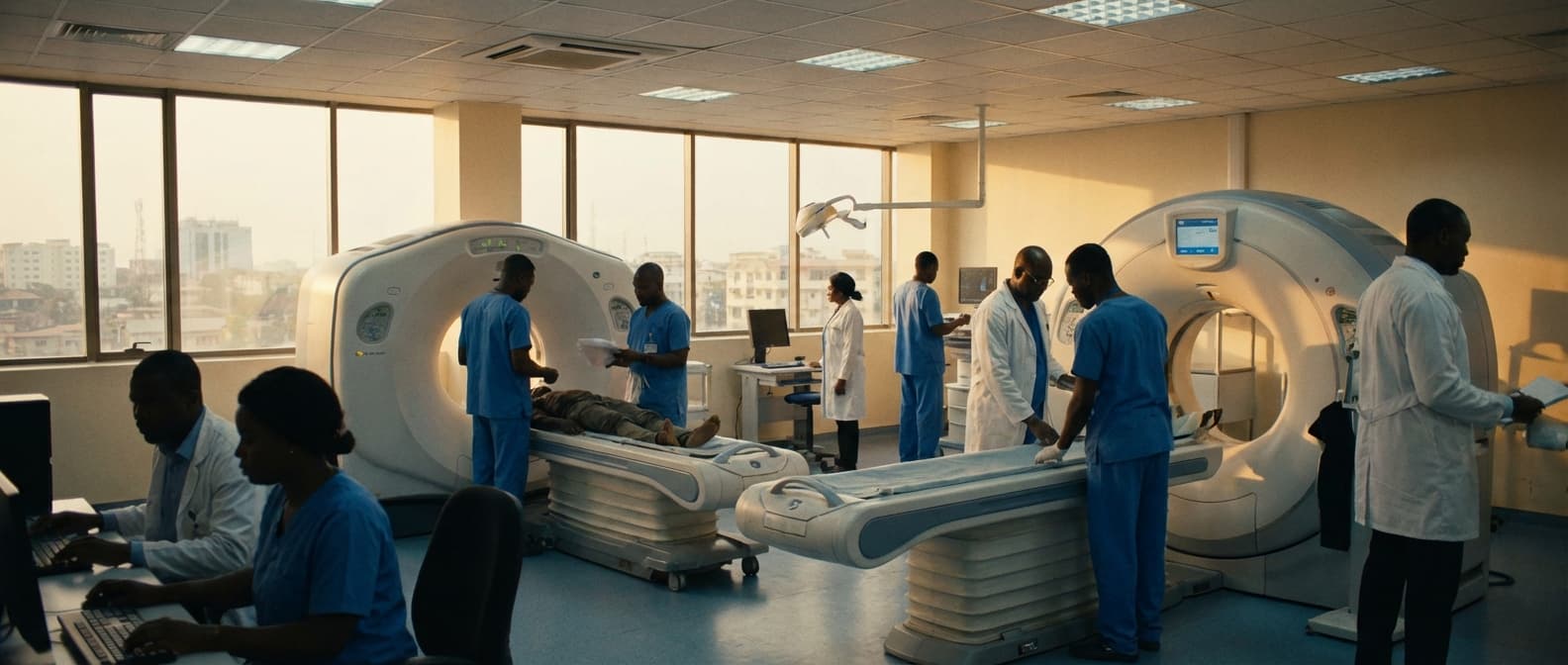
Imaging Acceptance Testing & QA in Kenya
Engineering Excellence & Technical Support
Commissioning and periodic QA for CT/MRI/X‑ray/US/Mammo. High-standard technical execution following OEM protocols and local regulatory frameworks.
Ensuring Uncompromised Image Clarity
We implement rigorous acceptance testing protocols for medical imaging equipment across Kenya, verifying diagnostic image quality against stringent international standards. This includes detailed analysis of resolution, contrast, signal-to-noise ratio, and artifact detection, guaranteeing clinicians receive accurate and reliable diagnostic information.
Streamlining QA for Diverse Imaging Modalities
Our QA services cover a wide spectrum of imaging modalities (X-ray, CT, MRI, Ultrasound, Mammography) in Kenyan healthcare facilities. We develop and execute customized testing plans, encompassing both physical and software performance verification, to ensure optimal functionality and patient safety across all imaging systems.
Data-Driven Performance & Compliance Audits
Leveraging advanced analytics and real-world data, we conduct thorough acceptance testing and QA audits for imaging departments in Kenya. This identifies performance trends, predicts potential failures, and ensures compliance with local regulations and international best practices, ultimately enhancing operational efficiency and patient care.
What Is Imaging Acceptance Testing & Qa In Kenya?
Imaging Acceptance Testing & Quality Assurance (QA) in Kenya refers to a systematic process of verifying and validating that imaging systems and workflows conform to predefined specifications, regulatory requirements, and user expectations. This service ensures that acquired medical images are of diagnostic quality, accurately represent anatomical structures, and are properly integrated into the healthcare IT infrastructure. It encompasses a range of technical evaluations and process audits aimed at identifying and rectifying defects or deviations before a system is deployed or significantly updated, thereby minimizing risks associated with misdiagnosis, data integrity issues, and operational inefficiencies within Kenyan healthcare facilities.
| Who Needs Imaging Acceptance Testing & QA? | Typical Use Cases | ||||
|---|---|---|---|---|---|
| Hospitals and Diagnostic Centers: For new imaging equipment installations, upgrades, or PACS/RIS deployments. | Procurement of new imaging equipment (e.g., CT scanners, MRI machines). | Implementation of a new PACS or Radiology Information System (RIS). | Upgrades to existing imaging software or hardware components. | Relocation or major reconfiguration of radiology departments. | Ensuring ongoing compliance and performance of existing imaging infrastructure. |
| Radiology Departments: To ensure diagnostic image quality and efficient workflow. | Radiologists and Technologists: To validate image interpretation capabilities and user interface ergonomics. | Healthcare IT Departments: To verify system integration, data integrity, and network performance. | Medical Equipment Vendors: To demonstrate system compliance and functionality to clients. | Regulatory Bodies: For oversight and compliance verification. | Healthcare Administrators: To ensure return on investment and minimize operational risks. |
Key Components of Imaging Acceptance Testing & QA:
- Image Quality Assessment: Evaluating image resolution, contrast, signal-to-noise ratio (SNR), artifacts, and geometric accuracy across various imaging modalities (e.g., X-ray, CT, MRI, Ultrasound, Mammography).
- System Functionality Verification: Testing all system components, including image acquisition hardware, processing software, display workstations, Picture Archiving and Communication Systems (PACS), and modalities' user interfaces, against functional specifications.
- Workflow Integration Testing: Assessing the seamless integration of imaging systems with existing hospital information systems (HIS), electronic health records (EHR), and reporting systems, ensuring data flow and interoperability.
- Performance Benchmarking: Measuring system throughput, image transfer speeds, processing times, and uptime to ensure it meets operational demands.
- Regulatory Compliance Checks: Verifying adherence to relevant Kenyan and international standards and regulations for medical imaging equipment and data handling (e.g., radiation safety standards, data privacy laws).
- User Acceptance Testing (UAT): Involving end-users (radiologists, technologists, IT personnel) to confirm the system meets their practical needs and is intuitive to operate.
- Documentation Review: Auditing technical manuals, installation guides, maintenance logs, and training materials for accuracy and completeness.
- Security Audits: Evaluating the security of the imaging data and systems against unauthorized access, breaches, and data loss.
Who Needs Imaging Acceptance Testing & Qa In Kenya?
In Kenya's rapidly growing healthcare sector, ensuring the accuracy, reliability, and compliance of medical imaging systems is paramount. Imaging Acceptance Testing & Quality Assurance (QA) are not luxury services but essential components for any healthcare provider that utilizes or plans to acquire medical imaging equipment. These services guarantee that the technology performs as intended, leading to better patient care, reduced risks, and efficient operations.
| Target Customer/Department | Why they need Imaging Acceptance Testing & QA | Specific Areas of Focus |
|---|---|---|
| Hospitals (Public & Private) | To ensure diagnostic accuracy, patient safety, regulatory compliance, and optimize workflow for a wide range of imaging modalities. | Radiology Departments, Cardiology Units, Oncology Centers, Emergency Departments, Surgical Suites. |
| Diagnostic Imaging Centers | To maintain high standards of image quality and service delivery, attract and retain patients, and comply with licensing requirements. | All imaging modalities offered (X-ray, CT, MRI, Ultrasound, Mammography, etc.), PACS (Picture Archiving and Communication System) integration. |
| Specialty Clinics (e.g., Cardiology, Neurology, Oncology) | To verify the performance of specific imaging equipment critical for diagnosis and treatment planning within their specialty. | Echocardiography machines, MRI scanners for neurological studies, PET/CT scanners for oncology, specialized ultrasound probes. |
| Medical Schools and Research Institutions | To ensure the reliability of imaging data for teaching and research purposes, and to validate new imaging protocols. | Research-grade imaging equipment, ensuring consistent and reproducible results, validation of imaging parameters for studies. |
| Government Health Agencies | To ensure public health facilities meet quality standards, optimize investment in medical technology, and promote equitable access to quality diagnostics. | Procurement vetting, compliance checks for public hospitals, setting national imaging quality standards. |
| Medical Equipment Vendors & Integrators | To ensure new installations meet manufacturer specifications, client expectations, and regulatory requirements, facilitating smooth handovers. | Pre-installation verification, post-installation acceptance testing, site readiness assessments, integration with existing hospital IT. |
Who Needs Imaging Acceptance Testing & QA in Kenya? Target Customers & Departments
- Hospitals (Public and Private)
- Diagnostic Imaging Centers
- Specialty Clinics (e.g., Cardiology, Neurology, Oncology)
- Medical Schools and Research Institutions
- Government Health Agencies
- Medical Equipment Vendors and Integrators
Imaging Acceptance Testing & Qa Process In Kenya
This document outlines the Imaging Acceptance Testing and Quality Assurance (QA) process in Kenya, detailing the workflow from initial inquiry to the final execution of tests. This process ensures that imaging systems and related software meet specified requirements, functionality, and quality standards before deployment or implementation within a Kenyan healthcare or research setting. The process emphasizes adherence to local regulations and best practices, aiming for efficient and effective validation.
| Stage | Description | Key Activities | Deliverables/Outcomes | Responsible Parties (Kenya Context) |
|---|---|---|---|---|
| Inquiry & Requirement Gathering | The initial phase where stakeholders express a need for new imaging systems, upgrades, or validation of existing ones. Detailed requirements are collected and documented. | Understanding client needs, defining functional and non-functional requirements, identifying relevant regulations (e.g., Pharmacy and Poisons Board, Ministry of Health guidelines), conducting stakeholder interviews. | Requirements Specification Document, Scope of Work. | Client (Hospital/Clinic/Research Institution), Vendor/Supplier, Regulatory Consultants (if applicable). |
| Test Planning & Strategy Development | Based on the gathered requirements, a comprehensive test plan is created, outlining the testing approach, scope, resources, and schedule. | Defining testing objectives, identifying test types (functional, performance, security, etc.), risk assessment, resource allocation, scheduling, defining entry and exit criteria. | Test Plan Document, Test Strategy. | QA Team Lead, Project Manager, Technical Experts. |
| Test Case Design & Development | Specific, step-by-step instructions are created to verify individual functionalities and features of the imaging system. | Designing test cases based on requirements, creating test scripts, developing test data, peer review of test cases. | Test Cases, Test Scripts, Test Data. | QA Testers, Subject Matter Experts (SMEs) in imaging modalities. |
| Environment Setup & Preparation | The testing environment, including hardware, software, and network infrastructure, is configured to mimic the production environment. | Setting up imaging hardware (e.g., CT, MRI scanners, X-ray machines), installing and configuring imaging software (PACS, RIS, VNA), network configuration, data loading, access control setup. | Configured Test Environment, Test Data Loaded. | IT Department, Vendor Technical Support, QA Team. |
| Test Execution | The designed test cases are executed systematically to identify defects and verify that the system meets its requirements. | Executing test cases, recording actual results, comparing actual results with expected results, documenting deviations. | Test Execution Logs, Pass/Fail Status for each test case. | QA Testers, End-Users (for specific functional tests). |
| Defect Reporting & Tracking | Any deviations from expected behavior (defects) are documented, reported, and tracked through their lifecycle. | Logging defects with detailed descriptions, severity, and priority; assigning defects to developers for fixing; retesting fixes. | Defect Reports, Defect Status Updates, Defect Resolution Rate. | QA Testers, Development Team, Project Manager. |
| Regression Testing | After defect fixes or changes are implemented, regression tests are performed to ensure that these changes have not introduced new issues or negatively impacted existing functionality. | Re-executing previously passed test cases, executing specific test suites covering critical functionalities. | Updated Test Execution Logs, Confirmation of no new defects. | QA Testers. |
| User Acceptance Testing (UAT) | The end-users of the system perform tests in a real-world simulation to confirm that the system meets their operational needs and is fit for purpose. | Users executing predefined UAT scenarios, providing feedback on usability and functionality, signing off on system performance. | UAT Sign-off Document, User Feedback. | End-Users (Radiologists, Technologists, Administrators), Client Project Team. |
| Final Report Generation & Sign-off | A comprehensive report summarizing all testing activities, findings, and outstanding issues is generated, leading to formal acceptance. | Compiling test results, summarizing defects and their resolution, providing overall quality assessment, obtaining formal client sign-off. | Final Test Report, Acceptance Certificate. | QA Lead, Project Manager, Client Representative. |
| Post-Implementation Monitoring | After the system is deployed, its performance and stability are monitored to ensure continued adherence to quality standards. | Monitoring system logs, user feedback collection, performance analysis, addressing any emergent issues. | Performance Metrics, Post-Implementation Feedback Reports. | IT Department, Support Team, Vendor Support. |
Key Stages in Imaging Acceptance Testing & QA Process
- Inquiry & Requirement Gathering
- Test Planning & Strategy Development
- Test Case Design & Development
- Environment Setup & Preparation
- Test Execution
- Defect Reporting & Tracking
- Regression Testing
- User Acceptance Testing (UAT)
- Final Report Generation & Sign-off
- Post-Implementation Monitoring
Imaging Acceptance Testing & Qa Cost In Kenya
Imaging Acceptance Testing & Quality Assurance (QA) are crucial steps in the lifecycle of any imaging device or software deployed in healthcare or industrial settings in Kenya. These processes ensure that the technology functions as intended, meets regulatory standards, and delivers accurate, reliable results before full operational use. The cost associated with these services can vary significantly based on several factors. Understanding these factors helps in budgeting and selecting appropriate service providers.
| Service Component | Estimated Price Range (KES) | Notes |
|---|---|---|
| Basic Functional Testing (per device/module) | 15,000 - 40,000 | Covers core operational checks and basic performance validation. Suitable for simpler devices or initial checks. |
| Comprehensive Acceptance Testing (per device/module) | 40,000 - 150,000 | Includes detailed functional, performance, and some integration testing. May involve basic UAT support. |
| System Integration Testing (PACS/RIS/HIS) | 100,000 - 500,000+ | Highly variable based on the complexity of integration and the number of systems involved. Essential for workflow efficiency. |
| User Acceptance Testing (UAT) Facilitation | 20,000 - 75,000 (per day) | Cost for experienced testers to guide and document UAT sessions with end-users. Can be per day or per project. |
| Performance and Load Testing | 50,000 - 200,000 | Assessing system responsiveness under various load conditions. Crucial for high-throughput environments. |
| Security Testing (for software/networked systems) | 75,000 - 300,000+ | Ensuring data privacy and system security against potential threats. More specialized than general testing. |
| Regulatory Compliance Verification | Negotiable/Project-Based | Specific to the standards being met. Often involves specialized consultants and extensive documentation. |
| Travel & Accommodation (if applicable) | Actuals + Markup | Charged based on location and duration of on-site work. |
| Project Management & Reporting | 10% - 25% of total testing cost | Covers coordination, planning, and detailed report generation. |
Key Pricing Factors for Imaging Acceptance Testing & QA in Kenya:
- Complexity of the Imaging System: More intricate systems (e.g., advanced MRI, CT scanners, complex PACS/RIS integration) require more in-depth testing and expertise, thus increasing costs.
- Scope of Testing: The breadth and depth of the testing required are primary cost drivers. This includes functional testing, performance testing, security testing, integration testing, and user acceptance testing (UAT).
- Number and Type of Devices/Software Modules: Testing a single X-ray machine will differ in cost from testing a comprehensive radiology department's imaging suite and its associated software.
- Location of Testing: On-site testing at remote or less accessible locations in Kenya might incur additional travel and accommodation expenses for the QA team.
- Duration of Testing: Longer testing periods, especially for large-scale deployments or systems with many potential issues, will naturally increase the overall cost.
- Vendor Expertise and Reputation: Highly specialized and experienced QA firms or individual consultants often command higher rates due to their proven track record and in-depth knowledge.
- Regulatory Compliance Requirements: If the testing needs to adhere to specific Kenyan or international medical device regulations (e.g., CDSCO, FDA equivalent if applicable), it can add to the complexity and cost.
- Reporting and Documentation Requirements: Detailed reports, documentation, and evidence of compliance often add to the time and effort required, influencing pricing.
- Integration with Existing Systems: Testing the interoperability of the new imaging system with existing hospital information systems (HIS), PACS, or RIS can be a complex and time-consuming process.
Affordable Imaging Acceptance Testing & Qa Options
Acceptance Testing (AT) and Quality Assurance (QA) for imaging systems are crucial to ensure they meet regulatory requirements, operational needs, and deliver accurate diagnostic results. However, these processes can be costly and time-consuming, especially for smaller practices or organizations with budget constraints. This document outlines affordable AT/QA options, focusing on value bundles and cost-saving strategies.
| Strategy | Description | Cost-Saving Benefit | Considerations |
|---|---|---|---|
| Value Bundles | Combining multiple AT/QA services into a package deal at a reduced price compared to individual service procurement. | Lower overall cost per service, predictable budgeting. | Requires careful evaluation of bundled services to ensure they meet specific needs. May include pre-defined test suites, reporting, and basic troubleshooting. |
| Phased Testing Approach | Breaking down AT/QA into smaller, manageable phases (e.g., basic functionality, advanced features, integration testing) and conducting them sequentially. | Spreads costs over time, allows for iterative improvements and validation, reduces initial investment. | Requires clear definition of each phase's scope and deliverables. May increase overall project duration. |
| Leveraging Vendor-Provided Tools | Utilizing testing and diagnostic tools often included with imaging equipment or PACS/RIS software. | Reduces or eliminates the need for third-party software licenses and training. | Vendor tools may have limitations in scope or customization. Requires internal expertise to utilize effectively. |
| Internal QA Champions | Training and empowering key internal staff (e.g., IT, lead technologists) to perform routine QA checks and basic AT. | Reduces reliance on external consultants for routine tasks, builds in-house expertise. | Requires investment in training and ongoing support. May not be suitable for complex or highly specialized testing. |
| Standardized Test Protocols | Developing and using pre-defined, repeatable test scripts and checklists for common AT/QA scenarios. | Increases efficiency, ensures consistency, reduces time spent on test design. | Protocols need regular review and updates to remain relevant. |
| Remote AT/QA Services | Engaging providers who can conduct testing and analysis remotely, minimizing travel costs and site visits. | Significant reduction in travel and accommodation expenses. | Requires reliable network connectivity and secure remote access protocols. |
| Risk-Based Testing Prioritization | Focusing testing efforts on the most critical functionalities and potential failure points that could impact patient care or operations. | Optimizes resource allocation by concentrating on high-impact areas, reducing overall testing time and cost. | Requires thorough risk assessment and understanding of system vulnerabilities. |
| Partnerships with Smaller QA Firms | Collaborating with specialized, smaller QA consulting firms that may offer more competitive pricing than larger, established players. | Potentially lower hourly rates or project fees. | Requires due diligence to assess the firm's expertise, track record, and reliability. |
| Post-Implementation Review & Optimization | Conducting a thorough review of AT/QA processes after implementation to identify inefficiencies and areas for future cost reduction. | Continuous improvement leading to long-term savings. | Requires dedicated time for analysis and implementation of changes. |
Why Affordable AT/QA is Important
- Ensuring patient safety and diagnostic accuracy.
- Meeting regulatory compliance (e.g., FDA, HIPAA).
- Minimizing downtime and operational disruptions.
- Optimizing system performance and lifespan.
- Reducing the risk of costly errors or rework.
- Improving user confidence and adoption.
Verified Providers In Kenya
In Kenya's evolving healthcare landscape, identifying reliable and reputable healthcare providers is paramount. Franance Health stands out as a leading organization committed to delivering high-quality medical services, earning the trust of patients through rigorous credentialing and an unwavering dedication to patient well-being. This document outlines why Franance Health's verified providers represent the best choice for your healthcare needs in Kenya.
| Provider Type | Franance Health Verification Criteria | Benefits for Patients |
|---|---|---|
| Hospitals & Clinics | Accreditation by relevant national and international bodies (e.g., Ministry of Health, Joint Commission International - if applicable), adherence to infection control standards, availability of essential medical equipment, qualified medical staff, robust emergency response protocols. | Access to comprehensive medical services, safe and hygienic environments, timely emergency care, assurance of competent medical professionals and advanced technology. |
| Specialist Doctors | Valid medical license from the Kenya Medical Practitioners and Dentists Council (KMPDC), recognized postgraduate qualifications (e.g., Masters, Fellowship), board certification in their specialty, verifiable professional experience, clean disciplinary record. | Consultation with highly trained and experienced specialists, accurate diagnosis and effective treatment plans tailored to specific conditions, access to advanced medical knowledge. |
| General Practitioners | Valid medical license from the KMPDC, recognized undergraduate medical degree, evidence of continuous professional development, good standing with professional bodies. | Reliable primary healthcare services, early detection and management of common illnesses, referrals to specialists when necessary, personalized health advice and preventative care. |
| Diagnostic Laboratories | Accreditation by the National Health Laboratory Accreditation Programme (NHLAP) or equivalent, use of validated testing methodologies, adherence to quality control procedures, qualified laboratory technologists. | Accurate and reliable diagnostic test results, timely reporting of findings, support for effective medical decision-making. |
| Pharmacies | License from the Pharmacy and Poisons Board (PPB), stocking of genuine and quality-assured medications, presence of registered pharmacists, adherence to safe storage and dispensing practices. | Access to safe and effective prescription and over-the-counter medications, professional advice on medication use, prevention of counterfeit drugs. |
Franance Health's Commitment to Verified Providers
- Rigorous Credentialing Process: Franance Health employs a multi-layered credentialing process for all affiliated healthcare professionals and facilities. This involves verifying medical licenses, educational qualifications, board certifications, and professional experience.
- Quality Assurance and Continuous Improvement: Beyond initial verification, Franance Health actively monitors the performance of its providers through patient feedback, clinical outcome reviews, and adherence to established best practices. This ensures a commitment to continuous quality improvement.
- Ethical Standards and Patient Advocacy: All Franance Health providers are bound by a strict code of ethics, prioritizing patient safety, confidentiality, and informed consent. The organization actively advocates for patient rights and accessible healthcare.
- Network of Excellence: Franance Health has cultivated a network of hospitals, clinics, and individual practitioners renowned for their expertise, state-of-the-art facilities, and compassionate care.
- Transparency and Accessibility: Franance Health champions transparency in healthcare. Patients can easily access information about their verified providers, including their qualifications and areas of specialization.
Scope Of Work For Imaging Acceptance Testing & Qa
This document outlines the Scope of Work (SOW) for Imaging Acceptance Testing and Quality Assurance (QA). It details the technical deliverables and standard specifications required to ensure the successful deployment and operational readiness of the imaging system. The testing will encompass functional, performance, security, and usability aspects.
| Phase | Activity | Deliverable | Standard Specification Reference |
|---|---|---|---|
| Test Plan Development | Approved Test Plan | Internal QA Standards, Project Requirements Document |
| Test Case Design | Comprehensive Test Cases | Test Plan, System Requirements Specification |
| Environment Setup & Verification | Configured & Verified Test Environment | Environment Specification Document |
| Core Imaging Functionality Testing (e.g., acquisition, display, manipulation) | Functional Test Results Report | Functional Requirements Specification (FRS), DICOM Standards |
| Integration Testing with other systems (e.g., RIS, PACS) | Integration Test Results Report | Interoperability Standards, HL7 Standards, DICOM Conformance Statements |
| User Interface (UI) & User Experience (UX) Testing | UI/UX Feedback Report | Usability Guidelines, User Interface Design Specifications |
| Load Testing (concurrent users, data volume) | Performance Test Results Report | System Performance Requirements, Load Benchmarks |
| Stress Testing (breaking point identification) | Stress Test Results Report | System Stability Requirements |
| Response Time Testing | Response Time Metrics Report | Performance SLA (Service Level Agreement) |
| Access Control & Authentication Testing | Security Test Report (Access Control) | Security Policies, HIPAA/GDPR Compliance Standards |
| Data Encryption & Integrity Testing | Security Test Report (Data) | Data Encryption Standards, Secure Data Handling Protocols |
| Vulnerability Assessment | Vulnerability Report | Industry Standard Vulnerability Databases (e.g., OWASP) |
| Error Handling & Recovery Testing | Error Handling Test Report | System Error Handling Specifications |
| Long-Duration & Soak Testing | Stability Test Results Report | System Uptime Requirements |
| Defect Tracking & Management | Defect Log | Defect Tracking System Requirements |
| Test Summary Report | Final Acceptance Testing Report | Project Management Plan, QA Best Practices |
Key Objectives
- Validate that the imaging system meets all specified functional requirements.
- Verify system performance under expected and peak load conditions.
- Ensure the system adheres to all defined security protocols and data privacy regulations.
- Confirm user-friendliness and efficient workflow for end-users.
- Identify and document any defects or deviations from specifications.
- Provide a comprehensive report on testing outcomes and recommendations.
Service Level Agreement For Imaging Acceptance Testing & Qa
This Service Level Agreement (SLA) outlines the response times and uptime guarantees for Imaging Acceptance Testing & Quality Assurance (QA) services. This SLA is effective as of [Start Date] and is in effect until [End Date].
| Service Component | Response Time Guarantee | Uptime Guarantee |
|---|---|---|
| Critical Issues (e.g., System Unavailability, Major Data Loss) | Within 1 hour of notification | 99.9% Uptime |
| High Priority Issues (e.g., Significant Performance Degradation affecting multiple users, Intermittent critical functionality failure) | Within 4 business hours of notification | 99.5% Uptime |
| Medium Priority Issues (e.g., Minor functional defects, Non-critical performance impact) | Within 1 business day of notification | 99.0% Uptime |
| Low Priority Issues (e.g., Cosmetic defects, Feature requests, Documentation errors) | Within 3 business days of notification | N/A (Scheduled for next release cycle) |
Scope of Services
- Imaging Acceptance Testing: This includes the validation of new imaging hardware and software installations to ensure they meet specified functional and performance requirements before being deployed into production environments.
- Imaging Quality Assurance (QA): This encompasses ongoing testing and monitoring of existing imaging systems to identify and address defects, performance degradation, and ensure consistent quality of image capture, processing, and storage.
Frequently Asked Questions

Ready when you are
Let's scope your Imaging Acceptance Testing & QA in Kenya project in Kenya.

Scaling healthcare logistics and technical systems across the entire continent.