
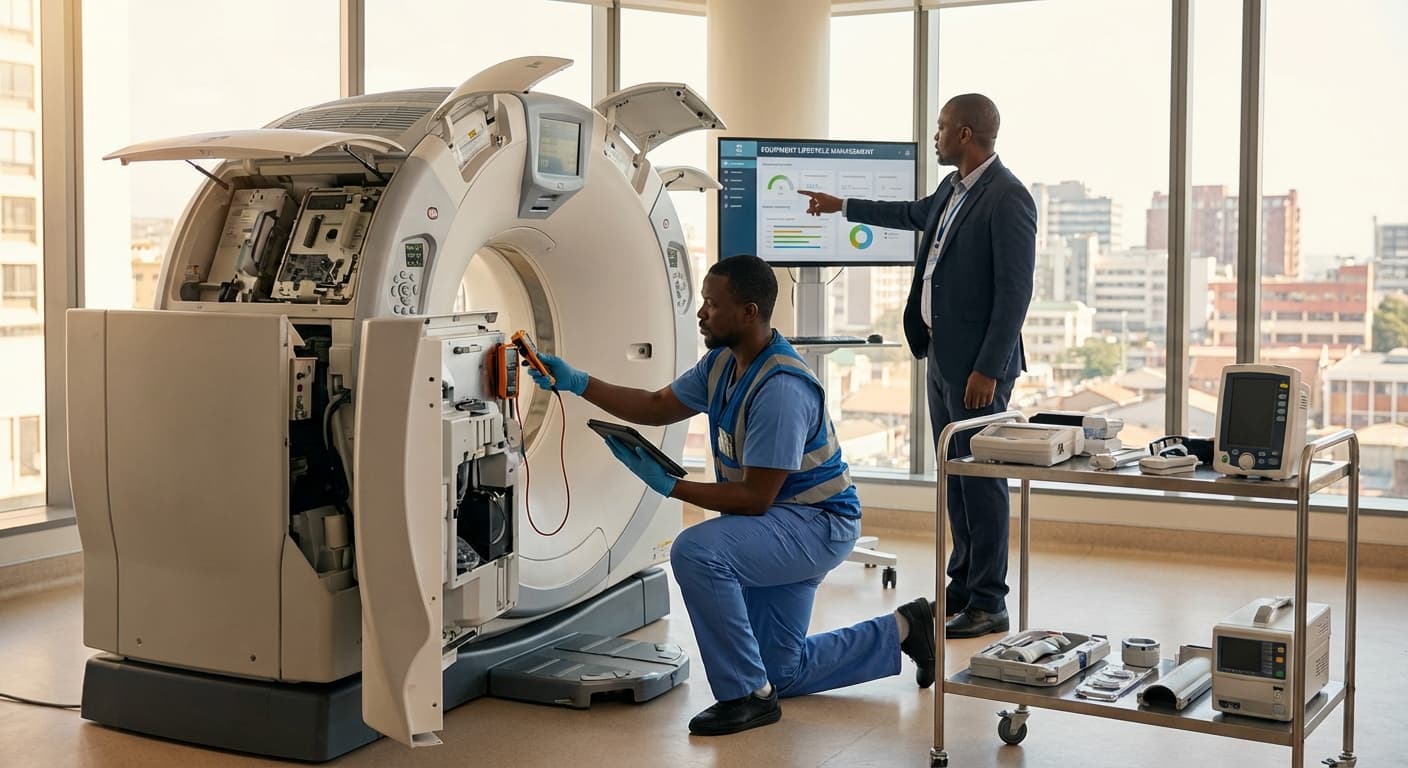
Equipment Replacement Planning & Obsolescence Strategy Service in Kenya
Engineering Excellence & Technical Support
Equipment Replacement Planning & Obsolescence Strategy Service High-standard technical execution following OEM protocols and local regulatory frameworks.
Predictive Analytics for Lifecycle Management
Leverage advanced AI and IoT data to forecast equipment lifespan, identify critical failure points, and optimize replacement schedules, minimizing downtime and maximizing ROI for Kenyan businesses.
Proactive Obsolescence Mitigation & Sourcing
Our service actively monitors component lifecycles and emerging technologies, developing strategic sourcing plans and alternative solutions to preemptively address obsolescence risks for your Kenyan operations.
Cost-Optimized Replacement & Upgrade Roadmaps
Develop tailored, cost-effective equipment replacement and upgrade strategies that align with your business objectives and budget, ensuring optimal asset utilization and long-term financial predictability in the Kenyan market.
What Is Equipment Replacement Planning & Obsolescence Strategy Service In Kenya?
Equipment Replacement Planning & Obsolescence Strategy Service in Kenya refers to a structured approach to managing the lifecycle of industrial and operational assets. It encompasses a systematic evaluation of existing equipment to determine optimal replacement timelines, considering factors such as age, condition, performance degradation, operating costs, technological advancements, and the strategic business objectives of the organization. The 'Obsolescence Strategy' component specifically addresses the proactive identification and mitigation of risks associated with equipment becoming outdated, unsupported, or incapable of meeting current or future operational demands. This service aims to ensure that organizations in Kenya maintain a competitive edge, optimize operational efficiency, minimize downtime, control capital expenditure, and comply with evolving industry standards and regulations through informed and strategic asset management decisions.
| Who Needs This Service? | Typical Use Cases |
|---|---|
| Manufacturing Companies (e.g., food processing, textiles, automotive components, pharmaceuticals) | Proactively identifying and replacing aging machinery in production lines to prevent unexpected breakdowns and maintain product quality. |
| Energy & Utilities (e.g., power generation, water treatment) | Strategizing the replacement of critical infrastructure components like turbines, transformers, or pumps to ensure continuous service delivery and grid stability. |
| Mining and Extractives Sector | Managing the lifecycle of heavy-duty machinery (e.g., excavators, haul trucks, crushers) to optimize extraction efficiency and minimize downtime in remote locations. |
| Logistics and Transportation Companies | Planning the replacement cycle for fleets of vehicles, warehouse automation systems, and material handling equipment to ensure operational reliability and fuel efficiency. |
| Large-Scale Agricultural Operations | Replacing outdated or inefficient farming machinery, irrigation systems, and processing equipment to improve yields and reduce operational costs. |
| Industrial Service Providers (e.g., maintenance, repair organizations) | Advising clients on equipment upgrade and replacement schedules to enhance their service offerings and asset performance. |
| Public Sector and Infrastructure Management (e.g., municipal services, road construction) | Developing long-term plans for the replacement of public works equipment and infrastructure to ensure service continuity and safety. |
Key Components of the Service
- Asset Condition Assessment: Detailed physical and performance evaluation of current equipment.
- Performance Analysis: Measurement of efficiency, reliability, and output against benchmarks.
- Total Cost of Ownership (TCO) Modeling: Calculation of all costs associated with equipment operation, maintenance, and potential future replacement.
- Technological Benchmarking: Assessment of available and emerging technologies and their potential impact on operational efficiency and competitive advantage.
- Risk Assessment (Obsolescence): Identification of equipment at risk of becoming obsolete due to technological, regulatory, or supply chain factors.
- Replacement Strategy Development: Formulation of plans for phased or immediate equipment replacement.
- Financial Planning & Budgeting: Development of capital expenditure forecasts and funding strategies for replacements.
- Vendor and Supplier Analysis: Evaluation of current and potential suppliers for new equipment and support services.
- Implementation Roadmap: Creation of a detailed plan for the procurement, installation, and commissioning of new assets.
- Decommissioning and Disposal Strategy: Planning for the safe and compliant removal of retired equipment.
Who Needs Equipment Replacement Planning & Obsolescence Strategy Service In Kenya?
Organizations in Kenya that rely on a stable and efficient operational infrastructure are prime candidates for equipment replacement planning and obsolescence strategy services. This is particularly true for sectors where equipment failure or outdated technology can lead to significant financial losses, safety hazards, or a loss of competitive edge. Proactive planning ensures business continuity, optimizes capital expenditure, and mitigates the risks associated with aging or unsupported equipment.
| Customer Type | Key Departments Involved | Primary Needs Addressed |
|---|---|---|
| Manufacturing Companies | Operations, Maintenance, Engineering, Procurement, Finance | Minimizing production downtime, optimizing machinery lifecycle, managing spare parts inventory, ensuring compliance with safety standards, budget forecasting for CAPEX. |
| Telecommunications Providers | Network Operations, Engineering, IT, Procurement, Finance | Ensuring network reliability and performance, managing end-of-life network equipment, planning for technology upgrades (e.g., 5G rollout), reducing operational costs, mitigating security risks from outdated systems. |
| Energy and Utilities | Operations, Maintenance, Engineering, Asset Management, Finance, Safety | Ensuring continuous power/water supply, managing aging infrastructure (turbines, transformers, pipes), planning for major capital investments in replacements or upgrades, compliance with environmental regulations, risk management for critical assets. |
| Healthcare Facilities | Biomedical Engineering, IT, Facilities Management, Procurement, Finance | Ensuring availability of critical medical equipment, managing lifecycle of diagnostic and treatment machines, compliance with medical device regulations, optimizing patient care delivery, budgeting for technology upgrades. |
| Transportation and Logistics | Fleet Management, Maintenance, Operations, Procurement, Safety | Maintaining operational readiness of vehicles/aircraft/vessels, managing wear and tear, planning for fleet upgrades, ensuring safety compliance, optimizing fuel efficiency, minimizing maintenance costs. |
| Mining and Resource Extraction | Maintenance, Engineering, Operations, Health & Safety, Procurement | Ensuring uptime of heavy machinery and processing equipment, managing wear and tear in harsh environments, planning for replacement of high-value assets, minimizing downtime impacting extraction targets, safety of personnel. |
| Government Agencies | Procurement, Asset Management, IT, Defense/Infrastructure Departments, Finance | Managing long-term asset lifecycles for public services, ensuring national security through reliable infrastructure, efficient use of taxpayer funds, planning for technology modernization, complying with procurement regulations. |
| Financial Institutions | IT Operations, Infrastructure Management, Cybersecurity, Procurement, Finance | Ensuring data center reliability and security, managing aging server and network hardware, planning for technology refreshes to support new financial services, mitigating cybersecurity risks from outdated systems, business continuity. |
| Commercial Properties | Facilities Management, Building Operations, Procurement, Finance | Maintaining HVAC systems, elevators, security systems, and other building infrastructure, ensuring occupant comfort and safety, planning for energy-efficient upgrades, managing long-term maintenance budgets. |
Target Customers & Departments in Kenya
- Manufacturing Companies
- Telecommunications Providers
- Energy and Utilities (Power Generation, Water Supply)
- Healthcare Facilities (Hospitals, Clinics)
- Transportation and Logistics (Airlines, Railways, Ports)
- Mining and Resource Extraction
- Government Agencies (Defense, Public Infrastructure)
- Financial Institutions (Data Centers, IT Infrastructure)
- Large Commercial Properties and Real Estate Developers
Equipment Replacement Planning & Obsolescence Strategy Service Process In Kenya
This document outlines the workflow for the Equipment Replacement Planning & Obsolescence Strategy Service Process in Kenya, from the initial client inquiry through to the final execution and ongoing support. This service aims to help organizations in Kenya proactively manage their equipment lifecycle, mitigate risks associated with obsolescence, and optimize capital expenditure for replacements. The process is designed to be collaborative, data-driven, and tailored to the specific needs of each client.
| Stage | Key Activities | Deliverables | Typical Timeline |
|---|---|---|---|
| Initial contact, understanding client needs, preliminary scope discussion. | Understanding of client requirements, decision to proceed with proposal. | 1-3 business days |
| Detailed requirements gathering, asset portfolio review, proposal development. | Formal proposal outlining scope, methodology, timeline, and fees. | 3-7 business days |
| Site visits, data extraction from client systems, asset verification. | Cleaned and validated asset inventory data. | 1-4 weeks (depending on portfolio size) |
| Applying obsolescence models, risk impact assessment. | Obsolescence scores per asset, identified risks and their potential impact. | 1-2 weeks |
| Prioritization, defining replacement criteria, scenario planning. | Prioritized replacement schedule, obsolescence management strategy. | 1-2 weeks |
| Cost estimation, ROI analysis, budget forecasting. | Projected replacement budgets, financial impact assessments. | 1 week |
| Consolidating findings, developing actionable recommendations. | Comprehensive report with strategic recommendations and financial projections. | 1 week |
| Vendor selection, procurement assistance, project management. | Successful deployment of new equipment, decommissioning of old. | Variable (dependent on replacement complexity and scale) |
| Periodic updates, performance tracking, strategy adjustments. | Revised replacement plans, updated obsolescence strategies. | Quarterly/Annually (as agreed) |
Service Workflow Stages
- {"title":"1. Inquiry & Initial Consultation","description":"The process begins when a potential client in Kenya expresses interest in the Equipment Replacement Planning & Obsolescence Strategy service. This typically involves an initial call or meeting to understand the client's business, their current equipment portfolio, and their perceived challenges or objectives related to asset management and lifecycle planning. Key information gathered includes the scope of equipment to be considered, industry, operational context, and budget considerations."}
- {"title":"2. Needs Assessment & Scoping","description":"Following the initial consultation, a detailed needs assessment is conducted. This stage involves a deeper dive into the client's existing inventory, maintenance records, operational criticality of each asset, and any existing obsolescence concerns. The scope of the service is clearly defined, including the types of equipment, the level of detail in the analysis, and the desired outcomes (e.g., replacement schedule, cost projections, risk mitigation strategies). A formal proposal outlining the scope, methodology, timeline, and fees is then presented."}
- {"title":"3. Data Collection & Asset Inventory Audit","description":"Once the proposal is accepted, the data collection phase commences. This involves gathering comprehensive information about the client's equipment. This may include: conducting physical site visits and asset audits, reviewing existing asset registers and maintenance logs, obtaining manufacturer specifications and warranty information, and understanding usage patterns and operational environments. Data validation and cleansing are crucial at this stage."}
- {"title":"4. Obsolescence Assessment & Risk Analysis","description":"Utilizing the collected data, a thorough obsolescence assessment is performed. This involves evaluating factors such as: age of equipment, availability of spare parts, manufacturer support lifecycle, technological advancements, regulatory compliance, and performance degradation. A risk analysis is then conducted to identify the potential impacts of obsolescence on the client's operations, including downtime, increased maintenance costs, safety hazards, and loss of competitive advantage. This often involves developing an obsolescence score for each asset."}
- {"title":"5. Replacement Planning & Strategy Development","description":"Based on the obsolescence assessment and risk analysis, a strategic replacement plan is developed. This involves: prioritizing equipment for replacement based on criticality and obsolescence risk, defining replacement criteria (e.g., end-of-life, performance thresholds), forecasting replacement costs (including capital expenditure, installation, and training), and exploring different replacement scenarios (e.g., phased replacement, technology upgrades). This stage also includes developing an overall obsolescence management strategy."}
- {"title":"6. Financial Modeling & Budgeting","description":"A key output of the service is the financial modeling of replacement plans. This includes developing projected budgets for equipment replacement over a defined period, considering capital expenditure, operational expenditure implications, and potential return on investment (ROI) for strategic upgrades. Various financial scenarios and funding options may be explored to align with the client's financial capabilities."}
- {"title":"7. Reporting & Recommendations","description":"A comprehensive report is prepared, summarizing the findings of the assessment, the developed replacement plan, the obsolescence strategy, and detailed financial projections. This report includes actionable recommendations for the client, outlining the proposed timeline for replacements, identified risks and mitigation strategies, and suggested investment priorities. The report is presented to the client's key stakeholders."}
- {"title":"8. Implementation Support & Execution Oversight","description":"Upon acceptance of the recommendations, the service can extend to supporting the implementation of the replacement plan. This may involve assisting with vendor selection, procurement processes, project management for installations, and decommissioning of old equipment. Oversight ensures that the execution aligns with the developed strategy and timelines."}
- {"title":"9. Ongoing Monitoring & Strategy Review","description":"Equipment replacement planning and obsolescence management are ongoing processes. The service can include provisions for periodic reviews and updates to the strategy, especially as new technologies emerge, operational needs change, or market conditions fluctuate. This ensures the client's equipment portfolio remains optimized and resilient to future obsolescence risks."}
Equipment Replacement Planning & Obsolescence Strategy Service Cost In Kenya
Planning for equipment replacement and developing an obsolescence strategy is crucial for businesses in Kenya to maintain operational efficiency, avoid costly downtime, and manage technological advancements. The cost of such a service can vary significantly based on several factors. Understanding these factors is key to budgeting and selecting the right service provider. This service typically involves a detailed assessment of existing equipment, forecasting future needs, identifying end-of-life cycles, and recommending replacement strategies, including sourcing and financing options. The specific scope of work, the complexity of the client's operations, the size of the organization, and the experience of the consulting firm all play a role in determining the final cost.
| Service Component / Engagement Type | Estimated Cost Range (KES - Kenyan Shillings) | Description of Range |
|---|---|---|
| Initial Consultation & Scoping (1-2 days) | KES 50,000 - KES 150,000 | For understanding needs, preliminary assessment, and proposal development. |
| Basic Equipment Inventory & Condition Assessment (Small-Medium Business) | KES 200,000 - KES 600,000 | Covers a limited number of asset types and a straightforward operational environment. |
| Comprehensive Equipment Replacement Planning & Obsolescence Strategy (Medium-Large Enterprise) | KES 750,000 - KES 3,000,000+ | Involves a detailed analysis of a significant asset base, complex systems, and advanced predictive modeling. The upper end reflects highly complex, multi-site operations or critical infrastructure. |
| Specialized Obsolescence Risk Analysis (e.g., IT Infrastructure, Specialized Machinery) | KES 300,000 - KES 1,500,000 | Focuses on specific technology or machinery with unique obsolescence drivers, requiring specialized expertise. |
| Strategy Implementation Support (Ongoing) | Typically charged on a monthly retainer or project basis, ranging from KES 100,000 - KES 500,000+ per month | Includes project management, vendor liaison, and oversight of replacement activities. |
| Hourly Rate for Ad-hoc Consulting | KES 7,500 - KES 25,000 per hour | For specific advice, short-term tasks, or follow-up questions. Varies based on consultant seniority. |
Key Pricing Factors for Equipment Replacement Planning & Obsolescence Strategy Services in Kenya
- Scope and Complexity of Assessment: A thorough assessment of a large, diverse, and complex asset portfolio will naturally incur higher costs than a simpler, smaller-scale evaluation. This includes the number of equipment types, the criticality of each asset, and the interconnectedness of systems.
- Data Availability and Quality: The ease of accessing accurate and comprehensive data on equipment history, maintenance records, performance metrics, and original purchase details impacts the time and effort required for the analysis. Poor data quality necessitates more investigative work.
- Depth of Obsolescence Analysis: The level of detail in identifying obsolescence risks (e.g., technological, functional, economic, regulatory) and the thoroughness of the predictive modeling for future obsolescence will influence costs. This can range from basic identification to sophisticated lifecycle management.
- Development of Replacement Strategies: The extent of strategy development, including market research for new equipment, vendor evaluation, cost-benefit analyses, risk assessments for new technology adoption, and the creation of detailed implementation roadmaps, contributes to the overall price.
- Implementation Support and Project Management: Services that extend beyond planning to include support during the procurement, installation, and decommissioning phases, or ongoing project management of the replacement program, will command higher fees.
- Consultant Experience and Reputation: Highly experienced consultants and reputable firms with a proven track record in asset management and strategic planning often charge premium rates.
- Duration of Engagement: Longer-term engagements, especially those involving ongoing monitoring and strategic adjustments, will naturally be more expensive than one-off planning projects.
- Geographic Location and Travel: While the service is based in Kenya, if consultants need to travel to multiple client sites across the country, travel and accommodation expenses can be factored in.
- Customization vs. Standardized Approach: Highly customized solutions tailored to unique business needs will typically be more expensive than using standardized methodologies and templates.
- Reporting and Deliverables: The format, detail, and frequency of reports and other deliverables (e.g., interactive dashboards, detailed presentations) can impact the cost.
Affordable Equipment Replacement Planning & Obsolescence Strategy Service Options
Our Affordable Equipment Replacement Planning & Obsolescence Strategy Service is designed to help organizations proactively manage their asset lifecycle, mitigate the risks associated with outdated or failing equipment, and optimize capital expenditure. We offer flexible value bundles and cost-saving strategies to ensure you receive maximum benefit within your budget.
| Cost-Saving Strategy | Description | Benefit | Applicable Bundle |
|---|---|---|---|
| Phased Replacement | Instead of replacing all equipment at once, we help you develop a schedule that spreads capital expenditure over time, aligning with actual needs and budget availability. | Reduces immediate financial burden, smooths cash flow, and allows for gradual technology adoption. | All Bundles |
| Predictive Maintenance Integration | Leveraging maintenance data to predict failures and schedule replacements proactively, avoiding costly emergency repairs and premature obsolescence. | Minimizes downtime, reduces emergency spend, and extends the useful life of existing assets where feasible. | Strategic Optimization, Comprehensive Lifecycle Management |
| Total Cost of Ownership (TCO) Analysis | Evaluating the full cost of equipment over its lifecycle (purchase, operation, maintenance, disposal) to identify the most cost-effective options. | Ensures investments in new equipment provide long-term value and avoids hidden costs. | Strategic Optimization, Comprehensive Lifecycle Management |
| Group Purchasing & Standardization | Identifying opportunities to standardize equipment and leverage bulk purchasing power for new acquisitions. | Achieves economies of scale, reduces procurement complexity, and lowers unit costs. | Strategic Optimization, Comprehensive Lifecycle Management |
| Extended Warranty & Service Contracts | Strategically negotiating and utilizing warranties and service contracts to protect against unexpected repair costs for critical equipment. | Provides budget certainty for maintenance and repair expenses on key assets. | Strategic Optimization, Comprehensive Lifecycle Management |
| Component-Level Obsolescence Management | Focusing on the obsolescence of critical components rather than entire systems where feasible, allowing for targeted upgrades and repairs. | Potentially delays full equipment replacement, saving significant capital. | Comprehensive Lifecycle Management |
| Technology Refresh vs. Replacement | Differentiating between opportunities for technology upgrades to extend the life of existing equipment versus complete replacement. | Offers more cost-effective solutions for improving performance and functionality without full capital outlay. | Comprehensive Lifecycle Management |
Value Bundles
- {"title":"Essential Planning","features":["Inventory Assessment","Critical Asset Identification","Basic Replacement Timeline Generation","Risk Assessment (Minor)","Initial Budgetary Estimates"],"description":"Covers core analysis of your current equipment inventory, identification of critical assets, and basic replacement forecasting. Ideal for organizations starting their asset management journey or with smaller, less complex inventories.","priceIndicator":"Low"}
- {"title":"Strategic Optimization","features":["All Essential Planning Features","Maintenance History Integration","Total Cost of Ownership (TCO) Analysis","Phased Replacement Strategy Development","Obsolescence Risk Mitigation Planning","Medium-Term Budget Projections"],"description":"Expands on Essential Planning with deeper analysis, including maintenance history integration, total cost of ownership (TCO) calculations, and development of phased replacement strategies. Suitable for organizations seeking to optimize their replacement schedules and budget allocation.","priceIndicator":"Medium"}
- {"title":"Comprehensive Lifecycle Management","features":["All Strategic Optimization Features","Advanced Predictive Analytics","Scenario Planning (e.g., technology shifts, budget constraints)","ERP/CMMS System Integration Support","Long-Term Obsolescence Forecasting (5-10+ years)","Vendor Sourcing & Negotiation Support","Contingency Planning","Detailed Capital Expenditure Roadmaps"],"description":"A holistic approach that includes advanced analytics, scenario planning, integration with ERP/CMMS systems, and proactive obsolescence forecasting with vendor sourcing recommendations. Best for organizations requiring robust, long-term asset management and risk mitigation.","priceIndicator":"High"}
Verified Providers In Kenya
In Kenya's dynamic healthcare landscape, identifying reliable and accredited medical providers is paramount for ensuring quality care. Franance Health has established itself as a trusted name, meticulously vetting and onboarding a network of healthcare professionals and institutions that meet stringent credentialing standards. This commitment to verification sets them apart, offering patients peace of mind and access to superior medical services. When seeking healthcare in Kenya, understanding what makes a provider 'verified' and why Franance Health's credentials signify excellence is crucial.
| Credential Type | Franance Health Verification Process | Patient Benefit |
|---|---|---|
| Medical Licenses & Registrations | Thorough checks with relevant Kenyan regulatory bodies (e.g., Kenya Medical Practitioners and Dentists Council - KMPDC). | Ensures providers are legally qualified and authorized to practice. |
| Academic & Professional Qualifications | Verification of degrees, diplomas, and specialized training from recognized institutions. | Guarantees practitioners possess the necessary theoretical knowledge and practical skills. |
| Specialty Certifications | Confirmation of board certifications and recognized specialist accreditations. | Identifies experts in specific medical fields for targeted care. |
| Work Experience & References | Scrutiny of previous employment history and professional references. | Confirms practical experience and positive professional track record. |
| Background Checks & Ethics | Screening for any disciplinary actions or ethical concerns. | Ensures providers adhere to high ethical standards and patient trust. |
| Facility Accreditation (for clinics/hospitals) | Verification of compliance with national health facility regulations and quality standards. | Assures a safe, well-equipped, and professionally managed healthcare environment. |
Why Franance Health Providers are the Best Choice:
- Rigorous Accreditation & Licensing Checks
- Specialist Expertise & Experience Verification
- Patient Safety & Quality Assurance Protocols
- Ethical Practice & Professional Conduct Standards
- Commitment to Continuous Professional Development
- Positive Patient Feedback & Outcome Tracking
Scope Of Work For Equipment Replacement Planning & Obsolescence Strategy Service
This document outlines the Scope of Work (SOW) for a consultancy service focused on Equipment Replacement Planning and Obsolescence Strategy. The objective is to develop a comprehensive and actionable plan to manage the lifecycle of critical equipment, mitigate risks associated with obsolescence, and optimize capital expenditure for replacements. The service will include a thorough assessment of the current equipment inventory, analysis of obsolescence risks, development of replacement strategies, and the creation of a robust obsolescence management framework. Key technical deliverables will include detailed reports, strategic plans, risk assessments, and supporting documentation. Standard specifications for these deliverables will ensure consistency, clarity, and usability for the client.
| Deliverable Name | Description | Standard Specification Notes |
|---|---|---|
| Current State Assessment Report | Comprehensive report detailing the current equipment inventory, its condition, criticality, and an initial assessment of obsolescence risks. Includes a prioritized list of equipment requiring immediate attention. | Format: PDF. Content: Executive Summary, Equipment Inventory Register (CSV/Excel), Criticality Matrix (Diagram/Table), Obsolescence Risk Profiles (Detailed for critical items), SWOT analysis of current practices. Data should be verifiable and clearly sourced. |
| Equipment Replacement Strategy and Obsolescence Management Plan | A strategic document outlining the long-term plan for equipment replacement, including prioritized schedules, budget estimates, and a framework for managing obsolescence proactively. Covers both hardware and software obsolescence. | Format: PDF. Content: Executive Summary, Replacement Prioritization Methodology, Phased Replacement Schedule (3-5 years), Budgetary Estimates (CAPEX/OPEX), Risk Mitigation Strategies (Technical & Operational), Obsolescence Monitoring Process, Recommended Technology Roadmaps, Performance Metrics (KPIs). |
| Implementation Roadmap and Standard Operating Procedures for Obsolescence Management | A practical guide for executing the replacement strategy and integrating obsolescence management into daily operations. Includes specific procedures and guidelines. | Format: PDF. Content: Phased Implementation Plan (Gantt Chart/Timeline), Procurement Guidelines for New Equipment, Training and Knowledge Transfer Plan, SOPs for Obsolescence Identification & Reporting, SOPs for Spare Parts Management, SOPs for End-of-Life Equipment Disposal, Change Management Plan. |
| Final Project Report and Executive Summary | A consolidated report summarizing the entire project, key findings, recommendations, and the overall value proposition. Includes a high-level overview for senior management. | Format: PDF. Content: Project Objectives, Methodology, Key Findings, Summary of Deliverables, Actionable Recommendations, Expected Benefits, Conclusion. |
Key Activities and Deliverables
- Phase 1: Assessment and Analysis
- Inventory and condition assessment of existing equipment.
- Identification of critical equipment based on operational impact and safety.
- Obsolescence risk assessment for identified critical equipment (e.g., manufacturer support, spare parts availability, regulatory compliance).
- Review of current maintenance and replacement practices.
- Deliverable: Current State Assessment Report (including inventory, criticality matrix, and initial obsolescence risk profile).
- Phase 2: Strategy Development
- Development of equipment replacement prioritization criteria.
- Formulation of short-term, medium-term, and long-term replacement strategies.
- Identification of alternative solutions for obsolete components (e.g., redesign, third-party support, virtualization).
- Cost-benefit analysis of different replacement scenarios.
- Development of a proactive obsolescence management framework.
- Deliverable: Equipment Replacement Strategy and Obsolescence Management Plan (including prioritization criteria, phased replacement schedule, risk mitigation strategies, and budget projections).
- Phase 3: Implementation Planning and Documentation
- Development of a roadmap for implementing the replacement strategy.
- Guidelines for procurement of new equipment.
- Recommendations for knowledge transfer and training related to new equipment.
- Development of standard operating procedures (SOPs) for ongoing obsolescence monitoring.
- Deliverable: Implementation Roadmap and Standard Operating Procedures for Obsolescence Management.
- Phase 4: Finalization and Handover
- Review and refinement of all deliverables based on client feedback.
- Final presentation and handover of all documentation and recommendations.
- Deliverable: Final Project Report and Executive Summary.
Service Level Agreement For Equipment Replacement Planning & Obsolescence Strategy Service
This Service Level Agreement (SLA) outlines the performance standards and commitments for the Equipment Replacement Planning & Obsolescence Strategy Service, specifically addressing response times for critical issues and uptime guarantees for supporting systems. The objective is to ensure timely and effective support for proactive equipment management and to minimize disruption caused by system unavailability.
| Service Element | Priority Level | Response Time Target (Business Hours) | Resolution Time Target (Business Hours) | Uptime Guarantee (Supporting Systems) |
|---|---|---|---|---|
| Critical Issue Reporting (e.g., system outage impacting immediate planning, urgent obsolescence threat identified) | P1 - Critical | 1 Business Hour | 4 Business Hours | 99.9% (monthly average) |
| High Priority Request (e.g., urgent update required for replacement plan, significant change in asset data) | P2 - High | 4 Business Hours | 8 Business Hours | 99.8% (monthly average) |
| Medium Priority Request (e.g., standard report generation, minor plan adjustment) | P3 - Medium | 1 Business Day | 3 Business Days | 99.7% (monthly average) |
| Low Priority Request (e.g., information request, general query) | P4 - Low | 3 Business Days | 5 Business Days | 99.5% (monthly average) |
| Scheduled System Maintenance (supporting portals, databases, etc.) | N/A | Advance Notification Required (minimum 48 hours) | N/A | Downtime will occur outside of core business hours whenever possible. |
Key Service Components
- Equipment Lifecycle Management
- Obsolescence Risk Assessment
- Replacement Forecasting
- Technology Roadmapping
- Procurement Strategy Guidance
- Disposal Planning
- Reporting and Analytics
Frequently Asked Questions

Ready when you are
Let's scope your Equipment Replacement Planning & Obsolescence Strategy Service in Kenya project in Kenya.

Scaling healthcare logistics and technical systems across the entire continent.