
Department Workflow Mapping Service (Radiology/ICU/OT/Lab/Dialysis) in Kenya
Engineering Excellence & Technical Support
Department Workflow Mapping Service (Radiology/ICU/OT/Lab/Dialysis) High-standard technical execution following OEM protocols and local regulatory frameworks.
Streamlined Radiology Imaging Workflow
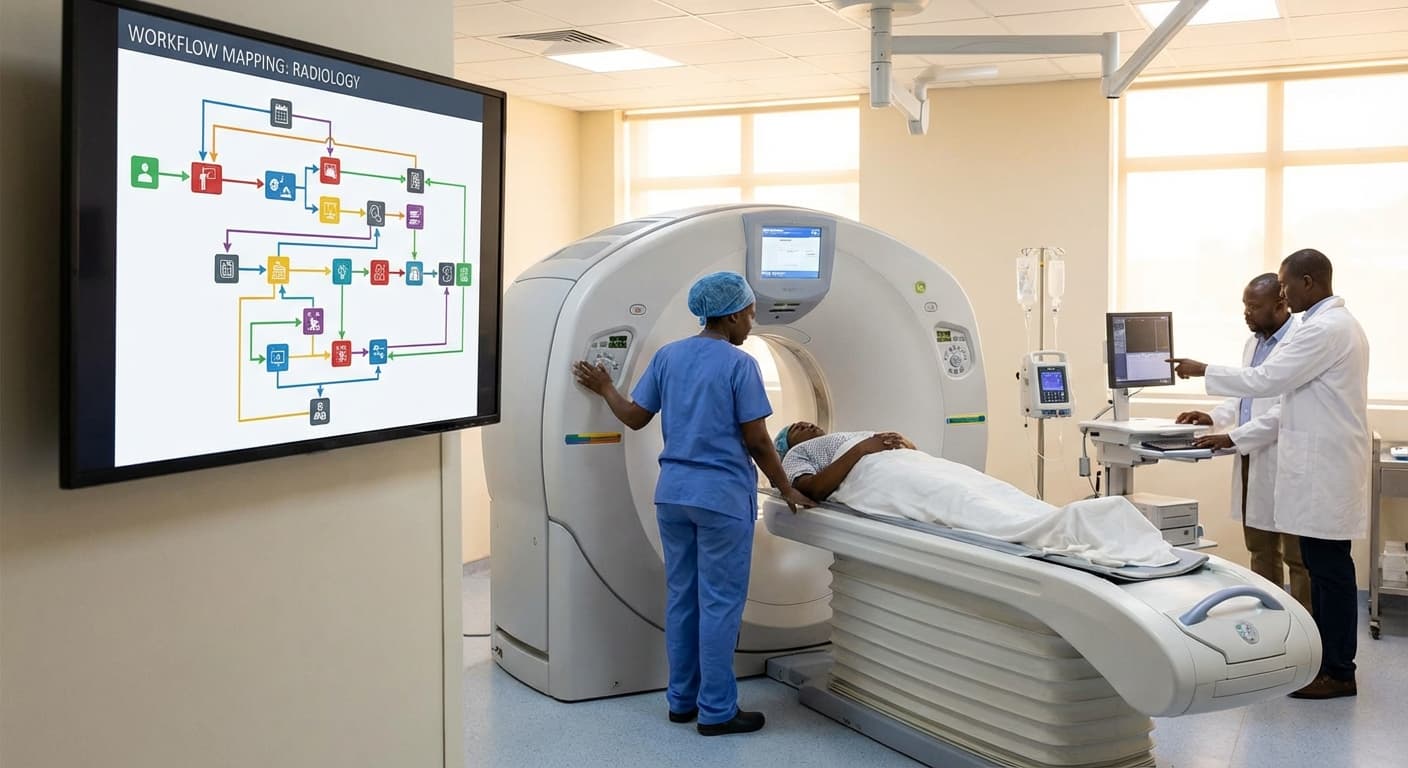
Our service meticulously maps your Radiology department's imaging workflow, from patient referral to final report. We identify bottlenecks in scheduling, image acquisition, PACS integration, and radiologist interpretation, proposing data-driven solutions to reduce turnaround times, enhance image quality, and improve patient throughput, specifically addressing the unique challenges faced by Kenyan healthcare facilities.
Optimized ICU Patient Flow & Resource Allocation
We provide a comprehensive workflow mapping for Intensive Care Units (ICUs), focusing on patient admission, monitoring, treatment protocols, and discharge processes. Our analysis highlights critical areas for improvement in staff allocation, equipment utilization, and inter-departmental communication, ensuring efficient patient care and resource management within the demanding environment of Kenyan ICUs.
Enhanced Operating Theatre (OT) Scheduling & Resource Utilization
Our workflow mapping service for Operating Theatres (OTs) dissects the entire surgical process, from pre-operative patient preparation to post-operative recovery. We identify inefficiencies in surgical scheduling, instrument sterilization, operating room utilization, and surgical team coordination, providing actionable insights to boost operational efficiency and patient safety in Kenyan surgical settings.
What Is Department Workflow Mapping Service (Radiology/icu/ot/lab/dialysis) In Kenya?
Department Workflow Mapping Service (Radiology/ICU/OT/Lab/Dialysis) in Kenya refers to a structured process of documenting, analyzing, and optimizing the sequence of activities, roles, information flows, and decision points within specific high-acuity hospital departments. This service aims to identify inefficiencies, bottlenecks, redundancies, and areas for improvement in the patient care continuum and operational processes. It leverages a combination of qualitative and quantitative methodologies to create a visual and comprehensive representation of how work is currently performed, leading to strategic recommendations for enhanced efficiency, patient safety, resource utilization, and overall service delivery quality.
| Department | Who Needs the Service | Typical Use Cases |
|---|---|---|
| Radiology | Radiology departments, Hospital administrators, Imaging technologists, Radiologists, IT departments (for PACS/RIS integration). | Optimizing patient scheduling and throughput for imaging modalities (X-ray, CT, MRI, Ultrasound). Improving report turnaround times. Streamlining image acquisition and processing workflows. Enhancing PACS/RIS system integration and utilization. Reducing patient waiting times and radiation exposure where applicable. |
| Intensive Care Unit (ICU) | ICU directors, Critical care nurses, Physicians, Hospital management, Biomedical engineering. | Improving patient admission, transfer, and discharge processes. Optimizing nurse-to-patient ratios and task allocation. Streamlining the management of critical equipment and supplies. Enhancing communication protocols among the multidisciplinary team. Reducing length of stay and improving patient outcomes. Ensuring efficient management of ventilator and hemodynamic monitoring. |
| Operating Theatre (OT) | Surgical department heads, Theatre managers, Anesthesiologists, Surgeons, Scrub nurses, Sterilization technicians. | Optimizing surgical case scheduling and room utilization. Streamlining patient preparation and post-operative recovery workflows. Improving instrument sterilization and turnover times. Enhancing supply chain management for surgical consumables. Reducing surgical site infections and perioperative complications. Ensuring efficient management of anesthesia equipment and protocols. |
| Laboratory | Laboratory directors, Pathologists, Medical technologists, Phlebotomists, Hospital administration, Quality assurance officers. | Optimizing sample collection, transport, and processing workflows. Improving test turnaround times for various laboratory analyses. Streamlining quality control procedures and instrument maintenance. Enhancing inventory management for reagents and consumables. Reducing pre-analytical, analytical, and post-analytical errors. Ensuring efficient integration with Electronic Health Records (EHR). |
| Dialysis | Nephrology department heads, Dialysis unit managers, Nephrologists, Dialysis nurses, Biomedical technicians, Patient services coordinators. | Optimizing patient scheduling and dialysis session management. Streamlining pre-dialysis assessment and post-dialysis care. Improving efficiency in machine setup, sterilization, and maintenance. Enhancing inventory management for dialysis consumables (dialyzers, tubing, fluids). Ensuring patient safety and infection control protocols. Improving patient experience and reducing session delays. |
Key Components of Department Workflow Mapping Service:
- Process Discovery and Documentation: Involves detailed observation, interviews with stakeholders (clinicians, technicians, administrators, support staff), and review of existing Standard Operating Procedures (SOPs) to capture the current state workflow. This includes identifying all steps, actors, inputs, outputs, and decision gateways.
- Data Collection and Analysis: Gathering relevant data such as patient throughput, turnaround times for tests/procedures, resource allocation, error rates, and patient satisfaction scores. This quantitative data is used to validate and quantify identified inefficiencies.
- Bottleneck Identification: Pinpointing specific stages in the workflow where delays, resource constraints, or process breakdowns occur, impeding smooth patient flow or timely service delivery.
- Root Cause Analysis: Investigating the underlying reasons for identified bottlenecks and inefficiencies, which may include issues with technology, staffing, training, communication, or policy.
- Gap Analysis: Comparing the current state workflow with desired future state or best practice benchmarks.
- Optimization and Redesign: Developing recommendations for process improvements, including streamlining steps, reallocating resources, implementing new technologies, revising SOPs, and enhancing inter-departmental communication.
- Implementation Support: Assisting the client in the phased rollout of recommended changes, including change management strategies, training, and pilot testing.
- Monitoring and Evaluation: Establishing metrics and mechanisms to track the impact of implemented changes and ensure sustained improvements.
Who Needs Department Workflow Mapping Service (Radiology/icu/ot/lab/dialysis) In Kenya?
In Kenya's dynamic healthcare landscape, optimizing operational efficiency is paramount for providing high-quality patient care. Department workflow mapping services offer a crucial solution for understanding, analyzing, and improving the intricate processes within specialized hospital units like Radiology, Intensive Care Units (ICU), Operating Theatres (OT), Laboratories, and Dialysis centers. These services help identify bottlenecks, reduce errors, enhance patient flow, and ensure resource optimization. Understanding who benefits most from these services is key to targeted adoption and success.
| Target Customer/Entity | Key Departments Benefiting | Specific Needs Addressed by Workflow Mapping |
|---|---|---|
| Public Hospitals (e.g., Kenyatta National Hospital, Moi Teaching and Referral Hospital) | Radiology, ICU, OT, Lab, Dialysis | Managing high patient volumes, resource constraints, inter-departmental communication, standardization of complex procedures, reducing patient wait times. |
| Private Hospitals and Tertiary Care Centers (e.g., Aga Khan University Hospital, Nairobi Hospital) | Radiology, ICU, OT, Lab, Dialysis | Maintaining high service standards, competitive advantage, efficiency for specialized procedures, optimizing revenue cycles, staff training and onboarding, adoption of advanced technologies. |
| Missionary and Faith-Based Hospitals | Radiology, ICU, OT, Lab, Dialysis | Ensuring cost-effective service delivery, efficient utilization of limited resources, maintaining quality of care for diverse patient populations, improving patient throughput. |
| Specialized Clinics (e.g., Oncology Centers, Cardiac Centers with integrated labs/imaging) | Radiology (for imaging), Lab (for diagnostics), ICU (if applicable), OT (if applicable) | Streamlining patient journeys for specific treatment pathways, ensuring timely diagnosis and intervention, integrating diagnostic and treatment services. |
| New Healthcare Facilities Under Development | Radiology, ICU, OT, Lab, Dialysis (during design and setup) | Designing efficient layouts and processes from the ground up, preventing future bottlenecks, establishing best practices before operational launch. |
| Government Health Agencies (e.g., Ministry of Health departments responsible for service delivery oversight) | All departments across various public facilities | Developing national standards, identifying areas for systemic improvement, supporting capacity building initiatives, data-driven policy making. |
Who Needs Department Workflow Mapping Service in Kenya?
- Hospitals and Healthcare Facilities seeking to improve operational efficiency and patient care.
- Departments experiencing recurring delays, bottlenecks, or inefficiencies.
- Facilities aiming to reduce medical errors and improve patient safety.
- Organizations looking to optimize resource allocation (staff, equipment, supplies).
- Healthcare providers undergoing digital transformation or implementing new technologies.
- Institutions focused on compliance with national and international healthcare standards.
- Any department where clear, standardized processes are vital for successful outcomes.
Department Workflow Mapping Service (Radiology/icu/ot/lab/dialysis) Process In Kenya
This document outlines the typical workflow for a Department Workflow Mapping Service specifically tailored for healthcare departments like Radiology, Intensive Care Unit (ICU), Operating Theatre (OT), Laboratory, and Dialysis within the Kenyan healthcare landscape. The service aims to analyze, document, and optimize existing processes to improve efficiency, reduce errors, enhance patient care, and ensure compliance with relevant regulations.
| Department Example | Key Workflow Components | Potential Challenges Addressed | Relevant Kenyan Regulations/Standards |
|---|---|---|---|
| Radiology | Patient scheduling, patient preparation, image acquisition, image interpretation, report generation, PACS integration, billing, quality control. | Long waiting times, inefficient scheduling, misdiagnosis due to poor image quality, lack of integration with EMR, equipment downtime. | Kenya Medical Practitioners and Dentists Council (KMPDC) guidelines, Radiation Protection Board regulations, Ministry of Health (MoH) service delivery standards. |
| Intensive Care Unit (ICU) | Patient admission & triage, monitoring (vital signs, ventilators), medication administration, procedures (intubation, central lines), multidisciplinary rounds, communication between staff, discharge planning. | Inadequate staffing, communication breakdowns, medication errors, delayed interventions, high infection rates, patient deterioration without timely recognition. | KMPDC guidelines, MoH standards for critical care, infection control protocols, nursing council regulations. |
| Operating Theatre (OT) | Patient pre-operative assessment, scheduling, instrument sterilization, surgical team preparation, procedure execution, post-operative care handoff, inventory management. | Delays in scheduling, instrument contamination, surgical site infections, communication gaps between surgical and nursing staff, inefficient use of OR time, supply chain issues. | KMPDC guidelines, MoH standards for surgical care, infection prevention and control guidelines, sterilization protocols. |
| Laboratory | Sample collection & accessioning, specimen processing, test performance, quality control, result reporting, LIS integration, waste management. | Sample mismanagement, prolonged turnaround times, incorrect testing, reporting errors, poor inventory control, inadequate quality assurance, biohazard risks. | KMPDC guidelines, National Health Laboratory Service (NHLS) standards (if applicable), ISO 15189 (for accredited labs), MoH laboratory guidelines. |
| Dialysis | Patient scheduling, pre-dialysis assessment, dialysis treatment protocol, monitoring during treatment, post-dialysis care, machine maintenance, infection control, fluid management. | Long waiting lists, machine downtime, infection transmission, inadequate patient education, managing complications, ensuring sufficient supplies, staff fatigue. | KMPDC guidelines, MoH standards for renal care, infection control protocols, guidelines for dialysis unit management. |
Workflow Stages:
- 1. Initial Inquiry & Needs Assessment:
- Client Contact: Healthcare facility (hospital, clinic) expresses interest in workflow mapping for a specific department (e.g., Radiology, ICU).
- Information Gathering: Service provider gathers initial information about the department's size, services offered, current challenges, and desired outcomes.
- Proposal Development: A customized proposal is developed, outlining the scope of work, methodology, deliverables, timeline, and associated costs.
- Agreement & Kick-off: Formal agreement is signed, and a kick-off meeting is scheduled to introduce the project team and key stakeholders.
- 2. Discovery & Data Collection:
- Stakeholder Identification: Key personnel within the department (e.g., department heads, senior clinicians, technicians, administrative staff) are identified.
- Observation & Shadowing: Project team observes and shadows staff performing their daily tasks to understand the real-time processes.
- Interviews & Workshops: Structured interviews and workshops are conducted with stakeholders to gather detailed information about procedures, decision points, information flow, and pain points.
- Document Review: Existing Standard Operating Procedures (SOPs), protocols, guidelines, and relevant policy documents are reviewed.
- Data Analysis (Initial): Collected information is organized and initially analyzed to identify recurring themes and potential areas for improvement.
- 3. Workflow Mapping & Analysis:
- Process Diagramming: Detailed process maps (e.g., using BPMN or similar notations) are created for key workflows within the department.
- Bottleneck Identification: Analysis focuses on identifying inefficiencies, bottlenecks, redundant steps, and potential sources of error.
- Role & Responsibility Clarification: Mapping clarifies the roles and responsibilities of different individuals and teams at each stage.
- Information & Material Flow Analysis: The movement of information, supplies, and patient data is meticulously tracked.
- Technology & System Integration Review: Existing technological systems (e.g., HIS, LIS, PACS) and their integration within the workflow are assessed.
- 4. Recommendation Development & Validation:
- Solution Brainstorming: Based on the analysis, potential solutions and improvements are brainstormed.
- Recommendation Formulation: Specific, actionable recommendations are developed to address identified inefficiencies and improve performance.
- Impact Assessment: The potential impact of proposed recommendations on efficiency, cost, quality, and patient safety is assessed.
- Stakeholder Feedback: Recommendations are presented to stakeholders for validation and feedback, ensuring buy-in and practical feasibility.
- 5. Documentation & Reporting:
- Final Workflow Documentation: Comprehensive documentation of the current and/or proposed optimized workflows is prepared.
- Detailed Report: A comprehensive report is generated, including an executive summary, detailed findings, analysis, recommendations, and implementation roadmap.
- Presentation of Findings: The report and findings are presented to the healthcare facility's management and relevant department leadership.
- 6. Implementation Support (Optional):
- Implementation Planning: Assistance in developing a detailed implementation plan for the recommended changes.
- Training & Capacity Building: Support in training staff on new or revised workflows and processes.
- Pilot Testing: Guidance in conducting pilot tests of new workflows before full-scale implementation.
- Monitoring & Evaluation: Assistance in setting up mechanisms for monitoring the effectiveness of implemented changes.
- 7. Project Closure:
- Final Review: A final review of the project deliverables and outcomes.
- Knowledge Transfer: Ensuring the healthcare facility has the necessary knowledge and tools to maintain and further optimize their workflows.
- Project Sign-off: Formal closure of the project.
Department Workflow Mapping Service (Radiology/icu/ot/lab/dialysis) Cost In Kenya
Estimating the cost of a Department Workflow Mapping Service for specialized hospital departments like Radiology, ICU, OT, Lab, and Dialysis in Kenya involves several key pricing factors. These factors directly influence the overall investment required for comprehensive process analysis and optimization. The service typically encompasses detailed observation, data collection, stakeholder interviews, bottleneck identification, and the development of optimized workflows, often culminating in a detailed report with actionable recommendations.
Key Pricing Factors:
- Department Size and Complexity: Larger departments with more intricate processes and a higher volume of patient throughput will naturally require more extensive mapping and analysis, thus increasing costs. A highly specialized ICU with multiple sub-sections will be more complex than a standard radiology reading room.
- Number of Sub-Processes to Map: Mapping the entire patient journey from admission to discharge, including all ancillary services, will be more costly than focusing on a specific bottleneck or a single process within a department.
- Scope of the Project (Analysis and Recommendation Depth): The depth of analysis and the level of detail in the recommendations significantly impact cost. This can range from basic process charting to advanced simulation modeling and strategic integration proposals.
- Data Collection Methodology: The methods employed for data collection (e.g., direct observation, staff surveys, existing data analysis, time-motion studies) will influence the time and resources required. Sophisticated data capture tools can add to the cost.
- Consultant Expertise and Experience: The reputation, experience, and specialization of the consulting firm or individual consultants are major determinants of cost. Highly sought-after experts with a proven track record in healthcare process improvement will command higher fees.
- Duration of the Project: Longer engagement periods, especially for large-scale or complex projects, will naturally lead to higher overall costs due to consultant time and resources.
- Deliverables Required: The type and quantity of deliverables (e.g., detailed process maps, performance metrics, training materials, implementation roadmaps) will affect the final price.
- Technology and Tools Used: The use of specialized workflow mapping software, simulation tools, or data analytics platforms can add to the project's cost, but often provides more robust and insightful results.
- Location and Site Visits: While the primary focus is on Kenya, the number of site visits required, travel and accommodation expenses for consultants, and any specific logistical challenges at the hospital site can influence the final quote.
- Reporting and Presentation Requirements: The complexity and formality of the final reports and presentations, including the need for executive summaries or detailed technical documentation, can also impact the cost.
Estimated Cost Ranges in Kenyan Shillings (KES):
It's important to note that these are indicative ranges, and a precise quote would require a detailed scope of work. The ranges are presented in Kenyan Shillings (KES).
| Department Type | Estimated Cost Range (KES) | Typical Project Duration (Weeks) |
|---|---|---|
| Radiology | KES 500,000 - 1,500,000 | 4 - 10 |
| ICU | KES 800,000 - 2,500,000 | 6 - 12 |
| OT | KES 700,000 - 2,000,000 | 5 - 10 |
| Laboratory | KES 400,000 - 1,200,000 | 3 - 8 |
| Dialysis | KES 600,000 - 1,800,000 | 4 - 9 |
Department Workflow Mapping Service Costs in Kenya (Indicative Ranges)
- {"name":"Radiology Department","description":"Mapping typical workflows including patient reception, imaging procedures (X-ray, CT, MRI, Ultrasound), report generation, and equipment maintenance scheduling."}
- {"name":"Intensive Care Unit (ICU)","description":"Focusing on patient admission, critical care management, monitoring, inter-departmental communication, staff shift handovers, and equipment utilization."}
- {"name":"Operating Theatre (OT)","description":"Analyzing pre-operative patient preparation, surgical team coordination, instrument sterilization, post-operative care, and theatre scheduling."}
- {"name":"Laboratory Department","description":"Mapping sample collection, processing, analysis, quality control, result reporting, and inventory management for reagents and supplies."}
- {"name":"Dialysis Unit","description":"Charting patient scheduling, pre-dialysis assessments, treatment procedures, post-dialysis monitoring, equipment maintenance, and fluid management."}
Affordable Department Workflow Mapping Service (Radiology/icu/ot/lab/dialysis) Options
Streamline your departmental operations with our affordable Workflow Mapping Service, specifically designed for Radiology, ICU, OT, Lab, and Dialysis departments. We help you visualize, analyze, and optimize your processes to improve efficiency, reduce errors, and enhance patient care. Our service focuses on delivering tangible value through expertly crafted process maps, identifying bottlenecks, and recommending data-driven solutions. We offer flexible options and transparent pricing to fit your budget.
| Value Bundle Name | Included Services | Target Department(s) | Ideal For | Starting Price (per department) |
|---|---|---|---|---|
| Foundation Flow | Basic Process Mapping (1-2 key workflows), Initial Bottleneck Identification, Summary Report | Radiology, Lab, Dialysis | Departments needing a foundational understanding of their core processes. | $2,500 |
| Optimized Operations | Comprehensive Workflow Mapping (3-5 key workflows), Detailed Bottleneck Analysis, Root Cause Investigation, Recommended Solutions, Process Improvement Roadmap | ICU, OT, Radiology, Lab | Departments aiming for significant efficiency gains and process optimization. | $4,500 |
| Integrated Excellence | End-to-End Process Mapping (multiple critical pathways), Cross-Departmental Workflow Analysis, Advanced Optimization Strategies, Implementation Support (optional add-on), KPI Tracking Framework | All Departments (Radiology, ICU, OT, Lab, Dialysis) | Organizations seeking a holistic approach to operational excellence and seamless integration. | $7,000+ |
| Rapid Assessment | Focused Workflow Mapping (1 critical workflow), Quick Wins Identification, Actionable Recommendations | Any Department | Departments needing a fast, targeted solution for a specific pain point. | $1,500 |
Key Benefits of Workflow Mapping
- Enhanced Efficiency: Identify and eliminate redundant steps and bottlenecks.
- Improved Accuracy: Reduce manual errors and inconsistencies in processes.
- Cost Reduction: Optimize resource allocation and minimize waste.
- Better Patient Outcomes: Ensure smoother patient flow and timely interventions.
- Increased Staff Satisfaction: Clarify roles and responsibilities, reducing frustration.
- Compliance Assurance: Standardize processes to meet regulatory requirements.
- Data-Driven Decision Making: Gain insights for continuous improvement.
Verified Providers In Kenya
In Kenya's dynamic healthcare landscape, discerning the best providers is crucial for quality care. Franance Health stands out as a beacon of excellence, consistently demonstrating a commitment to patient well-being and ethical medical practices. Their verified credentials are not just badges; they represent a rigorous adherence to standards that ensure you receive safe, effective, and compassionate healthcare. Choosing Franance Health means opting for a provider that prioritizes your health journey with expertise and integrity.
| Credential Type | Verification Process | Significance for Patients |
|---|---|---|
| Medical Licenses (Doctors, Nurses, etc.) | Issued and regularly reviewed by the Kenya Medical Practitioners and Dentists Council (KMPDC) or Nursing Council of Kenya (NCK). | Confirms that practitioners have met the minimum educational and ethical standards to practice medicine and nursing safely. |
| Facility Accreditation | Assessed by bodies like the Council for Health Accreditation East, Central and Southern Africa (COHASA) or internal quality assurance departments, adhering to Kenyan Ministry of Health standards. | Ensures the hospital or clinic meets high standards for infrastructure, equipment, safety protocols, and patient care delivery. |
| Specialist Certifications | Granted by recognized professional bodies within Kenya and internationally after completion of specialized training and examinations. | Indicates advanced expertise in a specific medical field, leading to more accurate diagnoses and effective treatment plans for complex conditions. |
| Compliance with National Health Policies | Regular audits and inspections by the Ministry of Health to ensure adherence to national health regulations, guidelines, and standards. | Guarantees that the provider is operating legally and ethically within the Kenyan healthcare framework, prioritizing public health and patient rights. |
Why Franance Health Credentials Matter
- Rigorous Accreditation and Licensing: Franance Health facilities and practitioners undergo stringent verification processes by Kenyan health regulatory bodies, ensuring compliance with all legal and professional requirements.
- Commitment to Continuous Professional Development: Their medical professionals regularly engage in advanced training and education, staying abreast of the latest medical advancements and treatment protocols.
- Emphasis on Patient Safety and Quality Assurance: Franance Health implements robust quality assurance programs, focusing on minimizing risks and optimizing patient outcomes.
- Ethical Practice and Patient-Centric Approach: A core value of Franance Health is prioritizing patient needs, fostering trust through transparent communication and ethical medical decision-making.
- Specialized Expertise and Advanced Technology: Their accredited providers possess specialized skills and utilize state-of-the-art medical technology to deliver comprehensive and effective care across various disciplines.
Scope Of Work For Department Workflow Mapping Service (Radiology/icu/ot/lab/dialysis)
This Scope of Work (SOW) outlines the services to be provided for the comprehensive workflow mapping of key hospital departments: Radiology, Intensive Care Unit (ICU), Operating Theatre (OT), Laboratory, and Dialysis. The objective is to document current processes, identify inefficiencies, and provide recommendations for optimization. The technical deliverables will adhere to standard industry specifications and best practices.
| Deliverable | Description | Standard Specifications / Methodology | Format |
|---|---|---|---|
| Project Kick-off Meeting Minutes | Summary of initial meeting, including stakeholder identification, project goals, timeline overview, and communication protocols. | ASME Y14.100 (Engineering Drawing Practices) principles for clarity and completeness; standard meeting minutes format. | Digital Document (e.g., PDF) |
| Current State Workflow Maps | Detailed visual representations of existing processes for each department, including all steps, decision points, roles, and system interactions. | BPMN 2.0 (Business Process Model and Notation) for standardized process modeling; SIPOC (Suppliers, Inputs, Process, Outputs, Customers) analysis where applicable. | Digital Diagram (e.g., BPMN XML, Visio, Lucidchart) |
| Data Collection & Analysis Report | Summary of data collected (e.g., patient wait times, equipment utilization, staff feedback), analysis of findings, and identification of key performance indicators (KPIs). | Lean Six Sigma principles for data analysis; standard statistical reporting practices. | Digital Document (e.g., PDF, Word) |
| Bottleneck & Inefficiency Identification Report | Specific documentation of identified bottlenecks, inefficiencies, and root causes within each workflow. | Root Cause Analysis (RCA) methodologies (e.g., Fishbone Diagram, 5 Whys); ISO 9001 principles for non-conformance identification. | Digital Document (e.g., PDF, Word) |
| Recommendations for Process Improvement | Actionable recommendations for optimizing workflows, including proposed changes, potential benefits, and implementation considerations. | SMART (Specific, Measurable, Achievable, Relevant, Time-bound) criteria for recommendation development; change management principles. | Digital Document (e.g., PDF, Word) |
| Future State Workflow Maps (Optional/Phase 2) | Visual representations of proposed optimized processes, demonstrating the impact of recommended changes. | BPMN 2.0; consistent with current state mapping for clear comparison. | Digital Diagram (e.g., BPMN XML, Visio, Lucidchart) |
| Final Project Report | Comprehensive report summarizing the entire project, including objectives, methodology, findings, recommendations, and next steps. | Standard project reporting structure; clarity, conciseness, and logical flow. | Digital Document (e.g., PDF) |
| Presentation of Findings | A presentation to key stakeholders to communicate project outcomes, key findings, and recommendations. | Standard presentation software (e.g., PowerPoint, Google Slides); clear and concise visuals. | Digital Presentation File |
Objectives of Workflow Mapping Service
- To visually represent and document the end-to-end processes within each designated department.
- To identify bottlenecks, redundancies, and areas for potential improvement in efficiency, patient safety, and resource utilization.
- To establish a baseline for future process improvement initiatives.
- To facilitate inter-departmental understanding and collaboration.
- To support the development of standard operating procedures (SOPs) and training materials.
Service Level Agreement For Department Workflow Mapping Service (Radiology/icu/ot/lab/dialysis)
This Service Level Agreement (SLA) outlines the commitment for the Department Workflow Mapping Service (DWMS) across Radiology, Intensive Care Unit (ICU), Operating Theatre (OT), Laboratory, and Dialysis departments. It defines response times for support requests and uptime guarantees for the mapping service.
| Service Component | Uptime Guarantee | Response Time (Critical Incident) | Response Time (Standard Inquiry) |
|---|---|---|---|
| DWMS Platform Availability | 99.5% (measured monthly, excluding scheduled maintenance) | 1 Hour (for service outage impacting all users in a department) | 4 Business Hours (for non-critical platform issues) |
| Workflow Mapping Consultation | N/A (Service is consultation-based) | 8 Business Hours (for urgent requests requiring immediate consultant engagement) | 2 Business Days (for standard consultation requests) |
| Report Generation & Analysis | N/A (Service is process-dependent) | 4 Business Hours (for critical data integrity issues impacting reports) | 2 Business Days (for standard report requests or analysis updates) |
Scope of Service
- The DWMS provides digital representations and analyses of existing workflows within the specified departments to identify inefficiencies, bottlenecks, and areas for improvement.
- This SLA covers the support and availability of the DWMS platform and associated consultation services.
- Exclusions: This SLA does not cover the implementation of proposed workflow changes, or issues arising from the client's internal IT infrastructure not directly related to the DWMS platform.
Frequently Asked Questions

Ready when you are
Let's scope your Department Workflow Mapping Service (Radiology/ICU/OT/Lab/Dialysis) in Kenya project in Kenya.

Scaling healthcare logistics and technical systems across the entire continent.