
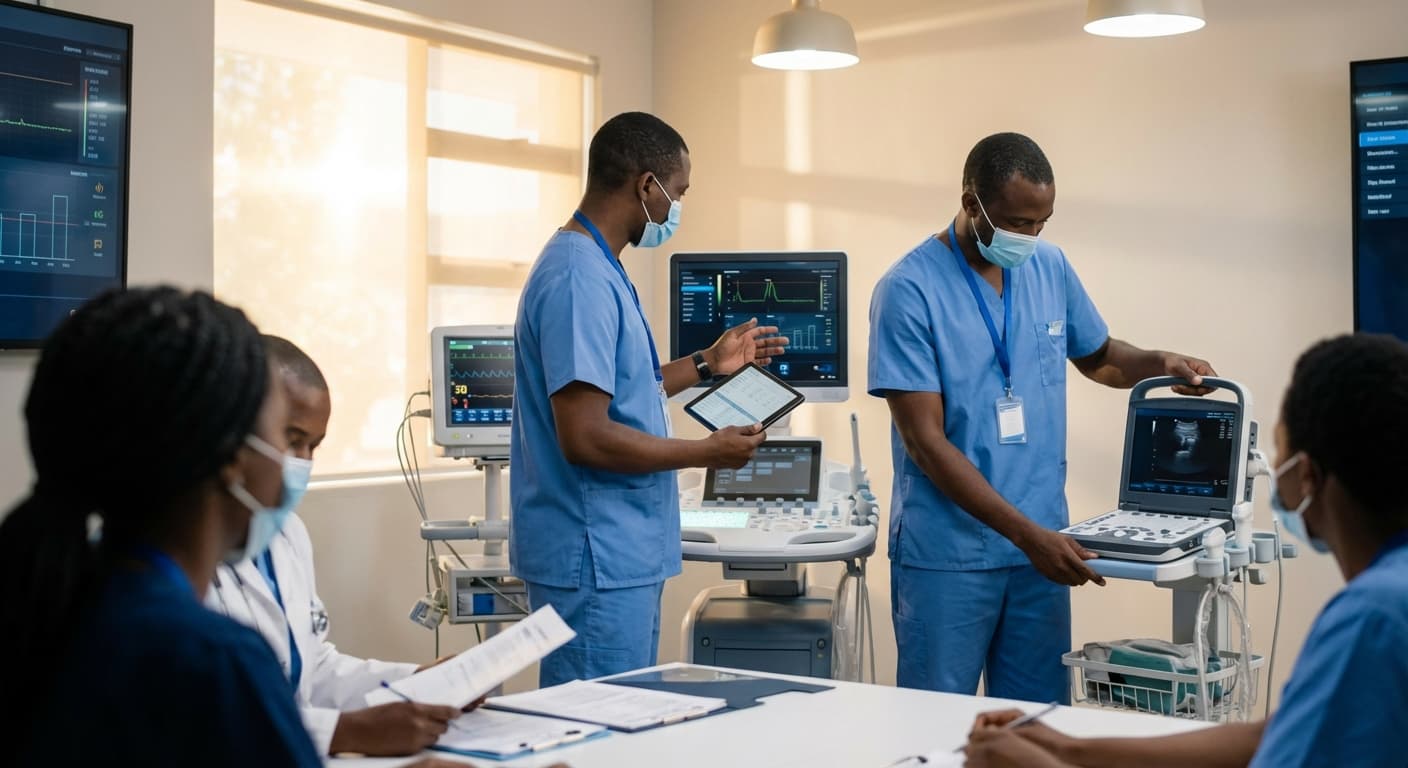
Clinical Needs Assessment for Medical Equipment in Kenya
Engineering Excellence & Technical Support
Clinical Needs Assessment for Medical Equipment High-standard technical execution following OEM protocols and local regulatory frameworks.
Strengthening Healthcare Infrastructure Through Data-Driven Equipment Planning
Implementing robust data collection and analysis protocols to accurately assess the current stock, condition, and utilization of medical equipment across Kenyan healthcare facilities. This ensures that procurement decisions are aligned with evidence-based needs, optimizing resource allocation and improving patient care delivery.
Bridging the Gap: Needs Assessment for Specialized Medical Equipment and Training
Conducting targeted needs assessments for high-priority and specialized medical equipment, considering local disease prevalence, referral patterns, and existing technological capabilities. This includes identifying crucial training requirements for healthcare professionals to ensure effective operation and maintenance, thereby maximizing the impact of new equipment investments.
Fostering Sustainable Medical Equipment Management and Local Capacity Building
Developing comprehensive strategies for the long-term sustainability of medical equipment, including maintenance plans, spare parts management, and end-of-life disposal. The needs assessment process actively involves local stakeholders, including biomedical engineers and hospital administrators, to build their capacity in equipment lifecycle management and promote local ownership.
What Is Clinical Needs Assessment For Medical Equipment In Kenya?
A Clinical Needs Assessment for Medical Equipment in Kenya is a systematic process designed to identify, evaluate, and prioritize the medical equipment requirements of healthcare facilities. This service is crucial for ensuring that healthcare providers possess the appropriate technology and infrastructure to deliver effective patient care aligned with prevailing health challenges and established clinical standards within the Kenyan context. It moves beyond simple inventory audits to a strategic evaluation of current capabilities, patient demographics, disease prevalence, and future health service expansion plans.
| Who Needs It? | Typical Use Cases |
|---|---|
| Public Healthcare Facilities: National, county referral, and sub-county hospitals; health centers and dispensaries seeking to upgrade, expand services, or replace aging equipment. | Private Healthcare Providers: Hospitals, specialized clinics, diagnostic centers, and private practitioners aiming to enhance their diagnostic capabilities, treatment offerings, or competitive advantage. |
| Non-Governmental Organizations (NGOs) and Faith-Based Organizations (FBOs): Healthcare providers operating with donor funding or charitable support, requiring rigorous justification for equipment investments. | Medical Equipment Manufacturers and Suppliers: To inform product development and sales strategies by understanding the actual demand and specific requirements of the Kenyan market. |
| Government Health Ministries and Agencies: For national health planning, resource allocation, and the development of procurement policies and guidelines. | International Development Partners and Donors: To guide their funding allocations and ensure that investments in healthcare infrastructure are evidence-based and impactful. |
| Biomedical Engineering Departments: To develop strategic procurement plans and ensure the long-term sustainability of medical equipment assets. | New Healthcare Facility Development: To equip greenfield projects with the necessary medical technology from inception. |
Key Components of a Clinical Needs Assessment for Medical Equipment in Kenya
- Facility Assessment: Evaluating existing infrastructure, utilities (power, water, waste management), and physical space to determine suitability for new or upgraded equipment.
- Clinical Service Analysis: Understanding the range of medical services offered, patient caseloads, and the specific diagnostic and therapeutic needs associated with each service line.
- Disease Burden and Epidemiological Data Review: Analyzing national and regional health statistics to identify prevalent diseases and conditions that require specific diagnostic or treatment modalities.
- Current Equipment Inventory and Performance Evaluation: Assessing the condition, functionality, maintenance history, and utilization rates of existing medical equipment to identify gaps or obsolete technology.
- Staff Skill and Training Assessment: Determining the availability of trained personnel to operate and maintain proposed equipment, and identifying training needs.
- Cost-Benefit Analysis and Budgetary Considerations: Evaluating the total cost of ownership, including procurement, installation, training, maintenance, consumables, and decommissioning, against projected benefits and available financial resources.
- Regulatory and Compliance Review: Ensuring that proposed equipment meets Kenyan Ministry of Health standards, international safety regulations, and any specific accreditation requirements.
- Technological Advancements and Future Planning: Considering emerging technologies and their potential impact on healthcare delivery, and aligning equipment acquisition with long-term strategic goals.
- Stakeholder Consultation: Engaging with clinicians, administrators, biomedical engineers, procurement officers, and potentially patient representatives to gather comprehensive input.
Who Needs Clinical Needs Assessment For Medical Equipment In Kenya?
Clinical needs assessment for medical equipment in Kenya is a critical process designed to ensure that healthcare facilities acquire the right tools to meet the specific health needs of the population they serve. This systematic evaluation identifies gaps in existing equipment, prioritizes the procurement of new or replacement devices based on clinical utility, cost-effectiveness, and local disease prevalence, and ensures that the acquired equipment is appropriate for the intended users and the healthcare environment. It moves beyond simply purchasing equipment to strategically investing in solutions that enhance patient care, improve diagnostic capabilities, and optimize operational efficiency within the Kenyan healthcare system. The process is vital for all stakeholders involved in healthcare delivery, from frontline practitioners to policymakers and procurement officers.
| Target Customer/Entity | Typical Departments Involved | Key Needs Assessment Focus Areas |
|---|---|---|
| Public Hospitals (National & County) | All clinical departments (e.g., Surgery, Internal Medicine, Pediatrics, Obstetrics & Gynecology, Radiology, Pathology, Emergency, ICU), Biomedical Engineering, Procurement, Administration | Meeting high patient volume, addressing prevalent local diseases, ensuring service continuity, national health policy alignment, cost-effectiveness for public funding. |
| Private Hospitals | Similar to public hospitals, with potential emphasis on specialized services like cardiology, oncology, advanced diagnostics. | Competitive service offerings, patient satisfaction, adoption of advanced technologies, revenue generation, niche market demands. |
| NGO/Missionary Healthcare Facilities | Clinical teams, project managers, community health workers, administrators. | Serving underserved populations, specific disease programs (e.g., HIV/AIDS, malaria, maternal health), sustainability, donor funding requirements, cultural appropriateness. |
| Tertiary & Referral Centers | Highly specialized clinical departments (e.g., Neurosurgery, Cardiothoracic Surgery, Transplant Units), advanced imaging, research units, critical care. | State-of-the-art diagnostic and therapeutic equipment, complex surgical procedures, advanced research capabilities, training of specialists. |
| Specialty Clinics (e.g., Oncology, Cardiology, Dialysis) | Specific specialty clinical teams, technicians, administrators. | Equipment for highly specific diagnostic and treatment modalities, advanced monitoring, patient comfort and specialized care. |
| District & Sub-County Hospitals | General practitioners, nurses, clinical officers, basic laboratory and imaging services, pharmacy. | Essential diagnostic and treatment equipment for common illnesses and emergencies, basic surgical capabilities, maternal and child health services. |
| Primary Healthcare Centers | Clinical officers, nurses, community health volunteers. | Basic diagnostic tools (e.g., stethoscopes, BP monitors, glucometers), essential medicines and supplies, basic maternal and child health equipment. |
| Medical Training Institutions | Anatomy, Physiology, Pathology, Radiology, Surgery departments, simulation centers, clinical simulation labs. | Training equipment for future healthcare professionals, simulation technology, research facilities, practical skill development. |
Who Needs Clinical Needs Assessment for Medical Equipment in Kenya?
- Public Hospitals (National and County Level)
- Private Hospitals
- Non-Governmental Organization (NGO) Healthcare Facilities
- Missionary Hospitals
- Tertiary and Referral Centers
- Specialty Clinics
- District and Sub-County Hospitals
- Primary Healthcare Centers (Dispensaries and Health Centers)
- Research Institutions with Clinical Arms
- Medical Training Institutions
Clinical Needs Assessment For Medical Equipment Process In Kenya
This document outlines the clinical needs assessment process for medical equipment in Kenya, detailing the workflow from initial inquiry to the successful execution of equipment procurement. This structured approach ensures that acquired equipment directly addresses identified healthcare gaps, optimizes resource allocation, and meets the specific clinical requirements of healthcare facilities. The process is designed to be transparent, evidence-based, and participatory, involving all relevant stakeholders from healthcare providers to procurement officers and Ministry of Health representatives.
| Stage | Key Activities | Responsible Parties | Outputs |
|---|---|---|---|
| Receiving requests, initial problem statement, identifying the need for equipment. | Healthcare Facility Staff, District Health Management Teams (DHMTs), National Programs | Needs request/problem statement |
| Confirming need, understanding context, preliminary site visits, stakeholder consultations. | County Health Departments, Ministry of Health (MoH) - Department of Health Sector Managed Equipment Services (HSMES) | Scope of assessment defined, preliminary feasibility confirmed |
| Service gap analysis, patient load assessment, existing equipment audit, infrastructure review, user capacity evaluation, clinical workflow analysis. | Clinical Officers, Nurses, Doctors, Biomedical Engineers, MoH - HSMES, Consultants | Detailed assessment report, identified clinical needs, justification for equipment |
| Ranking needs based on impact, urgency, and alignment with health priorities; developing strong justification for each item. | MoH - HSMES, National Health Technical Committee, Policy Makers | Prioritized list of equipment needs, detailed justifications |
| Defining technical, clinical, and performance specifications; ensuring compliance with standards. | Biomedical Engineers, Clinical Specialists, MoH - HSMES, Procurement Department | Detailed equipment specifications (technical and clinical) |
| Cost estimation (acquisition, installation, training, maintenance); identifying funding sources; securing budget approval. | MoH - HSMES, Ministry of Finance, Donors, Procurement Department | Approved budget, confirmed funding allocation |
| Tendering process, supplier evaluation and selection, contract negotiation, equipment ordering and delivery. | Procurement Department (MoH/Facility), Central Medical Stores (CMS), Suppliers | Procured and delivered medical equipment |
| Site preparation, equipment installation, functional testing, user training, handover. | Suppliers, Biomedical Engineers, MoH - HSMES, User Staff | Installed, commissioned, and operational equipment; trained personnel |
| Post-implementation review, assessing utilization, impact on patient care, maintenance effectiveness, collecting feedback. | MoH - HSMES, County Health Departments, Facility Management, User Staff | Performance reports, impact assessments, recommendations for improvement |
Workflow Stages and Key Activities
- {"title":"Stage 1: Inquiry and Needs Identification","description":"The process begins with a formal or informal inquiry from a healthcare facility, a district health management team, or a national health program highlighting a need for specific medical equipment. This stage involves initial information gathering to understand the perceived gap."}
- {"title":"Stage 2: Pre-Assessment and Scoping","description":"A preliminary assessment is conducted to confirm the validity of the inquiry, understand the context of the need, and determine the scope of the assessment. This may involve site visits, discussions with key personnel, and review of existing data."}
- {"title":"Stage 3: Detailed Clinical Needs Assessment","description":"This is the core of the process. A comprehensive assessment is performed to understand the clinical demand, the current service provision, existing equipment, infrastructure suitability, user capacity, and cost-effectiveness of the proposed equipment."}
- {"title":"Stage 4: Prioritization and Justification","description":"Based on the assessment findings, needs are prioritized according to their impact on patient care, public health priorities, and resource availability. A strong justification for each prioritized need is developed."}
- {"title":"Stage 5: Specification Development","description":"Detailed technical and clinical specifications for the required equipment are developed, ensuring they align with international standards, local guidelines, and the identified needs."}
- {"title":"Stage 6: Budgeting and Funding Allocation","description":"The cost of acquiring, installing, training, and maintaining the equipment is estimated. Funding sources are identified and allocated for the approved needs."}
- {"title":"Stage 7: Procurement and Acquisition","description":"This stage involves the actual tendering process, selection of suppliers, contract negotiation, and final purchase of the medical equipment."}
- {"title":"Stage 8: Installation, Commissioning, and Training","description":"Upon delivery, the equipment is installed, tested for functionality (commissioning), and users are trained on its operation and maintenance."}
- {"title":"Stage 9: Monitoring and Evaluation","description":"The performance and impact of the acquired equipment are monitored and evaluated post-implementation to ensure it is meeting the intended clinical needs and to inform future assessments."}
Clinical Needs Assessment For Medical Equipment Cost In Kenya
This document outlines a clinical needs assessment for medical equipment costs in Kenya, focusing on identifying key pricing factors and providing estimated cost ranges in Kenyan Shillings (KES). A comprehensive understanding of these elements is crucial for healthcare providers, procurement officers, and policymakers to make informed decisions regarding equipment acquisition, budgeting, and overall healthcare system strengthening.
The procurement of medical equipment in Kenya is influenced by a multifaceted array of factors. These include not only the inherent specifications and capabilities of the equipment itself but also external economic and logistical considerations. Understanding these drivers is paramount for accurate cost forecasting and strategic planning.
Key Pricing Factors:
- Equipment Type and Sophistication: Basic diagnostic tools like stethoscopes and blood pressure monitors will naturally be less expensive than advanced imaging systems (e.g., MRI, CT scanners) or complex surgical robots. The level of technology, precision, and automation significantly impacts price.
- Brand and Manufacturer Reputation: Established global and reputable local brands often command higher prices due to perceived quality, reliability, and after-sales support. Lesser-known brands may offer lower initial costs but could carry risks associated with durability and serviceability.
- New vs. Refurbished Equipment: New equipment offers the latest technology and warranty but comes at a premium. Refurbished equipment, when sourced from reputable suppliers with guarantees, can offer significant cost savings, making advanced technologies more accessible, especially in resource-constrained settings.
- Supplier and Distributor Markup: Local distributors and agents add their operational costs, profit margins, and provide local support, which influences the final retail price. Direct import can sometimes be cheaper but lacks local warranty and immediate support.
- Import Duties and Taxes: Kenya levies import duties, VAT, and other taxes on medical equipment, which can substantially increase the landed cost. Exemptions or preferential rates for specific medical goods can affect pricing.
- Shipping and Logistics: Costs associated with international and local transportation, insurance, customs clearance, and handling from the port of entry to the final destination are factored into the price.
- Installation and Training: Many sophisticated medical devices require professional installation and comprehensive training for clinical staff to operate them effectively and safely. These services are often bundled or charged separately.
- Warranty and After-Sales Service: The duration and scope of the warranty, as well as the availability and cost of ongoing maintenance and repair services, are critical considerations. Equipment with robust support contracts typically has a higher initial price.
- Currency Exchange Rates: Fluctuations in the Kenyan Shilling (KES) against major international currencies (USD, EUR, JPY) directly impact the cost of imported equipment.
- Volume Discounts and Negotiation: Bulk purchases or long-term contracts with suppliers can often lead to negotiated discounts.
- Local Availability and Demand: High demand for specific equipment coupled with limited local supply can drive up prices.
- Regulatory Approvals: The cost and time involved in obtaining necessary certifications and approvals from Kenyan regulatory bodies (e.g., Pharmacy and Poisons Board, Ministry of Health) can influence pricing.
Estimated Cost Ranges in Kenyan Shillings (KES):
It is important to note that these are broad estimates and actual prices can vary significantly based on the specific model, brand, supplier, and prevailing market conditions at the time of purchase. These ranges are intended to provide a general indication for planning purposes.
| Category | Typical Equipment Examples | Estimated Price Range (KES) | Notes on Factors |
|---|---|---|---|
| Basic Diagnostic & Monitoring | Stethoscope, Blood Pressure Monitor, Thermometer, Pulse Oximeter | KES 2,000 - KES 50,000 | Brand, features, portability |
| Basic Laboratory Equipment | Microscope (basic), Centrifuge (benchtop), Weighing Scale (digital) | KES 30,000 - KES 250,000 | Magnification, speed, precision, brand |
| Advanced Diagnostic & Monitoring | ECG Machine, Ultrasound Machine (basic portable), Foetal Doppler | KES 100,000 - KES 1,500,000 | Number of channels/probes, image quality, portability, brand |
| Imaging Equipment (Entry-Level) | X-Ray Machine (basic stationary), Portable Ultrasound | KES 1,000,000 - KES 15,000,000 | Detector type (CR/DR), power, image resolution, brand, new/refurbished |
| Imaging Equipment (Advanced) | CT Scanner, MRI Scanner | KES 20,000,000 - KES 200,000,000+ | Field strength (MRI), slices (CT), brand, installation, site requirements |
| Surgical Instruments | Basic Surgical Set, Specific Instrument Kits | KES 10,000 - KES 500,000+ | Material (stainless steel quality), specialization, set composition |
| Therapeutic Equipment | Physiotherapy Equipment (e.g., Ultrasound therapy unit), Nebulizer | KES 15,000 - KES 300,000 | Features, portability, brand |
| Critical Care & Life Support | Ventilator (basic/transport), Defibrillator, Patient Monitor (multi-parameter) | KES 500,000 - KES 10,000,000 | Modes of ventilation, monitoring parameters, portability, brand, software features |
| General Hospital Furniture | Hospital Bed (manual), Examination Couch, Trolley | KES 15,000 - KES 150,000 | Material, adjustability, features (e.g., electric bed), durability |
| Specialized Laboratory Equipment | Biochemistry Analyzer, Hematology Analyzer, PCR Machine | KES 500,000 - KES 20,000,000+ | Throughput, number of parameters, automation, brand, reagents |
Medical Equipment Cost Categories in Kenya
- Basic Diagnostic and Monitoring Equipment
- Imaging Equipment
- Laboratory Equipment
- Surgical Equipment
- Therapeutic Equipment
- Critical Care and Life Support Equipment
- General Hospital Furniture and Fixtures
Affordable Clinical Needs Assessment For Medical Equipment Options
This assessment focuses on providing cost-effective solutions for essential medical equipment. We'll explore 'value bundles' – curated packages of related equipment and services designed to offer a more economical choice than purchasing items individually. Additionally, we'll detail various 'cost-saving strategies' to maximize your budget while ensuring optimal patient care. This includes exploring options like refurbished equipment, leasing, and optimizing equipment utilization to reduce unnecessary expenditure.
| Value Bundle Option | Included Equipment/Services | Potential Cost Savings (vs. individual purchase) | Key Benefits |
|---|---|---|---|
| Basic Diagnostic Suite | Stethoscope, Blood Pressure Monitor, Thermometer, Pulse Oximeter | 15-20% | Essential for general practice, cost-effective for new clinics. |
| Minor Procedure Kit | Surgical Lights, Procedure Tray, Sterilization Equipment, Basic Instruments | 10-15% | Streamlines setup for common outpatient procedures. |
| Rehabilitation Starter Pack | Resistance Bands, Exercise Mats, Basic Weights, Balance Board | 12-18% | Cost-effective for physical therapy and wellness programs. |
| Telemedicine Essentials | High-resolution Webcam, Digital Stethoscope, Secure Communication Platform | 20-25% | Enables remote consultations and expands patient reach. |
| Refurbished Imaging Bundle | Certified Refurbished Ultrasound Machine/X-ray Unit, Basic Software | 30-50% | Significant capital expenditure reduction, reliable performance. |
Key Cost-Saving Strategies
- Prioritize essential equipment needs based on patient volume and service offerings.
- Investigate refurbished or reconditioned medical equipment for significant savings.
- Consider equipment leasing or rental agreements for short-term or specialized needs.
- Negotiate bulk purchase discounts and long-term service contracts.
- Explore open-source or lower-cost alternative medical devices where clinically appropriate.
- Implement robust equipment maintenance and calibration schedules to extend lifespan.
- Evaluate equipment sharing opportunities with other departments or facilities.
- Utilize modular and upgradeable equipment to adapt to future needs without full replacement.
- Train staff thoroughly on equipment operation and maintenance to minimize errors and extend longevity.
- Track equipment utilization to identify underutilized assets that can be repurposed or divested.
Verified Providers In Kenya
In Kenya's evolving healthcare landscape, the ability to identify and trust healthcare providers is paramount. Verified providers offer a crucial layer of assurance, ensuring that patients receive quality care from legitimate and competent professionals. Franance Health stands out as a leading platform dedicated to connecting Kenyans with these trusted healthcare resources.
| Credential/Aspect | Franance Health's Verification Process | Why it Matters for Patients |
|---|---|---|
| Medical Licenses & Certifications | Franance Health rigorously checks and confirms the validity of all practicing licenses and specialized certifications issued by recognized medical boards and regulatory bodies in Kenya. | Ensures providers are legally qualified to practice medicine and possess the necessary expertise in their respective fields. |
| Educational Qualifications | We scrutinize academic records and degrees from accredited medical schools and institutions to confirm the foundational knowledge of our providers. | Guarantees that providers have received comprehensive medical training from reputable sources. |
| Professional Experience & Affiliations | While not always a direct verification point, we consider reputable hospital affiliations and documented professional experience as indicators of established practice and peer recognition. | Provides insight into a provider's practical experience and their standing within the broader medical community. |
| Ethical Standards & Disciplinary Records | Where possible and accessible, we look for indicators of good standing and adherence to professional ethics, and flag any known disciplinary actions. | Offers assurance of a provider's commitment to patient well-being and professional conduct. |
| Facility Accreditation (for Clinics/Hospitals) | For healthcare facilities, Franance Health aims to verify any relevant accreditations from health authorities or recognized quality assurance bodies. | Confirms that healthcare facilities meet established standards for safety, equipment, and operational efficiency. |
Understanding Verified Providers and Franance Health's Role
- What are Verified Providers? Verified providers are healthcare professionals and institutions that have undergone a rigorous vetting process. This process typically involves confirming their medical licenses, certifications, educational qualifications, and adherence to ethical standards. For patients, this verification means greater confidence in the legitimacy and quality of the care they will receive.
- Why is Verification Important? The healthcare sector, while essential, can unfortunately attract individuals or entities operating without proper qualifications. Verification acts as a safeguard, protecting patients from potential harm, misinformation, and substandard services. It promotes transparency and accountability within the industry.
- Franance Health's Commitment to Verification: Franance Health is built on the principle of trust and accessibility. We understand the critical need for reliable healthcare information and services. Therefore, our platform prioritizes the verification of every provider listed, ensuring that only qualified and legitimate healthcare professionals and facilities are accessible to our users.
- The Benefits of Choosing Franance Health Verified Providers: By opting for providers found through Franance Health, users gain access to a curated network of healthcare professionals who have met stringent verification criteria. This translates to peace of mind, reduced risk, and a higher likelihood of positive health outcomes.
Scope Of Work For Clinical Needs Assessment For Medical Equipment
This Scope of Work (SOW) outlines the activities and deliverables required for a comprehensive clinical needs assessment for medical equipment within [Organization Name/Department]. The primary objective is to identify current and future medical equipment requirements, ensuring alignment with clinical service delivery, patient safety, technological advancements, and budgetary constraints. This assessment will inform procurement decisions, replacement cycles, and strategic planning for medical technology.
| Phase | Description | Key Activities | Deliverables | Timeline (Estimated) |
|---|---|---|---|---|
| Phase 1: Project Initiation & Planning | Establish project governance, define scope, and develop a detailed project plan. |
|
| 2 Weeks |
| Phase 2: Data Collection & Analysis | Gather comprehensive data on existing equipment, clinical needs, and future demands. |
|
| 6 Weeks |
| Phase 3: Gap Analysis & Recommendations | Identify discrepancies between current capabilities and desired future state, and formulate recommendations. |
|
| 4 Weeks |
| Phase 4: Technical Specifications & Budgeting Support | Develop preliminary technical specifications and support budget development. |
|
| 3 Weeks |
| Phase 5: Reporting & Finalization | Consolidate findings, develop final reports, and present recommendations. |
|
| 2 Weeks |
Key Objectives of the Clinical Needs Assessment
- Identify existing medical equipment inventory and assess its condition, age, utilization, and maintenance history.
- Analyze current and projected clinical service demands and patient throughput for each department.
- Determine essential medical equipment for new or expanded clinical services.
- Evaluate the suitability and performance of existing equipment against current clinical best practices and technological advancements.
- Identify gaps in current medical equipment provision and recommend solutions.
- Assess the training and support needs associated with new or upgraded medical equipment.
- Provide recommendations for equipment standardization to improve efficiency, reduce costs, and enhance interoperability.
- Develop a prioritized list of medical equipment needs, considering clinical urgency, strategic importance, and budget.
- Inform the development of a long-term medical equipment strategic plan and lifecycle management.
Service Level Agreement For Clinical Needs Assessment For Medical Equipment
This Service Level Agreement (SLA) outlines the response times and uptime guarantees for the Clinical Needs Assessment service provided for medical equipment. This service ensures that clinical departments have access to timely and accurate assessments to support the procurement and utilization of appropriate medical equipment.
| Service Component | Service Level Objective (SLO) | Measurement Method | Remedy for Breach |
|---|---|---|---|
| Initial Response to Request (New Assessment) | Within 4 business hours | Timestamp of request submission vs. timestamp of initial contact/assignment. | 10% discount on the next assessment fee for each breach. |
| Completion of Standard Assessment (Level 1 - Minor Equipment/Updates) | Within 5 business days | Timestamp of request submission vs. timestamp of final report delivery. | 15% discount on the next assessment fee for each breach. |
| Completion of Complex Assessment (Level 2 - Major Equipment/New Service Lines) | Within 10 business days | Timestamp of request submission vs. timestamp of final report delivery. | 20% discount on the next assessment fee for each breach. |
| Uptime Guarantee | 99.5% (excluding scheduled downtime) | Monthly calculation of total minutes in a month minus minutes of unscheduled downtime, divided by total minutes in a month. | 1% service credit for every 0.5% decrease below the SLO. |
| Availability of Assessment Reporting Portal | 99.9% (excluding scheduled downtime) | Monthly calculation of total minutes in a month minus minutes of unscheduled downtime for the portal, divided by total minutes in a month. | 0.5% service credit for every 0.25% decrease below the SLO. |
Key Service Components and Definitions
- Clinical Needs Assessment: The process of evaluating current and future clinical requirements for medical equipment, considering patient care, operational efficiency, and technological advancements.
- Response Time: The maximum allowed time from a request submission to the initiation of work on the assessment.
- Uptime Guarantee: The percentage of time the service is available and functional for users to submit requests and access reports.
- Service Request: A formal submission by an authorized user requesting a Clinical Needs Assessment for a specific piece of medical equipment or a category of equipment.
- Service Credits: Compensation provided to the client in the event of SLA breaches.
- Scheduled Downtime: Pre-announced periods when the service may be unavailable for planned maintenance or upgrades.
Frequently Asked Questions

Ready when you are
Let's scope your Clinical Needs Assessment for Medical Equipment in Kenya project in Kenya.

Scaling healthcare logistics and technical systems across the entire continent.