
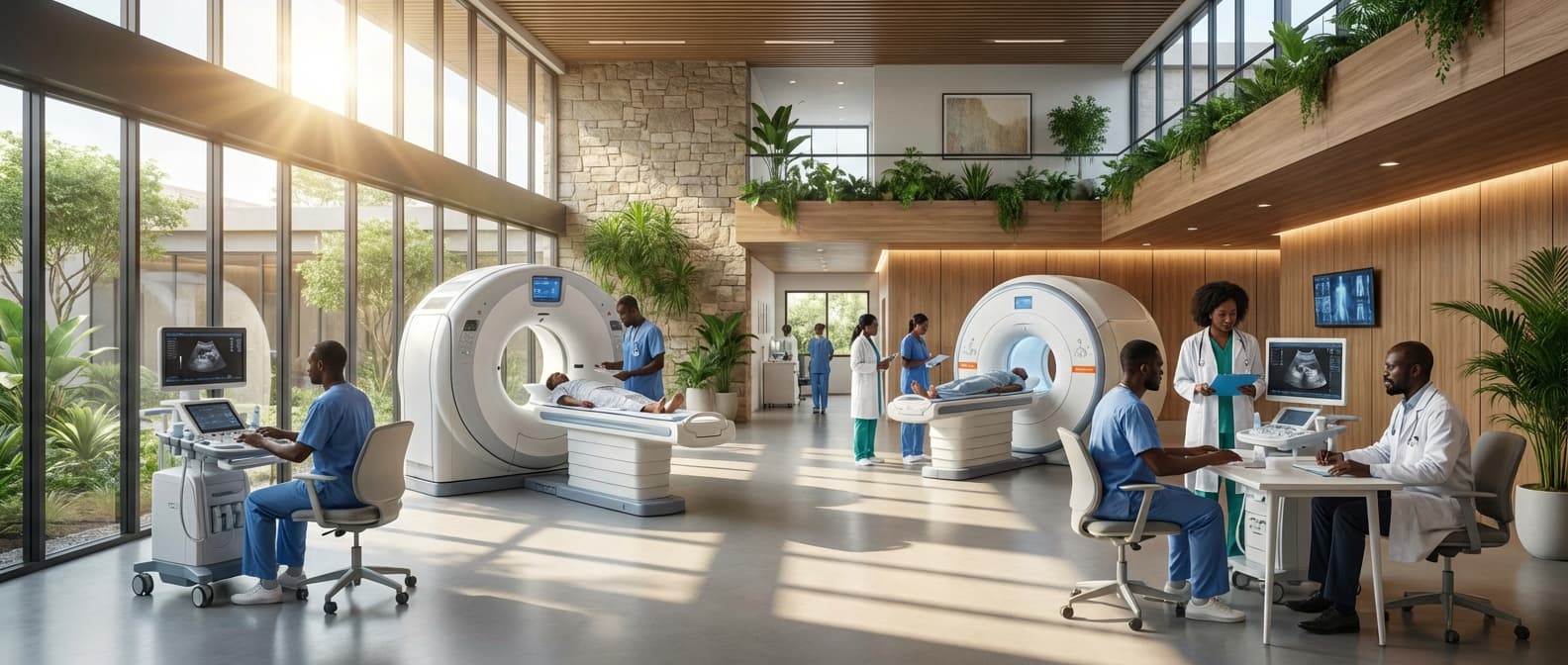
Diagnostic Imaging in Kenya
Engineering Excellence & Technical Support
High-resolution imaging systems including CT scanners, MRI, X-ray, and ultrasound technology for accurate clinical diagnosis. High-standard technical execution following OEM protocols and local regulatory frameworks.
Advanced MRI & CT Scans
Access to state-of-the-art Magnetic Resonance Imaging (MRI) and Computed Tomography (CT) scanners, providing high-resolution diagnostic capabilities for a wide range of medical conditions across multiple leading Kenyan healthcare facilities.
AI-Powered Ultrasound Enhancements
Integration of Artificial Intelligence (AI) algorithms to improve the accuracy and efficiency of ultrasound examinations, aiding in earlier and more precise diagnosis of critical findings by experienced radiologists in Kenya.
Digital X-ray & Fluoroscopy Networks
Widespread deployment of advanced digital X-ray and fluoroscopy units, enabling rapid image acquisition, enhanced image quality, and seamless digital sharing for faster consultations and treatment planning throughout Kenya's healthcare system.
What Is Diagnostic Imaging In Kenya?
Diagnostic imaging in Kenya refers to the use of various medical imaging technologies to visualize the internal structures of the human body for the purpose of diagnosis, monitoring, and interventional procedures. This service is a cornerstone of modern healthcare, providing non-invasive or minimally invasive methods to detect abnormalities, assess disease progression, and guide treatment strategies. The overarching goal is to obtain anatomical and physiological information that cannot be readily acquired through physical examination or routine laboratory tests. The integration of advanced imaging modalities with experienced radiologists and technicians ensures accurate and timely patient management.
| Who Needs Diagnostic Imaging? | Typical Use Cases |
|---|---|
| Patients presenting with undiagnosed symptoms (e.g., pain, swelling, abnormal lumps, neurological deficits). | Trauma patients requiring assessment of fractures, internal bleeding, or organ damage. |
| Individuals undergoing routine health check-ups or cancer screenings (e.g., mammography, low-dose CT for lung cancer screening). | Monitoring of chronic conditions (e.g., assessing tumor size in cancer patients, evaluating progression of degenerative diseases). |
| Patients requiring pre-operative evaluation or post-operative follow-up. | Guiding interventional procedures such as biopsies, drain placements, or angioplasty. |
| Pregnant women for fetal well-being assessment and monitoring. | Diagnosing and staging of various cancers (e.g., lung, liver, bone, brain, breast, prostate). |
| Patients suspected of having cardiovascular diseases (e.g., blockages in arteries). | Evaluating gastrointestinal issues (e.g., blockages, inflammation, bleeding). |
| Individuals with suspected neurological disorders (e.g., stroke, tumors, multiple sclerosis). | Assessing musculoskeletal injuries and conditions (e.g., tears, arthritis, infections). |
Key Components of Diagnostic Imaging Services in Kenya
- Radiography (X-ray): Utilizes ionizing radiation to create two-dimensional images of bones, organs, and tissues.
- Computed Tomography (CT) Scan: Employs a series of X-ray images taken from different angles around the body and uses computer processing to create cross-sectional images (slices) of bones, blood vessels, and soft tissues.
- Magnetic Resonance Imaging (MRI): Uses a strong magnetic field and radio waves to generate detailed images of organs, soft tissues, bone, and virtually all other internal body structures.
- Ultrasound (Sonography): Employs high-frequency sound waves to create real-time images of internal body structures, including organs, blood flow, and fetuses during pregnancy.
- Fluoroscopy: A type of medical imaging that shows a continuous X-ray image on a monitor, similar to an X-ray movie, which allows visualization of the movement of a body part or an instrument/substance through the body.
- Mammography: A specialized type of X-ray used to examine breast tissue for screening and diagnosis of breast cancer.
Who Needs Diagnostic Imaging In Kenya?
Diagnostic imaging plays a crucial role in healthcare delivery in Kenya, aiding in the diagnosis, staging, and monitoring of a wide range of medical conditions. Its applications span from detecting fractures and internal injuries to identifying tumors and assessing organ function. The demand for these services is driven by a growing population, an increasing burden of non-communicable diseases, and advancements in medical technology. This service is essential across various healthcare settings, from primary care clinics to tertiary referral hospitals.
| Healthcare Department/Specialty | Typical Diagnostic Imaging Modalities Used | Common Conditions/Applications |
|---|---|---|
| Orthopedics | X-ray, CT Scan | Fractures, dislocations, arthritis, bone tumors |
| Neurology | MRI, CT Scan, X-ray (skull) | Stroke, brain tumors, spinal cord injuries, epilepsy |
| Cardiology | Echocardiogram (ultrasound), CT Angiography, Cardiac MRI | Heart disease, blocked arteries, valve problems |
| Oncology | CT Scan, MRI, PET Scan, Ultrasound | Cancer diagnosis, staging, treatment monitoring, detecting metastases |
| General Surgery | CT Scan, Ultrasound, X-ray | Appendicitis, bowel obstruction, gallstones, organ damage |
| Emergency Medicine | X-ray, CT Scan, Ultrasound | Trauma, acute abdomen, suspected internal bleeding |
| Pediatrics | X-ray, Ultrasound, MRI | Congenital anomalies, infections, bone disorders in children |
| Radiology Department (Core) | All modalities (X-ray, CT, MRI, Ultrasound, Mammography) | Centralized interpretation and procedural performance for all specialties |
| Internal Medicine | X-ray, CT Scan, Ultrasound | Pneumonia, kidney stones, liver disease, gastrointestinal issues |
| Obstetrics & Gynecology | Ultrasound, MRI (pelvic) | Pregnancy monitoring, fibroids, ovarian cysts, pelvic masses |
Key Target Customers for Diagnostic Imaging in Kenya
- Individuals seeking diagnosis for acute injuries (e.g., fractures, head trauma)
- Patients with suspected or diagnosed chronic illnesses (e.g., cancer, cardiovascular disease, neurological disorders)
- Individuals undergoing routine health screenings or follow-up care
- Patients requiring pre-operative assessment or post-operative monitoring
- Specialist physicians and surgeons who require imaging for patient management
- Healthcare providers in remote or underserved areas who may not have direct access to imaging facilities
Diagnostic Imaging Process In Kenya
The diagnostic imaging process in Kenya, like in many other healthcare systems, follows a structured workflow to ensure accurate and timely diagnoses. This process typically begins with a patient inquiry or referral and culminates in the delivery of a diagnostic report to the referring physician. The workflow involves several key stages, each with specific steps and stakeholders.
| Stage | Description | Key Actors | Typical Duration | Potential Challenges |
|---|---|---|---|---|
| Patient Inquiry/Referral | A patient experiences symptoms or requires a follow-up, leading to a physician's request for an imaging examination. This can be initiated by the patient directly to a facility or through a referral from a doctor. | Patient, Referring Physician, Clinic/Hospital Administration | Immediate to 1 day | Lack of awareness about available services, difficulty accessing specialists for referrals, long waiting times for doctor's appointments. |
| Appointment Scheduling | Once a referral is made, an appointment is scheduled for the imaging procedure. This involves coordinating patient availability with the imaging center's schedule and equipment availability. | Patient, Imaging Center Reception/Scheduling Staff, Referring Physician's Office | 1 day to 1 week (can be longer for specialized or high-demand scans) | Limited appointment slots, equipment downtime, patient inability to attend scheduled appointments, geographical distance to imaging centers. |
| Patient Preparation | Depending on the type of scan, the patient may need to follow specific preparation instructions, such as fasting, avoiding certain medications, or consuming contrast agents. Instructions are provided by the imaging facility. | Patient, Imaging Center Technologist/Nurse | Varies (from hours to days prior to scan) | Patient non-compliance with instructions, misunderstanding of preparation protocols, lack of access to necessary preparation materials (e.g., contrast agents). |
| Image Acquisition (Scan) | The patient undergoes the diagnostic imaging procedure (e.g., X-ray, Ultrasound, CT scan, MRI) by a trained radiographer or technologist. The technology used depends on the clinical indication. | Patient, Radiographer/Technologist, Imaging Equipment | 15 minutes to 1 hour (depending on scan complexity) | Equipment malfunction, power outages, patient discomfort or inability to remain still, lack of skilled technologists, radiation safety concerns. |
| Image Interpretation | A radiologist, a medical doctor specializing in medical imaging, reviews the acquired images to identify any abnormalities or findings relevant to the patient's condition. | Radiologist, Diagnostic Images | 1 hour to 2 days (can be faster for urgent cases) | Shortage of radiologists (especially in rural areas), high workload for existing radiologists, variations in interpretation quality, limited access to advanced diagnostic tools for complex cases. |
| Report Generation | The radiologist compiles their findings and conclusions into a formal diagnostic report. This report includes a description of the images, any identified abnormalities, and a diagnostic impression or recommendation. | Radiologist, Reporting Software | 1 hour to 1 day (often concurrently with interpretation) | Time constraints, need for clear and concise language, potential for errors in dictation or transcription. |
| Report Delivery & Follow-up | The diagnostic report is sent to the referring physician. The physician then communicates the results to the patient and discusses further management or treatment plans based on the imaging findings. | Referring Physician, Patient, Imaging Center Administration, Electronic Health Records (EHR) System (if available) | 1 day to 3 days | Delayed report delivery, miscommunication between physicians and patients, lack of integrated EHR systems for seamless sharing, patient follow-up challenges, cost of subsequent investigations or treatments. |
Key Stages in the Diagnostic Imaging Process in Kenya:
- Patient Inquiry/Referral
- Appointment Scheduling
- Patient Preparation
- Image Acquisition (Scan)
- Image Interpretation
- Report Generation
- Report Delivery & Follow-up
Diagnostic Imaging Cost In Kenya
Diagnostic imaging plays a crucial role in modern healthcare, enabling accurate diagnosis and treatment planning. In Kenya, the cost of these services can vary significantly, influenced by a multitude of factors. Understanding these pricing dynamics is essential for both healthcare providers and patients seeking affordable and effective medical imaging.
Several key factors contribute to the overall cost of diagnostic imaging in Kenya:
- Type of Imaging Modality: Different imaging technologies have vastly different acquisition and maintenance costs. For instance, an X-ray is generally less expensive than an MRI or CT scan due to the complexity of the equipment and the specialized expertise required to operate it. Ultrasound is typically the most accessible and affordable option.
- Facility Type and Reputation: Larger, well-equipped private hospitals and specialized diagnostic centers with advanced technology and highly qualified radiologists tend to charge higher prices than smaller clinics or public healthcare facilities. The perceived quality of care and the brand reputation also influence pricing.
- Geographic Location: Costs can vary between urban centers like Nairobi and Mombasa compared to more rural or peri-urban areas. Urban areas often have higher operational costs (rent, utilities, salaries) which can be reflected in service prices. However, in some cases, competition in urban areas might also lead to more competitive pricing.
- Technology and Equipment Age/Sophistication: Facilities utilizing the latest, high-resolution imaging equipment will likely have higher costs associated with their acquisition, maintenance, and calibration. The age and sophistication of the technology directly impact the clarity and detail of the images produced.
- Radiologist and Technologist Expertise: The fees charged by highly experienced and specialized radiologists for interpretation, as well as the cost of skilled radiographers and technologists, contribute to the overall expense. Continuous training and professional development also add to these costs.
- Complexity of the Scan: A simple, routine scan will be less expensive than a complex procedure requiring advanced protocols, contrast agents, or extended scanning times. For example, a basic chest X-ray is significantly cheaper than a contrast-enhanced abdominal CT scan.
- Contrast Agents: When contrast agents are required to enhance image visibility, the cost of these agents is added to the procedure fee. The type and amount of contrast used will impact the final price.
- Insurance Coverage: While not a direct pricing factor from the facility's perspective, insurance coverage significantly impacts the out-of-pocket expense for patients. Patients with comprehensive medical insurance may have a substantial portion or all of their imaging costs covered, depending on their policy.
- Government Subsidies and Public Healthcare: Public hospitals and government-funded facilities often offer subsidized rates for diagnostic imaging, making them more affordable for a larger segment of the population. However, these facilities may also face longer waiting times and have limited access to the most advanced technologies.
The price ranges for common diagnostic imaging procedures in Kenya (as of late 2023/early 2024) can be approximated in Kenyan Shillings (KES). It's important to note that these are indicative ranges, and actual prices may vary.
Diagnostic Imaging Cost Ranges in Kenya (Approximate KES)
| Imaging Modality | Typical Price Range (KES) |
|---|---|
| X-ray (e.g., Chest X-ray) | 1,000 - 3,000 |
| Ultrasound (e.g., Abdominal, Pelvic) | 2,000 - 5,000 |
| CT Scan (e.g., Head, Abdomen) | 8,000 - 25,000 |
| MRI Scan (e.g., Brain, Spine, Knee) | 15,000 - 50,000+ |
| Mammography | 3,000 - 7,000 |
| Fluoroscopy | 4,000 - 10,000 |
Key Factors Influencing Diagnostic Imaging Costs in Kenya
- Type of Imaging Modality (X-ray, Ultrasound, CT, MRI)
- Facility Type (Public Hospital, Private Hospital, Diagnostic Center)
- Geographic Location (Urban vs. Rural)
- Technology and Equipment Sophistication
- Radiologist and Technologist Expertise
- Complexity of the Scan and Protocol
- Use of Contrast Agents
- Insurance Coverage and Patient Payment Method
- Government Subsidies and Public Healthcare Policies
Affordable Diagnostic Imaging Options
Accessing affordable diagnostic imaging is crucial for timely and accurate medical diagnoses without incurring excessive financial burdens. Understanding different imaging modalities, exploring value bundles, and implementing cost-saving strategies can significantly reduce out-of-pocket expenses. This guide provides an overview of common diagnostic imaging services and actionable advice for managing costs.
| Cost-Saving Strategy | Explanation | Potential Savings |
|---|---|---|
| Inquire about Value Bundles | Some imaging centers and hospitals offer bundled pricing for related diagnostic tests or packages of services. This can be more cost-effective than paying for each test individually. | Varies, but can offer 10-30% discount. |
| Shop Around and Compare Prices | Imaging costs can vary significantly between facilities. Obtain quotes from multiple providers, including independent imaging centers, hospitals, and imaging networks. | Up to 50% or more. |
| Understand Your Insurance Coverage | Before scheduling, verify with your insurance provider what is covered, any deductibles, co-pays, or co-insurance you'll be responsible for, and whether the facility is in-network. | Avoids surprise bills and unexpected out-of-network charges. |
| Ask About Self-Pay Discounts | If you do not have insurance or are facing high out-of-pocket costs, inquire about discounts for paying upfront without insurance. These discounts can be substantial. | Often 30-70% off. |
| Utilize Urgent Care or Free-Standing Imaging Centers | Free-standing imaging centers and some urgent care facilities are often less expensive than hospital-based imaging departments, as they have lower overhead costs. | Can be 20-50% cheaper than hospital imaging. |
| Ask About Generic or Less Expensive Modalities | Discuss with your doctor if a less expensive imaging modality (e.g., X-ray or ultrasound) could provide the necessary diagnostic information instead of a more expensive option like MRI or CT. | Significant savings depending on the modality replaced. |
| Seek Out Imaging Networks or Alliances | Some healthcare systems or independent groups form alliances to offer more competitive pricing on diagnostic services. | Potentially lower rates than individual facilities. |
| Negotiate Cash Prices | Don't hesitate to politely negotiate the price for cash payments, especially if you are self-paying or have a high deductible. Providers may be willing to offer a discount. | Can lead to further reductions on negotiated prices. |
| Explore Payment Plans | If immediate payment is a barrier, ask about interest-free payment plans or financing options offered by the imaging facility. | Allows for manageable monthly payments instead of a large lump sum. |
Common Diagnostic Imaging Modalities
- X-ray: Uses electromagnetic radiation to create images of bones and some soft tissues. Often the first-line imaging for fractures and lung conditions.
- Ultrasound (Sonography): Employs sound waves to create images of internal organs and soft tissues, commonly used for pregnancy, abdominal scans, and vascular imaging.
- Computed Tomography (CT) Scan: Combines multiple X-ray images taken from different angles to create detailed cross-sectional views of the body. Excellent for visualizing bones, soft tissues, and blood vessels.
- Magnetic Resonance Imaging (MRI): Uses strong magnetic fields and radio waves to produce detailed images of organs, soft tissues, bone marrow, and virtually all other internal body structures. Highly effective for neurological and musculoskeletal conditions.
- Positron Emission Tomography (PET) Scan: Uses a radioactive tracer to detect metabolic activity within the body, often used to diagnose and monitor cancer, heart disease, and brain disorders.
Verified Providers In Kenya
In Kenya's dynamic healthcare landscape, identifying reliable and qualified healthcare providers is paramount for informed patient decisions. Franance Health stands out as a beacon of trust, consistently demonstrating a commitment to excellence through its rigorous credentialing processes and a dedication to patient well-being. This document outlines why Franance Health credentials represent the best choice for accessing quality healthcare services in Kenya.
| Credential Aspect | Franance Health Verification | Patient Benefit |
|---|---|---|
| Medical Licensure | Confirmed current and valid medical licenses for all practitioners. | Ensures practitioners are legally authorized to practice medicine. |
| Educational Background | Verification of degrees, diplomas, and specialized training from accredited institutions. | Confirms foundational knowledge and expertise. |
| Professional Experience | Thorough review of work history, areas of practice, and patient outcomes. | Demonstrates practical skill and proven track record. |
| Specialist Certifications | Validation of board certifications and recognized specialist qualifications. | Guarantees expertise in specific medical fields. |
| Facility Accreditation | Partnership only with facilities holding valid accreditation from relevant health authorities. | Ensures safe, well-equipped, and properly managed healthcare environments. |
| Ethical Conduct | Adherence to a strict code of ethics and professional conduct. | Promotes trust and integrity in healthcare delivery. |
Key Credentials and Benefits of Choosing Franance Health:
- Accreditation and Certification: Franance Health partners exclusively with healthcare facilities and professionals who have undergone stringent accreditation and certification by recognized national and international bodies. This ensures adherence to the highest standards of clinical practice, patient safety, and ethical conduct.
- Rigorous Practitioner Vetting: Every healthcare professional affiliated with Franance Health is meticulously vetted. This includes verifying their medical licenses, educational qualifications, specialist certifications, and professional experience, guaranteeing that patients are treated by competent and experienced individuals.
- Commitment to Quality Assurance: Franance Health implements robust quality assurance programs. This involves regular audits, performance reviews, and feedback mechanisms to continuously monitor and improve the quality of care delivered by their network of providers.
- Patient-Centric Approach: A core tenet of Franance Health is its unwavering focus on patient needs and satisfaction. Their verified providers are trained to prioritize clear communication, empathetic care, and personalized treatment plans, fostering trust and ensuring a positive patient experience.
- Access to Specialized Expertise: Through their extensive network, Franance Health provides access to a wide range of specialists and sub-specialists. This means that whether you require routine care or complex medical interventions, you can be confident in finding a credentialed expert to meet your specific health needs.
- Transparency and Information: Franance Health is committed to transparency. Patients can access verifiable information about the credentials and specializations of their chosen providers, empowering them to make informed decisions about their healthcare.
Scope Of Work For Diagnostic Imaging
This Scope of Work (SOW) outlines the requirements for providing comprehensive diagnostic imaging services. It details the technical deliverables expected from the service provider and the standard specifications that will be adhered to throughout the engagement. The goal is to ensure accurate, timely, and high-quality diagnostic imaging to support patient care and clinical decision-making.
| Imaging Modality | Standard Specifications/Requirements | Reporting Turnaround Time (TAT) |
|---|---|---|
| X-ray (General Radiography) | Digital radiography (DR) or Computed radiography (CR) systems. High-resolution detectors. Dose optimization protocols. Compliance with ALARA principles. | Routine: 24 hours; STAT: 1 hour |
| Computed Tomography (CT) | Multi-detector CT (MDCT) scanner (e.g., 64-slice or higher). Advanced reconstruction algorithms. Low-dose protocols. Contrast injection systems. | Routine: 24 hours; STAT: 1 hour |
| Magnetic Resonance Imaging (MRI) | High-field strength MRI scanner (e.g., 1.5T or 3T). Gradient performance suitable for advanced sequences (e.g., diffusion, perfusion). Coil availability for all body parts. | Routine: 24-48 hours; STAT: 2 hours |
| Ultrasound | High-frequency transducers. Doppler capabilities. Advanced imaging modes (e.g., elastography, contrast-enhanced ultrasound). Portable units for bedside imaging. | Routine: 24 hours; STAT: 1 hour |
| Mammography | Digital mammography systems with tomosynthesis capability. High-resolution detectors. Dedicated breast imaging protocols. | Routine: 48 hours; STAT: Not Applicable (unless for urgent biopsy guidance) |
| Fluoroscopy | Digital fluoroscopy with high-quality imaging. C-arm systems with dose reduction features. Recording and playback capabilities. | Immediate reporting post-procedure |
| Nuclear Medicine | Gamma cameras (SPECT/SPECT-CT). Appropriate radiopharmaceutical inventory and handling protocols. Patient safety measures. | Routine: 48 hours; STAT: 4 hours (for specific urgent scans) |
Technical Deliverables
- Provision of all necessary diagnostic imaging equipment and modalities (e.g., X-ray, CT, MRI, Ultrasound, Mammography, Fluoroscopy, Nuclear Medicine).
- Installation, calibration, and regular maintenance of all imaging equipment according to manufacturer specifications and industry best practices.
- Operation and staffing of imaging departments/suites with qualified and licensed technologists and radiologists.
- Generation and delivery of diagnostic imaging reports in a timely manner, adhering to agreed-upon turnaround times (TATs).
- Secure storage and retrieval of all acquired imaging studies and associated reports.
- Integration of Picture Archiving and Communication Systems (PACS) and Radiology Information Systems (RIS) with the client's Electronic Health Record (EHR) system.
- Provision of remote access capabilities for reviewing images and reports by authorized clinical staff.
- Implementation of quality assurance programs for imaging equipment and radiologist performance.
- Adherence to all relevant regulatory requirements (e.g., HIPAA, ACR, Joint Commission).
- On-call services for emergency imaging procedures, as specified.
- Ongoing training and professional development for imaging staff.
- Disaster recovery and business continuity plans for imaging services.
Service Level Agreement For Diagnostic Imaging
This Service Level Agreement (SLA) outlines the guaranteed performance standards for diagnostic imaging services provided by [Your Company Name] to [Client Name]. It covers response times for critical and routine imaging requests and uptime guarantees for imaging equipment and associated systems.
| Service Component | Target Performance | Measurement Method | Remedy for Non-Compliance |
|---|---|---|---|
| Response Time (Critical Imaging) | Within 30 minutes | Timestamp of request initiation in RIS/PACS to timestamp of preliminary findings availability. | Service credit of 5% of monthly service fee for each instance exceeding the target. Escalation to dedicated support team. |
| Response Time (Routine Imaging) | Within 4 hours | Timestamp of request initiation in RIS/PACS to timestamp of preliminary findings availability. | Service credit of 2% of monthly service fee for each instance exceeding the target. |
| System Uptime Guarantee (Imaging Equipment) | 99.5% | Measured over a rolling 30-day period. Downtime excludes scheduled maintenance windows. | Service credit of 5% of monthly service fee for each full percentage point below the guarantee. Service credit of 10% for exceeding 10 hours of unplanned downtime per month. |
| System Uptime Guarantee (PACS/RIS) | 99.8% | Measured over a rolling 30-day period. Downtime excludes scheduled maintenance windows. | Service credit of 3% of monthly service fee for each full percentage point below the guarantee. |
| Image Availability | 99.9% | Measured over a rolling 30-day period. | Service credit of 2% of monthly service fee for each full percentage point below the guarantee. |
| Report Availability | 99.9% | Measured over a rolling 30-day period. | Service credit of 2% of monthly service fee for each full percentage point below the guarantee. |
Key Performance Indicators (KPIs)
- Response Time for Critical Imaging Requests: The time elapsed from the initiation of a critical imaging request by the referring physician to the availability of preliminary findings.
- Response Time for Routine Imaging Requests: The time elapsed from the initiation of a routine imaging request by the referring physician to the availability of preliminary findings.
- System Uptime Guarantee: The percentage of scheduled operational time that imaging equipment and associated PACS/RIS systems are available and functional.
- Image Availability: The percentage of time that completed diagnostic images are accessible through the PACS for review.
- Report Availability: The percentage of time that final diagnostic reports are accessible through the RIS/PACS for review.
Frequently Asked Questions

Ready when you are
Let's scope your Diagnostic Imaging in Kenya project in Kenya.

Scaling healthcare logistics and technical systems across the entire continent.