
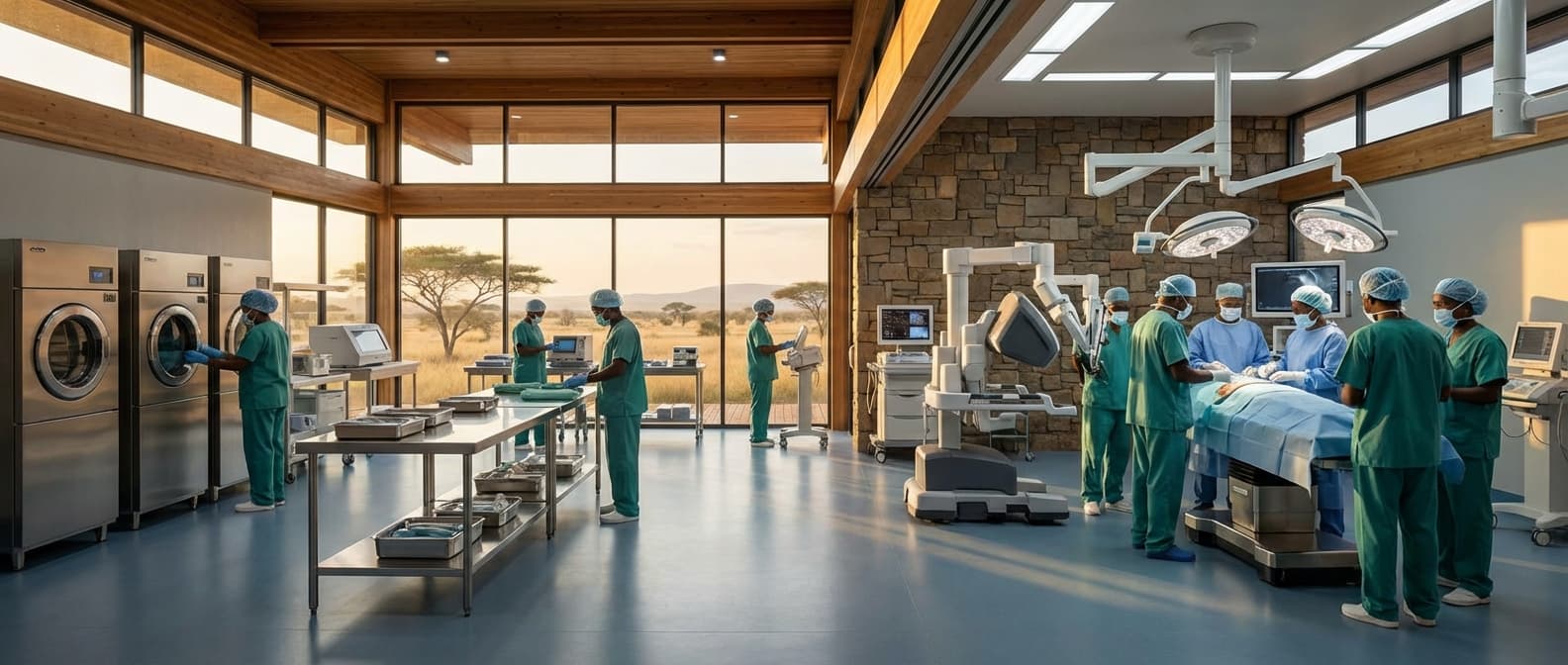
Medical Gas System Design & Installation in Kenya
Engineering Excellence & Technical Support
Medical gas pipeline systems: O2, N2O, air, vacuum High-standard technical execution following OEM protocols and local regulatory frameworks.
Centralized Medical Gas Supply
Engineered and installed robust centralized medical gas systems, ensuring reliable and continuous supply of medical gases (oxygen, medical air, vacuum) to critical care areas, operating rooms, and patient wards across leading Kenyan hospitals. Optimized pipe sizing, pressure regulation, and alarm systems for maximum safety and efficiency.
Nitrous Oxide & Specialty Gas Integration
Successfully designed and implemented specialized pipelines for nitrous oxide (N2O) and other critical medical gases, meeting stringent international standards (e.g., ISO 7396-1) and local Kenyan regulations. Ensured leak-free connections, appropriate material selection, and seamless integration with existing infrastructure for advanced anesthesia and pain management.
Emergency Gas Shut-off & Monitoring Systems
Installed and commissioned advanced emergency medical gas shut-off valves and comprehensive monitoring systems in accordance with ASHRAE and Kenyan safety guidelines. Provided real-time pressure, flow, and purity data, along with audible and visual alarms to guarantee patient safety and rapid response in emergency scenarios.
What Is Medical Gas System Design & Installation In Kenya?
Medical gas system design and installation in Kenya refers to the specialized engineering and construction process of creating integrated systems that deliver medical gases to healthcare facilities. These systems are critical for patient care, supporting a range of life-saving and therapeutic interventions. The design phase involves meticulous planning, adhering to international and national standards (such as ISO, NFPA, and relevant Kenyan building codes and health regulations), to ensure safety, reliability, and efficiency. This includes determining the types and quantities of gases required, selecting appropriate pipeline materials (typically copper or stainless steel), specifying pressure regulation and control equipment, and designing the distribution network throughout the facility. Installation is carried out by certified technicians experienced in handling medical gas systems, ensuring leak-proof connections, proper installation of outlets and alarms, and thorough system testing and commissioning.
| Who Needs Medical Gas System Design & Installation | Typical Use Cases |
|---|---|
| Hospitals (public and private) | Oxygen therapy for respiratory distress, anesthesia, resuscitation |
| Surgical centers | Nitrous oxide for anesthesia, medical air for surgical tools |
| Intensive Care Units (ICUs) and High Dependency Units (HDUs) | Ventilation support, continuous oxygen supply |
| Emergency rooms and trauma centers | Rapid delivery of oxygen and anesthetic gases |
| Specialty clinics (e.g., oncology, pulmonology) | Targeted gas therapies, diagnostic procedures |
| Dialysis centers | Medical air for equipment operation |
| Veterinary hospitals | Anesthesia and oxygen support for animals |
| Research laboratories (in healthcare settings) | Specialized gas mixtures for experiments |
Key Components of Medical Gas Systems
- Medical gas sources (bulk storage tanks, cylinders, medical air compressors, vacuum pumps)
- Central supply panels and manifolds
- Pipeline distribution networks (primary and secondary)
- Pressure regulators and safety relief devices
- Alarm systems (monitoring pressure, flow, and purity)
- Zone control valves
- Gas outlets (wall-mounted, ceiling pendants, integrated modules)
- Terminal units and flowmeters
Who Needs Medical Gas System Design & Installation In Kenya?
The design and installation of medical gas systems are critical for the safe and effective operation of healthcare facilities in Kenya. These systems are not just about pipes and gases; they are integral to patient care, providing essential medical gases like oxygen, medical air, nitrous oxide, and vacuum to various medical applications. Investing in properly designed and installed medical gas systems ensures compliance with national and international standards, minimizes risks of contamination and leakage, and supports the advanced medical procedures demanded by a growing population and evolving healthcare landscape in Kenya. This expertise is crucial for any facility where life-support and diagnostic equipment rely on a consistent and pure supply of medical gases.
| Customer Type | Primary Needs Addressed | Key Departments Served |
|---|---|---|
| Public Hospitals | Ensuring adequate supply for large patient volumes, critical care, and general medical services. Compliance with government standards. | All departments, with particular emphasis on ICUs, Operating Theaters, and Emergency Wards. |
| Private Hospitals & Specialty Clinics | Providing advanced medical gas solutions for specialized procedures, patient comfort, and state-of-the-art equipment. Competitive advantage. | Operating Theaters, ICUs, Endoscopy Suites, Cardiology Departments, Oncology Units. |
| Maternity & Fertility Centers | Essential for neonatal care (oxygen), anesthesia (nitrous oxide), and specialized fertility procedures. | Delivery Rooms, NICUs, Operating Theaters, Fertility Treatment Rooms. |
| Ambulance & Emergency Services | Ensuring reliable oxygen supply for critical patient transport and pre-hospital care. Mobile gas solutions. | Ambulances, Emergency Response Vehicles. |
| Veterinary Hospitals | Providing safe and controlled anesthetic gases, oxygen for respiratory support for animals. | Operating Theaters, Recovery Wards, Intensive Care Units for Animals. |
| Research & Educational Institutions | Supporting medical training, research requiring controlled gas environments, and clinical practice. | Simulation Labs, Research Laboratories, Teaching Hospitals. |
Who Needs Medical Gas System Design & Installation in Kenya? Target Customers & Departments
- {"items":["Public Hospitals (National, County Referral, District)","Private Hospitals and Specialty Clinics","Maternity and Fertility Centers","Ambulance and Emergency Services Providers","Veterinary Hospitals and Clinics","Research and Educational Institutions with Medical Facilities","Field Hospitals and Disaster Relief Organizations","Dental Clinics with Anesthetic Needs"],"title":"Target Customers"}
- {"items":["Operating Theaters/Surgical Suites","Intensive Care Units (ICUs)","High Dependency Units (HDUs)","Emergency/Accident & Emergency (A&E) Departments","Neonatal Intensive Care Units (NICUs)","Recovery Rooms","Patient Wards (General, Surgical, Medical)","Maternity Wards and Delivery Rooms","Diagnostic Imaging Departments (e.g., for anesthesia in MRI/CT scans)","Dental Suites","Rehabilitation Centers","Laboratories"],"title":"Key Departments Requiring Medical Gas Systems"}
Medical Gas System Design & Installation Process In Kenya
This document outlines the typical workflow for the design and installation of a Medical Gas System in Kenya, from the initial client inquiry to the final execution and handover. The process is structured to ensure compliance with national regulations, international standards, and client-specific requirements.
| Stage | Key Activities | Deliverables/Outputs | Typical Timeline (Indicative) |
|---|---|---|---|
| Client expresses interest and provides preliminary project requirements (e.g., type of facility, number of beds, required gases). Discussion to understand scope, budget, and desired timeline. | Project brief, preliminary understanding of scope. | 1-2 Weeks |
| On-site visit to assess the facility's existing infrastructure, space availability, structural considerations, power supply, and potential challenges. Review of architectural drawings. Assessment of adherence to relevant Kenyan building codes and healthcare facility guidelines. | Site survey report, feasibility assessment, identification of potential constraints. | 2-4 Weeks |
| Development of a preliminary system layout, selection of gas types and quantities, and initial equipment specification. Preparation of a detailed proposal including technical specifications, cost estimates, project timeline, and terms and conditions. | Conceptual design drawings, preliminary Bill of Quantities (BOQ), detailed project proposal. | 3-5 Weeks |
| Creation of comprehensive engineering drawings (e.g., piping layouts, schematics, valve locations, alarm panel configurations) compliant with relevant standards (e.g., BS EN 737, NFPA 99, Kenyan Ministry of Health guidelines). Detailed BOQ and equipment specifications. | Detailed design drawings (CAD), engineering calculations, final BOQ, technical specifications. | 4-8 Weeks |
| Submission of design documents to relevant authorities for approval (e.g., National Construction Authority, Ministry of Health, local county government). Obtaining necessary permits for construction and installation. | Approved design drawings, construction permits. | 4-12 Weeks (highly dependent on authority timelines) |
| Sourcing and procurement of all necessary medical gas equipment, piping, fittings, valves, alarms, and related accessories from approved and certified suppliers. Ensuring compliance with international quality standards. | Procured materials and equipment, supplier invoices. | 6-10 Weeks (can run concurrently with approvals) |
| On-site installation of the medical gas system by qualified technicians. This includes pipework installation, welding, pressure testing, and connection of all components. Commissioning involves system start-up, functional checks, and calibration of all equipment. | Installed medical gas system, initial pressure test reports. | 8-16 Weeks (depending on facility size and complexity) |
| Rigorous testing and validation of the entire system to ensure it meets all design specifications, safety standards, and performance requirements. This includes purity testing, flow rate testing, and alarm system verification. Obtaining certification from relevant bodies. | Test reports, validation certificates, final system certification. | 2-4 Weeks |
| Comprehensive training for facility staff on the operation, maintenance, and emergency procedures for the medical gas system. Formal handover of the system, including all documentation (as-built drawings, O&M manuals, test certificates). | Trained staff, O&M manuals, as-built drawings, handover documentation. | 1 Week |
| Provision of ongoing technical support, warranty services, and scheduled maintenance to ensure the continued safe and efficient operation of the medical gas system. | Maintenance agreements, service reports. | Ongoing |
Medical Gas System Design & Installation Process in Kenya: Workflow
- Initial Inquiry & Needs Assessment
- Site Survey & Feasibility Study
- Conceptual Design & Proposal Development
- Detailed Design & Engineering
- Regulatory Approvals & Permitting
- Procurement & Material Sourcing
- Installation & Commissioning
- Testing, Validation & Certification
- Training & Handover
- Post-Installation Support & Maintenance
Medical Gas System Design & Installation Cost In Kenya
Designing and installing a medical gas system in Kenya involves a range of costs influenced by several factors. These systems are critical for healthcare facilities, providing essential gases like oxygen, medical air, vacuum, and nitrous oxide. The complexity of the system, the size of the facility, the specific medical gases required, the materials used, and the labor involved are primary determinants of the overall price. Installation by certified professionals is paramount to ensure safety and compliance with national and international standards. The pricing in Kenya is typically quoted in Kenyan Shillings (KES).
| System Component/Service | Estimated Cost Range (KES) | Notes |
|---|---|---|
| Medical Gas Design & Engineering | 50,000 - 300,000+ | Varies with facility size and complexity. |
| Copper Piping (per meter, installed) | 1,500 - 5,000+ | Depends on pipe diameter, grade, and installation difficulty. |
| Medical Gas Outlets (installed) | 8,000 - 25,000+ per outlet | Includes outlet, rough-in box, and connection to main line. |
| Oxygen Manifold (cylinder bank) | 150,000 - 500,000+ | For facilities not using bulk storage. Capacity dependent. |
| Medical Air Compressor (system) | 200,000 - 1,000,000+ | Includes compressors, dryers, filters, and receiver tanks. |
| Vacuum Pump System | 100,000 - 600,000+ | Includes pumps, receiver tanks, and filtration. |
| Nitrous Oxide Manifold/System | 100,000 - 400,000+ | Varies based on supply method (cylinders or bulk). |
| Bulk Liquid Oxygen Storage Tank (rental/purchase) | Negotiable (significant upfront/monthly cost) | Typically for larger hospitals, often with a supplier contract. |
| Alarm & Monitoring Systems | 50,000 - 250,000+ | Basic to advanced systems, dependent on features and zones. |
| Testing & Commissioning | 30,000 - 150,000+ | Essential for safety and regulatory approval. |
| Total Installation Cost (Small Clinic) | 500,000 - 1,500,000 | Basic system, fewer outlets. |
| Total Installation Cost (Medium Hospital) | 2,000,000 - 8,000,000+ | More complex system, higher number of outlets, advanced features. |
| Total Installation Cost (Large Hospital/Specialty Center) | 10,000,000 - 50,000,000+ | Extensive system, multiple gas types, advanced technology, bulk storage. |
Key Pricing Factors for Medical Gas System Design & Installation in Kenya:
- System Complexity & Scope: The number of medical gases required (e.g., oxygen, medical air, vacuum, nitrous oxide, CO2), the number of outlets per room, and the size and type of the facility (hospital, clinic, dental office) significantly impact cost. Larger and more complex systems naturally incur higher expenses.
- Facility Size & Bed Count: The total area to be covered and the number of beds requiring medical gas supply are direct drivers of material quantity and installation labor, thus affecting the final price.
- Type of Medical Gases: Different gases may have varying cylinder sizes, storage requirements, and regulatory considerations, which can influence installation costs.
- Material Quality & Standards: The choice between copper piping (standard for medical gases) of varying grades, the quality of manifolds, regulators, alarm systems, and outlet fixtures will affect the material cost. Compliance with KES standards and international certifications (e.g., NFPA, HTM) will influence material selection.
- Specialized Equipment: This includes medical gas generators (oxygen concentrators, medical air compressors), vacuum pumps, bulk storage tanks (liquid or cylinder banks), and sophisticated alarm and monitoring systems. The capacity and brand of these units will greatly influence cost.
- Installation Labor & Expertise: The cost of skilled technicians and engineers specializing in medical gas systems. Certified installers are crucial for safety and regulatory compliance, and their expertise commands a higher labor rate.
- Design & Engineering Fees: The process of designing a compliant and efficient medical gas system involves qualified engineers. Their fees are a component of the overall project cost.
- Testing & Commissioning: Rigorous testing and commissioning of the system to ensure it meets all performance and safety standards are mandatory and add to the total expense.
- Location within Kenya: While major urban centers might have more readily available specialized services, transportation and logistical costs for materials and labor to more remote areas could lead to price variations.
- Regulatory Compliance & Approvals: Obtaining necessary permits and ensuring compliance with Ministry of Health regulations and other local building codes can incur administrative fees and require specific compliance measures.
Affordable Medical Gas System Design & Installation Options
Designing and installing a medical gas system is a critical yet often complex and costly endeavor for healthcare facilities. However, by exploring affordable options, understanding value bundles, and implementing smart cost-saving strategies, facilities can achieve a safe, compliant, and efficient medical gas infrastructure without breaking the bank. This guide outlines key considerations for budget-conscious medical gas system projects.
| Value Bundle | Description | Cost-Saving Benefit |
|---|---|---|
| Design-Build Partnership | A single entity handles both the design and construction of the medical gas system, streamlining communication and project management. | Reduces potential for design-build conflicts, shortens project timelines, and can lead to more integrated cost efficiencies. Easier to hold one party accountable for budget adherence. |
| Pre-Fabricated Medical Gas Panels | Pre-assembled and tested panels containing outlets, valves, and alarms that are ready for installation. | Significantly reduces on-site labor, installation time, and the risk of on-site assembly errors. Ensures quality control and faster commissioning. |
| Integrated Maintenance & Monitoring Packages | Bundled services that include initial installation, regular maintenance, and remote system monitoring. | Predictable operational costs, reduced risk of unexpected breakdowns and associated emergency repair expenses, and optimized system performance leading to potential energy savings. |
| Turnkey Installation Solutions | A comprehensive service that covers everything from initial design and equipment procurement to installation, testing, and commissioning. | Simplifies project management for the facility, reduces the need for internal resources, and often results in competitive pricing due to economies of scale for the provider. |
Key Considerations for Affordable Medical Gas Systems
- Phased Installation: Breaking down the project into manageable phases can spread costs over time and allow for adjustments based on evolving needs and budget. This is particularly useful for expanding facilities or those undergoing gradual upgrades.
- Modular System Components: Opting for modular or pre-fabricated medical gas outlets, panels, and manifold systems can reduce on-site labor and installation time, leading to significant cost savings.
- Material Selection: While safety is paramount, exploring cost-effective, durable materials for piping and fixtures that meet all relevant standards can be a smart strategy. Consulting with engineers on material trade-offs is crucial.
- Energy Efficiency: Incorporating energy-efficient medical air compressors and vacuum systems can lead to long-term operational cost savings on utilities.
- Standardization: Standardizing on specific medical gas equipment and components across the facility can simplify maintenance, reduce inventory needs, and potentially allow for bulk purchasing discounts.
- Remote Monitoring & Alarms: While an upfront investment, advanced remote monitoring and alarm systems can prevent costly system failures and downtime by enabling proactive maintenance and rapid response to issues.
Verified Providers In Kenya
In Kenya's dynamic healthcare landscape, identifying trusted and qualified medical providers is paramount for ensuring quality care. Franance Health stands out as a beacon of excellence, meticulously vetting its network of healthcare professionals and facilities. This rigorous credentialing process ensures that every provider associated with Franance Health meets the highest standards of medical expertise, ethical practice, and patient safety. Choosing Franance Health means opting for a healthcare experience where reliability, professionalism, and superior patient outcomes are not just promises, but guarantees.
| Credential Type | Franance Health Verification Standard | Benefit to Patients |
|---|---|---|
| Medical Licenses | Up-to-date and valid licenses from the Kenya Medical Practitioners and Dentists Council (KMPDC). | Ensures providers are legally authorized to practice medicine. |
| Specialist Certifications | Verification of recognized postgraduate qualifications and board certifications. | Guarantees expertise in specific medical fields. |
| Professional Experience | Thorough review of past practice, hospital affiliations, and continuous professional development. | Confirms practical knowledge and proven track record. |
| Facility Accreditation | For clinics and hospitals, verification of accreditation from relevant bodies and adherence to operational standards. | Ensures a safe, well-equipped, and efficiently managed healthcare environment. |
| Reputation and Patient Feedback | Monitoring of patient reviews and professional standing within the medical community. | Provides insights into patient satisfaction and overall quality of care. |
Why Franance Health Credentials Matter
- Rigorous Vetting Process: Franance Health employs a comprehensive evaluation system for all its network providers.
- Qualified Professionals: Ensures all listed doctors, specialists, and clinics possess the necessary licenses, certifications, and demonstrable experience.
- Commitment to Patient Safety: Prioritizes providers who adhere to stringent safety protocols and best practices.
- Ethical Standards: Upholds a commitment to ethical medical conduct and patient-centered care.
- Enhanced Trust and Reliability: Offers peace of mind to patients by guaranteeing access to vetted and reputable healthcare services.
Scope Of Work For Medical Gas System Design & Installation
This Scope of Work (SOW) outlines the requirements for the design and installation of a medical gas system. It details the technical deliverables expected and the standard specifications that must be adhered to throughout the project. The goal is to ensure a safe, compliant, and functional medical gas system that meets all relevant codes and standards.
| Technical Deliverable | Description | Relevant Standard/Specification |
|---|---|---|
| System Design Drawings | Detailed drawings including piping layouts, schematics, equipment locations, and pressure ratings. | NFPA 99, ASSE 6000 Series, local building codes |
| Equipment Submittals | Manufacturer specifications, performance data, and certifications for all medical gas equipment (manifolds, regulators, alarms, outlets, etc.). | NFPA 99, CGA (Compressed Gas Association) standards |
| Piping Material Specifications | Detailed specifications for medical gas piping, including material type, wall thickness, joining methods, and cleaning requirements. | ASTM B819 (Copper Tube), ASTM B88 (Copper Tube), NFPA 99 |
| Installation Workmanship Standards | Guidelines for proper installation of piping, brazing, welding, and system components. | ASSE 6000 Series, NFPA 99 |
| Leak Testing Procedures & Reports | Methodology for pressure and leak testing of the entire medical gas system, along with documented results. | NFPA 99, ASSE 6000 Series |
| Purity Testing Procedures & Reports | Procedures and results for testing the purity of medical gases to ensure they meet required standards. | NFPA 99, CGA standards |
| System Pressure & Flow Rate Testing Reports | Documentation of pressure and flow rate verification for each medical gas outlet. | NFPA 99, ASSE 6000 Series |
| Alarm System Functionality Tests | Verification of the proper operation of all medical gas alarms. | NFPA 99 |
| As-Built Drawings | Final drawings reflecting the actual installed system, including any deviations from the original design. | Project-specific requirements, NFPA 99 |
| Operations & Maintenance (O&M) Manuals | Comprehensive manuals covering system operation, routine maintenance, troubleshooting, and emergency procedures. | Manufacturer recommendations, NFPA 99 |
| Manufacturer Certifications | Proof of compliance of installed equipment with relevant industry standards. | NFPA 99, CGA, relevant ASTM standards |
| Final Inspection & Certificate of Compliance | Formal acceptance of the installed system by the governing authority or a certified third-party inspector. | Local building codes, NFPA 99, ASSE 6000 Series |
Key Project Phases & Activities
- Design Phase: Conceptualization, detailed engineering design, system layout, equipment selection, and preparation of construction documents.
- Procurement Phase: Sourcing and acquisition of all required medical gas equipment, piping, and accessories.
- Installation Phase: Execution of all piping, manifold, alarm, and outlet installations according to approved designs and specifications.
- Testing & Commissioning Phase: Comprehensive testing of the entire system for leaks, purity, pressure, and operational functionality.
- Training Phase: Training of facility personnel on system operation, maintenance, and emergency procedures.
- Documentation & Handover Phase: Provision of all as-built drawings, O&M manuals, test reports, and certifications.
Service Level Agreement For Medical Gas System Design & Installation
This Service Level Agreement (SLA) outlines the response times and uptime guarantees for the design and installation of Medical Gas Systems. It defines the expected performance standards, responsibilities of both parties, and remedies for failure to meet these standards. This SLA is supplementary to the main contract for Medical Gas System Design & Installation.
| Service Level | Description | Target Time/Guarantee | Measurement Method |
|---|---|---|---|
| Critical Issue Response | Acknowledgement and commencement of troubleshooting for urgent system failures (e.g., complete loss of supply, major leaks affecting patient care). | 1 hour | Timestamp of issue reporting via agreed channels (phone, email) to Service Provider's acknowledgement. |
| Non-Critical Issue Response | Acknowledgement and commencement of troubleshooting for non-urgent issues (e.g., minor performance degradation, documentation queries). | 4 business hours | Timestamp of issue reporting via agreed channels to Service Provider's acknowledgement. |
| System Uptime Guarantee | Percentage of time the medical gas system is functional and compliant, as per design specifications and regulatory requirements, excluding planned maintenance. | 99.9% | Continuous monitoring of system performance and alarm logs. Measured monthly. |
| Scheduled Maintenance Notification | Advance notice provided for any planned maintenance that will affect system availability. | 7 days prior | Date of official notification sent to the Client. |
| Design Documentation Availability | Ease of access to current and accurate design drawings, specifications, and any approved revisions. | Within 1 business day of request | Time taken from request to delivery of requested documentation. |
| Critical Issue Resolution | Target time for restoring full functionality of the medical gas system following a critical issue. | 8 business hours | Timestamp of issue reporting to timestamp of successful resolution verification. |
| Non-Critical Issue Resolution | Target time for resolving non-critical issues. | 3 business days | Timestamp of issue reporting to timestamp of successful resolution verification. |
Key Performance Indicators (KPIs)
- Response Time for Critical Issues: The maximum allowable time for the Service Provider to acknowledge and begin addressing a reported critical issue related to the medical gas system design or installation.
- Response Time for Non-Critical Issues: The maximum allowable time for the Service Provider to acknowledge and begin addressing a reported non-critical issue.
- Uptime Guarantee: The minimum percentage of time the designed and installed medical gas system is expected to be fully operational and compliant with relevant standards, excluding scheduled maintenance.
- Resolution Time: The target time for resolving reported issues, categorized by severity.
- Availability of Design Documentation: The assurance that design documentation is readily available and up-to-date.
Frequently Asked Questions

Ready when you are
Let's scope your Medical Gas System Design & Installation in Kenya project in Kenya.

Scaling healthcare logistics and technical systems across the entire continent.