
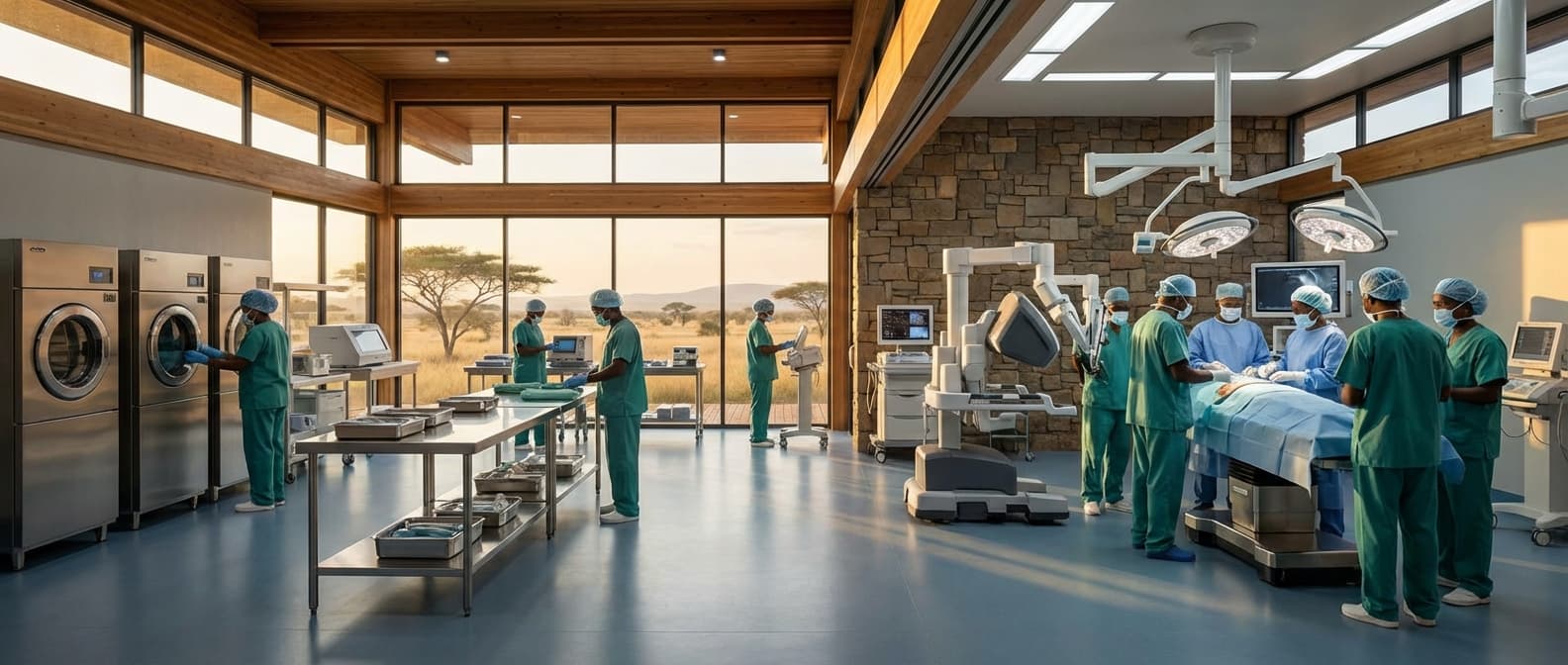
Endoscopy Reprocessing Validation in Kenya
Engineering Excellence & Technical Support
AER validation, SOP development and compliance High-standard technical execution following OEM protocols and local regulatory frameworks.
Rigorous Validation Protocols
Ensuring all endoscopy reprocessing procedures in Kenya meet international standards through comprehensive validation studies, including biological and chemical indicator testing to guarantee effective decontamination.
Advanced Monitoring Systems
Implementing cutting-edge technologies for real-time monitoring of cleaning and disinfection cycles in Kenyan healthcare facilities, ensuring consistent adherence to validated protocols and minimizing the risk of infections.
Sterilization Efficacy Assurance
Providing robust validation and ongoing verification of sterilization processes for endoscopes in Kenya, utilizing methods like Bowie-Dick tests and spore testing to confirm the elimination of all viable microorganisms.
What Is Endoscopy Reprocessing Validation In Kenya?
Endoscopy reprocessing validation in Kenya is a critical process that ensures flexible endoscopes are decontaminated to a level that eliminates the risk of pathogen transmission between patients. This service involves a comprehensive assessment and verification of the entire reprocessing workflow, from initial cleaning and disinfection to high-level disinfection (HLD) or sterilization. The validation confirms the efficacy of the cleaning agents, disinfection solutions, and equipment used, as well as the competency of the personnel performing the procedures. It is a regulatory requirement in many jurisdictions to maintain patient safety and infection control standards.
| Who Needs Endoscopy Reprocessing Validation | Typical Use Cases |
|---|---|
| Healthcare facilities in Kenya that perform flexible endoscopy procedures (e.g., hospitals, specialized clinics). | Hospitals performing gastrointestinal endoscopies (gastroscopy, colonoscopy, sigmoidoscopy). |
| Medical device manufacturers and distributors supplying reprocessing equipment or disinfectants. | Pulmonology departments performing bronchoscopies. |
| Third-party reprocessing services. | Urology departments performing cystoscopies and ureteroscopies. |
| Regulatory bodies overseeing healthcare quality and infection control. | ENT departments performing nasopharyngoscopies. |
| Any organization involved in the entire lifecycle of endoscope reprocessing in Kenya. | Surgical departments performing laparoscopic or arthroscopic procedures that utilize flexible endoscopes. |
What Endoscopy Reprocessing Validation Involves:
- Initial visual inspection and leak testing of endoscopes.
- Verification of cleaning efficacy using biochemical assays to detect residual organic material (e.g., protein, hemoglobin, carbohydrates).
- Microbiological challenge testing to confirm the inactivation of a broad spectrum of microorganisms (including high-risk pathogens) by the HLD process.
- Validation of automated endoscope reprocessors (AERs) for their cleaning and disinfection cycles.
- Assessment of manual cleaning and HLD processes, including concentration and contact time of disinfectants.
- Environmental monitoring of the reprocessing area.
- Personnel competency assessment and training verification.
- Documentation review and compliance with relevant standards and guidelines (e.g., ISO, national health regulations).
Who Needs Endoscopy Reprocessing Validation In Kenya?
Endoscopy reprocessing validation in Kenya is a critical process ensuring the safety and efficacy of reusable endoscopic instruments. This process is paramount to prevent the transmission of healthcare-associated infections (HAIs) and to maintain the integrity and longevity of expensive medical equipment. The need for this validation stems from the complex nature of endoscopic procedures and the potential for organic debris and microorganisms to remain on instruments if reprocessing is not performed meticulously according to validated protocols. In Kenya, as healthcare facilities strive to meet international standards of patient care and infection control, a robust validation framework for endoscopy reprocessing becomes indispensable.
| Target Customer/Facility Type | Key Departments Involved | Specific Needs for Validation |
|---|---|---|
| Hospitals (Public & Private) | Gastroenterology, Pulmonology, Urology, Surgery, Endoscopy Suite/Unit, Central Sterile Services Department (CSSD) | Ensuring patient safety, preventing HAIs, compliance with national and international guidelines, maintaining equipment warranty, optimizing reprocessing workflows. |
| Specialty Clinics | Gastroenterology, Pulmonology, Urology, ENT Departments, Sterile Processing Area | Maintaining high patient throughput, adhering to specialized reprocessing protocols for delicate instruments, cost-effectiveness of reprocessing. |
| Diagnostic and Imaging Centers | Endoscopy Unit, Sterile Processing Staff | Accurate diagnostic outcomes, preventing cross-contamination between procedures, efficient turnaround time for instruments. |
| Government Health Facilities | CSSD, Surgical Wards, Medical Departments | Resource optimization, ensuring basic but essential infection control standards, capacity building for reprocessing staff. |
| Private Healthcare Providers | CSSD, Specialty Units, Quality Assurance Department | Maintaining brand reputation for high-quality care, meeting stringent investor/owner expectations, comprehensive risk management. |
| NGO Healthcare Facilities | CSSD, Clinical Departments | Providing safe and accessible care in resource-limited settings, ensuring effective use of donated or procured equipment, basic infection prevention training. |
| Academic Medical Centers | CSSD, All Clinical Departments utilizing endoscopes, Infection Control Committee, Biomedical Engineering | Setting benchmarks for best practices, training future healthcare professionals, research on infection transmission and prevention, ensuring the safety of research participants. |
Target Customers and Departments in Kenya Requiring Endoscopy Reprocessing Validation
- {"title":"Hospitals (Public and Private)","description":"All hospitals performing endoscopic procedures, from large tertiary care centers to smaller district hospitals, are primary users. This includes those catering to a broad spectrum of the population, both insured and uninsured."}
- {"title":"Specialty Clinics","description":"Clinics specializing in gastroenterology, pulmonology, urology, and otolaryngology (ENT) that utilize flexible or rigid endoscopes for diagnostic and therapeutic purposes."}
- {"title":"Diagnostic and Imaging Centers","description":"Facilities offering endoscopic services as part of their diagnostic imaging and intervention offerings."}
- {"title":"Government Health Facilities","description":"Public hospitals and health centers managed by the Ministry of Health and county governments across Kenya."}
- {"title":"Private Healthcare Providers","description":"Both local and international private hospital groups operating in Kenya."}
- {"title":"Non-Governmental Organization (NGO) Healthcare Facilities","description":"Hospitals and clinics run by NGOs that provide essential healthcare services, often in underserved areas."}
- {"title":"Academic Medical Centers and Teaching Hospitals","description":"Institutions involved in training healthcare professionals and conducting research, requiring the highest standards of patient safety and equipment management."}
Endoscopy Reprocessing Validation Process In Kenya
The Endoscopy Reprocessing Validation Process in Kenya ensures that endoscopes are safely and effectively cleaned and disinfected after each patient use, minimizing the risk of healthcare-associated infections. This process is crucial for patient safety and adherence to national healthcare standards. The workflow begins with an inquiry from a healthcare facility seeking to validate their current or newly implemented reprocessing procedures. This leads to a series of steps involving documentation review, on-site assessment, and ultimately, formal validation and certification.
| Phase | Key Activities | Responsible Parties | Deliverables/Outcomes |
|---|---|---|---|
| Healthcare facility expresses interest in validating their endoscopy reprocessing. | Healthcare Facility, Ministry of Health (or designated regulatory body) | Confirmation of eligibility, provision of validation guidelines and forms. |
| Facility submits detailed reprocessing protocols, SOPs, training records, equipment manuals, cleaning agent/disinfectant data sheets, and any previous validation reports. | Healthcare Facility | Comprehensive documentation package for review. |
| Review of submitted documents, identification of potential gaps, scheduling of on-site assessment, and development of an assessment plan. | Ministry of Health (or designated regulatory body), Validation Team | Pre-assessment report, agreed-upon assessment schedule and scope. |
| Direct observation of the reprocessing workflow, inspection of the reprocessing area, evaluation of staff competency, verification of equipment functionality, and potential independent testing (e.g., for residual organic matter, microbial contamination). | Validation Team, Healthcare Facility Staff | Observed reprocessing process, staff competency assessment, equipment verification, test results (if applicable). |
| Analysis of all collected data (documentation review, observations, test results), identification of non-compliance issues, and compilation of a comprehensive validation report. | Validation Team | Detailed validation report outlining findings, non-conformities, and recommendations. |
| Review of the validation report by the regulatory body, issuance of a validation certificate if all requirements are met, or request for corrective actions if deficiencies are found. | Ministry of Health (or designated regulatory body), Healthcare Facility | Validation certificate or a corrective action plan with a timeline. |
| Periodic audits or reviews to ensure continued compliance, and re-validation at specified intervals or after significant changes in equipment, personnel, or protocols. | Ministry of Health (or designated regulatory body), Healthcare Facility | Ongoing compliance, updated validation status. |
Endoscopy Reprocessing Validation Workflow in Kenya
- Inquiry and Initial Contact
- Documentation Submission
- Pre-Assessment and Planning
- On-Site Assessment and Performance Verification
- Data Analysis and Report Generation
- Validation Approval and Certification
- Post-Validation Monitoring and Re-validation
Endoscopy Reprocessing Validation Cost In Kenya
Endoscopy reprocessing validation is a critical step in ensuring patient safety and preventing the transmission of infections. In Kenya, the cost of this validation is influenced by several factors, making it difficult to provide a single definitive price. However, understanding these factors helps in estimating potential expenses and budgeting effectively. The process typically involves testing to confirm the efficacy of the disinfection or sterilization process against various microorganisms. The specific validation methods employed, the number of tests conducted, the type of endoscope being processed, and the laboratory or service provider chosen all contribute to the overall cost. Local currency (Kenyan Shillings - KES) pricing can fluctuate based on market demand, the sophistication of the validation protocols used, and any applicable regulatory fees. It's crucial for healthcare facilities to engage with accredited laboratories or specialized service providers to obtain accurate quotations tailored to their specific needs.
| Service Component / Scope | Estimated Cost Range (KES) | Notes |
|---|---|---|
| Initial Process Validation (per endoscope type, comprehensive testing) | KES 50,000 - KES 250,000+ | Covers microbial challenges, indicator verification, and documentation for a specific reprocessing cycle. Highly dependent on the complexity of the method and the number of tests. |
| Routine Biological Indicator Testing (per batch/cycle) | KES 5,000 - KES 15,000 | Cost of the biological indicator itself and the associated laboratory processing. Often part of a routine quality control program. |
| Chemical Indicator Testing (per cycle) | KES 1,000 - KES 5,000 | Cost of chemical indicators and their verification. A simpler, but less definitive, validation method. |
| Process Challenge Device (PCD) Testing | KES 10,000 - KES 30,000 per test | Involves using specialized devices to mimic challenges in lumens. Cost is per device and test run. |
| Microbiological Swabs/Cultures of Reprocessed Endoscopes | KES 3,000 - KES 10,000 per sample | Used to detect residual microbial contamination on the endoscope surface after reprocessing. |
| Documentation and Reporting | Often included in the overall validation cost, but can be a separate charge if extensive | Crucial for regulatory compliance and quality assurance. |
| Consultancy and Protocol Development | KES 20,000 - KES 100,000+ | If a healthcare facility needs help developing or refining their validation protocols. |
Key Factors Influencing Endoscopy Reprocessing Validation Costs in Kenya
- Type of Validation Required (e.g., chemical indicator testing, biological indicator testing, process challenge device testing)
- Scope of Testing (number of microorganisms tested, specific pathogens)
- Number of Endoscope Types/Models to Validate
- Volume of Reprocessing Cycles to Validate
- Laboratory Accreditation and Reputation
- Geographical Location within Kenya (transportation and logistics costs)
- Service Provider's Expertise and Technology
- Regulatory Compliance Requirements (if any specific to the validation process)
- Frequency of Validation (initial validation vs. periodic re-validation)
Affordable Endoscopy Reprocessing Validation Options
Endoscopy reprocessing validation is a critical but often costly aspect of healthcare facility operations. Ensuring that reusable endoscopes are properly cleaned, disinfected, and sterilized is paramount for patient safety and regulatory compliance. This requires a robust validation process, which can involve significant investment in equipment, consumables, and personnel. Fortunately, healthcare facilities can explore various affordable endoscopy reprocessing validation options, focusing on value bundles and implementing cost-saving strategies to optimize their budgets without compromising safety standards.
| Value Bundle Components | Cost-Saving Strategies | Benefits |
|---|---|---|
| Integrated Cleaning & Disinfection Systems | Negotiate bulk purchasing discounts with suppliers for equipment and associated chemicals. Consider leasing options for high-cost equipment. | Reduced upfront capital investment, streamlined workflow, standardized quality, and potential for reduced chemical waste. |
| Automated Leak Testing & Flushing Systems | Opt for systems with integrated validation reporting capabilities to reduce manual documentation time and errors. Explore service contracts that include validation testing. | Improved detection of breaches, prevention of contamination, enhanced efficiency, and reduced risk of instrument damage. |
| Biological & Chemical Indicator Bundles | Partner with a single supplier for all indicator needs to leverage volume discounts. Utilize reusable or cost-effective indicator solutions where appropriate and validated. | Ensured effectiveness of disinfection/sterilization, simplified ordering and inventory management, and minimized risk of using expired or incorrect indicators. |
| Staff Training & Competency Assessment Programs | Develop in-house training modules or partner with specialized training providers for bundled educational packages. Utilize online or blended learning approaches. | Improved staff proficiency, reduced reprocessing errors, enhanced compliance, and a more confident and efficient reprocessing team. |
| Third-Party Reprocessing Services with Validation Oversight | Compare pricing models and service level agreements (SLAs) from multiple providers. Negotiate long-term contracts for better rates. Consider outsourcing specific complex reprocessing tasks. | Reduced need for in-house equipment and specialized staff, consistent quality assurance, scalability, and potential cost savings compared to full in-house operations. |
| Comprehensive Validation Protocol & Testing Kits | Standardize testing protocols across all endoscope types to simplify management. Explore bundled pricing for regular validation testing services. | Ensured consistent and compliant validation, reduced administrative burden, and proactive identification of any reprocessing deviations. |
Key Considerations for Affordable Endoscopy Reprocessing Validation
- Understanding Regulatory Requirements: Staying abreast of evolving guidelines from bodies like the FDA, CDC, and professional organizations (e.g., SGNA) is crucial to avoid costly non-compliance.
- Prioritizing Patient Safety: Cost-saving measures should never compromise the effectiveness of the reprocessing process and the safety of patients.
- Leveraging Technology Wisely: Exploring advanced yet cost-effective automated systems and validation tools can streamline processes and reduce manual labor.
- Investing in Staff Training: Well-trained staff are more efficient and less prone to errors, which can indirectly reduce costs associated with rework or compliance issues.
- Strategic Partnerships: Collaborating with third-party reprocessing services or suppliers for bundled solutions can offer economies of scale.
- Data-Driven Decision Making: Utilizing data analytics to track reprocessing effectiveness, identify bottlenecks, and optimize resource allocation can lead to significant savings.
Verified Providers In Kenya
In Kenya's evolving healthcare landscape, identifying reliable and accredited medical facilities is paramount for patient well-being. Franance Health has emerged as a beacon of trust, distinguished by its rigorous credentialing process and unwavering commitment to quality care. This commitment translates into a superior patient experience, marked by expertise, safety, and ethical practices. Choosing a Franance Health-verified provider means opting for a healthcare partner that prioritizes your health journey with the highest standards.
| Credential Aspect | Franance Health Verification | Patient Benefit |
|---|---|---|
| Medical Practitioner Licensing | Verified active registration with relevant medical boards | Ensures practitioners are legally qualified and competent. |
| Facility Accreditations | Confirmation of adherence to national and international healthcare standards | Guarantees a safe and well-equipped medical environment. |
| Clinical Protocols & Quality Management | Assessment of established protocols for patient care and quality improvement | Promotes consistent, high-quality treatment and reduces errors. |
| Infection Control Measures | Scrutiny of hygiene practices and outbreak prevention strategies | Protects patients from healthcare-associated infections. |
| Patient Rights & Grievance Mechanisms | Confirmation of clear patient rights policies and accessible complaint resolution | Empowers patients and ensures their concerns are addressed. |
| Continuing Professional Development | Evidence of ongoing training and skill enhancement for medical staff | Ensures access to the latest medical knowledge and techniques. |
Why Franance Health Credentials Matter
- Rigorous Verification Process: Franance Health employs a multi-faceted verification system that goes beyond basic accreditation, scrutinizing facilities, practitioners, and operational protocols.
- Enhanced Patient Safety: Verified providers adhere to stringent safety standards, minimizing risks and ensuring a secure environment for all patients.
- Quality of Care Assurance: Credentials signify a commitment to evidence-based medicine, continuous professional development, and patient-centered approaches.
- Ethical Practice Standards: Franance Health vets providers for ethical conduct, transparency, and patient rights advocacy.
- Access to Trusted Expertise: Choosing a verified provider connects you with qualified and competent medical professionals.
- Improved Healthcare Outcomes: The comprehensive vetting process is designed to lead to better health outcomes for patients.
Scope Of Work For Endoscopy Reprocessing Validation
This Scope of Work (SOW) outlines the requirements and deliverables for the validation of the endoscopy reprocessing procedure. The objective is to ensure that the adopted reprocessing protocols effectively and consistently render flexible endoscopes safe for patient use, meeting all regulatory and industry standards. This validation will encompass a comprehensive review of the entire reprocessing workflow, from initial cleaning to high-level disinfection/sterilization, and subsequent storage. It will involve both process validation and potentially environmental monitoring and microbial testing.
| Deliverable | Description | Standard Specification/Reference | Acceptance Criteria |
|---|---|---|---|
| Validation Protocol | Document detailing the scientific approach, objectives, scope, methodology, sampling plan, validation parameters, and acceptance criteria for the reprocessing validation. | ISO 13485, AAMI ST58, CDC Guidelines for Disinfection and Sterilization in Healthcare Facilities, Local regulatory requirements (e.g., FDA, EMA). | Approved by the client's Quality Assurance (QA) department and relevant stakeholders prior to execution. |
| Validation Execution | Implementation of the approved validation protocol, including all necessary testing and data collection. | Adherence to the approved Validation Protocol. | Completion of all scheduled tests and data collection with no critical deviations. |
| Microbiological Testing Reports | Results from all microbiological tests performed, including methodologies, raw data, and interpretation. | Applicable USP/EP general chapters for microbiological testing, ASTM standards for specific tests. | Results demonstrating absence of specified pathogens and acceptable bioburden levels as defined in the protocol. |
| Environmental Monitoring Reports (if applicable) | Results from air and surface sampling, including methodologies, locations, and interpretation. | ISO 14698 series, CDC Guidelines for Disinfection and Sterilization in Healthcare Facilities. | Results within established acceptable limits for the reprocessing environment. |
| Validation Report | A comprehensive document summarizing the validation activities, results, analysis, any deviations encountered, their impact, and a conclusion regarding the validation status of the endoscopy reprocessing process. | ISO 13485, FDA Guidance for Industry on Process Validation, Client's internal SOPs. | Demonstrates that the reprocessing process consistently achieves the predetermined acceptance criteria, rendering endoscopes safe for patient use. |
| Updated/New SOPs | Revised or newly created SOPs for endoscopy reprocessing, incorporating any changes or improvements identified during validation. | Client's internal SOP format and requirements. | Approved by client's QA and relevant department heads. |
Key Activities and Deliverables
- Review and approval of existing endoscopy reprocessing Standard Operating Procedures (SOPs).
- Development and approval of a detailed Validation Protocol, including sampling plans, acceptance criteria, and test methodologies.
- Execution of the validation activities as per the approved protocol.
- Performance of microbiological testing (e.g., bioburden, microbial enumeration, testing for specific pathogens) as required.
- Environmental monitoring (e.g., air and surface sampling) if deemed necessary by the protocol.
- Data analysis and interpretation of validation results.
- Preparation and submission of a comprehensive Validation Report, summarizing findings, deviations (if any), and conclusions.
- Development and submission of updated or new SOPs based on validation findings.
- Recommendations for continuous improvement of the reprocessing process.
- Final validation report and associated documentation review and approval.
Service Level Agreement For Endoscopy Reprocessing Validation
This Service Level Agreement (SLA) outlines the response times and uptime guarantees for the Endoscopy Reprocessing Validation service provided by [Your Company Name]. This service ensures the accuracy and reliability of automated validation processes for endoscope reprocessing, crucial for infection control and patient safety.
| Service Metric | Response Time Target | Uptime Guarantee | Notes |
|---|---|---|---|
| Critical System Alerts (e.g., validation failure, equipment malfunction) | 15 minutes (from detection to acknowledgment) | 99.9% (monthly) | Includes initial diagnosis and escalation. |
| Routine Validation Reporting | Within 30 minutes of cycle completion | 99.9% (monthly) | Applies to standard reporting functions. |
| System Availability (for accessing data and reports) | N/A (Continuous availability expected) | 99.9% (monthly) | Excludes scheduled maintenance periods. |
| Technical Support (non-urgent inquiries) | Within 4 business hours (for initial response) | N/A | Support channels: email, dedicated portal. |
| Scheduled Maintenance | N/A | N/A | Scheduled during off-peak hours, with advance notification (minimum 48 hours). |
Key Service Components:
- Automated validation of endoscope reprocessing cycles.
- Real-time monitoring and reporting of validation results.
- Alerts and notifications for process deviations.
- Integration with existing reprocessing equipment and software.
- Regular system updates and maintenance.
Frequently Asked Questions

Ready when you are
Let's scope your Endoscopy Reprocessing Validation in Kenya project in Kenya.

Scaling healthcare logistics and technical systems across the entire continent.