
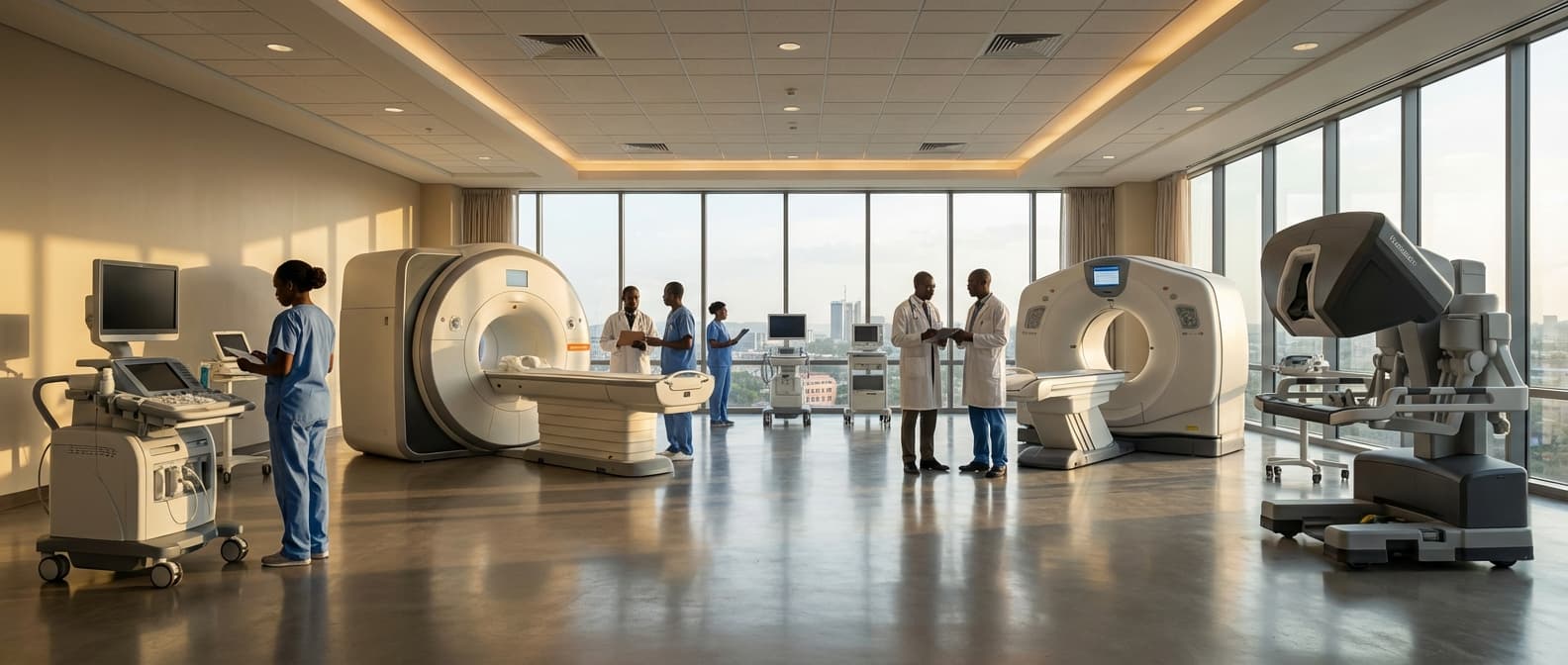
Life Support & Consumables in Kenya
Engineering Excellence & Technical Support
Reliable supply of essential medical consumables and life support equipment ensuring uninterrupted, quality patient care delivery. High-standard technical execution following OEM protocols and local regulatory frameworks.
Nationwide Emergency Oxygen Network Expansion
Deployment of robust, solar-powered oxygen concentrators and cryogenic storage solutions across 150 remote health facilities, ensuring uninterrupted supply for critical respiratory patients nationwide.
Mobile Water Purification Units for Disaster Relief
Implementation of a fleet of solar-driven mobile water purification units, capable of providing up to 10,000 liters of potable water daily, significantly enhancing emergency response capabilities during floods and droughts.
Cold Chain Logistics Optimization for Vaccines
Integration of IoT-enabled, temperature-controlled transport vehicles and smart vaccine storage units, reducing spoilage rates by 25% and ensuring the integrity of vital immunization programs in challenging climates.
What Is Life Support & Consumables In Kenya?
Life Support & Consumables in Kenya refers to the provision of essential medical equipment, devices, and supplies required to sustain the vital functions of critically ill or injured patients, thereby supporting their continued existence. This service is crucial in scenarios where a patient's physiological systems are compromised and require external assistance to maintain homeostasis. It encompasses a broad spectrum of interventions, ranging from basic respiratory support to complex organ system augmentation, alongside the continuous supply of associated expendable materials necessary for their operation and patient care.
| Who Needs Life Support & Consumables? | Typical Use Cases in Kenya | |||||||
|---|---|---|---|---|---|---|---|---|
| Patients in Intensive Care Units (ICUs) with respiratory failure (e.g., pneumonia, ARDS, COPD exacerbations). | Management of severe sepsis and septic shock requiring cardiovascular and respiratory support. | Patients undergoing major surgical procedures with potential for post-operative complications. | Individuals with acute kidney injury or chronic kidney disease requiring renal replacement therapy. | Trauma patients with severe injuries affecting multiple organ systems. | Neonates and infants with congenital anomalies or prematurity requiring intensive care. | Patients with severe burns requiring extensive wound management and nutritional support. | Individuals with neurological emergencies (e.g., stroke, head injury) requiring ventilatory and hemodynamic management. | Patients with chronic life-limiting illnesses experiencing acute exacerbations. |
| University Teaching Hospitals (e.g., KNH, Moi Teaching and Referral Hospital). | Tertiary and Private Hospitals with dedicated critical care units. | Specialized Medical Centers (e.g., cardiac centers, cancer treatment facilities). | Emergency response situations and disaster management efforts. | Remote or underserved areas where advanced medical care might be limited but critical interventions are still required (often through mobile units or specialized transport). | Home-based care for patients requiring long-term ventilation or dialysis, managed by specialized agencies. |
Key Components of Life Support & Consumables
- Mechanical Ventilation: Devices that assist or entirely control a patient's breathing, including ventilators, endotracheal tubes, tracheostomy tubes, and associated circuits, filters, and humidifiers.
- Cardiovascular Support: Equipment and consumables for managing circulatory function, such as infusion pumps, arterial and venous catheters, hemodynamic monitoring systems, and vasoactive medications.
- Renal Replacement Therapy: Systems for dialysis (hemodialysis, peritoneal dialysis) and their required disposables like dialyzers, tubing sets, and dialysis solutions.
- Nutritional Support: Enteral and parenteral feeding equipment, including feeding tubes, infusion sets, and specialized nutritional formulas.
- Oxygen Therapy: Oxygen concentrators, cylinders, nasal cannulas, masks, and pulse oximeters for monitoring oxygen saturation.
- Wound Care and Dressings: Specialized dressings, antimicrobial agents, and negative pressure wound therapy systems for managing critical injuries and post-operative sites.
- Medications and Fluids: A wide array of intravenous fluids, electrolyte solutions, antibiotics, analgesics, and sedatives essential for managing critical illness.
Who Needs Life Support & Consumables In Kenya?
Life support and consumables are critical for a wide range of healthcare facilities and specialized departments in Kenya. These essential items ensure the proper functioning of medical equipment, patient care, and infection control. Understanding the target customers and departments is crucial for effective distribution and service provision.
| Target Customer Category | Key Departments/Areas of Need | Examples of Life Support & Consumables |
|---|---|---|
| Public Hospitals | ICU, A&E, Operating Theatres, General Wards, Maternity, NICU, Dialysis | Ventilators, oxygen cylinders, IV fluids, catheters, syringes, needles, surgical gloves, sterile drapes, disinfectants, bandages, dialysis tubing, monitoring sensors. |
| Private Hospitals | Similar to public hospitals, often with specialized units (e.g., cardiac cath labs) | High-flow oxygen systems, advanced ventilators, specialized surgical kits, anesthesia masks, ECG electrodes, blood pressure cuffs, infusion pumps, wound care dressings. |
| Maternity Homes & Clinics | Maternity wards, delivery rooms, neonatal care | Oxygen masks, infant warmers, suction devices, umbilical cord clamps, sterile gowns, delivery kits, baby formula, diapers, antiseptics. |
| Ambulance Services | On-board patient transport and stabilization | Portable ventilators, oxygen tanks, spinal boards, splints, bandages, IV access kits, defibrillators, monitoring equipment. |
| Dialysis Centers | Hemodialysis and peritoneal dialysis | Dialyzers, bloodlines, saline solutions, anticoagulants, sterile needles, gloves, masks, disinfectant wipes. |
| Research Institutions & Laboratories | Experimental procedures, sample handling, diagnostic testing | Sterile consumables (pipettes, tubes, culture plates), reagents, PPE (gloves, masks, lab coats), gas supplies (nitrogen, CO2). |
| NGOs & Rural Health Posts | Primary healthcare, emergency response, maternal and child health | Basic oxygen delivery systems, essential medications, wound care supplies, sterile kits for minor procedures, syringes, basic diagnostic consumables. |
Target Customers & Departments in Kenya Requiring Life Support & Consumables
- Hospitals (Public and Private)
- Maternity Homes and Clinics
- Intensive Care Units (ICUs)
- Operating Theatres
- Emergency Rooms / Accident & Emergency (A&E) Departments
- Neonatal Intensive Care Units (NICUs)
- Dialysis Centers
- Specialized Surgical Departments (e.g., Cardiology, Neurology, Orthopedics)
- Anesthesia Departments
- Ambulance Services and Emergency Medical Services
- Rehabilitation Centers
- Research Institutions and Laboratories
- Non-Governmental Organizations (NGOs) providing healthcare services
- Remote Healthcare Facilities and Mobile Clinics
Life Support & Consumables Process In Kenya
This document outlines the typical workflow for Life Support and Consumables procurement and delivery processes in Kenya, from the initial inquiry to final execution. The process is designed to ensure timely and efficient provision of essential medical supplies and equipment to healthcare facilities and other organizations requiring them. It involves several key stages, each with specific activities and responsibilities.
| Stage | Description | Key Activities | Responsible Parties | Typical Challenges |
|---|---|---|---|---|
| Inquiry & Needs Assessment | The process begins when a healthcare facility or organization identifies a need for life support equipment or consumables. | Client identifies needs, defines specifications (type, quantity, quality), consults with medical staff, and initiates contact with potential suppliers. | Client/Healthcare Facility, Procurement Department, Medical Staff. | Unclear or evolving needs, lack of detailed specifications, budget constraints. |
| Quotation & Proposal Submission | Suppliers respond to inquiries by providing detailed pricing and product information. | Supplier receives inquiry, reviews specifications, prepares a formal quotation/proposal including pricing, lead times, product details, and terms of service. May involve site visits or further consultations. | Potential Suppliers/Distributors. | Inaccurate pricing, lengthy response times, inability to meet specific technical requirements, competitive pricing. |
| Order Placement & Confirmation | The client formally selects a supplier and places an order. | Client reviews quotations, selects a supplier, issues a Purchase Order (PO). Supplier acknowledges and confirms the PO, providing an estimated delivery date. | Client/Healthcare Facility, Supplier. | Discrepancies between PO and quotation, delayed PO issuance, supplier capacity issues. |
| Procurement & Stock Management | The supplier acquires or allocates the ordered items. | Supplier procures items from manufacturers, manages existing inventory, or initiates manufacturing if custom orders. | Supplier, Manufacturer (if applicable). | Supply chain disruptions, stockouts, long lead times from manufacturers. |
| Quality Assurance & Verification | Ensuring the ordered items meet specified quality standards. | Supplier conducts internal quality checks, verifies product compliance with certifications (e.g., KEBS, FDA), and prepares items for shipment. | Supplier, Quality Control Department, Regulatory Bodies (if applicable). | Counterfeit products, non-compliance with standards, damaged goods. |
| Logistics & Delivery | Transporting the goods from the supplier to the client's location. | Supplier arranges for packaging, transportation (road, air, sea), insurance, and customs clearance (if applicable). Delivery to the specified address is coordinated. | Supplier, Logistics Provider, Courier Services, Customs Officials. | Logistical delays, transportation costs, damaged goods during transit, import/export restrictions. |
| Installation & Training (if applicable) | For equipment, ensuring proper setup and user familiarization. | Supplier's technicians install equipment. Training is provided to client's staff on operation, maintenance, and troubleshooting. | Supplier's Technicians, Client's Medical/Technical Staff. | Lack of trained installation personnel, inadequate training materials, scheduling conflicts. |
| Invoicing & Payment | The financial transaction for the delivered goods and services. | Supplier issues an invoice to the client. Client verifies delivery against the invoice and initiates payment according to agreed terms (e.g., net 30, upfront payment). | Supplier, Client's Finance Department. | Delayed payments, invoice disputes, currency fluctuations. |
| After-Sales Support & Feedback | Ongoing support and gathering client satisfaction. | Supplier provides warranty support, maintenance services, and addresses any post-delivery issues. Client provides feedback on the product and service. | Supplier, Client. | Poor after-sales service, difficulty in obtaining spare parts, unresponsive support. |
Key Stages in the Life Support & Consumables Process in Kenya
- Inquiry & Needs Assessment
- Quotation & Proposal Submission
- Order Placement & Confirmation
- Procurement & Stock Management
- Quality Assurance & Verification
- Logistics & Delivery
- Installation & Training (if applicable)
- Invoicing & Payment
- After-Sales Support & Feedback
Life Support & Consumables Cost In Kenya
Life support and consumables are crucial for various sectors in Kenya, including healthcare, agriculture, and specialized industries. The cost of these items can vary significantly due to several factors. In the healthcare sector, 'life support' typically refers to equipment like ventilators, incubators, dialysis machines, and oxygen concentrators, while 'consumables' include items like sterile dressings, IV fluids, syringes, gloves, and medications. In agriculture, life support might encompass irrigation systems and climate control, with consumables being fertilizers, pesticides, and seeds. Pricing in Kenya is influenced by import duties, VAT, transportation costs, supplier markups, brand reputation, and the specific quantities purchased. The local currency, the Kenyan Shilling (KES), is the primary medium of exchange, and exchange rate fluctuations can impact the cost of imported items.
| Item Category | Typical Range (KES) | Notes |
|---|---|---|
| Medical Ventilator (Basic/Intermediate) | KES 1,500,000 - KES 5,000,000+ | Prices vary widely based on features, brand, and whether new or refurbished. |
| Incubator (Neonatal) | KES 500,000 - KES 2,000,000+ | Advanced features and monitoring capabilities increase cost. |
| Dialysis Machine (Hemodialysis) | KES 2,000,000 - KES 7,000,000+ | Includes unit cost, installation, and initial training. |
| Oxygen Concentrator (Hospital Grade) | KES 150,000 - KES 600,000+ | Capacity (e.g., 5LPM, 10LPM) and features affect price. |
| IV Fluids (500ml Bag) | KES 150 - KES 500 | Cost depends on type (Saline, Dextrose, Ringer's Lactate) and brand. |
| Syringes (Disposable, various sizes) | KES 10 - KES 50 per unit | Bulk purchases significantly reduce per-unit cost. |
| Sterile Gloves (Box of 100) | KES 800 - KES 2,500 | Material (latex, nitrile) and brand influence price. |
| Basic Antibiotics (e.g., Amoxicillin 250mg capsule) | KES 20 - KES 100 per capsule/dose | Prescription-based, prices can vary by pharmacy and brand. |
| Fertilizer (DAP, 50kg bag) | KES 3,500 - KES 6,000 | Subject to government subsidies and seasonal demand. |
| Pesticide (Common types, per litre/kg) | KES 500 - KES 3,000 | Varies greatly by active ingredient, formulation, and brand. |
Key Pricing Factors for Life Support & Consumables in Kenya
- Import Duties and Taxes: Levied on imported goods, significantly affecting final prices.
- Value Added Tax (VAT): A standard consumption tax applied to most goods and services.
- Transportation and Logistics: Costs associated with moving goods from ports to final destinations.
- Supplier Markups: The profit margin added by distributors and retailers.
- Brand Reputation and Quality: Premium brands often command higher prices.
- Quantity and Bulk Discounts: Larger orders generally receive lower per-unit costs.
- Currency Exchange Rates: Fluctuations in the Kenyan Shilling against major currencies impact imported goods.
- Availability and Demand: Scarcity or high demand can drive up prices.
- Regulatory Compliance Costs: Meeting specific Kenyan standards can add to the overall cost.
Affordable Life Support & Consumables Options
Navigating life support and medical consumables can be a significant financial undertaking. Fortunately, there are numerous strategies and product offerings designed to make these essential items more affordable. This guide explores value bundles, cost-saving strategies, and provides a framework for understanding these options. Prioritizing your health doesn't have to come at an exorbitant price.
| Value Bundle Type | Description | Potential Benefits | Considerations |
|---|---|---|---|
| Starter Kits | Comprehensive packages containing essential items for a new diagnosis or treatment (e.g., diabetes starter kit with glucose meter, test strips, lancets). | Convenience, ensures you have critical items upfront, often at a bundled discount. | May contain items you don't need; verify contents and compare individual item costs. |
| Home Care Packages | Bundles of frequently used consumables for ongoing home care, such as wound care supplies, ostomy supplies, or respiratory supplies. | Regular supply management, potential for bulk pricing advantages, simplifies reordering. | Requires an accurate assessment of ongoing needs; ensure compatibility with prescribed treatments. |
| Monthly Supply Subscriptions | Automated delivery of consumables on a recurring basis, often with tiered pricing for larger quantities or longer commitments. | Predictable costs, convenience, often the lowest per-unit price for regular users. | Requires commitment; check return policies and cancellation terms. |
| Equipment & Consumable Bundles | Packages that include durable medical equipment (e.g., CPAP machine) along with its necessary consumables (e.g., masks, filters, tubing). | Streamlined procurement, potential for integrated service and support, cost savings on the combined purchase. | Ensure the equipment meets your specific medical requirements; verify the quality and availability of replacement consumables. |
| Specialty Care Bundles | Tailored bundles for specific medical conditions (e.g., post-surgical recovery kits, pediatric care packages) containing specialized items. | Addresses niche needs, ensures availability of critical specialized supplies, can be cost-effective compared to individual purchases. | Verify that the bundle is appropriate for your specific condition and prescribed care plan. |
Key Cost-Saving Strategies
- Generic vs. Brand Name: Often, generic versions of medical supplies offer the same quality and efficacy at a significantly lower price point. Always consult with your healthcare provider to ensure a generic alternative is suitable for your specific needs.
- Bulk Purchasing: Buying consumables in larger quantities can lead to substantial discounts per unit. Evaluate your usage patterns to determine if bulk purchases are practical and cost-effective, considering shelf life and storage space.
- Subscription Services: Many suppliers offer subscription models for recurring needs like wound dressings, incontinence products, or specific medications. These often come with discounted pricing and convenient auto-delivery.
- Discount Programs & Coupons: Keep an eye out for manufacturer coupons, pharmacy discounts, and insurance provider programs that offer savings on specific life support equipment and consumables.
- Secondhand Equipment: For certain durable medical equipment (e.g., wheelchairs, walkers, hospital beds), consider purchasing gently used items. Thoroughly inspect and sanitize any pre-owned equipment before use.
- Insurance & Government Programs: Understand your insurance coverage thoroughly. Explore eligibility for government assistance programs (e.g., Medicare, Medicaid, VA benefits) that can help offset the cost of medical supplies and equipment.
- Telehealth Consultations: For some follow-up care and prescription renewals, telehealth can reduce the need for in-person visits, potentially saving on travel costs and appointment fees.
- DIY & Maintenance: For some less complex consumables, explore if there are safe and approved methods for in-home cleaning or maintenance of reusable components to extend their lifespan.
Verified Providers In Kenya
When seeking healthcare services in Kenya, it is paramount to ensure you are engaging with verified providers. This not only guarantees the quality of care but also safeguards your health and finances. Franance Health has established itself as a leader in this regard, rigorously vetting its network of healthcare professionals and facilities. Their commitment to transparency and patient well-being makes them the most reliable choice for accessing quality healthcare in Kenya. Understanding Franance Health's credentialing process and the benefits it offers is crucial for making informed healthcare decisions.
| Franance Health Credentialing Component | What it Entails | Benefit to You |
|---|---|---|
| Professional Qualifications Verification | Confirmation of medical licenses, degrees, and specialist certifications from recognized regulatory bodies. | Ensures you are treated by qualified and licensed medical professionals. |
| Experience Assessment | Review of professional history, including previous work experience and any disciplinary actions. | Guarantees that your provider has practical, proven expertise in their field. |
| Facility Standards Check | Inspection of medical facilities for adherence to safety, hygiene, and equipment standards. | Provides a safe and well-equipped environment for your treatment. |
| Ethical Practice Review | Assessment of adherence to medical ethics and patient rights principles. | Ensures you are treated with respect, dignity, and have your privacy protected. |
| Continuous Professional Development (CPD) | Verification that providers are actively engaged in ongoing training and skill enhancement. | Confirms that your provider stays up-to-date with the latest medical advancements and best practices. |
| Patient Feedback and Satisfaction Monitoring | Regular collection and analysis of patient feedback on service quality and outcomes. | Ensures that providers are consistently meeting and exceeding patient expectations. |
Why Franance Health Providers Are the Best Choice:
- Rigorous Vetting Process: Franance Health employs a multi-stage credentialing process to ensure all affiliated providers meet the highest standards of medical expertise, ethical practice, and operational efficiency.
- Quality Assurance: Regular audits and performance reviews of their network guarantee consistent, high-quality patient care and outcomes.
- Patient-Centric Approach: Franance Health prioritizes patient satisfaction and safety, ensuring providers are not only medically competent but also compassionate and responsive to patient needs.
- Affordability and Transparency: They work to ensure their network providers offer fair and transparent pricing, making quality healthcare more accessible.
- Comprehensive Network: Franance Health boasts a wide network of specialists and general practitioners across various disciplines, ensuring you can find the right care for any health concern.
- Peace of Mind: Partnering with Franance Health offers the assurance that you are receiving care from legitimate, qualified, and reputable healthcare providers.
Scope Of Work For Life Support & Consumables
This Scope of Work (SOW) outlines the requirements for the provision of Life Support and Consumables for the [Project Name/Location]. It details the technical deliverables expected from the selected vendor, along with the standard specifications that all supplied items and services must adhere to. The objective is to ensure the health, safety, and operational continuity of personnel and equipment throughout the project lifecycle.
| Technical Deliverable | Description | Standard Specification / Requirement |
|---|---|---|
| Potable Water Supply | Continuous provision of safe and potable drinking water. | Must meet WHO standards for drinking water quality. Regular testing and reporting required. Backup supply mechanisms to be detailed. |
| Food & Nutritional Products | Provision of a varied and nutritionally balanced diet for all personnel. | Includes fresh, frozen, and shelf-stable options. Compliance with local food safety regulations. Allergen information to be clearly labeled. Menu planning and dietary restriction accommodation. |
| Waste Management Services | Collection, segregation, treatment, and disposal of all project-generated waste. | Includes general waste, hazardous waste, and medical waste. Adherence to environmental regulations. Detailed waste management plan required. |
| Personal Protective Equipment (PPE) | Supply and maintenance of appropriate PPE for all personnel. | Includes safety helmets, boots, gloves, eye protection, respiratory protection, and high-visibility clothing. Must comply with relevant ISO and industry standards. Fit-testing and training provided. |
| Medical Supplies | Provision of a comprehensive range of first-aid and medical supplies. | Includes bandages, antiseptics, pain relievers, and emergency medical kits. Expiration date management and regular inventory checks. Provision of basic medical equipment as per risk assessment. |
| Hygiene & Cleaning Consumables | Supply of disinfectants, sanitizers, soaps, detergents, and cleaning tools. | Products must be effective and safe for use in the specified environment. Biodegradable and environmentally friendly options to be prioritized where feasible. |
| Inventory Management System | Implementation and operation of a robust system for tracking all consumables. | Includes real-time inventory levels, reorder points, and consumption reporting. Minimizes stockouts and overstocking. Secure storage and handling procedures. |
| Reporting & Documentation | Regular reports on supply status, quality control, and incident management. | Includes daily, weekly, and monthly reports as required. All documentation to be maintained for the project duration and as per contractual agreement. |
Key Areas Covered by this Scope of Work
- Provision of Potable Water and Water Treatment Solutions
- Supply of Food and Nutritional Products
- Provision of Waste Management and Sanitation Services
- Supply of Personal Protective Equipment (PPE) and Safety Gear
- Procurement and Management of Medical Supplies and Equipment
- Management of Hygiene and Cleaning Consumables
- Logistics and Inventory Management for all Consumables
Service Level Agreement For Life Support & Consumables
This Service Level Agreement (SLA) outlines the guaranteed response times and uptime for Life Support and Consumables services. This agreement is between [Provider Name] and [Client Name], effective from [Start Date].
| Service Component | Uptime Guarantee | Response Time (Critical) | Response Time (Routine) | Resolution Time (Target) |
|---|---|---|---|---|
| Life Support System Uptime | 99.9% | N/A | N/A | N/A |
| Emergency Consumables Delivery | N/A | 1 Hour | N/A | 4 Hours |
| Critical Life Support Equipment Failure Support | N/A | 30 Minutes (Remote Diagnosis) | N/A | 2 Hours (On-site Technician Arrival) |
| Scheduled Preventative Maintenance | N/A | N/A | Within 48 hours of notification | N/A |
| Remote Monitoring & Alerting System Uptime | 99.95% | N/A | N/A | N/A |
Scope of Service
- Life Support Equipment Maintenance and Repair
- Scheduled Preventative Maintenance for Life Support Systems
- Emergency Replenishment of Critical Consumables (e.g., oxygen, medication cartridges)
- Remote Monitoring and Alerting for Life Support Systems
- On-site Technical Support for Life Support Equipment Failures
Frequently Asked Questions

Ready when you are
Let's scope your Life Support & Consumables in Kenya project in Kenya.

Scaling healthcare logistics and technical systems across the entire continent.