
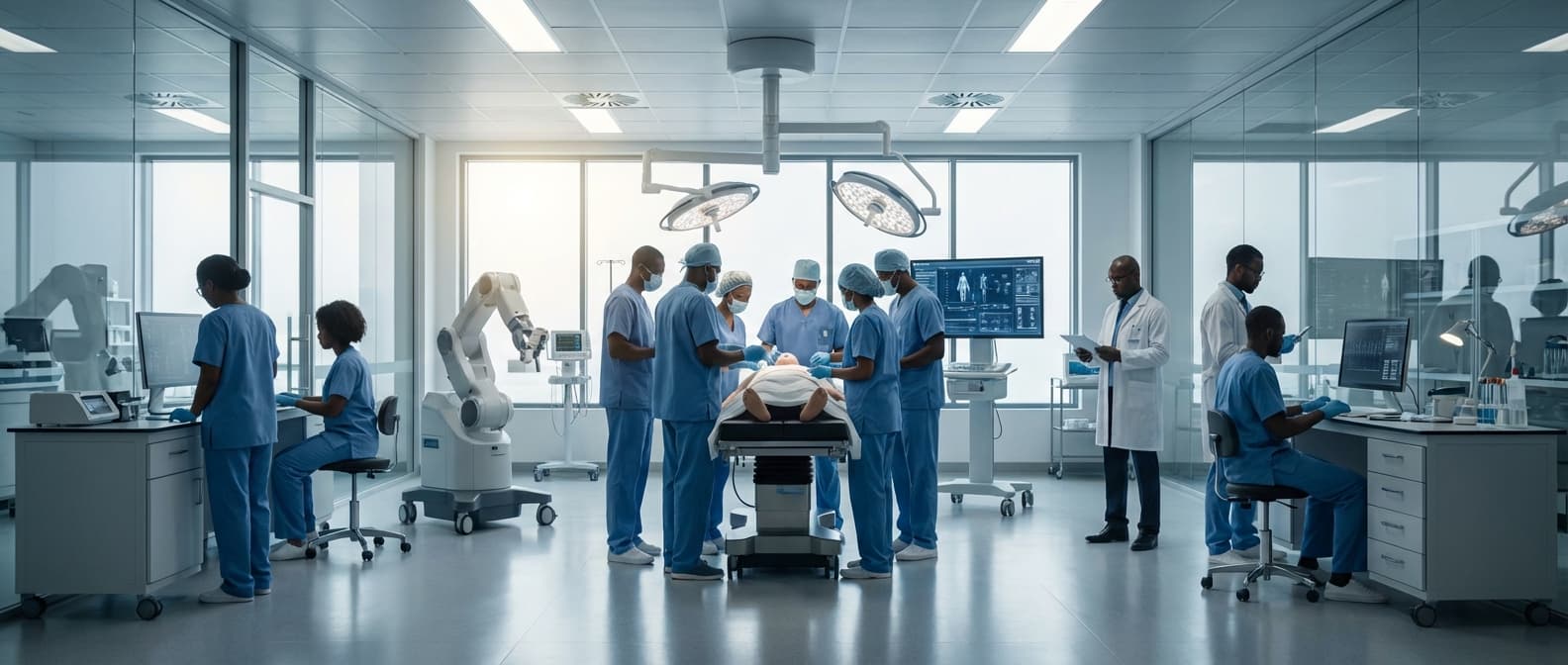
Managed Equipment Service (MES) in Kenya
Engineering Excellence & Technical Support
Long‑term equipment provision with uptime SLAs and lifecycle management. High-standard technical execution following OEM protocols and local regulatory frameworks.
Optimized Fleet Uptime
Leveraging advanced remote monitoring and predictive analytics, we ensure your critical medical equipment operates at peak performance, minimizing downtime and maximizing patient care delivery across Kenya.
Seamless Technology Integration
Our MES seamlessly integrates new and existing medical technologies, providing centralized management, software updates, and interoperability solutions tailored to the unique healthcare landscape of Kenya.
Proactive Cybersecurity for Medical Devices
We implement robust, multi-layered cybersecurity protocols to protect your sensitive patient data and networked medical devices from evolving threats, ensuring compliance and operational integrity in Kenyan healthcare facilities.
What Is Managed Equipment Service (Mes) In Kenya?
Managed Equipment Service (MES) in Kenya is a comprehensive outsourcing model whereby a third-party provider assumes responsibility for the procurement, installation, maintenance, and eventual replacement of medical equipment for healthcare facilities. This service aims to alleviate the financial and operational burdens associated with capital expenditure and ongoing technical support, allowing healthcare providers to focus on patient care. The service typically operates on a fee-per-use, per-bed, or fixed monthly/annual payment basis, effectively transferring the risks and responsibilities of equipment ownership and management to the MES provider.
| Who Needs MES? | Typical Use Cases |
|---|---|
| Public Hospitals and Health Centers: Seeking to upgrade or expand their medical infrastructure without significant upfront capital investment. Enhancing service delivery in underserved regions. | General Hospitals: Requiring a diverse range of diagnostic and therapeutic equipment, such as imaging systems (X-ray, CT, MRI), laboratory analyzers, and surgical instruments. |
| Private Hospitals and Clinics: Aiming to optimize operational efficiency, reduce maintenance costs, and access cutting-edge medical technology. Expanding capacity or services. | Specialty Clinics (e.g., Cardiology, Oncology, Dialysis): Needing specialized and high-value equipment that requires expert maintenance and calibration. |
| Tertiary and Referral Centers: Facing high-volume usage of critical equipment and requiring guaranteed uptime and rapid response times for repairs. Implementing new medical technologies. | Diagnostic Centers: Focused on providing a wide array of diagnostic services, necessitating reliable and well-maintained imaging, pathology, and laboratory equipment. |
| Healthcare Networks and Groups: Standardizing equipment across multiple facilities to achieve economies of scale, consistent quality of care, and centralized management. Managing multiple sites. | Rural Health Facilities: Lacking in-house technical expertise and the financial capacity for equipment ownership and maintenance, thereby improving access to advanced medical diagnostics and treatment. |
Key Components of Managed Equipment Service (MES) in Kenya:
- Procurement and Acquisition: Sourcing and purchasing of medical equipment aligned with the facility's clinical needs and budget.
- Installation and Commissioning: Professional setup and testing of equipment to ensure optimal functionality and safety.
- Preventive Maintenance: Scheduled servicing and calibration to minimize downtime and extend equipment lifespan.
- Corrective Maintenance and Repair: Prompt response to equipment malfunctions and breakdowns by certified technicians.
- Training: Providing clinical and technical staff with comprehensive training on the operation and basic maintenance of the equipment.
- Consumables Management: In some models, the MES provider may also manage the supply of associated consumables.
- Technology Upgrades and Replacement: Planning and execution of equipment upgrades and replacements to keep pace with technological advancements and clinical demands.
- Performance Monitoring and Reporting: Continuous tracking of equipment utilization, maintenance history, and cost-effectiveness.
- Regulatory Compliance: Ensuring all equipment adheres to relevant national and international standards and regulations.
Who Needs Managed Equipment Service (Mes) In Kenya?
Managed Equipment Service (MES) offers a comprehensive solution for organizations in Kenya looking to optimize the acquisition, maintenance, and lifecycle management of their critical equipment. Instead of direct ownership, organizations partner with a service provider who takes responsibility for the entire equipment lifecycle. This includes procurement, installation, maintenance, repair, upgrades, and eventual disposal. MES liberates organizations from the capital expenditure and operational burdens associated with equipment management, allowing them to focus on their core competencies. The benefits are far-reaching, ranging from predictable costs and access to the latest technology to improved operational efficiency and reduced downtime. In essence, any organization in Kenya that relies heavily on specialized or high-value equipment and seeks to de-risk its operations, enhance its financial predictability, and ensure continuous access to up-to-date technology can benefit significantly from MES.
| Target Customer Segment | Key Departments Benefiting from MES | Specific Needs Addressed by MES |
|---|---|---|
| Healthcare Facilities (Hospitals, Clinics, Diagnostic Centers) | Biomedical Engineering, Radiology, Pathology, Operating Theatres, IT Department | High-cost medical imaging equipment (MRI, CT scanners), diagnostic machinery, surgical instruments, laboratory equipment. Predictable maintenance costs, access to advanced technology for better patient care, reduced downtime for critical procedures. |
| Educational Institutions (Universities, Colleges, Vocational Training Centers) | IT Department, Science & Engineering Faculties, Library Services, Administration | Computer labs, specialized scientific equipment (labs, workshops), projectors, audio-visual systems, printers. Keeping technology up-to-date for student learning, managing large fleets of devices, reducing IT support burden. |
| Manufacturing and Industrial Companies | Production/Operations, Maintenance, Engineering, Quality Control, IT | Production machinery, specialized tools, testing equipment, robotics, IT infrastructure. Ensuring minimal production downtime, access to efficient and modern machinery, predictable operational costs, improved safety and quality. |
| Telecommunications Providers | Network Operations, Infrastructure, IT | Base stations, network hardware, testing equipment, server infrastructure. Ensuring network reliability, rapid deployment of new technologies, managing the lifecycle of complex network assets. |
| Research and Development Centers | Research Labs, IT, Administration | High-end scientific instruments, laboratory equipment, specialized computing infrastructure. Access to cutting-edge research tools, cost-effective experimentation, efficient management of expensive and complex equipment. |
| Government Agencies and Public Services (e.g., Police, Fire, Utilities) | IT Departments, Operational Units, Fleet Management | Communication equipment, specialized vehicles and their equipment, IT infrastructure, public service delivery devices. Ensuring operational readiness, managing the lifecycle of critical public service assets, predictable budgeting. |
| Large Corporate Offices and Shared Service Centers | IT Department, Facilities Management, Administration | Printers, copiers, servers, networking equipment, audiovisual systems. Streamlining office equipment management, reducing IT support overhead, ensuring a productive work environment, cost control. |
Who Needs Managed Equipment Service (MES) in Kenya? Target Customers and Departments
- Healthcare Facilities
- Educational Institutions
- Manufacturing and Industrial Companies
- Telecommunications Providers
- Research and Development Centers
- Government Agencies and Public Services
- Large Corporate Offices and Shared Service Centers
Managed Equipment Service (Mes) Process In Kenya
The Managed Equipment Service (MES) process in Kenya is a critical procurement and service delivery framework designed to equip public health facilities with essential medical equipment. It operates under a public-private partnership model, where the government contracts private entities to provide, install, maintain, and upgrade medical equipment. This process ensures that healthcare providers have access to modern and functional medical technology, thereby improving the quality of healthcare services delivered across the country. The workflow is structured to ensure transparency, efficiency, and accountability from the initial inquiry to the final execution and ongoing service.
| Stage | Key Activities | Responsible Parties | Deliverables/Outcomes |
|---|---|---|---|
| Inquiry & Needs Assessment | Identification of equipment gaps and needs by health facilities; Prioritization based on healthcare demands and national health strategies. Development of equipment specifications. | Ministry of Health (MoH), Health Facilities, County Governments | Detailed needs assessment report, prioritized equipment list, defined specifications. |
| Tendering & Procurement | Development of tender documents; Publication of tender notices; Receipt and evaluation of bids from potential MES providers; Awarding of contracts to qualified bidders. | MoH, National Treasury, Public Procurement Regulatory Authority (PPRA) | Awarded MES contract(s) to selected providers. |
| Contract Negotiation & Signing | Detailed negotiation of contract terms, service level agreements (SLAs), payment schedules, and performance indicators with the selected MES provider. | MoH, MES Provider | Signed MES contract, including detailed SLAs and payment milestones. |
| Equipment Deployment & Installation | Procurement, delivery, installation, and commissioning of the specified medical equipment at designated health facilities. Site readiness assessment and preparation. | MES Provider, MoH (for oversight), Health Facilities (for site readiness) | Installed and functional medical equipment at target facilities. |
| Training & Capacity Building | Training of healthcare professionals (doctors, nurses, technicians) on the operation, basic maintenance, and troubleshooting of the new equipment. | MES Provider, Health Facilities | Competent healthcare staff trained on equipment usage. |
| Ongoing Maintenance & Support | Routine preventive maintenance, corrective maintenance (repairs), and provision of spare parts for the installed equipment. Technical support and troubleshooting. | MES Provider, Health Facilities (reporting issues) | Consistently functional equipment, minimized downtime, timely repairs. |
| Performance Monitoring & Evaluation | Regular monitoring of equipment uptime, response times for maintenance, adherence to SLAs, and overall service quality by the MoH and/or designated third-party evaluators. | MoH, County Governments, Independent Evaluators | Performance reports, identification of areas for improvement, payment validation based on performance. |
| Equipment Upgrades & Replacement | Periodic review of equipment technology and performance; Planning and execution of upgrades or replacement of obsolete or worn-out equipment as per contract terms and evolving healthcare needs. | MoH, MES Provider | Updated and modern medical equipment, ensuring continued service delivery. |
Managed Equipment Service (MES) Process Workflow in Kenya
- Inquiry & Needs Assessment
- Tendering & Procurement
- Contract Negotiation & Signing
- Equipment Deployment & Installation
- Training & Capacity Building
- Ongoing Maintenance & Support
- Performance Monitoring & Evaluation
- Equipment Upgrades & Replacement
Managed Equipment Service (Mes) Cost In Kenya
Managed Equipment Service (MES) in Kenya offers healthcare providers a comprehensive solution for acquiring, maintaining, and upgrading medical equipment. The cost of MES is influenced by several key pricing factors, leading to a range of investment possibilities. These factors include the type and volume of equipment, the service level agreement (SLA) negotiated, the duration of the contract, and the technology lifecycle management. Additionally, provider expertise, bundled services like training and consumables, and the specific clinical needs of the facility play a significant role. The Kenyan market is seeing increasing adoption of MES as it allows for predictable budgeting, access to cutting-edge technology without massive upfront capital expenditure, and improved operational efficiency. Understanding these pricing dynamics is crucial for Kenyan healthcare institutions seeking to implement or expand their MES contracts.
| Equipment Category | Typical MES Cost Range (KES per Month/Unit) | Notes |
|---|---|---|
| Basic Diagnostic Equipment (e.g., Ultrasound, X-ray - basic units) | 15,000 - 50,000 | Varies based on features and age of the unit. |
| Advanced Diagnostic Imaging (e.g., MRI, CT Scanners) | 100,000 - 500,000+ | High-end technology with complex maintenance requirements. |
| Surgical Equipment (e.g., Anesthesia Machines, Ventilators) | 30,000 - 150,000 | Depends on the complexity and number of integrated systems. |
| Laboratory Equipment (e.g., Analyzers, Microscopes) | 10,000 - 75,000 | Cost is often per unit or per throughput for automated systems. |
| Patient Monitoring Systems | 5,000 - 25,000 | Per bed or per central station, depending on the system. |
| Sterilization Equipment | 8,000 - 40,000 | Autoclaves, washer-disinfectors, etc. |
| Pharmacy Automation | 20,000 - 100,000+ | Automated dispensing cabinets, compounding systems. |
Key Pricing Factors for Managed Equipment Service (MES) in Kenya
- Type and Volume of Equipment: The more sophisticated and numerous the medical devices, the higher the MES cost.
- Service Level Agreement (SLA): The comprehensiveness of maintenance, repair response times, and uptime guarantees directly impacts pricing.
- Contract Duration: Longer-term contracts often come with more favorable pricing per unit.
- Technology Lifecycle Management: The inclusion of planned upgrades and replacements within the contract influences cost.
- Provider Expertise and Reputation: Established and highly-rated MES providers may command higher prices due to their reliability and experience.
- Bundled Services: Inclusion of training, consumables, software updates, and IT integration adds to the overall cost but offers added value.
- Clinical Needs and Specialization: Highly specialized or custom equipment will generally be more expensive to manage.
- Geographical Location within Kenya: While less significant for national providers, localized support infrastructure can subtly influence costs.
Affordable Managed Equipment Service (Mes) Options
Managed Equipment Service (MES) can be a strategic and cost-effective solution for organizations to manage their technology infrastructure. Instead of outright purchasing and maintaining equipment, MES providers offer comprehensive services for a recurring fee. This allows businesses to access up-to-date technology, reduce capital expenditure, and shift IT operational costs to predictable operational expenses. Finding affordable MES options often involves understanding value bundles and implementing smart cost-saving strategies.
| Value Bundle Component | Description | Cost-Saving Benefit |
|---|---|---|
| Equipment Leasing/Rental | Instead of purchasing, you lease or rent the necessary equipment from the MES provider. | Lower upfront capital investment. Predictable monthly costs. Access to newer technology through planned refreshes. |
| Proactive Maintenance & Support | Includes regular maintenance, monitoring, and 24/7 technical support. | Minimizes downtime and costly emergency repairs. Extends equipment lifespan. Reduces the need for in-house specialized technicians. |
| Software Licensing & Management | Management and licensing of necessary software applications for the equipment. | Ensures compliance. Optimizes license usage. Reduces administrative overhead for tracking and renewals. |
| Security Services | Includes security patches, vulnerability assessments, and threat monitoring for the managed equipment. | Protects against data breaches and cyber threats. Avoids costs associated with security incidents and remediation. |
| Disposal & Recycling | Responsible and compliant disposal or recycling of end-of-life equipment. | Avoids environmental penalties and liabilities. Simplifies the asset lifecycle management. |
Key Components of Affordable MES
- Predictable Operational Expenses: MES transforms large, unpredictable capital expenditures into manageable monthly or quarterly operational costs.
- Access to Latest Technology: Providers often include technology refresh cycles, ensuring you always have access to current and efficient equipment.
- Reduced Total Cost of Ownership (TCO): By outsourcing management, maintenance, and support, businesses can significantly lower their TCO.
- Scalability and Flexibility: MES allows for easy scaling up or down of services based on business needs, avoiding over-provisioning.
- Focus on Core Business: Frees up internal IT resources to focus on strategic initiatives rather than day-to-day equipment management.
Verified Providers In Kenya
When seeking healthcare services in Kenya, identifying verified providers is paramount for ensuring quality care and peace of mind. Franance Health stands out as a leading platform dedicated to connecting individuals with trusted and credentialed healthcare professionals and facilities. Their rigorous vetting process and commitment to transparency make them the best choice for your healthcare needs.
| Provider Type | Franance Health Verification | Benefits for Patients |
|---|---|---|
| Doctors (General & Specialists) | License verification, specialist board certification checks, and practice history review. | Access to qualified and experienced medical professionals, ensuring accurate diagnosis and effective treatment plans. |
| Hospitals & Clinics | Accreditation checks, compliance with health regulations, and assessment of facilities and equipment. | Receiving care in safe, well-equipped, and professionally managed healthcare institutions. |
| Diagnostic Laboratories | Verification of technical expertise, equipment calibration, and adherence to quality control standards. | Reliable and accurate diagnostic test results for informed medical decisions. |
| Pharmacies | License verification and checks for adherence to pharmaceutical regulations and ethical dispensing practices. | Access to genuine and safely dispensed medications from trusted sources. |
Why Franance Health Credentials Matter:
- Verified Credentials: Franance Health meticulously verifies the qualifications, licenses, and certifications of all listed healthcare providers, ensuring they meet stringent professional standards.
- Specialty Matching: Their platform facilitates easy searching and matching with specialists based on your specific medical needs, saving you time and effort.
- Patient Reviews and Ratings: Access to genuine patient feedback provides valuable insights into the provider's bedside manner, efficacy of treatment, and overall patient experience.
- Transparency in Pricing and Services: Franance Health promotes clarity regarding service offerings and associated costs, empowering you to make informed decisions.
- Accessibility and Convenience: The platform offers a user-friendly interface and a wide network of verified providers across Kenya, making healthcare access more convenient.
- Commitment to Quality: By partnering exclusively with credentialed and reputable healthcare entities, Franance Health upholds a high standard of medical service delivery.
Scope Of Work For Managed Equipment Service (Mes)
This Scope of Work (SOW) outlines the requirements for a Managed Equipment Service (MES) provider. The MES provider will be responsible for the procurement, installation, maintenance, and eventual replacement of specified medical equipment within the healthcare facility. The objective is to ensure the availability, reliability, and optimal performance of these assets, allowing the facility to focus on patient care.
| Category | Specific Equipment | Quantity | Technical Deliverables | Standard Specifications |
|---|---|---|---|---|
| Diagnostic Imaging | MRI Scanner (e.g., 1.5T) | 1 | Installation, calibration, preventative maintenance, corrective maintenance, image quality assurance, software updates, training for radiographers and technicians. | Vendor: Siemens Healthineers, GE Healthcare, Philips. Model: Specific model to be agreed upon. Field strength: 1.5T. Resolution: X.X mm. SNR: > Y.Z. Compliance: FDA, CE. |
| Diagnostic Imaging | CT Scanner (e.g., 64-slice) | 2 | Installation, calibration, preventative maintenance, corrective maintenance, radiation safety compliance, image quality assurance, software updates, training for radiographers and technicians. | Vendor: Siemens Healthineers, GE Healthcare, Philips. Model: Specific model to be agreed upon. Slice count: 64-slice or higher. Gantry rotation time: < 0.5s. X-ray tube cooling: Liquid or air. Compliance: FDA, CE. |
| Therapy | Linear Accelerator (LINAC) | 1 | Installation, shielding, commissioning, preventative maintenance, corrective maintenance, radiation safety protocols, quality assurance testing, beam calibration, user training. | Vendor: Varian Medical Systems, Elekta, Accuray. Model: Specific model to be agreed upon. Energy range: Photon (e.g., 6-18 MeV), Electron (e.g., 6-20 MeV). Dose rate: Variable. Compliance: FDA, CE, IAEA standards. |
| Patient Monitoring | Intensive Care Unit (ICU) Monitor | 20 | Installation, configuration, preventative maintenance, corrective maintenance, calibration, software updates, connectivity to EMR, training for nursing staff. | Vendor: Philips, GE Healthcare, Draeger. Model: Specific model to be agreed upon. Parameters: ECG, SpO2, NIBP, Respiration, Temperature. Display: Touchscreen, high resolution. Connectivity: HL7 compliant. Compliance: IEC 60601. |
| Surgical Equipment | Electrosurgical Unit (ESU) | 10 | Installation, preventative maintenance, corrective maintenance, safety testing, calibration, user training. | Vendor: Covidien (Medtronic), Erbe, Stryker. Model: Specific model to be agreed upon. Power output: Variable (e.g., 300W). Modes: Monopolar, Bipolar. Safety features: Output monitoring, fault detection. Compliance: IEC 60601. |
| Laboratory Equipment | Automated Hematology Analyzer | 3 | Installation, calibration, preventative maintenance, corrective maintenance, quality control procedures, reagent management, user training. | Vendor: Sysmex, Beckman Coulter, Siemens Healthineers. Model: Specific model to be agreed upon. Throughput: X tests/hour. Parameters: CBC with differential (e.g., 5-part). Sample volume: Low. Compliance: ISO 13485, IVDR. |
| Anesthesia | Anesthesia Machine | 5 | Installation, preventative maintenance, corrective maintenance, calibration of gas sensors and ventilators, safety checks, user training. | Vendor: Drager, GE Healthcare, Mindray. Model: Specific model to be agreed upon. Ventilation modes: Volume control, pressure control, etc. Gas delivery: Integrated vaporizer, O2, N2O, Air. Monitoring: Integrated vital signs. Compliance: IEC 60601. |
Key Objectives of the MES
- Ensure continuous and reliable operation of all managed equipment.
- Minimize equipment downtime and associated costs.
- Optimize equipment utilization and lifecycle management.
- Provide access to the latest technology and innovations.
- Manage equipment inventory, tracking, and depreciation.
- Ensure compliance with all relevant regulatory and safety standards.
- Provide comprehensive training for clinical and technical staff.
- Offer flexible and cost-effective financial models.
Service Level Agreement For Managed Equipment Service (Mes)
This Service Level Agreement (SLA) outlines the performance expectations for the Managed Equipment Service (MES) provided by [Provider Name] to [Client Name]. It defines critical response times for support requests and guarantees specific uptime percentages for the managed equipment.
| Incident Severity | Response Time Target (Business Hours) | Resolution Time Target (Business Hours) | Uptime Guarantee |
|---|---|---|---|
| Critical Incident | 15 minutes | 4 business hours | 99.9% monthly uptime |
| Major Incident | 30 minutes | 8 business hours | 99.5% monthly uptime |
| Minor Incident | 1 business hour | 24 business hours | 99.0% monthly uptime |
| General Inquiry/Request | 4 business hours | N/A (best effort for timely response) | N/A |
Key Definitions
- Managed Equipment Service (MES): The comprehensive management of specified equipment, including monitoring, maintenance, troubleshooting, and repair.
- Service Request: A documented request for support or issue resolution submitted by the Client to the Provider via the agreed-upon channels (e.g., ticketing system, email, phone).
- Critical Incident: An event that renders essential equipment or services completely inoperable, significantly impacting the Client's core business operations.
- Major Incident: An event that significantly degrades the performance of essential equipment or services, causing substantial disruption to the Client's business operations but not complete inoperability.
- Minor Incident: An event that causes a minor disruption to equipment or service performance, with minimal impact on the Client's core business operations.
- Uptime: The percentage of time that the managed equipment is fully operational and available for use, excluding scheduled maintenance windows.
- Response Time: The maximum time allowed for the Provider to acknowledge and begin actively working on a Service Request.
- Resolution Time: The maximum time allowed for the Provider to restore the affected equipment or service to its agreed-upon operational state.
- Scheduled Maintenance: Pre-planned downtime for preventative maintenance, upgrades, or system enhancements, communicated to the Client in advance.
Frequently Asked Questions

Ready when you are
Let's scope your Managed Equipment Service (MES) in Kenya project in Kenya.

Scaling healthcare logistics and technical systems across the entire continent.