
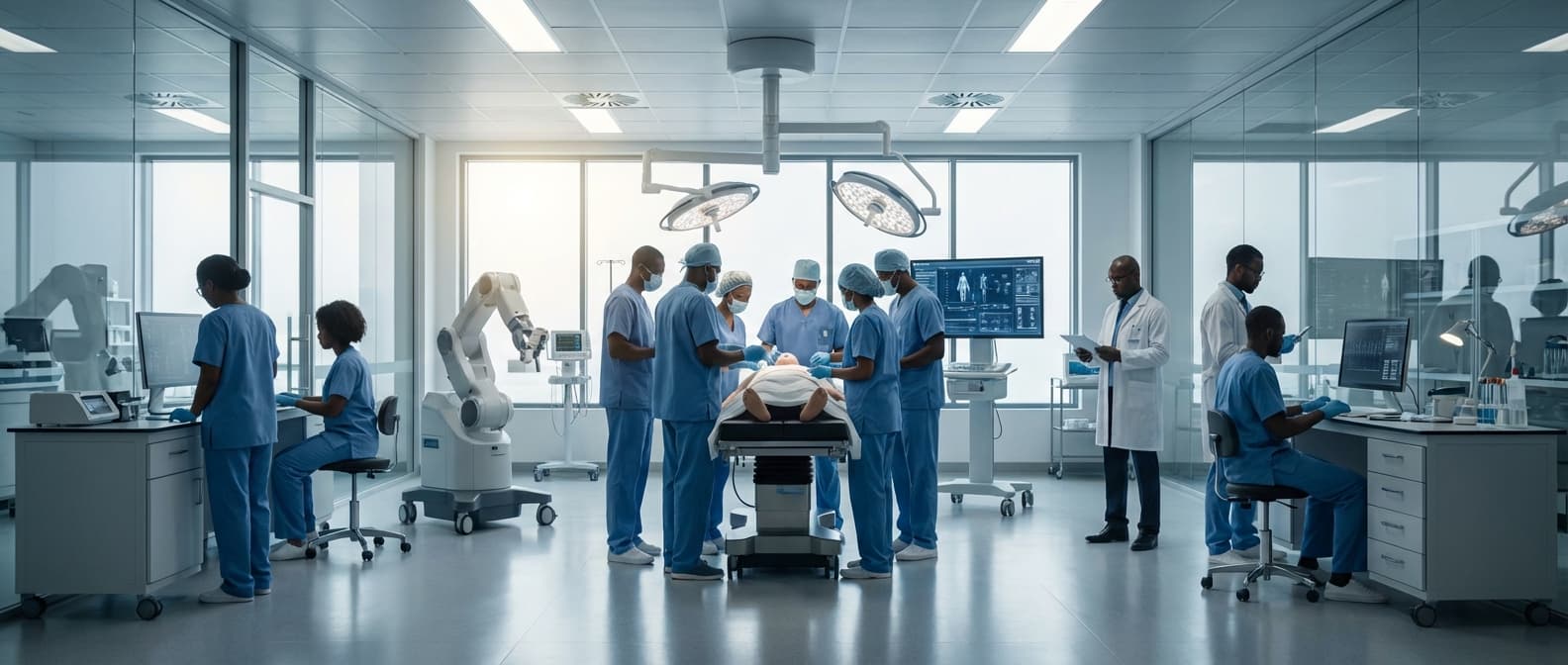
Biomedical Staffing Augmentation in Kenya
Engineering Excellence & Technical Support
Onsite biomedical engineers and PACS administrators High-standard technical execution following OEM protocols and local regulatory frameworks.
Rapid Deployment of Specialized Talent
Leverage our agile staffing model to quickly source and deploy highly skilled biomedical engineers, technicians, and laboratory specialists across Kenya. We bridge critical skill gaps, ensuring uninterrupted operations and project timelines for healthcare facilities and research institutions.
Certified & Compliant Workforce
Access a pre-vetted pool of biomedical professionals adhering to Kenyan regulatory standards and international best practices. Our augmentation services guarantee personnel with the necessary certifications, licenses, and up-to-date training for medical equipment maintenance, validation, and clinical support.
Scalable Expertise for Project Success
Tailor your biomedical workforce on-demand. Whether for short-term project needs, specialized equipment installations, or expanded service offerings, our augmentation solutions provide flexible access to top-tier expertise, driving efficiency and optimizing resource allocation for your organization's unique challenges.
What Is Biomedical Staffing Augmentation In Kenya?
Biomedical Staffing Augmentation in Kenya refers to the strategic process of supplementing existing in-house biomedical engineering teams with external, specialized personnel. This service is designed to address temporary or ongoing needs for skilled professionals, enabling healthcare facilities and related organizations to maintain, repair, calibrate, and manage their medical equipment effectively. It involves the provision of qualified biomedical technicians, engineers, and support staff on a contract, project, or ad-hoc basis. The augmentation process typically includes rigorous vetting of candidates, ensuring they possess the requisite technical expertise, certifications, and experience pertinent to the specific equipment and operational demands within the Kenyan healthcare landscape.
| Who Needs Biomedical Staffing Augmentation? | Typical Use Cases | ||||
|---|---|---|---|---|---|
| Hospitals (Public and Private): Across all bed capacities and specialties, requiring support for diverse medical technology portfolios. | Response to staff leave, maternity, or unexpected absences. | Implementation of new medical equipment requiring specialized installation and training. | Addressing backlogs in preventive maintenance or repair schedules. | Supporting specialized departments with limited in-house expertise (e.g., radiology, oncology). | Large-scale equipment upgrades or replacements. |
| Specialized Clinics and Diagnostic Centers: Requiring expertise for advanced diagnostic and therapeutic equipment. | Outsourcing of specific maintenance tasks to free up internal resources. | Project-based support for departmental restructuring or technology adoption. | Assistance during peak operational periods or patient surges. | ||
| Medical Equipment Manufacturers and Distributors: Needing to provide installation, training, and maintenance services to their clients. | Supplementing field service teams for large rollout projects. | Providing temporary technical support for product launches. | Ensuring rapid response for warranty repairs and service level agreements (SLAs). | ||
| Government Health Agencies and NGOs: Managing a large fleet of medical equipment across multiple facilities, often with budget constraints. | Supporting public health initiatives with limited internal capacity. | Ensuring the functionality of essential medical devices in underserved areas. | Facilitating capacity building and knowledge transfer to local personnel. | ||
| Research Institutions and Universities: Operating advanced medical research equipment. | Maintaining and calibrating highly specialized research apparatus. | Providing technical support for research projects involving complex instrumentation. |
Key Components of Biomedical Staffing Augmentation in Kenya
- Talent Acquisition and Vetting: Sourcing and pre-screening of qualified biomedical professionals with verified credentials and practical experience.
- Onboarding and Integration: Facilitating the seamless integration of augmented staff into the client's existing workflows, safety protocols, and reporting structures.
- Technical Skill Specialization: Provision of personnel with expertise in specific medical equipment categories (e.g., diagnostic imaging, laboratory equipment, critical care devices, surgical instruments).
- Regulatory Compliance: Ensuring augmented staff are aware of and adhere to Kenyan healthcare regulations, standards, and best practices.
- Flexibility and Scalability: Offering adaptable staffing solutions to meet fluctuating workload demands, project timelines, or unexpected personnel shortages.
- Risk Mitigation: Reducing the burden on internal teams, minimizing equipment downtime, and ensuring operational continuity.
- Cost Optimization: Providing a cost-effective alternative to permanent hiring, particularly for short-term needs or specialized skill sets.
Who Needs Biomedical Staffing Augmentation In Kenya?
Biomedical staffing augmentation in Kenya is crucial for healthcare facilities that face challenges in acquiring and retaining qualified biomedical engineering personnel. This includes public hospitals, private hospitals, specialized clinics, research institutions, and medical device manufacturers. These organizations often experience high patient loads, a growing reliance on complex medical technology, and a shortage of skilled biomedical technicians and engineers. Augmentation provides a flexible and efficient solution to bridge these staffing gaps, ensuring the optimal functioning and maintenance of essential medical equipment, thereby directly impacting patient care quality and safety.
| Department | Needs for Biomedical Staffing Augmentation | Impact of Augmentation |
|---|---|---|
| Biomedical Engineering Department | Shortage of trained technicians for installation, calibration, repair, and preventative maintenance of medical equipment. | Ensured equipment uptime, reduced repair turnaround times, improved patient safety, and extended equipment lifespan. |
| Clinical Engineering | Lack of specialized expertise for advanced medical technologies (e.g., MRI, CT scanners, ventilators). | Accurate equipment operation, adherence to safety standards, and optimized utilization of sophisticated medical devices. |
| Procurement and Logistics | Need for technical evaluation of new equipment and managing vendor service contracts. | Informed purchasing decisions, efficient management of service agreements, and reduced operational costs. |
| IT Department (Interfacing with Medical Devices) | Insufficient personnel to manage the integration of medical equipment with hospital IT systems and ensure data security. | Seamless data flow, enhanced diagnostic capabilities, and robust cybersecurity for medical devices. |
| Quality Assurance and Patient Safety | Requirement for regular equipment safety checks and compliance with regulatory standards. | Minimized risks of equipment malfunction, adherence to national and international safety regulations, and improved patient outcomes. |
| Training and Development | Need for ongoing training of existing staff on new technologies and maintenance procedures. | Upskilled workforce, increased efficiency, and adoption of best practices in biomedical engineering. |
Target Customers for Biomedical Staffing Augmentation in Kenya
- Public Hospitals (County and National)
- Private Hospitals and Hospital Groups
- Specialized Clinics (e.g., Oncology, Cardiology, Imaging Centers)
- Medical Research Institutions and Universities
- Medical Device Manufacturers and Distributors (for installation, maintenance, and support)
- Non-Governmental Organizations (NGOs) operating healthcare facilities
- Government Health Ministries and Agencies
Biomedical Staffing Augmentation Process In Kenya
The Biomedical Staffing Augmentation Process in Kenya outlines the structured workflow for organizations to acquire qualified biomedical professionals on a temporary or project basis. This process aims to address specific staffing needs, bridge skill gaps, and enhance the operational capacity of healthcare facilities, research institutions, and medical device companies. The workflow encompasses several key stages, from the initial client inquiry to the successful deployment and management of augmented staff.
| Stage | Description | Key Activities | Deliverables/Outcomes |
|---|---|---|---|
| The process begins with a potential client expressing a need for biomedical staffing support. | Client contacts staffing agency/provider, discusses requirements (role, duration, skills, location, budget), defines job specifications, clarifies expectations. | Clearly defined staffing requirements, understanding of the client's needs, agreed-upon scope of work. |
| The staffing provider actively searches for and screens suitable candidates. | Utilizing databases, professional networks, job boards, and recruitment agencies; reviewing CVs, conducting initial interviews, verifying qualifications, assessing technical skills, background checks, and reference checks. | Shortlist of qualified and pre-screened candidates for the client's consideration. |
| The shortlisted candidates are presented to the client for review and selection. | Presenting candidate profiles and resumes to the client, facilitating interviews (in-person or virtual) between client and candidates, gathering client feedback. | Client's final selection of one or more candidates for the augmented positions. |
| Formal agreements are established, and the selected candidate is prepared for deployment. | Negotiating and signing service/employment contracts (including terms, rates, and responsibilities), onboarding the candidate (orientation, necessary training, provision of equipment/access if applicable), ensuring compliance with Kenyan labor laws and regulations. | Legally binding contracts in place, candidate ready to commence work, understanding of company policies and procedures. |
| The augmented staff member begins their assignment and their performance is tracked. | Candidate commences work at the client's site, regular check-ins with both the augmented staff and the client, performance reviews, addressing any immediate issues or challenges. | Successful integration of the augmented staff into the client's team, consistent performance aligned with expectations, proactive issue resolution. |
| The assignment concludes, and a formal exit process is managed. | Completion of the contract term or project, final performance review, collection of feedback from both client and augmented staff, processing of final payments and administrative tasks, debriefing for continuous improvement. | Smooth transition for the augmented staff, valuable feedback for future engagements, closure of the assignment. |
Key Stages of the Biomedical Staffing Augmentation Process in Kenya:
- Inquiry & Needs Assessment
- Candidate Sourcing & Vetting
- Client Presentation & Selection
- Contracting & Onboarding
- Deployment & Performance Monitoring
- Offboarding & Feedback
Biomedical Staffing Augmentation Cost In Kenya
Biomedical Staffing Augmentation in Kenya refers to the practice of temporarily increasing the number of qualified biomedical personnel to support healthcare institutions, research facilities, or specific projects. This can include filling short-term vacancies, managing increased workloads, or bringing in specialized expertise. The cost of such augmentation is influenced by a multitude of factors, making it crucial for organizations to understand these dynamics when budgeting. Pricing ranges can vary significantly based on the specific needs and duration of the engagement. Understanding these pricing factors allows for more accurate cost estimation and effective resource allocation within the Kenyan healthcare sector.
| Role Category | Typical Experience Level | Estimated Daily Rate (KES) | Estimated Monthly Rate (KES) |
|---|---|---|---|
| Biomedical Technician (General) | Entry-level to Mid-level | 5,000 - 9,000 | 100,000 - 180,000 |
| Biomedical Engineer (General) | Mid-level to Senior | 8,000 - 15,000 | 160,000 - 300,000 |
| Laboratory Scientist (General) | Entry-level to Mid-level | 4,000 - 7,000 | 80,000 - 140,000 |
| Radiology Technologist (X-ray, Ultrasound) | Mid-level to Senior | 7,000 - 12,000 | 140,000 - 240,000 |
| Specialized Biomedical Engineer (e.g., Imaging, ICU) | Senior with specialization | 12,000 - 20,000+ | 240,000 - 400,000+ |
| Oncology Specialist Nurse | Senior with specialization | 10,000 - 18,000 | 200,000 - 360,000 |
| Clinical Research Assistant | Entry-level to Mid-level | 3,500 - 6,000 | 70,000 - 120,000 |
Key Pricing Factors for Biomedical Staffing Augmentation in Kenya
- Skill Set and Specialization: Highly specialized roles (e.g., advanced imaging technicians, specific laboratory scientists, experienced biomedical engineers) command higher rates than generalist positions.
- Experience Level: Senior biomedical professionals with extensive experience and proven track records will naturally be more expensive than entry-level or junior staff.
- Duration of Engagement: Short-term assignments (e.g., a few weeks or months) often have higher hourly or daily rates to compensate for the temporary nature and recruitment overhead, compared to longer-term contracts.
- Location of Deployment: Staffing augmentation in remote or underserved areas might incur additional costs for travel, accommodation, and hardship allowances, impacting the overall price.
- Scope of Work and Responsibilities: The complexity of the tasks, level of responsibility, and any required on-call duties will influence the pricing.
- Urgency of Need: If staff are required with immediate effect, recruitment agencies or providers may charge a premium for expedited placement services.
- Agency Fees/Markups: Recruitment and staffing agencies typically add their service fees, which are a percentage of the staff's salary, to the total cost.
- Statutory Deductions and Benefits: Costs associated with employer contributions (e.g., NSSF, NHIF), and any mandated or negotiated benefits (e.g., leave, medical insurance) need to be factored in.
- Training and Onboarding: If the augmented staff require specific training or orientation to the institution's protocols and equipment, these costs will be borne by the client.
- Market Demand: General market conditions, the availability of qualified personnel, and the overall demand for specific biomedical skills in Kenya can influence pricing.
Affordable Biomedical Staffing Augmentation Options
Biomedical departments often face fluctuating demands, requiring specialized skills for short-term projects or to cover staff shortages. Augmenting your existing team with external biomedical professionals can be a strategic solution. This document explores affordable options for biomedical staffing augmentation, focusing on value bundles and cost-saving strategies to maximize your return on investment.
| Strategy/Bundle | Description | Benefits | Cost-Saving Aspect |
|---|---|---|---|
| Project-Specific Skill Package | A pre-defined bundle of services for a specific project, e.g., commissioning a new CT scanner, requiring a certified engineer and a specialized physicist. | Ensures specialized expertise is available for critical project phases. Reduces the need for extensive internal training. | Pay only for the specialized skills needed for the project duration. Avoids hiring permanent staff with niche expertise. |
| On-Demand Technical Support Bundle | A retainer-based agreement for a set number of hours of remote or on-site technical support for a specific equipment category. | Provides quick access to troubleshooting and preventative maintenance. Minimizes equipment downtime. | Predictable monthly cost. Reduced travel expenses for remote support. Avoids expensive emergency call-out fees. |
| Documentation & Compliance Augmentation | A package focusing on creating or updating service manuals, training materials, or compliance documentation, potentially with remote assistance. | Ensures regulatory adherence and operational efficiency. Frees up internal technical staff for hands-on duties. | Leverages efficient remote work. Specialized expertise in documentation can be more cost-effective than training internal staff. |
| Flexible Staffing Pool | Partnering with a staffing agency to maintain access to a pool of qualified biomedical technicians and engineers, with flexible engagement options. | Agility to scale staffing up or down based on workload. Quick replacement of unavailable personnel. | Avoids paying full-time salaries and benefits for fluctuating needs. Reduced recruitment costs. |
| Trainee Augmentation with Expert Mentorship | Placing a junior biomedical technician augmented by an experienced mentor (either from the agency or an existing internal senior staff member) for training and task completion. | Cost-effective way to get routine tasks done while developing internal talent. Ensures quality and safety through mentorship. | Lower hourly rate for the junior staff. Shared mentorship time reduces the burden on senior staff. Cost of training is embedded. |
Affordable Biomedical Staffing Augmentation Options
- Value Bundles: Customized packages offering a blend of services and flexible engagement models to meet specific needs.
- Cost-Saving Strategies: Proactive approaches and smart utilization of resources to reduce overall staffing expenses.
- On-Demand Staffing: Accessing qualified professionals for immediate, short-term needs, avoiding long-term commitment costs.
- Project-Based Augmentation: Engaging specialists for defined projects with clear objectives and timelines.
- Remote/Virtual Support: Leveraging off-site expertise for tasks like data analysis, documentation, or initial troubleshooting, reducing on-site presence costs.
- Skill-Specific Augmentation: Targeting specific technical skills (e.g., specific imaging modalities, laboratory equipment) only when needed, rather than maintaining a broad in-house skill set.
- Trainee/Junior Staff Augmentation with Senior Oversight: Utilizing less experienced staff for routine tasks under the guidance of a senior augmented professional or an existing internal expert, offering a cost-effective solution for supervised work.
Verified Providers In Kenya
When seeking healthcare services in Kenya, the trustworthiness and quality of providers are paramount. Verified providers, especially those with recognized credentials like Franance Health, offer a significant advantage. This document outlines why selecting providers accredited by reputable organizations, such as Franance Health, is the optimal choice for ensuring effective and reliable medical care.
| Provider Aspect | Franance Health Credentials & Benefits | Why it Matters for You |
|---|---|---|
| Credentialing and Accreditation | Franance Health rigorously vets and accredits healthcare facilities and professionals, ensuring they meet stringent quality and safety benchmarks. | Guarantees you are receiving care from a recognized and competent source, minimizing risks associated with unqualified providers. |
| Quality Assurance | Accreditation by Franance Health signifies adherence to continuous quality improvement processes, including patient care protocols, facility management, and infection control. | Ensures a higher standard of care, leading to better treatment outcomes and a safer patient experience. |
| Professional Standards | Franance Health promotes and enforces ethical practices and professional conduct among its accredited providers, ensuring patient rights are respected. | You can expect respectful, transparent, and patient-centered care from all Franance Health credentialed professionals. |
| Trust and Reliability | The Franance Health mark of accreditation serves as a seal of trust, indicating a commitment to excellence in healthcare delivery. | Provides confidence in the reliability of the services you receive, allowing you to focus on your recovery rather than worrying about provider qualifications. |
| Access to Best Practices | Accredited providers are kept abreast of the latest medical advancements and best practices through Franance Health's network and resources. | You benefit from up-to-date medical knowledge and techniques, leading to more effective and modern treatment options. |
| Reputation and Recognition | Franance Health is a respected name in the Kenyan healthcare landscape, and its accreditation is highly valued. | Choosing a Franance Health verified provider means aligning with a recognized standard of healthcare excellence within Kenya. |
Why Choose Verified Providers
- Enhanced patient safety and reduced risk of medical errors.
- Access to qualified and competent healthcare professionals.
- Assurance of adherence to established medical standards and best practices.
- Increased patient confidence and peace of mind.
- Streamlined access to quality healthcare services.
- Facilitation of ethical and professional conduct within the healthcare system.
Scope Of Work For Biomedical Staffing Augmentation
This Scope of Work (SOW) outlines the requirements for augmenting the biomedical staff of [Client Name] through a temporary staffing agency. The objective is to secure qualified and experienced biomedical professionals to support [specific department/project] and ensure the continued operational efficiency and maintenance of medical equipment. This SOW details the technical deliverables expected from the augmented staff and the standard specifications they must adhere to.
| Technical Deliverable | Standard Specification / Requirement | Acceptance Criteria |
|---|---|---|
| Preventative Maintenance (PM) Completion | All scheduled PMs completed within the designated timeframe (e.g., +/- 10% of scheduled date). Adherence to manufacturer-recommended PM protocols and checklists. | PM documentation submitted within 48 hours of completion. Successful completion rate of 95% for all assigned PMs. |
| Corrective Maintenance (CM) Response Time | Emergency equipment repairs addressed within 1 hour of notification. Routine equipment repairs addressed within 8 business hours. | Mean Time to Respond (MTTR) for critical equipment below [Specify Time, e.g., 45 minutes]. Documentation of all CM events including downtime and resolution. |
| Equipment Calibration | All equipment requiring calibration performed according to manufacturer specifications and regulatory standards (e.g., FDA, Joint Commission). Use of NIST-traceable calibration equipment. | Calibration certificates provided for all calibrated devices, signed by qualified personnel. Verification of calibration accuracy through functional testing. |
| New Equipment Installation & Setup | Unpacking, assembly, installation, and initial functional testing of new medical equipment. Integration with hospital network and PACS/HIS as applicable. | Successful functional testing report signed by the requesting department and biomedical staff. Equipment operational and ready for clinical use. |
| Troubleshooting & Repair of Medical Devices | Accurate diagnosis and effective repair of malfunctioning medical equipment. Minimizing downtime and ensuring patient safety. | Resolution rate of 90% for all assigned troubleshooting and repair tickets. Documentation of root cause analysis for recurring issues. |
| Documentation & Record Keeping | Meticulous record-keeping of all maintenance, repair, calibration, and installation activities in the hospital's Computerized Maintenance Management System (CMMS) [Specify CMMS Name, e.g., Real Estate Management System (REMS), AssetWorks]. | 100% of all completed work orders accurately and promptly entered into the CMMS. Compliance with all data entry standards and requirements. |
| Adherence to Safety & Regulatory Standards | Strict adherence to all relevant safety protocols, infection control procedures, and regulatory requirements (e.g., HIPAA, FDA, OSHA, Joint Commission). | No reported safety violations or regulatory non-compliance issues directly attributable to augmented staff. Successful participation in internal and external audits. |
| Technical Training & Knowledge Transfer | Ability to perform maintenance on specified equipment types. Willingness to participate in knowledge transfer sessions with existing staff. | Demonstrated proficiency in maintaining specified equipment. Positive feedback from existing staff regarding knowledge sharing. |
Key Personnel Requirements & Responsibilities
- Biomedical Equipment Technician (BMET) - Level II/III: Perform installation, calibration, preventative maintenance, troubleshooting, and repair of a wide range of medical devices as per manufacturer guidelines and organizational policies.
- Clinical Engineer: Provide technical expertise in equipment lifecycle management, risk assessment, regulatory compliance, and capital equipment planning. May also assist with complex troubleshooting and training.
- Biomedical Informatics Specialist: Support the integration and maintenance of biomedical equipment within the hospital's IT infrastructure, including data management, cybersecurity for medical devices, and interface troubleshooting.
Service Level Agreement For Biomedical Staffing Augmentation
This Service Level Agreement (SLA) outlines the response times and uptime guarantees for the Biomedical Staffing Augmentation services provided by [Your Company Name] to [Client Company Name]. This SLA is effective as of [Effective Date] and shall remain in effect until [End Date], unless terminated in accordance with the Master Services Agreement.
| Service Level Component | Definition | Target/Guarantee | Measurement Method | Remedy for Failure |
|---|---|---|---|---|
| Urgent Staff Request Response Time | Time to acknowledge and confirm availability for immediate replacement or augmentation of Augmentation Staff for Critical Equipment issues. | Within 30 minutes of notification. | Timestamped notification receipt and confirmation communication. | Service Credit of [X]% of daily augmentation rate for each occurrence exceeding the response time. |
| Routine Staff Request Response Time | Time to acknowledge and confirm availability for non-urgent staffing needs or scheduled augmentation. | Within 4 business hours of notification. | Timestamped notification receipt and confirmation communication. | Service Credit of [Y]% of daily augmentation rate for each occurrence exceeding the response time. |
| Augmentation Staff Uptime Guarantee | The percentage of scheduled Augmentation Staff hours that are successfully fulfilled and available for duty. | 98% uptime for scheduled Augmentation Staff hours. | Calculated by dividing actual fulfilled Augmentation Staff hours by total scheduled Augmentation Staff hours over a monthly period. | For each full percentage point below 98% uptime in a given month, [Client Company Name] will receive a Service Credit equivalent to [Z]% of the monthly augmentation fees for the affected Augmentation Staff. |
| Escalation Procedure Response Time | Time to acknowledge and initiate resolution for escalated service issues that have not been resolved within the initial response timeframe. | Within 1 business hour of escalation notification. | Timestamped escalation notification and confirmation of initiation of resolution. | Service Credit of [A]% of daily augmentation rate for each occurrence exceeding the response time. |
Definitions
- Augmentation Staff: Qualified biomedical professionals provided by [Your Company Name] to supplement the existing staff at [Client Company Name]'s facilities.
- Critical Equipment: Biomedical equipment identified by [Client Company Name] as essential for patient care, diagnosis, or treatment, with a failure of which posing an immediate risk to patient safety or operational continuity.
- Downtime: The period during which Augmentation Staff is unavailable to perform their duties due to reasons attributable to [Your Company Name], including but not limited to, failure to provide scheduled staff, prolonged unscheduled absences, or significant performance issues impacting service delivery.
- Response Time: The maximum allowed time for [Your Company Name] to acknowledge and begin addressing a service request or issue.
- Uptime Guarantee: The percentage of time that Augmentation Staff is contractually available to perform their duties as scheduled and agreed upon.
Frequently Asked Questions

Ready when you are
Let's scope your Biomedical Staffing Augmentation in Kenya project in Kenya.

Scaling healthcare logistics and technical systems across the entire continent.