
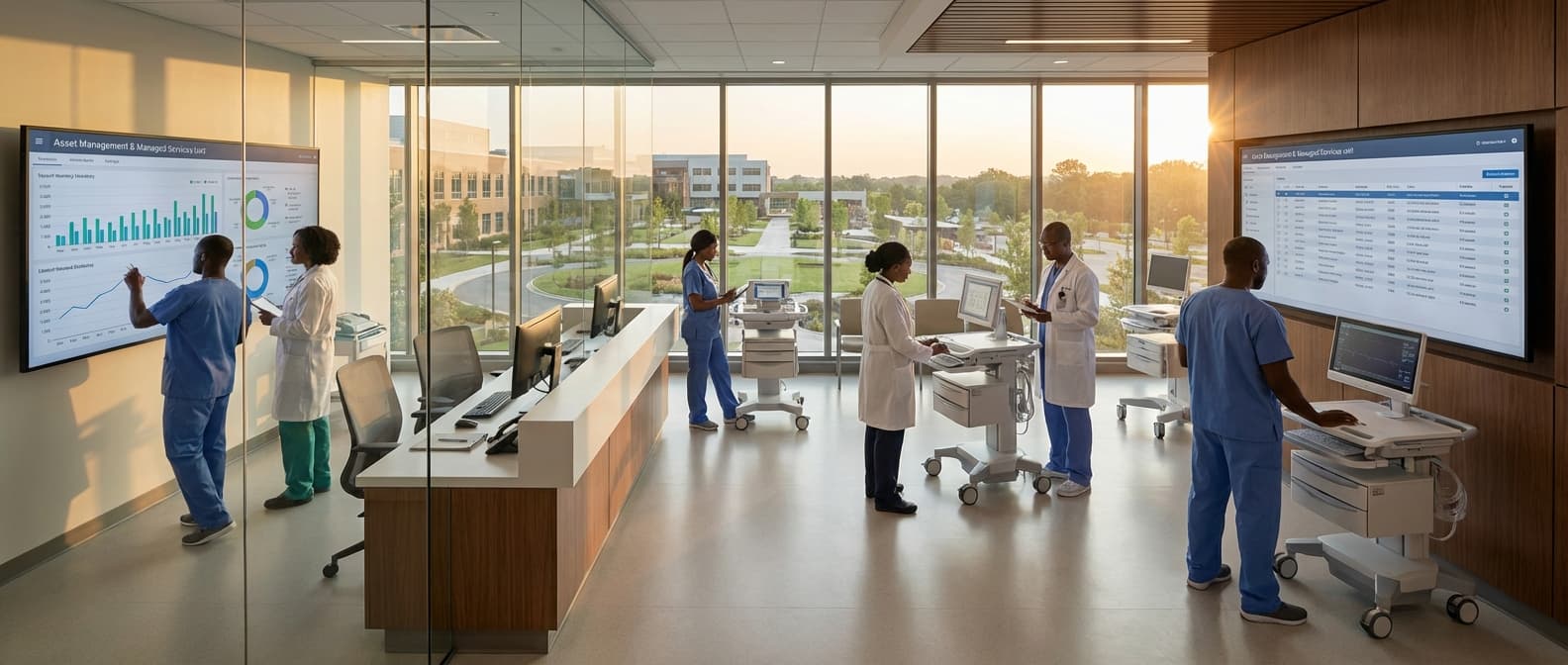
Maintenance KPI Reporting Service (Uptime/MTBF/MTTR) in Kenya
Engineering Excellence & Technical Support
Maintenance KPI Reporting Service (Uptime/MTBF/MTTR) High-standard technical execution following OEM protocols and local regulatory frameworks.
Proactive Uptime Maximization
Our service leverages real-time sensor data and predictive analytics to identify potential equipment failures *before* they occur. This allows for scheduled maintenance interventions, drastically reducing unscheduled downtime and ensuring consistent operational uptime for Kenyan businesses.
Accelerated Mean Time Between Failures (MTBF)
By meticulously analyzing historical maintenance records and pinpointing root causes of failures, we provide actionable insights to improve equipment reliability. Our data-driven approach helps Kenyan organizations extend the lifespan of their assets, significantly increasing the Mean Time Between Failures (MTBF).
Optimized Mean Time To Repair (MTTR)
We empower maintenance teams with instant access to detailed equipment history, diagnostic tools, and recommended repair procedures. This streamlined information flow drastically reduces troubleshooting and repair times, leading to a lower Mean Time To Repair (MTTR) and faster restoration of critical operations.
What Is Maintenance Kpi Reporting Service (Uptime/mtbf/mttr) In Kenya?
A Maintenance KPI Reporting Service (Uptime/MTBF/MTTR) in Kenya refers to a specialized offering that provides organizations with the collection, analysis, and reporting of Key Performance Indicators (KPIs) critical to assessing and optimizing their asset maintenance strategies. This service focuses on quantifiable metrics such as Uptime (percentage of time an asset is operational), Mean Time Between Failures (MTBF - average time an asset operates successfully before failing), and Mean Time To Repair (MTTR - average time taken to restore a failed asset to operational status). The service leverages data acquisition from various sources (e.g., CMMS, SCADA, IoT sensors), employs analytical methodologies, and delivers actionable reports to stakeholders, enabling data-driven decision-making for predictive, preventive, and corrective maintenance initiatives.
| Entity/Sector | Who Needs Maintenance KPI Reporting Service (Uptime/MTBF/MTTR)? | Typical Use Cases |
|---|---|---|
| Manufacturing and Industrial Operations | Production Managers, Plant Engineers, Maintenance Supervisors, Reliability Engineers. | Optimizing production line uptime, minimizing unexpected equipment failures, reducing repair costs, enhancing overall equipment effectiveness (OEE), scheduling preventive maintenance based on failure predictions. |
| Energy and Utilities (Power Generation, Water Treatment) | Operations Directors, Asset Managers, Maintenance Planners, Grid Reliability Engineers. | Ensuring continuous power supply or water provision, managing the lifespan of critical infrastructure (turbines, pumps, transformers), forecasting maintenance needs, complying with regulatory uptime requirements. |
| Telecommunications | Network Operations Center (NOC) Managers, Field Service Managers, Infrastructure Engineers. | Maximizing network availability, reducing service disruption to subscribers, optimizing response times for network faults, managing the reliability of cell towers and data centers. |
| Transportation and Logistics | Fleet Managers, Maintenance Superintendents, Operations Planners. | Ensuring vehicle uptime for delivery schedules, minimizing breakdowns, optimizing maintenance schedules for trucks, trains, or aircraft, reducing operational delays. |
| Mining and Extractives | Mine Operations Managers, Maintenance Superintendents, Equipment Reliability Engineers. | Maximizing uptime of heavy machinery (excavators, haul trucks), reducing downtime due to equipment failure, optimizing maintenance schedules in remote or harsh environments, ensuring safety through reliable equipment. |
| Healthcare Facilities | Facility Managers, Biomedical Engineers, IT Infrastructure Managers. | Ensuring the uninterrupted operation of critical medical equipment (MRI machines, ventilators), maintaining building systems (HVAC, power), ensuring data center uptime for patient records, adhering to compliance standards. |
| Oil and Gas | Production Managers, Plant Engineers, Maintenance Supervisors, Integrity Engineers. | Ensuring continuous production from platforms and refineries, minimizing downtime of critical equipment (pumps, compressors, pipelines), managing the reliability of offshore assets, adhering to stringent safety and environmental standards. |
What this service involves:
- Data Acquisition and Integration: Establishing robust mechanisms to collect raw operational and maintenance data from diverse sources, including Computerized Maintenance Management Systems (CMMS), Supervisory Control and Data Acquisition (SCADA) systems, Programmable Logic Controllers (PLCs), Internet of Things (IoT) sensors, and manual logs.
- KPI Calculation and Validation: Implementing algorithms and validation processes to accurately calculate core maintenance KPIs like Uptime, MTBF, MTTR, Availability, Failure Rate, and Maintenance Costs. This includes defining clear methodologies for data segmentation and event identification (e.g., start/end of failures).
- Data Analysis and Trend Identification: Employing statistical analysis, root cause analysis (RCA) techniques, and pattern recognition to identify trends, anomalies, and underlying causes of failures or suboptimal performance. This phase often involves correlation analysis between operational parameters and maintenance events.
- Reporting and Visualization: Generating comprehensive and visually intuitive reports, dashboards, and scorecards. These outputs are tailored to different stakeholder levels (e.g., operational managers, maintenance supervisors, executive leadership) and may include graphical representations of trends, comparative analyses, and performance benchmarks.
- Actionable Insights and Recommendations: Translating data-driven findings into practical, implementable recommendations for improving maintenance strategies, optimizing resource allocation, enhancing asset reliability, and reducing operational downtime.
- Benchmarking and Performance Monitoring: Facilitating internal and external benchmarking against industry standards or peer organizations to gauge performance and identify areas for improvement. Continuous monitoring ensures that the impact of implemented changes is tracked.
- Technology and Platform Management: Often involves the utilization of specialized software platforms, cloud-based solutions, or custom-developed analytical tools for data storage, processing, and reporting.
Who Needs Maintenance Kpi Reporting Service (Uptime/mtbf/mttr) In Kenya?
In Kenya's dynamic industrial and commercial landscape, effective maintenance is crucial for operational efficiency, cost control, and customer satisfaction. Businesses that rely on the consistent performance of physical assets often struggle with understanding, measuring, and improving their maintenance operations. This is where a Maintenance KPI Reporting Service, specifically focusing on Uptime, Mean Time Between Failures (MTBF), and Mean Time To Repair (MTTR), becomes indispensable. Such a service provides data-driven insights to optimize maintenance strategies, minimize downtime, and maximize asset lifespan. These metrics are vital for businesses aiming for reliability, productivity, and a competitive edge.
| Target Customer Type | Typical Departments Involved | Why They Need the Service |
|---|---|---|
| Manufacturing Companies | Operations, Production, Maintenance, Engineering, Quality Control | To minimize production line stoppages (Uptime), identify recurring equipment failures (MTBF), and reduce repair times to maintain output and product quality. |
| Oil and Gas Sector | Production, Operations, Maintenance, HSE (Health, Safety, Environment), Asset Integrity | To ensure continuous extraction and processing (Uptime), predict and prevent major equipment failures in critical infrastructure (MTBF), and rapidly restore operations after incidents (MTTR). |
| Telecommunications Providers | Network Operations, Field Maintenance, Technical Support, Service Delivery | To guarantee network availability and service continuity for subscribers (Uptime), understand the reliability of network equipment (MTBF), and quickly resolve service disruptions (MTTR). |
| Healthcare Facilities | Facilities Management, Biomedical Engineering, Operations, IT | To ensure critical medical equipment is operational at all times (Uptime), minimize breakdowns of life-saving devices (MTBF), and reduce the time taken to repair essential machinery (MTTR). |
| Transportation and Logistics Companies | Fleet Management, Operations, Maintenance, Supply Chain | To maximize vehicle and equipment availability for deliveries and operations (Uptime), identify common issues causing breakdowns (MTBF), and reduce vehicle downtime for repairs (MTTR). |
| Power Generation and Distribution Utilities | Operations, Maintenance, Engineering, Grid Management | To maintain consistent electricity supply (Uptime), predict and prevent failures in power generation and transmission equipment (MTBF), and swiftly restore power after outages (MTTR). |
| Food and Beverage Processing Plants | Production, Operations, Maintenance, Quality Assurance | To ensure uninterrupted food production lines (Uptime), reduce the frequency of equipment breakdowns that can lead to spoilage or delays (MTBF), and minimize downtime during maintenance or repair (MTTR). |
| Mining Operations | Operations, Maintenance, Engineering, Safety | To maximize extraction and processing time (Uptime), improve the reliability of heavy machinery and processing plants (MTBF), and reduce the duration of equipment downtime (MTTR). |
| Large-Scale Agriculture and Agribusiness | Farm Management, Operations, Maintenance, Equipment Management | To ensure machinery and processing equipment are available during critical farming seasons (Uptime), reduce the incidence of equipment failures impacting harvests or processing (MTBF), and minimize repair times for essential farm equipment (MTTR). |
| Real Estate and Facility Management Companies | Facilities Management, Operations, Maintenance, Property Management | To ensure buildings and their critical systems (HVAC, elevators, power) are always operational (Uptime), identify recurring issues with building infrastructure (MTBF), and ensure swift resolution of maintenance requests (MTTR). |
Who Needs Maintenance KPI Reporting Service (Uptime/MTBF/MTTR) in Kenya?
- Manufacturing Companies
- Oil and Gas Sector
- Telecommunications Providers
- Healthcare Facilities
- Transportation and Logistics Companies
- Power Generation and Distribution Utilities
- Food and Beverage Processing Plants
- Mining Operations
- Large-Scale Agriculture and Agribusiness
- Real Estate and Facility Management Companies
Maintenance Kpi Reporting Service (Uptime/mtbf/mttr) Process In Kenya
This document outlines the workflow for the Maintenance KPI Reporting Service (Uptime/MTBF/MTTR) in Kenya, from initial client inquiry to the final delivery of reports. This service aims to provide businesses with critical insights into the reliability and maintainability of their assets, enabling proactive maintenance strategies and improved operational efficiency.
| Phase | Stage | Description | Key Activities | Deliverables | Key Stakeholders |
|---|---|---|---|---|---|
| Inquiry & Scoping | Initial Contact | Potential client expresses interest in the Maintenance KPI Reporting Service. | Receive inquiry (email, phone, website form), Initial consultation to understand client needs and existing systems. | Preliminary understanding of client's asset types, scope, and reporting requirements. | Prospective Client |
| Inquiry & Scoping | Needs Assessment & Proposal | Detailed understanding of the client's operational environment and specific KPI requirements. | On-site or virtual assessment of asset inventory, data collection methods, and existing maintenance processes. Develop a customized service proposal outlining scope, KPIs, data sources, reporting frequency, and pricing. | Detailed service proposal, Scope of Work (SOW) document. | Prospective Client, Service Provider Sales/Consulting Team |
| Onboarding & Setup | Contract & Agreement | Formalization of the service agreement. | Client reviews and signs the service proposal/contract. Agreement on payment terms and service level agreements (SLAs). | Signed contract, Service Level Agreement (SLA). | Prospective Client, Service Provider Legal/Contracts Team |
| Onboarding & Setup | Data Integration & System Setup | Connecting to client's data sources and configuring reporting tools. | Identify and gain access to relevant data sources (e.g., CMMS, SCADA, ERP, IoT sensors). Configure data connectors and/or implement data collection mechanisms. Set up reporting dashboards and analytical tools. | Established data connections, Configured reporting platform. | Client IT/Operations Team, Service Provider Technical Team |
| Data Collection & Processing | Data Extraction & Validation | Gathering raw data related to asset operation and maintenance. | Scheduled or ad-hoc extraction of operational data (runtime, cycles) and maintenance logs (failure dates/times, repair times, causes). Data cleaning, de-duplication, and validation to ensure accuracy. | Validated raw data. | Service Provider Data Engineers/Analysts, Client Operations Team |
| Data Collection & Processing | KPI Calculation | Computing the defined maintenance KPIs. | Apply formulas and algorithms to calculate Uptime, MTBF, and MTTR based on validated data. Perform trend analysis and identify significant deviations. | Calculated KPI values. | Service Provider Data Analysts |
| Reporting & Analysis | Report Generation | Compiling and presenting the calculated KPIs. | Generate automated or customized reports in agreed-upon formats (dashboards, PDFs, spreadsheets). Include historical trends, performance against targets, and root cause analysis insights. | Maintenance KPI Reports (Uptime, MTBF, MTTR). | Service Provider Reporting Team |
| Reporting & Analysis | Report Review & Presentation | Presenting the findings and recommendations to the client. | Scheduled review meetings (virtual or in-person) to present the KPI reports. Discuss key findings, identify areas for improvement, and provide actionable recommendations for maintenance strategies. | Presentation slides, Meeting minutes, Actionable recommendations. | Service Provider Analysts/Consultants, Client Management/Operations Team |
| Execution & Optimization | Action Planning & Implementation | Client acts on the recommendations provided. | Client develops and implements action plans based on the insights from the KPI reports (e.g., predictive maintenance scheduling, spare parts optimization, operator training). | Implemented maintenance improvements. | Client Operations/Maintenance Team |
| Execution & Optimization | Continuous Monitoring & Feedback | Ongoing service delivery and refinement. | Regularly monitor the impact of implemented changes on KPIs. Gather client feedback on report clarity, timeliness, and usefulness. Adjust reporting parameters or data collection as needed. | Updated KPI trends, Client satisfaction feedback. | Service Provider Account Manager, Service Provider Technical Team, Client Management/Operations Team |
Key Maintenance KPIs Covered
- Uptime: The percentage of time an asset is operational and available for use.
- Mean Time Between Failures (MTBF): The average time elapsed between inherent failures of a repairable system during normal system operation.
- Mean Time To Repair (MTTR): The average time it takes to repair a failed asset and return it to operational status.
Maintenance Kpi Reporting Service (Uptime/mtbf/mttr) Cost In Kenya
In Kenya, the cost of a Maintenance KPI Reporting Service focused on Uptime, Mean Time Between Failures (MTBF), and Mean Time To Repair (MTTR) can vary significantly based on several factors. These services are crucial for businesses aiming to optimize their operational efficiency, minimize downtime, and improve overall asset reliability. The pricing typically reflects the complexity of the systems being monitored, the volume of data, the level of customization required, and the provider's expertise. Local currency, the Kenyan Shilling (KES), is used for all pricing indications.
| Service Level/Scope | Typical Pricing Range (KES per month) | Description |
|---|---|---|
| Basic Uptime & Downtime Reporting (Limited Assets) | 15,000 - 40,000 | Focuses on tracking operational hours vs. downtime for a small number of critical assets. Reports are usually standard templates. |
| Standard MTBF & MTTR Reporting (Medium Scope) | 40,000 - 100,000 | Includes detailed tracking of failure occurrences, repair times, and basic analysis for a moderate number of assets. May offer some customization. |
| Comprehensive KPI Suite (Large Scope/Complex Systems) | 100,000 - 300,000+ | Covers a wide range of assets, includes advanced analytics, predictive insights, customizable dashboards, integration capabilities, and dedicated support. |
| Full-Service Solution (Includes Hardware & Installation) | 500,000 - 1,500,000+ (Initial Setup) + Ongoing Fees | Encompasses sensor deployment, network setup, data acquisition, and sophisticated reporting/analytics platform. Initial setup costs can be substantial. |
| Consultancy & Custom Analytics | Hourly/Project-Based (10,000 - 30,000+ per hour) | For specific projects, in-depth root cause analysis, or development of highly specialized reporting features. |
Key Pricing Factors for Maintenance KPI Reporting Services in Kenya
- {"item":"Scope of Monitoring:","description":"The number and type of assets or systems being monitored directly impact cost. Reporting on a few simple machines will be less expensive than comprehensive monitoring of a large, complex industrial plant or a fleet of vehicles."}
- {"item":"Data Volume & Frequency:","description":"The amount of data collected and the frequency of reporting (e.g., real-time, daily, weekly, monthly) influence processing power and storage needs, thus affecting price."}
- {"item":"Sensor & Data Acquisition Infrastructure:","description":"If the service provider also supplies and installs sensors, IoT devices, or data loggers, this will be a significant cost component. If the client already has this infrastructure, the cost will be lower, focusing purely on reporting and analysis."}
- {"item":"Customization & Integration:","description":"Bespoke dashboards, custom report formats, and integration with existing Enterprise Resource Planning (ERP) or Computerized Maintenance Management Systems (CMMS) will increase the cost due to development and implementation efforts."}
- {"item":"Level of Analysis & Insights:","description":"Basic data aggregation is cheaper than advanced analytics, predictive maintenance insights, root cause analysis, or proactive recommendations provided by the service."}
- {"item":"Provider Expertise & Reputation:","description":"Established providers with a proven track record and specialized expertise in industrial IoT and maintenance analytics may command higher prices."}
- {"item":"Support & Training:","description":"The level of ongoing technical support, user training, and service level agreements (SLAs) offered will impact the overall cost."}
- {"item":"Contract Duration:","description":"Longer-term contracts often come with discounted rates compared to short-term or ad-hoc services."}
Affordable Maintenance Kpi Reporting Service (Uptime/mtbf/mttr) Options
Our Affordable Maintenance KPI Reporting Service provides essential insights into your asset performance, focusing on key metrics like Uptime, Mean Time Between Failures (MTBF), and Mean Time To Repair (MTTR). Understanding these indicators is crucial for proactive maintenance, minimizing downtime, and optimizing operational efficiency. We offer flexible value bundles and implement cost-saving strategies to make this vital service accessible to businesses of all sizes.
| Cost-Saving Strategy | Description | Impact on Service |
|---|---|---|
| Tiered Service Offerings | Providing different levels of service complexity and reporting frequency allows clients to select the bundle that best fits their budget and needs, avoiding overpayment for unutilized features. | Enables cost-effective access to essential KPI reporting. Clients pay for what they need. |
| Automated Data Ingestion | Leveraging APIs and direct integrations with existing CMMS/EAM systems to automate data collection, reducing manual data entry and potential errors. | Significantly lowers labor costs associated with data preparation, leading to more affordable reporting. |
| Template-Based Reporting | Utilizing pre-defined, industry-standard reporting templates that can be easily customized, rather than building bespoke reports from scratch for every client. | Reduces report development time and cost, making the service more accessible. |
| Remote Service Delivery | Providing all reporting and analysis services remotely, eliminating the need for on-site visits and associated travel expenses. | Lowers overhead for the service provider, translating to lower costs for clients. |
| Focus on Actionable Insights | Prioritizing the delivery of clear, actionable recommendations within reports to help clients implement changes that drive cost savings and efficiency, proving the ROI of the service. | Demonstrates the value of the service and encourages continued engagement, justifying the investment. |
| Batch Processing and Scheduling | Optimizing reporting generation to run in batches during off-peak hours, efficiently utilizing system resources. | Improves operational efficiency for the service provider, potentially leading to lower pricing. |
| Standardized Data Validation | Implementing efficient, automated processes for data validation to ensure accuracy without extensive manual review. | Reduces the labor-intensive aspect of data quality checks, contributing to cost savings. |
Value Bundles for KPI Reporting
- {"title":"Basic Insight Bundle","description":"Ideal for smaller operations or those new to KPI tracking. Includes monthly reports on core metrics (Uptime, MTBF, MTTR) with basic trend analysis and visual dashboards. Focused on essential performance monitoring."}
- {"title":"Standard Performance Bundle","description":"A step up for businesses seeking deeper analysis. Offers bi-weekly or monthly reports with enhanced trend analysis, root cause identification support for common issues, and recommendations for basic preventative actions. Includes historical data comparison."}
- {"title":"Advanced Optimization Bundle","description":"Comprehensive solution for organizations aiming for peak operational efficiency. Includes weekly or bi-weekly reports with in-depth root cause analysis, predictive maintenance insights (based on historical patterns), scenario planning, and strategic recommendations for asset lifecycle management and spare parts optimization."}
- {"title":"Custom Enterprise Bundle","description":"Tailored to meet the unique needs of large-scale operations. Includes bespoke KPI definitions, integration with existing CMMS/EAM systems, advanced data analytics, real-time dashboards, and dedicated support for strategic decision-making."}
Verified Providers In Kenya
In the competitive landscape of healthcare in Kenya, identifying truly reliable and effective healthcare providers is paramount. Franance Health stands out as a network committed to upholding the highest standards of care and ethical practice. This commitment is demonstrated through rigorous credentialing processes and a dedication to patient well-being, making them a leading choice for those seeking quality medical services. Their emphasis on verified providers ensures that patients are receiving care from qualified and experienced professionals, fostering trust and confidence in the healthcare system.
| Provider Type | Credentialing Criteria | Benefits for Patients |
|---|---|---|
| General Practitioners | MBChB degree, Kenya Medical Practitioners and Dentists Council (KMPDC) registration, valid practicing license, at least 2 years of post-internship experience. | Access to primary healthcare services from qualified and experienced doctors. |
| Specialists (e.g., Cardiologists, Dermatologists) | MBChB degree, KMPDC registration, valid practicing license, completion of recognized specialist training (e.g., Masters, Fellowship), active membership in relevant professional bodies. | Consultation and treatment from highly trained experts in specific medical fields. |
| Hospitals and Clinics | Accreditation from relevant regulatory bodies (e.g., Ministry of Health, Joint Commission International - if applicable), compliance with safety and hygiene standards, availability of essential equipment and qualified personnel. | Safe and well-equipped healthcare facilities offering comprehensive services. |
| Nurses and Allied Health Professionals | Relevant degree or diploma, registration and licensing with their respective councils (e.g., Nursing Council of Kenya), ongoing professional development. | Skilled and certified healthcare professionals providing essential support and care. |
Why Franance Health Credentials Matter:
- Rigorous Verification Process: Franance Health meticulously vets all affiliated healthcare providers, ensuring they meet stringent educational, licensing, and professional experience requirements.
- Commitment to Quality Care: Their credentialing goes beyond basic qualifications, focusing on providers who demonstrate a commitment to patient-centered care, ethical conduct, and continuous professional development.
- Access to Trusted Professionals: By choosing Franance Health, patients gain access to a network of doctors, specialists, and facilities that have undergone thorough scrutiny.
- Enhanced Patient Safety: The verification process minimizes risks associated with unqualified practitioners, prioritizing patient safety and positive health outcomes.
- Building Trust and Transparency: Franance Health's transparent credentialing system builds trust between patients and providers, fostering a more positive and effective healthcare experience.
Scope Of Work For Maintenance Kpi Reporting Service (Uptime/mtbf/mttr)
This Scope of Work (SOW) defines the services to be provided for the Maintenance KPI Reporting Service, focusing on Uptime, Mean Time Between Failures (MTBF), and Mean Time To Repair (MTTR). The service aims to deliver accurate, timely, and actionable reports to support maintenance decision-making and operational efficiency. This document outlines the technical deliverables, standard specifications, and expected outcomes.
| Deliverable | Description | Format/Specification | Frequency | Purpose/Benefit |
|---|---|---|---|---|
| Raw Data Collection & Integration | Gathering maintenance logs, sensor data, operational status, and incident reports from various sources (e.g., CMMS, SCADA, IoT devices). | API integration, CSV import, direct database access. Data to be cleansed, validated, and standardized. | Real-time/Daily | Ensures comprehensive and accurate input data for KPI calculation. |
| Uptime Calculation Report | Detailed report on the operational availability of critical assets and systems. | PDF, Excel, Interactive Dashboard. Calculation methodology to be agreed upon (e.g., Scheduled Downtime vs. Unscheduled Downtime). | Weekly/Monthly | Identifies asset availability issues and opportunities for improvement in maintenance scheduling and execution. |
| MTBF Calculation Report | Analysis of failure intervals for repairable assets, highlighting trends and patterns. | PDF, Excel, Interactive Dashboard. Calculation based on total operating time divided by the number of failures within a defined period. | Monthly/Quarterly | Predicts potential failure points, informs reliability-centered maintenance strategies, and optimizes spare parts inventory. |
| MTTR Calculation Report | Assessment of repair durations, identifying bottlenecks in the repair process. | PDF, Excel, Interactive Dashboard. Calculation based on total downtime due to repairs divided by the number of repair events. | Weekly/Monthly | Improves maintenance response times, identifies training needs for technicians, and optimizes repair procedures. |
| Trend Analysis & Insights Report | Analysis of KPI trends over time, identifying significant changes, outliers, and potential root causes. | PDF, Presentation slides. Includes graphical representations and narrative explanations. | Monthly/Quarterly | Provides strategic insights for proactive maintenance, capital expenditure planning, and process optimization. |
| Root Cause Analysis (RCA) Support | Assistance in conducting RCA for significant failures or recurring issues identified through KPI analysis. | Documentation, facilitated workshops, data provision for RCA activities. | As Needed | Drives permanent fixes for recurring problems, reducing future failures and downtime. |
| Customizable Dashboard Access | Web-based interactive dashboard for real-time visualization and drill-down capabilities of KPIs. | Web portal access with role-based security. Data refresh rate to be specified. | Real-time/Daily | Enables stakeholders to monitor performance, identify issues, and make informed decisions promptly. |
Key Performance Indicators (KPIs) Covered
- Uptime: The percentage of time a piece of equipment or system is operational and available for use.
- Mean Time Between Failures (MTBF): The average time elapsed between inherent failures of a repairable system during normal system operation.
- Mean Time To Repair (MTTR): The average time taken to repair a failed component or system, from the moment the failure is detected until it is fully operational again.
Service Level Agreement For Maintenance Kpi Reporting Service (Uptime/mtbf/mttr)
This Service Level Agreement (SLA) outlines the terms and conditions under which the Maintenance KPI Reporting Service will be provided, focusing on Uptime, Mean Time Between Failures (MTBF), and Mean Time To Repair (MTTR) reporting. It defines the expected response times and uptime guarantees for the reporting platform and associated services.
| Service Component | Uptime Guarantee | Response Time (Business Hours) | Response Time (Outside Business Hours) | MTBF Target | MTTR Target |
|---|---|---|---|---|---|
| Maintenance KPI Reporting Platform Access | 99.5% | 2 Business Hours | 4 Business Hours | 1000+ hours | 8 Business Hours |
| Data Ingestion & Processing (KPIs) | 99.0% | 4 Business Hours | 8 Business Hours | 800+ hours | 12 Business Hours |
| API Access (for integration) | 99.8% | 1 Business Hour | 2 Business Hours | 1500+ hours | 6 Business Hours |
Key Definitions
- Uptime: The percentage of time the Maintenance KPI Reporting Service is operational and accessible to authorized users.
- Mean Time Between Failures (MTBF): A metric used to measure the average time elapsed between inherent failures of a repairable system during normal operation. For this SLA, it refers to the reporting system's reliability.
- Mean Time To Repair (MTTR): The average time taken to repair a failed component or system and restore it to operational status. For this SLA, it refers to the time taken to resolve reported issues affecting the reporting service.
- Scheduled Maintenance: Planned downtime for system updates, upgrades, or preventive maintenance, communicated to the client in advance.
- Unscheduled Downtime: Any unplanned interruption to the Maintenance KPI Reporting Service.
- Business Hours: Monday to Friday, 9:00 AM to 5:00 PM (Client's Local Time), excluding public holidays.
Frequently Asked Questions

Ready when you are
Let's scope your Maintenance KPI Reporting Service (Uptime/MTBF/MTTR) in Kenya project in Kenya.

Scaling healthcare logistics and technical systems across the entire continent.