
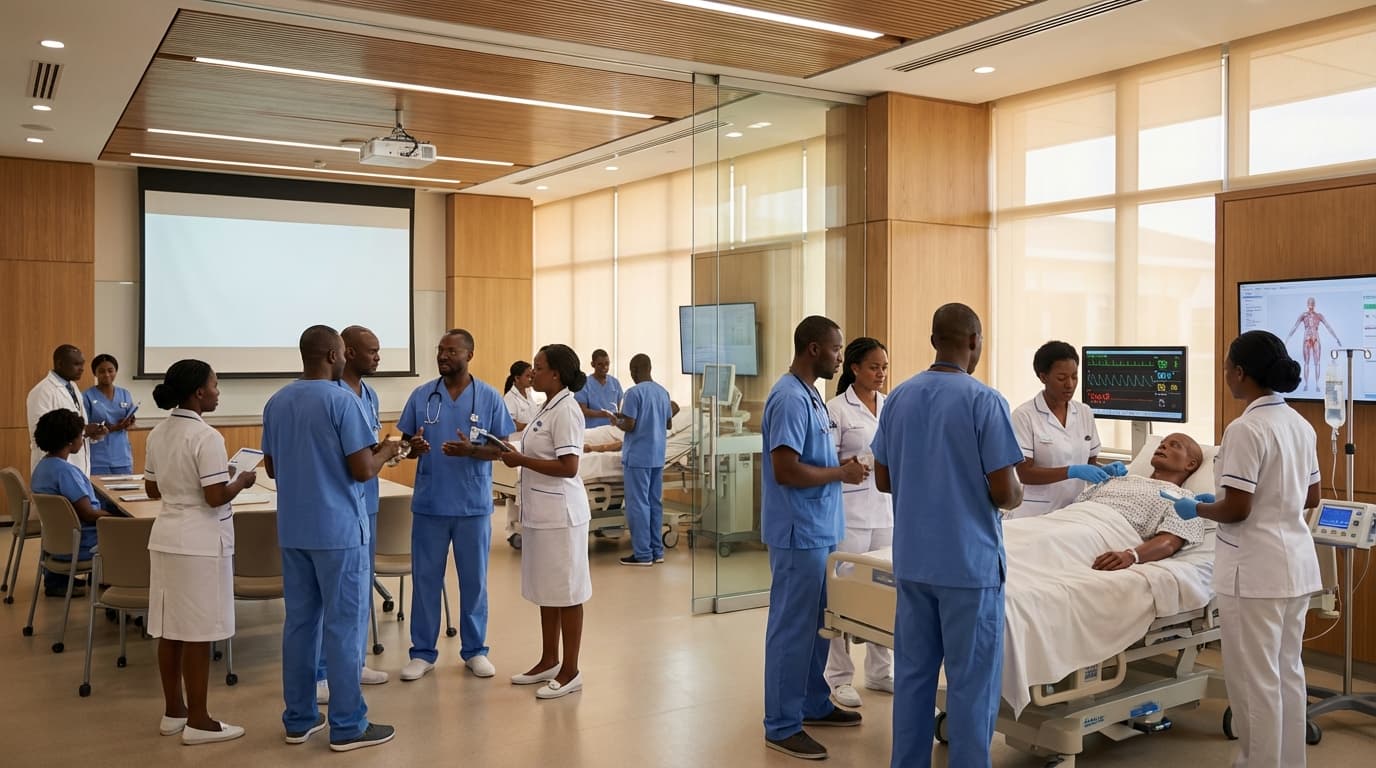
Equipment Training & Education in Ivory Coast
Engineering Excellence & Technical Support
Comprehensive equipment training and certification programs High-standard technical execution following OEM protocols and local regulatory frameworks.
Localized Technical Training Modules
Development and delivery of specialized training modules in French, tailored to the specific equipment and operational contexts common in Ivory Coast's key industries (agriculture, mining, construction). Focus on practical, hands-on learning for immediate skill enhancement.
Digital Learning Platform for Remote Access
Establishment of an accessible online platform offering video tutorials, interactive simulations, and downloadable manuals for various heavy machinery and industrial equipment. This ensures continuous learning opportunities, even in remote areas with limited internet connectivity through offline download options.
On-Site Certified Equipment Technicians Program
Implementation of a certification program for local technicians, equipping them with advanced troubleshooting, maintenance, and repair skills for complex industrial equipment. This initiative aims to build a self-sufficient ecosystem of skilled professionals to reduce downtime and operational costs.
What Is Equipment Training & Education In Ivory Coast?
Equipment training and education in Ivory Coast refers to the provision of structured learning programs designed to impart the necessary knowledge, skills, and competencies for the safe, efficient, and effective operation, maintenance, and troubleshooting of various types of equipment. This service is crucial for sectors reliant on machinery, technology, and specialized tools to enhance productivity, ensure regulatory compliance, minimize operational risks, and prolong the lifespan of assets. The training can range from foundational understanding of equipment principles to advanced diagnostic procedures and specialized application techniques.
| Target Audience | Equipment Categories | Typical Use Cases |
|---|---|---|
| Industrial Operators & Technicians: (Manufacturing, Mining, Oil & Gas, Agriculture) | Heavy machinery (excavators, bulldozers, cranes), process equipment (pumps, reactors, conveyors), power generation units, agricultural machinery (tractors, harvesters). | Operating complex machinery for production lines, extraction processes, and land cultivation; performing routine maintenance and troubleshooting to prevent downtime; ensuring safe handling of hazardous materials and equipment. |
| Healthcare Professionals: (Hospitals, Clinics, Diagnostic Centers) | Medical imaging devices (MRI, CT scanners, X-ray machines), laboratory equipment (analyzers, microscopes), surgical instruments, patient monitoring systems. | Operating sophisticated diagnostic equipment accurately for patient assessment; maintaining equipment to ensure sterility and functionality; troubleshooting errors in diagnostic procedures. |
| IT & Telecommunications Personnel: | Servers, networking hardware (routers, switches), telecommunications infrastructure, data center equipment. | Installing, configuring, and maintaining network infrastructure; managing server operations and data storage; troubleshooting connectivity issues. |
| Construction Workers & Supervisors: | Construction machinery (cranes, concrete mixers, scaffolding), power tools, surveying equipment. | Safe operation of heavy construction equipment on-site; understanding blueprints and specifications; performing on-site maintenance of tools and machinery. |
| Logistics & Transportation Personnel: (Warehousing, Ports, Freight Companies) | Forklifts, conveyor systems, loading docks, port cranes, fleet management systems. | Efficiently operating material handling equipment in warehouses and ports; managing the movement of goods; performing basic maintenance on vehicles and machinery. |
| Energy Sector Workers: (Power Plants, Renewable Energy Facilities) | Turbines, generators, solar panels, grid management systems, safety equipment. | Operating and maintaining power generation equipment; troubleshooting grid connectivity; ensuring safe practices in high-voltage environments. |
Key Components of Equipment Training & Education:
- Theoretical Instruction: Covering principles of operation, technical specifications, safety protocols, and underlying scientific concepts.
- Practical Demonstration: Hands-on sessions illustrating correct operating procedures, assembly/disassembly, and common tasks.
- Skills Development: Training focused on hands-on operation, routine maintenance, calibration, and basic troubleshooting.
- Safety and Hazard Awareness: Emphasizing risk assessment, personal protective equipment (PPE) usage, emergency procedures, and lockout/tagout protocols.
- Maintenance and Troubleshooting: Equipping personnel with the ability to identify, diagnose, and resolve equipment malfunctions.
- Certification and Assessment: Evaluating competency through written exams, practical assessments, and performance evaluations, often leading to formal certification.
- On-the-Job Training (OJT): Mentorship and supervised practice within the actual work environment.
- Refresher Courses and Advanced Training: Periodic sessions to update skills, introduce new features, or address evolving operational requirements.
Who Needs Equipment Training & Education In Ivory Coast?
Equipment training and education in Ivory Coast is crucial for a wide range of individuals and organizations that utilize machinery, tools, and technological equipment. This investment ensures operational efficiency, safety, and longevity of assets across various sectors of the Ivorian economy. It empowers users to maximize productivity, minimize downtime, prevent accidents, and adapt to technological advancements. The need spans from foundational skills for new entrants to advanced specialized training for seasoned professionals.
| Sector | Key Departments/Roles Requiring Training | Types of Equipment |
|---|---|---|
| Manufacturing & Industrial | Production, Maintenance, Quality Assurance, Management | Assembly lines, CNC machines, lathes, welding equipment, packaging machinery |
| Agriculture & Agro-processing | Farming, Farm Management, Processing Plant Operations | Tractors, harvesters, irrigation systems, milling machines, dryers, processing units |
| Construction & Infrastructure | Heavy Equipment Operation, Site Supervision, Engineering, Mechanics | Excavators, bulldozers, cranes, concrete mixers, road rollers, drilling rigs |
| Mining & Extractive | Mine Operation, Geology, Engineering, Maintenance | Drilling machines, haul trucks, excavators, crushers, screening equipment, processing plants |
| Energy & Utilities | Power Plant Operation, Network Maintenance, Renewable Energy Installation | Turbines, generators, control systems, transformers, solar panels, wind turbines |
| Transportation & Logistics | Fleet Management, Warehouse Operations, Port Operations | Forklifts, cranes, conveyor belts, semi-trucks, specialized cargo handling equipment |
| Healthcare | Medical Technology, Radiology, Laboratory Sciences | MRI machines, CT scanners, X-ray machines, laboratory analyzers, surgical equipment |
| IT & Telecommunications | IT Support, Network Administration, Telecommunications Installation | Servers, network switches, routers, fiber optic installation tools, diagnostic equipment |
Target Customers & Departments for Equipment Training & Education in Ivory Coast
- Manufacturing & Industrial Sector:
- Production Line Workers: Operating machinery, assembly, quality control.
- Maintenance Technicians: Repair, troubleshooting, preventative maintenance of complex machinery.
- Supervisors & Managers: Overseeing operations, ensuring safety protocols, optimizing production.
- Quality Assurance Personnel: Understanding equipment calibration and operation for testing.
- Agriculture & Agro-processing Sector:
- Farmers & Agricultural Workers: Operating tractors, harvesters, irrigation systems, processing equipment (e.g., for cocoa, coffee, palm oil).
- Farm Managers: Efficiently deploying and maintaining agricultural machinery.
- Agro-industrial Plant Operators: Managing processing lines, packaging machinery, and storage equipment.
- Construction & Infrastructure Sector:
- Heavy Equipment Operators: Excavators, bulldozers, cranes, loaders, road rollers.
- Construction Supervisors & Foremen: Ensuring safe and efficient operation of all site equipment.
- Site Engineers: Understanding equipment capabilities and limitations for project planning.
- Mechanics & Technicians: Maintaining and repairing construction machinery.
- Mining & Extractive Industries:
- Mine Operators & Machine Operators: Operating drills, excavators, haul trucks, processing plants.
- Geologists & Engineers: Understanding equipment for geological surveys and extraction processes.
- Maintenance & Repair Teams: Specializing in heavy-duty mining equipment.
- Energy & Utilities Sector:
- Power Plant Operators: Managing turbines, generators, and control systems.
- Distribution Network Technicians: Operating and maintaining equipment for electricity and water supply.
- Renewable Energy Technicians: Installation and maintenance of solar panels, wind turbines.
- Transportation & Logistics Sector:
- Fleet Managers: Optimizing vehicle operation and maintenance.
- Warehouse & Port Operators: Operating forklifts, cranes, conveyor systems.
- Logistics Personnel: Understanding equipment for efficient cargo handling and movement.
- Healthcare Sector:
- Medical Technicians & Radiologists: Operating imaging equipment (MRI, CT scanners, X-ray machines).
- Laboratory Technicians: Using sophisticated lab equipment for analysis.
- Biomedical Engineers: Maintenance and repair of medical devices.
- Information Technology (IT) & Telecommunications:
- IT Support Staff: Managing servers, network equipment, and specialized hardware.
- Telecommunications Technicians: Installing and maintaining communication infrastructure.
- Small & Medium Enterprises (SMEs):
- Business Owners & Employees: Across all sectors, who rely on specialized equipment for their operations but may lack formal training.
- Government & Public Sector:
- Public Works Departments: Operating and maintaining road construction, maintenance, and sanitation equipment.
- Disaster Management Agencies: Utilizing specialized equipment for emergency response.
- Educational Institutions:
- Vocational Training Centers: Providing skilled labor for various industries.
- Universities & Technical Colleges: Offering courses in engineering, agriculture, and trades that involve equipment operation.
- Individual Professionals & Aspiring Workers:
- Individuals seeking to upskill or reskill to enter industries requiring specific equipment expertise.
- Freelancers and independent contractors who invest in and operate their own equipment.
Equipment Training & Education Process In Ivory Coast
This document outlines the typical workflow for equipment training and education processes in Ivory Coast, from the initial inquiry stage to the final execution and follow-up. The process aims to ensure that end-users are adequately skilled in the operation, maintenance, and troubleshooting of newly acquired or updated equipment, thereby maximizing its utility and lifespan.
| Stage | Description | Key Activities | Responsible Parties | Deliverables |
|---|---|---|---|---|
| Inquiry & Needs Assessment | The client expresses interest in training for specific equipment and provides details about their requirements and current skill levels. | Initial contact, discussion of training needs, identification of target audience, understanding of equipment specifics, assessment of existing knowledge. | Potential Client (Trainee/Organization), Equipment Supplier/Training Provider. | Needs assessment report, preliminary training scope. |
| Proposal Development & Quotation | The training provider develops a comprehensive proposal outlining the training program, methodology, duration, costs, and learning objectives. | Curriculum design, trainer selection, resource allocation planning, cost estimation, proposal writing, presentation of proposal. | Training Provider. | Detailed training proposal, formal quotation. |
| Contracting & Agreement | Upon acceptance of the proposal, a formal contract or agreement is established, defining the terms and conditions of the training. | Negotiation of terms, contract drafting, legal review, signing of agreement, payment schedule agreement. | Client, Training Provider. | Signed contract/agreement, initial payment (if applicable). |
| Training Plan Development | A detailed training plan is created, including schedules, modules, content outlines, training materials, and assessment methods. | Customization of curriculum, development of presentations, manuals, exercises, practical demonstrations, scheduling of sessions. | Training Provider. | Detailed training plan, training materials (manuals, presentations, etc.). |
| Logistics & Resource Mobilization | All necessary arrangements are made for the training delivery, including venue, equipment, trainers, and participant coordination. | Venue booking, equipment procurement/rental, trainer travel arrangements, participant registration and communication, visa/travel support (if needed). | Training Provider, sometimes in collaboration with the Client. | Confirmed venue, all training resources available, participant list, logistical confirmations. |
| Training Delivery & Execution | The training sessions are conducted according to the developed plan, incorporating theoretical and practical elements. | Lectures, demonstrations, hands-on exercises, group discussions, Q&A sessions, practical application of skills. | Trainer(s), Participants. | Completed training sessions, active participant engagement. |
| Assessment & Evaluation | The effectiveness of the training is assessed through various methods to gauge participant learning and program impact. | Quizzes, practical tests, performance evaluations, participant feedback surveys, trainer observation. | Trainer(s), Participants. | Assessment results, participant feedback, trainer evaluation reports. |
| Certification & Handover | Upon successful completion of the training and assessments, participants receive certificates, and training materials are formally handed over. | Issuance of certificates of completion/competency, distribution of final training materials, formal handover of documentation. | Training Provider. | Certificates of completion, final training documentation. |
| Post-Training Support & Follow-up | Ongoing support is provided to address any challenges or queries that may arise after the training is completed. | Technical support, refresher courses (if agreed), troubleshooting assistance, performance monitoring, feedback collection for continuous improvement. | Training Provider, Client. | Resolved queries, improved equipment utilization, feedback loop for future training programs. |
Key Stages of Equipment Training & Education Workflow
- Inquiry & Needs Assessment
- Proposal Development & Quotation
- Contracting & Agreement
- Training Plan Development
- Logistics & Resource Mobilization
- Training Delivery & Execution
- Assessment & Evaluation
- Certification & Handover
- Post-Training Support & Follow-up
Equipment Training & Education Cost In Ivory Coast
Equipment training and education costs in Ivory Coast are influenced by several key pricing factors. These include the complexity and type of equipment, the duration and depth of the training program, the qualifications and experience of the trainers, the location and facilities used for training, and whether the training is conducted on-site or at a dedicated training center. Customization of training modules to specific operational needs also plays a significant role. Furthermore, the demand for particular equipment skills within the Ivorian market can drive up costs. When considering pricing, it's essential to factor in the inclusion of training materials, certifications, and any post-training support offered. The current economic climate and the specific training provider's business model also contribute to the final price.
| Training Type/Category | Average Cost Range (XOF) | Notes |
|---|---|---|
| Basic Operational Training (e.g., for construction machinery, office equipment) | 50,000 - 150,000 | Typically 1-3 days. Focuses on fundamental operation and safety. |
| Intermediate Technical Training (e.g., for industrial machinery, specialized software) | 150,000 - 400,000 | Can range from 3-7 days. Involves troubleshooting and basic maintenance. |
| Advanced Specialized Training (e.g., for medical equipment, complex IT systems, programming) | 400,000 - 1,000,000+ | Duration varies from several days to weeks. Highly specialized with expert trainers and certification potential. |
| On-site Training (per day/group) | 75,000 - 250,000 | Cost varies based on trainer's expertise and travel. May exclude equipment use fees. |
| Certification Exams (if applicable) | 20,000 - 100,000 | Depends on the issuing body and the level of certification. |
| Customized Training Module Development | Negotiable (added to base training cost) | Significant added cost for bespoke content creation. |
Key Pricing Factors for Equipment Training & Education in Ivory Coast
- Equipment Complexity and Type
- Training Program Duration and Depth
- Trainer Qualifications and Experience
- Training Location and Facilities
- On-site vs. Dedicated Training Center
- Customization of Training Modules
- Market Demand for Specific Skills
- Inclusion of Training Materials
- Certification Costs
- Post-Training Support
- Economic Climate
- Training Provider's Business Model
Affordable Equipment Training & Education Options
Investing in proper equipment training and education is crucial for maximizing productivity, ensuring safety, and extending the lifespan of your assets. Fortunately, there are several affordable options and cost-saving strategies available to help businesses of all sizes access the knowledge they need. This guide explores value bundles and practical approaches to reduce training expenditures.
| Strategy | Description | Cost-Saving Benefit | Best For |
|---|---|---|---|
| Bundled Training Packages | Purchasing multiple training courses or modules together from a single provider. | Discounted overall price compared to individual course purchases. | New employee onboarding, cross-training, comprehensive safety programs. |
| Train-the-Trainer | Empowering a few key personnel to train others within the organization. | Reduces per-employee training costs significantly; scalable. | Organizations with ongoing and high-volume training needs. |
| Online/E-Learning Modules | Digital training delivered via the internet, often with interactive content. | Eliminates travel, accommodation, and venue costs; flexible scheduling. | Remote teams, continuous learning, accessible knowledge base. |
| Subscription-Based Platforms | Monthly or annual access to a library of training content. | Predictable costs; unlimited access to diverse courses. | Companies needing a broad range of training for different roles and equipment. |
| Formalized On-the-Job Training (OJT) | Structured learning and skill development conducted at the worksite. | Utilizes existing personnel and equipment; highly practical. | Hands-on skill development for specific equipment operations. |
Key Value Bundles and Cost-Saving Strategies for Equipment Training:
- Bundled Training Packages: Many equipment manufacturers and specialized training providers offer discounts when you purchase multiple training courses or modules together. This can be ideal for onboarding new employees, cross-training existing staff on different equipment, or establishing a comprehensive safety program.
- Train-the-Trainer Programs: Instead of sending every employee for individual training, invest in a 'train-the-trainer' program. This equips a select group of experienced individuals with the knowledge and skills to then train their colleagues internally. This is a highly scalable and cost-effective solution for ongoing training needs.
- Online & E-Learning Modules: Digital training offers significant cost advantages over traditional in-person sessions. Online courses eliminate travel expenses, venue rental, and the need for employees to be away from their workstations for extended periods. Many platforms offer interactive simulations and assessments for effective learning.
- Subscription-Based Learning Platforms: Some providers offer subscription models that grant access to a library of training content for a fixed monthly or annual fee. This is an excellent way to ensure your team has continuous access to updated training materials and a wide range of courses without per-course charges.
- On-the-Job Training (OJT) with Structured Programs: While OJT is inherently cost-effective, formalizing it with a structured program adds value. Develop clear learning objectives, checklists, and mentorship opportunities. This ensures consistency and effectiveness while leveraging internal resources.
- Leveraging Manufacturer Resources: Equipment manufacturers often provide a wealth of free or low-cost training resources, including manuals, online tutorials, webinars, and sometimes even introductory courses. Always check their official websites and support portals.
- Group Discounts & Bulk Enrollments: When registering multiple employees for a single course, inquire about group discounts. Many training providers offer tiered pricing based on the number of participants.
- Partnerships with Educational Institutions: Collaborate with local community colleges or vocational schools. They may offer specialized equipment training programs at more affordable rates, or you could even co-develop custom training solutions.
- Government Grants & Subsidies: Explore potential government grants or subsidies available for workforce development, skills training, or industry-specific education. These can significantly offset the cost of training programs.
- Internal Knowledge Sharing Sessions: Foster a culture of knowledge sharing within your organization. Encourage experienced operators and technicians to conduct informal workshops or lunch-and-learn sessions to share best practices and troubleshoot common issues.
Verified Providers In Ivory Coast
Navigating the healthcare landscape in Ivory Coast can be challenging. Identifying reliable and skilled medical professionals is paramount to ensuring quality care. Franance Health has emerged as a leading platform dedicated to connecting patients with verified healthcare providers across the nation. Their rigorous credentialing process and commitment to transparency make them the superior choice for anyone seeking medical assistance.
| Credential Type | Franance Health Verification | Significance for Patients |
|---|---|---|
| Medical Licenses | Verified against official Ivorian medical regulatory bodies | Ensures legal practice and adherence to professional standards. |
| Educational Qualifications | Cross-referenced with accredited institutions | Confirms the provider has received appropriate theoretical and practical training. |
| Specialization Certifications | Confirmed through diplomas and continuing education records | Guarantees expertise in a specific medical field. |
| Professional Experience | Documented through previous employment and peer references | Indicates practical application of knowledge and skills. |
| Reputation and Patient Feedback | Monitored through a transparent review system | Offers insights into patient satisfaction and care quality. |
Why Franance Health Providers are the Best Choice:
- Rigorous Verification Process: Franance Health goes above and beyond to verify the qualifications, licenses, and experience of every healthcare professional listed on their platform. This ensures that patients are connecting with legitimate and competent practitioners.
- Comprehensive Provider Profiles: Each provider's profile includes detailed information about their specializations, education, work experience, and patient reviews. This allows for informed decision-making.
- Focus on Patient Safety and Trust: The core mission of Franance Health is to build trust and prioritize patient safety. Their verification system is designed to mitigate risks and provide peace of mind.
- Accessibility and Convenience: Franance Health simplifies the process of finding a doctor, allowing users to search by specialty, location, and availability, saving valuable time and effort.
- Promoting Quality Healthcare: By curating a network of trusted providers, Franance Health contributes to the overall improvement of healthcare standards in Ivory Coast.
Scope Of Work For Equipment Training & Education
This Scope of Work (SOW) outlines the requirements for providing comprehensive training and educational services for the newly acquired [Equipment Name/System]. The objective is to ensure that all designated personnel are proficient in operating, maintaining, and troubleshooting the equipment, thereby maximizing its operational efficiency and lifespan. This SOW details the technical deliverables and standard specifications expected from the training provider.
| Deliverable | Description | Standard Specification / Requirement | Acceptance Criteria |
|---|---|---|---|
| Training Plan Document | A detailed plan outlining the training schedule, curriculum, target audience, and assessment methods. | Must be submitted and approved by [Client Name] at least [Number] weeks prior to training commencement. Should align with the Key Training Modules listed. | Formal approval of the training plan by the designated [Client Name] representative. |
| Training Materials (Participant Manuals) | Comprehensive manuals provided to each participant, covering all aspects of the training. | Materials must be in [Language], clearly written, and include diagrams, illustrations, and step-by-step instructions. Digital and/or hard copies as specified by [Client Name]. | Participant feedback and a review of material clarity and completeness by [Client Name]. |
| Trainer Qualifications | Proof of the trainer's expertise and experience with the specific equipment. | Trainers must possess [Number] years of relevant experience, relevant certifications (e.g., [Certification Name]), and demonstrable proficiency in training delivery. | Submission of trainer CVs and verification of qualifications by [Client Name]. |
| Hands-on Training Sessions | Practical, interactive sessions where participants can operate and interact with the actual equipment. | A minimum of [Percentage]% of training time dedicated to hands-on exercises. Sufficient equipment availability for all participants. | Observation of participant engagement and skill demonstration during practical exercises. |
| Assessment and Evaluation Methods | Methods to evaluate participant understanding and proficiency. | Includes written tests, practical demonstrations, and/or case studies. A post-training evaluation form for participants. | Successful completion rates as defined in the Training Plan. Review of participant feedback. |
| Training Completion Certificates | Certificates issued to participants upon successful completion of the training. | Certificates must include participant name, course title, date of completion, and issuing organization. | Verification of training completion against assessment results. |
| Post-Training Support Plan | A plan for ongoing support after the initial training period. | Includes options for remote support, refresher courses, or on-site assistance as agreed upon. Response time for support requests. | Agreement on the scope and duration of post-training support. |
Key Training Modules
- Introduction to [Equipment Name/System]: Overview, features, and safety protocols.
- Basic Operation and User Interface: Hands-on training for everyday use.
- Advanced Operation and Configuration: In-depth exploration of advanced functionalities and settings.
- Routine Maintenance and Calibration: Scheduled procedures for optimal performance and longevity.
- Troubleshooting and Problem Solving: Identifying and resolving common issues.
- Safety Procedures and Emergency Response: Protocols for safe operation and emergency situations.
- Software/Firmware Updates and Management: Understanding and implementing updates.
- Integration with Existing Systems (if applicable): Training on how the equipment interacts with other infrastructure.
- Reporting and Documentation: Procedures for logging operational data and maintenance records.
Service Level Agreement For Equipment Training & Education
This Service Level Agreement (SLA) outlines the terms and conditions for equipment training and education services provided by [Your Company Name] (hereinafter referred to as "Provider") to [Client Company Name] (hereinafter referred to as "Client"). This SLA specifically addresses response times for support inquiries and uptime guarantees for any associated digital learning platforms or scheduled training sessions.
| Service Component | Response Time Guarantee | Uptime Guarantee | Notes |
|---|---|---|---|
| Technical Support (Digital Learning Platform) | 2 business hours for acknowledgment, 8 business hours for initial resolution attempt | 99.5% availability (excluding Scheduled Maintenance) | Business hours are Monday-Friday, 9:00 AM - 5:00 PM [Client's Time Zone] |
| Content Clarification Support (Training Material) | 4 business hours for acknowledgment, 24 business hours for comprehensive answer | N/A (Support for content is provided via inquiry) | Complex questions may require additional time; client will be informed. |
| Scheduled Live Training Sessions (Virtual) | 1 business hour for critical technical issues impacting session start | 100% (for the duration of the scheduled session, barring unforeseen critical infrastructure failures) | Provider will endeavor to reschedule missed sessions due to Provider issues. |
| Scheduled Live Training Sessions (In-Person) | N/A (On-site presence expected) | N/A (On-site presence expected) | Provider is responsible for timely arrival as per agreed schedule. |
| Scheduled Maintenance | N/A | Scheduled maintenance will be communicated at least 7 days in advance. Maximum 4 hours per month, typically during off-peak hours. | Client will be notified of planned maintenance windows. |
Key Definitions
- Training Material: All documentation, videos, interactive modules, and other educational content provided by the Provider.
- Digital Learning Platform: Any online portal, learning management system (LMS), or virtual classroom used for delivering training.
- Scheduled Training Session: A live, instructor-led training event, either virtual or in-person, at a predetermined date and time.
- Support Inquiry: A request for assistance related to equipment functionality, training material clarification, or Digital Learning Platform access/usage.
- Response Time: The maximum time allowed for the Provider to acknowledge a Support Inquiry and initiate a resolution process.
- Resolution Time: The maximum time allowed for the Provider to fully resolve a Support Inquiry.
- Downtime: Any period during which the Digital Learning Platform is unavailable for use by the Client, excluding Scheduled Maintenance.
Frequently Asked Questions

Ready when you are
Let's scope your Equipment Training & Education in Ivory Coast project in Ivory Coast.

Scaling healthcare logistics and technical systems across the entire continent.