
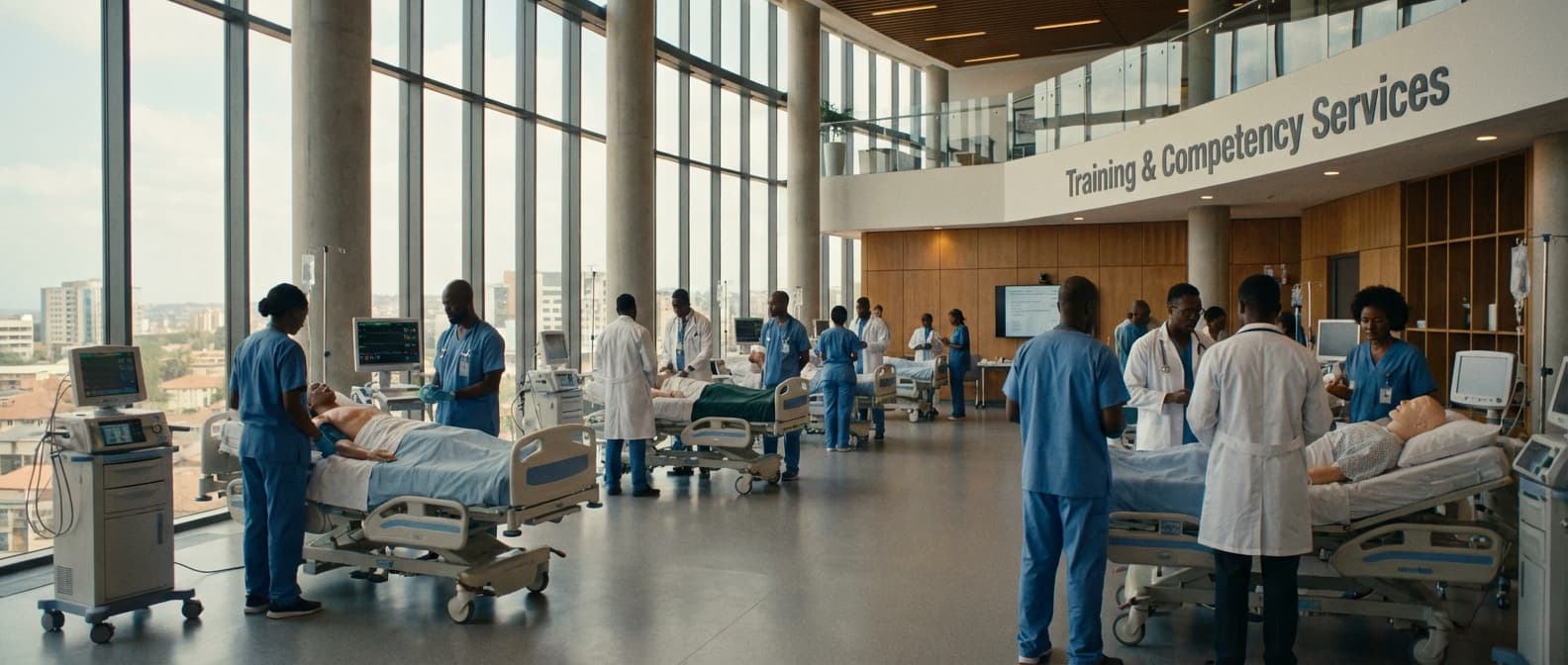
Ventilator User Training Service (Nurses) in Ivory Coast
Engineering Excellence & Technical Support
Ventilator User Training Service (Nurses) High-standard technical execution following OEM protocols and local regulatory frameworks.
Mastering Ventilation Modes
Gain expert knowledge on the diverse range of ventilator modes (e.g., AC/VC, SIMV, PSV, BiPAP) commonly used in Ivory Coast. Learn to select, set, and adjust modes based on patient condition, lung mechanics, and clinical goals for optimal gas exchange and patient comfort.
Effective Alarm Management & Troubleshooting
Develop proficiency in recognizing, interpreting, and responding to critical ventilator alarms. This module covers common causes of alarms (e.g., high/low pressures, disconnections, apnea) and provides step-by-step troubleshooting protocols tailored to resource-constrained environments in Ivory Coast, ensuring prompt and effective interventions.
Evidence-Based Weaning Protocols
Acquire best practices for ventilator weaning in line with international guidelines and adapted for local context. Understand patient assessment, weaning parameters, spontaneous breathing trials (SBTs), and strategies to reduce duration of mechanical ventilation, promoting faster recovery and improved patient outcomes.
What Is Ventilator User Training Service (Nurses) In Ivory Coast?
The Ventilator User Training Service (Nurses) in Ivory Coast is a specialized educational program designed to equip registered nurses and other qualified healthcare professionals with the requisite knowledge and practical skills for the safe and effective operation of mechanical ventilators. This service addresses the critical need for proficient ventilator management in the Ivorian healthcare system, ensuring optimal patient outcomes and adherence to international best practices in respiratory care. The training encompasses theoretical instruction on ventilatory physiology, ventilator modes and settings, patient monitoring, troubleshooting, and infection control, complemented by hands-on simulation and practical application within clinical settings.
| Who Needs the Service | Typical Use Cases | |||||
|---|---|---|---|---|---|---|
| Registered Nurses (RNs) working in Intensive Care Units (ICUs), High Dependency Units (HDUs), Emergency Departments, and Operating Rooms. | Management of patients with acute respiratory failure (e.g., ARDS, pneumonia, COPD exacerbations, sepsis-induced respiratory distress). | Post-operative management of patients requiring mechanical ventilation. | Management of patients with neurological conditions affecting respiratory drive (e.g., Guillain-Barré syndrome, myasthenia gravis). | Provision of ventilatory support in pre-hospital emergency settings (where applicable and with appropriate equipment). | Training of new nursing staff in critical care environments. | Refresher training for experienced nurses to stay updated on new technologies and protocols. |
Key Components of Ventilator User Training Service (Nurses)
- Physiological Principles of Mechanical Ventilation
- Types of Ventilators and their Components
- Ventilator Modes: Volume-Controlled, Pressure-Controlled, and Advanced Modes
- Initial Ventilator Setup and Patient Connection
- Parameter Selection: Tidal Volume, Respiratory Rate, PEEP, FiO2, Flow Rate, I:E Ratio
- Humidification and Temperature Control
- Patient Monitoring: Arterial Blood Gases (ABGs), Hemodynamics, Respiratory Mechanics
- Alarms and Troubleshooting: Recognition and Management of Common Ventilator Alarms
- Weaning Strategies and Extubation Criteria
- Infection Prevention and Control Protocols (e.g., VAP Prevention)
- Ethical Considerations and Patient Comfort
- Documentation and Record Keeping
Who Needs Ventilator User Training Service (Nurses) In Ivory Coast?
This training service is designed to equip nurses in Ivory Coast with the essential skills and knowledge to safely and effectively operate and manage mechanical ventilators. Given the critical role of ventilators in managing respiratory distress and supporting life, comprehensive training for nurses is paramount for patient safety, optimal treatment outcomes, and efficient healthcare delivery.
| Customer Group | Primary Need for Training | Key Responsibilities related to Ventilators |
|---|---|---|
| Registered Nurses (RNs) | In-depth understanding of ventilator modes, settings, alarms, patient monitoring, and troubleshooting. | Initiating ventilation, adjusting settings based on patient response and physician orders, weaning patients from ventilation, managing ventilator-associated pneumonia (VAP) prevention strategies, and responding to emergencies. |
| Licensed Practical Nurses (LPNs) / Nursing Assistants | Basic understanding of ventilator operation, alarm recognition, and immediate response actions. | Monitoring for audible alarms, reporting any changes in patient status or ventilator function to RNs, ensuring proper tubing connections, and assisting with patient care activities while on ventilation. |
| Nurse Educators and Supervisors | Ensuring the competency of their nursing staff, developing and implementing training programs, and overseeing quality of care. | Designing training curricula, conducting skills validation, providing ongoing education, and ensuring adherence to protocols and best practices. |
| Newly Graduated Nurses | Foundational knowledge and practical skills to safely manage ventilated patients in a critical care environment. | Learning basic ventilator operation, understanding common modes, recognizing critical alarms, and performing essential patient care. |
Target Customers and Departments
- {"items":["Registered Nurses (RNs)","Licensed Practical Nurses (LPNs) / Nursing Assistants (depending on scope of practice and facility policy)","Nurse Educators and Supervisors","Newly graduated nurses entering critical care settings","Nurses transitioning to critical care or respiratory support roles"],"title":"Target Customers"}
- {"items":["Intensive Care Units (ICUs) / Critical Care Units (CCUs)","Emergency Departments (EDs) / Emergency Rooms (ERs)","Operating Rooms (ORs) - for intraoperative ventilation","Post-Anesthesia Care Units (PACUs) / Recovery Rooms","Respiratory Therapy Departments (where nurses collaborate closely with respiratory therapists)","Pediatric Intensive Care Units (PICUs)","Neonatal Intensive Care Units (NICUs)","General Medical-Surgical Wards (with high acuity patients requiring ventilation)","COVID-19 Treatment Centers/Wards (if applicable)"],"title":"Target Departments"}
Ventilator User Training Service (Nurses) Process In Ivory Coast
This document outlines the workflow for the Ventilator User Training Service for nurses in Ivory Coast. The process begins with an inquiry from a healthcare facility and culminates in the successful execution of the training program, ensuring nurses are proficient in operating ventilators.
| Step | Description | Key Activities | Responsible Party(ies) | Expected Outcome |
|---|---|---|---|---|
| Healthcare facilities express interest in the ventilator user training service. | Reception of inquiry (phone, email, website form). Initial acknowledgement and collection of basic facility information. | Training Provider's Sales/Administrative Team | Acknowledgement of inquiry, understanding of basic need. |
| Understanding the specific training needs of the facility and its nurses. | Site visit or detailed discussion to assess existing knowledge, number of nurses, types of ventilators used, specific training objectives. Development of a tailored training proposal outlining curriculum, duration, cost, and trainer credentials. | Training Provider's Technical/Training Team, Facility's Nursing Management/Medical Director | Clear understanding of training requirements, mutually agreed-upon training objectives, formal training proposal. |
| Formalizing the training arrangement and setting a timeline. | Review and acceptance of the proposal. Negotiation of terms and conditions. Signing of a training agreement. Collaborative scheduling of training dates and times based on facility availability and trainer accessibility. | Training Provider's Management, Facility's Administration/Procurement | Signed training agreement, confirmed training schedule. |
| Developing and gathering all necessary resources for the training. | Customizing training modules (presentations, handouts, case studies) based on the approved proposal. Ensuring availability of training ventilators (if applicable), simulation equipment, and audiovisual aids. | Training Provider's Training Team | Ready-to-use training materials and equipment. |
| Delivering the comprehensive training program to the nurses. | Conducting theoretical sessions (classroom-based) covering ventilator principles, operation, monitoring, and troubleshooting. Facilitating practical hands-on sessions with ventilators, including patient scenarios and simulations. Q&A sessions and interactive discussions. | Certified Training Provider's Trainers, Participating Nurses | Nurses gain theoretical knowledge and practical skills in ventilator operation. |
| Assessing the nurses' comprehension and proficiency. | Administering written and/or practical assessments to evaluate learning outcomes. Issuing certificates of completion to nurses who successfully pass the evaluation. | Training Provider's Trainers, Participating Nurses | Assessment of learning, certification of competent nurses. |
| Providing ongoing assistance and addressing any post-training needs. | Collecting feedback from the facility and participants. Offering post-training support for any queries or challenges encountered. Providing updates on new ventilator technology or protocols as needed. | Training Provider's Support Team, Facility's Nursing Management | Ensured continuous competence, client satisfaction, and potential for future training needs. |
Ventilator User Training Service (Nurses) Process in Ivory Coast: Workflow
- Inquiry & Initial Contact
- Needs Assessment & Proposal Development
- Agreement & Scheduling
- Training Material Preparation
- On-Site Training Execution
- Post-Training Evaluation & Certification
- Follow-up & Support
Ventilator User Training Service (Nurses) Cost In Ivory Coast
Training nurses on ventilator use in Ivory Coast involves several cost factors. The price will fluctuate based on the training provider, the depth and duration of the program, the number of participants, the location of the training (on-site at a facility vs. off-site at a training center), and any included materials or certifications. Specialized or advanced training will naturally command a higher price than basic introductory courses. The local economic conditions and the demand for such specialized training also play a role in pricing.
Pricing Factors:
- Training Provider: Reputable institutions or experienced medical training companies may charge more due to their expertise and established curriculum.
- Duration and Depth: A comprehensive, multi-day course covering advanced troubleshooting will be more expensive than a single-day introductory session.
- Number of Participants: Group discounts are common, so the per-person cost can decrease with larger cohorts.
- Location: On-site training at a hospital might include logistical costs for the trainer, potentially increasing the overall price. Off-site training might involve venue rental, catering, and travel for participants.
- Materials and Certification: Inclusion of printed manuals, online resources, simulators, and official certifications will impact the final cost.
- Trainer Expertise: Highly experienced and certified trainers, especially those with international credentials, may increase the training fee.
Estimated Cost Ranges (in CFA Francs - XOF):
Based on typical market rates for specialized medical training in Ivory Coast, the cost for ventilator user training for nurses can range significantly.
| Training Type | Estimated Cost Range (XOF) |
|---|---|
| Basic Introduction to Ventilator Operation (1-2 days) | 75,000 - 150,000 per participant |
| Comprehensive Ventilator Management (3-5 days, including critical care scenarios) | 150,000 - 300,000 per participant |
| Advanced Ventilator Troubleshooting & Weaning Techniques (2-3 days) | 120,000 - 250,000 per participant |
| On-site Group Training (per day, for up to 10-15 participants, excluding travel/accommodation) | 300,000 - 700,000 per day |
Factors Influencing Ventilator User Training Costs for Nurses in Ivory Coast
- Reputation and accreditation of the training provider.
- Duration of the training program (hours or days).
- Complexity of the curriculum (basic operation vs. advanced troubleshooting and critical care scenarios).
- Number of participants in the training session.
- Location of the training (on-site at a healthcare facility or at a designated training center).
- Inclusion of hands-on simulation equipment.
- Provision of training materials (manuals, digital resources).
- Issuance of certificates or continuing education credits.
- Travel and accommodation expenses for trainers (if applicable).
- Customization of the training to specific hospital protocols or equipment.
Affordable Ventilator User Training Service (Nurses) Options
This document outlines affordable ventilator user training service options specifically designed for nurses, focusing on value bundles and cost-saving strategies. Effective ventilator management is critical for patient outcomes, and accessible, high-quality training empowers nurses to provide optimal care. We explore various training delivery methods and packaging options to ensure cost-effectiveness without compromising educational standards.
| Training Option | Description | Value Bundle Components | Cost-Saving Strategies | Target Audience |
|---|---|---|---|---|
| Basic Ventilator Competency Online Course | Self-paced online modules covering fundamental ventilator principles and common modes. | Access to core curriculum, pre-assessment, post-assessment, digital certificate. | Reduced overhead compared to in-person training, scalability for large groups, group discounts. | New nurses, nurses new to critical care, refresher training. |
| Blended Learning: Online + In-Person Skills Lab | Combines online theoretical learning with a focused, hands-on in-person skills session. | Full online course access, dedicated in-person lab time with instructors and manikins, skills checklist, post-lab assessment. | Optimized in-person time reduces instructor hours, cost-effective for smaller groups, can be scheduled during existing unit meetings. | Nurses requiring practical application, those transitioning to higher acuity units. |
| Unit-Based Train-the-Trainer Program | Empowers experienced nurses within a unit to train their colleagues, fostering internal expertise. | Master trainer curriculum, teaching aids, competency evaluation tools for trainers, ongoing support for trainers. | Significantly reduces external training costs, promotes consistent unit-specific protocols, leverages existing staff. | Charge nurses, preceptors, clinical nurse specialists within a unit. |
| Subscription-Based Learning Platform | Ongoing access to a library of ventilator training modules, including advanced topics and scenario-based simulations. | Unlimited access to all online courses, regular content updates, discussion forums, annual refresher modules. | Predictable annual cost, access to a wide range of content for continuous learning, eliminates per-course fees. | Hospitals seeking continuous professional development, specialized critical care units. |
| Group Discount Packages | Discounted pricing for training a cohort of nurses from the same facility or unit. | Customizable bundles based on the number of participants and chosen training format. | Tiered discounts based on group size, bundled training packages for multiple units. | All hospital departments and units requiring ventilator training. |
Key Features of Affordable Ventilator User Training
- Comprehensive curriculum covering essential ventilator modes, settings, and patient monitoring.
- Hands-on skills practice with simulated scenarios.
- Focus on critical thinking and troubleshooting common ventilator-related issues.
- Flexible learning formats to accommodate busy nursing schedules.
- Certification upon successful completion, enhancing professional credentials.
- Ongoing support and access to updated training materials.
Verified Providers In Ivory Coast
In Ivory Coast's evolving healthcare landscape, identifying and trusting verified healthcare providers is paramount for individuals seeking quality and reliable medical services. Franance Health stands out as a leading platform committed to connecting patients with accredited and reputable medical professionals. This commitment to verification ensures that patients receive the highest standard of care, backed by rigorous credentialing and a dedication to patient well-being. Choosing Franance Health means opting for transparency, expertise, and peace of mind in your healthcare journey.
| Provider Type | Franance Health Verification Criteria | Benefits for Patients |
|---|---|---|
| General Practitioners | Valid medical license, proof of continuing medical education, clean disciplinary record. | Access to reliable primary care, early detection of health issues, trusted health advice. |
| Specialists (e.g., Cardiologists, Dermatologists, Pediatricians) | Board certification in their specialty, fellowship training (where applicable), hospital affiliations, peer reviews. | Expert diagnosis and treatment for specific medical conditions, access to advanced medical knowledge. |
| Hospitals and Clinics | Accreditation by relevant health authorities, adherence to safety protocols, quality of facilities and equipment, staff qualifications. | Safe and well-equipped medical facilities, comprehensive range of services, standardized care quality. |
| Diagnostic Laboratories | Licensing, use of certified equipment, quality control measures, qualified laboratory technicians. | Accurate and reliable diagnostic testing, timely results for effective treatment planning. |
Why Franance Health Credentials Matter
- Rigorous Accreditation Processes: Franance Health partners only with providers who have undergone stringent accreditation and licensing checks, ensuring they meet national and international healthcare standards.
- Specialized Expertise Showcase: The platform highlights the specific specializations and sub-specializations of its healthcare professionals, allowing patients to find the exact expertise they need.
- Patient Reviews and Ratings: Transparent patient feedback systems offer insights into the quality of care and patient experience, fostering accountability and trust.
- Commitment to Continuous Professional Development: Franance Health encourages and often requires its listed providers to engage in ongoing training and development, keeping them at the forefront of medical advancements.
- Accessibility and Convenience: The platform simplifies the process of finding and booking appointments with verified providers across Ivory Coast.
- Ethical Practice Standards: Franance Health vets providers for adherence to ethical medical practices and patient confidentiality.
Scope Of Work For Ventilator User Training Service (Nurses)
This Scope of Work outlines the requirements for a comprehensive Ventilator User Training Service specifically designed for nurses. The service aims to equip nurses with the necessary knowledge and practical skills to safely and effectively operate various mechanical ventilators, manage patient ventilation, and respond to common alarms and troubleshooting scenarios. The training will emphasize patient safety, adherence to clinical protocols, and optimal utilization of ventilator features.
| Technical Deliverable | Description | Standard Specifications/Key Features |
|---|---|---|
| Training Curriculum | A structured curriculum covering theoretical concepts and practical applications of ventilator use. | Modules aligned with international best practices and relevant clinical guidelines. Customizable to specific ventilator models and institutional protocols. Includes didactic content, case studies, and interactive exercises. |
| Training Materials | Comprehensive set of learning resources for participants. | User manuals for specified ventilator models, presentation slides, handouts, pocket guides, and access to online learning modules (if applicable). Materials should be clear, concise, and visually engaging. |
| Hands-on Training Sessions | Practical, supervised sessions utilizing actual or simulated ventilator equipment. | Minimum trainer-to-participant ratio of 1:6. Sessions conducted in a controlled environment with readily available technical support. Focus on practical skills, parameter setting, troubleshooting, and alarm management. |
| Competency Assessment | Evaluation of nurses' understanding and practical skills. | Includes written examinations (multiple choice, short answer), practical skill demonstrations (e.g., ventilator setup, parameter adjustment, alarm response), and case study analysis. Passing score clearly defined. |
| Certification | Formal recognition of successful completion of the training. | Certificate of completion issued upon successful passing of all assessment components. Clearly states the scope of training and date of completion. May include specific ventilator models covered. |
| Post-Training Support | Resources and assistance available after the formal training period. | Access to a dedicated support line or email for clinical and technical queries. Availability of refresher training modules or advanced sessions. Online resource portal with FAQs and updated information. |
| Train-the-Trainer Program (Optional) | Training for designated hospital staff to deliver ongoing ventilator training. | In-depth curriculum for trainers, focusing on pedagogical techniques, advanced troubleshooting, and curriculum delivery. Assessment of trainer competency. |
Training Objectives for Nurses
- Understand the principles of mechanical ventilation and its physiological effects.
- Identify and differentiate various types of ventilators and their core functionalities.
- Perform pre-use checks and setup procedures for different ventilator models.
- Initiate and manage common ventilation modes (e.g., AC, SIMV, PSV).
- Set appropriate ventilator parameters based on patient condition and physician orders.
- Monitor patient response to ventilation and interpret key ventilator waveforms and parameters.
- Recognize and respond to common ventilator alarms and troubleshooting scenarios.
- Understand the principles of weaning from mechanical ventilation.
- Adhere to infection control protocols related to ventilator use and maintenance.
- Document ventilator settings, patient status, and interventions accurately.
Service Level Agreement For Ventilator User Training Service (Nurses)
This Service Level Agreement (SLA) outlines the guaranteed response times and uptime for the Ventilator User Training Service specifically designed for nurses. This ensures timely and reliable access to training resources and support for critical patient care.
| Service Component | SLA Metric | Target | Remedy (for breaches) |
|---|---|---|---|
| Technical Support (Online Platform Access Issues) | Response Time (Acknowledgement) | Within 1 business hour | 10% service credit for each incident exceeding target |
| Technical Support (Online Platform Access Issues) | Resolution Time (Critical Issues - e.g., unable to access any training) | Within 4 business hours | 20% service credit for each incident exceeding target |
| Content Support (Questions about training material) | Response Time (Acknowledgement) | Within 2 business hours | 5% service credit for each incident exceeding target |
| Training Platform Availability | Monthly Uptime Guarantee | 99.5% | Service credit calculated based on the duration of unplanned downtime (e.g., 1% credit for every hour of downtime beyond the allowed 0.5%) |
| Scheduled Maintenance (Notification) | Advance Notice | Minimum 48 hours | N/A (scheduled maintenance is excluded from uptime calculations, but advance notice is critical) |
Key Performance Indicators (KPIs)
- {"title":"Response Times for Support Inquiries","description":"Defines the maximum time allowed to acknowledge and begin addressing support requests from nurses."}
- {"title":"Uptime Guarantee","description":"Specifies the minimum percentage of time the training platform and its associated resources will be available and operational."}
Frequently Asked Questions

Ready when you are
Let's scope your Ventilator User Training Service (Nurses) in Ivory Coast project in Ivory Coast.

Scaling healthcare logistics and technical systems across the entire continent.