
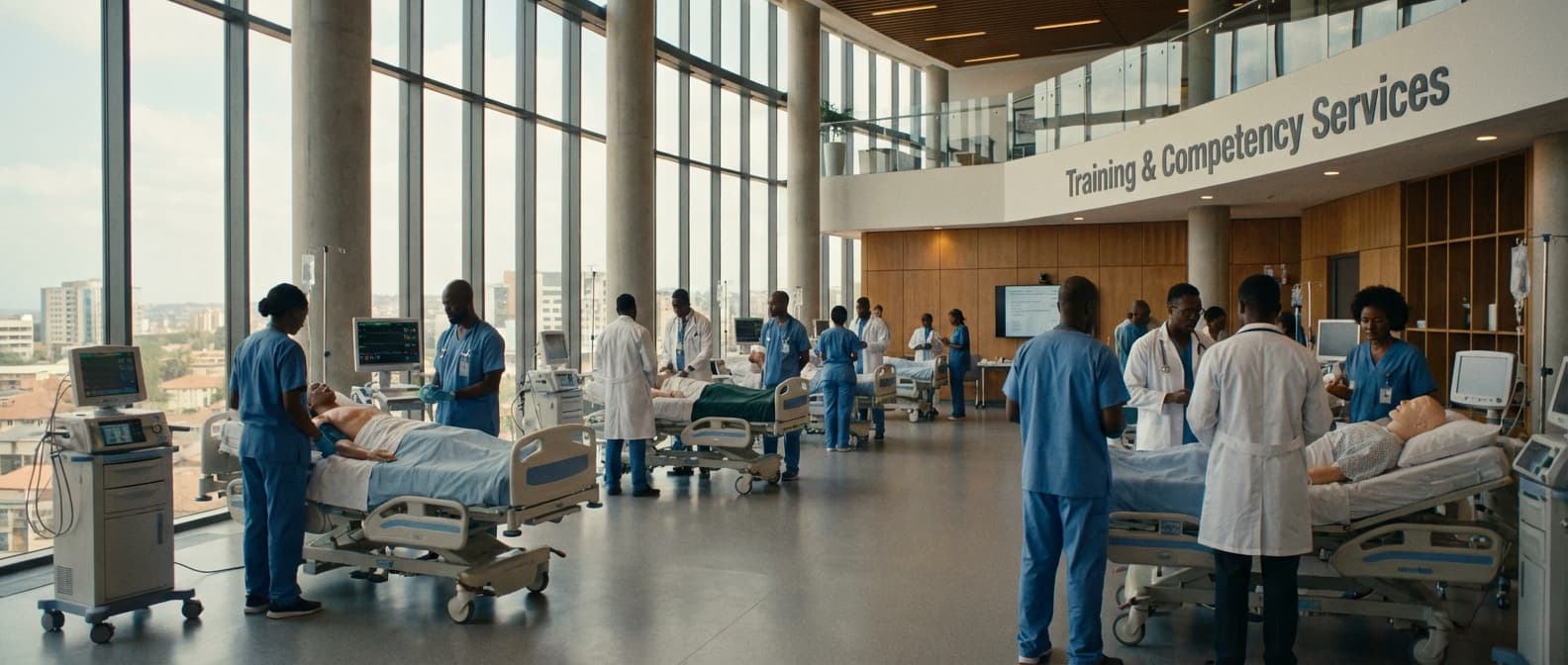
Ultrasound Application Training Service (Protocol-Based) in Ivory Coast
Engineering Excellence & Technical Support
Ultrasound Application Training Service (Protocol-Based) High-standard technical execution following OEM protocols and local regulatory frameworks.
Advanced Ultrasound Protocol Mastery
Our training provides hands-on expertise in diverse ultrasound protocols relevant to Ivory Coast's healthcare needs. Master advanced techniques for accurate diagnosis and improved patient outcomes.
Contextualized Clinical Scenarios
Experience realistic patient case studies and simulated examinations tailored to the specific pathology prevalent in Ivory Coast. Enhance your diagnostic confidence in real-world settings.
Interactive Protocol Optimization
Engage in live, guided sessions to refine and optimize your ultrasound scanning techniques based on established protocols. Receive personalized feedback for continuous skill development.
What Is Ultrasound Application Training Service (Protocol-based) In Ivory Coast?
Ultrasound Application Training Service (Protocol-Based) in Ivory Coast refers to a specialized educational program designed to equip healthcare professionals with the theoretical knowledge and practical skills required to perform ultrasound examinations according to established, standardized protocols. This service focuses on the systematic and reproducible application of ultrasound imaging techniques for diagnostic purposes. The 'protocol-based' aspect signifies adherence to a predefined set of imaging parameters, patient positioning, probe manipulation, and image acquisition sequences tailored to specific anatomical regions or clinical indications. This ensures consistency, accuracy, and comparability of ultrasound findings across different practitioners and healthcare facilities within Ivory Coast. The training aims to enhance diagnostic confidence and optimize resource utilization by promoting efficient and effective ultrasound utilization.
| Target Audience | Training Needs | Typical Use Cases |
|---|---|---|
| Radiologists (Specialists and Residents) | Standardization of ultrasound techniques, acquisition of new subspecialty skills, adherence to evidence-based protocols, quality assurance. | Routine abdominal, pelvic, thyroid, breast, musculoskeletal, and vascular ultrasound examinations. Advanced applications in specific organ systems. |
| Obstetricians and Gynecologists | Fetal biometry and growth assessment, anomaly scanning, Doppler assessment of fetoplacental circulation, gynecological assessments (uterus, ovaries). | First-trimester screening, detailed fetal anomaly scans, routine obstetric follow-ups, diagnosis of gynecological conditions like ovarian cysts, fibroids, and endometrial pathology. |
| General Practitioners and Family Physicians | Point-of-care ultrasound (POCUS) for initial patient assessment, screening for common pathologies, guiding basic procedures. | Rapid assessment of fluid collections (e.g., ascites, pleural effusion), basic cardiac assessment (e.g., for heart failure), guiding fluid resuscitation, initial assessment of trauma patients. |
| Sonographers and Ultrasound Technicians | Foundation in core ultrasound principles, proficiency in executing standardized protocols, quality image acquisition. | Performing a broad range of diagnostic ultrasound examinations under the supervision of a radiologist or specialist physician. |
| Emergency Medicine Physicians and Surgeons | Rapid bedside ultrasound for trauma (FAST exam), cardiac arrest (RUSH exam), and other acute conditions. | Assessment of internal bleeding, pneumothorax, pericardial effusion, evaluation of gross cardiac function, identification of gross organ injury. |
Key Components of Ultrasound Application Training Service (Protocol-Based):
- Theoretical Instruction: Comprehensive didactic sessions covering ultrasound physics, instrumentation, image optimization, anatomical correlation, and the physiological basis of common pathologies.
- Protocol Development and Review: Familiarization with and adherence to nationally or internationally recognized ultrasound protocols for various examinations (e.g., obstetric, gynecological, abdominal, musculoskeletal, vascular). This may involve review of existing protocols and, in some cases, adaptation to local context.
- Hands-on Simulation and Supervised Practice: Extensive practical sessions utilizing ultrasound phantoms and real patient scenarios. Trainees receive direct supervision and feedback on probe handling, patient positioning, image acquisition techniques, and protocol execution.
- Case-Based Learning: Analysis and discussion of a wide spectrum of clinical cases, integrating ultrasound findings with clinical history, other diagnostic modalities, and patient outcomes.
- Competency Assessment: Formal evaluation of acquired skills through practical examinations, image review, and theoretical quizzes to ensure proficiency in protocol adherence and diagnostic interpretation.
- Continuous Professional Development: Guidance on maintaining and updating ultrasound knowledge and skills in line with evolving technologies and clinical guidelines.
Who Needs Ultrasound Application Training Service (Protocol-based) In Ivory Coast?
This document outlines the need for specialized Ultrasound Application Training Services, specifically protocol-based, within Ivory Coast. Such training is crucial for enhancing diagnostic accuracy, improving patient care, and ensuring efficient utilization of ultrasound technology across various healthcare settings.
| Target Customer Segment | Specific Roles/Personnel | Key Needs Addressed by Protocol-Based Training |
|---|---|---|
| Public and Private Hospitals | Radiologists, Sonographers, Technicians, Medical Officers | Standardization of imaging protocols, accurate diagnosis of pathologies, improved patient throughput, compliance with international best practices. |
| Obstetrics and Gynecology Clinics/Departments | Obstetricians, Gynecologists, Midwives | Fetal anomaly screening, pregnancy monitoring, gynecological condition assessment, safe obstetric procedures (e.g., amniocentesis guidance). |
| Cardiology Units | Cardiologists, Cardiac Sonographers | Echocardiography protocols, assessment of cardiac function and structure, diagnosis of congenital and acquired heart diseases. |
| Emergency Departments | Emergency Physicians, Trauma Surgeons | Rapid assessment of trauma (FAST scan), diagnosis of acute conditions (e.g., appendicitis, ectopic pregnancy), point-of-care ultrasound (POCUS) protocols. |
| Medical Training Institutions | Lecturers, Trainee Doctors, Sonography Students | Curriculum development, hands-on skill acquisition based on standardized protocols, preparation for professional certification. |
| NGOs and Public Health Programs | Healthcare Workers in remote or underserved areas | Basic ultrasound skills for primary screening (e.g., obstetric ultrasound in rural settings), resource-efficient diagnostic tools, community health improvement. |
Target Customers and Departments in Ivory Coast Requiring Ultrasound Application Training Service (Protocol-Based)
- Radiology Departments in Public and Private Hospitals
- Obstetrics and Gynecology Departments
- Cardiology Departments
- Emergency Departments
- Internal Medicine Departments
- Pediatric Departments
- Surgical Departments (for intraoperative ultrasound)
- Diagnostic Imaging Centers
- Specialized Clinics (e.g., fertility clinics, vascular clinics)
- Medical Training Institutions and Universities
- Non-Governmental Organizations (NGOs) involved in healthcare delivery
- Public Health Programs focusing on maternal and child health
Ultrasound Application Training Service (Protocol-based) Process In Ivory Coast
This document outlines the standard workflow for Ultrasound Application Training Services, specifically protocol-based, as provided in Ivory Coast. The process is designed to be clear, efficient, and customer-centric, from the initial inquiry to the successful execution of the training. Each stage is meticulously managed to ensure optimal learning outcomes and client satisfaction.
| Stage | Description | Key Activities | Deliverables/Outcomes | Responsible Party |
|---|---|---|---|---|
| The client expresses interest in ultrasound application training and provides initial details about their requirements. | Initial contact (phone, email, web form). Discussion of specific ultrasound modalities, target applications (e.g., obstetrics, cardiology, general imaging), desired skill level, number of participants, and any specific protocols to be covered. Assessment of existing knowledge and equipment available. | Understanding of client's training needs. Identification of specific training modules required. | Client, Training Provider Sales/Consultant |
| Based on the needs assessment, the training provider develops a tailored proposal and quotation. | Customization of training curriculum and schedule. Selection of appropriate instructors and training materials. Development of a detailed cost breakdown (training fees, materials, travel, accommodation if applicable). Presentation of the proposal to the client for review. | Comprehensive training proposal. Detailed quotation. Potential for proposal revisions based on client feedback. | Training Provider (Sales/Technical Team) |
| Formal agreement is established between the client and the training provider. | Review and negotiation of contract terms. Signing of the training agreement/contract. Payment of initial deposit or full payment as per agreed terms. | Signed training contract. Confirmed booking and payment. | Client, Training Provider Management |
| All logistical and academic preparations are completed before the training commencement. | Scheduling of specific training dates and venue (on-site or off-site). Confirmation of participant list and their background. Preparation and distribution of pre-training materials (e.g., reading assignments, basic theory). Finalizing training agenda and equipment setup (if applicable). Visa/travel arrangements for trainers (if international). | Confirmed training schedule. Participant registration. Pre-training materials disseminated. Logistics finalized. | Training Provider (Operations/Admin), Client (for participant coordination) |
| The actual training sessions are conducted as per the agreed protocol-based curriculum. | Delivery of theoretical lectures. Hands-on practical sessions using ultrasound simulators or actual equipment. Case study analysis. Q&A sessions and interactive discussions. Demonstration of protocol adherence and optimization. Competency assessments (practical and theoretical). | Completion of training modules. Demonstrated understanding and practical skills. Adherence to specific protocols. | Training Provider (Instructors), Participants |
| Follow-up support is provided, and the effectiveness of the training is evaluated. | Distribution of training certificates. Collection of participant feedback through evaluation forms. Post-training Q&A support (e.g., email, dedicated helpline). Analysis of training effectiveness and identification of areas for improvement. | Training certificates issued. Feedback collected and analyzed. Performance insights gained. Identification of areas for future training enhancement. | Training Provider (Instructors/Support Team), Participants |
| Formal recognition of training completion and ongoing support. | Issuance of official certificates of completion, often including the specific protocols trained. Offering advanced training modules or refresher courses. Potential for ongoing technical support or consultation. Building a long-term relationship for future training needs. | Certified trainees. Satisfied client. Potential for repeat business and referrals. | Training Provider Management, Client |
Ultrasound Application Training Service (Protocol-Based) Workflow in Ivory Coast
- Inquiry and Needs Assessment
- Proposal Development and Quotation
- Contracting and Agreement
- Pre-Training Preparation
- Training Execution
- Post-Training Support and Evaluation
- Certification and Follow-up
Ultrasound Application Training Service (Protocol-based) Cost In Ivory Coast
The cost of Ultrasound Application Training Services (Protocol-Based) in Ivory Coast can vary significantly based on several factors. These services are crucial for healthcare professionals to accurately interpret ultrasound images and utilize the technology effectively for diagnosis and patient care. Pricing is typically influenced by the duration of the training, the specific ultrasound applications covered, the level of expertise of the trainers, the location of the training (e.g., hospital facility vs. dedicated training center), and whether the training is for individuals or groups. The local currency used for these transactions is the West African CFA franc (XOF).
| Training Type/Duration | Estimated Cost Range (XOF) | Notes |
|---|---|---|
| Introductory/Basic Ultrasound Principles (1-2 days) | 80,000 - 150,000 | Covers fundamental scanning techniques and image acquisition. |
| General Ultrasound Applications (3-5 days) | 150,000 - 350,000 | Broader coverage of common abdominal, pelvic, and superficial structures. |
| Specialized Application Training (e.g., Obstetrics/Gynecology, Cardiology - 3-7 days) | 250,000 - 600,000+ | Focuses on advanced protocols for specific organ systems. Costs can be significantly higher for highly specialized areas. |
| Advanced/Fellowship Level Training (Weeks/Months) | Negotiable (often above 600,000 XOF) | In-depth, comprehensive programs often tailored to research or advanced clinical practice. Pricing is highly individualized. |
| Group Training (per participant, for a 3-day general course) | 100,000 - 200,000 | Discounts may apply for larger groups, e.g., 10+ participants. |
Key Pricing Factors for Ultrasound Application Training Services (Protocol-Based) in Ivory Coast:
- Duration of Training: Shorter, introductory courses will be less expensive than in-depth, multi-day or multi-week programs.
- Specific Ultrasound Applications: Training focused on general ultrasound will likely be more affordable than specialized areas like obstetric, cardiac, vascular, or musculoskeletal ultrasound.
- Trainer Expertise and Reputation: Highly experienced sonographers, radiologists, or specialized physicians with a strong reputation will command higher fees.
- Training Format: On-site training at a healthcare facility might have different cost structures compared to off-site training at a dedicated education center or online/hybrid models.
- Group Size: Bulk bookings for a hospital department or clinic might benefit from volume discounts.
- Inclusion of Equipment/Simulators: Training that includes hands-on practice with ultrasound machines or advanced simulators will be more costly.
- Certification/Accreditation: Training programs leading to recognized certifications often come with a higher price tag.
- Training Materials: The provision of detailed manuals, e-learning modules, and post-training support can influence the overall cost.
Affordable Ultrasound Application Training Service (Protocol-based) Options
Our Affordable Ultrasound Application Training Service offers comprehensive, protocol-based learning designed to equip sonographers with the essential skills and knowledge for various ultrasound applications. We understand that investing in high-quality training can be a significant expense, which is why we've developed flexible options and cost-saving strategies to make this crucial professional development accessible to individuals and institutions alike. Our protocol-based approach ensures standardized, efficient, and accurate ultrasound examinations, leading to improved patient care and diagnostic confidence. Explore our value bundles and discover how to maximize your training investment.
| Value Bundle Name | Inclusions | Ideal For | Cost-Saving Strategy | Starting Price (USD) |
|---|---|---|---|---|
| Foundation Essentials Bundle | Core Ultrasound Physics, Introduction to Common Applications (e.g., Abdomen, OB/GYN Basics), Protocol Review Sessions, Basic Image Optimization Techniques. | Entry-level sonographers, students, or those needing a refresher on foundational principles. | Bundled content offers a discount compared to individual module purchases. Early bird registration discounts available. | $599 |
| Specialty Focus Bundle | Includes Foundation Essentials PLUS in-depth training for 2 chosen specialty applications (e.g., Echocardiography, Vascular, Small Parts), Advanced Protocol Navigation, Case Study Analysis. | Sonographers looking to specialize or enhance skills in specific areas. | Significant savings by combining multiple specialty modules. Group discounts for teams of 3+. | $999 |
| Comprehensive Career Accelerator | Includes Foundation Essentials and 4 specialty applications (your choice), Advanced Image Interpretation, Quality Assurance in Ultrasound, Simulation-based Practice Sessions, Dedicated Mentor Support. | Aspiring lead sonographers, those seeking advanced proficiency, or imaging departments aiming to upskill their entire team. | Highest value for extensive training. Payment plans available. Institutional site licenses offer per-user discounts. | $1799 |
| Customizable Training Module | Select individual modules or create a personalized bundle based on specific needs and existing skill sets. Includes chosen modules, protocol guides, and online resources. | Individuals or institutions with highly specific training requirements or limited time. | Pay only for what you need, avoiding unnecessary costs. Bulk purchase discounts for 5+ modules. | Priced per module (starting at $150/module) |
Key Features of Our Protocol-Based Ultrasound Training:
- Comprehensive curriculum covering fundamental and advanced ultrasound principles.
- Focus on standardized, evidence-based examination protocols for diverse applications.
- Hands-on practice opportunities with simulation tools and/or expert supervision (depending on package).
- Experienced instructors with real-world clinical expertise.
- Flexible learning formats to suit individual schedules and learning styles.
- Certification opportunities upon successful completion of training modules.
Verified Providers In Ivory Coast
In Ivory Coast, ensuring access to quality healthcare is paramount. When seeking medical services, identifying 'Verified Providers' is crucial. These providers have undergone rigorous vetting processes to guarantee their adherence to established standards of care, patient safety, and ethical practices. Franance Health, a leading health services provider in Ivory Coast, stands out as a prime example of such a verified entity. Their commitment to excellence is not just a promise but a demonstrable reality, making them the best choice for your healthcare needs.
| Franance Health Credential | Meaning and Implication | Benefit to Patients |
|---|---|---|
| Accreditation by National Health Authorities (e.g., Ministry of Health) | Formal recognition of compliance with national healthcare regulations, safety protocols, and quality standards. | Assurance of legally compliant and safe medical practices, protection of patient rights. |
| Certification by International Healthcare Standards Bodies (where applicable) | Adherence to globally recognized benchmarks for quality, patient safety, and operational efficiency. | Access to world-class healthcare standards, potentially facilitating international patient referrals or recognition. |
| Partnerships with Renowned Medical Institutions | Collaborations with institutions known for their expertise, research, and advanced medical capabilities. | Leveraging specialized knowledge and access to cutting-edge treatments and diagnostic procedures. |
| Verified Practitioner Credentials | Thorough background checks and verification of medical licenses, specializations, and continuous professional development for all medical staff. | Confidence in receiving care from competent and trustworthy healthcare professionals. |
| Patient Feedback and Satisfaction Scores | Regular collection and analysis of patient feedback to continuously improve services and address concerns. | A healthcare experience tailored to meet and exceed patient expectations, with a focus on comfort and effective outcomes. |
| Commitment to Continuous Quality Improvement | Ongoing internal reviews, training, and implementation of best practices to maintain and enhance service quality. | Consistent delivery of high-quality healthcare services that evolve with medical advancements. |
Why Franance Health is Your Best Choice:
- Comprehensive Network of Accredited Facilities: Franance Health partners with a wide array of hospitals, clinics, and specialized centers that have met stringent accreditation requirements.
- Highly Qualified Medical Professionals: Access to a pool of experienced and certified doctors, nurses, and specialists dedicated to patient well-being.
- Patient-Centric Approach: A focus on personalized care, clear communication, and a commitment to patient satisfaction.
- Advanced Medical Technologies: Investment in modern diagnostic and treatment equipment to ensure accurate diagnoses and effective interventions.
- Transparent and Ethical Practices: Adherence to strict ethical guidelines and transparent operational procedures.
- Proactive Health Management: Programs and services designed for preventative care and long-term health optimization.
- Seamless Access to Care: Streamlined appointment booking and efficient service delivery.
Scope Of Work For Ultrasound Application Training Service (Protocol-based)
This Scope of Work (SOW) outlines the requirements for a Protocol-Based Ultrasound Application Training Service. The objective is to provide comprehensive training to healthcare professionals on the proper utilization of specific ultrasound applications, adhering to established clinical protocols and best practices. This service will ensure competency in image acquisition, optimization, interpretation, and reporting for defined ultrasound examinations.
| Deliverable | Description | Standard Specifications/Requirements | Acceptance Criteria |
|---|---|---|---|
| Training Curriculum Development | Creation of a detailed training curriculum for each specified ultrasound application. This includes learning objectives, theoretical content modules, practical scanning sessions, and assessment methods. | Curriculum must align with current international/national guidelines (e.g., AIUM, EFSUMB, ASE, RCOG) and the client's existing protocols. Content should be evidence-based and incorporate case studies. | Curriculum document submitted and approved by the client, demonstrating clear alignment with specified ultrasound applications and protocols. |
| Training Materials | Development and provision of comprehensive training materials for trainees. This may include presentations, handouts, reference guides, image libraries, and online modules. | Materials must be clear, concise, visually engaging, and accessible in [Specify Format, e.g., PDF, PPT, online platform]. Content must be protocol-specific and easy to understand. | All training materials delivered and accessible to trainees. Content reviewed and approved by the client for accuracy and relevance. |
| Expert-Led Training Sessions (Theory) | Delivery of theoretical lectures and discussions by qualified and experienced sonographers or radiologists. Sessions will cover anatomy, physiology, pathology, scanning techniques, and protocol interpretation. | Sessions conducted by instructors with relevant clinical expertise and experience in teaching. Duration and frequency to be agreed upon. Sessions to be interactive. | Completion certificates for theoretical modules. Trainee attendance records maintained. Post-session feedback collected and reviewed. |
| Expert-Led Training Sessions (Practical/Hands-on) | Supervised hands-on scanning sessions using ultrasound equipment. Trainees will practice scanning techniques, image optimization, and protocol adherence under expert guidance. | Sessions conducted on live patients or high-fidelity phantoms, mirroring real-world clinical scenarios. Appropriate patient consent and ethical considerations must be maintained. Ratio of instructors to trainees optimized for effective supervision. | Demonstrated competency in scanning techniques as assessed by the instructor. Image quality and adherence to protocol evaluated. Practical assessment checklists completed. |
| Case Study Analysis | Presentation and analysis of diverse clinical cases relevant to each ultrasound application. This includes image interpretation, differential diagnosis, and reporting strategies. | Cases should represent common and challenging presentations. Analysis should focus on applying protocol-driven interpretation skills. | Trainees demonstrate ability to interpret images and discuss findings in a case-based scenario. Written or verbal assessment of case analysis. |
| Protocol Adherence Assessment | Formal evaluation of trainee's ability to consistently follow the specified ultrasound protocols during scanning and reporting. | Assessment will involve direct observation of scanning, review of acquired images, and evaluation of reported findings against protocol requirements. | Trainees achieve a satisfactory score on protocol adherence assessment, demonstrating consistent application of learned protocols. |
| Competency Evaluation and Reporting | Comprehensive assessment of trainee competency in performing and interpreting ultrasound examinations based on the developed protocols. This may include written exams, practical examinations, and portfolio review. | Evaluation methods should be objective and validated. A formal competency report for each trainee will be generated. | Each trainee receives a detailed competency report. Successful trainees will meet the defined competency standards for the specific ultrasound application. |
| Post-Training Support (Optional) | Provision of ongoing support to trainees for a defined period after the formal training. This could include Q&A sessions, remote image review, or access to online resources. | Support mechanism and duration to be clearly defined and agreed upon in advance. Response times for queries to be established. | Client satisfaction with the level and responsiveness of post-training support. Continued improvement in trainee performance observed. |
| Training Equipment and Simulation Resources | Provision of ultrasound machines and relevant simulation resources (e.g., phantoms) for practical training sessions, if not provided by the client. | Equipment must be functional, up-to-date, and representative of systems used in clinical practice. Phantoms should accurately simulate anatomical structures. | All training equipment and simulation resources are available and in good working order for the duration of the training. |
Objectives
- To equip trainees with the theoretical knowledge and practical skills required to perform and interpret [Specify Ultrasound Applications, e.g., Abdominal Ultrasound, Echocardiography, Obstetrics/Gynecology Ultrasound, Musculoskeletal Ultrasound, etc.] according to established clinical protocols.
- To ensure trainees can optimize ultrasound equipment settings for superior image quality relevant to specific examinations.
- To train trainees on accurate identification and documentation of anatomical structures, physiological findings, and pathological conditions.
- To foster proficiency in generating standardized ultrasound reports that comply with institutional and professional guidelines.
- To enhance diagnostic accuracy and improve patient care through standardized, protocol-driven ultrasound examinations.
Service Level Agreement For Ultrasound Application Training Service (Protocol-based)
This Service Level Agreement (SLA) outlines the service levels and guarantees provided for the Protocol-Based Ultrasound Application Training Service. It defines the responsibilities of both the Service Provider and the Client regarding response times and system uptime.
| Service Level Component | Definition | Target | Measurement Period |
|---|---|---|---|
| System Uptime Guarantee | The percentage of time the Ultrasound Application Training Service is available and operational. | 99.5% | Monthly |
| Response Time - Critical Issues | Time to acknowledge and begin addressing a Critical Issue. | 1 Hour | Upon reporting of issue |
| Response Time - Major Issues | Time to acknowledge and begin addressing a Major Issue. | 4 Business Hours | Upon reporting of issue |
| Response Time - Minor Issues | Time to acknowledge and begin addressing a Minor Issue. | 8 Business Hours | Upon reporting of issue |
| Scheduled Maintenance Notification | Advance notice provided for planned maintenance. | Minimum 48 Hours | Before scheduled maintenance |
Key Definitions
- Training Session: A scheduled period during which the Ultrasound Application Training Service is actively used by the Client for educational purposes, following pre-defined protocols.
- Scheduled Maintenance: Planned downtime for system updates, upgrades, or repairs, communicated to the Client in advance.
- Unscheduled Downtime: Any period where the Training Service is unavailable due to unforeseen issues, excluding Scheduled Maintenance and events outside the Service Provider's reasonable control.
- Response Time: The maximum time within which the Service Provider will acknowledge and begin addressing a reported issue or request.
- Uptime: The percentage of time the Training Service is available and operational for use by the Client, excluding Scheduled Maintenance.
- Critical Issue: A problem that renders the Ultrasound Application Training Service completely inoperable or significantly impairs its core functionality, preventing users from conducting training sessions.
- Major Issue: A problem that affects a significant portion of the Ultrasound Application Training Service's functionality but allows for some level of operation or workaround.
- Minor Issue: A problem that has a minimal impact on the Ultrasound Application Training Service's functionality and does not prevent core operations.
Frequently Asked Questions

Ready when you are
Let's scope your Ultrasound Application Training Service (Protocol-Based) in Ivory Coast project in Ivory Coast.

Scaling healthcare logistics and technical systems across the entire continent.