
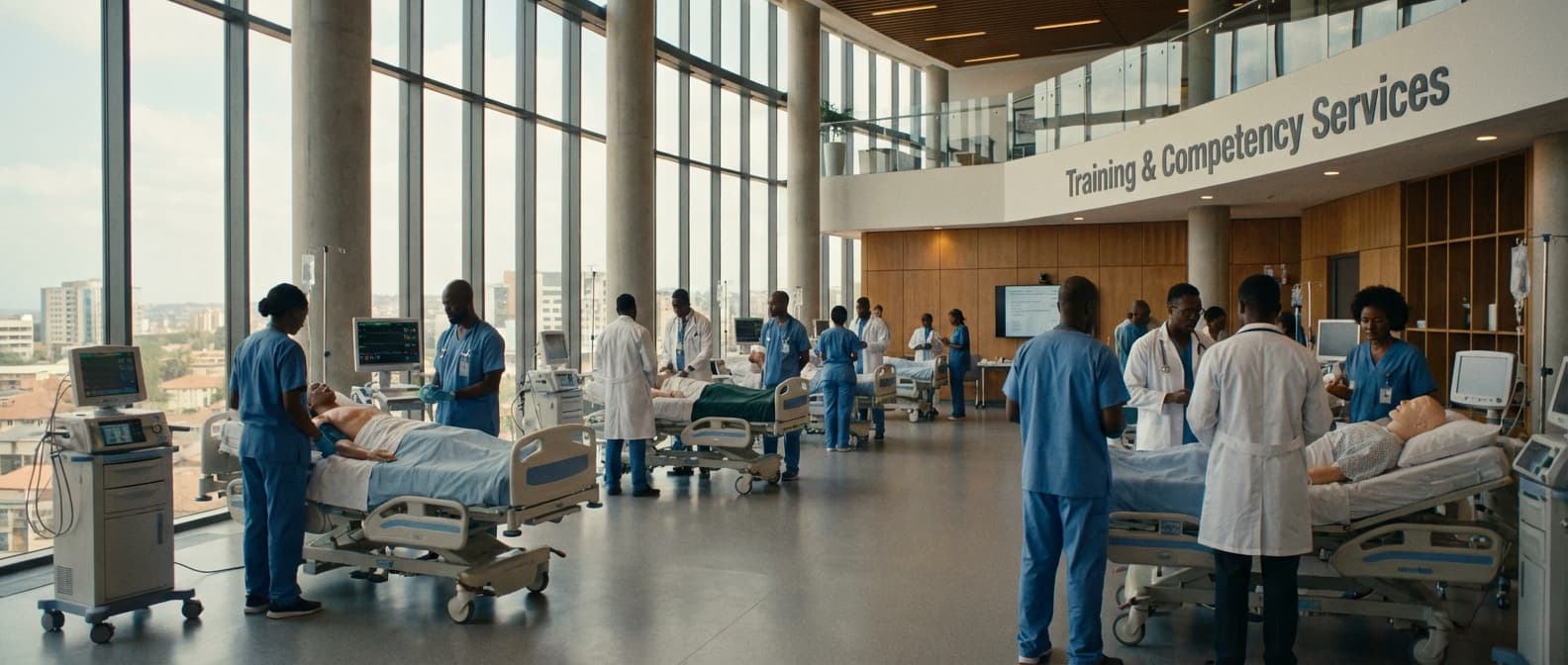
MRI Operator Training Service (Radiographers) in Ivory Coast
Engineering Excellence & Technical Support
MRI Operator Training Service (Radiographers) High-standard technical execution following OEM protocols and local regulatory frameworks.
Advanced MRI Protocol Mastery
Gain in-depth training on a comprehensive suite of MRI protocols, from routine brain scans to advanced musculoskeletal imaging, ensuring optimal image acquisition for diverse patient needs in Ivory Coast's evolving healthcare landscape.
Patient Safety & Compliance Excellence
Master crucial patient safety protocols, including contraindication screening, RF safety, and contrast agent administration guidelines, to ensure secure and compliant MRI procedures in accordance with international and local best practices.
Image Optimization & Quality Assurance
Develop expertise in image artifact identification, troubleshooting, and advanced post-processing techniques to consistently deliver high-quality diagnostic images, enhancing diagnostic accuracy and patient outcomes for the Ivorian population.
What Is Mri Operator Training Service (Radiographers) In Ivory Coast?
MRI Operator Training Service (Radiographers) in Ivory Coast refers to specialized educational programs designed to equip radiographers with the theoretical knowledge and practical skills necessary to safely and effectively operate Magnetic Resonance Imaging (MRI) scanners. This service is crucial for ensuring high-quality diagnostic imaging while adhering to stringent safety protocols in the Republic of Ivory Coast. The training focuses on the principles of MRI physics, advanced imaging techniques, patient preparation and positioning, contrast agent administration, image acquisition, post-processing, and equipment maintenance. It addresses the specific regulatory requirements and healthcare infrastructure pertinent to Ivory Coast.
| Who Needs MRI Operator Training? | Typical Use Cases in Ivory Coast | ||||||||
|---|---|---|---|---|---|---|---|---|---|
| Newly qualified radiographers entering MRI departments. | Enhancing diagnostic capabilities in public and private hospitals for neurology (e.g., stroke, tumors, multiple sclerosis). | On-the-job training for existing radiographers transitioning to MRI roles. | Orthopedic imaging (e.g., joint injuries, degenerative conditions, musculoskeletal tumors). | Continuing professional development for radiographers seeking specialization. | Abdominal and pelvic imaging (e.g., liver lesions, prostate cancer, gynecological conditions). | Radiographers working in mobile MRI units. | Cardiovascular imaging (e.g., cardiac function, congenital heart disease). | Technicians in imaging research facilities. | Oncology imaging (e.g., tumor staging, treatment monitoring). |
Key Components of MRI Operator Training Service (Radiographers) in Ivory Coast:
- MRI Physics Principles: Understanding signal generation, image formation, pulse sequences, and artifact reduction.
- Patient Management: Protocols for patient screening (contraindications, implants), preparation, sedation, and management of claustrophobia.
- Image Acquisition Techniques: Proficiency in various MRI sequences (T1, T2, FLAIR, DWI, etc.) and optimization for different anatomical regions and pathologies.
- Contrast Agent Administration: Knowledge of contrast agent properties, indications, contraindications, adverse reactions, and safe injection practices.
- Equipment Operation and Quality Control: Hands-on training with specific MRI scanner models, including routine quality assurance procedures and troubleshooting.
- Radiation Safety and Patient Protection: Emphasis on non-ionizing radiation principles and minimizing potential risks associated with strong magnetic fields and radiofrequency pulses.
- Image Post-Processing and Interpretation Fundamentals: Basic understanding of workstation operation for image manipulation and preliminary assessment (in conjunction with radiologists).
- Ethical and Legal Considerations: Adherence to professional conduct, patient confidentiality, and national healthcare regulations in Ivory Coast.
- Emergency Procedures: Training on managing medical emergencies that may arise during an MRI scan.
Who Needs Mri Operator Training Service (Radiographers) In Ivory Coast?
MRI Operator Training Services are crucial for radiographers in Ivory Coast to ensure the safe, efficient, and high-quality operation of Magnetic Resonance Imaging (MRI) scanners. This training is essential for anyone directly involved in the acquisition, processing, and interpretation of MRI scans, as well as for those responsible for patient care during MRI procedures. The growing demand for advanced diagnostic imaging necessitates a skilled workforce capable of utilizing this sophisticated technology.
| Customer Type | Relevant Departments | Training Needs |
|---|---|---|
| Public Hospitals | Radiology Department, Neurology, Oncology, Cardiology, Orthopedics | Basic & Advanced MRI operation, patient safety protocols, image interpretation basics, quality assurance, equipment maintenance awareness. |
| Private Hospitals | Radiology Department, all specialty departments requiring MRI | Same as Public Hospitals, with a potential emphasis on efficiency, customer service, and revenue optimization related to MRI services. |
| Diagnostic Imaging Centers | Radiology Department, Imaging Technologists | Specialized MRI protocols for various body parts, advanced imaging techniques, patient scheduling and workflow optimization, interventional MRI (if applicable). |
| Specialized Clinics | Radiology Department (if internal), referring physicians | Understanding of specific MRI applications for their specialty, effective communication of findings, patient selection criteria. |
| Medical Schools/Universities | Radiology Training Programs, Medical Faculties | Curriculum development for MRI, hands-on training for students, faculty development in MRI technology. |
| Government Health Agencies | Healthcare Planning and Regulation Divisions | Understanding of training requirements for national healthcare standards, identifying training gaps, potential policymakers for accreditation of training programs. |
| NGOs in Healthcare | Program Management, Medical Operations | Assessing training needs for partner facilities, sourcing and funding specialized training, capacity building initiatives. |
Target Customers and Departments:
- Hospitals (Public and Private): The primary recipients of MRI services and thus the primary employers of radiographers. This includes university hospitals, general hospitals, and specialized medical centers.
- Diagnostic Imaging Centers: Standalone facilities dedicated to providing imaging services, often equipped with MRI machines.
- Specialized Clinics: Clinics focusing on neurology, oncology, cardiology, orthopedics, and other specialties that frequently utilize MRI for diagnosis and treatment planning.
- Radiology Departments: The core department within hospitals and imaging centers responsible for all medical imaging procedures, including MRI.
- Medical Schools and Universities: Institutions training future radiographers and medical professionals, who will require foundational and advanced MRI knowledge.
- Government Health Ministries and Agencies: Responsible for setting standards, regulating healthcare services, and potentially funding training initiatives to improve national healthcare infrastructure.
- Non-Governmental Organizations (NGOs) involved in healthcare: Organizations working to improve access to and quality of healthcare in Ivory Coast, which may include establishing or upgrading diagnostic capabilities.
Mri Operator Training Service (Radiographers) Process In Ivory Coast
This document outlines the standard workflow for MRI Operator Training services specifically tailored for radiographers in Ivory Coast, from initial inquiry to the successful completion of the training program. The process is designed to be comprehensive, efficient, and to ensure that trainees receive high-quality, relevant education in MRI operation.
| Stage | Description | Key Activities | Responsible Parties | Deliverables/Outcomes |
|---|---|---|---|---|
| The process begins when a radiographer or their institution expresses interest in MRI operator training. | Receive inquiry, understand specific training needs (e.g., basic operation, advanced techniques, specific MRI systems), discuss current skill levels, and identify desired learning outcomes. | Prospective Trainee/Institution, Training Service Provider (TSP) | Understanding of trainee's background and training requirements, initial scope of training identified. |
| Based on the needs assessment, the TSP develops a tailored training proposal. | Outline training modules, curriculum, duration, venue (on-site/off-site), instructors' qualifications, required equipment, learning objectives, methodology, and a detailed cost breakdown. | Training Service Provider (TSP) | Formal training proposal document. |
| Once the proposal is reviewed, negotiations take place to finalize the terms of the training. | Discuss and agree on pricing, payment schedule, training dates, cancellation policies, intellectual property rights (if any), and liability. Formalize the agreement with a contract. | Prospective Trainee/Institution, Training Service Provider (TSP) | Signed training contract/agreement. |
| The institution selects the radiographers who will participate in the training. | Confirm participant list, collect necessary participant information (CVs, academic records), provide pre-reading materials, and arrange logistics (travel, accommodation if applicable). | Institution, Training Service Provider (TSP) | Confirmed participant list, logistical arrangements made, participants informed and prepared. |
| The core phase where the training is delivered. | Conduct theoretical sessions (MRI physics, safety, protocols), practical demonstrations on MRI scanners, hands-on scanning sessions with real patients (under supervision), case study analysis, and interactive Q&A sessions. | Training Service Provider (TSP) Instructors, Trainees | Knowledge acquisition, practical skill development, competency building in MRI operation. |
| Assessing the effectiveness of the training and gathering feedback. | Conduct theoretical and practical assessments (quizzes, skill-based evaluations), collect feedback from trainees and their supervisors on the training content, delivery, and instructors. Analyze assessment results. | Training Service Provider (TSP), Trainees, Institution Supervisors | Trainee performance reports, training effectiveness evaluation report, areas for improvement identified. |
| Formal recognition of successful completion and ongoing support. | Issue certificates of completion to successful trainees. Provide post-training support, such as access to online resources, follow-up consultations for complex cases, or opportunities for advanced training. | Training Service Provider (TSP) | Certificates of completion, enhanced MRI operational capabilities of radiographers, potential for ongoing professional development. |
MRI Operator Training Service (Radiographers) Workflow in Ivory Coast
- Initial Inquiry & Needs Assessment
- Proposal Development & Submission
- Contract Negotiation & Agreement
- Participant Selection & Pre-Training Preparation
- Training Program Execution
- Post-Training Evaluation & Feedback
- Certification & Follow-up Support
Mri Operator Training Service (Radiographers) Cost In Ivory Coast
The cost of MRI operator training for radiographers in Ivory Coast can vary significantly based on several factors. These include the duration and intensity of the training program, the reputation and accreditation of the training institution, the qualifications of the instructors, the specific MRI modalities covered, and whether the training includes practical, hands-on experience with state-of-the-art equipment. Additional costs may arise for training materials, assessments, and certification. The local currency, the West African CFA franc (XOF), is used for these transactions.
| Training Type/Duration | Estimated Cost Range (XOF) | Notes |
|---|---|---|
| Basic/Introductory MRI Principles (1-3 days) | 50,000 - 150,000 | Covers fundamental concepts and safety. |
| Intermediate MRI Operator Training (1-2 weeks) | 200,000 - 600,000 | Includes basic sequence understanding and some practical exposure. |
| Advanced/Specialized MRI Operator Training (2-4 weeks) | 700,000 - 1,500,000+ | Focuses on specific protocols, advanced techniques, and in-depth practical sessions. |
| On-site Corporate Training (Negotiable) | Varies widely | Customized programs for healthcare facilities, pricing depends on scope and participant numbers. |
Key Pricing Factors for MRI Operator Training in Ivory Coast:
- Training Program Duration & Intensity: Shorter, introductory courses will be less expensive than comprehensive, multi-week programs.
- Institution's Reputation & Accreditation: Well-established and accredited institutions often command higher fees.
- Instructor Expertise: Highly experienced and specialized MRI instructors may increase the overall cost.
- Scope of Training: Training focused on specific advanced MRI sequences or specialized applications will likely be priced higher.
- Practical/Hands-on Component: Programs offering extensive supervised practical experience on actual MRI scanners are typically more costly.
- Training Materials & Resources: Provision of textbooks, digital resources, and simulator access can influence pricing.
- Assessment & Certification: Fees for examinations and the issuance of recognized certifications contribute to the cost.
- Location of Training: Training conducted in major cities like Abidjan might have slightly different pricing than in more remote areas.
Affordable Mri Operator Training Service (Radiographers) Options
This guide outlines affordable options for MRI operator training for radiographers, focusing on value bundles and cost-saving strategies to make advanced skill acquisition more accessible. Investing in specialized MRI training is crucial for radiographers looking to expand their career opportunities and contribute to diagnostic imaging advancements. We explore various training modalities and provide insights into maximizing your training budget.
| Training Type | Typical Cost Range (USD) | Value Bundle Components | Cost-Saving Potential |
|---|---|---|---|
| Online Certification Courses | $500 - $2,500 | Self-paced modules, online assessments, digital study materials, access to online forums. | Significantly lower than in-person due to reduced overhead, no travel/accommodation. |
| Blended Learning Programs | $1,500 - $4,000 | Online theoretical modules, limited in-person practical sessions (e.g., 1-2 weeks), simulation access, mentorship. | Balances cost-effectiveness of online learning with essential hands-on experience. |
| Intensive In-Person Workshops (Short-Term) | $2,000 - $5,000+ | Dedicated scanner time, hands-on patient scanning, expert-led lectures, comprehensive study guides. | Higher cost, but offers in-depth practical skills. Savings through group bookings or employer sponsorship. |
| University/College Certificate Programs | $2,000 - $6,000+ | Structured curriculum, academic credit, access to university resources, faculty guidance, often includes clinical rotations. | Can be more comprehensive. Potential for financial aid or scholarships. Compare credit transferability. |
| Manufacturer-Specific Training | Varies (often included with equipment purchase or higher fee) | Focus on specific MRI scanner models, hands-on operation, troubleshooting, protocol optimization. | Can be a significant cost if not included. Negotiate as part of equipment acquisition. |
Key Cost-Saving Strategies for MRI Operator Training
- Prioritize Accreditation and Certification: While seeking affordable options, ensure the training program is accredited and leads to recognized certifications. This validates your skills and enhances employability.
- Explore Online and Blended Learning: Virtual classrooms and online modules can significantly reduce travel and accommodation costs. Blended learning combines online theory with in-person practical sessions.
- Leverage Employer Sponsorship: Inquire about employer-sponsored training programs. Many healthcare institutions invest in upskilling their staff, especially for in-demand modalities like MRI.
- Group Discounts and Institutional Packages: If multiple radiographers from the same facility require training, inquire about group discounts or institutional packages. This can lead to substantial savings per individual.
- Look for Early Bird Discounts and Promotions: Training providers often offer discounts for early registration. Stay updated on their websites and newsletters.
- Consider Regional Training Centers: Training outside major metropolitan areas might offer lower tuition fees and living expenses.
- Utilize Simulation Technology: Training that incorporates advanced MRI simulators can provide hands-on experience without the high cost and logistical challenges of dedicated MRI scanner time.
- Seek Out Free or Low-Cost Webinars and Workshops: While not comprehensive training, these can offer introductory knowledge and updates on MRI technology and practices, supplementing formal education.
Verified Providers In Ivory Coast
Ensuring access to reliable and safe healthcare is paramount. In Ivory Coast, the presence of verified healthcare providers is crucial for citizens and expatriates alike. This document outlines the significance of verified providers and highlights how Franance Health's credentials position them as the premier choice for your medical needs. Verified providers undergo rigorous checks, ensuring they meet established standards of quality, safety, and professionalism. This verification process typically involves examining licenses, certifications, adherence to ethical practices, and a history of competent patient care. For individuals seeking medical attention, this verification offers peace of mind, knowing they are entrusting their well-being to qualified and legitimate professionals.
| Credential/Aspect | Franance Health's Commitment | Benefit to Patients |
|---|---|---|
| Licensing and Accreditation | Franance Health partners exclusively with healthcare facilities and professionals who hold valid and current licenses and accreditations recognized by Ivorian health authorities. | Ensures providers are legally authorized and meet regulatory standards for practice. |
| Professional Qualifications | All medical practitioners associated with Franance Health undergo thorough vetting of their educational background, specialized training, and professional certifications. | Guarantees that patients receive care from highly skilled and knowledgeable experts in their respective fields. |
| Quality Assurance Protocols | Franance Health implements robust internal quality assurance measures, including regular performance reviews and patient feedback mechanisms. | Continuously monitors and improves the standard of care delivered, leading to better patient outcomes. |
| Ethical Practice Adherence | We mandate strict adherence to medical ethics and professional conduct for all our partners, ensuring patient privacy, informed consent, and respectful treatment. | Builds a foundation of trust and confidence, empowering patients in their healthcare journey. |
| Network Integrity | Franance Health meticulously vets its network of clinics, hospitals, and individual providers to ensure they meet our high standards for facilities, equipment, and hygiene. | Provides access to safe, well-equipped, and clean healthcare environments for optimal recovery. |
Why Choosing Verified Providers is Essential in Ivory Coast
- Patient Safety: Verified providers adhere to strict safety protocols, minimizing risks associated with medical procedures.
- Quality of Care: Verification ensures providers possess the necessary skills, knowledge, and experience to deliver high-quality medical services.
- Trust and Credibility: A verified status builds trust, assuring patients they are receiving care from legitimate and reputable healthcare professionals.
- Access to Proper Treatments: Verified practitioners are more likely to offer evidence-based treatments and adhere to best practices.
- Ethical Standards: Verification often includes an assessment of ethical conduct, ensuring providers act in the best interest of their patients.
Scope Of Work For Mri Operator Training Service (Radiographers)
This Scope of Work (SOW) outlines the requirements for providing comprehensive MRI Operator Training Services specifically tailored for Radiographers. The training will cover theoretical knowledge, practical application, safety protocols, and advanced techniques related to Magnetic Resonance Imaging (MRI). The objective is to equip radiographers with the necessary skills and understanding to operate MRI scanners efficiently, safely, and produce high-quality diagnostic images.
| Deliverable ID | Deliverable Name | Description | Standard Specifications | Format | Acceptance Criteria |
|---|---|---|---|---|---|
| TDO-001 | Training Curriculum | Detailed outline of all training modules, learning objectives, and content structure. | Must cover all modules listed in the 'Key Training Modules' section. Each module should have clear learning objectives and a breakdown of topics. | Digital Document (PDF) | Approved by client's Training Manager based on comprehensiveness and alignment with stated objectives. |
| TDO-002 | Training Manuals & Handouts | Comprehensive written materials for each module, including theoretical explanations, diagrams, and practical guidelines. | High-quality printing or digital format. Content must be accurate, up-to-date, and easy to understand. Include glossary of terms. | Printed Books / Digital Documents (PDF) | Content accuracy verified by client's MRI Lead Radiographer. Readability and clarity assessed by trainees. |
| TDO-003 | Practical Training Sessions Log | Record of all practical training sessions conducted, including date, time, duration, specific scanner used, trainees present, and skills practiced. | Detailed entries for each session. Must include a summary of skills covered and trainee performance observations. | Digital Spreadsheet (Excel/Google Sheets) | Completeness and accuracy of entries confirmed by client's Clinical Supervisor. |
| TDO-004 | Trainee Performance Assessments | Evaluations of radiographers' understanding and practical skills at the end of each module and upon completion of the training. | Includes theoretical quizzes, practical skill demonstrations, and scenario-based assessments. Assessments must be objective and consistently applied. | Digital Documents (PDF/Word) and Practical Observation Checklists | Minimum passing score of 80% on theoretical assessments. Successful demonstration of all core competencies in practical assessments as verified by the trainer and client supervisor. |
| TDO-005 | Training Completion Certificates | Formal certificates issued to radiographers who successfully complete the training program. | Must include trainee's name, course title, date of completion, issuing organization name, and trainer's signature. Should be suitable for professional record-keeping. | High-quality printed certificates and/or digital versions (PDF) | Issued only to trainees who meet the acceptance criteria for 'Trainee Performance Assessments' (TDO-004). |
| TDO-006 | Post-Training Support Plan | Outline of how ongoing support will be provided to radiographers post-training, including access to trainers, resources, and troubleshooting. | Details of communication channels, response times, and availability of subject matter experts for a defined period. | Digital Document (PDF) | Clarity and feasibility of the support plan as reviewed by the client's HR and Training departments. |
| TDO-007 | Training Feedback Report | Summary of feedback collected from trainees regarding the training content, delivery, and trainers. | Includes aggregated quantitative data (e.g., satisfaction scores) and qualitative feedback. Analysis of feedback and recommendations for improvement. | Digital Document (PDF) | Comprehensive and objective reporting of feedback, with actionable insights for future training iterations. |
Key Training Modules
- Introduction to MRI Physics and Principles
- MRI System Components and Operation
- Patient Care and Safety in the MRI Environment
- Image Acquisition Techniques and Protocols
- Image Reconstruction and Post-Processing
- Artifact Identification and Correction
- Quality Assurance and Quality Control (QA/QC) in MRI
- Advanced MRI Applications (e.g., fMRI, Spectroscopy, Cardiac MRI - upon request)
Service Level Agreement For Mri Operator Training Service (Radiographers)
This Service Level Agreement (SLA) outlines the performance standards and guarantees for the MRI Operator Training Service provided to registered radiographers. It defines the expected response times for support inquiries and establishes uptime guarantees for the online training platform.
| Service Component | Service Level Objective (SLO) | Measurement Metric | Remedy for Non-Compliance |
|---|---|---|---|
| Technical Support (Email/Ticket) | 95% of issues acknowledged within 4 business hours | Percentage of support tickets acknowledged within the defined timeframe | 10% service credit on the next monthly invoice for each instance of failure to meet SLO |
| Technical Support (Phone - Urgent Issues) | 99% of urgent issues addressed by a live agent within 1 business hour | Percentage of urgent support calls answered by a live agent within the defined timeframe | 15% service credit on the next monthly invoice for each instance of failure to meet SLO |
| Online Training Platform Uptime | 99.5% uptime during scheduled training hours (24/7 availability for self-paced) | Percentage of time the platform is accessible and functional | 2.5% service credit for every hour the platform is down beyond the guaranteed uptime, capped at 10% of monthly service fee |
| Training Material Access | 100% availability of subscribed training modules | Percentage of subscribed training materials accessible to the user | Extended access to the affected training modules for the duration of the downtime, or a pro-rata refund for the affected period |
Key Performance Indicators (KPIs) and Guarantees
- Support Response Times: Guarantees timely assistance for technical issues, training content queries, and platform access problems.
- Platform Uptime: Ensures consistent availability of the online MRI Operator Training platform for scheduled and self-paced learning.
- Training Material Availability: Confirms that all subscribed training modules and resources will be accessible throughout the agreed-upon service period.
Frequently Asked Questions

Ready when you are
Let's scope your MRI Operator Training Service (Radiographers) in Ivory Coast project in Ivory Coast.

Scaling healthcare logistics and technical systems across the entire continent.