
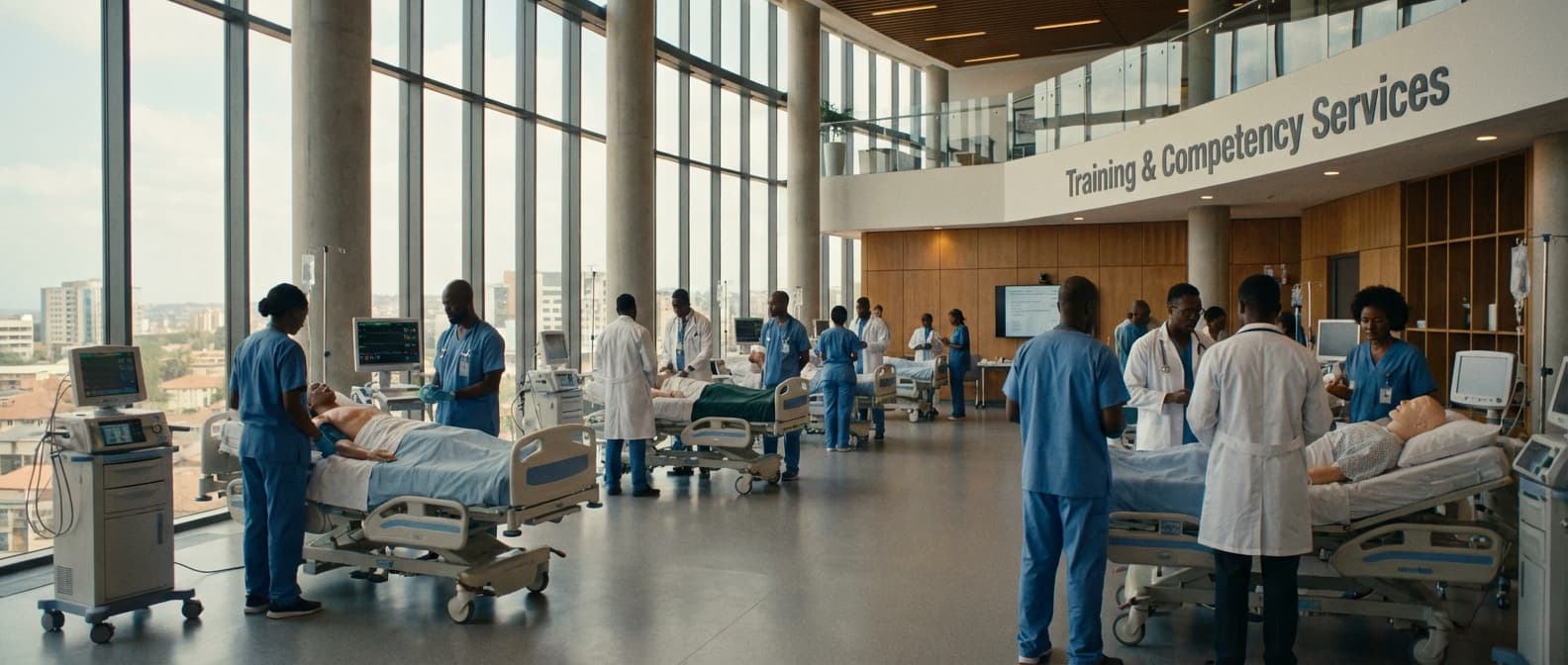
CT Operator Training Service (Radiographers) in Ivory Coast
Engineering Excellence & Technical Support
CT Operator Training Service (Radiographers) High-standard technical execution following OEM protocols and local regulatory frameworks.
Mastering Advanced Imaging Protocols
Our CT Operator Training Service equips radiographers in Ivory Coast with proficiency in advanced imaging protocols, including multi-detector CT (MDCT) techniques, contrast administration optimization, and specialized imaging sequences for neurological, cardiovascular, and oncological applications. Gain expertise in acquiring high-quality diagnostic images efficiently and safely.
Prioritizing Patient and Operator Safety
Dedicated modules on radiation safety and dose optimization are central to our training. Learn to implement ALARA principles effectively, utilize advanced dose reduction techniques, and understand regulatory compliance specific to Ivory Coast, ensuring the highest standards of patient care and occupational health for radiographers.
Enhancing Image Interpretation Skills
Beyond acquisition, our service focuses on developing critical image analysis skills. Radiographers will learn to identify subtle abnormalities, understand common artifacts and their mitigation, and gain exposure to contemporary image post-processing techniques, empowering them to contribute more effectively to the diagnostic workflow.
What Is Ct Operator Training Service (Radiographers) In Ivory Coast?
CT Operator Training Service (Radiographers) in Ivory Coast refers to specialized educational programs designed to equip radiographers with the knowledge and practical skills necessary for the proficient operation of Computed Tomography (CT) scanners. This service is crucial for ensuring diagnostic image quality, patient safety, and adherence to established protocols within the medical imaging sector in Ivory Coast. The training encompasses theoretical understanding of CT physics, image acquisition techniques, radiation safety, patient positioning, artifact recognition and reduction, and quality assurance procedures specific to CT imaging. It aims to develop competent operators capable of performing a wide range of CT examinations across various anatomical regions and clinical indications.
| Who Needs CT Operator Training? | Typical Use Cases |
|---|---|
| Certified Radiographers seeking specialization in CT imaging. | Acquisition of skills for new CT scanner operators in hospitals and diagnostic imaging centers. |
| Existing CT operators requiring recertification or advanced training. | Enhancement of diagnostic accuracy and efficiency through optimized scanning techniques. |
| Healthcare professionals in roles requiring understanding of CT data (e.g., radiologists, technologists). | Implementation of new CT technologies and protocols within clinical practice. |
| Medical imaging technicians in public and private healthcare facilities in Ivory Coast. | Ensuring compliance with national and international standards for CT operation and radiation safety. |
| Graduates from radiography programs looking to enter the field of CT. | Facilitating the safe and effective use of CT technology in diverse clinical settings, including remote or underserved areas. |
Key Components of CT Operator Training Service:
- Theoretical Instruction: In-depth modules covering CT principles, hardware components, radiation physics, biological effects of radiation, contrast media administration guidelines, and relevant anatomy and physiology.
- Practical Skills Development: Hands-on training on actual CT scanners, focusing on patient preparation, scan parameter optimization, gantry operation, image reconstruction, and data management.
- Protocols and Techniques: Training on standardized CT protocols for different body parts and pathologies, including advanced techniques such as multi-detector CT (MDCT), spiral scanning, and specialized imaging applications (e.g., CT angiography, low-dose CT).
- Radiation Safety and Protection: Comprehensive education on ALARA (As Low As Reasonably Achievable) principles, dose monitoring, shielding techniques, and regulatory compliance for radiation safety.
- Image Quality Assurance: Training on recognizing and mitigating common artifacts, performing system quality control tests, and implementing strategies to ensure optimal image diagnostic quality.
- Patient Care and Management: Emphasis on patient communication, comfort, sedation protocols (where applicable), and management of adverse reactions to contrast media.
- Emergency Procedures: Training on recognizing and responding to medical emergencies that may arise during CT examinations.
- Legal and Ethical Considerations: Understanding of patient confidentiality, informed consent, and professional responsibilities in the practice of CT imaging.
Who Needs Ct Operator Training Service (Radiographers) In Ivory Coast?
CT Operator Training Service (Radiographers) in Ivory Coast is essential for ensuring the safe, efficient, and high-quality use of CT imaging technology. This training caters to a specific group of healthcare professionals who play a crucial role in diagnostic imaging. By equipping radiographers with advanced skills and knowledge, healthcare facilities can improve patient care, reduce radiation exposure, and optimize operational workflows.
| Target Customer Segment | Relevant Departments/Settings |
|---|---|
| Public Hospitals | Radiology Departments, Diagnostic Imaging Units |
| Private Hospitals | Radiology Departments, Imaging Centers |
| University Hospitals | Radiology Departments, Research Units, Teaching Hospitals |
| Specialized Imaging Clinics | CT Scan Centers, Diagnostic Imaging Clinics |
| Government Health Facilities | Ministry of Health supported diagnostic centers |
| Non-Governmental Organization (NGO) Healthcare Providers | Clinics and hospitals with diagnostic imaging capabilities |
Target Customers and Departments for CT Operator Training Service (Radiographers) in Ivory Coast
- Radiographers seeking to specialize or enhance their skills in CT operation.
- Newly qualified radiographers entering the workforce.
- Radiographers in public and private hospitals.
- Technologists working in specialized imaging centers and diagnostic clinics.
- Radiographers in research institutions that utilize CT scanning.
Ct Operator Training Service (Radiographers) Process In Ivory Coast
This document outlines the standard workflow for CT Operator Training Services for Radiographers in Ivory Coast, covering the entire process from initial inquiry to the successful completion and delivery of training.
| Stage | Key Activities | Responsible Parties | Deliverables/Outcomes | Timeframe (Estimated) |
|---|---|---|---|---|
| Potential client (hospital, clinic, government agency) expresses interest in CT operator training. Initial discussions to understand specific training needs, target audience (number of radiographers, existing skill levels), desired learning outcomes, and any existing CT equipment. Gathering information on existing training protocols, any identified gaps in skills, and specific CT modalities to be covered. | Client (Hospital/Clinic Administrator, HR, Radiology Department Head), Training Provider Sales/Business Development Team | Understanding of client's training requirements, identification of training scope. | 1-3 Business Days |
| Training provider develops a detailed proposal outlining the training program, curriculum, methodology, duration, trainer qualifications, proposed dates, venue options (on-site, off-site), cost breakdown, and payment terms. Discussions and negotiations with the client to refine the proposal based on feedback, budget, and specific requirements. | Training Provider (Technical/Training Department, Sales Team), Client | Formal training proposal, agreed-upon training scope and objectives. | 3-7 Business Days |
| Formalization of the agreement through a contract or Memorandum of Understanding (MoU). This includes detailed terms and conditions, payment schedule, cancellation policies, confidentiality clauses, and responsibilities of both parties. | Client Legal Department, Training Provider Legal Department/Management | Signed contract/MoU. | 5-10 Business Days |
| Based on the agreed scope, the training provider designs or customizes the curriculum. This involves developing training modules, practical exercises, case studies, and assessment tools. Ensuring alignment with international best practices and potentially local regulatory requirements. | Training Provider (Curriculum Developers, Subject Matter Experts) | Detailed training curriculum, training materials (presentations, manuals, handouts). | 7-14 Business Days (depending on customization complexity) |
| Arranging all logistical aspects: confirming training dates and times, booking venue (if off-site), coordinating trainer travel and accommodation, ensuring availability of CT scanner(s) for practical sessions, and organizing any necessary equipment or materials. | Training Provider (Logistics Coordinator, Project Manager), Client (Facility Manager, IT Support) | Confirmed training schedule, booked venue, confirmed trainer availability, access to CT scanner. | 10-20 Business Days (often runs concurrently with Stage 4) |
| Providing participants with pre-training information, including the agenda, learning objectives, any pre-reading materials, and instructions for attendance. Final confirmation of all arrangements with the client. | Training Provider (Project Manager, Trainers), Client (HR, Department Heads) | Participant awareness and preparedness, confirmation of logistics. | 2-5 Business Days before training |
| Conducting the training sessions. This includes theoretical lectures, interactive discussions, hands-on practical demonstrations on the CT scanner, simulated scenarios, and case study analysis. | Training Provider (Qualified Trainers) | Knowledge transfer, skill development, practical experience for radiographers. | Varies based on program duration (e.g., 3-5 days for a comprehensive course) |
| Assessing participant learning through theoretical tests, practical evaluations (e.g., image acquisition, protocol selection), and observation of skills during practical sessions. Gathering feedback from participants on the training effectiveness and content. | Training Provider (Trainers, Assessors), Participants | Assessment results for each participant, participant feedback on the training. | During and immediately after training delivery |
| Issuing certificates of completion to participants who have successfully met the learning objectives and passed the assessments. Providing a comprehensive training report to the client, detailing participant performance, training conducted, and any recommendations. | Training Provider (Administration, Training Management) | Certificates of completion, final training report. | 3-7 Business Days after training completion |
| Offering ongoing support to participants, which may include answering follow-up questions, providing access to online resources, or facilitating further mentoring. Collecting final feedback from the client for continuous improvement of training services. | Training Provider (Support Team, Account Manager), Client | Continued professional development for radiographers, improved future training offerings. | Ongoing (e.g., 1-3 months post-training) |
CT Operator Training Service (Radiographers) Process in Ivory Coast
- Inquiry & Needs Assessment
- Proposal Development & Negotiation
- Contracting & Agreement
- Training Program Design & Customization
- Logistics & Scheduling
- Pre-Training Communication
- Training Delivery
- Assessment & Evaluation
- Certification & Documentation
- Post-Training Support & Feedback
Ct Operator Training Service (Radiographers) Cost In Ivory Coast
The cost of CT Operator Training for Radiographers in Ivory Coast can vary significantly based on several factors. These include the reputation and accreditation of the training institution, the duration and depth of the program, the inclusion of practical hands-on experience with actual CT scanners, the level of specialization (e.g., general CT, specialized CT like cardiac or neurological), and the inclusion of certification exams. The training can be delivered in a classroom setting, online, or a blended approach. Institutions located in major economic centers like Abidjan might have higher fees due to overhead costs. Furthermore, whether the training is for individual radiographers or for a group from a healthcare facility will also influence the overall pricing, with group discounts often available.
| Training Type/Duration | Estimated Price Range (XOF) | Notes |
|---|---|---|
| Basic/Introductory CT Operator Course (e.g., 1-2 weeks) | 200,000 - 450,000 | Focuses on fundamental principles and basic operation. |
| Comprehensive CT Operator Training (e.g., 4-6 weeks) | 400,000 - 900,000 | Includes in-depth theory, protocols, and significant hands-on practice. |
| Specialized CT Modality Training (e.g., Cardiac CT, Neuro CT - short courses, 3-5 days) | 300,000 - 700,000 | Focuses on specific protocols and advanced applications for a particular area. May be a supplement to general training. |
| Group Training (per radiographer, for a facility) | 150,000 - 600,000 | Price highly dependent on the size of the group and the course duration. Bulk discounts apply. |
| Online/Blended Learning Courses | 100,000 - 400,000 | Often more affordable due to reduced overhead. Practical components might be simulated or require separate arrangements. |
Key Pricing Factors for CT Operator Training (Radiographers) in Ivory Coast:
- Training Institution Reputation & Accreditation: Established and accredited institutions generally command higher fees.
- Program Duration & Depth: Longer and more comprehensive programs will be more expensive.
- Practical/Hands-on Component: Training involving actual CT scanner usage will increase costs.
- Specialization: Advanced or specialized CT training (e.g., neuro, cardiac) often has a higher price tag.
- Delivery Method: In-person, online, or blended learning models have different cost structures.
- Location of Training: Training in major cities like Abidjan may be more expensive.
- Individual vs. Group Training: Group training often comes with per-person discounts.
Affordable Ct Operator Training Service (Radiographers) Options
This document outlines affordable CT operator training services specifically designed for radiographers, focusing on value bundles and cost-saving strategies to make advanced CT education accessible and budget-friendly. We understand the importance of continuous professional development in CT imaging and aim to provide high-quality training that maximizes your return on investment.
| Value Bundle Option | Description | Included Features | Estimated Cost Range (USD) |
|---|---|---|---|
| Foundation CT Essentials | Core knowledge and skills for new CT operators or those seeking a refresher. | Online modules, basic simulation access, comprehensive study guide. | $500 - $1,000 per trainee |
| Advanced CT Techniques | Focuses on specialized CT applications (e.g., cardiac CT, interventional CT, low-dose CT). | Online modules, advanced simulation scenarios, case studies, instructor-led Q&A sessions. | $800 - $1,500 per trainee |
| Comprehensive CT Certification Prep | Designed to thoroughly prepare trainees for CT certification exams. | All features of Foundation CT Essentials, plus advanced modules, mock exams, personalized feedback. | $1,200 - $2,000 per trainee |
| On-Site Group Training | Customizable training delivered at your facility for multiple staff members. | Tailored curriculum, on-site instructor, simulation access (if available on-site), group discount. | Contact for quote (dependent on group size and duration) |
| Blended Learning Package | Combines self-paced online learning with live, instructor-led virtual sessions. | Online modules, live webinars, interactive workshops, case study analysis. | $900 - $1,700 per trainee |
Key Components of Affordable CT Operator Training
- Comprehensive Curriculum: Covers fundamental CT physics, anatomy, protocol optimization, image acquisition, artifact reduction, and patient safety.
- Hands-on Simulation: Utilizes advanced simulation software for practical experience without requiring actual patient scan time.
- Experienced Instructors: Led by certified CT technologists and radiographers with extensive clinical and teaching experience.
- Flexible Learning Formats: Offers online, blended, and on-site training options to suit various schedules and institutional needs.
- Certification Preparation: Includes modules designed to prepare trainees for CT certification exams (e.g., ARRT CT).
- Continuing Education Credits: Many courses offer CE credits, essential for maintaining professional licensure and certifications.
Verified Providers In Ivory Coast
In the Ivory Coast's burgeoning healthcare sector, identifying trustworthy and high-quality healthcare providers is paramount for individuals and organizations seeking reliable medical services. Franance Health has emerged as a leading name, distinguished by its rigorous credentialing processes and commitment to excellence. This document outlines why partnering with Franance Health represents the best choice for accessing verified healthcare in Ivory Coast.
| Credential | Description | Significance for Patients |
|---|---|---|
| Accredited Medical Licenses | Verification of all current and valid medical licenses issued by the Ivorian Ministry of Health and relevant professional councils. | Ensures providers are legally qualified and authorized to practice medicine. |
| Specialist Certifications | Confirmation of specialized training and board certifications from reputable national and international medical associations. | Guarantees that providers possess the advanced knowledge and skills for specific medical conditions and treatments. |
| Clean Disciplinary Records | Thorough checks for any past disciplinary actions or malpractice claims against healthcare professionals. | Provides assurance of a provider's ethical conduct and commitment to patient safety. |
| Continuing Medical Education (CME) Compliance | Verification that providers actively participate in ongoing professional development and training. | Indicates that providers are up-to-date with the latest medical advancements and best practices. |
| Hospital Affiliations and Privileges | Confirmation of affiliations with reputable hospitals and the scope of their privileges within those institutions. | Suggests peer review and validation of a provider's competence by established healthcare facilities. |
| Franance Health Quality Stamp | An internal designation awarded after successful completion of Franance Health's comprehensive vetting and ongoing monitoring process. | Represents the highest assurance of quality, reliability, and patient-centric care. |
Franance Health Credentials: A Mark of Excellence
- Rigorous Vetting Process: Franance Health employs a comprehensive multi-stage vetting procedure for all affiliated healthcare providers. This includes thorough background checks, verification of medical licenses and certifications with relevant national and international bodies, and an assessment of their professional history.
- Specialty Expertise Verification: Beyond general qualifications, Franance Health ensures that each provider's claimed specialty is thoroughly validated. This involves scrutinizing their training, experience, and any advanced certifications in their respective fields.
- Quality Assurance and Performance Monitoring: Franance Health doesn't stop at initial credentialing. They implement ongoing quality assurance programs, including patient feedback mechanisms and periodic reviews of clinical outcomes and adherence to best practices.
- Compliance with International Standards: A key differentiator is Franance Health's commitment to aligning its credentialing standards with internationally recognized benchmarks for healthcare quality and patient safety.
- Ethical Practice and Patient Confidentiality: Providers associated with Franance Health are held to high ethical standards, with a strong emphasis on patient confidentiality and transparent communication.
- Technological Integration and Modern Practices: Franance Health prioritizes providers who demonstrate proficiency in utilizing modern medical technologies and adopting contemporary, evidence-based treatment methodologies.
Scope Of Work For Ct Operator Training Service (Radiographers)
This Scope of Work (SOW) outlines the requirements for a comprehensive CT Operator Training Service specifically designed for Radiographers. The objective is to equip radiographers with the knowledge and practical skills necessary to operate CT scanners safely, efficiently, and effectively, producing high-quality diagnostic images while adhering to best practices and regulatory standards. The training will cover theoretical concepts, hands-on operation, image optimization, artifact reduction, patient safety protocols, and quality assurance procedures.
| Module | Topic | Learning Objectives | Key Concepts Covered | Assessment Methods |
|---|---|---|---|---|
| Module 1 | Introduction to CT Technology | Understand the fundamental principles of CT imaging. | X-ray generation, detectors, gantry rotation, data acquisition, image reconstruction (e.g., filtered back-projection, iterative reconstruction). | Quiz, knowledge check questions. |
| Module 2 | CT Scanner Anatomy and Operation | Familiarize with CT scanner components and their functions; operate the console. | Gantry, couch, X-ray tube, collimators, table movement, console interface, system startup/shutdown. | Practical demonstration, console operation checklist. |
| Module 3 | Patient Positioning and Protocol Selection | Perform accurate patient positioning and select appropriate scanning protocols. | Patient preparation, immobilization, contrast media administration principles (if applicable), protocol selection based on anatomy and clinical indication, scan range. | Practical positioning exercises, protocol selection scenarios. |
| Module 4 | Image Acquisition Parameters and Optimization | Control and optimize image acquisition parameters for diagnostic quality. | kVp, mA, pitch, slice thickness, field of view (FOV), reconstruction algorithms, windowing (level and width). | Image quality assessment exercises, parameter adjustment simulations. |
| Module 5 | Image Reconstruction and Post-Processing | Understand image reconstruction processes and perform basic post-processing. | Reconstruction algorithms, multiplanar reformations (MPR), maximum intensity projections (MIP), minimum intensity projections (MinIP), 3D rendering (basic concepts). | Post-processing task completion, review of reformatted images. |
| Module 6 | Radiation Safety and Dose Management | Implement radiation safety principles and manage patient dose. | ALARA principle, dose reduction techniques (e.g., automatic exposure control, iterative reconstruction), shielding, regulatory requirements, dose monitoring. | Radiation safety quiz, dose estimation scenarios. |
| Module 7 | Artifact Recognition and Reduction | Identify and implement strategies to reduce common CT artifacts. | Beam hardening, metal artifacts, motion artifacts, streak artifacts, partial volume averaging; troubleshooting techniques. | Artifact identification exercises, practical reduction strategies. |
| Module 8 | Quality Assurance and Maintenance | Understand quality assurance procedures and basic system maintenance. | Image quality phantoms, routine QC checks, troubleshooting common issues, reporting procedures, basic cleaning and care. | QC phantom analysis, reporting of simulated issues. |
| Module 9 | Advanced Applications (Optional/Elective) | Gain awareness of advanced CT applications and techniques. | CT angiography, cardiac CT, dual-energy CT, interventional CT (basic principles). | Case study discussions, conceptual understanding checks. |
Technical Deliverables
- Detailed Training Curriculum and Schedule
- Training Materials (Presentations, Handouts, Manuals)
- Instructor Qualifications and Experience Documentation
- Hands-on Training Sessions (Simulated and/or Live Environment)
- Competency Assessment Tools (Quizzes, Practical Evaluations)
- Post-Training Performance Monitoring Plan
- Training Completion Certificates
- Post-Training Support and Refresher Course Options
Service Level Agreement For Ct Operator Training Service (Radiographers)
This Service Level Agreement (SLA) outlines the performance standards and commitments for the CT Operator Training Service provided to Radiographers. It defines the expected response times for support requests and the guaranteed uptime for the training platform.
| Service Component | Response Time Target (Business Hours) | Uptime Guarantee (Monthly) |
|---|---|---|
| CT Operator Training Platform Access | 1 Hour | 99.5% |
| Technical Support (Issue Resolution) | 4 Business Hours | N/A |
| Content Update Notifications | 24 Hours | N/A |
Key Performance Indicators (KPIs)
- Response Time: The maximum time allowed for the support team to acknowledge and begin addressing a reported issue.
- Uptime Guarantee: The percentage of time the CT Operator Training Service platform is expected to be available and fully functional.
Frequently Asked Questions

Ready when you are
Let's scope your CT Operator Training Service (Radiographers) in Ivory Coast project in Ivory Coast.

Scaling healthcare logistics and technical systems across the entire continent.