
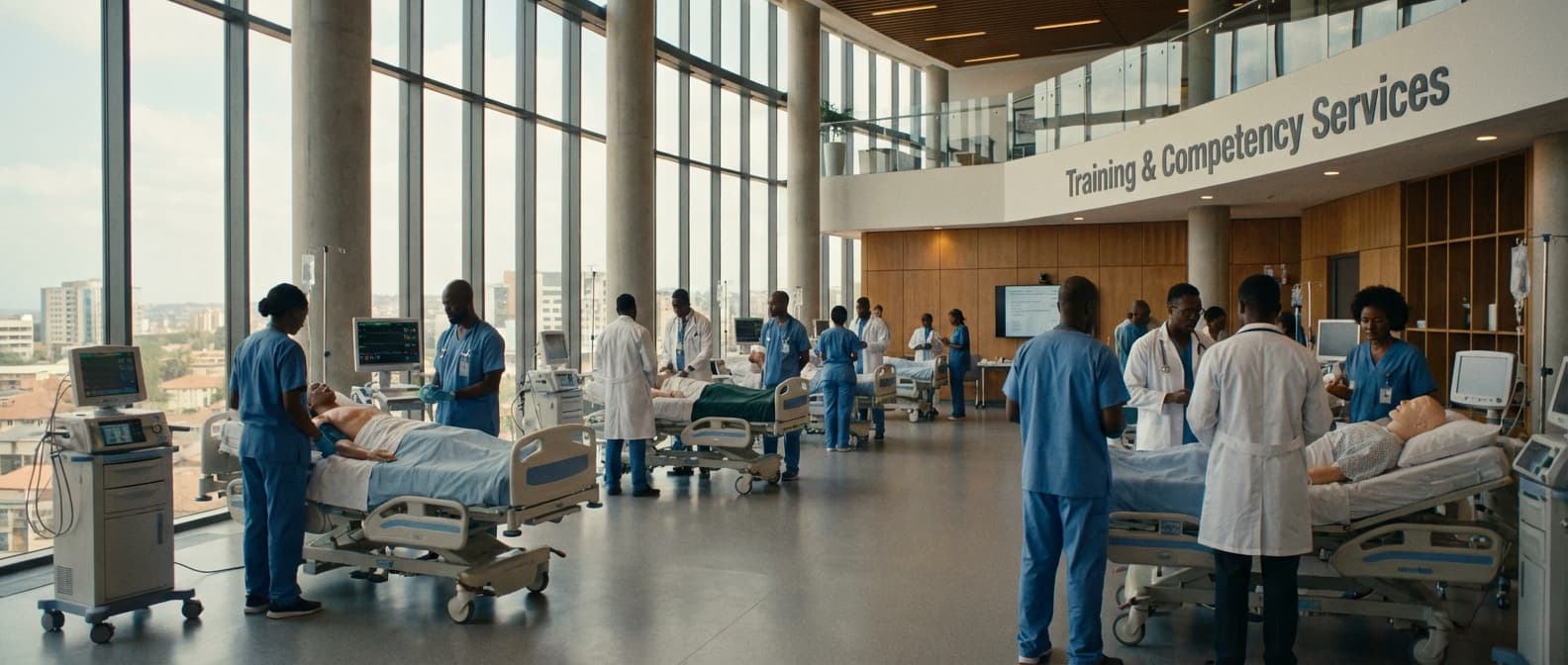
Anesthesia Workstation User Training Service in Ivory Coast
Engineering Excellence & Technical Support
Anesthesia Workstation User Training Service High-standard technical execution following OEM protocols and local regulatory frameworks.
Mastering Advanced Ventilation Modes
Deep dive into complex ventilation strategies, including Pressure Control Ventilation (PCV), Volume Control Plus (VC+), and Adaptive Ventilation (AV), with hands-on simulations for real-time response and patient outcome optimization. Understand trigger sensitivities and PEEP management for diverse patient populations.
Optimizing Hemodynamic Monitoring & Management
Learn to interpret and utilize advanced hemodynamic parameters displayed on the workstation, such as cardiac output (CO), stroke volume variation (SVV), and pulse pressure variation (PPV). Develop proficiency in proactive fluid management and vasopressor titration based on real-time data.
Precision Drug Delivery & Pharmacology Integration
Gain expertise in configuring and managing the workstation's integrated drug delivery system. Understand pharmacokinetic/pharmacodynamic (PK/PD) principles for accurate dosing of anesthetics and analgesics, ensuring patient safety and controlled induction/emergence.
What Is Anesthesia Workstation User Training Service In Ivory Coast?
Anesthesia Workstation User Training Service in Ivory Coast refers to specialized educational programs designed to equip healthcare professionals with the necessary knowledge and practical skills to safely and effectively operate anesthesia workstations. These workstations are complex medical devices integral to the delivery of anesthesia during surgical and other medical procedures, encompassing functionalities such as mechanical ventilation, gas delivery, patient monitoring, and vaporizers. The service focuses on theoretical understanding of device principles, practical hands-on training with specific models, troubleshooting common issues, and adhering to established safety protocols and regulatory requirements within the Ivorian healthcare context.
| Target Audience | Rationale for Training | Typical Use Cases |
|---|---|---|
| Anesthesiologists and Certified Registered Nurse Anesthetists (CRNAs) | Essential for safe and effective patient care, ensuring optimal anesthetic delivery and patient safety during surgical procedures. | Operating Rooms, Intensive Care Units (ICUs), Emergency Departments, Pain Management Clinics, Veterinary Anesthesia. |
| Anesthesia Technicians/Biomedical Engineers | To ensure proper installation, maintenance, calibration, and troubleshooting of anesthesia workstations, minimizing downtime and ensuring device reliability. | Biomedical Engineering Departments, Hospital Maintenance Units, Medical Device Service Companies. |
| Nursing Staff (peri-operative, critical care) | To understand basic functionalities, alarm interpretation, and immediate actions in case of device malfunction or patient deterioration. | Recovery Rooms (Post-Anesthesia Care Units - PACU), ICUs, Operating Room Support Staff. |
| Medical Device Sales Representatives and Field Service Engineers | To effectively demonstrate, install, and service specific anesthesia workstation models within the Ivorian market. | Medical Equipment Distributors, Manufacturers' Technical Support Teams. |
Key Components of Anesthesia Workstation User Training Service:
- Device Anatomy and Physiology: Comprehensive understanding of the workstation's components, their functions, and how they interact with patient physiology.
- Operational Procedures: Step-by-step guidance on system setup, pre-use checks, intra-operative management, and post-operative shutdown.
- Ventilator Management: In-depth training on various ventilation modes, settings, alarms, and interpretation of ventilator graphics.
- Gas Delivery and Vaporizer Control: Proficiency in managing anesthetic gas mixtures, concentrations, and safe operation of vaporizers.
- Patient Monitoring Integration: Understanding how the workstation interfaces with patient monitors and interpreting key physiological parameters.
- Alarm Management and Troubleshooting: Recognition and appropriate response to critical alarms, along with systematic troubleshooting of common device malfunctions.
- Infection Control and Sterilization: Adherence to protocols for maintaining device hygiene and preventing cross-contamination.
- Emergency Procedures: Training on responding to critical events and device failures during anesthesia administration.
- Regulatory Compliance: Awareness of relevant national and international standards and guidelines pertaining to anesthesia equipment use in Ivory Coast.
Who Needs Anesthesia Workstation User Training Service In Ivory Coast?
In Ivory Coast, the demand for Anesthesia Workstation User Training Services is driven by the critical need to ensure safe and effective patient care in surgical and intensive care settings. As healthcare infrastructure evolves and new technologies are introduced, a skilled workforce is essential for proper operation and maintenance of sophisticated anesthesia equipment. This training is not merely about button-pushing; it encompasses understanding ventilation modes, monitoring patient physiology, managing emergencies, and adhering to best practices in anesthesia delivery. Such services are crucial for hospitals and clinics aiming to upgrade their capabilities, comply with international standards, and mitigate risks associated with equipment malfunction or improper use.
| Target Customer Segment | Key Departments/Users Requiring Training |
|---|---|
| Public Hospitals | Anesthesiology Department, Operating Rooms, Intensive Care Units (ICUs), Post-Anesthesia Care Units (PACUs), Emergency Departments. |
| Private Hospitals & Surgical Centers | Anesthesiology Teams, Surgical Staff, ICU Nurses, Anesthesia Technicians, Biomedical Engineering Department (for maintenance understanding). |
| University Teaching Hospitals | Anesthesiology Residents and Fellows, Attending Anesthesiologists, Anesthesia Nurse Practitioners, Medical Students (rotations), Biomedical Engineering Students. |
| Military Hospitals | Military Anesthesiologists, Combat Medics (advanced roles), Trauma Teams, ICU Staff. |
| NGO Healthcare Facilities | Local and Expatriate Anesthesiologists, Nurses with Anesthesia Training, Paramedics (where applicable), Biomedical Technicians. |
| Medical Equipment Suppliers/Distributors | Technical Support Staff, Field Service Engineers, Sales Representatives (for product demonstration and basic troubleshooting). |
Target Customers and Departments Requiring Anesthesia Workstation User Training Service in Ivory Coast
- Hospitals (Public and Private)
- Clinics and Surgical Centers
- University Teaching Hospitals
- Military Hospitals
- Non-Governmental Organization (NGO) Healthcare Facilities
Anesthesia Workstation User Training Service Process In Ivory Coast
This document outlines the service process for Anesthesia Workstation User Training in Ivory Coast, detailing the workflow from initial inquiry to the successful execution of the training. This process is designed to ensure a smooth and efficient experience for clients seeking to train their personnel on anesthesia workstations, ultimately enhancing patient safety and operational efficiency in healthcare facilities.
| Phase | Key Activities | Deliverables | Responsibility |
|---|---|---|---|
| Inquiry & Needs Assessment | Initial contact, gather requirements, discuss objectives | Understanding of client needs | Client, Service Provider |
| Proposal & Quotation | Develop training proposal, cost estimation | Formal proposal and quotation | Service Provider |
| Agreement & Scheduling | Contract negotiation, signing, finalize dates and venue | Signed training agreement, confirmed schedule | Client, Service Provider |
| Pre-Training Preparation | Curriculum adjustment, logistics, participant registration | Prepared training materials, confirmed logistics | Service Provider, Client |
| Training Execution | Deliver theoretical and practical sessions, demonstrations, Q&A | Trained personnel | Service Provider (Trainers) |
| Assessment & Evaluation | Knowledge and skills assessment, collect feedback | Assessment results, participant feedback | Service Provider (Trainers), Participants |
| Post-Training Support & Certification | Issue certificates, provide report, offer follow-up | Certificates of completion, training report | Service Provider |
| Invoicing & Payment Finalization | Issue final invoice, receive payment | Finalized payment | Client, Service Provider |
Anesthesia Workstation User Training Service Process
- 1. Inquiry & Needs Assessment: The process begins with an inquiry from a healthcare facility or individual seeking anesthesia workstation user training. This initial contact can be made via phone, email, or through a dedicated online portal. Our team will engage with the client to understand their specific needs, including the type of anesthesia workstations in use, the number of personnel to be trained, the desired training dates, and any specific learning objectives or challenges. This phase may involve preliminary discussions to gather essential information.
- 2. Proposal & Quotation: Based on the needs assessment, a detailed proposal and quotation will be prepared and submitted to the client. This document will outline the scope of the training, the curriculum to be covered (e.g., workstation setup, operation, safety features, troubleshooting, maintenance basics), the proposed training methodology (e.g., theoretical sessions, hands-on demonstrations, simulation exercises), the duration of the training, trainer qualifications, required resources, and the total cost. The proposal will also include payment terms and conditions.
- 3. Agreement & Scheduling: Upon acceptance of the proposal and quotation, a formal training agreement will be drafted and signed by both parties. This agreement will serve as a contract, legally binding the service provider and the client. Following the agreement, the training schedule will be finalized, considering the client's availability and the trainer's schedule. This includes confirming the venue, dates, and times for the training sessions.
- 4. Pre-Training Preparation: Before the training commences, extensive preparation takes place. This includes: * Curriculum Customization: Adapting the training content to the specific workstation models and the client's operational context, if necessary. * Logistics Management: Arranging travel and accommodation for trainers (if required), ensuring the availability of training materials (manuals, presentations, handouts), and coordinating with the client for access to the anesthesia workstations and suitable training space. * Participant Registration: The client will register the participants who will be attending the training. This information will be used for attendance tracking and certificate issuance.
- 5. Training Execution: This is the core phase where the training is delivered. The certified trainers will conduct the sessions according to the agreed-upon curriculum and methodology. This typically involves: * Theoretical Sessions: Explaining the principles, features, and functionalities of the anesthesia workstations. * Practical Demonstrations: Live demonstrations of workstation operation, including patient setup and monitoring. * Hands-on Practice: Participants will have the opportunity to operate the workstations under guided supervision. * Case Studies & Scenarios: Applying knowledge through simulated clinical scenarios. * Q&A and Troubleshooting: Addressing participant queries and common operational issues.
- 6. Assessment & Evaluation: Throughout and at the end of the training, participants' understanding and competence will be assessed. This may include: * Knowledge Checks: Quizzes or tests to evaluate theoretical comprehension. * Practical Skills Assessment: Observing participants' ability to perform specific tasks on the workstations. * Feedback Collection: Participants will be asked to provide feedback on the training content, delivery, and overall experience through evaluation forms. The trainers will also assess the effectiveness of the training delivery.
- 7. Post-Training Support & Certification: Upon successful completion of the training and assessment, participants will receive certificates of completion. This phase may also include: * Reporting: A comprehensive training report will be provided to the client, summarizing the training delivered, participant attendance, assessment results, and key takeaways. * Follow-up Support: Offering limited post-training support, such as answering follow-up questions via email or phone for a specified period. * Recommendations: Providing recommendations for further training or best practices to optimize workstation utilization and safety.
- 8. Invoicing & Payment Finalization: Following the successful completion of the training and delivery of the final report and certificates, the final invoice will be issued to the client based on the agreed-upon terms. Once payment is received, the service engagement is considered complete.
Anesthesia Workstation User Training Service Cost In Ivory Coast
The cost of anesthesia workstation user training services in Ivory Coast can vary significantly based on several factors, including the provider's reputation, the complexity of the workstation, the duration and depth of the training, and the location within Ivory Coast. Local currency is the West African CFA franc (XOF). Training typically involves both theoretical instruction and hands-on practice, covering aspects like equipment setup, parameter selection, monitoring, troubleshooting, and emergency procedures.
| Service Level/Scope | Estimated Price Range (XOF) | Typical Inclusions |
|---|---|---|
| Basic User Training (1-2 days) | 150,000 - 400,000 XOF | Introduction to workstation, basic operation, safety checks, parameter setting, basic troubleshooting. |
| Intermediate User Training (3-4 days) | 350,000 - 800,000 XOF | Includes basic training plus advanced ventilation modes, monitoring integration, alarm management, common workflow optimization, basic maintenance checks. |
| Advanced/Specialized Training (5+ days or custom) | 700,000 - 2,000,000+ XOF | Comprehensive training, in-depth troubleshooting, integration with other hospital systems, specific clinical application training, hands-on simulations, potential for train-the-trainer programs. |
| On-site Training (additional costs) | Variable (consult provider) | Travel, accommodation, and per diem for trainers, may be charged separately or bundled. |
Key Pricing Factors for Anesthesia Workstation User Training in Ivory Coast
- Provider Reputation and Expertise: Established training companies or those with highly experienced anesthesiologists and biomedical engineers as instructors often command higher fees.
- Workstation Complexity and Brand: Training for advanced, multi-functional anesthesia workstations (e.g., those with integrated ventilators, advanced monitoring, and anesthesia delivery systems) will generally be more expensive than for simpler models.
- Training Duration and Scope: The length of the training program directly impacts cost. Comprehensive training covering all aspects of the workstation will be pricier than a basic overview.
- Number of Participants: While not always a direct per-person cost, group discounts or higher per-person rates for smaller, individualized sessions can influence the overall expense.
- Location of Training: On-site training at a hospital or clinic might incur additional travel and accommodation costs for the trainers, which would be factored into the price.
- Customization of Training: Tailoring the training content to specific hospital protocols or unique clinical needs may involve extra charges.
- Inclusion of Materials and Certification: Whether training manuals, practice materials, and a formal certificate of completion are included can affect the price.
- Post-Training Support: Some providers may offer limited post-training support (e.g., phone consultations), which could be bundled into the cost.
Affordable Anesthesia Workstation User Training Service Options
This document outlines the value bundles and cost-saving strategies for our affordable anesthesia workstation user training service. We understand the importance of comprehensive and cost-effective training for your clinical staff to ensure safe and efficient operation of your anesthesia workstations. Our tiered service options are designed to meet varying budget and training needs, maximizing the return on your investment.
| Cost-Saving Strategy | Description | Benefit |
|---|---|---|
| Group Training Discounts: | Enroll multiple staff members from the same institution in any of our bundles for a reduced per-participant cost. | Significant savings for training larger teams simultaneously, promoting consistent knowledge across departments. |
| Online/Blended Learning Options: | Leverage our online modules for theoretical components, supplemented by in-person practical sessions for hands-on skills. Reduces travel and on-site training costs. | Flexibility in learning, reduced logistical expenses, and ability to train staff at their own pace. |
| Train-the-Trainer Programs: | Equip select senior staff members with the skills and knowledge to train their colleagues internally. This is a one-time investment in building internal expertise. | Long-term cost reduction by establishing in-house training capabilities, fostering continuous learning and knowledge retention. |
| Early Bird Registration: | Register for training courses well in advance of the scheduled date to avail special discounted pricing. | Financial incentive for proactive planning and budget management. |
| Subscription Model for Ongoing Access: | Opt for an annual subscription that provides continuous access to updated training materials, refresher courses, and new module releases. | Predictable annual cost, ensures staff are always up-to-date with the latest features and best practices, and avoids recurring per-course fees. |
Value Bundles
- Basic Essentials Bundle: Ideal for new users or those requiring a refresher on core functionalities. Includes foundational modules on workstation setup, basic monitoring, gas delivery, and emergency procedures. Offers a cost-effective entry point into comprehensive training.
- Standard Proficiency Bundle: Builds upon the Basic Essentials, incorporating advanced monitoring techniques, ventilation modes, drug delivery calculations, and common troubleshooting scenarios. This bundle is recommended for users who require a deeper understanding for daily operations.
- Advanced Expertise Bundle: Designed for experienced users, clinical educators, or those responsible for specialized anesthetic techniques. Includes in-depth training on complex ventilation strategies, regional anesthesia integration, advanced hemodynamic monitoring, and maintenance protocols. This bundle offers the most comprehensive knowledge base.
- Customized Solution Bundle: For institutions with unique needs or specific workstation models, we offer tailor-made training programs. This bundle allows you to select specific modules and focus areas, ensuring maximum relevance and efficiency for your team.
Verified Providers In Ivory Coast
Navigating the healthcare landscape in Ivory Coast can be challenging, especially when seeking providers with a proven track record of excellence and ethical practice. Franance Health stands out as a premier organization dedicated to ensuring that its network of healthcare providers meets the highest international standards. This commitment to quality and reliability makes them the best choice for individuals and organizations seeking dependable medical services.
| Credential/Aspect | Franance Health's Commitment | Benefit to Patients |
|---|---|---|
| Licensing and Certification Verification | Mandatory and thorough verification of all medical licenses and certifications. | Ensures providers are legally qualified and possess the necessary expertise. |
| Clinical Competence Assessment | Evaluation of practical skills, experience, and knowledge. | Guarantees patients receive care from highly skilled and experienced medical professionals. |
| Ethical Standards Review | Assessment of adherence to professional ethics, patient rights, and data privacy. | Promotes a safe, respectful, and trustworthy healthcare environment. |
| Reputation and Reference Checks | Comprehensive review of professional history and references. | Builds confidence in the integrity and reliability of the provider. |
| Compliance with International Standards | Encourages and verifies adherence to global best practices in healthcare. | Ensures a high standard of care comparable to leading international facilities. |
Franance Health Credentials and Why They Represent the Best Choice:
- Rigorous Vetting Process: Franance Health employs a multi-faceted and stringent vetting process for all its affiliated providers. This includes thorough background checks, verification of medical licenses and certifications, and assessments of clinical competence and experience.
- Adherence to International Standards: Providers within the Franance Health network are expected to adhere to internationally recognized medical protocols and best practices. This ensures a consistent and high level of care, regardless of the specific facility or practitioner.
- Commitment to Ethical Practices: Franance Health places a strong emphasis on ethical conduct and patient-centered care. Providers are evaluated on their commitment to patient privacy, informed consent, and fair treatment.
- Continuous Quality Improvement: The organization fosters a culture of continuous quality improvement among its network. This involves regular performance reviews, feedback mechanisms, and opportunities for ongoing professional development.
- Patient-Centric Approach: Franance Health prioritizes the patient experience. Their network is designed to offer accessible, responsive, and compassionate healthcare services, with a focus on patient satisfaction and well-being.
- Transparency and Accountability: Franance Health maintains a high degree of transparency regarding its provider network and its quality assurance processes. They are accountable for the standards upheld by their affiliated healthcare professionals.
- Peace of Mind: Partnering with Franance Health provides unparalleled peace of mind, knowing that you are accessing healthcare services from credible, skilled, and ethically sound professionals in Ivory Coast.
Scope Of Work For Anesthesia Workstation User Training Service
This Scope of Work (SOW) outlines the requirements for providing Anesthesia Workstation User Training Services. The objective is to ensure that healthcare professionals are proficient in the safe and effective operation of the anesthesia workstation, including its various features, functionalities, and maintenance procedures. This SOW details the technical deliverables and standard specifications for the training program.
| Category | Deliverable Description | Standard Specifications / Requirements | Format / Medium | Acceptance Criteria |
|---|---|---|---|---|
| Training Curriculum Development | Development of a comprehensive training curriculum for the specific anesthesia workstation model. | Must cover all core functionalities, advanced features, safety protocols, and troubleshooting. Tailored to the target audience (e.g., anesthesiologists, nurse anesthetists, technicians). | Digital document (e.g., PDF) and editable format (e.g., Word). | Curriculum reviewed and approved by the client's clinical and technical leads. Demonstrates alignment with manufacturer's guidelines and clinical best practices. |
| Training Materials | Creation of user-friendly training materials. | Includes: user manuals, quick reference guides, visual aids (diagrams, charts), presentation slides, and case studies. Content must be accurate, up-to-date, and easy to understand. | Digital (PDF, PPT, JPG) and potentially printed materials. | Materials are clear, concise, and accurately reflect the workstation's operation. Consistent branding and formatting. |
| Instructor-Led Training Sessions | Delivery of hands-on, instructor-led training sessions. | Sessions conducted by certified and experienced trainers. Includes lectures, demonstrations, Q&A, and supervised practice. Class size to be determined based on client needs. | In-person or virtual live sessions. | Participants demonstrate proficiency through practical exercises and assessments. Post-training feedback collected from participants. |
| Practical Simulation/Hands-on Exercises | Facilitation of practical exercises using the anesthesia workstation. | Participants perform tasks such as: system setup, ventilation modes, vaporizer settings, emergency scenarios, and basic maintenance. Utilize actual workstations or high-fidelity simulators. | Hands-on sessions on actual equipment or simulators. | Successful completion of all assigned practical tasks. Trainer observation and assessment of user competency. |
| Competency Assessment | Development and administration of a competency assessment. | Includes written or online tests and practical skills evaluation to verify user understanding and ability. Pass/fail criteria clearly defined. | Written/online tests, practical observation checklists. | Minimum passing score achieved by participants. Demonstrated ability to perform critical functions safely and correctly. |
| Training Report | Provision of a comprehensive training report. | Report includes: participant attendance, assessment results, areas of strength, areas for improvement, and recommendations for ongoing training. Aggregated data and individual performance summaries. | Digital document (e.g., PDF). | Report is accurate, timely, and provides actionable insights. Client review and acceptance of report findings. |
| Post-Training Support (Optional) | Limited post-training support. | Includes: access to training materials, Q&A via email or phone for a defined period, and clarification of specific operational queries. | Email, phone, or online portal. | Timely responses to queries. Resolution of user questions within agreed-upon SLAs. |
| Trainer Qualifications | Experienced and certified trainers. | Trainers must have: demonstrable experience in anesthesia, expertise with the specific workstation model, and adult education training certification (e.g., CTT+ or equivalent). | CVs and certifications of trainers. | Review and approval of trainer qualifications by the client. |
Key Objectives of the Training Service
- To equip users with comprehensive knowledge of the anesthesia workstation's components and controls.
- To ensure users can perform pre-use checks, daily maintenance, and basic troubleshooting.
- To train users on the correct setup, operation, and monitoring of the anesthesia workstation during patient care.
- To familiarize users with safety features and emergency procedures.
- To provide hands-on experience with the anesthesia workstation in a simulated or real clinical environment.
- To address specific clinical applications and advanced features as required.
Service Level Agreement For Anesthesia Workstation User Training Service
This Service Level Agreement (SLA) outlines the performance expectations and commitments for the Anesthesia Workstation User Training Service provided by [Your Company Name] to [Client Company Name]. It defines the acceptable response times for support requests and the uptime guarantees for access to training materials and platform functionalities.
| Service Component | Uptime Guarantee | Response Time (Support Requests) | Resolution Time (Critical Issues) |
|---|---|---|---|
| Anesthesia Workstation Training Platform (LMS, Simulation Environment) | 99.5% Uptime (excluding scheduled maintenance) | Acknowledged within 4 business hours | Resolved within 8 business hours |
| Access to Training Modules and Content | 99.8% Uptime (excluding scheduled maintenance) | Acknowledged within 6 business hours | Resolved within 12 business hours |
| Technical Support (Login, Access Issues) | N/A (covered by platform uptime) | Acknowledged within 2 business hours | Resolved within 4 business hours |
| Content/Curriculum Support (Training Material Queries) | N/A (covered by platform uptime) | Acknowledged within 8 business hours | Resolved within 24 business hours |
Scope of Service
- Provision of online training modules for the Anesthesia Workstation.
- Access to simulation exercises and practical scenarios.
- Availability of support resources for technical and content-related queries.
- Regular updates and maintenance of the training platform.
Frequently Asked Questions

Ready when you are
Let's scope your Anesthesia Workstation User Training Service in Ivory Coast project in Ivory Coast.

Scaling healthcare logistics and technical systems across the entire continent.