
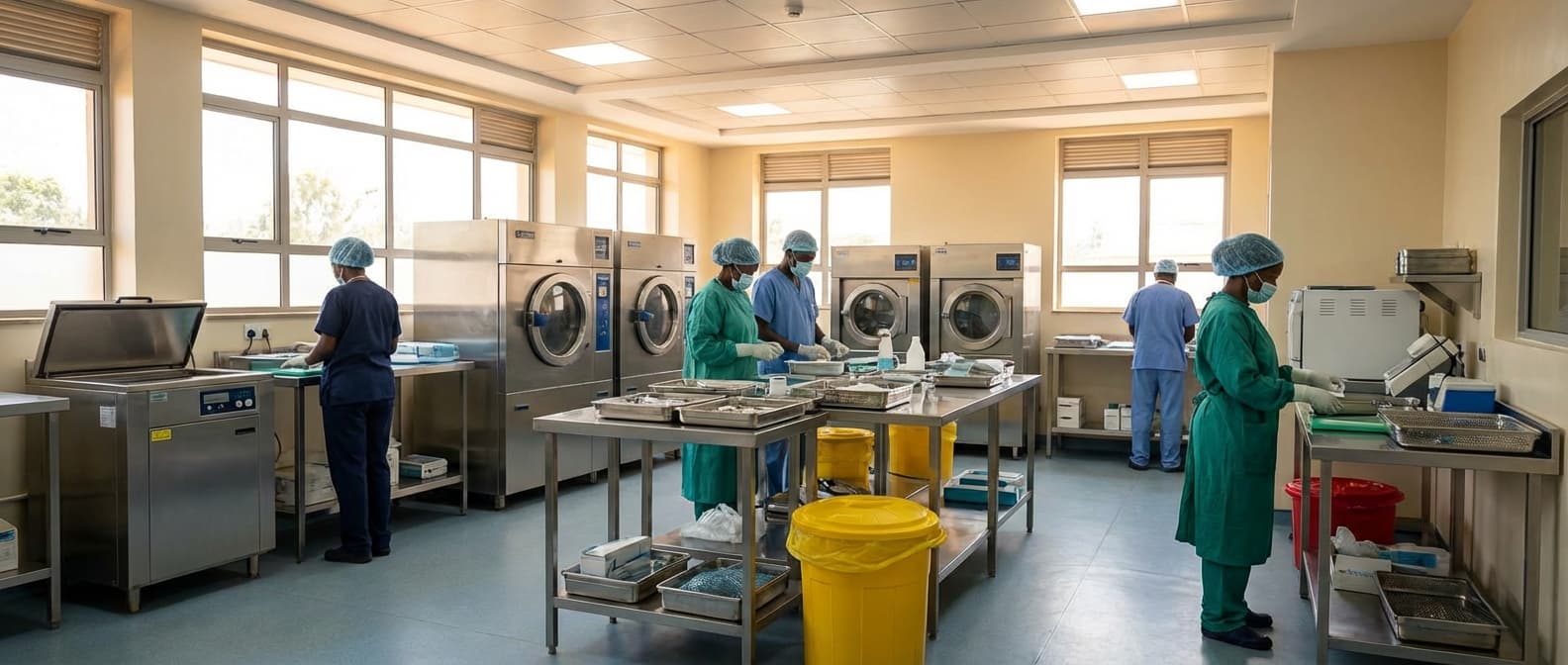
Medical Equipment Decontamination Service (Pre-Repair/Pre-Relocation) in Ivory Coast
Engineering Excellence & Technical Support
Medical Equipment Decontamination Service (Pre-Repair/Pre-Relocation) High-standard technical execution following OEM protocols and local regulatory frameworks.
Advanced Bioburden Analysis
Leveraging state-of-the-art microscopic and microbiological techniques to accurately identify and quantify bioburden on critical medical equipment, ensuring a comprehensive and evidence-based decontamination protocol tailored for Ivory Coast's specific healthcare environment. This meticulous approach guarantees optimal pre-repair and pre-relocation safety.
Pathogen-Specific Decontamination Protocols
Developing and implementing highly targeted decontamination procedures that address the prevalent pathogens and microbial risks specific to healthcare settings in Ivory Coast. Our expertise ensures effective elimination of infectious agents, safeguarding technicians during repairs and preventing cross-contamination during equipment relocation.
Regulatory Compliance & Documentation
Providing robust, auditable documentation of all decontamination processes, aligning with international best practices and local health regulations in Ivory Coast. This ensures full compliance for equipment undergoing repair or relocation, offering peace of mind and seamless integration back into clinical use.
What Is Medical Equipment Decontamination Service (Pre-repair/pre-relocation) In Ivory Coast?
Medical Equipment Decontamination Service (Pre-Repair/Pre-Relocation) in Ivory Coast refers to the specialized process of rendering medical devices safe for handling by third-party technicians or for transit during relocation. This service is critical for mitigating biological and chemical hazards associated with used medical equipment, thereby protecting personnel, preventing cross-contamination, and ensuring compliance with health and safety regulations within the Ivorian healthcare landscape. The decontamination process typically involves a systematic approach to cleaning, disinfection, and sometimes sterilization, tailored to the specific type of equipment and its potential bioburden.
| Need For Service | Who Needs It | Typical Use Cases | |||||
|---|---|---|---|---|---|---|---|
| Mitigation of biological and chemical risks to personnel involved in repair, maintenance, or relocation. | Healthcare facilities (hospitals, clinics, diagnostic laboratories, dental practices) in Ivory Coast. | Sending diagnostic imaging equipment (e.g., X-ray machines, ultrasound probes) for third-party repair. | Transferring surgical instruments or anesthesia equipment between departments or to off-site storage. | Relocating entire medical departments or facilities, necessitating the safe transit of diverse medical devices. | Returning leased medical equipment to the provider for servicing or end-of-lease inspection. | Receiving refurbished medical equipment from external vendors. | Addressing potential contamination from infectious diseases or hazardous substances. |
| Prevention of cross-contamination and the spread of healthcare-associated infections (HAIs). | Medical equipment manufacturers and service providers operating or servicing clients in Ivory Coast. | Disposal or recycling of end-of-life medical equipment. | Preparation of loaned or borrowed medical equipment for return. | ||||
| Compliance with national and international health, safety, and environmental regulations. | Logistics and transportation companies handling medical equipment shipments. | Researchers and academic institutions utilizing medical devices for studies. | |||||
| Preservation of equipment integrity and functionality by preventing damage from residual contaminants. | Any entity responsible for the lifecycle management of medical equipment in Ivory Coast. |
Key Components of Medical Equipment Decontamination Service (Pre-Repair/Pre-Relocation)
- Pre-Cleaning: Initial removal of gross soil, debris, and visible contaminants using appropriate detergents and water. This step is crucial for the efficacy of subsequent disinfection or sterilization.
- Disinfection: Application of chemical agents (e.g., quaternary ammonium compounds, high-level disinfectants) or physical methods (e.g., UV irradiation) to eliminate or inactivate most pathogenic microorganisms on the equipment's surfaces. The level of disinfection (low, intermediate, or high) is determined by the equipment's intended use and the potential risk of pathogen transmission.
- Sterilization (if applicable): For equipment with critical or semi-critical applications, a higher level of decontamination may be required, aiming for the complete elimination of all viable microorganisms, including spores. This can be achieved through autoclaving, ethylene oxide gas sterilization, or other validated methods.
- Drying: Thorough drying of the equipment after cleaning and disinfection/sterilization is essential to prevent microbial regrowth and corrosion.
- Packaging: Secure packaging of the decontaminated equipment to maintain its sterile or clean state during transport to the repair facility or during relocation.
- Documentation: Comprehensive record-keeping of the decontamination process, including the agents used, parameters applied, and personnel involved, for traceability and compliance.
- Hazardous Material Handling (if applicable): Specialized procedures for equipment contaminated with potent chemical agents, cytotoxic drugs, or radioactive isotopes, requiring adherence to specific safety protocols and waste disposal regulations.
Who Needs Medical Equipment Decontamination Service (Pre-repair/pre-relocation) In Ivory Coast?
In Ivory Coast, the demand for specialized medical equipment decontamination services prior to repair or relocation is crucial for ensuring the safety of both technicians and patients, as well as the integrity of the equipment itself. This service addresses the potential presence of biohazardous materials that can accumulate on medical devices during their use.
| Customer Type | Key Departments Involved | Specific Equipment Decontamination Needs | Reasons for Decontamination |
|---|---|---|---|
| Hospitals (Public & Private) | Sterilization and Central Sterile Supply Department (CSSD), Biomedical Engineering, Operating Rooms, Intensive Care Units (ICUs), Laboratories, Radiology/Imaging Departments | Surgical instruments, endoscopes, ventilators, patient monitors, imaging equipment (MRI, CT scanners), dialysis machines, laboratory analyzers. | Prevent cross-contamination during repair, ensure technician safety, maintain sterile environments, comply with infection control protocols. |
| Clinics and Diagnostic Centers | Laboratory Departments, Imaging Departments, minor procedure rooms | Blood analyzers, microscopes, ultrasound probes, ECG machines, minor surgical tools. | Protect staff from infectious agents, prevent contamination of new equipment, ensure accurate diagnostic results. |
| Specialized Medical Facilities | Specific to the specialty (e.g., Endoscopy Units, Cardiology Departments) | Endoscopic equipment, cardiac catheters, electrophysiology equipment, specialized surgical tools. | Maintain high-level disinfection standards, prevent transmission of resistant organisms, ensure patient safety during procedures. |
| Medical Equipment Manufacturers & Suppliers | Service and Repair Departments, Logistics and Warehousing | Any equipment returned for repair, refurbishment, or disposal. | Protect their technicians and facilities from biohazards, ensure compliance with environmental regulations, maintain product integrity. |
| Government Health Agencies | Procurement and Inventory Management, Public Health Surveillance | Equipment for public health campaigns, donated medical supplies, equipment from closed facilities. | Ensure safe handling and redistribution of equipment, prevent disease spread, manage national medical asset inventory. |
| NGOs in Healthcare | Program Management, Field Operations, Logistics | Medical equipment deployed in remote or challenging settings, equipment used in mobile clinics. | Address potential contamination in resource-limited environments, ensure equipment is safe for reuse or transfer, protect field staff. |
Target Customers and Departments in Ivory Coast for Pre-Repair/Pre-Relocation Medical Equipment Decontamination Service
- Hospitals (Public and Private)
- Clinics and Diagnostic Centers
- Specialized Medical Facilities (e.g., imaging centers, surgical centers)
- Medical Equipment Manufacturers and Suppliers (for returned or refurbished equipment)
- Government Health Agencies (for public health initiatives and inventory management)
- Non-Governmental Organizations (NGOs) involved in healthcare delivery
Medical Equipment Decontamination Service (Pre-repair/pre-relocation) Process In Ivory Coast
This document outlines the comprehensive workflow for the Medical Equipment Decontamination Service (Pre-Repair/Pre-Relocation) in Ivory Coast, ensuring that medical devices are safely and effectively decontaminated before undergoing repairs or relocation. This process adheres to strict hygiene protocols and regulatory requirements to prevent cross-contamination and protect personnel and the environment.
| Stage | Description | Key Activities | Responsible Party | Output/Deliverable |
|---|---|---|---|---|
| The process begins when a client (hospital, clinic, or medical equipment vendor) contacts the decontamination service provider with a request for decontamination of medical equipment scheduled for repair or relocation. | Receive inquiry, understand client's needs, identify equipment type and quantity, gather preliminary information on contamination level (if known), and assess urgency. | Client, Decontamination Service Provider (DSP) Sales/Operations Team | Initial understanding of service requirement, basic equipment details. |
| Based on the initial assessment, the DSP provides a detailed quotation and initiates the formal service agreement. | Develop detailed quotation based on equipment type, decontamination method, volume, and any special requirements. Prepare and present the service agreement outlining terms, conditions, pricing, and timelines. Client reviews and approves the agreement. Sign the contract. | DSP Sales/Operations Team, Client | Approved quotation, Signed Service Agreement. |
| The medical equipment is safely collected from the client's site or received at the DSP's designated facility. | Coordinate logistics for collection or ensure secure transportation to DSP facility. Conduct initial visual inspection upon receipt to note any obvious damage or discrepancies. Document equipment details (serial numbers, model numbers, condition). | DSP Logistics Team, DSP Receiving Staff, Client (for handover) | Documented receipt of equipment, equipment inventory list. |
| This is the core stage where the medical equipment undergoes a rigorous decontamination procedure tailored to its type and potential contaminants. | Perform pre-cleaning (if necessary). Select appropriate decontamination agents and methods (e.g., chemical disinfection, high-level disinfection, sterilization, or specialized cleaning). Execute the decontamination protocol according to manufacturer's recommendations and regulatory standards. Monitor and validate the decontamination process effectiveness. Document all steps, chemicals used, exposure times, and results. | DSP Decontamination Technicians, DSP Quality Control | Decontaminated medical equipment, Decontamination Logbook, Process validation records. |
| Upon successful decontamination, the DSP provides certification and all necessary documentation to the client. | Issue a Certificate of Decontamination for each piece of equipment, verifying that it has undergone the required decontamination process. Compile a comprehensive report including the decontamination logbook, validation results, and any other relevant documentation. | DSP Quality Assurance/Administrative Staff | Certificate of Decontamination, Decontamination Report. |
| The decontaminated equipment is formally released back to the client or to the designated repair/relocation agent. | Hand over the decontaminated equipment along with its certification and report to the client or their authorized representative. Ensure proper packaging for safe transport to the repair facility or new location. Obtain signed confirmation of receipt from the client or their agent. | DSP Logistics/Release Team, Client/Repair Agent | Released decontaminated equipment, Signed acknowledgment of receipt. |
Key Stages of the Medical Equipment Decontamination Service (Pre-Repair/Pre-Relocation) Workflow:
- Inquiry and Initial Assessment
- Quotation and Service Agreement
- Equipment Collection/Receipt
- Decontamination Process
- Certification and Documentation
- Equipment Release (for Repair/Relocation)
Medical Equipment Decontamination Service (Pre-repair/pre-relocation) Cost In Ivory Coast
The cost of medical equipment decontamination services in Ivory Coast, particularly for pre-repair or pre-relocation purposes, can vary significantly based on several key factors. These services are crucial for ensuring patient and staff safety, preventing cross-contamination, and complying with regulatory standards. The primary objective of pre-repair/relocation decontamination is to eliminate biological and chemical contaminants from the equipment before it is handled by technicians or moved to a new location. This process is often mandated by manufacturers and healthcare facility policies.
| Equipment Category | Estimated Cost Range (XOF - West African CFA Franc) | Notes |
|---|---|---|
| Small Diagnostic Equipment (e.g., Stethoscopes, BP Monitors, Thermometers) | 5,000 - 15,000 | Basic manual cleaning with disinfectants. |
| Mid-Size Diagnostic/Therapeutic Equipment (e.g., ECG Machines, Pulse Oximeters, Infusion Pumps) | 15,000 - 50,000 | May involve more thorough cleaning and disinfection protocols. |
| Large Imaging/Surgical Equipment (e.g., Ultrasound Machines, Endoscopes, Defibrillators) | 50,000 - 200,000+ | Complex cleaning, potentially involving specialized disinfectants or automated systems. Endoscopes often require high-level disinfection (HLD) which is more costly. |
| Very Large/Specialized Equipment (e.g., MRI, CT Scanners, Anesthesia Machines) | 200,000 - 1,000,000+ | Extensive decontamination, often requiring specialized external services with advanced technology and extensive safety protocols. May involve specific manufacturer recommendations. |
| Emergency/Urgent Decontamination | Additional 20% - 50% | Surcharges for rapid response and out-of-hours services. |
Factors Influencing Medical Equipment Decontamination Costs in Ivory Coast:
- Type and Size of Medical Equipment: Larger and more complex equipment, such as MRI machines or CT scanners, require more extensive cleaning, specialized chemicals, and longer processing times, thus increasing costs. Smaller items like stethoscopes or blood pressure monitors will naturally be less expensive to decontaminate.
- Level of Contamination: Heavily contaminated equipment, especially from infectious disease wards or emergency situations, necessitates more thorough and potentially aggressive decontamination procedures, leading to higher costs. This might involve multiple cleaning cycles or specialized disinfectants.
- Decontamination Method: The chosen method plays a significant role. Manual cleaning with disinfectants is generally less expensive than using advanced methods like ethylene oxide (EtO) sterilization, vaporized hydrogen peroxide (VHP), or gamma irradiation, which are typically used for high-level disinfection or sterilization and require specialized equipment and facilities.
- Turnaround Time (Urgency): Emergency decontamination services or requests for rapid turnaround will often incur premium charges compared to standard service timelines.
- Location and Accessibility: The geographical location of the healthcare facility within Ivory Coast and the accessibility of the equipment for the decontamination team can impact logistical costs, including transportation and personnel time.
- Service Provider's Reputation and Expertise: Established and reputable decontamination service providers with highly trained personnel and advanced equipment may command higher prices due to their reliability and quality of service.
- Volume of Equipment: Discounts may be offered for bulk decontamination services for a large number of equipment items from a single facility.
- Scope of Service: Whether the service includes just decontamination or also packaging, transportation, and documentation will affect the overall price.
- Regulatory Compliance and Certification: Ensuring that the decontamination process meets specific national or international standards (e.g., ISO, local health ministry guidelines) might require additional testing or validation, influencing the cost.
Affordable Medical Equipment Decontamination Service (Pre-repair/pre-relocation) Options
Ensuring medical equipment is properly decontaminated before repair or relocation is crucial for preventing the spread of pathogens and maintaining a safe healthcare environment. Our affordable medical equipment decontamination service offers pre-emptive solutions designed to be both effective and budget-friendly. We understand the financial pressures faced by healthcare facilities, which is why we've developed flexible service options and value bundles to cater to diverse needs and budgets.
| Service Bundle Name | Description | Typical Cost Savings | Ideal For |
|---|---|---|---|
| 'Prevent & Protect' Bundle | Includes decontamination for up to 5 standard medical devices (e.g., vital signs monitors, infusion pumps) pre-repair or pre-relocation. | 10-15% off per-unit cost | Smaller clinics, individual departments, or those with a moderate equipment turnover. |
| 'Comprehensive Care' Bundle | Decontamination for up to 15 diverse medical devices (including some specialized equipment like ventilators or imaging accessories) with a focus on preventing cross-contamination. | 15-20% off per-unit cost | Medium-sized hospitals, surgical centers, or facilities with high equipment usage. |
| 'Annual Assurance' Service Agreement | Scheduled quarterly or bi-annual decontamination of all specified equipment within a facility, prioritizing critical care devices. | Up to 25% off per-unit cost + priority scheduling | Healthcare systems, large hospitals, and facilities requiring continuous compliance and risk mitigation. |
| 'Bulk Decon' Discount | Customizable decontamination plan for large volumes of similar equipment (e.g., entire ward inventory before a departmental refresh). | Tiered pricing based on volume, starting at 20% off | Equipment manufacturers, large-scale renovations, or end-of-life equipment processing. |
Our Value Bundles & Cost-Saving Strategies
- Bundled Decontamination Packages: Combining decontamination services for multiple pieces of equipment or for a recurring schedule often results in significant discounts. This allows facilities to manage their budgets more predictably.
- Pre-Repair Assurance: Decontaminating equipment before it's sent for repair not only protects technicians but can also reduce potential repair delays and associated costs by ensuring a clean workspace.
- Pre-Relocation Safety: Prior to moving equipment between departments or facilities, thorough decontamination minimizes the risk of cross-contamination and ensures compliance with health regulations, avoiding costly penalties.
- Tiered Service Levels: We offer different levels of decontamination, from standard surface cleaning to advanced sterilization, allowing you to choose the most appropriate and cost-effective option for your specific equipment and risk assessment.
- Volume Discounts: The more equipment you have decontaminated, the lower the per-unit cost becomes. We incentivize larger decontamination projects.
- Scheduled Service Agreements: Establishing a regular decontamination schedule for your most frequently used or high-risk equipment can lead to preferential pricing and ensure continuous compliance.
- Educational Resources: We provide guidance on best practices for in-house cleaning protocols between professional decontaminations, empowering your staff and potentially reducing the frequency of external services needed.
- Specialized Cleaning Agents: We utilize a range of EPA-approved and medical-grade cleaning and disinfecting agents that are highly effective while also being cost-efficient, allowing us to pass savings on to our clients.
- On-Site vs. Off-Site Options: Depending on the volume and type of equipment, our on-site decontamination can save on transportation costs, while off-site services in our specialized facility may offer economies of scale for larger batches.
Verified Providers In Ivory Coast
Finding reliable healthcare in a foreign country can be a daunting task. In Ivory Coast, ensuring you are accessing verified and high-quality medical services is paramount. Franance Health stands out as a trusted partner, meticulously vetting healthcare providers to offer an unparalleled level of assurance to its users. This commitment to credential verification goes beyond a simple database check; it involves a comprehensive assessment of qualifications, licensing, specializations, and a track record of patient satisfaction. By choosing Franance Health, you are not just finding a doctor; you are connecting with a network of professionals rigorously vetted for their expertise, ethical practices, and dedication to patient well-being. Their credentials represent a promise of competence and a commitment to delivering the best possible care.
| Provider Type | Franance Health Verification Level | Benefits of Choosing Verified Providers |
|---|---|---|
| Hospitals | Gold Standard Verified | Access to state-of-the-art facilities, advanced medical equipment, and multidisciplinary teams. |
| Specialist Clinics | Silver Verified | Guaranteed expertise in specific medical fields, ensuring targeted and effective treatment. |
| General Practitioners | Bronze Verified | Reliable primary care physicians with confirmed general medical knowledge and patient-centered approach. |
| Diagnostic Centers | Quality Assured | Accurate and dependable diagnostic testing, crucial for proper diagnosis and treatment planning. |
Key Franance Health Credential Verification Processes:
- Verification of Medical Licenses and Certifications
- Validation of Educational Background and Specializations
- Review of Professional Experience and Hospital Affiliations
- Background Checks and Ethical Practice Assessments
- Ongoing Monitoring of Provider Performance and Patient Feedback
Scope Of Work For Medical Equipment Decontamination Service (Pre-repair/pre-relocation)
This Scope of Work (SOW) outlines the requirements for comprehensive medical equipment decontamination services to be performed prior to repair or relocation. The objective is to ensure the safety of personnel involved in repair/relocation and to prevent cross-contamination of sensitive environments. This SOW details the technical deliverables and standard specifications for these decontamination activities.
| Service Component | Description | Standard Specifications / Deliverables |
|---|---|---|
| Pre-Decontamination Assessment | Initial evaluation of the equipment to be decontaminated, including identification of potential biohazards, surfaces requiring attention, and any specific decontamination challenges. | Digital or written report detailing equipment make/model, serial number, intended use, potential bioburden (based on clinical history), and recommended decontamination agents and methods. Photographic evidence of equipment condition prior to decontamination. |
| Surface Decontamination | Cleaning and disinfection of all external and accessible internal surfaces of the medical equipment. | Utilize EPA-approved or equivalent broad-spectrum disinfectants effective against common healthcare-associated pathogens (e.g., bacteria, viruses, fungi). Minimum contact time for disinfectant as per manufacturer's instructions. Surfaces to include: housing, control panels, cables, accessories, and any exposed internal components accessible without disassembly beyond standard maintenance access. Verification of disinfectant efficacy via ATP testing or equivalent surface cleanliness indicator. |
| Disassembly/Access for Internal Decontamination (if applicable) | Careful disassembly of specific components or access panels as required to reach internal areas potentially contaminated by bodily fluids or infectious materials. This is only to be performed if the standard surface decontamination is insufficient for the identified biohazard. | Minimal disassembly to achieve access, documented with photographs. Reassembly must be to original functional state. Decontamination of internal components using appropriate methods and disinfectants. Verification of internal cleanliness through visual inspection and/or swab testing for bioburden. |
| Specialized Component Decontamination | Targeted decontamination of specific high-risk components (e.g., fluid pathways, ventilation systems, probes) based on equipment type and historical use. | Application of validated cleaning and disinfection protocols for specific component types. Use of specialized equipment or agents as necessary (e.g., ultrasonic cleaning, specific enzymatic cleaners for proteinaceous materials). Documentation of specific component decontamination procedures. |
| Drying and Airing | Ensuring all equipment surfaces and internal components are adequately dried after decontamination to prevent microbial growth and equipment damage. | Use of clean, lint-free cloths for drying. Air drying in a clean, controlled environment with adequate ventilation. Verification of dryness via visual inspection or moisture meter if deemed necessary. |
| Post-Decontamination Inspection and Verification | Final inspection to confirm that all surfaces have been decontaminated and that the equipment is ready for repair or relocation. | Visual inspection by qualified personnel. ATP testing or other appropriate bioburden indicator testing on critical surfaces to confirm reduction in microbial load below acceptable threshold. Certification of decontamination. |
| Waste Disposal | Proper segregation, containment, and disposal of all contaminated materials (e.g., wipes, gloves, used disinfectants) according to local, state, and federal regulations. | Use of biohazard bags and approved waste containers. Manifests or records of waste disposal as required by regulations. Documentation of waste disposal methods and locations. |
| Documentation and Certification | Comprehensive record-keeping of all decontamination activities performed. | Decontamination Certificate for each piece of equipment, including: equipment ID (make, model, serial number), date and time of decontamination, name of technician(s), disinfectants used, contact times, methods employed, verification results (e.g., ATP readings), and confirmation of readiness for repair/relocation. Photographs of equipment before and after decontamination. |
Key Objectives
- Ensure the safety of biomedical technicians, repair personnel, and relocation teams by rendering equipment biologically safe.
- Prevent the spread of infectious agents within healthcare facilities and during transit.
- Comply with all relevant health, safety, and environmental regulations.
- Document all decontamination procedures and confirm effectiveness.
Service Level Agreement For Medical Equipment Decontamination Service (Pre-repair/pre-relocation)
This Service Level Agreement (SLA) outlines the guaranteed response times and uptime for the Medical Equipment Decontamination Service provided by [Your Company Name] for pre-repair and pre-relocation decontamination. This agreement ensures that critical medical equipment can be safely and efficiently prepared for maintenance or relocation, minimizing downtime and operational disruption.
| Service Category | Service Level Objective (SLO) | Measurement | Guarantee/Uptime | |
|---|---|---|---|---|
| Decontamination Scheduling (Pre-Repair/Relocation) | Request Acknowledgement | Time from service request receipt to acknowledgement by [Your Company Name]'s dispatch. | Within 2 business hours. | |
| Decontamination Scheduling (Pre-Repair/Relocation) | Technician Arrival (On-site Decontamination) | Time from service request confirmation to technician arrival at the client's site. | Within 8 business hours for routine requests; within 4 business hours for urgent requests (as defined by client). | N/A (This is a scheduled service, not an uptime guarantee in the traditional sense. The guarantee is in timely initiation.) |
| Decontamination Process | Completion Time | Time taken to complete the decontamination process for a standard piece of equipment (as defined in Appendix A). | Within 4 business hours of technician arrival for standard equipment. Extended time for complex equipment will be communicated and agreed upon at scheduling. | N/A |
| Decontamination Process | Decontamination Effectiveness | Successful adherence to established decontamination protocols ensuring biological safety. | 100% effective decontamination for all completed services. | N/A |
| Post-Decontamination | Certification Issuance | Time from completion of decontamination to issuance of digital or hard copy certification. | Within 2 business hours of completion. |
Scope of Service
- Decontamination of specified medical equipment prior to scheduled repair.
- Decontamination of specified medical equipment prior to scheduled relocation.
- Adherence to manufacturer guidelines and relevant health and safety regulations.
- Provision of certification of decontamination upon completion.
Frequently Asked Questions

Ready when you are
Let's scope your Medical Equipment Decontamination Service (Pre-Repair/Pre-Relocation) in Ivory Coast project in Ivory Coast.

Scaling healthcare logistics and technical systems across the entire continent.