
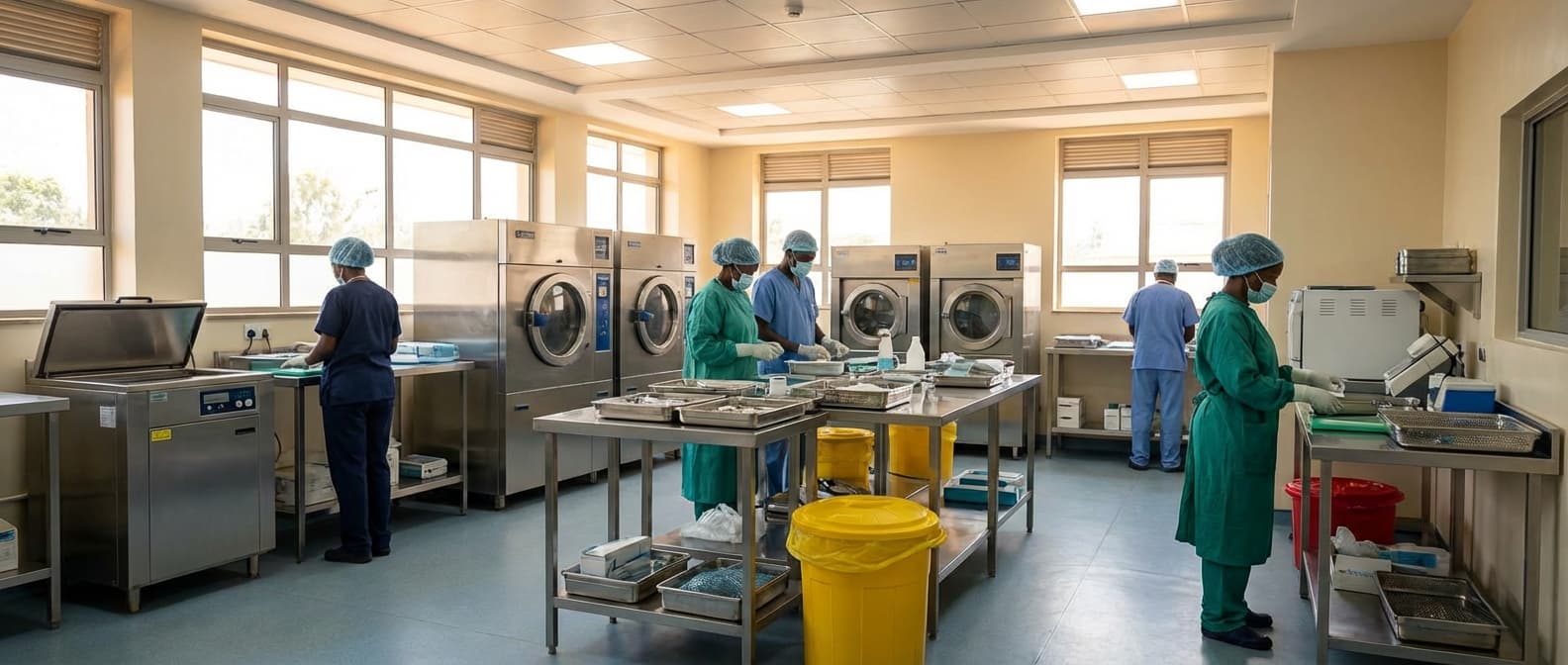
Infection-Control Readiness Support Service for Reusable Equipment in Ivory Coast
Engineering Excellence & Technical Support
Infection-Control Readiness Support Service for Reusable Equipment High-standard technical execution following OEM protocols and local regulatory frameworks.
Advanced Steam Sterilization Systems
Deploying state-of-the-art autoclaves with validated cycles to ensure terminal sterilization of critical and semi-critical reusable medical devices, exceeding WHO guidelines and reducing the risk of healthcare-associated infections.
Comprehensive Staff Training & Competency
Implementing a multi-modal training program for healthcare personnel on proper decontamination, sterilization, and aseptic handling techniques for reusable equipment, with ongoing competency assessments and certification to maintain high standards of practice.
Real-time Equipment Tracking & Traceability
Utilizing a robust digital platform for real-time monitoring of reusable equipment workflow, from point of use to reprocessing and return to service, ensuring complete traceability and facilitating rapid response to any breaches in the sterilization chain.
What Is Infection-control Readiness Support Service For Reusable Equipment In Ivory Coast?
The Infection-Control Readiness Support Service for Reusable Equipment in Ivory Coast refers to a comprehensive program designed to ensure that healthcare facilities in the country possess the necessary infrastructure, trained personnel, protocols, and consumables to safely and effectively clean, disinfect, and sterilize reusable medical devices. This service is crucial for preventing healthcare-associated infections (HAIs) arising from the inadequate reprocessing of instruments and equipment. It aims to enhance the capacity of healthcare providers to adhere to national and international infection prevention and control (IPC) standards, thereby improving patient safety and the overall quality of healthcare delivery.
| Stakeholder Group | Rationale for Need | Typical Use Cases |
|---|---|---|
| Public Hospitals and Clinics | High volume of patients, often with limited resources; critical for preventing HAIs in a resource-constrained setting. | Reprocessing of surgical instruments, endoscopic equipment, diagnostic devices (e.g., stethoscopes, blood pressure cuffs), and dental instruments. |
| Private Healthcare Facilities | Varying levels of infrastructure and training; need to meet quality standards and patient expectations. | Sterilization of instruments for elective surgeries, reprocessing of specialized medical devices, and ensuring compliance with regulatory requirements. |
| Non-Governmental Organization (NGO) Health Centers | Often operate in remote or underserved areas; may lack standardized IPC practices. | Establishing basic reprocessing capabilities for essential medical tools, training local staff in emergency settings, and supporting mobile clinics. |
| Maternal and Child Health Centers | Focus on sterile delivery equipment and instruments for neonatal care. | Ensuring the safe reprocessing of forceps, scissors, and other instruments used in childbirth and infant care. |
| Diagnostic Laboratories | Reprocessing of reusable laboratory equipment and glassware. | Sterilization of culture media preparation tools, dissection instruments, and diagnostic glassware. |
Key Components of the Service:
- Risk Assessment and Needs Analysis: Evaluating existing reprocessing practices, infrastructure limitations, and available resources within healthcare facilities.
- Development and Implementation of Standard Operating Procedures (SOPs): Creating and disseminating evidence-based SOPs for cleaning, disinfection, and sterilization of all categories of reusable medical equipment.
- Infrastructure Improvement and Equipment Procurement: Advising on and facilitating the acquisition of appropriate reprocessing equipment (e.g., autoclaves, washer-disinfectors, ultrasonic cleaners) and ensuring adequate water and power supply.
- Training and Capacity Building: Conducting training programs for healthcare workers (nurses, technicians, environmental services staff) on principles of IPC, correct reprocessing techniques, and safe handling of chemicals.
- Supply Chain Management: Establishing robust systems for the procurement and inventory management of essential consumables like detergents, disinfectants, sterile packaging materials, and indicator systems.
- Monitoring and Evaluation: Implementing systems for regular monitoring of reprocessing processes, equipment functionality, and staff adherence to protocols, with feedback mechanisms for continuous improvement.
- Quality Assurance and Validation: Ensuring that sterilization processes are validated and routinely monitored using appropriate biological and chemical indicators.
Who Needs Infection-control Readiness Support Service For Reusable Equipment In Ivory Coast?
Infection-control readiness support services for reusable equipment in Ivory Coast are crucial for a variety of healthcare facilities. These services ensure that reusable medical devices are cleaned, disinfected, and sterilized effectively, preventing the spread of healthcare-associated infections (HAIs). This is particularly important in a context where resources and training might be limited, making standardized and reliable infection control practices vital. The target customers are diverse, ranging from large public hospitals to smaller private clinics, all of whom handle reusable medical equipment on a daily basis.
| Target Customer Type | Key Departments Involved |
|---|---|
| Public Hospitals | Central Sterilization Supply Department (CSSD), Operating Theaters, Intensive Care Units (ICUs), Emergency Departments, Outpatient Clinics, Maternity Wards, Laboratories |
| Private Hospitals | Central Sterilization Supply Department (CSSD), Operating Rooms, Intensive Care Units (ICUs), Emergency Rooms, Specialized Clinics (e.g., cardiology, oncology), Outpatient Departments |
| Specialty Clinics | Sterilization Units, Treatment Rooms, Procedure Rooms, Dental Surgeries, Ophthalmic Surgery Rooms |
| Surgical Centers | Sterilization Units, Operating Rooms, Recovery Rooms |
| Health Centers and Dispensaries | Treatment Rooms, Minor Procedure Areas, Pharmacy (for instrument handling if applicable) |
| NGO Health Facilities | All clinical departments handling reusable instruments and equipment, often with a focus on primary care and specific health programs |
| Research Institutions with Clinical Components | Clinical research units, laboratories, and any departments involved in patient care or specimen handling that utilize reusable equipment |
Target Customers and Departments for Infection-Control Readiness Support Services for Reusable Equipment in Ivory Coast
- Public Hospitals
- Private Hospitals
- Specialty Clinics (e.g., dental, ophthalmology)
- Surgical Centers
- Health Centers and Dispensaries
- Non-Governmental Organization (NGO) Health Facilities
- Research Institutions with Clinical Components
Infection-control Readiness Support Service For Reusable Equipment Process In Ivory Coast
This service aims to enhance infection control practices for reusable medical equipment in Ivory Coast by providing comprehensive support, from initial inquiry to the successful execution of improved processes. The workflow is designed to be structured, collaborative, and tailored to the specific needs of healthcare facilities.
| Stage | Description | Key Activities | Deliverables | Responsible Parties |
|---|---|---|---|---|
| Inquiry & Needs Assessment | Initial contact from a healthcare facility seeking support for their reusable equipment infection control processes. | Facility contacts service provider. Initial discussion of needs, challenges, and objectives. Identification of key stakeholders. | Understanding of facility's current situation, preliminary identification of needs. | Healthcare Facility, Service Provider |
| Proposal & Agreement | Based on the initial assessment, a tailored proposal is developed outlining the scope of work, methodology, timeline, and costs. | Service provider develops a detailed proposal. Proposal review and discussion with the facility. Negotiation and finalization of contract/agreement. | Formal proposal, Signed agreement/contract. | Service Provider, Healthcare Facility |
| On-site Assessment & Gap Analysis | In-depth evaluation of the facility's current reusable equipment processing workflow and infection control practices. | Observation of current practices. Interviews with staff. Review of existing protocols and documentation. Assessment of infrastructure and equipment. | Detailed assessment report highlighting strengths, weaknesses, and areas for improvement. Identification of specific gaps in infection control readiness. | Service Provider, Healthcare Facility Staff |
| Development of Customized Plan | Creation of a specific, actionable plan to address identified gaps and improve infection control for reusable equipment. | Development of revised standard operating procedures (SOPs). Recommendations for infrastructure upgrades or equipment procurement. Design of training modules. | Comprehensive Infection Control Readiness Plan. Revised SOPs. Training curriculum. | Service Provider, with input from facility |
| Training & Capacity Building | Empowering the facility's staff with the knowledge and skills required to implement and sustain improved infection control practices. | Delivery of theoretical and practical training sessions for all relevant staff. Demonstration of correct techniques. Competency assessments. | Trained staff. Increased awareness of infection control principles. Improved practical skills. | Service Provider, Healthcare Facility Staff |
| Implementation Support & Monitoring | Assistance during the initial phase of implementing the new plan and ongoing monitoring of its effectiveness. | On-site supervision and guidance during implementation. Regular follow-up visits. Data collection on key performance indicators (KPIs). Troubleshooting and problem-solving. | Successful initial implementation of new processes. Early identification and resolution of issues. Performance data. | Service Provider, Healthcare Facility Staff |
| Evaluation & Continuous Improvement | Assessing the long-term impact of the implemented changes and establishing mechanisms for ongoing improvement. | Post-implementation evaluation of effectiveness. Refinement of processes based on feedback and data. Development of sustainability strategies. Knowledge transfer to facility leadership. | Final evaluation report. Recommendations for continuous improvement. Sustainable infection control practices. | Service Provider, Healthcare Facility Leadership |
Workflow Stages
- Inquiry & Needs Assessment
- Proposal & Agreement
- On-site Assessment & Gap Analysis
- Development of Customized Plan
- Training & Capacity Building
- Implementation Support & Monitoring
- Evaluation & Continuous Improvement
Infection-control Readiness Support Service For Reusable Equipment Cost In Ivory Coast
The cost of infection-control readiness support services for reusable equipment in Ivory Coast is influenced by several key pricing factors. These services are crucial for healthcare facilities to ensure that reusable medical devices, such as surgical instruments, endoscopes, and respiratory equipment, are properly cleaned, disinfected, and sterilized to prevent healthcare-associated infections (HAIs). The pricing is generally determined on a project basis, subscription model, or per-equipment basis, depending on the scope and duration of the service.
Key Pricing Factors:
- Scope of Services: This is the most significant driver of cost. It can range from basic training and protocol development to comprehensive outsourcing of the entire reprocessing cycle. Services might include:
* **Consultation and Assessment:** Evaluating existing protocols, infrastructure, and staff competency.
* **Protocol Development and Implementation:** Creating or refining Standard Operating Procedures (SOPs) for cleaning, disinfection, sterilization, and storage.
* **Staff Training:** Educating healthcare professionals on best practices and regulatory requirements.
* **Equipment Procurement and Maintenance:** Advising on or providing the necessary cleaning and sterilization equipment and ensuring its ongoing functionality.
* **Quality Assurance and Monitoring:** Implementing systems for tracking and verifying reprocessing effectiveness.
* **Waste Management:** Proper disposal of contaminated materials.
- Type and Volume of Reusable Equipment: Different types of equipment have varying reprocessing requirements and complexities. For instance, complex endoscopic equipment often requires more specialized and costly reprocessing than simple surgical instruments. The sheer volume of equipment requiring reprocessing will also impact the overall cost.
- Duration of Engagement: Whether the service is a one-time project (e.g., initial setup or audit) or an ongoing managed service will significantly affect the pricing. Long-term contracts often come with discounted rates.
- Provider Expertise and Reputation: Specialized companies or highly experienced consultants with a proven track record in infection control will command higher fees. Their expertise in regulatory compliance and advanced reprocessing techniques is valuable.
- Location within Ivory Coast: While Abidjan, the economic capital, might have higher operational costs for service providers, the actual cost of service delivery might be less dependent on the specific city and more on the facility's accessibility and remoteness.
- Level of Customization: Tailoring services to the specific needs and existing infrastructure of a healthcare facility will influence the cost. Off-the-shelf solutions are typically less expensive than bespoke programs.
- Regulatory Compliance Requirements: Adherence to national and international infection control standards (e.g., WHO guidelines, national health ministry regulations) can influence the complexity and therefore the cost of the required support.
- Technology and Equipment Involved: If the service includes the supply or maintenance of advanced sterilization equipment (e.g., autoclaves, low-temperature sterilizers), this will add to the cost. The sophistication of monitoring and tracking software also plays a role.
Pricing Ranges in Local Currency (West African CFA Franc - XOF):
It is challenging to provide precise figures without a detailed needs assessment, as prices can vary significantly. However, based on general market understanding for professional services in Ivory Coast, the following ranges can be considered. These are indicative and subject to negotiation.
- Basic Consultation & Protocol Review (Per Day): This might involve a consultant spending a day or two assessing current practices and suggesting improvements.
* **Range:** 50,000 XOF - 150,000 XOF
- Staff Training Session (Per Session/Group): A half-day or full-day training for a team.
* **Range:** 75,000 XOF - 250,000 XOF
- Comprehensive Protocol Development & Initial Implementation (One-Time Project): This could involve several weeks of work, including assessment, protocol writing, and initial staff training for a medium-sized facility.
* **Range:** 500,000 XOF - 2,000,000 XOF
- Ongoing Support & Quality Assurance (Monthly Subscription): This would typically involve regular site visits, remote monitoring, ongoing training, and reporting for a healthcare facility.
* **Range:** 150,000 XOF - 750,000 XOF per month, depending on the scale of operations and the level of service.
- Full Outsourcing of Reprocessing Services (Monthly/Per Case): In rare cases, facilities might outsource the entire reprocessing function. This is highly dependent on the volume and complexity of equipment.
* **Range:** Highly variable, potentially starting from 1,000,000 XOF per month and escalating significantly with volume and complexity.
It is essential for healthcare facilities in Ivory Coast to obtain detailed proposals from multiple reputable service providers, clearly outlining the scope of work, deliverables, timelines, and associated costs, to ensure they select the most appropriate and cost-effective solution for their infection-control readiness needs.
| Service Type | Estimated Cost Range (XOF) | Notes |
|---|---|---|
| Basic Consultation & Protocol Review (Per Day) | 50,000 - 150,000 | For initial assessment or targeted advice. |
| Staff Training Session (Per Session/Group) | 75,000 - 250,000 | Covers training for a team on specific procedures. |
| Comprehensive Protocol Development & Initial Implementation (One-Time Project) | 500,000 - 2,000,000 | For establishing or overhauling infection control processes. |
| Ongoing Support & Quality Assurance (Monthly Subscription) | 150,000 - 750,000 | Includes regular monitoring, reporting, and continuous improvement. |
| Full Outsourcing of Reprocessing Services (Monthly/Per Case) | Starting from 1,000,000+ | Highly variable; dependent on volume and complexity of equipment. |
Factors Influencing Infection-Control Readiness Support Service Costs in Ivory Coast
- Scope of Services (Consultation, Training, Protocol Development, Equipment Management, QA)
- Type and Volume of Reusable Equipment
- Duration of Engagement (Project-based vs. Ongoing)
- Provider Expertise and Reputation
- Geographic Location within Ivory Coast (though less significant than scope)
- Level of Customization Required
- Regulatory Compliance Standards to be Met
- Technology and Equipment Involved in Reprocessing
Affordable Infection-control Readiness Support Service For Reusable Equipment Options
Our Affordable Infection-Control Readiness Support Service for Reusable Equipment Options provides a vital solution for healthcare facilities navigating the complexities of sterilization, disinfection, and compliance. We understand that maintaining robust infection control protocols for reusable medical devices is paramount but can also be a significant financial and operational burden. This service is designed to offer flexible, cost-effective support, ensuring your facility remains safe, compliant, and efficient.
We offer 'Value Bundles' as a core component of our service, allowing you to select a comprehensive package of support tailored to your specific needs and budget. These bundles are designed to provide predictable costs and maximize the return on your investment in infection control. We also implement several cost-saving strategies throughout our service delivery to further enhance affordability.
| Value Bundle | Included Services | Key Benefits | Estimated Cost Savings |
|---|---|---|---|
| Core Readiness Bundle | Basic sterilization monitoring, routine equipment checks, essential staff training modules. | Foundation for safe reusable equipment handling, enhanced staff awareness, reduced risk of basic compliance failures. | Up to 15% reduction in reprocessing errors and associated rework costs. |
| Advanced Compliance Bundle | Core bundle services + advanced disinfection protocols, detailed equipment validation, customized compliance audits, on-demand expert consultation. | Ensured adherence to complex regulations, optimized reprocessing efficiency, expert guidance for challenging scenarios, improved patient safety. | Up to 25% reduction in regulatory non-compliance fines and potential lawsuits; optimized staff time by 10%. |
| Total Operational Excellence Bundle | Advanced bundle services + proactive equipment lifecycle management, integrated digital tracking system, comprehensive risk assessment and mitigation strategies, emergency preparedness planning. | Maximized equipment lifespan, real-time visibility and control over reusable assets, minimized infection outbreaks, robust business continuity. | Up to 30% reduction in capital expenditure for equipment replacement; improved operational uptime by 20%; significant reduction in the cost of managing healthcare-associated infections (HAIs). |
Key Features of Our Service
- Comprehensive Reusable Equipment Support: Covering sterilization, disinfection, maintenance, and tracking of reusable medical devices.
- Regulatory Compliance Assistance: Ensuring adherence to all relevant healthcare regulations and guidelines.
- Staff Training & Education: Empowering your team with the latest infection control best practices.
- Technology Integration: Leveraging digital solutions for improved tracking, data management, and workflow efficiency.
- On-Demand Expertise: Access to certified infection control specialists when you need them.
- Proactive Risk Management: Identifying and mitigating potential infection control risks before they become issues.
Verified Providers In Ivory Coast
In Ivory Coast's burgeoning healthcare landscape, identifying trustworthy and credentialed providers is paramount for individuals seeking quality medical services. Franance Health has emerged as a leading accreditation and verification body, setting a high standard for healthcare professionals and institutions. Their rigorous vetting process ensures that accredited providers meet stringent criteria, offering patients peace of mind and confidence in their healthcare choices.
| Category | Franance Health Verification Criteria | Benefits for Patients |
|---|---|---|
| Medical Professionals | Valid licenses, recognized degrees and certifications, demonstrated clinical competency, adherence to ethical guidelines. | Confidence in the doctor's or specialist's qualifications and ability to provide safe and effective treatment. |
| Healthcare Facilities (Clinics, Hospitals) | Adequate infrastructure, modern medical equipment, adherence to hygiene and safety protocols, qualified staffing, effective patient management systems. | Assurance of a safe and well-equipped environment for medical procedures and recovery. |
| Specialized Services | Demonstrated expertise in specific medical fields (e.g., cardiology, oncology, pediatrics), advanced training, specialized equipment availability. | Access to high-quality care for complex medical conditions from providers with proven expertise. |
| Patient Experience | Clear communication protocols, respectful patient interaction, efficient service delivery, effective complaint resolution mechanisms. | A more positive and transparent healthcare journey with attentive and responsive medical staff. |
Why Franance Health Credentials Represent the Best Choice:
- Unwavering Commitment to Quality: Franance Health's accreditation signifies a provider's dedication to maintaining the highest standards of medical practice, patient care, and operational excellence.
- Rigorous Verification Process: Applicants undergo a comprehensive evaluation of their qualifications, experience, ethical conduct, and adherence to best practices, ensuring only competent and reliable providers are recognized.
- Patient Safety and Trust: By choosing a Franance Health-verified provider, patients can be assured they are receiving care from professionals who have been thoroughly vetted for their competence and commitment to safety.
- Continuous Improvement: Accreditation is not a one-time achievement. Franance Health mandates ongoing compliance and regular reviews, encouraging a culture of continuous improvement among its accredited entities.
- International Recognition: Franance Health's standards are often aligned with international best practices, providing a level of assurance that resonates with both local and expatriate communities.
- Access to Specialized Expertise: The verification process often highlights providers with specialized skills and advanced medical knowledge, making it easier for patients to find the right care for their specific needs.
Scope Of Work For Infection-control Readiness Support Service For Reusable Equipment
This Scope of Work (SOW) outlines the requirements for Infection-Control Readiness Support Services for Reusable Equipment. The service aims to ensure that healthcare facilities have robust processes and systems in place to prevent the transmission of infections through the reprocessing and use of reusable medical devices. This SOW details the technical deliverables and standard specifications required from the service provider.
| Deliverable | Description | Standard Specification/Acceptance Criteria | Timeline |
|---|---|---|---|
| Initial Assessment Report | A comprehensive report detailing the current state of reusable equipment reprocessing, including policy review, staff competency assessment, workflow analysis, equipment inventory, and environmental assessment. | The report shall include a gap analysis against relevant national and international guidelines (e.g., CDC, WHO, AAMI ST standards). It must identify specific areas of non-compliance and potential risks. Findings should be presented with clear data and evidence. Minimum of 5 actionable recommendations. | Within 4 weeks of project commencement |
| Policy and Procedure Review & Development | Review of existing policies and procedures for cleaning, disinfection, sterilization, and storage of reusable equipment. Development of new or revised policies and procedures as needed. | Policies and procedures must align with current best practices, regulatory requirements, and manufacturer instructions for use (IFUs). Shall include clear roles and responsibilities, step-by-step instructions, and documented validation processes. Approved by facility IPC committee. | Within 8 weeks of project commencement |
| Staff Training Program & Materials | Development and delivery of a comprehensive training program for all staff involved in reusable equipment reprocessing. This includes initial training and development of materials for ongoing competency assessment. | Training shall cover principles of IPC, specific reprocessing steps for various equipment types, use of reprocessing equipment, documentation, and troubleshooting. Training materials must be evidence-based and presented in clear, understandable language (e.g., presentations, handbooks, visual aids). Training evaluation methods (e.g., post-tests, practical assessments) must be included. Minimum of 80% pass rate for competency assessments. | Within 10 weeks of project commencement |
| Workflow Optimization Plan | Development of a plan to optimize the workflow for reusable equipment reprocessing to improve efficiency, reduce the risk of contamination, and ensure timely availability of sterile equipment. | The plan shall include visual process maps, identification of bottlenecks, recommended changes to layout or equipment placement, and strategies for efficient material flow. Must demonstrate a potential for at least 15% improvement in turnaround time for critical equipment. | Within 6 weeks of project commencement |
| Sterilization Monitoring Program Review | Review of the facility's current sterilization monitoring program, including biological and chemical indicator usage, interpretation of results, and incident management. | Program review must verify adherence to manufacturer's IFUs for indicators and relevant standards (e.g., ISO 13485, AAMI ST series). Must include a clear protocol for responding to positive biological indicators or failed chemical indicators. | Within 5 weeks of project commencement |
| Equipment Maintenance & Calibration Log Review | Review of logs and schedules for maintenance and calibration of all reprocessing equipment (e.g., washers, sterilizers, ultrasonic cleaners). | Logs must demonstrate compliance with manufacturer recommendations and relevant regulatory requirements. Records should be complete, legible, and up-to-date. A proposed preventative maintenance schedule shall be provided if existing is inadequate. | Within 4 weeks of project commencement |
| Risk Management Report | Identification and assessment of potential risks associated with reusable equipment reprocessing, along with proposed mitigation strategies. | Report shall utilize a standardized risk assessment matrix (e.g., FMEA). Identified risks must be prioritized, and mitigation strategies must be practical and cost-effective. A documented action plan for high-priority risks. | Within 7 weeks of project commencement |
| Final Recommendation Report & Implementation Plan | A consolidated report outlining all recommendations from previous deliverables, along with a detailed implementation plan for proposed changes. | The report shall prioritize recommendations based on impact and feasibility. The implementation plan must include timelines, responsible parties, resource requirements, and key performance indicators (KPIs) for monitoring success. A post-implementation review plan. | Within 12 weeks of project commencement |
| Post-Implementation Audit (Optional) | An audit to assess the effectiveness of implemented changes and ensure sustained compliance with IPC standards. | The audit will evaluate key performance indicators (KPIs) identified in the implementation plan and verify adherence to revised policies and procedures through direct observation and record review. | To be scheduled 3-6 months post-implementation |
Key Objectives
- To assess and enhance the current infection prevention and control (IPC) practices for reusable equipment.
- To ensure compliance with relevant national and international IPC guidelines and standards.
- To identify and mitigate risks associated with the reprocessing of reusable equipment.
- To provide actionable recommendations for continuous improvement in IPC programs for reusable equipment.
- To equip facility staff with the knowledge and skills to maintain high standards of reusable equipment reprocessing.
Service Level Agreement For Infection-control Readiness Support Service For Reusable Equipment
This Service Level Agreement (SLA) outlines the response times and uptime guarantees for the Infection-Control Readiness Support Service for Reusable Equipment. This service is designed to ensure timely assistance and availability of critical support for maintaining infection control standards for reusable medical equipment.
| Service Tier | Incident Severity | Initial Response Time | Resolution Target Time | Uptime Guarantee |
|---|---|---|---|---|
| Critical | Catastrophic failure or widespread risk to patient safety due to reusable equipment infection control breach. | 15 minutes | 2 hours | 99.9% per month |
| High | Significant operational impact or potential risk to patient safety affecting a large number of users or critical equipment. | 1 hour | 4 hours | 99.5% per month |
| Medium | Moderate operational impact or potential risk to patient safety affecting a limited number of users or non-critical equipment. | 4 business hours | 8 business hours | 99.0% per month |
| Low | Minor operational impact, informational requests, or pre-emptive maintenance recommendations. | 1 business day | 3 business days | 98.0% per month |
Key Service Components
- 24/7 Availability: The support service operates around the clock, every day of the year.
- Defined Response Times: Specific timeframes for initial response and resolution are established.
- Uptime Guarantees: Assurances regarding the continuous availability of the support service.
- Escalation Procedures: Clear pathways for escalating issues that exceed standard resolution times.
- Reporting and Review: Regular reporting on service performance against agreed-upon metrics.
Frequently Asked Questions

Ready when you are
Let's scope your Infection-Control Readiness Support Service for Reusable Equipment in Ivory Coast project in Ivory Coast.

Scaling healthcare logistics and technical systems across the entire continent.