
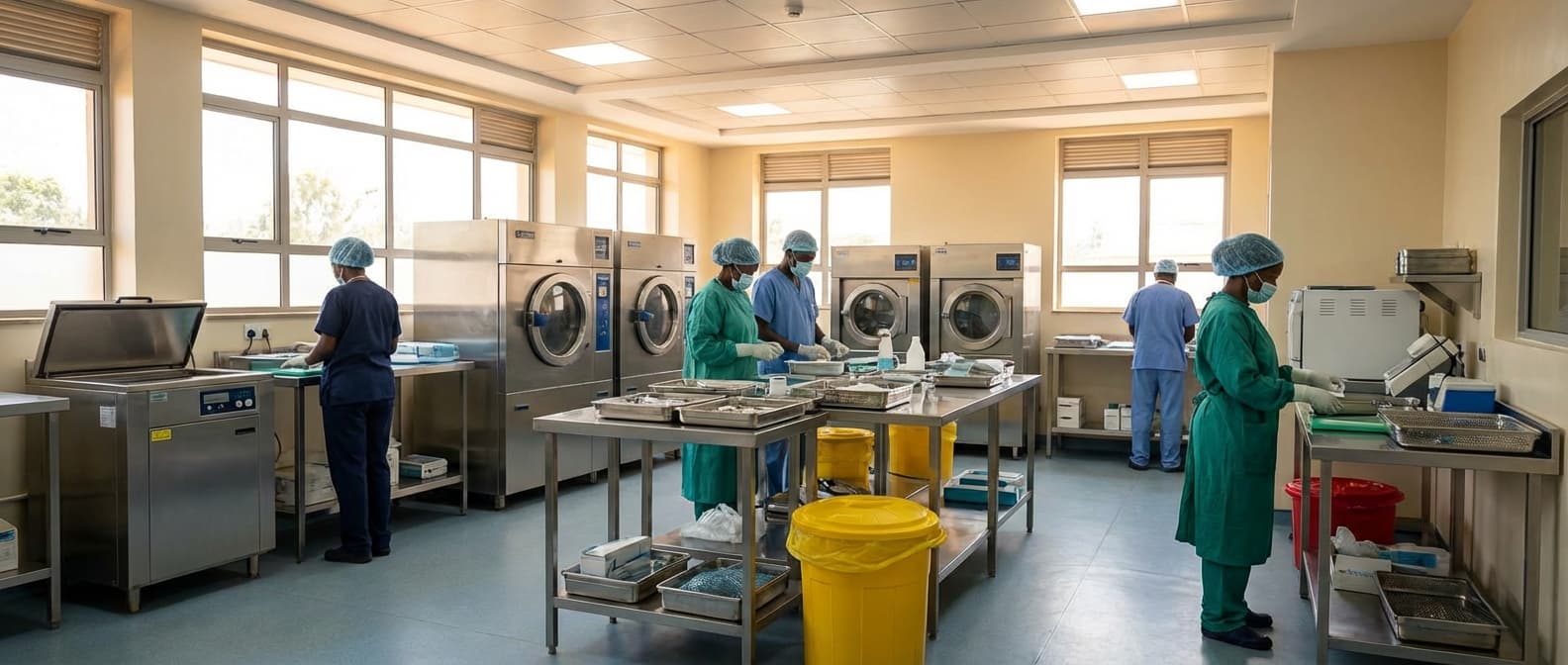
Endoscope Reprocessing Equipment Support Service in Ivory Coast
Engineering Excellence & Technical Support
Endoscope Reprocessing Equipment Support Service High-standard technical execution following OEM protocols and local regulatory frameworks.
Expert Technical Support & On-Site Repair
Rapid and expert technical support for your endoscope reprocessing equipment. Our certified technicians in Abidjan and other key Ivorian cities provide on-site diagnostics, troubleshooting, and prompt repairs to minimize downtime and ensure continuous operational efficiency.
Proactive Maintenance & Calibration Services
Extend the lifespan and optimize the performance of your reprocessing systems with our proactive maintenance and calibration services. We offer scheduled service visits and calibration checks to ensure your equipment meets the highest standards of safety and efficacy, adhering to international guidelines.
Genuine Spare Parts & Inventory Management
Access to a comprehensive inventory of genuine spare parts for all major endoscope reprocessing equipment brands. We ensure the availability of critical components and offer efficient inventory management solutions to expedite repairs and prevent future disruptions in Ivory Coast.
What Is Endoscope Reprocessing Equipment Support Service In Ivory Coast?
Endoscope reprocessing equipment support service in Ivory Coast refers to the specialized provision of maintenance, repair, calibration, and validation services for automated endoscope reprocessors (AERs) and associated ancillary equipment used in healthcare facilities. This service ensures the safe, effective, and compliant reprocessing of flexible endoscopes, critical for preventing healthcare-associated infections (HAIs) and maintaining patient safety. The service encompasses scheduled preventive maintenance to minimize downtime and prevent equipment failure, as well as on-demand emergency repairs to address unexpected malfunctions. It also includes essential calibration and validation procedures to guarantee that the AERs are functioning within manufacturer specifications and meeting regulatory requirements for high-level disinfection (HLD) or sterilization.
| Who Needs the Service? | Typical Use Cases |
|---|---|
| Hospitals (public and private) | Routine maintenance of AERs used for gastrointestinal endoscopes (gastroscopy, colonoscopy, sigmoidoscopy). |
| Surgical Centers / Outpatient Clinics performing endoscopic procedures | Repair of AERs used for bronchoscopes, laryngoscopes, and other specialized endoscopes. |
| Diagnostic Imaging Centers with Endoscopy Units | Calibration and validation of AERs to meet accreditation and infection control standards. |
| Central Sterilization Supply Departments (CSSDs) with Endoscopy Reprocessing Capabilities | Emergency breakdown services for AERs to maintain surgical schedule continuity. |
| Healthcare Facilities with limited in-house technical expertise | Ensuring compliance with national and international guidelines for endoscope reprocessing (e.g., CDC, WHO recommendations). |
Key Components of Endoscope Reprocessing Equipment Support Service:
- Preventive Maintenance (PM): Scheduled inspections, cleaning, lubrication, and replacement of wear-and-tear parts to ensure optimal performance and longevity of AERs.
- Corrective Maintenance (CM): On-site troubleshooting, diagnosis, and repair of equipment malfunctions by qualified technicians.
- Calibration: Adjustment of critical parameters (e.g., temperature, cycle times, flow rates) to ensure adherence to manufacturer specifications and regulatory standards.
- Validation: Process verification to confirm that the AERs consistently achieve the intended level of microbial inactivation (e.g., HLD) under specified operating conditions.
- Technical Support: Remote or on-site assistance for operational queries, error code interpretation, and best practice guidance.
- Spare Parts Management: Ensuring availability of genuine and compatible spare parts for prompt repairs.
- Training and Education: Providing training for hospital biomedical engineering staff and reprocessing technicians on proper equipment operation, maintenance, and troubleshooting.
Who Needs Endoscope Reprocessing Equipment Support Service In Ivory Coast?
The demand for endoscope reprocessing equipment support services in Ivory Coast is driven by the increasing adoption of endoscopic procedures and the critical need for ensuring patient safety. Effective reprocessing of endoscopes is paramount to prevent the transmission of infections and maintain the longevity of expensive medical equipment. This service is essential for healthcare facilities that utilize flexible endoscopes for diagnostic and therapeutic interventions.
| Target Customer Type | Key Departments Requiring Support |
|---|---|
| Public Hospitals | Gastroenterology, Pulmonology, Urology, Gynecology, Otolaryngology (ENT), Endoscopy Units, Central Sterile Supply Departments (CSSD) |
| Private Hospitals | Gastroenterology, Pulmonology, Urology, Gynecology, Otolaryngology (ENT), Endoscopy Units, Central Sterile Supply Departments (CSSD), Operating Theaters |
| Specialized Clinics (e.g., Gastroenterology Clinics) | Gastroenterology, Endoscopy Suites, Sterilization/Disinfection Units |
| Diagnostic Centers | Endoscopy Units, Imaging Departments (if performing endoscopic procedures), Sterilization Areas |
| Outpatient Surgery Centers | Endoscopy Units, Surgical Suites, Sterilization and Reprocessing Areas |
Target Customers and Departments in Ivory Coast Requiring Endoscope Reprocessing Equipment Support Service:
- Hospitals (Public and Private)
- Specialized Clinics
- Diagnostic Centers
- Outpatient Surgery Centers
Endoscope Reprocessing Equipment Support Service Process In Ivory Coast
The Endoscope Reprocessing Equipment Support Service Process in Ivory Coast outlines the systematic workflow for providing technical assistance and maintenance for endoscope reprocessing equipment. This process ensures the proper functioning and longevity of critical medical devices, directly impacting patient safety and healthcare quality. It encompasses all stages from the initial client contact to the successful completion of the service, including documentation and follow-up.
| Stage | Description | Key Activities | Responsible Party | Deliverables |
|---|---|---|---|---|
| Inquiry & Initial Contact | The process begins when a healthcare facility identifies a need for support or encounters an issue with their endoscope reprocessing equipment. | Client contacts service provider (phone, email, website form). Initial problem description and equipment details are provided. | Healthcare Facility (Client), Service Provider's Customer Service/Sales Team | Acknowledgment of inquiry, initial contact information exchange. |
| Service Request & Assessment | The service provider gathers detailed information about the issue and the equipment to determine the scope of service required. | Detailed problem reporting by the client. Remote troubleshooting (if possible). Assessment of equipment model, serial number, and warranty status. | Service Provider's Technical Support Team/Customer Service | Service request logged in the system, preliminary diagnosis, assessment of urgency. |
| Quotation & Authorization | A detailed proposal outlining the scope of work, estimated costs, and timeline is provided to the client for approval. | Preparation of a formal quotation including parts, labor, travel expenses, and service fees. Submission of quotation to the client. Client reviews and provides authorization/purchase order. | Service Provider's Sales/Service Coordination Team, Healthcare Facility (Client) | Formal quotation, approved purchase order/authorization for service. |
| Scheduling & Dispatch | Once authorized, the service appointment is scheduled, and the appropriate technician is dispatched. | Coordination of service date and time with the client. Assignment of a qualified technician based on expertise and location. Preparation of service kit and necessary parts. | Service Provider's Service Coordination Team, Service Technician | Confirmed service schedule, dispatched technician with relevant equipment and parts. |
| On-site Service Execution | The qualified service technician performs the necessary maintenance, repair, or installation on the client's premises. | Arrival at the facility, verification of equipment and issue. Performing diagnostic tests, repairs, part replacements, or preventative maintenance. Adherence to safety protocols and sterile procedures. | Service Technician | Repaired/maintained equipment, completed service tasks. |
| Testing & Verification | After the service is completed, the equipment is rigorously tested to ensure it functions correctly and meets specifications. | Running functional tests on the reprocessed endoscope and the reprocessing equipment. Verification of parameters and cycle completion. Calibration (if applicable). | Service Technician | Successful test results, confirmation of proper equipment operation. |
| Documentation & Handover | All service activities are documented, and the client is informed about the completed work and any recommendations. | Completion of service report detailing work performed, parts used, and recommendations. Client sign-off on the service report. Explanation of performed services and future maintenance suggestions to the client. | Service Technician, Healthcare Facility (Client) | Signed service report, updated service history, client acknowledgment. |
| Follow-up & Feedback | A post-service follow-up ensures client satisfaction and gathers feedback for continuous improvement. | Proactive follow-up call or email to the client. Gathering feedback on service quality, technician performance, and overall satisfaction. Addressing any lingering concerns. | Service Provider's Customer Service/Quality Assurance Team | Client satisfaction confirmation, service improvement insights, potential for repeat business. |
Key Stages of the Endoscope Reprocessing Equipment Support Service Process
- Inquiry & Initial Contact
- Service Request & Assessment
- Quotation & Authorization
- Scheduling & Dispatch
- On-site Service Execution
- Testing & Verification
- Documentation & Handover
- Follow-up & Feedback
Endoscope Reprocessing Equipment Support Service Cost In Ivory Coast
The cost of endoscope reprocessing equipment support services in Ivory Coast is a crucial consideration for healthcare facilities. These services ensure the proper functioning, maintenance, and longevity of essential reprocessing equipment, directly impacting patient safety and operational efficiency. Several factors influence the pricing structure, leading to a range of costs for these vital services.
| Service Type | Estimated Price Range (XOF - West African CFA Franc) | Notes |
|---|---|---|
| Basic Preventive Maintenance (Annual Contract) | 250,000 - 750,000 | Covers 1-2 scheduled visits per year for inspection, calibration, and minor adjustments. |
| Comprehensive Preventive Maintenance (Annual Contract) | 750,000 - 2,000,000 | Includes multiple scheduled visits, detailed inspections, replacement of routine consumables, and basic software checks. |
| On-Demand Repair Service (Per Call-Out) | 100,000 - 500,000 (plus parts/consumables) | Covers technician visit and labor for unscheduled repairs. Parts and consumables are billed separately. |
| Extended Warranty/Service Package (Per Unit, Annual) | 500,000 - 1,500,000 | Often includes a combination of preventive maintenance and a defined number of on-demand repairs, sometimes with reduced labor rates. |
| Full Service/Managed Maintenance (Per Unit, Annual) | 1,500,000 - 4,000,000+ | Comprehensive support, potentially including all parts, labor, software updates, and guaranteed response times. Pricing varies significantly based on equipment value and service level. |
| Emergency/Rush Service Surcharge | 50,000 - 200,000 (additional) | Applied for services required outside of standard business hours or with exceptionally short notice. |
Key Pricing Factors for Endoscope Reprocessing Equipment Support Service in Ivory Coast
- Type and Complexity of Equipment: The specific type and sophistication of the endoscope reprocessing equipment (e.g., automated endoscope reprocessors, washer-disinfectors, drying and storage cabinets) significantly impact service costs. More complex machinery with advanced features or integrated systems generally require more specialized and thus more expensive support.
- Scope of Service Agreement: Support services can range from basic reactive maintenance to comprehensive preventive maintenance plans, extended warranties, and even full outsourcing of reprocessing operations. The broader the scope of the agreement, the higher the overall cost, but it often translates to better value and predictability.
- Frequency and Nature of Maintenance: Planned preventive maintenance, which aims to avert issues, is typically priced differently than emergency on-demand repairs. The number of scheduled visits per year and the complexity of the tasks involved (e.g., calibration, part replacement, software updates) will affect the pricing.
- Response Time and Service Level Agreements (SLAs): Healthcare facilities requiring rapid response times for equipment failures will incur higher costs. SLAs often define guaranteed uptime, repair turnaround times, and availability of technicians, with premium services commanding higher prices.
- Geographic Location and Accessibility: While less of a factor within a single country like Ivory Coast compared to international services, the remoteness of a healthcare facility from the service provider's main hub could slightly influence travel and logistical costs.
- Parts and Consumables: The cost of replacement parts and consumables (e.g., filters, seals, cleaning agents) used during maintenance and repair is a direct component of the service cost. OEM (Original Equipment Manufacturer) parts are generally more expensive than third-party alternatives.
- Technician Expertise and Certification: Highly specialized and certified technicians who are trained on specific endoscope reprocessing equipment brands and models will command higher rates. The availability of such specialized personnel can also influence pricing.
- Service Provider's Overhead and Profit Margin: Like any business, service providers factor in their operational costs, including salaries, training, insurance, and a reasonable profit margin, into their pricing structure.
- Contract Duration: Longer-term support contracts can sometimes offer discounted rates compared to short-term or ad-hoc service agreements, providing cost predictability for the healthcare facility.
- Additional Features and Software Support: Services that include software updates, remote diagnostics, or performance monitoring tools may have an additional cost or be bundled into premium service packages.
Affordable Endoscope Reprocessing Equipment Support Service Options
This document outlines affordable endoscope reprocessing equipment support service options, emphasizing the value of service bundles and cost-saving strategies to healthcare facilities. Maintaining the integrity and functionality of endoscope reprocessing equipment is critical for patient safety and operational efficiency. However, the costs associated with specialized maintenance and repair can be substantial. By understanding and leveraging value bundles and implementing smart cost-saving strategies, facilities can ensure reliable equipment performance without compromising their budget.
| Service Offering | Description | Value Proposition | Cost-Saving Strategy |
|---|---|---|---|
| Preventative Maintenance Bundles | Scheduled, routine inspections, cleaning, calibration, and minor part replacements. | Reduces the likelihood of unexpected failures, extends equipment life, ensures optimal performance. | Bundled pricing often offers a discount compared to individual service calls. Predictable costs prevent emergency repair markups. |
| Comprehensive Service Contracts | Includes preventative maintenance, on-site emergency repairs, parts, and labor coverage. | Provides complete peace of mind, minimizes downtime, and offers unlimited access to technical support. | Guarantees fixed annual costs. Reduces the need for in-house technical staff and expensive individual repair invoices. |
| Parts and Consumables Programs | Discounts on OEM or high-quality aftermarket parts and essential reprocessing consumables (filters, detergents). | Ensures the use of appropriate parts for optimal function and longevity. | Bulk purchasing or tiered discounts for loyal customers. Negotiated pricing on recurring supply needs. |
| Extended Warranties | Extends the manufacturer's warranty period for critical components or the entire system. | Protects against unforeseen major repair costs beyond the initial warranty. | A proactive investment to avoid significant out-of-pocket expenses for component failures. |
| Remote Monitoring and Diagnostics | Leveraging technology to remotely monitor equipment performance and diagnose issues. | Enables faster troubleshooting, potentially resolving minor issues without a site visit. | Reduces the need for unnecessary technician travel and on-site service calls. |
| Training and Education Programs | On-site or remote training for in-house biomedical staff on basic maintenance and troubleshooting. | Empowers in-house teams to handle minor issues, freeing up specialized technicians for complex tasks. | Reduces reliance on external service for basic upkeep, lowering overall service expenditure. |
Key Benefits of Affordable Endoscope Reprocessing Equipment Support Services
- Enhanced Equipment Uptime: Regular, preventative maintenance minimizes unexpected breakdowns, ensuring endoscopes are ready for patient procedures.
- Improved Patient Safety: Properly functioning equipment guarantees effective cleaning and disinfection, reducing the risk of Healthcare-Associated Infections (HAIs).
- Extended Equipment Lifespan: Proactive servicing and timely repairs help to prolong the operational life of expensive endoscope reprocessing equipment.
- Compliance Assurance: Adherence to regulatory standards for reprocessing equipment is maintained, avoiding penalties and reputational damage.
- Predictable Budgeting: Service contracts and bundles offer predictable maintenance costs, aiding in financial planning.
- Access to Expertise: Skilled technicians provide specialized knowledge for complex equipment, ensuring accurate diagnostics and repairs.
Verified Providers In Ivory Coast
In the Ivory Coast's burgeoning healthcare landscape, identifying truly verified and trustworthy providers is paramount for patients seeking quality care. Franance Health stands out as a beacon of reliability, setting a high standard for medical services. Their commitment to rigorous credentialing and patient-centric practices makes them the premier choice for those prioritizing safety, expertise, and ethical treatment.
| Provider Type | Franance Health Verification Criteria | Why It's the Best Choice |
|---|---|---|
| General Practitioners | Valid medical license, clean professional record, evidence of continued medical education. | Ensures basic health needs are met by competent and ethical doctors, fostering trust and accessibility. |
| Specialists (e.g., Cardiologists, Dermatologists) | All GP criteria plus board certification in their specialty, demonstrated case experience, peer reviews. | Guarantees access to highly skilled experts for complex conditions, leading to more precise diagnoses and effective, tailored treatments. |
| Surgeons | All specialist criteria plus extensive surgical training, proven surgical outcomes, hospital privileges verification. | Provides confidence in surgical procedures, ensuring they are performed by experienced professionals with a track record of success and patient safety. |
| Diagnostic Laboratories | Accreditation from relevant national or international bodies, quality control protocols, qualified technicians. | Ensures the accuracy and reliability of diagnostic tests, which are crucial for correct diagnoses and treatment planning. |
| Hospitals and Clinics | Compliance with national healthcare regulations, evidence of robust infection control measures, patient satisfaction surveys, qualified medical staff. | Offers a safe and supportive environment for treatment, with well-equipped facilities and a commitment to high-quality patient care. |
Why Franance Health Credentials Matter:
- Rigorous Verification Process: Franance Health doesn't just accept providers at face value. They implement a multi-stage verification process that scrutinizes medical licenses, professional certifications, educational backgrounds, and specialized training. This ensures that every affiliated healthcare professional meets and often exceeds established standards.
- Commitment to Patient Safety: Patient safety is at the core of Franance Health's mission. Their credentialing process includes thorough background checks and reviews of past performance, minimizing risks and ensuring that patients are treated by competent and ethical practitioners.
- Focus on Specialization and Expertise: Beyond general qualifications, Franance Health prioritizes providers with proven expertise in specific medical fields. This ensures that patients are connected with the most suitable specialists for their unique health needs, leading to more accurate diagnoses and effective treatments.
- Adherence to International Standards: Franance Health aligns its credentialing protocols with internationally recognized best practices in healthcare quality and safety. This global perspective guarantees that patients in the Ivory Coast have access to a level of care comparable to leading healthcare systems worldwide.
- Continuous Professional Development: Franance Health encourages and often requires its affiliated providers to engage in ongoing professional development. This commitment to lifelong learning ensures that practitioners remain up-to-date with the latest medical advancements, technologies, and treatment protocols.
Scope Of Work For Endoscope Reprocessing Equipment Support Service
This Scope of Work (SOW) outlines the requirements for Endoscope Reprocessing Equipment Support Services. The service aims to ensure the optimal performance, reliability, and regulatory compliance of all endoscope reprocessing equipment within the designated healthcare facility. This includes routine maintenance, calibration, repair, and validation services.
| Deliverable | Description | Standard Specification / Requirement | Frequency / Trigger | Documentation |
|---|---|---|---|---|
| Preventive Maintenance (PM) Plan | Scheduled inspections, cleaning, lubrication, and replacement of wear-and-tear parts to prevent equipment failures. | Manufacturer's recommended PM schedule and procedures. Compliance with relevant ISO and AAMI standards. | As per manufacturer's recommendations (e.g., quarterly, semi-annually, annually). | Detailed PM checklist, service report with findings and actions taken. |
| Corrective Maintenance (CM) Response | On-demand repair services for equipment malfunctions and breakdowns. | Response time: Within X business hours (e.g., 4 business hours) for critical equipment. Repair time: Within Y business days (e.g., 2 business days) for common issues, with escalation for complex repairs. | Upon equipment failure notification. | Troubleshooting log, repair report detailing cause of failure, parts replaced, and corrective actions. |
| Equipment Calibration | Ensuring equipment readings and operational parameters are accurate and within specified tolerances. | Calibration traceable to National Institute of Standards and Technology (NIST) or equivalent standards. Calibration of temperature, pressure, flow rates, cycle parameters, etc. | As per manufacturer's recommendations or regulatory requirements (e.g., annually, bi-annually). | Calibration certificate with 'as found' and 'as left' data, uncertainty of measurement. |
| Installation Qualification (IQ) | Verification that the equipment is installed according to manufacturer specifications and environmental requirements. | Verification of power, water, drainage, ventilation, and physical location. Documentation review. | Upon initial installation or significant relocation. | IQ protocol and report. |
| Operational Qualification (OQ) | Verification that the equipment operates consistently and within acceptable limits throughout its intended operational ranges. | Testing of all functional parameters and alarm systems under simulated normal and worst-case conditions. | Upon installation, after major repairs or modifications, and periodically (e.g., every 3 years). | OQ protocol and report. |
| Performance Qualification (PQ) | Verification that the equipment consistently performs as intended in the actual user environment and under typical processing loads. | Execution of multiple cycles with representative loads and process monitoring (e.g., chemical indicators, biological indicators). | Upon installation, after major repairs or modifications, and periodically (e.g., every 3 years). | PQ protocol and report, including all test data and results. |
| Technical Support and Consultation | Providing expert advice on equipment operation, troubleshooting, and best practices for reprocessing. | Availability of qualified technical personnel via phone, email, or remote access. Assistance with process optimization and regulatory compliance. | On-demand, as needed. | Call logs, email correspondence, consultation reports. |
| Parts and Consumables Management | Ensuring availability of genuine or equivalent replacement parts and recommended consumables for repairs and maintenance. | Maintain an adequate inventory of common spare parts. Provide access to a catalog of available parts. Preferred use of OEM parts. | Proactive monitoring and stocking, on-demand ordering. | Inventory reports, parts order history. |
| Service Reporting and Record Keeping | Comprehensive documentation of all service activities performed. | All reports must be clear, concise, and contain all relevant information. Records to be maintained for a minimum of X years (e.g., 7 years) as per regulatory requirements. | Upon completion of each service activity. | Centralized digital or physical archive of all service reports, logs, and certificates. |
| Staff Training (Optional) | Training provided to facility staff on basic equipment operation, user maintenance, and troubleshooting. | Content tailored to specific equipment models and facility needs. Delivered by certified trainers. | As agreed upon or during PM visits. | Training material, attendance records, competency assessments. |
Key Service Areas
- Preventive Maintenance (PM)
- Corrective Maintenance (CM) / Repair Services
- Calibration
- Validation Services (IQ/OQ/PQ)
- Technical Support and Consultation
- Parts and Consumables Management
Service Level Agreement For Endoscope Reprocessing Equipment Support Service
This Service Level Agreement (SLA) outlines the guaranteed response times and uptime for the support service of endoscope reprocessing equipment. This SLA is intended to ensure the consistent and reliable operation of critical reprocessing equipment, thereby maintaining patient safety and operational efficiency.
| Service Level | Critical Issue | Major Issue | Minor Issue |
|---|---|---|---|
| Response Time (Business Hours) | 1 Hour | 2 Hours | 4 Business Hours |
| Response Time (24/7) | 1 Hour | 2 Hours | N/A (Support provided during business hours for minor issues) |
| Uptime Guarantee (Monthly) | 99.5% | 99.5% | 99.5% |
| Exclusions from Uptime Calculation | Scheduled Preventative Maintenance, Customer-induced damage, Force Majeure events | Scheduled Preventative Maintenance, Customer-induced damage, Force Majeure events | Scheduled Preventative Maintenance, Customer-induced damage, Force Majeure events |
Key Performance Indicators (KPIs)
- Response Time: The maximum time allowed for the support provider to acknowledge and initiate a response to a reported incident.
- Resolution Time: The maximum time allowed for the support provider to resolve a reported incident, restoring the equipment to full operational status.
- Uptime Guarantee: The minimum percentage of time the equipment is expected to be operational and available for use.
- Preventative Maintenance: Scheduled maintenance activities designed to prevent equipment failures.
Frequently Asked Questions

Ready when you are
Let's scope your Endoscope Reprocessing Equipment Support Service in Ivory Coast project in Ivory Coast.

Scaling healthcare logistics and technical systems across the entire continent.