
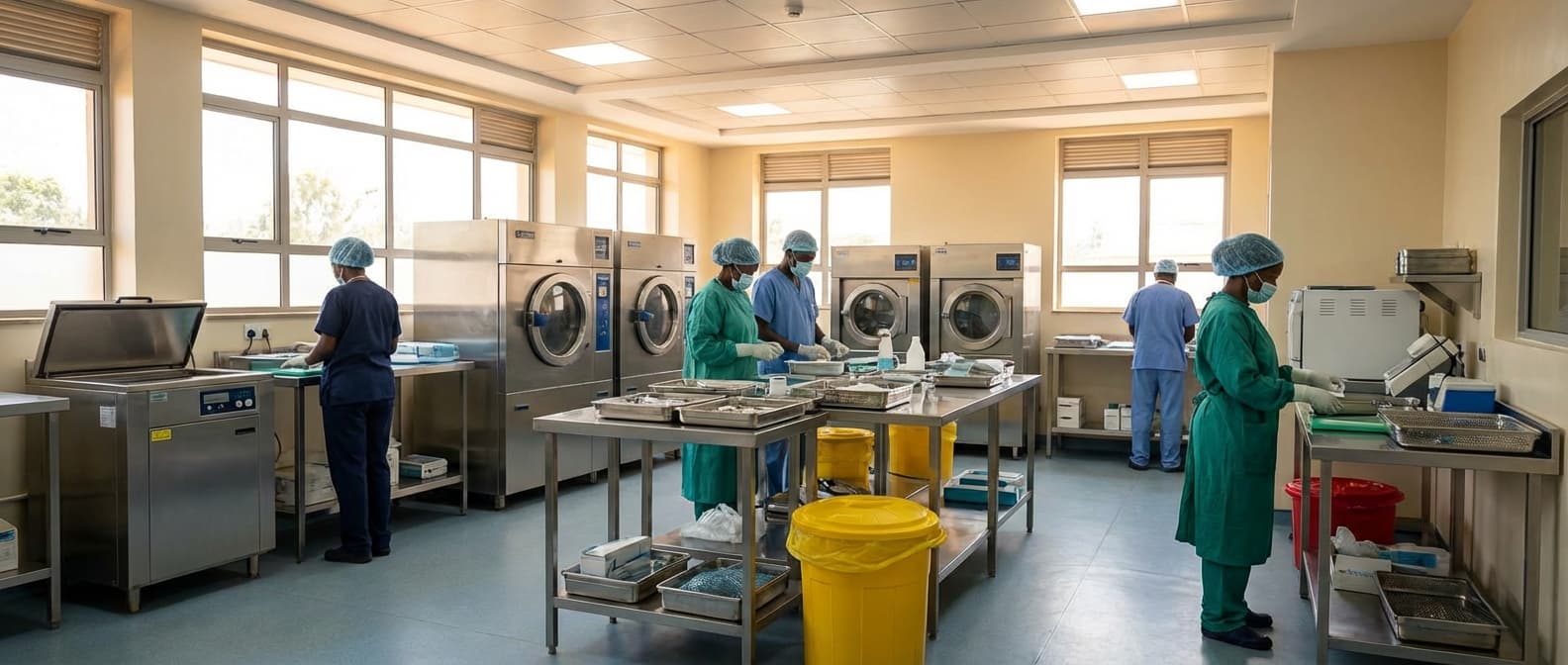
Autoclave Validation Support Service in Ivory Coast
Engineering Excellence & Technical Support
Autoclave Validation Support Service High-standard technical execution following OEM protocols and local regulatory frameworks.
Rigorous Cycle Development & Qualification
Our Autoclave Validation Support Service in Ivory Coast specializes in developing and qualifying robust sterilization cycles. We employ advanced statistical methods and comprehensive testing protocols to ensure optimal efficacy, safety, and compliance with international standards (ISO 17665, etc.), guaranteeing the sterility of your medical devices and laboratory equipment.
Comprehensive Biocompatibility & Sterility Assurance
We provide end-to-end support for biocompatibility assessment and sterility assurance in Ivory Coast. Our services include thorough bioburden testing, validation of sterile barrier systems, and environmental monitoring, offering peace of mind that your products meet stringent regulatory requirements and are safe for patient use or laboratory application.
Expert Calibration & Performance Monitoring
Ensure the ongoing reliability of your autoclaves with our expert calibration and performance monitoring services in Ivory Coast. We utilize accredited calibration equipment and provide detailed performance qualification (PQ) reports, identifying potential deviations and offering proactive maintenance recommendations to prevent downtime and maintain consistent sterilization outcomes.
What Is Autoclave Validation Support Service In Ivory Coast?
Autoclave validation support services in Ivory Coast are specialized offerings designed to ensure the operational integrity, efficacy, and compliance of steam sterilization equipment (autoclaves) within healthcare and industrial settings. This service is crucial for verifying that autoclaves consistently achieve the required parameters (temperature, pressure, time, steam quality) to effectively eliminate viable microorganisms from medical devices, laboratory equipment, or other sterilized materials. The validation process establishes documented evidence that the autoclave consistently performs within predefined specifications, thereby guaranteeing sterility assurance levels (SAL) and meeting regulatory requirements.
| Stakeholder Group | Rationale for Need | Typical Use Cases |
|---|---|---|
| Healthcare Facilities (Hospitals, Clinics, Dental Practices) | Ensuring patient safety by guaranteeing the sterility of medical and dental instruments, preventing healthcare-associated infections (HAIs). Compliance with national and international healthcare regulations (e.g., Ministries of Health directives). | Sterilization of surgical instruments, dental tools, endoscopes, laboratory consumables, linens. |
| Pharmaceutical and Biotechnology Companies | Maintaining product sterility and integrity for manufacturing processes and laboratory research. Compliance with Good Manufacturing Practices (GMP) and Good Laboratory Practices (GLP). | Sterilization of laboratory glassware, media, filtration systems, production equipment components. |
| Research and Development Laboratories (Universities, Private Labs) | Ensuring the reliability and reproducibility of experiments by sterilizing critical equipment and consumables. Maintaining research integrity. | Sterilization of culture media, glassware, inoculation loops, pipette tips, small laboratory instruments. |
| Food and Beverage Industry (Specific Applications) | Sterilizing critical components or packaging materials to ensure product shelf-life and safety. Compliance with food safety regulations. | Sterilization of certain packaging materials, components in aseptic processing lines. |
| Veterinary Clinics and Animal Research Facilities | Ensuring the sterility of surgical instruments and equipment for animal care. Preventing the spread of zoonotic diseases. | Sterilization of surgical instruments, cages, and laboratory equipment. |
Key Components of Autoclave Validation Support Service
- Installation Qualification (IQ): Verifying that the autoclave is installed according to manufacturer specifications and relevant standards.
- Operational Qualification (OQ): Testing the autoclave's functionality across its operational range to ensure it meets design specifications and performs reliably under various conditions.
- Performance Qualification (PQ): Demonstrating, through a series of challenge cycles, that the autoclave consistently achieves the validated sterilization parameters under actual use conditions with typical loads.
- Revalidation Studies: Conducting periodic validation or validation after significant maintenance, repairs, or relocation to ensure continued efficacy.
- Calibration of Monitoring Devices: Ensuring the accuracy of critical instruments like temperature probes, pressure gauges, and timers.
- Load Studies: Evaluating the effectiveness of the sterilization cycle with representative product or material loads, including the use of biological and chemical indicators.
- Documentation and Reporting: Providing comprehensive validation reports, certificates, and audit-ready documentation that detail the methodology, results, and conclusions of the validation process.
- Training: Offering training to on-site personnel on the proper operation, maintenance, and basic troubleshooting of the autoclave.
Who Needs Autoclave Validation Support Service In Ivory Coast?
Autoclave validation is a critical process for ensuring the efficacy and safety of sterilization equipment. In Ivory Coast, various institutions and businesses rely on autoclaves for critical sterilization needs. The demand for reliable Autoclave Validation Support Services stems from a commitment to regulatory compliance, patient safety, infection control, and the integrity of manufactured products. These services guarantee that autoclaves are functioning optimally and meeting stringent industry standards.
| Customer Segment | Key Departments Requiring Validation |
|---|---|
| Hospitals and Healthcare Facilities | Sterilization Department (CSSD), Operating Rooms, Infection Control, Central Pharmacy, Laboratories (Pathology, Microbiology) |
| Dental Clinics | Sterilization Area, Treatment Rooms |
| Laboratories (Medical, Research, and Industrial) | Sterilization Room, Microbiology Department, Research & Development, Quality Control |
| Pharmaceutical Manufacturers | Production (Cleanrooms), Quality Assurance/Quality Control (QA/QC), Formulation, Packaging |
| Food and Beverage Processing Plants | Production (Sterilization of equipment/packaging), Quality Assurance/Quality Control (QA/QC), Research & Development |
| Veterinary Clinics and Animal Hospitals | Sterilization Area, Surgical Suites, Diagnostic Laboratories |
| Medical Device Manufacturers | Production (Sterilization of devices), Quality Assurance/Quality Control (QA/QC), Research & Development |
| Cosmetic and Beauty Salons | Sterilization of instruments (e.g., tattoo parlors, piercing studios) |
| Educational Institutions | Science Laboratories, Medical Schools, Veterinary Schools, Research Facilities |
Target Customers for Autoclave Validation Support Services in Ivory Coast
- Hospitals and Healthcare Facilities
- Dental Clinics
- Laboratories (Medical, Research, and Industrial)
- Pharmaceutical Manufacturers
- Food and Beverage Processing Plants
- Veterinary Clinics and Animal Hospitals
- Medical Device Manufacturers
- Cosmetic and Beauty Salons (with sterilization requirements)
- Educational Institutions (with science and medical departments)
Autoclave Validation Support Service Process In Ivory Coast
This document outlines the standard workflow for Autoclave Validation Support Services in Ivory Coast, from initial client inquiry to the successful completion of the validation execution. The process is designed to ensure compliance with relevant regulatory standards and client-specific requirements.
| Step | Description | Key Activities | Deliverables/Outcomes |
|---|---|---|---|
| The process begins when a client expresses interest in autoclave validation services. This stage involves understanding the client's needs, the autoclave's specifications, and their regulatory context. | Client contacts service provider (phone, email, website). Initial discussion to gather information (autoclave type, size, usage, regulatory requirements). Clarification of scope and objectives. | Client needs understood. Initial assessment of project feasibility. |
| Based on the initial consultation, a detailed proposal and quotation are prepared, outlining the scope of work, methodology, timeline, and associated costs. | Development of a customized validation plan outline. Estimation of resources and time required. Preparation of a formal proposal and cost quotation. | Client receives a comprehensive proposal. Clear understanding of services, costs, and timelines. |
| Upon acceptance of the proposal, a formal contract or service agreement is established, legally binding the service provider and client. | Review and negotiation of contract terms. Signing of the service agreement. Issuance of a proforma invoice for deposit (if applicable). | Formal agreement in place. Project officially initiated. |
| This crucial phase involves detailed planning to ensure a smooth and efficient execution of the validation process on-site. | Development of detailed Validation Master Plan (VMP) and specific protocols (IQ, OQ, PQ). Scheduling of on-site activities. Coordination with client for access, utilities, and personnel. Preparation of all necessary equipment and calibration certificates. | Approved Validation Protocols. Scheduled on-site visit. Readiness for execution. |
| This is the core execution phase where the Installation Qualification (IQ), Operational Qualification (OQ), and Performance Qualification (PQ) are performed according to the approved protocols. | Installation Qualification (IQ): Verifying the autoclave is installed correctly according to manufacturer specifications and regulatory requirements. Operational Qualification (OQ): Testing the autoclave's operational parameters within its defined range. Performance Qualification (PQ): Demonstrating the autoclave consistently performs as intended under actual or simulated use conditions (e.g., load testing, biological indicator testing). | Raw data collected from tests. Executed and documented IQ, OQ, and PQ protocols. |
| Following the on-site execution, all collected data is meticulously analyzed to draw conclusions about the autoclave's performance and compliance. | Review and analysis of all test data. Comparison of results against predefined acceptance criteria. Identification of any deviations or out-of-specification results. Preparation of a comprehensive validation report. | Detailed Validation Report including data, analysis, and conclusions. Identification of any non-conformities. |
| Upon successful completion of the validation process and approval of the report, a formal validation certificate is issued. | Final review and approval of the validation report by both parties. Issuance of the official Autoclave Validation Certificate. | Formal documentation of successful validation. |
| The service extends beyond certificate issuance to offer ongoing support and address any subsequent client needs. | Archiving of validation documentation. Addressing client queries regarding the validation. Potential discussion of re-validation schedules or maintenance support. | Client satisfaction. Ongoing relationship maintained. Preparedness for future validation needs. |
Autoclave Validation Support Service Workflow
- Inquiry & Initial Consultation
- Proposal & Quotation
- Contract Agreement
- Pre-Validation Planning
- On-site Execution (IQ/OQ/PQ)
- Data Analysis & Reporting
- Validation Certificate Issuance
- Follow-up & Support
Autoclave Validation Support Service Cost In Ivory Coast
Autoclave validation is a critical process to ensure the efficacy and safety of sterilization equipment, particularly in healthcare and pharmaceutical settings. In Ivory Coast, the cost of autoclave validation support services can vary significantly based on several key factors. These services are typically provided by specialized companies or certified technicians who offer expertise in performing these crucial tests and documentation. Understanding these pricing drivers is essential for organizations budgeting for this regulatory requirement.
| Service Component/Scope | Estimated Price Range (XOF) | Notes |
|---|---|---|
| Initial Installation & Operational Qualification (IQ/OQ) | 250,000 - 600,000 | Covers verification of installation and basic operational parameters. Varies by autoclave complexity. |
| Performance Qualification (PQ) - Per Cycle (basic) | 150,000 - 300,000 | Includes running and documenting a limited number of standard sterilization cycles. |
| Performance Qualification (PQ) - Comprehensive Package (multiple cycles, challenging loads) | 500,000 - 1,500,000+ | For full validation demonstrating efficacy across various loads and conditions. Price increases with load complexity and number of cycles. |
| Periodic Re-validation (Annual/Bi-annual) | 300,000 - 800,000 | Typically includes PQ for a defined set of conditions. May be less comprehensive than initial validation. |
| Additional Calibration Services (per probe) | 30,000 - 75,000 | Calibration of temperature probes and other sensors used during validation. |
| Travel and Logistics (outside major cities) | 50,000 - 200,000+ | Dependent on distance and accessibility. |
| Urgent/Expedited Service Surcharge | 20% - 50% of base cost | For services required within a very short timeframe. |
Key Factors Influencing Autoclave Validation Support Service Costs in Ivory Coast
- Type of Validation: The scope of validation plays a significant role. This can range from initial installation qualification (IQ), operational qualification (OQ), and performance qualification (PQ) to periodic re-validation. Each stage involves different testing methodologies and levels of complexity, impacting the overall cost.
- Autoclave Size and Capacity: Larger autoclaves or those with higher capacities generally require more extensive testing and potentially more specialized equipment to validate, leading to higher service fees.
- Number of Validation Cycles: During PQ, multiple cycles are typically run and documented to demonstrate consistent sterilization. The number of cycles required by regulatory guidelines or the client's internal protocols will influence the time and resources needed, thus affecting the price.
- Complexity of the Load: The type of materials being sterilized (e.g., porous loads, solid instruments, liquids) can influence the validation process. Validating sterilization for complex or challenging loads may require more sophisticated testing and analytical procedures.
- Geographic Location within Ivory Coast: While Abidjan is the primary economic hub, services required in more remote regions might incur additional travel and logistical costs for the service providers, which are often passed on to the client.
- Service Provider's Reputation and Expertise: Established companies with a proven track record, highly trained personnel, and advanced validation equipment may command higher prices due to their reliability and the quality of their reports.
- Urgency of Service: Expedited validation services, often required to meet tight deadlines or regulatory audit dates, typically come with a premium charge.
- Included Documentation and Reporting: The level of detail and comprehensiveness of the validation report, including calibration certificates, test results, and recommendations, can affect the cost. Some providers offer more detailed reporting packages.
- Annual Maintenance Contracts: Some service providers may offer discounted rates for validation services if bundled with annual maintenance contracts or service agreements for the autoclave.
- Regulatory Requirements and Standards: Adherence to specific international or national standards (e.g., ISO, local health authority guidelines) can necessitate more rigorous testing protocols, thus impacting the cost.
Affordable Autoclave Validation Support Service Options
Securing reliable and compliant autoclave validation is crucial for healthcare facilities, research labs, and any industry relying on sterilization. However, the cost of validation can be a significant concern. This service aims to provide affordable autoclave validation support, offering flexible options designed to meet your budgetary needs while ensuring rigorous adherence to industry standards. We understand that different organizations have varying requirements and financial capacities, which is why we've developed a range of value bundles and cost-saving strategies.
| Service Bundle | Included Services | Key Benefits | Estimated Cost Range (USD) |
|---|---|---|---|
| Basic Re-validation Package | Annual re-validation of one autoclave (e.g., Bowie-Dick, biological indicators, thermal mapping if required). | Ensures continued compliance with minimal investment. Ideal for organizations with established validation history. | $750 - $1,500 |
| Comprehensive Validation Suite | Full validation (IQ/OQ/PQ) for a new autoclave or after major repairs/upgrades. Includes all necessary testing and documentation. | Guarantees initial compliance and operational readiness. Essential for new installations and critical changes. | $1,500 - $3,000 |
| Facility-Wide Support Plan | Annual re-validation for up to 3 autoclaves, plus priority scheduling and discounted rates for additional units or specialized testing. | Provides consistent validation across multiple units and offers cost savings through bulk commitment. | $2,000 - $4,500 |
| Preventative Maintenance & Validation Combo | Annual preventative maintenance service alongside the required re-validation testing. | Combines essential maintenance with compliance, reducing the risk of future issues and associated costs. | Custom Quote Based on Equipment |
Affordable Autoclave Validation Support Service Options
- Value Bundles: Tailored packages combining essential validation services at a discounted rate.
- Cost-Saving Strategies: Proactive approaches to minimize your overall validation expenditure.
- Flexible Service Levels: Options ranging from basic re-validation to comprehensive validation protocols.
- Multi-Autoclave Discounts: Reduced pricing for validating multiple units within the same facility.
- Long-Term Service Agreements: Preferential rates for ongoing validation contracts.
- Remote Support Options: Cost-effective solutions for initial consultation and troubleshooting.
- Standardized Protocols: Utilizing pre-defined, industry-accepted validation methods to streamline the process and reduce customization costs.
- Focus on Efficiency: Optimized scheduling and execution of validation procedures to minimize downtime and labor costs.
Verified Providers In Ivory Coast
In the pursuit of reliable healthcare in Ivory Coast, identifying verified providers is paramount. Franance Health stands out as a leading example of a credentialed and trustworthy healthcare network. Their commitment to rigorous vetting processes ensures that all affiliated medical professionals and facilities meet the highest standards of quality, ethics, and patient care. Choosing Franance Health offers a significant advantage due to their established credibility, comprehensive network, and dedication to patient well-being, making them the best choice for individuals seeking dependable medical services in Ivory Coast.
| Credential Type | Franance Health Assurance | Patient Benefit |
|---|---|---|
| Medical Licensure & Certification | All affiliated doctors possess valid Ivorian medical licenses and relevant specialist certifications. | Ensures practitioners are qualified and legally permitted to practice. |
| Facility Accreditation | Partner hospitals and clinics undergo regular inspections and meet established healthcare facility standards. | Guarantees a safe and well-equipped environment for treatment. |
| Quality Assurance Protocols | Franance Health implements internal quality control measures and continuous improvement programs. | Promotes high standards of medical care and positive patient outcomes. |
| Patient Feedback & Grievance Redressal | Systems are in place to collect patient feedback and address concerns effectively. | Empowers patients and ensures accountability within the network. |
| Professional Development | Encourages and supports ongoing training and professional development for healthcare providers. | Keeps practitioners updated with the latest medical advancements and practices. |
Key Franance Health Credentials and Benefits:
- Accreditation by recognized health bodies
- Rigorous selection and vetting of medical professionals
- Adherence to international quality standards in healthcare delivery
- Commitment to ethical medical practices and patient rights
- Extensive network of qualified doctors, specialists, and hospitals
- Focus on patient safety and satisfaction
- Transparent and reliable healthcare service provision
Scope Of Work For Autoclave Validation Support Service
This Scope of Work (SOW) outlines the services provided by the Vendor to support the Client's Autoclave Validation activities. The Vendor will offer technical expertise and standard documentation to ensure the successful and compliant validation of the Client's autoclave(s). This includes the execution of validation protocols, generation of reports, and adherence to relevant industry standards and regulatory requirements.
| Deliverable/Service | Description | Standard Specification/Reference | Format |
|---|---|---|---|
| Validation Protocol Development/Review | Creation or review of detailed protocols for IQ, OQ, and PQ, defining test methods, acceptance criteria, and responsibilities. | Client's validation master plan, relevant SOPs, GMP guidelines (e.g., FDA 21 CFR Part 11, EU GMP Annex 1, ISO 13485, PDA TR No. 1) | Electronic Document (e.g., Word, PDF) |
| Installation Qualification (IQ) Protocol and Report | Verification of the autoclave's installation, including equipment identification, proper utilities, and initial setup. | Manufacturer's Installation Manual, relevant design specifications, Client's SOPs for installation. | Electronic Document (e.g., Word, PDF) |
| Operational Qualification (OQ) Protocol and Report | Testing of the autoclave's operational capabilities across its defined operating range, ensuring it performs as intended. | Manufacturer's Operating Manual, defined process parameters, Client's critical process parameters (CPPs). | Electronic Document (e.g., Word, PDF) |
| Performance Qualification (PQ) Protocol and Report | Validation of the autoclave's ability to consistently deliver the required sterilization process under normal operating conditions, typically using biological indicators and temperature mapping. | Client's Sterilization Cycle Specifications, target F0 values or equivalent, biological indicator manufacturer's instructions, temperature mapping requirements (e.g., ANSI/AAMI ST46, ISO 17665). | Electronic Document (e.g., Word, PDF) |
| Revalidation Protocol and Report | Protocol and report for revalidating the autoclave following significant maintenance, modifications, or as per established revalidation schedule. | Original validation protocols, change control documentation, regulatory requirements for revalidation. | Electronic Document (e.g., Word, PDF) |
| Data Analysis and Interpretation | Analysis of raw data from OQ and PQ runs, including temperature, pressure, and time data, and interpretation of results against acceptance criteria. | Statistical analysis methods, established validation acceptance criteria. | Included within OQ/PQ Reports and Summary Report |
| Validation Summary Report | A comprehensive report summarizing the validation activities, results, deviations, and overall conclusion regarding the autoclave's validated status. | All executed protocols, raw data, OQ/PQ reports, deviation reports. | Electronic Document (e.g., Word, PDF) |
| Certificate of Analysis (CoA) for Calibration Services | If calibration of critical instruments (e.g., temperature sensors) is performed as part of validation, a CoA will be provided. | NIST traceable standards, accredited calibration laboratory procedures. | Electronic Document (e.g., PDF) |
| Traceability Matrix | A document demonstrating the link between validation requirements, test cases executed, and the corresponding test results. | Client's validation plan, design specifications, regulatory requirements. | Electronic Document (e.g., Excel, Word) |
| Deviation and Non-conformance Reports | Documentation of any deviations encountered during validation testing, including root cause analysis and impact assessment. | Client's deviation management SOPs, GMP guidelines. | Electronic Document (e.g., Word, PDF) |
Technical Deliverables
- Validation Protocol Development/Review
- Installation Qualification (IQ) Protocol and Report
- Operational Qualification (OQ) Protocol and Report
- Performance Qualification (PQ) Protocol and Report
- Revalidation Protocol and Report (as applicable)
- Data Analysis and Interpretation
- Validation Summary Report
- Certificate of Analysis (CoA) for Calibration Services (if provided)
- Traceability Matrix (linking requirements to test cases)
- Deviation and Non-conformance Reports (if applicable)
Service Level Agreement For Autoclave Validation Support Service
This Service Level Agreement (SLA) outlines the response times and uptime guarantees for the Autoclave Validation Support Service provided by [Your Company Name]. This agreement is effective as of [Start Date] and remains in effect until [End Date], unless terminated in accordance with the Master Service Agreement.
| Service Component | Response Time Target | Uptime Guarantee |
|---|---|---|
Scope of Service
- On-site validation support for autoclave units.
- IQ, OQ, and PQ documentation review and execution.
- Troubleshooting and issue resolution related to autoclave performance.
- Calibration and re-validation services.
- Training on autoclave operation and validation procedures.
Frequently Asked Questions

Ready when you are
Let's scope your Autoclave Validation Support Service in Ivory Coast project in Ivory Coast.

Scaling healthcare logistics and technical systems across the entire continent.