
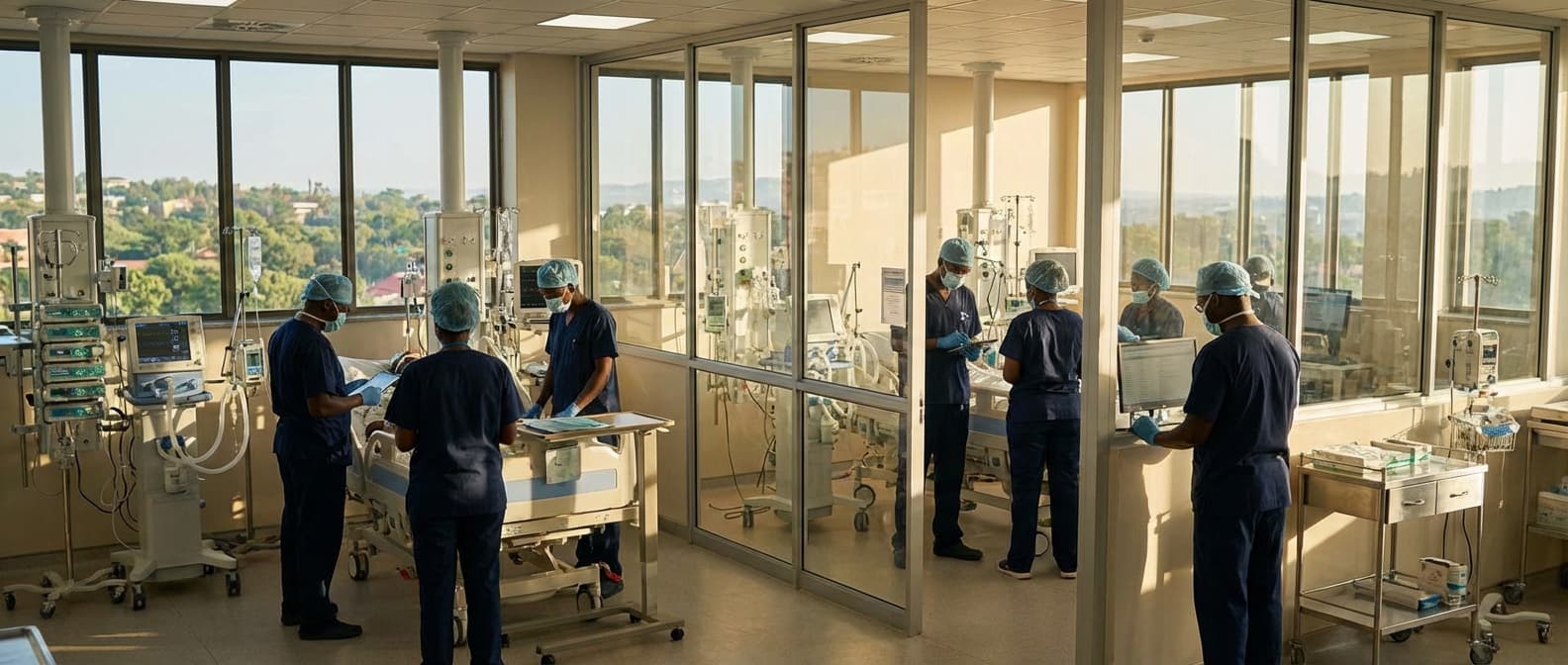
Ventilator Fleet Management & PM in Ivory Coast
Engineering Excellence & Technical Support
Preventive maintenance and fleet management for ICU ventilators High-standard technical execution following OEM protocols and local regulatory frameworks.
Proactive Maintenance Scheduling for Reduced Downtime
Leveraging IoT sensors and historical data, we implement a predictive maintenance program that anticipates potential ventilator failures. This allows for scheduled servicing during optimal periods, significantly minimizing unplanned downtime and ensuring critical equipment availability for patient care across Ivory Coast.
Centralized Fleet Monitoring & Real-time Status Updates
Our cloud-based platform provides a centralized dashboard for real-time monitoring of the entire ventilator fleet. Administrators and biomedical engineers receive instant alerts on device status, location, and performance metrics, enabling swift responses to any emergent issues and optimizing resource allocation nationwide.
Optimized Spare Parts Inventory & Procurement
By analyzing usage patterns and failure rates, we intelligently forecast spare parts demand for the ventilator fleet. This ensures optimal inventory levels are maintained at key service centers, reducing lead times for repairs and preventing stockouts, thereby enhancing the overall efficiency and cost-effectiveness of ventilator maintenance in Ivory Coast.
What Is Ventilator Fleet Management & Pm In Ivory Coast?
Ventilator Fleet Management & Preventive Maintenance (PM) in Ivory Coast refers to the comprehensive process of overseeing, maintaining, and optimizing the utilization of mechanical ventilators within healthcare facilities. This service is critical for ensuring the operational readiness, reliability, and cost-effectiveness of a vital medical technology, particularly in a resource-sensitive healthcare landscape. It encompasses a range of activities aimed at maximizing the lifespan and performance of ventilators, thereby supporting patient care and operational continuity.
| Service Component | Description | Target Audience | Typical Use Cases |
|---|---|---|---|
| Inventory & Asset Tracking | Detailed logging of all ventilator units, their specifications, and current status. | Hospitals, clinics, public health agencies, biomedical engineering departments. | Audits, resource allocation planning, disaster preparedness, asset depreciation tracking. |
| Preventive Maintenance (PM) | Scheduled inspections, calibration, cleaning, and component replacement to ensure optimal function and prevent failures. | Hospitals (ICUs, ORs, Emergency Departments), specialized respiratory care centers, home healthcare providers. | Routine checks before patient use, adherence to service intervals, minimizing unexpected downtime. |
| Corrective Maintenance & Repair | Diagnosis and repair of malfunctioning ventilators. | Hospitals, emergency services, remote healthcare facilities, critical care units. | Responding to equipment failures during patient care, urgent repair needs, troubleshooting complex issues. |
| Performance & Utilization Monitoring | Analyzing usage patterns, alarm frequency, and operational efficiency of the ventilator fleet. | Hospital administration, clinical department heads, biomedical engineering managers. | Identifying under/over-utilization, optimizing equipment sharing, planning for increased demand (e.g., during epidemics). |
| Regulatory Compliance & Documentation | Ensuring all maintenance activities meet local and international standards and maintaining comprehensive service records. | All healthcare providers using ventilators, Ministry of Health oversight bodies. | Accreditation processes, legal defense, quality assurance, traceability of repairs. |
| Spare Parts Management | Maintaining an adequate stock of essential spare parts and managing their procurement and inventory. | Biomedical engineering departments, centralized medical equipment repositories. | Reducing repair lead times, ensuring availability of critical components, cost-effective procurement. |
| Training & Support | Providing education on ventilator operation, maintenance, and troubleshooting for both clinical and technical staff. | Clinical nurses, respiratory therapists, biomedical technicians, hospital administrators. | Enhancing user competence, reducing user-induced errors, empowering local technical capacity. |
Key Components of Ventilator Fleet Management & PM
- Inventory Management: Establishing and maintaining an accurate, up-to-date inventory of all ventilators, including make, model, serial number, acquisition date, location, and service history.
- Preventive Maintenance (PM) Scheduling and Execution: Implementing a systematic PM program based on manufacturer recommendations and clinical usage patterns. This involves scheduled inspections, calibrations, cleaning, and replacement of wear-and-tear components to prevent failures.
- Corrective Maintenance and Repair: Prompt and efficient diagnosis and repair of ventilators that experience malfunctions or breakdowns. This includes sourcing spare parts and engaging qualified biomedical engineers.
- Performance Monitoring and Optimization: Tracking ventilator usage, performance metrics, and identifying trends to optimize allocation, identify underutilized assets, and forecast future needs.
- Regulatory Compliance: Ensuring all maintenance activities and documentation adhere to national healthcare regulations, safety standards, and manufacturer guidelines.
- Training and Competency Assessment: Providing ongoing training for clinical staff on the proper use and basic troubleshooting of ventilators, as well as for biomedical technicians on advanced maintenance procedures.
- Asset Lifecycle Management: Planning for the eventual replacement or decommissioning of ventilators based on age, obsolescence, and technological advancements.
- Budgeting and Cost Control: Developing and managing budgets for maintenance, repairs, spare parts, and eventual asset replacement to ensure financial sustainability.
Who Needs Ventilator Fleet Management & Pm In Ivory Coast?
Effective ventilator fleet management and preventative maintenance (PM) are crucial for ensuring the optimal performance, longevity, and reliability of vital medical equipment in Ivory Coast's healthcare system. This proactive approach minimizes costly breakdowns, reduces patient risk, and ensures that critical care resources are consistently available when needed. The demand for such services is driven by the need to maintain a functional and efficient medical infrastructure, especially in light of increasing healthcare demands and the importance of patient safety.
| Target Customer/Department | Specific Needs/Justification for Fleet Management & PM | Key Decision-Makers/Influencers |
|---|---|---|
| Public Hospitals (National & Regional) | High volume of patients, often with limited resources. Need to maximize equipment uptime and lifespan to serve a large population. Cost-effectiveness is paramount. | Hospital Administrators, Biomedical Engineering Departments, Procurement Officers, Heads of Critical Care/ICU Units. |
| Private Hospitals & Clinics | Focus on patient satisfaction and service quality. Minimizing downtime directly impacts revenue and reputation. Often have more specialized equipment. | Hospital Directors, Chief Medical Officers, Biomedical Engineers, Facility Managers, Department Heads (e.g., Anesthesia, Pulmonology). |
| Tertiary Care Centers & University Hospitals | Serve complex cases and research. Require highly sophisticated ventilators. Need to maintain cutting-edge technology and ensure research continuity. | Chief of Medical Staff, Heads of Specialty Departments (e.g., Critical Care Medicine, Respiratory Therapy), Biomedical Engineering Directors, Research Coordinators. |
| Emergency Medical Services (EMS) & Ambulance Services | Ventilators are critical for pre-hospital care. Reliability is paramount to patient survival. Mobile units require robust maintenance protocols. | EMS Directors, Fleet Managers, Operations Supervisors, Chief Paramedics. |
| Military Hospitals & Clinics | Serve military personnel and their families. May operate in remote or challenging environments. Need for rapid deployment and reliable equipment. | Medical Corps Commanders, Hospital Administrators, Logistics Officers, Biomedical Technicians. |
| NGO-funded Healthcare Facilities | Often operate with grants and specific project timelines. Need to demonstrate efficient resource utilization and long-term sustainability of equipment. | Program Managers, Facility Directors, Biomedical Officers (if applicable), Finance Officers. |
| Government Ministry of Health | Responsible for national health policy, procurement standards, and public health infrastructure. Needs data for resource allocation and national healthcare planning. | Minister of Health, Director General of Health Services, Heads of Health Technology Assessment Departments, Procurement Directors. |
Target Customers & Departments in Ivory Coast for Ventilator Fleet Management & PM
- Public Hospitals (National & Regional)
- Private Hospitals & Clinics
- Tertiary Care Centers & University Hospitals
- Emergency Medical Services (EMS) & Ambulance Services
- Military Hospitals & Clinics
- NGO-funded Healthcare Facilities
- Government Ministry of Health (for oversight and procurement)
Ventilator Fleet Management & Pm Process In Ivory Coast
This document outlines the typical workflow for Ventilator Fleet Management and Preventive Maintenance (PM) processes in Ivory Coast, covering the journey from initial inquiry to successful execution. It details the steps involved in ensuring the optimal performance and longevity of the ventilator fleet through proactive maintenance.
| Stage | Description | Key Activities | Responsible Parties | Deliverables/Outcomes |
|---|---|---|---|---|
| Initial contact from a healthcare facility or entity requesting services related to their ventilator fleet. | Understand client's fleet size, types of ventilators, current maintenance status, budget, and specific requirements. Site visit may be required. | Client (Healthcare Facility), Service Provider (Sales/Technical Team) | Clear understanding of client needs, preliminary assessment of scope and complexity. |
| Based on the assessment, a detailed proposal and cost estimate are prepared. | Develop a comprehensive service proposal outlining PM schedules, scope of work, spare parts, labor costs, and timelines. Include warranty information. | Service Provider (Sales/Technical Team) | Formal proposal document with detailed quotation. |
| Formalization of the agreement between the client and the service provider. | Negotiate terms and conditions. Sign a Service Level Agreement (SLA) or contract outlining responsibilities, payment terms, and service guarantees. | Client (Procurement/Administration), Service Provider (Management/Legal) | Signed contract/SLA. |
| Detailed inspection of the client's facility and current ventilator inventory. | Conduct a thorough site survey to identify access points, power availability, and storage. Create an accurate inventory of all ventilators, including make, model, serial number, and current condition. | Service Provider (Field Technicians/Inventory Specialists) | Detailed site survey report and updated ventilator inventory list. |
| Organize the logistics for the PM activities. | Develop a detailed PM schedule based on manufacturer recommendations and client operational needs. Coordinate with the client for preferred service dates and times to minimize disruption. Assign qualified technicians. | Service Provider (Operations/Scheduling Department) | Approved PM schedule, technician assignments, and logistical plans. |
| Ensure all necessary parts and consumables are available for the scheduled PM. | Identify and procure genuine spare parts, filters, calibration gases, and other consumables based on the inventory and PM requirements. Manage inventory of common parts. | Service Provider (Procurement/Warehouse) | Availability of all required parts and consumables at the service location. |
| The core of the service delivery where PM is performed on the ventilators. | Perform routine checks, cleaning, calibration, battery replacement, software updates, and any necessary minor repairs as per manufacturer guidelines and the SLA. Document all actions taken. | Service Provider (Field Technicians) | Serviced ventilators, completed maintenance logs for each unit. |
| Verify the effectiveness of the maintenance performed. | Conduct post-maintenance testing and performance verification to ensure ventilators are functioning within manufacturer specifications. Review maintenance logs for accuracy and completeness. | Service Provider (Field Technicians/Quality Assurance) | Verified performance data, quality assurance sign-off. |
| Compile and submit all relevant documentation to the client. | Generate comprehensive reports detailing the PM performed, parts used, test results, any recommendations for future action, and an updated inventory status. Submit reports to the client. | Service Provider (Field Technicians/Administrative Staff) | Detailed PM reports, service certificates, and updated asset records. |
| Post-service engagement to ensure client satisfaction and identify areas for improvement. | Follow up with the client to confirm satisfaction with the service. Gather feedback on the process and performance. Address any outstanding queries or concerns. Propose further service needs or upgrades. | Service Provider (Account Management/Customer Service) | Client satisfaction survey, feedback analysis, potential for future service engagements. |
Ventilator Fleet Management & PM Process Workflow
- Inquiry & Needs Assessment
- Quote Generation & Proposal
- Contract & Service Agreement
- Site Survey & Inventory
- Scheduling & Planning
- Parts & Consumables Procurement
- Preventive Maintenance Execution
- Quality Control & Testing
- Documentation & Reporting
- Follow-up & Feedback
Ventilator Fleet Management & Pm Cost In Ivory Coast
Managing a ventilator fleet in Ivory Coast involves significant costs, encompassing procurement, maintenance, and operational expenses. These costs are influenced by a multitude of factors, including the type and age of ventilators, the complexity of maintenance required, the availability of spare parts, and the expertise of the maintenance personnel. Geographical location within Ivory Coast can also play a role due to transportation and logistics costs. Service provider expertise, contractual agreements (e.g., comprehensive vs. basic maintenance), and the frequency of preventive maintenance (PM) all contribute to the overall pricing. The local currency for pricing is the West African CFA franc (XOF).
| Service Component | Estimated Cost Range (XOF) | Notes |
|---|---|---|
| New Ventilator Acquisition (Mid-Range) | 5,000,000 - 15,000,000 | Price varies significantly by brand, features, and intended use (e.g., ICU vs. transport). |
| Preventive Maintenance (PM) - Annual Contract (Per Unit) | 200,000 - 800,000 | Covers routine checks, cleaning, calibration, and minor part replacements. Higher for more complex units. |
| On-Demand Repair Call-Out (Labor & Basic Parts) | 50,000 - 250,000 | Excludes cost of major components. Response time can affect pricing. |
| Major Component Replacement (e.g., Compressor, Battery) | 200,000 - 1,000,000+ | Highly dependent on the specific part and ventilator model. |
| Comprehensive Service Contract (Annual, Per Unit) | 800,000 - 2,500,000+ | Includes PM, unlimited repairs, labor, and often some spare parts. Can be structured with deductibles. |
| Biomedical Technician Training (Per Technician, Per Course) | 150,000 - 500,000 | Specialized training for specific ventilator models or advanced troubleshooting. |
| Spare Parts Inventory (Estimated Annual Stock) | 1,000,000 - 5,000,000+ | For a fleet of 10-20 units, covering common wear-and-tear parts. |
| Fleet Management Software/Platform (Annual Subscription) | 100,000 - 500,000 | For tracking maintenance schedules, asset history, and performance. |
Key Pricing Factors for Ventilator Fleet Management & PM in Ivory Coast
- Ventilator Type & Model: Advanced, specialized, or newer models typically have higher initial costs and more expensive maintenance. Older or basic models might be cheaper to acquire but could require more frequent repairs.
- Age & Condition of Ventilators: Older ventilators nearing the end of their lifespan may incur higher repair costs and require more frequent component replacements.
- Scope of Service Contract: Comprehensive service contracts covering all parts and labor will be more expensive than basic maintenance agreements.
- Frequency of Preventive Maintenance (PM): Regular PM, while an upfront cost, can prevent more costly breakdowns and extend the life of the equipment.
- Availability and Cost of Spare Parts: Genuine OEM parts are often more expensive than third-party alternatives, but can be crucial for long-term reliability.
- Labor Costs & Technician Expertise: Skilled biomedical technicians command higher wages. The availability of qualified local technicians can impact pricing.
- Logistics & Transportation: Costs associated with transporting technicians, equipment, and parts to and from various healthcare facilities across Ivory Coast.
- Service Provider Reputation & Experience: Established and reputable service providers may charge a premium for their expertise and reliability.
- Location of Facility: Remote or hard-to-reach facilities may incur additional travel and logistical charges.
- Service Level Agreements (SLAs): Response times, uptime guarantees, and reporting requirements can influence the cost of maintenance contracts.
- Regulatory Compliance & Certification: Ensuring ventilators meet local and international standards may require specific maintenance procedures and documentation, adding to costs.
Affordable Ventilator Fleet Management & Pm Options
Managing a ventilator fleet efficiently and ensuring timely preventive maintenance (PM) is crucial for patient care and operational cost control. This document outlines affordable options for ventilator fleet management and PM, focusing on value bundles and strategic cost-saving approaches.
| Value Bundle Component | Description | Cost-Saving Strategy Implication |
|---|---|---|
| Comprehensive PM Contracts | Includes scheduled inspections, calibrations, and replacement of wear-and-tear parts. Often offered with guaranteed response times. | Reduces the likelihood of unexpected breakdowns, thereby lowering emergency repair costs and minimizing downtime. Predictable budgeting. |
| Extended Warranty Options | Purchasing extended coverage beyond the manufacturer's standard warranty period. | Protects against major repair expenses for a longer duration, especially beneficial for older or frequently used ventilators. Spreads risk. |
| Managed Parts Inventory | Third-party providers manage the stocking and delivery of essential ventilator parts, ensuring availability when needed. | Reduces the need for internal inventory storage and carrying costs. Ensures parts are available for PM and repairs, minimizing delays and associated costs. |
| Refurbished/Certified Pre-Owned Ventilators | Acquiring reliable, fully functional ventilators that have been professionally refurbished and certified. | Significantly lower acquisition costs compared to new units, while still offering a warranty and reliable performance. Excellent for expanding capacity or replacing aging fleets on a budget. |
| Performance-Based Service Agreements | Contracts where service providers are incentivized to meet specific performance metrics (e.g., uptime, resolution time). | Aligns provider goals with the hospital's need for reliable equipment, encouraging proactive maintenance and efficient repairs, ultimately reducing total cost of ownership. |
| On-Site Biomedical Technicians (Shared Services) | Engaging a service provider that offers on-site technicians who can service multiple facilities or a large fleet within one institution. | Reduces travel time and costs for technician visits. Quicker response times for immediate needs. Potentially more cost-effective than maintaining a full in-house team for smaller or mid-sized fleets. |
| Data Analytics and Predictive Maintenance Software | Leveraging software to track ventilator usage, performance data, and predict potential failures. | Enables proactive maintenance scheduling before a breakdown occurs, minimizing costly emergency repairs and reducing unplanned downtime. Optimizes parts ordering. |
| Group Purchasing Organizations (GPOs) | Joining a GPO allows for aggregated purchasing power, leading to better pricing on equipment, parts, and service contracts. | Achieves economies of scale, resulting in lower prices for bundled services and individual components. Simplifies procurement through pre-negotiated contracts. |
Key Components of Affordable Ventilator Fleet Management & PM
- {"title":"Value Bundles Explained","description":"Value bundles are service packages that combine multiple essential offerings at a predetermined, often discounted, price. They aim to provide comprehensive solutions while simplifying procurement and budgeting. For ventilator fleet management, this can include a mix of maintenance contracts, repair services, parts inventory management, and potentially software updates or training."}
- {"title":"Cost-Saving Strategies","description":"Beyond bundled services, several strategic approaches can significantly reduce overall costs associated with ventilator fleet management and PM. These strategies focus on proactive measures, optimized resource allocation, and intelligent purchasing."}
- {"title":"Preventive Maintenance (PM)","description":"Regular, scheduled maintenance designed to prevent equipment failure. This is critical for ensuring ventilator reliability, safety, and extending the lifespan of devices. Neglecting PM often leads to costly emergency repairs and potential patient harm."}
- {"title":"Fleet Management","description":"The overarching process of overseeing and optimizing the entire lifecycle of medical equipment, including ventilators. This involves tracking inventory, managing deployment, monitoring usage, scheduling maintenance, and planning for replacements."}
Verified Providers In Ivory Coast
In Ivory Coast, the healthcare landscape is evolving, with a growing emphasis on quality and reliability. For individuals and organizations seeking dependable healthcare services, identifying verified providers is paramount. Franance Health stands out as a leading entity in this regard, offering a robust network of accredited healthcare professionals and facilities. Their stringent credentialing process ensures that all associated providers meet the highest standards of medical expertise, ethical practice, and operational excellence. Choosing Franance Health means opting for peace of mind, knowing you are connected with the best in the Ivorian healthcare sector. Their commitment to patient well-being and continuous quality improvement makes them an indispensable partner in navigating healthcare access and ensuring optimal health outcomes.
| Provider Category | Franance Health Verification Means | Benefits to Patients |
|---|---|---|
| Hospitals & Clinics | Certified infrastructure, licensed medical staff, quality management systems in place. | Access to modern facilities, skilled doctors and nurses, and patient-centric care. |
| Specialist Doctors | Verified medical degrees, board certifications, and proven experience in their field. | Accurate diagnoses, effective treatment plans, and specialized medical attention. |
| Diagnostic Laboratories | Accredited equipment, qualified technicians, and adherence to quality control standards. | Reliable and accurate lab results for informed medical decisions. |
| Pharmacies | Licensed dispensing of medications, trained pharmacists, and quality assurance of pharmaceuticals. | Safe and appropriate access to prescribed and over-the-counter medications. |
Why Franance Health Credentials Matter
- Rigorous vetting and accreditation process for all providers.
- Ensures adherence to international medical standards.
- Promotes transparency and trust in healthcare services.
- Facilitates access to specialized medical expertise.
- Upholds ethical medical practices and patient rights.
- Contributes to a higher standard of healthcare delivery in Ivory Coast.
Scope Of Work For Ventilator Fleet Management & Pm
This Scope of Work (SOW) outlines the requirements for a comprehensive Ventilator Fleet Management and Preventive Maintenance (PM) program. The objective is to ensure the optimal performance, reliability, and safety of the organization's ventilator fleet through proactive maintenance, efficient asset tracking, and adherence to stringent technical standards. This SOW details the technical deliverables and standard specifications required to achieve these goals.
| Section | Description | Key Deliverables | Standard Specifications/Requirements | |||
|---|---|---|---|---|---|---|
| Fleet Inventory & Asset Management | Establish and maintain a comprehensive, accurate, and up-to-date inventory of all ventilators. This includes tracking location, status, service history, and ownership. | Centralized electronic asset registry (database/CMMS module). | Unique asset identification for each ventilator. | Detailed equipment profile for each unit (make, model, serial number, purchase date, warranty information, current location). | Regular (e.g., quarterly) reconciliation of physical inventory against the registry. | Integration with existing hospital information systems (HIS/EHR) where feasible. |
| Preventive Maintenance (PM) Program | Develop and implement a standardized PM program for all ventilator models. This includes scheduled inspections, cleaning, calibration, and functional testing. | Comprehensive PM checklists for each ventilator model. | Defined PM schedules based on manufacturer recommendations and usage patterns (e.g., hours of use, calendar time). | Execution of PM tasks by qualified biomedical technicians. | Documentation of all PM activities, including dates, technician, tasks performed, parts used, and any issues identified. | Adherence to manufacturer's recommended PM procedures and intervals. |
| Corrective Maintenance & Repair | Respond to reported equipment failures and malfunctions in a timely manner. Diagnose, repair, and test ventilators to restore them to full operational status. | Defined response times for different severity levels of equipment failures. | Trained and certified technicians for repair of various ventilator models. | Availability of critical spare parts and consumables. | Documentation of all corrective maintenance activities, including fault diagnosis, repairs performed, parts used, and testing results. | Root cause analysis for recurring or critical failures. |
| Calibration & Performance Verification | Ensure all ventilators are accurately calibrated and meet performance specifications as per manufacturer guidelines and regulatory standards. | Regular calibration schedules for critical parameters (e.g., flow, pressure, volume, FiO2). | Use of calibrated test equipment traceable to national standards. | Documentation of calibration records, including pre- and post-calibration readings. | Compliance with relevant industry standards (e.g., AAMI, IEC) for performance testing. | |
| Technical Documentation & Training | Maintain all relevant technical documentation, including service manuals, schematics, and software updates. Provide training to relevant personnel. | Access to up-to-date service manuals for all inventoried ventilator models. | Repository of firmware and software updates. | Training records for biomedical technicians on specific ventilator models and PM/repair procedures. | Training for clinical staff on basic operation and troubleshooting of ventilators. | |
| Quality Assurance & Reporting | Implement quality assurance processes to monitor the effectiveness of the fleet management and PM program. Generate regular reports on fleet status and performance. | Defined quality metrics (e.g., PM completion rate, average repair time, equipment downtime). | Regular performance reports (e.g., monthly, quarterly) including key performance indicators (KPIs). | Incident reporting and investigation procedures. | Audits of PM and repair procedures. | |
| Safety & Compliance | Ensure all activities comply with relevant healthcare regulations, accreditation standards, and manufacturer guidelines. | Compliance with FDA regulations (e.g., FDA 21 CFR Part 820). | Adherence to Joint Commission standards (if applicable). | Strict adherence to manufacturer's safety guidelines. | Documentation of compliance with all applicable standards. |
Key Objectives
- Maximize ventilator uptime and operational readiness.
- Ensure patient safety through well-maintained equipment.
- Optimize resource allocation for maintenance and repair.
- Maintain compliance with regulatory requirements and manufacturer recommendations.
- Provide accurate and timely data for fleet performance analysis.
- Extend the useful life of ventilator assets through effective PM.
Service Level Agreement For Ventilator Fleet Management & Pm
This Service Level Agreement (SLA) outlines the terms and conditions for the provision of Ventilator Fleet Management and Preventative Maintenance (PM) services by [Provider Name] (hereinafter referred to as the "Provider") to [Client Name] (hereinafter referred to as the "Client"). This agreement defines the expected response times for service requests and the guaranteed uptime for the client's ventilator fleet.
| Service Type | Priority Level | Response Time Target | Resolution Time Target |
|---|---|---|---|
| Preventative Maintenance (PM) | Scheduled | As per agreed PM schedule | As per agreed PM schedule |
| Emergency Repair (Critical Failure) | High | 1 hour (from confirmation of receipt of Service Request) | 4 hours (from arrival on-site or remote diagnostics confirmation of issue) |
| Technical Support (Non-Critical Issue) | Medium | 4 business hours (from confirmation of receipt of Service Request) | 8 business hours (from arrival on-site or remote diagnostics confirmation of issue) |
| Routine Inquiry/Information Request | Low | 1 business day (from confirmation of receipt of Service Request) | N/A |
Key Definitions
- Ventilator Fleet: Refers to all designated ventilator units owned or operated by the Client that are subject to this SLA.
- Preventative Maintenance (PM): Scheduled maintenance procedures performed to ensure the optimal functioning and longevity of the ventilator units.
- Service Request: A formal notification from the Client to the Provider requesting technical support, repair, or PM for a ventilator unit.
- Critical Failure: A malfunction of a ventilator unit that renders it inoperable or unsafe for patient use.
- Non-Critical Issue: A malfunction or performance degradation of a ventilator unit that does not immediately impact patient safety or operational continuity.
- Downtime: The period during which a ventilator unit is unavailable for use due to malfunction or required maintenance, excluding scheduled PM.
- Uptime Guarantee: The minimum percentage of time the ventilator fleet is expected to be operational and available for use.
Frequently Asked Questions

Ready when you are
Let's scope your Ventilator Fleet Management & PM in Ivory Coast project in Ivory Coast.

Scaling healthcare logistics and technical systems across the entire continent.