
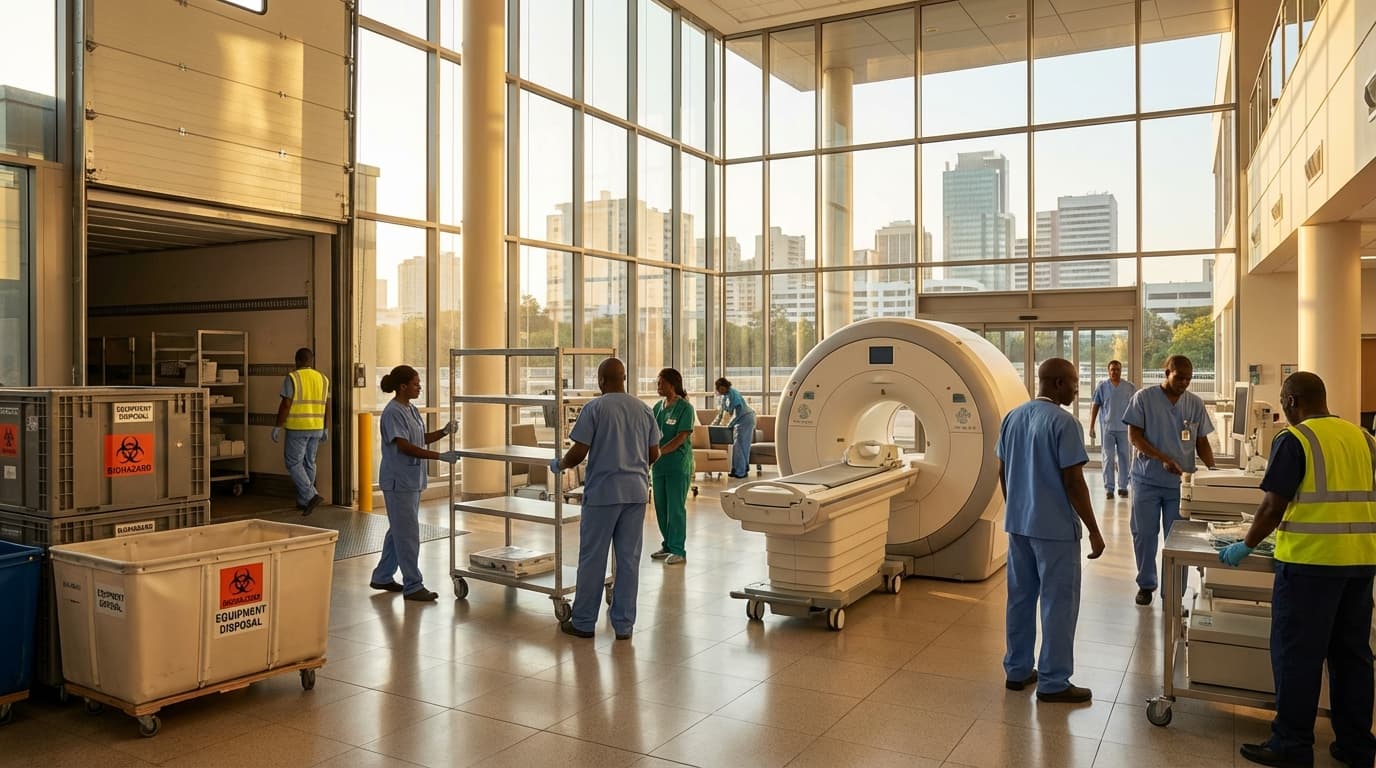
Site Restoration Service After Equipment Removal in Ivory Coast
Engineering Excellence & Technical Support
Site Restoration Service After Equipment Removal High-standard technical execution following OEM protocols and local regulatory frameworks.
Ecological Regeneration & Biodiversity Support
We meticulously replant native flora, reintroduce soil health amendments, and implement erosion control measures to rapidly restore ecological balance and support the return of local biodiversity post-equipment removal in Ivory Coast.
Advanced Site Decontamination & Remediation
Utilizing advanced soil and water testing, we employ specialized techniques to identify and neutralize any residual contaminants from equipment operation, ensuring the site is safe and compliant with Ivorian environmental regulations.
Community Engagement & Sustainable Land Use Planning
We collaborate closely with local communities in Ivory Coast to understand their land use needs, integrating their input into the restoration plan to ensure long-term sustainability and benefit for residents after equipment removal.
What Is Site Restoration Service After Equipment Removal In Ivory Coast?
Site restoration services following equipment removal in Ivory Coast refer to the comprehensive process of returning a land parcel to its pre-operational or agreed-upon post-operational state after industrial or construction equipment has been dismantled and transported away. This service is crucial for mitigating environmental impacts, ensuring land usability, and complying with regulatory requirements. It encompasses a range of activities aimed at remediating any degradation or alteration caused by the presence and operation of the removed equipment.
| Who Needs Site Restoration Services? | Typical Use Cases | ||||||
|---|---|---|---|---|---|---|---|
| Industrial facility operators (oil and gas, mining, manufacturing) | Oil and gas exploration and production sites (onshore and offshore platforms) | Mining operations and processing plants | Construction companies and developers | Agricultural operations that have utilized heavy machinery or infrastructure | Telecommunications tower installations | Power generation facilities | Government agencies responsible for land management and environmental protection |
| Decommissioning of oil rigs and associated onshore facilities | Closure of mining pits and tailing dams | Demolition and site clearance after construction projects | Remediation of contaminated land at former industrial sites | Restoration of land after temporary infrastructure deployment (e.g., during infrastructure development projects) | Rehabilitation of land used for agricultural processing or storage facilities | Removal of defunct industrial machinery and their foundations |
Key Components of Site Restoration:
- Decommissioning and Demolition: Safe dismantling and removal of all associated structures, foundations, and infrastructure.
- Hazardous Material Abatement: Identification, containment, and disposal of any hazardous substances (e.g., fuels, lubricants, asbestos) that may have been released or are present in the removed equipment's footprint.
- Soil Remediation: Addressing contamination from spills, leaks, or altered soil composition through techniques like excavation, bioremediation, or chemical treatment.
- Landscaping and Revegetation: Re-grading the terrain to its original contours, topsoil replacement, and the planting of native vegetation to restore ecological function and aesthetic appeal.
- Waterway and Drainage System Restoration: Repairing or reconstructing any impacted natural or artificial drainage systems.
- Waste Management and Disposal: Proper handling and disposal of all debris and removed materials in accordance with Ivorian environmental regulations.
- Monitoring and Validation: Post-restoration monitoring to confirm the effectiveness of remediation efforts and the achievement of agreed-upon environmental standards.
Who Needs Site Restoration Service After Equipment Removal In Ivory Coast?
Following the removal of industrial equipment, construction machinery, or agricultural machinery in Ivory Coast, sites often require professional restoration. This process is crucial for environmental compliance, safety, and preparing the land for future use. The need for site restoration services extends across various industries and involves different departments within organizations.
| Target Customer Group | Relevant Departments |
|---|---|
| Mining Companies | Environmental Health and Safety (EHS), Operations, Site Management, Legal |
| Oil and Gas Companies | Environmental Management, HSE, Operations, Asset Integrity, Land Management |
| Construction Firms | Project Management, Site Management, Health and Safety, Procurement, Legal |
| Manufacturing Plants | Facilities Management, Environmental Compliance, Operations, Health and Safety, Engineering |
| Agricultural Operations | Farm Management, Operations, Environmental Stewardship, Agronomy |
| Government Agencies | Public Works Department, Environmental Protection Agency, Land Administration, Planning Departments |
| Infrastructure Projects | Project Management Office (PMO), Environmental Compliance Officers, Site Supervisors, Engineering Teams |
| Real Estate Developers | Development Management, Environmental Planning, Legal, Acquisitions |
| Logistics and Warehousing Companies | Operations Management, Facilities Management, HSE, Procurement |
| Telecommunications Providers | Network Operations, Infrastructure Management, Environmental Compliance, Site Acquisition |
Target Customers for Site Restoration Service in Ivory Coast
- Mining Companies
- Oil and Gas Exploration and Production Companies
- Construction Firms
- Manufacturing Plants
- Agricultural Cooperatives and Large-Scale Farms
- Government Agencies (responsible for public works or land management)
- Infrastructure Development Projects (e.g., ports, roads, power plants)
- Real Estate Developers
- Logistics and Warehousing Companies
- Telecommunications Infrastructure Providers
Site Restoration Service After Equipment Removal Process In Ivory Coast
Our Site Restoration Service in Ivory Coast is designed to efficiently and effectively return land to its original or improved condition after equipment removal. This comprehensive process ensures minimal environmental impact and compliance with local regulations. From the initial inquiry to the final handover, we manage every step with professionalism and expertise.
| Phase | Key Activities | Deliverables | Estimated Timeline (Weeks) |
|---|---|---|---|
| Phase 1: Planning & Preparation | Inquiry, Site Assessment, Proposal Development, Contract Negotiation, Permitting | Detailed Site Report, Restoration Plan, Approved Permits, Signed Contract | 2-4 |
| Phase 2: Execution | Site Mobilization, Demolition, Debris Removal, Remediation (if needed), Soil Restoration, Landscaping | Cleared Site, Treated Soil (if applicable), Prepared Land for Revegetation | 4-12 |
| Phase 3: Restoration & Completion | Revegetation, Planting, Final Site Inspection, Reporting, Client Handover | Restored Ecosystem, Final Restoration Report, Client Sign-off | 2-6 |
Site Restoration Workflow: From Inquiry to Execution
- Initial Inquiry & Consultation: Client contacts us with site restoration needs.
- Site Assessment & Planning: Our team visits the site for detailed evaluation.
- Proposal & Quotation: A comprehensive plan and cost estimate are provided.
- Contract & Agreement: Formalizing the scope of work and terms.
- Permitting & Approvals: Securing necessary local permits.
- Mobilization & Site Preparation: Gathering resources and preparing the site.
- Equipment Removal & Decommissioning Support: Coordinating with equipment removal teams.
- Demolition & Debris Removal: Safely dismantling and disposing of structures.
- Hazardous Material Remediation (if applicable): Identifying and safely removing hazardous substances.
- Soil Remediation & Landscaping: Restoring soil health and natural features.
- Revegetation & Planting: Introducing native flora to encourage ecosystem recovery.
- Final Inspection & Reporting: Documenting the completed restoration.
- Client Handover & Sign-off: Final approval and project closure.
Site Restoration Service After Equipment Removal Cost In Ivory Coast
Restoring a site after equipment removal in Ivory Coast involves several steps and can vary significantly in cost. Factors influencing the final price include the size and complexity of the site, the type of equipment removed, the extent of the damage or disturbance, and the specific restoration methods required. Generally, services can range from basic debris removal and ground leveling to more comprehensive landscaping and soil remediation. The local currency used for these services is the West African CFA franc (XOF).
| Service Component | Estimated Cost Range (XOF) | Notes |
|---|---|---|
| Initial Site Assessment & Planning | 50,000 - 200,000 | Depends on the complexity and size of the site. |
| Debris & Waste Removal (per ton) | 10,000 - 30,000 | Excludes specialized hazardous waste disposal. |
| Hazardous Waste Disposal (per ton) | 50,000 - 150,000+ | Varies significantly based on material type and disposal facility. |
| Ground Leveling & Grading | 1,000 - 5,000 per square meter | Influenced by the extent of earthwork required. |
| Soil Remediation (if needed) | 50,000 - 500,000+ per cubic meter | Highly dependent on the type and severity of contamination. |
| Topsoil Replacement (per cubic meter) | 20,000 - 60,000 | Cost of good quality topsoil and delivery. |
| Revegetation/Landscaping | 100,000 - 1,000,000+ | Includes cost of plants, seeds, mulch, and installation labor. |
| Fencing/Erosion Control | 30,000 - 250,000+ | Depends on material and length/area protected. |
| Water Management/Drainage | 50,000 - 500,000+ | If specific drainage solutions are required. |
| Permitting & Administrative Fees | 20,000 - 100,000 | Varies by local municipality and project scope. |
| Contingency (10-20%) | Variable | Recommended for unforeseen issues. |
Key Pricing Factors for Site Restoration Services in Ivory Coast:
- Site Size and Scope: Larger areas naturally incur higher costs due to increased labor and material requirements.
- Type and Amount of Equipment Removed: Heavy machinery or hazardous materials will demand specialized handling and disposal, increasing expenses.
- Condition of the Site Post-Removal: The degree of soil disturbance, contamination, or structural damage will dictate the complexity and cost of restoration.
- Restoration Methods Employed: Simple grading is less expensive than extensive soil remediation, revegetation, or construction of new features.
- Accessibility of the Site: Difficult-to-access locations may require specialized equipment or more time for personnel and materials.
- Permitting and Regulatory Compliance: Obtaining necessary permits for demolition, waste disposal, and restoration can add to the overall cost.
- Labor Costs: Wages for skilled and unskilled labor vary based on location within Ivory Coast and the availability of qualified personnel.
- Material Costs: This includes the cost of soil, mulch, plants, fencing, or any other materials needed for the restoration.
- Disposal Fees: Costs associated with legally and safely disposing of debris, hazardous waste, or contaminated soil.
- Project Timeline: Urgent or expedited projects may command higher prices.
- Contractor's Overhead and Profit: Business operating costs, insurance, and profit margins are factored into the final quote.
Affordable Site Restoration Service After Equipment Removal Options
After equipment removal, your site likely needs professional restoration to return it to a safe, usable, and aesthetically pleasing condition. This process can involve several services, including debris clearing, grading, soil remediation, reseeding, and minor structural repairs. Finding an affordable service is crucial, and understanding value bundles and cost-saving strategies can significantly reduce your expenditure without compromising quality.
| Restoration Service | Typical Bundle Component | Cost-Saving Tip |
|---|---|---|
| Debris Removal & Site Clearing | Included in most basic bundles. | Pre-sort waste materials for recycling or disposal; consider renting a dumpster yourself for smaller amounts. |
| Grading & Leveling | Often bundled with debris removal. | Clearly define the desired final grade to avoid unnecessary work; inquire about using existing soil for fill. |
| Soil Remediation & Amendment | May be part of a comprehensive bundle. | Request soil testing beforehand to understand specific needs; consider organic amendments which can be cost-effective long-term. |
| Seeding & Vegetation | Standard in many restoration packages. | Choose native, drought-tolerant species that require less maintenance; discuss hydroseeding for faster coverage and water retention. |
| Minor Pavement/Concrete Repair | Can be an add-on or part of a premium bundle. | Assess if minor patching is sufficient versus full resurfacing; explore eco-friendly repair materials. |
| Basic Landscaping (e.g., Mulching) | Often included as a finishing touch. | Inquire about sourcing bulk mulch from local providers; consider seasonal availability for better pricing. |
Understanding Value Bundles and Cost-Saving Strategies
- {"title":"What are Value Bundles?","description":"Value bundles, also known as package deals or bundled services, combine multiple restoration tasks into a single, often discounted, package. Instead of hiring separate contractors for each individual service, a bundled approach streamlines the process and can offer significant cost savings. These bundles are designed to address common site restoration needs comprehensively."}
- {"title":"Common Restoration Services Included in Bundles","description":"Typical services bundled together might include: debris removal, grading and leveling, soil amendment and fertilization, grass or vegetation seeding, minor concrete/asphalt repair, and basic landscaping."}
- {"title":"Benefits of Value Bundles","description":"Opting for a value bundle offers several advantages: cost savings through package discounts, simplified project management with a single point of contact, faster project completion due to coordinated efforts, and a more holistic approach to site restoration."}
- {"title":"Cost-Saving Strategies","description":"Beyond value bundles, several other strategies can help reduce the cost of site restoration:"}
- {"title":"DIY Components","description":"Identify tasks that you or your team can handle yourselves, such as initial debris sorting or basic site clearing. This can significantly reduce the contractor's labor costs."}
- {"title":"Off-Season Scheduling","description":"Contractors may offer lower rates during their slower periods. Planning your restoration for the off-season can lead to substantial savings."}
- {"title":"Multiple Quotes","description":"Always obtain at least three detailed quotes from different reputable restoration companies. Compare not only the price but also the scope of work and the quality of materials proposed."}
- {"title":"Material Sourcing","description":"Inquire if you can source some materials (e.g., topsoil, mulch) yourself from local suppliers at a lower cost, provided they meet the contractor's specifications."}
- {"title":"Phased Restoration","description":"If budget is a major constraint, consider breaking down the restoration into phases. Prioritize the most critical tasks and schedule less urgent ones for a later date."}
- {"title":"Negotiation","description":"Don't be afraid to negotiate. Discuss your budget constraints with contractors and see if there's any flexibility in pricing or service scope."}
- {"title":"Focus on Essential Services","description":"Differentiate between essential restoration needs and optional aesthetic enhancements. Prioritize getting the site functional and safe before investing in purely cosmetic improvements."}
Verified Providers In Ivory Coast
Navigating the healthcare landscape in Ivory Coast can be challenging. Ensuring you are engaging with verified and reputable providers is paramount for receiving quality care and peace of mind. Franance Health stands out as a beacon of trust, offering a rigorously credentialed network that represents the best choice for your healthcare needs. This commitment to verification ensures that patients have access to skilled professionals and facilities adhering to high standards. Franance Health's meticulous vetting process goes beyond mere registration, delving into the qualifications, experience, and ethical standing of each provider. This comprehensive approach guarantees that when you choose a Franance Health-affiliated provider, you are choosing excellence and reliability.
| Provider Type | Franance Health Verification Criteria | Benefits for Patients |
|---|---|---|
| Medical Doctors (General & Specialists) | Valid medical license, Board certification (where applicable), Proof of continuing medical education, Clean disciplinary record. | Accurate diagnosis, Effective treatment plans, Access to specialized expertise, Safe medical procedures. |
| Hospitals & Clinics | Accreditation by recognized bodies, Compliance with hygiene and safety regulations, Availability of essential medical equipment, Qualified nursing and support staff. | Sterile and safe environment, Access to advanced medical technology, Comprehensive care services, Responsive emergency services. |
| Pharmacies | Valid operating license, Proper storage of medications, Dispensing by licensed pharmacists, Authentic and quality-assured pharmaceuticals. | Access to safe and effective medications, Expert advice on drug usage, Prevention of counterfeit drugs. |
| Diagnostic Laboratories | Accreditation, Certified technicians, Calibration and maintenance of equipment, Quality control measures. | Accurate and reliable test results, Early detection of diseases, Informed medical decisions. |
Why Franance Health Credentials Matter
- Rigorous Vetting Process: Franance Health employs a multi-stage verification process for all its partner providers.
- Clinical Competence Assurance: Credentials are checked to ensure providers possess the necessary qualifications and expertise.
- Adherence to Standards: Verified providers commit to upholding national and international healthcare standards.
- Patient Safety Focus: The verification process prioritizes patient safety and well-being.
- Ethical Practice Verification: Franance Health assesses the ethical conduct and professional integrity of providers.
- Continuous Monitoring: Regular reviews and feedback mechanisms are in place to maintain quality.
- Access to Specialized Care: A verified network can lead to easier access to specialized medical services.
- Reduced Risk of Malpractice: Choosing verified providers significantly minimizes the risk of encountering unqualified practitioners.
- Enhanced Patient Trust: The Franance Health seal of approval builds confidence and trust in the healthcare system.
Scope Of Work For Site Restoration Service After Equipment Removal
This Scope of Work (SOW) outlines the requirements for site restoration services following the complete removal of industrial equipment. The objective is to return the site to a safe, environmentally sound, and functional condition, meeting or exceeding all applicable regulatory standards and client specifications. This document details the technical deliverables and standard specifications required to achieve these goals.
| Task | Description | Technical Deliverable | Standard Specifications / Applicable Regulations |
|---|---|---|---|
| Site Assessment and Planning | Conduct a thorough assessment of the site post-equipment removal to identify any residual contamination (chemical, physical, or biological), assess existing site conditions, and develop a detailed restoration plan. | Site Assessment Report including photographic evidence, contamination survey results, and a proposed Restoration Plan. | ASTM E1527-13 (Phase I Environmental Site Assessment), ASTM E1903-11 (Phase II Environmental Site Assessment), Local Environmental Regulations. |
| Decontamination and Cleaning | Remove all residual process chemicals, oils, greases, and other contaminants from surfaces, structures, and any remaining infrastructure. | Cleaning Verification Report (e.g., swab testing, visual inspection reports). | Client-specific cleaning standards, OSHA regulations (29 CFR 1910.120 - HAZWOPER if applicable), local wastewater discharge regulations. |
| Soil Remediation and Disposal | Excavate, treat, and/or dispose of contaminated soil as identified in the Site Assessment. If necessary, import clean fill material to replace excavated areas. | Soil Sampling and Analysis Reports, Manifests for soil disposal, Certificate of Analysis for imported fill material. | EPA RCRA regulations, State Environmental Protection Agency regulations, ASTM D1556 (Sand Cone Method for density), ASTM D422 (Particle Size Analysis). |
| Grading and Landscaping | Restore the site to pre-disturbance grade or to an agreed-upon final grade. Re-vegetate areas disturbed by the removal and restoration process as per approved landscaping plans. | As-built grading survey, photographic documentation of completed landscaping, seeding/planting specifications. | Local grading ordinances, U.S. Army Corps of Engineers Manual for Sediment and Erosion Control, native plant species lists for the region. |
| Disposal of Removed Materials | Properly classify, package, transport, and dispose of all removed equipment, scrap metal, hazardous waste, and non-hazardous waste in accordance with all applicable regulations. | Waste characterization reports, manifests for all waste streams, landfill/recycling facility acceptance receipts. | EPA RCRA regulations (40 CFR Parts 260-279), DOT Hazardous Materials Regulations (49 CFR Parts 171-180), local solid waste management regulations. |
| Final Inspection and Reporting | Conduct a final site walk-through with the client and regulatory agencies (if applicable) to confirm completion and compliance. Provide a comprehensive final report documenting all restoration activities. | Final Restoration Report including all previous deliverables, photographic documentation of the restored site, and sign-off from client and relevant authorities. | Client's acceptance criteria, applicable local, state, and federal environmental permits and approvals. |
Key Project Phases and Deliverables
- Site Assessment and Planning
- Decontamination and Cleaning
- Soil Remediation and Disposal
- Grading and Landscaping
- Disposal of Removed Materials
- Final Inspection and Reporting
Service Level Agreement For Site Restoration Service After Equipment Removal
This Service Level Agreement (SLA) outlines the response times and uptime guarantees for the site restoration service provided after equipment removal. This SLA is designed to ensure a prompt and efficient restoration of the site to its agreed-upon condition, minimizing disruption and downtime.
| Service Component | Service Level Objective (SLO) | Measurement Metric | Acknowledgement |
|---|---|---|---|
| Initial Response to Restoration Request | Within 4 business hours of notification | Time from notification receipt to confirmation of action initiation | Formal notification (email, portal ticket) and acknowledgment of receipt |
| Site Restoration Completion | Within 72 business hours of confirmed site access | Time from confirmed site access to completion of all restoration tasks as per agreed scope | Completion report signed by both parties |
| Post-Restoration Uptime Guarantee | 99.5% uptime for a period of 30 days following successful restoration | Percentage of time the restored site is fully functional and meets agreed-upon standards, excluding scheduled maintenance | Monitoring reports and incident logs |
Key Service Level Objectives
- Response Time: The time taken to acknowledge a reported issue and initiate corrective action.
- Restoration Time: The maximum allowable time to complete the site restoration after equipment removal.
- Uptime Guarantee: The percentage of time the restored site is expected to be in a functional and usable state following restoration.
Frequently Asked Questions

Ready when you are
Let's scope your Site Restoration Service After Equipment Removal in Ivory Coast project in Ivory Coast.

Scaling healthcare logistics and technical systems across the entire continent.