
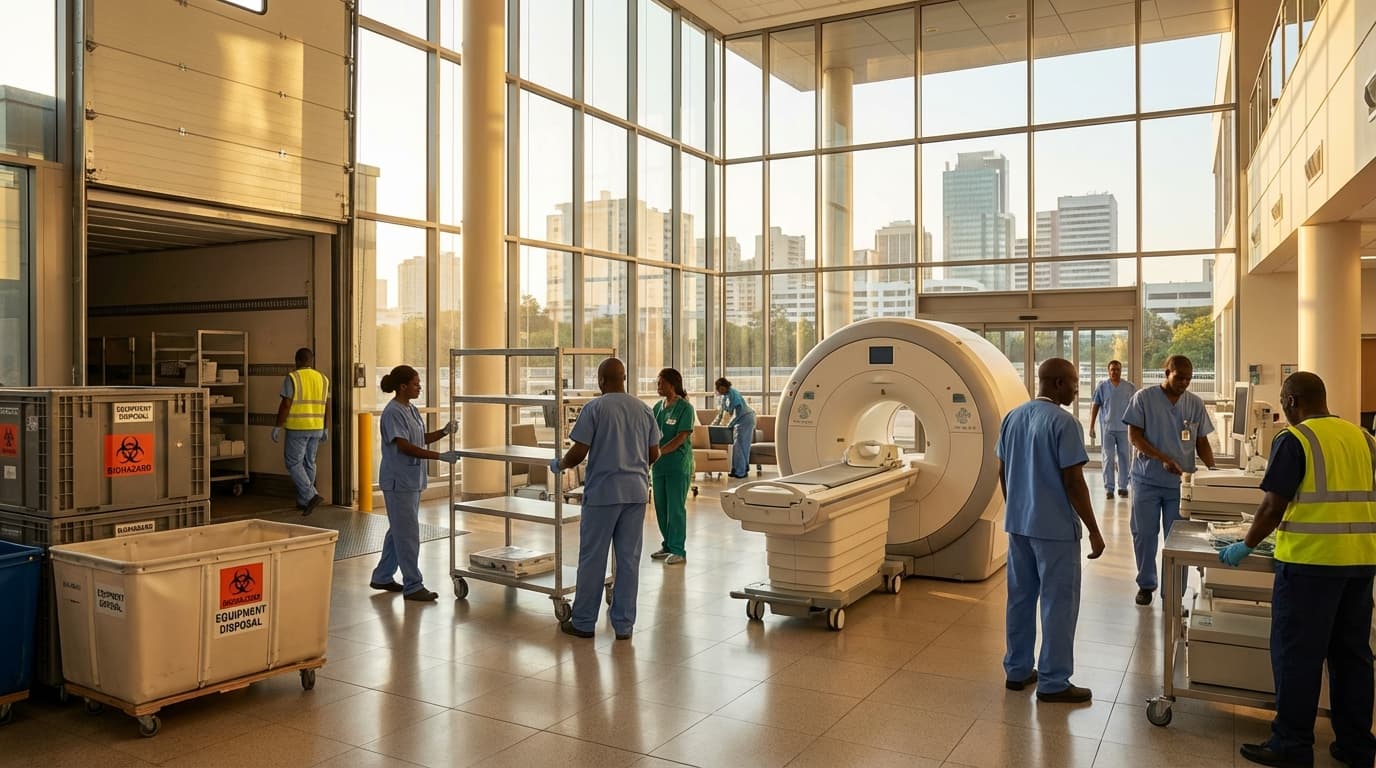
Medical Equipment Relocation Service (Move & Re-Install) in Ivory Coast
Engineering Excellence & Technical Support
Medical Equipment Relocation Service (Move & Re-Install) High-standard technical execution following OEM protocols and local regulatory frameworks.
Specialized Handling of Sensitive Medical Equipment
Our Ivory Coast team is expertly trained in the precise handling and secure transportation of delicate medical imaging equipment, including X-ray machines, MRI scanners, and CT scanners. We ensure zero compromise on calibration and operational integrity from point of origin to final re-installation.
Certified Clean Room Relocation & Re-installation
We offer specialized clean room logistics for critical medical devices. Our process adheres to stringent international standards for decontamination, packaging, and environmental control, guaranteeing sterile and operational re-installation of sensitive laboratory and surgical equipment in Ivory Coast.
On-Site Re-calibration & Performance Verification
Beyond just relocation, our service includes comprehensive on-site re-calibration and performance verification by certified technicians. We ensure all moved medical equipment in Ivory Coast meets manufacturer specifications and is fully ready for immediate clinical use post-re-installation.
What Is Medical Equipment Relocation Service (Move & Re-install) In Ivory Coast?
A Medical Equipment Relocation Service (Move & Re-Install) in Ivory Coast refers to a specialized logistical and technical undertaking that involves the safe, compliant, and efficient transportation of sensitive medical devices from one location to another within the country, followed by their meticulous re-installation, calibration, and functional verification at the new site. This service is critical for healthcare facilities undergoing expansion, renovation, relocation, or the acquisition of new equipment. The process demands adherence to stringent regulatory standards, preservation of equipment integrity, and minimization of operational downtime.
| Who Needs This Service? | Typical Use Cases |
|---|---|
| Hospitals and Clinics (Public and Private) | Relocation of entire departments (e.g., Radiology, ICU, Operating Theatres) due to facility upgrades or new construction. |
| Diagnostic Imaging Centers | Moving MRI, CT scanners, X-ray machines, and ultrasound equipment to new or expanded premises. |
| Specialized Medical Practices (e.g., Cardiology, Oncology, Dentistry) | Relocating high-value and sensitive equipment like Cath labs, linear accelerators, or advanced dental chairs. |
| Research Institutions and Laboratories | Transporting analytical instruments, centrifuges, and other laboratory apparatus requiring precise handling. |
| Medical Equipment Manufacturers and Distributors | As part of installation services for newly purchased equipment at client sites. |
| Government Health Agencies | Relocation of medical assets during public health initiatives or the establishment of new health centers. |
Key Components of Medical Equipment Relocation Service (Move & Re-Install):
- Pre-relocation Assessment: Detailed inventory, site surveys of origin and destination, risk assessment, and planning for specific equipment handling requirements (e.g., environmental controls, structural support).
- Dismantling and Preparation: Careful disassembly of complex equipment by certified technicians, appropriate packaging using specialized materials to prevent shock, vibration, and environmental damage, and secure labeling for transit.
- Transportation and Logistics: Utilization of climate-controlled, vibration-dampened vehicles, optimized route planning to minimize transit time and potential hazards, and adherence to regulations for transporting specialized goods.
- On-site Re-installation: Precise reassembly of equipment, connection to existing infrastructure (power, data, medical gases), and adherence to manufacturer specifications and local building codes.
- Calibration and Testing: Post-installation calibration of all critical parameters to ensure accuracy and performance, followed by comprehensive functional testing and performance verification.
- Operational Verification and Training: Confirmation of full operational readiness, troubleshooting of any initial issues, and often, provision of basic user training for on-site personnel.
- Documentation and Compliance: Generation of detailed relocation reports, maintenance of chain of custody records, and ensuring compliance with Ivorian health and safety regulations.
- Decommissioning/Recommissioning: For certain large or integrated systems, this may involve proper decommissioning at the origin and recommissioning at the destination, including software backups and system resets.
Who Needs Medical Equipment Relocation Service (Move & Re-install) In Ivory Coast?
Medical equipment relocation is a complex and critical process. It requires specialized knowledge, meticulous planning, and careful execution to ensure the integrity and functionality of sensitive medical devices. This service is essential for healthcare providers undergoing transitions that involve the movement of vital diagnostic, therapeutic, and life-support equipment. Failure to handle these moves correctly can lead to costly downtime, equipment damage, compromised patient care, and significant financial losses.
| Target Customer/Entity | Key Departments Benefiting |
|---|---|
| Hospitals (Public and Private) | Radiology/Imaging, Surgery, Intensive Care Units (ICU), Emergency Departments (ER), Operating Rooms (OR), Laboratories, Oncology, Cardiology, Central Sterile Supply Department (CSSD) |
| Clinics and Medical Centers | Diagnostic rooms, treatment areas, laboratories, administrative offices |
| Diagnostic Imaging Centers | Radiology (X-ray, CT, MRI), Ultrasound departments, Nuclear Medicine |
| Laboratories (Medical and Research) | Biochemistry, Hematology, Microbiology, Pathology, Molecular Biology, Research Labs |
| Specialized Medical Facilities | Dialysis units, radiotherapy centers, rehabilitation centers |
| Government Health Agencies | Public hospitals, health ministry facilities, regional health centers |
| NGOs involved in healthcare | Mobile clinics, remote healthcare facilities, project sites |
| Medical Equipment Manufacturers/Distributors | Installation teams, service departments, logistics |
| Research Institutions | Medical research labs, clinical trial facilities |
Who Needs Medical Equipment Relocation Service (Move & Re-Install) in Ivory Coast?
- Hospitals (Public and Private)
- Clinics and Medical Centers
- Diagnostic Imaging Centers
- Laboratories (Medical and Research)
- Specialized Medical Facilities (e.g., Dialysis Centers, Cancer Treatment Centers)
- Government Health Agencies
- Non-Governmental Organizations (NGOs) involved in healthcare
- Medical Equipment Manufacturers and Distributors (for installations and relocations)
- Research Institutions with medical departments
Medical Equipment Relocation Service (Move & Re-install) Process In Ivory Coast
This document outlines the typical workflow for a Medical Equipment Relocation Service (Move & Re-Install) in Ivory Coast, from the initial client inquiry to the successful completion of the relocation and re-installation of medical equipment.
| Phase | Key Activities | Description & Considerations (Ivory Coast Specific) | Responsible Parties |
|---|---|---|---|
| Phase 1: Inquiry & Assessment | Initial Contact & Needs Analysis | Client contacts the relocation service provider. Provider gathers information on the type, quantity, size, and condition of medical equipment, as well as the origin and destination locations. Considerations: Local understanding of import/export regulations for medical devices if crossing borders, even domestically. Availability of specialized personnel for specific equipment. | Client, Relocation Service Provider |
| Site Survey | On-site inspection of both origin and destination. | Assessing access points, potential obstacles, power requirements, environmental conditions (e.g., humidity, temperature control for sensitive equipment), and security at both locations. Considerations: Infrastructure challenges in certain regions of Ivory Coast (e.g., road quality, power stability), local permit requirements for moving large equipment. | Relocation Service Provider |
| Phase 2: Planning & Quotation | Developing a Detailed Relocation Plan | Creating a comprehensive plan outlining steps, timelines, equipment needs (specialized vehicles, lifting equipment), staffing, and risk mitigation strategies. Considerations: Potential for delays due to local holidays or administrative processes. Coordination with hospital/clinic administration and relevant government bodies. | Relocation Service Provider |
| Formal Quotation & Contract | Presenting a detailed quote including services, costs, and terms. | The quote covers de-installation, packaging, transportation, re-installation, testing, insurance, and any required permits. Considerations: Currency fluctuations and local taxation. Clear contract terms regarding liability and insurance. | Relocation Service Provider, Client |
| Phase 3: Pre-Relocation Preparations | Obtaining Necessary Permits & Approvals | Securing any required permits for moving heavy or specialized equipment, especially if it involves public roads or specific zones. Considerations: Navigating Ivorian bureaucracy for permits can be time-consuming. Engaging local agents might be beneficial. | Relocation Service Provider (with client's assistance) |
| Scheduling & Coordination | Finalizing dates and times with all stakeholders. | Aligning with the client's operational schedule to minimize disruption to patient care. Coordinating with building management at both locations. Considerations: Ensuring access to electricity and other utilities at the destination for testing. | Relocation Service Provider, Client |
| Phase 4: De-installation & Packaging | Safe De-installation of Equipment | Skilled technicians carefully disconnect and dismantle equipment, following manufacturer guidelines and safety protocols. Considerations: Maintaining original configuration and ensuring no damage during disconnection. Proper labeling of all components. | Relocation Service Provider (Specialized Technicians) |
| Specialized Packaging | Protecting equipment during transit. | Using appropriate materials (e.g., anti-static wrapping, custom crates, padding) to prevent damage from vibration, shock, and environmental factors. Considerations: Climate-controlled packaging may be necessary for sensitive devices. Compliance with international standards if applicable (even for domestic moves, best practice is key). | Relocation Service Provider (Packaging Specialists) |
| Phase 5: Transportation | Loading & Securing Equipment | Carefully loading packaged equipment onto specialized transport vehicles and securing it to prevent movement during transit. Considerations: Using vehicles equipped for sensitive cargo. Weight distribution and balance are crucial. | Relocation Service Provider (Logistics Team) |
| Transit | Transporting equipment to the destination. | Utilizing appropriate transportation methods based on distance and equipment type. Route planning to avoid obstacles or poor road conditions. Considerations: Monitoring transit progress. Security measures during transportation to prevent theft. | Relocation Service Provider (Logistics Team) |
| Phase 6: Re-installation & Testing | Unloading & Positioning | Carefully unloading and positioning the equipment at its new location, ensuring correct orientation and proximity to utilities. Considerations: Ensuring adequate space and accessibility for operation. | Relocation Service Provider (Logistics Team, Technicians) |
| Re-assembly & Connection | Re-assembling and connecting all components. | Technicians re-install the equipment, reconnecting power, data cables, and other necessary interfaces. Considerations: Following manufacturer's specifications for re-installation. | Relocation Service Provider (Specialized Technicians) |
| Testing & Calibration | Verifying functionality and performance. | Conducting comprehensive tests to ensure the equipment is operating within its specified parameters. Calibration may be required. Considerations: Availability of qualified personnel for calibration of specific medical devices. Client participation in acceptance testing. | Relocation Service Provider (Specialized Technicians), Client |
| Phase 7: Handover & Documentation | Final Inspection & Sign-off | Client inspects the re-installed equipment and provides final approval. Considerations: Thorough documentation of any issues or observations. | Client, Relocation Service Provider |
| Documentation & Training (if applicable) | Providing relevant documentation and basic operational guidance. | Handing over installation reports, test results, and any relevant operating manuals. Basic training on new configurations or essential operation may be provided. Considerations: Ensuring documentation is in a language understood by the client's staff. | Relocation Service Provider, Client |
| Phase 8: Post-Relocation Support | Post-Installation Follow-up | Checking in with the client to ensure satisfaction and address any immediate concerns. Considerations: Establishing a clear point of contact for any post-move issues. | Relocation Service Provider |
| Warranty & Maintenance | Addressing any remaining warranty or maintenance questions. | Clarifying warranty terms for the relocation service and providing information on ongoing equipment maintenance. Considerations: Understanding local support networks for specialized medical equipment. | Relocation Service Provider, Client |
Medical Equipment Relocation Service Workflow in Ivory Coast
- Phase 1: Inquiry & Assessment
- Phase 2: Planning & Quotation
- Phase 3: Pre-Relocation Preparations
- Phase 4: De-installation & Packaging
- Phase 5: Transportation
- Phase 6: Re-installation & Testing
- Phase 7: Handover & Documentation
- Phase 8: Post-Relocation Support
Medical Equipment Relocation Service (Move & Re-install) Cost In Ivory Coast
Relocating specialized medical equipment in Ivory Coast requires careful planning and execution to ensure the safety and integrity of sensitive instruments. The cost of such a service, often referred to as 'Move & Re-Install,' is influenced by several key factors. These factors determine the overall complexity, risk, and resources required, ultimately shaping the pricing structure. Understanding these elements is crucial for healthcare facilities and medical practitioners to budget effectively for their equipment relocation needs.
| Service Component / Equipment Type | Estimated Cost Range (XOF) | Notes |
|---|---|---|
| Consultation & Site Survey | 25,000 - 75,000 | For initial assessment, planning, and risk evaluation. Often included in larger quotes. |
| Basic Equipment (e.g., Examination Beds, Stethoscopes, BP Monitors) | 50,000 - 150,000 | Includes local transport and placement. Minimal dismantling. |
| Mid-Range Equipment (e.g., Small X-ray Units, Ultrasound Machines, Lab Analyzers) | 200,000 - 750,000 | May involve partial dismantling, specialized packing, and basic re-installation. |
| Large/Complex Equipment (e.g., MRI, CT Scanners, Sophisticated Surgical Systems) | 1,000,000 - 10,000,000+ | Significant dismantling, custom crating, specialized transport (potentially including air or sea freight for international), extensive re-installation, calibration, and testing by certified technicians. |
| Labor (per technician, per day) | 30,000 - 70,000 | Depending on skill level and specialization. |
| Specialized Packing Materials & Crating | 50,000 - 500,000+ | Varies greatly based on equipment size and fragility. |
| Insurance (typically a percentage of equipment value) | 1% - 5% of equipment value | Highly recommended for high-value items. |
| Inter-city/Regional Transport (per km) | 2,000 - 5,000 | Factors in fuel, vehicle wear, and driver time. |
| Re-installation & Calibration Services (specialist) | 100,000 - 1,000,000+ | Provided by manufacturer-certified technicians, especially for advanced imaging or surgical equipment. |
Key Pricing Factors for Medical Equipment Relocation in Ivory Coast:
- Type and Size of Equipment: Larger, heavier, or more delicate equipment (e.g., MRI machines, CT scanners, X-ray units, large laboratory analyzers) will inherently be more expensive to move due to the specialized handling, lifting equipment, and transport vehicles required. Smaller, less sensitive items (e.g., examination tables, basic diagnostic tools) will be more cost-effective.
- Distance of Relocation: The geographical distance between the old and new location is a primary cost driver. Longer distances involve higher fuel costs, increased labor time, and potentially overnight accommodation for the relocation crew. Local moves within the same city will be significantly cheaper than inter-regional or cross-country relocations.
- Accessibility and Site Conditions: The ease of access to both the pickup and delivery sites plays a vital role. Difficult access, such as narrow doorways, multiple flights of stairs without an elevator, unpaved roads, or sites requiring specialized permits, will increase labor and time, thus inflating the cost.
- Dismantling and Re-installation Complexity: The extent of dismantling required for the equipment and the intricacy of its re-installation and calibration at the new site are major determinants. Highly complex systems requiring expert technicians for re-assembly and testing will command higher fees. Some basic equipment might only require transportation and placement.
- Specialized Handling and Packing: Medical equipment often requires specific packing materials and techniques to prevent damage from vibrations, shocks, or environmental factors. The need for custom crating, climate-controlled transport, or anti-static packaging will add to the overall expense.
- Insurance Coverage: Adequate insurance for the valuable medical equipment during transit is paramount. The cost of comprehensive insurance will be factored into the relocation service fee.
- Urgency and Timeline: If the relocation needs to be completed on an expedited basis, an urgent surcharge may apply. Flexibility in scheduling can sometimes lead to cost savings.
- Additional Services: This can include services like environmental testing (e.g., temperature and humidity control), decommissioning of old equipment, or IT infrastructure setup related to the medical devices.
- Service Provider Expertise and Reputation: Established relocation companies with a proven track record in handling medical equipment, especially those with specialized training and certifications, may charge a premium for their expertise and reliability.
- Regulatory and Permit Requirements: Depending on the type of equipment and the locations involved, specific permits or adherence to certain regulations might be necessary, adding to the administrative and logistical costs.
Affordable Medical Equipment Relocation Service (Move & Re-install) Options
Relocating medical equipment requires specialized care, expertise, and adherence to strict protocols to ensure safety and functionality. Our Affordable Medical Equipment Relocation Service (Move & Re-Install) offers comprehensive solutions designed to minimize downtime and protect your valuable assets. We understand the unique challenges associated with moving sensitive medical technology, from delicate diagnostic machines to large-scale patient care units. Our services encompass secure packing, insured transportation, precise uncrating, and professional re-installation and calibration by certified technicians. We provide transparent pricing and offer value bundles to optimize your budget without compromising on quality or safety. Explore our cost-saving strategies and customized solutions to meet your specific relocation needs.
| Service Package | Description | Included Services | Potential Savings | Ideal For |
|---|---|---|---|---|
| Essential Move | Basic relocation for standard equipment. | De-installation, transport, uncrating, basic re-installation. | Lower upfront cost. | Smaller clinics, individual practice moves, less complex equipment. |
| Standard Bundle (Move & Re-Install) | Our most popular package, offering comprehensive relocation. | De-installation, specialized packing, insured transport, uncrating, re-installation, basic testing. | Discounted rate compared to individual services. | Hospitals, medium-sized clinics, multi-room equipment moves. |
| Comprehensive Care Bundle | Our premium package for maximum peace of mind. | All Standard Bundle services + full calibration, performance validation, site preparation assistance, extended warranty on re-installation. | Significant cost savings through bundled services and reduced risk of future issues. | Large medical facilities, high-value or highly sensitive equipment, critical care units. |
| Customized Solution | Tailored to your unique requirements. | Flexible scope of services based on specific needs and budget. | Optimized cost for specific equipment or site challenges. | Unique facility layouts, specialized research equipment, emergency relocations. |
Key Features of Our Affordable Medical Equipment Relocation Service
- Specialized handling for sensitive medical equipment
- Certified technicians for de-installation and re-installation
- Secure packing and crating to prevent damage
- Insured transportation with real-time tracking
- On-site assessment and planning
- Compliance with all relevant safety and regulatory standards
- Minimal downtime for your facility
- Post-installation testing and calibration
Verified Providers In Ivory Coast
In Ivory Coast's healthcare landscape, ensuring you're interacting with verified providers is paramount for receiving safe, effective, and ethical medical care. This is where "Franance Health" stands out as a beacon of trust and excellence. Franance Health isn't just a name; it's a commitment to rigorous credentialing and a guarantee of quality. Their stringent verification process ensures that all healthcare professionals and facilities associated with them meet the highest international standards. This meticulous approach provides patients with unparalleled peace of mind, knowing they are in capable and accredited hands. Choosing Franance Health-verified providers means opting for a healthcare experience built on expertise, integrity, and a patient-centric approach.
| Aspect of Verification | Franance Health's Approach | Benefit to Patients |
|---|---|---|
| Professional Licensing | Thorough validation of current and valid medical licenses issued by recognized authorities. | Guarantees providers are legally authorized to practice medicine. |
| Educational Background | Verification of academic qualifications from accredited institutions. | Ensures providers have received comprehensive theoretical and practical training. |
| Clinical Experience | Assessment of relevant work experience and specialization. | Confirms providers have practical expertise in their chosen fields. |
| Continuing Professional Development (CPD) | Requirement for providers to demonstrate ongoing learning and skill enhancement. | Ensures providers stay updated with the latest medical advancements and techniques. |
| Reputation and Background Checks | Investigates professional standing and absence of disciplinary actions. | Mitigates risks by ensuring providers have a good ethical record. |
Why Franance Health Credentials Represent the Best Choice:
- Rigorous Verification Process: Franance Health implements a multi-layered vetting system that scrutinizes professional licenses, educational backgrounds, and practical experience of all affiliated healthcare providers.
- Adherence to International Standards: Their credentials align with globally recognized benchmarks for medical practice, ensuring a high level of competence and safety.
- Commitment to Ethical Practice: Verification includes a thorough review of a provider's ethical conduct and adherence to professional codes of conduct, safeguarding patient rights.
- Enhanced Patient Safety: By partnering with verified providers, patients significantly reduce the risk of encountering unqualified or fraudulent practitioners.
- Access to Quality Care: Franance Health's network comprises highly skilled and reputable professionals, offering access to a superior standard of medical treatment.
- Transparency and Trust: The verified status provides a transparent and trustworthy indicator of a provider's legitimacy and quality, fostering confidence in the healthcare system.
Scope Of Work For Medical Equipment Relocation Service (Move & Re-install)
This Scope of Work (SOW) outlines the requirements for the relocation and re-installation of medical equipment. It details the services to be provided, technical deliverables, and standard specifications to ensure a safe, efficient, and compliant transition of sensitive medical devices. This SOW is intended for use by both the service provider and the client (hospital/healthcare facility).
| Section | Description | Technical Deliverables | Standard Specifications / Requirements | ||||||
|---|---|---|---|---|---|---|---|---|---|
| 1.0 Pre-Move Planning & Survey | Detailed assessment of all equipment to be moved, including size, weight, fragility, power requirements, and access points at both origin and destination. Development of a comprehensive move plan. | 1.1 Detailed Inventory List (with serial numbers, model numbers, and asset tags). | 1.1.1 Manufacturer's specifications for each equipment type. | 1.2 Site Survey Reports (origin and destination), including detailed floor plans, access route assessments, and potential obstacles. | 1.2.1 ADA compliance for all access routes. | 1.3 Move Plan & Schedule, including timelines, responsibilities, and contingency plans. | 1.3.1 Client approval of the Move Plan. | 1.4 Risk Assessment and Mitigation Plan. | 1.4.1 Identification of high-risk equipment and specific handling procedures. |
| 2.0 De-installation | Careful disconnection and disassembly of medical equipment at the origin location, ensuring proper labeling and documentation for re-installation. | 2.1 Professional disconnection of power, data, water, and gas lines. | 2.1.1 Adherence to manufacturer's de-installation guidelines. | 2.2 Secure labeling of all cables, components, and removed parts with unique identifiers linked to the equipment. | 2.2.1 Standardized color-coding for different connection types (e.g., power, data). | 2.3 Photography/videography of critical connection points and configurations for reference during re-installation. | 2.3.1 High-resolution images and video recordings. | 2.4 Secure storage of small parts and accessories. | 2.4.1 Use of dedicated, labeled containers. |
| 3.0 Packing & Protection | Appropriate packaging of medical equipment to prevent damage during transit, utilizing specialized materials and techniques. | 3.1 Use of anti-static, padded, and shock-absorbent materials (e.g., foam, bubble wrap, specialized crates). | 3.1.1 Materials certified for ESD (Electrostatic Discharge) protection where required. | 3.2 Secure crating or boxing for fragile or high-value items. | 3.2.1 Custom-built crates designed to fit specific equipment dimensions. | 3.3 Moisture and environmental protection (e.g., VCI bags, desiccant packs). | 3.3.1 Humidity indicators within packaging. | 3.4 Clear labeling of all packages with equipment name, destination room, handling instructions (e.g., 'Fragile', 'This Way Up'). | 3.4.1 International standards for handling symbols. |
| 4.0 Transportation | Secure and compliant transportation of packed medical equipment from the origin to the destination using specialized vehicles and trained personnel. | 4.1 Use of climate-controlled and air-ride suspension vehicles. | 4.1.1 GPS tracking for all transport vehicles. | 4.2 Trained and certified moving personnel with experience in handling delicate medical equipment. | 4.2.1 Background checks for all personnel. | 4.3 Securement of equipment within the transport vehicle to prevent shifting and damage. | 4.3.1 Use of appropriate restraints (straps, chocks). | 4.4 Compliance with all transportation regulations (e.g., DOT, local regulations). | 4.4.1 Hazardous materials transportation protocols, if applicable. |
| 5.0 Unpacking & Positioning | Careful unpacking and positioning of medical equipment at the designated location within the destination facility. | 5.1 Unpacking in a clean and designated area to prevent contamination. | 5.1.1 Use of clean unpacking materials. | 5.2 Careful removal of all protective packaging materials. | 5.2.1 Proper disposal of packaging waste. | 5.3 Positioning of equipment according to the approved move plan and facility layout. | 5.3.1 Verification of designated placement against floor plans. | ||
| 6.0 Re-installation & Connection | Professional re-installation and connection of medical equipment according to manufacturer specifications and facility requirements. | 6.1 Reconnection of power, data, water, and gas lines using proper labeling and procedures. | 6.1.1 Verification of correct power voltage and phase. | 6.2 Reassembly of any disassembled components. | 6.2.1 Following manufacturer's re-assembly guidelines. | 6.3 Ensuring all connections are secure and functional. | 6.3.1 Pressure testing for gas lines, if applicable. | ||
| 7.0 Testing & Calibration | Thorough testing and calibration of all re-installed medical equipment to ensure full operational functionality. | 7.1 Performing diagnostic checks as per manufacturer's recommendations. | 7.1.1 Use of manufacturer-approved diagnostic software. | 7.2 Calibration of critical parameters and sensors. | 7.2.1 Calibration traceable to national standards. | 7.3 Functional testing of all modes and features. | 7.3.1 Simulated patient scenarios for complex equipment. | 7.4 Performance verification against baseline data (if available). | 7.4.1 Pre- and post-move performance comparison. |
| 8.0 Final Handover & Documentation | Formal handover of re-installed equipment to the client, accompanied by comprehensive documentation. | 8.1 Client sign-off on successful re-installation and testing of each equipment item. | 8.1.1 Completion of a handover checklist for each equipment type. | 8.2 Provision of updated equipment inventory list. | 8.2.1 Signed and dated by both parties. | 8.3 Digital copies of all relevant documentation (move plan, site surveys, test reports). | 8.3.1 Secure cloud-based storage or client-provided media. | 8.4 Training for designated facility personnel on any operational changes or specific handling requirements post-relocation (if applicable). | 8.4.1 Manufacturer-certified trainers. |
| 9.0 Safety & Compliance | Adherence to all safety protocols, regulatory requirements, and manufacturer guidelines throughout the entire relocation process. | 9.1 Compliance with all applicable healthcare facility safety policies. | 9.1.1 Infection control protocols during the move. | 9.2 Adherence to manufacturer's warranty and service guidelines. | 9.2.1 Notification of manufacturer if any warranty might be affected. | 9.3 Provision of insurance coverage for equipment during transit and re-installation. | 9.3.1 Certificate of Insurance (COI) provided prior to commencement. | 9.4 Emergency response and incident reporting procedures. | 9.4.1 Clearly defined escalation paths. |
Key Objectives of the Medical Equipment Relocation Service
- Safe and secure transportation of all specified medical equipment from origin to destination.
- Minimizing downtime of critical medical equipment.
- Ensuring accurate and functional re-installation of all equipment.
- Compliance with all relevant safety, regulatory, and manufacturer guidelines.
- Maintaining the integrity and operational status of all equipment.
- Effective communication and coordination throughout the relocation process.
Service Level Agreement For Medical Equipment Relocation Service (Move & Re-install)
This Service Level Agreement (SLA) outlines the performance standards and guarantees for Medical Equipment Relocation Services, encompassing the complete process of moving and re-installing specified medical equipment. This SLA applies to all services rendered by [Service Provider Name] (hereinafter referred to as "Provider") to [Client Name] (hereinafter referred to as "Client"), as detailed in the Master Service Agreement (MSA) dated [Date of MSA].
| Service Component | Response Time | Uptime Guarantee (Post Re-Installation) |
|---|---|---|
| Initial Consultation & Site Assessment Scheduling | Within 4 business hours of request confirmation. | N/A |
| Site Assessment Completion & Proposal Delivery | Within 2 business days following the initial site visit. | N/A |
| Service Commencement (Post Agreement & Scheduling) | As per agreed-upon project timeline in the Annex A. | N/A |
| Emergency Support (Technical Issues Post Re-Installation - within warranty period) | On-site or remote support initiation within 4 business hours of reported critical failure. | 99.9% uptime for critical medical equipment (as defined in Annex B) within the first 30 days post-re-installation. For non-critical equipment, a best-effort approach to restore functionality. |
| Routine Support (Non-Critical Issues Post Re-Installation - within warranty period) | Remote support initiation within 8 business hours of reported issue. On-site visit scheduled within 24 business hours if remote resolution is not possible. | N/A |
Scope of Service
- Equipment Identification: The specific medical equipment to be relocated will be clearly defined in a separate attached Annex (Annex A), including serial numbers, model numbers, and any specialized handling requirements.
- Pre-Move Assessment: A thorough on-site assessment will be conducted by the Provider to evaluate the existing location, destination, access routes, and any potential challenges.
- Dismantling & Packaging: Safe and secure dismantling (if required) and professional packaging of the medical equipment using appropriate materials.
- Transportation: Secure and insured transportation of the equipment from the origin to the destination.
- Unloading & Positioning: Careful unloading and precise positioning of the equipment at the new location.
- Re-assembly & Calibration: Professional re-assembly of the equipment and performance of initial calibration and functional testing to ensure operational readiness.
- Documentation: Provision of a post-relocation report detailing the condition of the equipment upon arrival and successful re-installation.
Frequently Asked Questions

Ready when you are
Let's scope your Medical Equipment Relocation Service (Move & Re-Install) in Ivory Coast project in Ivory Coast.

Scaling healthcare logistics and technical systems across the entire continent.