
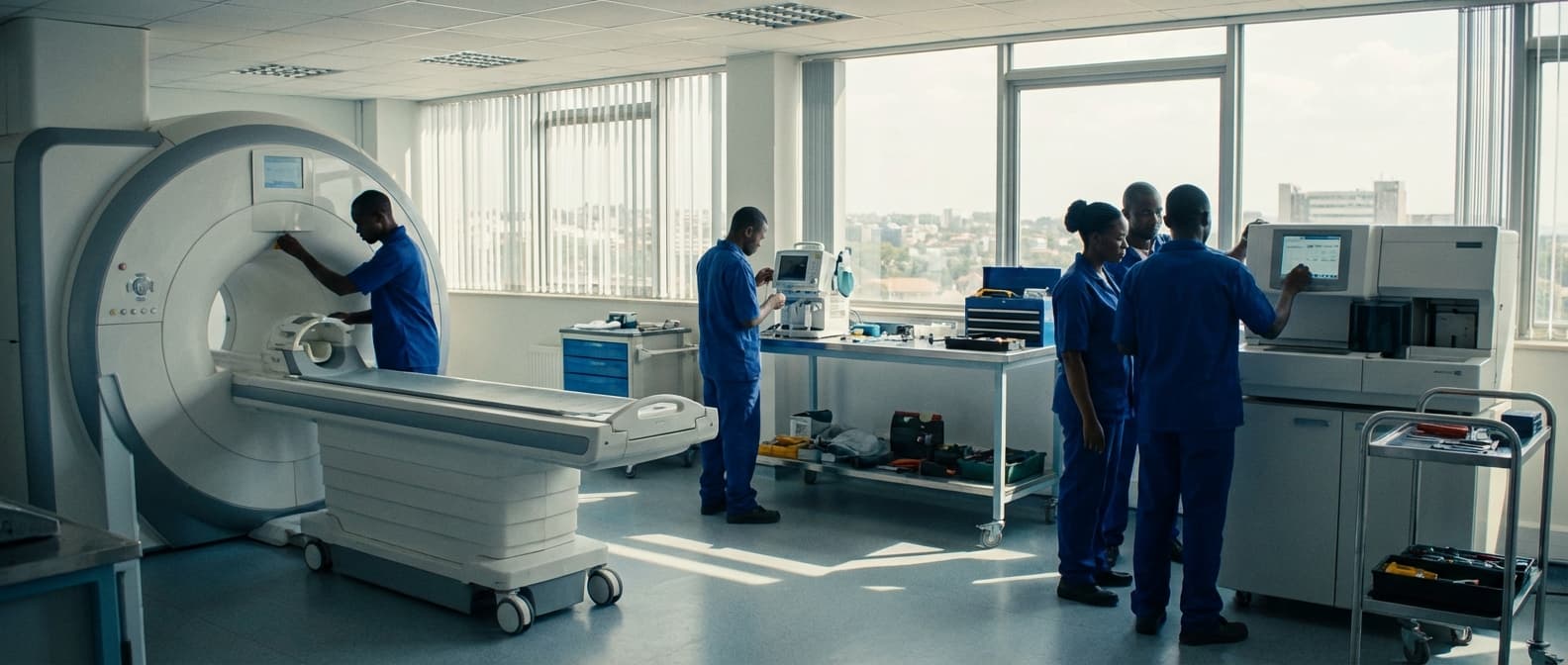
Planned Shutdown Coordination Service for Critical Equipment in Ivory Coast
Engineering Excellence & Technical Support
Planned Shutdown Coordination Service for Critical Equipment High-standard technical execution following OEM protocols and local regulatory frameworks.
Optimized Uptime Through Proactive Scheduling
Leveraging advanced predictive analytics and deep domain expertise, our service meticulously plans and coordinates critical equipment shutdowns in Ivory Coast. This minimizes unexpected downtime and maximizes operational continuity for essential industries like mining, oil & gas, and power generation.
Integrated Safety & Compliance Framework
We ensure all planned shutdowns adhere to stringent Ivorian safety regulations and international best practices. Our service integrates risk assessments, permit-to-work systems, and detailed execution plans, safeguarding personnel and assets throughout the maintenance process.
Cross-Functional Collaboration & Resource Alignment
Our expertise lies in orchestrating complex logistical challenges. We facilitate seamless coordination between internal maintenance teams, external contractors, and regulatory bodies in Ivory Coast, ensuring optimal resource allocation and efficient execution of shutdown activities for maximum operational impact.
What Is Planned Shutdown Coordination Service For Critical Equipment In Ivory Coast?
The Planned Shutdown Coordination Service for Critical Equipment in Ivory Coast is a specialized operational support function designed to manage and optimize the planned and scheduled cessation of operation for essential industrial and infrastructure assets. This service is paramount for maintaining the integrity, reliability, and safety of high-value, mission-critical equipment by ensuring that downtime for maintenance, upgrades, or inspections is executed with minimal disruption to ongoing operations and downstream processes. It encompasses a holistic approach to planning, scheduling, executing, and recovering from planned outages, integrating technical expertise, resource management, and risk mitigation strategies.
| Service Area | Description | Target Stakeholders | Typical Use Cases |
|---|---|---|---|
| Industrial Manufacturing | Management of planned maintenance and overhauls for production machinery, process lines, and utility systems. | Manufacturing plants, processing facilities, chemical plants, automotive factories. | Annual major maintenance, equipment upgrades, technology integration, compliance-driven shutdowns. |
| Energy Sector (Oil & Gas, Power Generation) | Coordination of planned outages for refineries, power plants, offshore platforms, and transmission infrastructure. | Oil and gas companies, power utility operators, transmission system operators. | Turnarounds, catalyst regeneration, turbine overhauls, grid infrastructure maintenance, fuel conversion projects. |
| Mining and Metallurgy | Scheduling and execution of maintenance for heavy mining equipment, processing plants, smelters, and refineries. | Mining corporations, metallurgical processing facilities. | Scheduled maintenance of crushers, mills, conveyor systems, furnaces, and associated infrastructure. |
| Infrastructure and Utilities | Planned shutdowns for critical public infrastructure such as water treatment plants, wastewater facilities, and telecommunications networks. | Municipalities, water authorities, telecommunications providers. | Treatment plant upgrades, pipeline repairs, network modernization, asset renewal projects. |
| Logistics and Transportation | Coordination of planned downtime for port facilities, railway infrastructure, and air traffic control systems. | Port authorities, railway operators, airport management. | Terminal upgrades, track maintenance, navigation system upgrades, runway resurfacing. |
Key Components of the Planned Shutdown Coordination Service
- Scope Definition and Objective Setting: Clearly delineating the boundaries of the shutdown, defining specific maintenance, inspection, or upgrade tasks, and establishing measurable objectives for the outage.
- Detailed Planning and Scheduling: Developing comprehensive work plans, resource allocation matrices (personnel, materials, specialized tools), and critical path method (CPM) scheduling to optimize timelines and minimize duration.
- Risk Assessment and Mitigation: Identifying potential hazards, operational risks, safety concerns, and environmental impacts associated with the shutdown and implementing robust mitigation strategies and contingency plans.
- Stakeholder Communication and Coordination: Facilitating seamless communication and collaboration among all involved parties, including internal operational teams, maintenance departments, engineering, external contractors, regulatory bodies, and supply chain partners.
- Permitting and Regulatory Compliance: Ensuring all necessary permits, licenses, and regulatory approvals are secured prior to and during the shutdown period.
- Resource Management and Logistics: Orchestrating the procurement, mobilization, and demobilization of all required resources, including skilled labor, specialized equipment, spare parts, and consumables.
- Execution Oversight and Quality Assurance: Providing on-site supervision and technical guidance during the shutdown, ensuring adherence to established procedures, quality standards, and safety protocols.
- Post-Shutdown Reinstatement and Verification: Managing the safe and efficient recommissioning of equipment, conducting performance testing, and verifying that all objectives have been met before returning assets to operational status.
- Documentation and Lessons Learned: Compiling detailed shutdown reports, maintaining accurate records, and conducting post-shutdown reviews to capture lessons learned for future planning and continuous improvement.
Who Needs Planned Shutdown Coordination Service For Critical Equipment In Ivory Coast?
Planned shutdown coordination services are vital for ensuring the reliable and efficient operation of critical equipment in Ivory Coast. These services are designed to minimize disruptions, optimize maintenance schedules, and prevent costly unplanned downtime. Industries relying heavily on continuous operations, complex machinery, and strict safety regulations are the primary beneficiaries.
| Target Customer Industry | Key Departments Involved |
|---|---|
| Oil and Gas (Upstream, Midstream, Downstream) | Operations, Maintenance, Safety, Production, Engineering, Asset Integrity |
| Mining and Metallurgy | Operations, Maintenance, Engineering, Production, Health & Safety |
| Power Generation and Distribution | Operations, Maintenance, Engineering, Grid Management, Safety |
| Manufacturing (e.g., Cement, Chemicals, Food & Beverage, Automotive) | Production, Maintenance, Engineering, Quality Control, Operations |
| Telecommunications Infrastructure | Network Operations, Maintenance, Engineering, Site Management |
| Water Treatment and Distribution | Operations, Maintenance, Engineering, Environmental Compliance |
| Large-Scale Agriculture and Agro-Processing | Operations, Maintenance, Engineering, Production, Logistics |
Who Needs Planned Shutdown Coordination Services in Ivory Coast?
- Industries with continuous or near-continuous operations where any downtime has significant financial implications.
- Companies operating complex, interconnected machinery that requires intricate scheduling for maintenance.
- Organizations adhering to stringent safety and environmental regulations, where planned shutdowns are essential for compliance and risk mitigation.
- Businesses seeking to reduce operational costs through optimized maintenance and prevention of expensive emergency repairs.
- Entities managing aging infrastructure that requires regular and meticulously planned interventions.
Planned Shutdown Coordination Service For Critical Equipment Process In Ivory Coast
This document outlines the workflow for the Planned Shutdown Coordination Service for Critical Equipment, specifically designed for operations in Ivory Coast. This service ensures efficient and safe execution of planned shutdowns, minimizing downtime and optimizing resource allocation.
| Stage | Description | Key Activities | Responsible Parties | Deliverables |
|---|---|---|---|---|
| Initial contact from the client regarding a planned shutdown requirement. | Receive and review client's initial request. Discuss equipment criticality, desired shutdown dates, and preliminary objectives. Understand operational context in Ivory Coast. | Client, Service Provider (Coordination Team) | Initial understanding of shutdown scope and objectives. |
| Detailed definition of the shutdown scope and comprehensive planning. | Conduct site visits (if necessary). Define specific equipment for shutdown. Establish detailed work scope, including maintenance, inspection, and upgrade tasks. Develop a detailed timeline and schedule. Identify potential risks and mitigation strategies. Define safety protocols and environmental considerations specific to Ivory Coast. | Service Provider (Coordination Team), Client Engineering & Operations Teams | Detailed Shutdown Plan, Gantt Chart/Schedule, Risk Assessment Matrix, Safety Plan. |
| Gathering and preparing all necessary resources for the shutdown. | Identify and procure required specialized personnel (internal/external). Secure necessary tools, equipment, and materials. Arrange for logistics, including transportation, accommodation, and local permits/clearances in Ivory Coast. Confirm supplier and vendor readiness. | Service Provider (Procurement & Logistics), Client Procurement | Mobilized workforce, confirmed equipment and materials, logistical arrangements. |
| Preparatory work before the actual shutdown commencement. | Conduct pre-shutdown safety briefings and training. Isolate and de-energize equipment as per procedure. Finalize site preparation and access control. Review detailed work instructions with execution teams. Confirm all permits and authorizations are in place. | Service Provider (Coordination Team & Execution Teams), Client Operations & Safety Teams | Ready for shutdown execution, confirmed safety compliance. |
| The period when critical equipment is offline and planned activities are performed. | Manage and coordinate all on-site activities. Monitor progress against the schedule. Implement safety protocols rigorously. Conduct daily progress meetings and address any issues. Ensure quality control of executed tasks. Maintain clear communication channels. | Service Provider (On-site Management & Execution Teams), Client Representatives | Completed planned maintenance, repairs, or upgrades. Equipment availability for restart. |
| Activities following the completion of planned work. | Perform pre-start checks and functional testing of equipment. Gradual re-energization and recommissioning of equipment. Verify successful completion of all tasks. Demobilize personnel and equipment. Site cleanup and restoration. | Service Provider (Execution Teams & Commissioning Engineers), Client Operations & Maintenance Teams | Commissioned and operational critical equipment, demobilization report. |
| Documentation and evaluation of the shutdown's performance. | Prepare a comprehensive post-shutdown report detailing work completed, deviations from plan, lessons learned, and final costs. Analyze shutdown performance against objectives and KPIs. Provide recommendations for future shutdowns. Conduct a post-mortem meeting with the client. | Service Provider (Coordination Team & Project Management), Client Management | Post-Shutdown Report, Lessons Learned Document, Final Cost Analysis, Recommendations for Future Improvements. |
Workflow Stages
- Inquiry and Needs Assessment
- Scope Definition and Planning
- Resource Mobilization
- Pre-Shutdown Activities
- Shutdown Execution
- Post-Shutdown Activities
- Reporting and Analysis
Planned Shutdown Coordination Service For Critical Equipment Cost In Ivory Coast
Coordinating planned shutdowns for critical equipment in Ivory Coast involves a complex interplay of factors that influence the overall cost. These factors range from the scope and duration of the shutdown to the specific industry, the expertise of the service provider, and the required safety and regulatory compliance. A well-managed shutdown aims to minimize disruption, enhance safety, and ensure the longevity of critical assets, making the investment in a specialized coordination service a strategic decision for many businesses in sectors like oil and gas, manufacturing, mining, and power generation.
| Service Component | Estimated Price Range (XOF - CFA Franc BCEAO) |
|---|---|
| Initial Consultation and Assessment | 50,000 - 200,000 |
| Detailed Shutdown Planning & Scheduling (per week of planning) | 250,000 - 750,000 |
| On-Site Project Management (per day) | 150,000 - 500,000 |
| Safety and Compliance Oversight (per day) | 100,000 - 300,000 |
| Logistics and Resource Coordination (variable) | Negotiable (often a percentage of sub-contracted costs or a daily rate) |
| Specialized Technical Support (per day, depending on skill) | 200,000 - 800,000+ |
| Risk Assessment and Mitigation Planning | 100,000 - 400,000 |
| Post-Shutdown Reporting and Analysis | 50,000 - 200,000 |
| Comprehensive Shutdown Coordination Package (Small to Medium Scale) | 2,000,000 - 10,000,000+ |
| Comprehensive Shutdown Coordination Package (Large Scale/Complex) | 10,000,000 - 50,000,000+ |
Key Pricing Factors for Planned Shutdown Coordination Services in Ivory Coast
- Scope and Complexity of the Shutdown: The more equipment involved, the more intricate the coordination, and the higher the cost. This includes the number of units, their interdependence, and the criticality of each.
- Duration of the Shutdown: Longer shutdowns naturally incur higher coordination costs due to extended project management, personnel deployment, and potential site access fees.
- Industry and Equipment Type: Different industries have varying regulatory requirements and specialized needs. For example, a shutdown in the oil and gas sector may be more complex and expensive than in a light manufacturing setting.
- Service Provider Expertise and Reputation: Highly experienced and reputable service providers with a proven track record in complex shutdowns often command higher fees, reflecting their efficiency and risk mitigation capabilities.
- Geographic Location and Accessibility: Remote locations or sites with difficult access can increase logistical costs, including transportation of personnel and equipment, accommodation, and site preparation.
- Required Safety and Regulatory Compliance: Adherence to stringent national and international safety standards, environmental regulations, and industry-specific compliance protocols adds to the cost through specialized training, equipment, and auditing.
- Resource Augmentation and Specialized Skills: The need for specific skilled labor (e.g., specialized welders, certified inspectors, hazardous materials handlers) during the shutdown period will impact costs.
- Technology and Tools Employed: The use of advanced planning software, simulation tools, digital twins, and specialized diagnostic equipment can increase upfront costs but often lead to greater efficiency and reduced downtime.
- Contingency Planning and Risk Management: The level of detail in contingency planning and the extent of risk management strategies employed by the service provider will influence the pricing.
- Pre-Shutdown Planning and Post-Shutdown Analysis: Comprehensive pre-shutdown assessments and post-shutdown performance reviews are crucial and contribute to the overall service cost.
Affordable Planned Shutdown Coordination Service For Critical Equipment Options
Our Affordable Planned Shutdown Coordination Service is designed to minimize disruption and maximize efficiency during critical equipment maintenance and upgrades. We offer flexible value bundles tailored to your specific needs, ensuring you receive comprehensive support without exceeding your budget. Our approach focuses on proactive planning, meticulous execution, and cost-saving strategies to deliver exceptional value.
| Value Bundle Tier | Description | Core Features | Optional Add-ons | Estimated Cost Savings Potential |
|---|---|---|---|---|
| Essential Support | For organizations with internal resources but requiring specialized planning expertise. | Detailed planning & scheduling, basic risk assessment, vendor coordination. | On-site supervision (limited), basic reporting. | 5-10% through optimized scheduling and reduced overruns. |
| Comprehensive Coordination | Ideal for organizations needing end-to-end management of their planned shutdowns. | All Essential Support features, plus advanced risk mitigation, full vendor/contractor management, stakeholder communication. | Detailed post-shutdown analysis, emergency response planning. | 10-15% through streamlined execution and minimized downtime. |
| Strategic Partnership | For organizations seeking a fully integrated and proactive approach to critical equipment maintenance. | All Comprehensive Coordination features, plus continuous improvement initiatives, strategic asset management integration, proactive obsolescence planning. | Customized reporting dashboards, dedicated project manager. | 15-25% through long-term efficiency gains, predictive maintenance integration, and optimized asset lifecycle. |
Key Service Components
- Detailed Planning & Scheduling: Development of comprehensive shutdown plans, timelines, and resource allocation.
- Risk Assessment & Mitigation: Identification of potential risks and implementation of strategies to minimize downtime and safety hazards.
- Vendor & Contractor Management: Coordination and oversight of all third-party service providers.
- Communication & Stakeholder Engagement: Ensuring clear and consistent communication with all relevant parties.
- On-site Supervision & Execution Support: Providing expert guidance and support during the shutdown period.
- Post-Shutdown Analysis & Reporting: Reviewing performance, identifying lessons learned, and providing detailed reports.
- Emergency Response Planning: Developing protocols for unexpected issues that may arise.
Verified Providers In Ivory Coast
In Ivory Coast's burgeoning healthcare landscape, identifying trusted and credentialed providers is paramount. Franance Health has emerged as a leading name, consistently demonstrating a commitment to quality, patient care, and ethical practices. Their rigorous credentialing process ensures that all affiliated medical professionals and facilities meet the highest standards, offering patients peace of mind and access to exceptional healthcare services. Choosing a Franance Health verified provider means opting for expertise, reliability, and a patient-centered approach.
| Aspect | Franance Health Verification | Implication for Patients |
|---|---|---|
| Provider Qualification | Rigorous assessment of medical licenses, certifications, and peer reviews. | Ensures competence and specialized expertise. |
| Facility Standards | Inspection of infrastructure, equipment, and adherence to safety/hygiene protocols. | Guarantees a safe and well-equipped healthcare environment. |
| Ethical Practices | Review of ethical conduct, patient rights adherence, and professional integrity. | Promotes trust and respectful patient-provider relationships. |
| Continuing Education | Verification of participation in ongoing professional development programs. | Ensures providers are up-to-date with the latest medical advancements. |
| Patient Feedback Mechanisms | Inclusion of systems for gathering and acting upon patient feedback. | Drives continuous improvement in service quality. |
Key Benefits of Choosing Franance Health Verified Providers:
- Unwavering Commitment to Quality: Franance Health rigorously vets all providers, ensuring they adhere to international best practices and local regulations.
- Expert Medical Professionals: Access a network of highly qualified doctors, specialists, and nurses with proven track records and specialized skills.
- State-of-the-Art Facilities: Verified institutions are equipped with modern technology and maintain stringent hygiene and safety standards.
- Patient-Centric Care: Providers are selected for their dedication to patient well-being, compassionate treatment, and transparent communication.
- Enhanced Trust and Reliability: The Franance Health seal signifies a trusted partner in your healthcare journey, reducing the risk of subpar services.
- Streamlined Access to Services: Franance Health facilitates easier access to a network of reputable healthcare providers, simplifying appointment booking and care coordination.
Scope Of Work For Planned Shutdown Coordination Service For Critical Equipment
This Scope of Work (SOW) outlines the services required for the planning, coordination, and execution oversight of planned shutdowns for critical equipment. The objective is to minimize downtime, ensure safety, and maintain the integrity of the equipment and associated systems during scheduled maintenance and upgrade activities. The service provider will be responsible for all aspects of shutdown planning and coordination, from initial scope definition to post-shutdown reporting, adhering to strict technical deliverables and standard specifications.
| Technical Deliverable | Description | Standard Specification / Reference | Format |
|---|---|---|---|
| Shutdown Management Plan | Comprehensive document detailing all aspects of the shutdown, including objectives, scope, schedule, resource plan, risk assessment, safety plan, communication plan, and contingency plans. | Client's Shutdown Procedure Document; Industry Best Practices (e.g., PMI, asset management standards). | PDF, Word Document |
| Detailed Shutdown Schedule | Critical path method (CPM) schedule outlining all activities, durations, dependencies, resource assignments, and milestones. Includes pre-shutdown, execution, and post-shutdown phases. | Primavera P6, Microsoft Project; Client's scheduling standards. | P6 File, MPP File, PDF Gantt Chart |
| Risk Register & Mitigation Plan | Identification of potential risks, their likelihood and impact, and the corresponding mitigation strategies and contingency plans. | Client's HSE Manual; HAZOP/HAZID methodologies. | Excel Spreadsheet, PDF |
| Permit to Work (PTW) Matrix & Log | Matrix defining required PTW for each activity and a log tracking the status of all issued and closed permits. | Client's PTW System and Procedures. | Excel Spreadsheet, PDF Log |
| Resource Allocation Matrix | Details of all personnel (internal/external), equipment, and materials required for each phase of the shutdown, including their availability and allocation. | Client's HR policies; Vendor supply chain management standards. | Excel Spreadsheet, PDF |
| Safety & Environmental Management Plan | Specific procedures for ensuring safe execution of work, including emergency response, fire prevention, hazardous material handling, and waste management. | Client's HSE Policies and Procedures; ISO 14001, ISO 45001. | PDF, Word Document |
| Technical Work Instructions / Method Statements | Detailed instructions for specific maintenance, repair, or upgrade tasks, reviewed and approved by relevant technical authorities. | Vendor Manuals; Client's Engineering Standards; Manufacturer Specifications. | PDF, Word Document |
| Daily Progress Reports | Concise reports summarizing work completed, work in progress, planned activities for the next period, issues encountered, and safety observations. | Client's reporting templates; agreed daily reporting format. | Email, PDF, Online Dashboard |
| Shutdown Close-out Report | Comprehensive report detailing work accomplished, deviations from the plan, actual resource utilization, costs incurred, lessons learned, and recommendations for future shutdowns. | Client's closing procedure; agreed reporting template. | PDF, Word Document |
| As-Built Documentation (if applicable) | Updated drawings, manuals, and specifications reflecting any changes made during the shutdown. | Client's CAD standards; Manufacturer documentation. | CAD Files, PDF, Digital formats |
Key Activities and Responsibilities
- Shutdown Planning & Strategy Development: Defining shutdown objectives, scope, duration, and necessary resources.
- Detailed Schedule Creation: Developing a comprehensive, critical path-based schedule for all shutdown activities, including pre-shutdown, during-shutdown, and post-shutdown phases.
- Resource Management & Allocation: Identifying and coordinating the availability of internal personnel, external contractors, specialized tools, and materials.
- Risk Assessment & Mitigation: Conducting thorough risk assessments for all shutdown activities and developing mitigation strategies.
- Permit to Work (PTW) Coordination: Ensuring all necessary PTW are obtained and managed effectively.
- Safety Management & Oversight: Implementing and enforcing all site safety regulations and procedures during the shutdown.
- Technical Coordination: Liaising with equipment vendors, engineering teams, and maintenance personnel to ensure technical integrity.
- Logistics & Site Management: Managing site access, laydown areas, temporary facilities, and waste disposal.
- Communication & Reporting: Establishing clear communication channels and providing regular progress reports to stakeholders.
- Quality Assurance & Control (QA/QC): Ensuring all work performed meets the required quality standards.
- Post-Shutdown Activities: Overseeing functional testing, performance validation, and handover processes.
- Lessons Learned & Continuous Improvement: Documenting lessons learned and recommending improvements for future shutdowns.
Service Level Agreement For Planned Shutdown Coordination Service For Critical Equipment
This Service Level Agreement (SLA) outlines the terms and conditions for the Planned Shutdown Coordination Service for Critical Equipment, focusing on response times and uptime guarantees. It aims to ensure minimal disruption during scheduled maintenance and upgrades. This SLA applies to all agreed-upon planned shutdown coordination services provided by [Provider Name] to [Client Name].
| Service Component | Response Time Target | Uptime Guarantee (Excluding Planned Downtime) | Notes/Escalation |
|---|---|---|---|
| Initial Acknowledgement of Planned Shutdown Request | 2 Business Hours | N/A | Applies to requests submitted through designated channels during business hours. For off-hours requests, acknowledgement within 4 Business Hours. |
| Draft Shutdown Schedule and Resource Plan Submission | 5 Business Days (post-acknowledgement) | N/A | Subject to client providing all necessary input within 2 business days of request. May vary based on complexity. |
| Coordination During Shutdown Window (Communication & Issue Triage) | 1 Business Hour (for critical coordination issues) | N/A | Applies to active coordination during the agreed shutdown window. Escalation to senior technical staff within 2 hours if initial triage is unsuccessful. |
| Post-Shutdown Verification and Reporting | 1 Business Day (post-resumption) | N/A | Includes confirmation of equipment readiness and summary of coordination activities. |
| Emergency Coordination Support (for unforeseen issues impacting shutdown) | 30 Minutes (initial contact) | N/A | For critical issues that arise unexpectedly during the planned shutdown window and threaten the resumption timeline. 24/7 availability for emergency coordination. |
| Overall Critical Equipment Uptime | N/A | 99.9% (excluding approved planned downtime) | This guarantee applies to the uptime of the critical equipment itself, as facilitated by effective coordination of planned shutdowns. Provider is not responsible for client-side configuration or external dependencies. |
Key Definitions
- Critical Equipment: Any piece of operational hardware, software, or system whose failure or downtime would significantly impact business operations, safety, or revenue.
- Planned Shutdown: A scheduled cessation of operation for specific critical equipment, initiated for maintenance, upgrades, or other planned activities.
- Coordination Service: The set of activities performed by the provider to facilitate and manage the planning, execution, and resumption of a planned shutdown, including communication, scheduling, resource allocation, and risk mitigation.
- Response Time: The maximum time allowed for the provider to acknowledge and begin addressing a request or incident related to the coordination service.
- Uptime Guarantee: The minimum percentage of time that the critical equipment is expected to be operational, excluding agreed-upon planned downtime.
- Downtime: The period during which critical equipment is not operational, whether planned or unplanned.
Frequently Asked Questions

Ready when you are
Let's scope your Planned Shutdown Coordination Service for Critical Equipment in Ivory Coast project in Ivory Coast.

Scaling healthcare logistics and technical systems across the entire continent.