
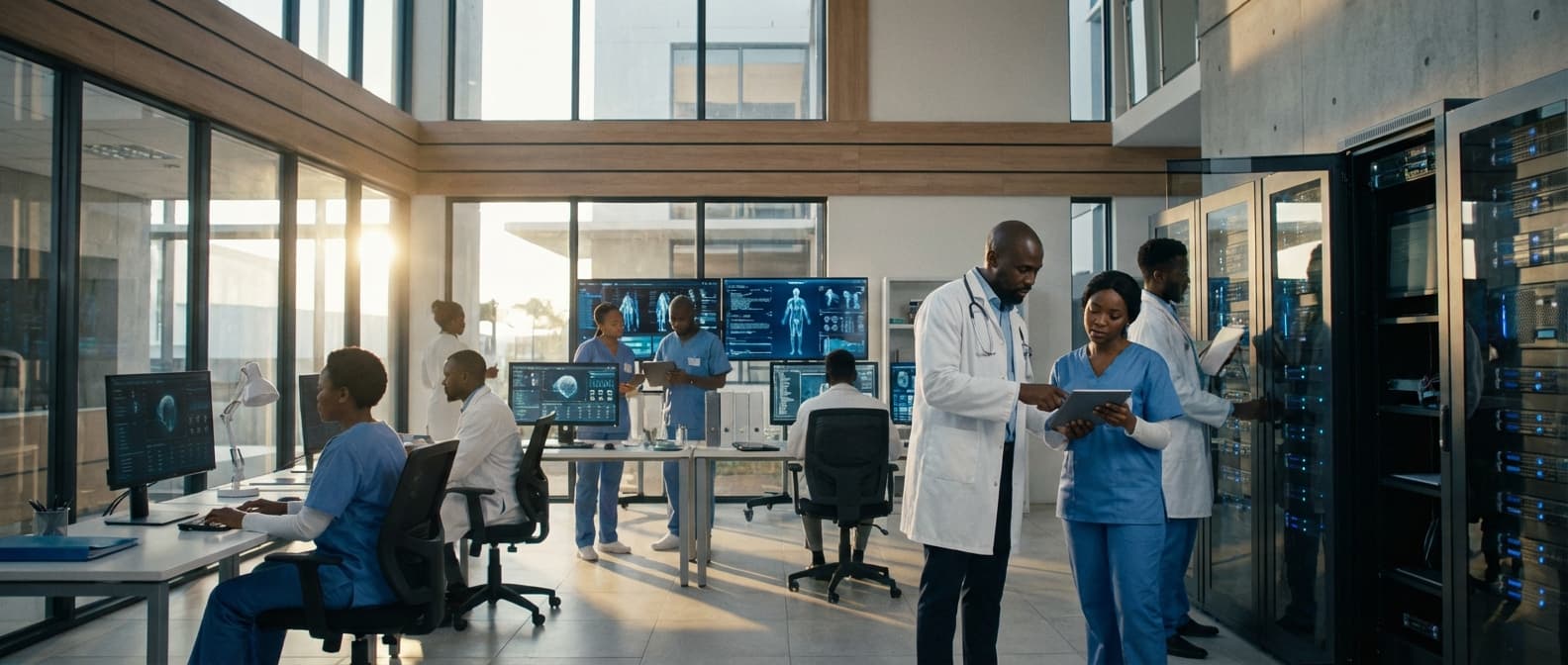
Tele-Radiology in Ivory Coast
Engineering Excellence & Technical Support
24/7 access to certified radiologists providing rapid, accurate remote interpretation of diagnostic imaging studies. High-standard technical execution following OEM protocols and local regulatory frameworks.
Expanded Access to Subspecialty Expertise
Tele-radiology platforms connect remote Ivorian clinics with subspecialist radiologists, enabling timely diagnosis of complex cases (e.g., neuroimaging, cardiac imaging) previously unavailable locally, leading to improved patient outcomes and reduced medical tourism.
Accelerated Diagnostic Turnaround Times
Digital image transfer and cloud-based PACS systems allow for rapid transmission of medical images from rural or underserved areas to radiologists, significantly reducing report turnaround times and enabling faster treatment initiation for critical conditions like stroke or trauma.
Enhanced Local Radiologist Training and Development
Tele-radiology facilitates remote case reviews and mentorship opportunities between experienced international radiologists and emerging Ivorian talent. This direct collaboration supports continuous learning, skill enhancement, and the development of a robust local radiology workforce.
What Is Tele-radiology In Ivory Coast?
Tele-radiology in Ivory Coast refers to the practice of transmitting radiological images (such as X-rays, CT scans, MRIs, and ultrasounds) from one geographical location to another for expert interpretation. This service leverages telecommunications technology, including the internet and specialized Picture Archiving and Communication Systems (PACS) and Radiological Information Systems (RIS), to enable remote reading and reporting of diagnostic imaging studies. The core objective is to overcome geographical barriers, improve access to specialized radiological expertise, and expedite diagnostic turnaround times, particularly in underserved or remote areas of Ivory Coast where qualified radiologists may be scarce.
| Use Case | Description | Radiological Modality | Clinical Impact |
|---|---|---|---|
| Emergency Department Triage | Rapid interpretation of acute trauma, stroke, or cardiac imaging to facilitate immediate clinical decision-making. | CT, X-ray, MRI, Ultrasound | Reduced mortality and morbidity through timely intervention. |
| Subspecialty Consultations | Obtaining expert opinions on complex cases in fields like neuro-radiology, musculoskeletal radiology, or pediatric radiology from specialists located elsewhere. | MRI, CT, PET-CT | Improved diagnostic accuracy and personalized treatment planning for complex conditions. |
| Rural Health Center Support | Providing basic diagnostic imaging interpretation for primary healthcare facilities to screen for common pathologies. | X-ray, Ultrasound | Increased access to essential diagnostics in underserved regions, enabling earlier detection of treatable diseases. |
| Outpatient Follow-up and Screening | Interpreting imaging for routine follow-up of chronic conditions or for public health screening programs (e.g., tuberculosis, breast cancer). | X-ray, Mammography, CT | Enhanced management of chronic diseases and early detection of asymptomatic malignancies. |
| Inter-hospital Referrals | Facilitating seamless transfer of imaging and reports between different healthcare facilities for further management or specialized procedures. | All modalities | Streamlined patient care pathways and improved continuity of care. |
Key Components and Beneficiaries of Tele-radiology in Ivory Coast
- Service Components:
- Image Acquisition: Radiological examinations performed at local healthcare facilities.
- Image Transmission: Secure digital transfer of DICOM-compliant images via broadband internet or dedicated networks to a remote reading center.
- Remote Interpretation: Board-certified radiologists at the remote center analyze the images and generate diagnostic reports.
- Report Delivery: Secure transmission of the finalized reports back to the originating facility, often integrated with the local RIS/PACS.
- Consultation and Quality Assurance: Opportunities for referring physicians to consult with remote radiologists and ongoing quality control mechanisms.
- Beneficiaries:
- Patients in Rural and Remote Areas: Access to advanced diagnostic imaging interpretation previously unavailable locally.
- Hospitals and Clinics with Limited Radiologist Staff: Supplementation of existing radiology services, reducing workload and wait times.
- Referral Centers and Tertiary Hospitals: Expedited interpretation of complex cases and subspecialty reads.
- Emergency Departments: Rapid turnaround for critical imaging studies requiring immediate diagnosis.
- Public Health Initiatives: Facilitating screening programs and disease surveillance in widespread populations.
- Medical Training Institutions: Providing access to diverse cases for educational purposes.
Who Needs Tele-radiology In Ivory Coast?
Tele-radiology offers a transformative solution for the Ivory Coast's healthcare landscape, addressing critical gaps in radiology services. By enabling remote interpretation of medical images, tele-radiology can significantly improve diagnostic accuracy, speed up turnaround times, and expand access to specialist expertise, particularly in underserved rural areas. This technology is not a luxury but a necessity for enhancing patient care, optimizing resource utilization, and elevating the overall quality of diagnostic imaging services within the nation. The target customers and departments are those most affected by the current limitations and those who stand to gain the most from immediate access to advanced radiology interpretation.
| Customer Segment | Key Departments/Needs | Benefits of Tele-Radiology |
|---|---|---|
| Public Hospitals & Clinics (Rural/Remote) | Emergency Room, General Medicine, Surgery, Pediatrics, Maternity. Lack of on-site radiologists, long travel times for patients to access imaging specialists. | Provides immediate access to expert interpretation, reduces patient travel burden, improves diagnostic accuracy and timeliness, supports healthcare professionals in remote areas. |
| Private Hospitals & Clinics | Radiology Department, Cardiology, Neurology, Orthopedics, Oncology. Desire to offer specialized interpretations, manage workload, and provide 24/7 coverage without hiring additional in-house staff. | Enhances service offerings, improves turnaround times for complex cases, allows for subspecialty interpretations, optimizes operational efficiency, provides continuous coverage. |
| Diagnostic Imaging Centers | Radiology, Ultrasound, CT, MRI. Seeking to expand service reach, provide faster reporting, and offer specialized interpretations for a wider client base. | Increases capacity for image interpretation, reduces reporting backlogs, allows for access to niche subspecialties, broadens service area and client base. |
| Referral Hospitals | All imaging-reliant departments. To serve as a central interpretation hub for smaller affiliated facilities and manage increased diagnostic demand. | Facilitates efficient sharing of expertise, standardizes reporting quality across a network, manages high volumes of imaging studies effectively. |
| Emergency Departments | Trauma, Acute Care. Critical need for rapid interpretation of emergency imaging studies (e.g., CT scans for stroke, trauma). | Enables faster diagnosis and treatment initiation, potentially saving lives and reducing long-term complications. |
| Maternity & Pediatric Units | Obstetrics, Gynecology, Pediatrics. Need for specialized interpretation of fetal ultrasounds, pediatric imaging for diagnosis and monitoring. | Improves care for pregnant women and children by providing access to specialized pediatric and obstetric radiology expertise. |
| Oncology Centers | Medical Oncology, Radiation Oncology, Surgical Oncology. Essential for staging, treatment monitoring, and follow-up imaging in cancer patients. | Supports accurate cancer staging and monitoring of treatment response, leading to more effective oncological management. |
Target Customers & Departments for Tele-Radiology in Ivory Coast
- Public Hospitals and Clinics (especially in rural and remote regions)
- Private Hospitals and Clinics (seeking to enhance their diagnostic capabilities and patient services)
- Diagnostic Imaging Centers
- Referral Hospitals (serving as hubs for surrounding smaller facilities)
- Emergency Departments
- Outpatient Clinics
- Maternity and Pediatric Units
- Oncology Centers
Tele-radiology Process In Ivory Coast
Tele-radiology in Ivory Coast aims to extend specialized radiological services to areas with limited access to radiologists and advanced imaging equipment. The process involves a structured workflow from the initial patient inquiry or referral to the final reporting and diagnosis. This system leverages telecommunications technology to transmit medical images and reports between healthcare facilities and remote radiologists, facilitating timely and accurate diagnoses, especially in underserved regions.
| Stage | Description | Key Actors | Technology/Tools Used | Challenges |
|---|---|---|---|---|
| Patient Consultation & Referral | A patient presents with symptoms requiring radiological examination at a local clinic or hospital. A referring physician assesses the need for radiology and initiates the tele-radiology request. | Referring Physician, Nurse, Patient | Electronic Health Record (EHR) systems (if available), Referral forms | Lack of awareness about tele-radiology, Inconsistent referral protocols, Limited access to referring physicians in remote areas. |
| Image Acquisition & Data Preparation | Radiological images (X-ray, CT, MRI, Ultrasound) are acquired using available equipment at the originating facility. Patient demographic and clinical information are compiled. | Radiology Technologist, Nurse | Imaging modalities (X-ray machines, CT scanners, MRI scanners, Ultrasound machines), PACS (Picture Archiving and Communication System) or image storage solutions, DICOM converters | Outdated or poorly maintained imaging equipment, Lack of trained technologists, Inadequate IT infrastructure for image archiving and conversion. |
| Image Transmission | The acquired images, along with associated clinical data, are securely transmitted from the local facility to the tele-radiology service provider's central server or directly to the remote radiologist. | IT Support, Radiology Technologist | Secure internet connection, VPNs (Virtual Private Networks), Cloud-based tele-radiology platforms, Secure file transfer protocols (e.g., SFTP) | Unreliable internet connectivity, High bandwidth requirements for large image files, Data security and privacy concerns, Interoperability issues between different systems. |
| Radiologist's Review & Interpretation | A qualified radiologist, often located remotely, accesses the transmitted images and clinical data. They analyze the images, identify abnormalities, and formulate a diagnosis. | Remote Radiologist | Tele-radiology viewing workstations, PACS clients, DICOM viewers, Diagnostic monitors | Limited availability of specialized radiologists, Language barriers (if applicable), Time zone differences impacting immediate response, Workload management for remote radiologists. |
| Report Generation & Transmission | The radiologist dictates or writes a comprehensive report detailing their findings and diagnosis. This report is then transmitted back to the referring facility. | Remote Radiologist, Dictation/Reporting Software | Speech recognition software, Report templates, Secure email or platform-based report delivery | Need for clear and concise reporting, Timeliness of report delivery, Integration of reports into local EHR systems. |
| Diagnosis & Treatment Planning | The referring physician receives the radiology report and integrates it with the patient's clinical information to make a definitive diagnosis and plan appropriate treatment. | Referring Physician | EHR systems, Communication tools | Physician's understanding and application of the radiology report, Effective communication between referring physician and radiologist (if needed). |
| Follow-up & Quality Assurance | Ensuring the patient receives the correct treatment based on the diagnosis. Mechanisms are in place to monitor the quality of tele-radiology services, including feedback loops and case reviews. | Referring Physician, Tele-radiology Service Provider, Patient | Quality audit tools, Feedback forms, Case review protocols | Establishing robust quality control measures, Ensuring patient satisfaction, Continuous improvement of the tele-radiology service. |
Tele-Radiology Workflow in Ivory Coast
- Patient Consultation & Referral
- Image Acquisition & Data Preparation
- Image Transmission
- Radiologist's Review & Interpretation
- Report Generation & Transmission
- Diagnosis & Treatment Planning
- Follow-up & Quality Assurance
Tele-radiology Cost In Ivory Coast
Tele-radiology services in Ivory Coast offer a growing solution for remote diagnostic imaging. The cost of these services is influenced by a variety of factors, primarily revolving around the complexity of the scan, the radiologist's specialization, the turnaround time required, and the provider's operational overhead. While specific pricing can vary significantly between different tele-radiology providers and clinics, a general understanding of the pricing structure and typical ranges in local currency (CFA Franc, XOF) is crucial for healthcare facilities and patients seeking these services. Factors such as the volume of cases, the level of reporting detail, and whether preliminary reads or final expert opinions are sought also play a role. It's important to note that these are estimates, and direct quotes from providers are recommended for accurate budgeting.
| Imaging Modality/Service Type | Estimated Price Range (XOF) | Notes |
|---|---|---|
| Basic X-ray (e.g., chest, limb) | 15,000 - 30,000 | Standard reporting; higher for multiple views or complex fractures. |
| CT Scan (e.g., brain, abdomen) | 40,000 - 90,000 | Varies by scan area and contrast use. Routine reporting. |
| MRI Scan (e.g., brain, spine, joint) | 60,000 - 150,000+ | Significantly influenced by scan area and sequence complexity. Contrast adds to cost. |
| Ultrasound (e.g., abdominal, obstetric) | 25,000 - 60,000 | Routine obstetric scans may be at the lower end; complex abdominal or specialized ultrasounds at the higher end. |
| STAT/Urgent Reporting (within hours) | +20-50% of base price | Premium for expedited services across all modalities. |
| Sub-specialist Consultation (e.g., Neuroradiology, Musculoskeletal) | Additional 10,000 - 30,000 | On top of standard reporting fee for expert opinion. |
| Preliminary Read | 10,000 - 20,000 | Quicker, less detailed initial assessment. |
Key Factors Influencing Tele-Radiology Costs in Ivory Coast
- Type and Complexity of Imaging Modality (X-ray, CT, MRI, Ultrasound)
- Specific Anatomical Region or Organ Being Scanned
- Urgency of Report Turnaround Time (e.g., routine vs. STAT)
- Radiologist's Sub-specialization and Experience
- Level of Detail Required in the Radiologist's Report
- Volume of Cases or Contractual Agreements with Healthcare Facilities
- Provider's Technological Infrastructure and Support Staff
- Geographic Location of the Referring Facility within Ivory Coast
- Additional Services (e.g., preliminary reads, second opinions, interventional radiology consultation)
Affordable Tele-radiology Options
Tele-radiology offers a flexible and cost-effective solution for healthcare providers seeking expert diagnostic imaging interpretation. Beyond the basic pay-per-read model, "value bundles" and strategic cost-saving approaches can further optimize the financial benefits of tele-radiology services. Understanding these options can lead to significant reductions in operational expenses while maintaining or improving the quality of patient care.
| Cost-Saving Strategy | Description | Potential Benefits |
|---|---|---|
| Volume-Based Discounts | Negotiating lower per-read fees based on anticipated or guaranteed study volumes. | Reduced cost per image interpretation, predictable budgeting. |
| Long-Term Contracts | Committing to a tele-radiology provider for an extended period (e.g., 1-3 years) in exchange for preferential pricing. | Secured rates, potential for tiered discounts as volume grows. |
| Tiered Service Levels | Defining different pricing based on turnaround time requirements (e.g., routine vs. STAT reads). | Paying only for the urgency needed, optimizing costs for non-emergent cases. |
| Shared Resources/Hub-and-Spoke Models | Leveraging a central tele-radiology hub for interpretation, potentially serving multiple smaller clinics or facilities. | Economies of scale, reduced overhead for individual sites. |
| Integrated IT Solutions | Partnering with tele-radiology providers who offer integrated PACS/RIS or seamless interoperability, reducing the need for separate IT infrastructure. | Lower IT maintenance costs, streamlined workflow. |
| Customizable Reporting | Working with providers to tailor reporting templates to match existing workflows and physician preferences, reducing dictation and editing time. | Increased radiologist efficiency, faster report turnaround. |
| Off-Peak Hour Utilization | Scheduling non-emergent reads during off-peak hours when radiologist rates may be lower (if applicable). | Potential cost savings for routine studies. |
| Proactive Quality Management | Working with a provider with robust QA programs to minimize errors and subsequent appeals or litigation, which can be costly. | Reduced risk, improved patient safety, avoided downstream expenses. |
Key Tele-Radiology Value Bundle Components
- Dedicated radiologist access for specific modalities (e.g., MRI, CT)
- Subspecialty coverage for complex cases (e.g., neuroradiology, musculoskeletal)
- 24/7 availability for emergent reads and overnight coverage
- Integrated PACS/RIS solutions and IT support
- Quality assurance and peer review programs
- Customizable reporting templates and turnaround time guarantees
- Teleradiology platform access and training
Verified Providers In Ivory Coast
In the evolving landscape of healthcare in Ivory Coast, identifying trustworthy and qualified healthcare providers is paramount for individuals seeking quality care. Franance Health stands out as a leading organization dedicated to verifying and promoting the best healthcare credentials. This commitment ensures that patients can access a network of professionals who meet rigorous standards of competence, ethics, and patient safety. Choosing a verified provider through Franance Health offers a significant advantage, providing peace of mind and confidence in the quality of medical services received. Their comprehensive vetting process, which examines educational qualifications, professional licenses, experience, and adherence to best practices, makes them an indispensable resource for anyone prioritizing reliable healthcare.
| Credential Type | Franance Health Verification | Importance for Patients |
|---|---|---|
| Medical Degrees & Diplomas | Verified for authenticity and relevance from recognized institutions. | Confirms foundational medical knowledge and training. |
| Professional Licenses | Confirmed with relevant national and international licensing bodies. | Ensures legal authorization to practice medicine. |
| Specialization Certifications | Validated to confirm advanced training and expertise in specific fields. | Guarantees access to specialized knowledge and skills. |
| Continuing Medical Education (CME) | Evidence of ongoing professional development and staying current with medical advancements. | Indicates commitment to up-to-date practices and patient outcomes. |
| Professional Affiliations & Memberships | Checked for active and reputable memberships in relevant medical societies. | Suggests engagement with the broader medical community and adherence to professional standards. |
| Criminal Background Checks (where applicable) | Performed to ensure patient safety and ethical practice. | Provides an additional layer of security and trust. |
Why Franance Health Verified Providers are the Best Choice:
- Unparalleled Credibility: Franance Health's stringent verification process ensures that all listed providers have their qualifications and credentials thoroughly checked, offering an unparalleled level of trust.
- Commitment to Quality: Verified providers are committed to upholding the highest standards of medical practice, patient care, and ethical conduct.
- Enhanced Patient Safety: By entrusting your health to a Franance Health verified provider, you are significantly reducing the risk of encountering unqualified or fraudulent practitioners.
- Access to Expertise: Their network comprises highly skilled and experienced medical professionals across various specializations, ensuring you can find the right expertise for your specific needs.
- Streamlined Healthcare Navigation: Franance Health simplifies the process of finding reliable healthcare, saving you time and effort in researching individual provider credentials.
- Continuous Monitoring: Franance Health maintains ongoing oversight to ensure that verified providers continue to meet their high standards.
Scope Of Work For Tele-radiology
This Scope of Work (SOW) outlines the technical deliverables and standard specifications for the provision of Tele-Radiology services. The aim is to ensure high-quality, secure, and efficient remote interpretation of radiological images, supporting timely diagnosis and patient care.
| Specification Category | Standard/Requirement | Description | Compliance Criteria |
|---|---|---|---|
| Image Transmission | DICOM Standard (e.g., DICOM 3.0) | Secure and lossless transmission of medical images. | Successful transmission of all imaging modalities without data corruption; verified by checksums and log files. |
| Data Security & Privacy | HIPAA/GDPR Compliance | Protection of Protected Health Information (PHI). | Regular security audits, penetration testing, and documented compliance policies; absence of breaches. |
| PACS Integration | HL7 (Health Level Seven) Integration | Seamless integration with existing PACS and EMR/EHR systems for order entry and results reporting. | Successful bidirectional data exchange; validated workflows by IT and clinical teams. |
| Reporting Software | ACR (American College of Radiology) Guidelines & Best Practices | Use of standardized reporting templates and efficient reporting tools. | Reports meet ACR quality standards; evidenced by review feedback and report content analysis. |
| Network Connectivity | Minimum Bandwidth & Latency Requirements | Sufficient bandwidth and low latency for smooth image viewing and communication. | Consistent performance metrics (e.g., <2 seconds for image loading for standard resolutions); verified by network monitoring tools. |
| Radiologist Credentials | Board Certification & Licensure | All interpreting radiologists must be board-certified and licensed in relevant jurisdictions. | Verified credentials and active licenses; maintained in a credentialing database. |
| System Availability | Uptime Guarantee (e.g., 99.5%) | High availability of the tele-radiology platform. | Documented uptime reports; service level agreement (SLA) adherence. |
| Emergency Notification | Critical Finding Protocols | Defined protocols for immediate notification of critical findings to referring physicians. | Successful implementation and execution of notification procedures; confirmed by read-back and acknowledgment logs. |
Technical Deliverables
- Secure, HIPAA-compliant PACS (Picture Archiving and Communication System) access and integration.
- Reliable and secure transmission of DICOM (Digital Imaging and Communications in Medicine) images.
- Access to a comprehensive suite of reporting tools, including templated reports and voice recognition software.
- Real-time or near real-time availability of radiologists for urgent cases.
- Robust IT infrastructure for remote access, including VPN (Virtual Private Network) and multi-factor authentication.
- Quality assurance and peer review processes for all interpretations.
- Detailed audit trails for all image access, interpretation, and reporting activities.
- Adherence to all relevant national and international radiology and data security standards.
- On-demand availability of radiologists for consultations and second opinions.
- Integration capabilities with existing EMR/EHR (Electronic Medical Record/Electronic Health Record) systems.
- Regular system performance monitoring and reporting.
- Disaster recovery and business continuity plan for the tele-radiology service.
- Training and support for hospital staff on using the tele-radiology platform.
- Protocols for handling critical findings and STAT (short turnaround time) reads.
- Data encryption at rest and in transit.
Service Level Agreement For Tele-radiology
This Service Level Agreement (SLA) outlines the response times and uptime guarantees for the tele-radiology services provided by [Your Company Name] to [Client Company Name]. This SLA is an appendix to the Master Services Agreement (MSA) dated [Date of MSA].
| Service Component | Service Level Objective (SLO) | Measurement Period | Reporting Frequency | Remedy for Breach |
|---|---|---|---|---|
| Report Turnaround Time (Non-STAT) | 90% of preliminary reports issued within 8 business hours of image receipt. | Monthly | Monthly | 5% service credit on monthly fees for each 1% below 90% threshold. |
| Report Turnaround Time (STAT) | 95% of preliminary reports issued within 1 hour of image receipt. | Monthly | Monthly | 10% service credit on monthly fees for each 1% below 95% threshold. |
| Report Turnaround Time (Urgent) | 90% of preliminary reports issued within 4 business hours of image receipt. | Monthly | Monthly | 7.5% service credit on monthly fees for each 1% below 90% threshold. |
| System Uptime | 99.9% availability of the tele-radiology platform (excluding scheduled maintenance). | Monthly | Monthly | 2% service credit on monthly fees for every hour of unplanned downtime exceeding 0.1% of the total hours in the month. |
| Data Transmission Success Rate | 99.5% of image files successfully transmitted without corruption. | Monthly | Monthly | 2% service credit on monthly fees for every 0.5% below the 99.5% threshold. |
| Radiologist Availability (On-Call) | Coverage provided as per agreed-upon schedule, with a maximum response time of 5 minutes to acknowledge a STAT request. | As needed | Monthly (summary) | Subject to specific breach notification and escalation procedures outlined in the MSA. May result in review of staffing levels and potential service adjustments. |
Scope of Services
- Real-time interpretation of diagnostic imaging studies (e.g., X-ray, CT, MRI, Ultrasound) received via secure digital transmission.
- Generation of preliminary and final radiology reports.
- On-call availability for urgent and STAT interpretations.
- Secure data transmission and storage.
- Continuous monitoring and maintenance of tele-radiology infrastructure.
Frequently Asked Questions

Ready when you are
Let's scope your Tele-Radiology in Ivory Coast project in Ivory Coast.

Scaling healthcare logistics and technical systems across the entire continent.