
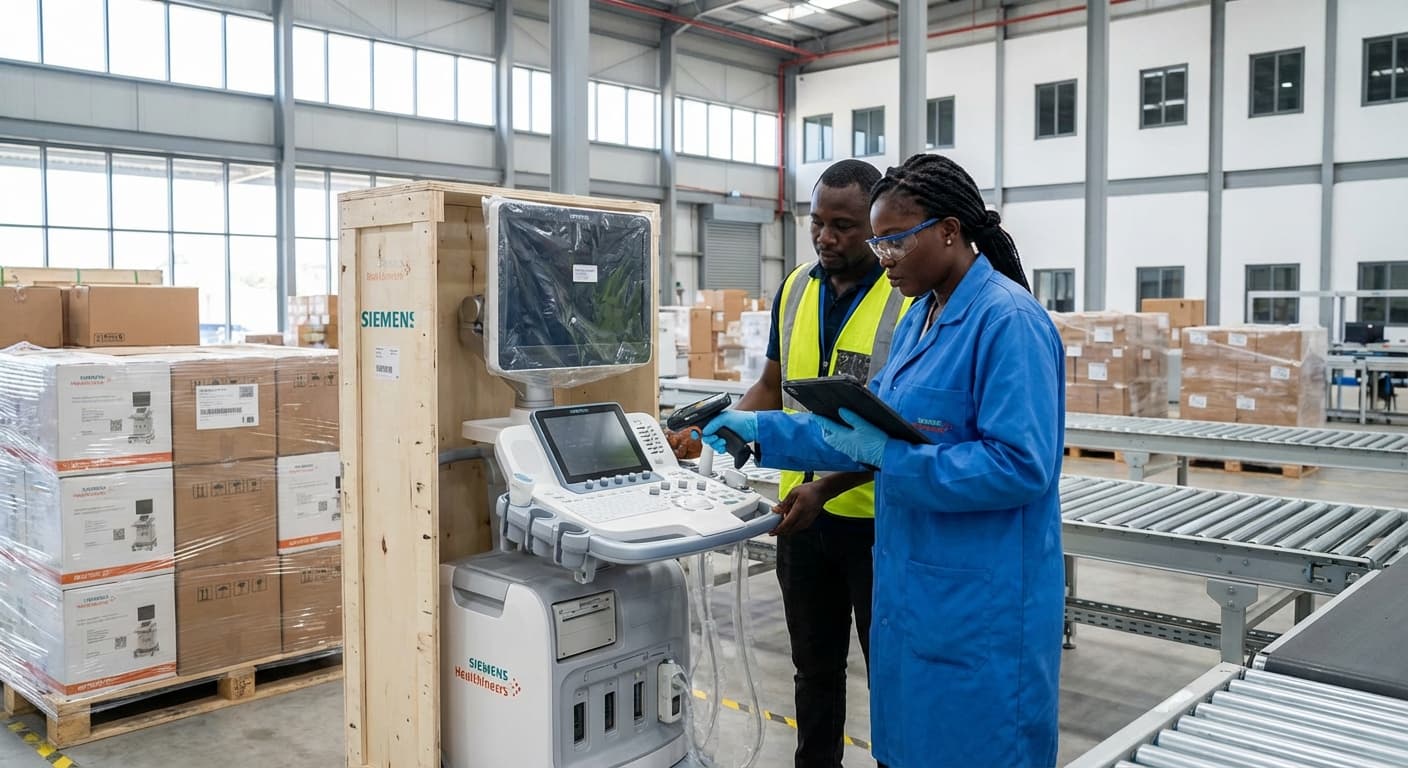
Warehouse Receiving Inspection Service (Medical Equipment) in Ivory Coast
Engineering Excellence & Technical Support
Warehouse Receiving Inspection Service (Medical Equipment) High-standard technical execution following OEM protocols and local regulatory frameworks.
Advanced Inspection Technology
Leveraging state-of-the-art inspection equipment and digital platforms for comprehensive medical equipment verification, ensuring adherence to international standards and Ivory Coast's regulatory requirements.
Certified Quality Assurance
Our team comprises certified inspectors with specialized knowledge in medical device regulations and quality control. We provide rigorous pre-shipment and incoming goods inspections to guarantee safety and efficacy.
Expedited Clearance & Compliance
Streamlined inspection processes designed to accelerate customs clearance and ensure swift integration of vital medical equipment into Ivory Coast's healthcare infrastructure, minimizing downtime.
What Is Warehouse Receiving Inspection Service (Medical Equipment) In Ivory Coast?
Warehouse Receiving Inspection Service (Medical Equipment) in Ivory Coast refers to a specialized quality control process conducted upon the arrival of medical equipment at a designated warehouse or storage facility within Ivory Coast. This service is critical for ensuring that received medical equipment conforms to specified standards, regulatory requirements, and contractual obligations before it is accepted into inventory, deployed, or distributed. The inspection aims to identify any discrepancies, damages, or non-conformities that could compromise patient safety, operational efficacy, or regulatory compliance.
This service involves a systematic examination of incoming medical equipment, encompassing visual inspection, documentation verification, functional testing (where applicable and feasible at the receiving stage), and adherence to specific storage and handling protocols. It is a vital component of the supply chain management for healthcare providers, medical device manufacturers, distributors, and government health agencies operating in Ivory Coast.
| Who Needs This Service? | Typical Use Cases |
|---|---|
| Healthcare Facilities: Hospitals, clinics, diagnostic centers, and medical laboratories in Ivory Coast that procure medical equipment. | Ensuring that procured equipment meets quality and safety standards before patient use. Verifying that delivered equipment matches specifications and is free from transit damage. |
| Medical Device Manufacturers (Domestic and International): Companies distributing their products into the Ivorian market. | Confirming that their products are received in good condition by local distributors or direct clients. Maintaining quality control throughout the supply chain. |
| Medical Equipment Distributors and Importers: Entities responsible for the import and wholesale distribution of medical devices in Ivory Coast. | Validating incoming shipments from international or domestic manufacturers. Mitigating risks associated with damaged or incorrect goods. Ensuring compliance with import regulations. |
| Government Health Agencies and Ministries: Public sector organizations responsible for public health infrastructure and procurement. | Overseeing the quality and integrity of medical equipment procured for public healthcare facilities. Ensuring taxpayer funds are used for compliant and functional equipment. |
| Procurement and Logistics Departments: Within any organization handling medical equipment. | Implementing robust quality assurance measures at the point of receipt. Reducing the likelihood of accepting non-compliant or damaged assets, thereby avoiding costly returns or replacements. |
| Third-Party Logistics (3PL) Providers: Managing warehouse operations for medical equipment on behalf of clients. | Offering value-added inspection services to their clients. Ensuring accurate inventory management and quality assurance for sensitive medical products. |
Key Components of Warehouse Receiving Inspection Service (Medical Equipment)
- Documentation Verification: Cross-referencing received items against purchase orders, invoices, packing lists, certificates of origin, and regulatory approvals (e.g., ANSM-CI registration, IFU - Instructions for Use).
- Physical Inspection: Assessing the condition of packaging for damage, tampering, or environmental exposure. Examining the equipment itself for cosmetic defects, structural integrity, and completeness of accessories.
- Identification and Traceability: Verifying serial numbers, batch numbers, and model numbers against documentation to ensure correct items have been received and facilitate future traceability.
- Quantity Verification: Confirming the exact quantity of each item received matches the shipping documents.
- Basic Functionality Check (where applicable): Performing initial checks to ascertain that the equipment powers on or exhibits basic intended behavior, without full operational testing which is typically reserved for post-installation verification.
- Environmental Assessment: Verifying that the storage conditions during transit and upon arrival are appropriate for the specific medical equipment, considering temperature, humidity, and light sensitivity.
- Non-conformance Reporting: Documenting any identified deviations, damages, or discrepancies in a detailed inspection report, often with photographic evidence, and initiating the corrective action process.
- Compliance Checks: Ensuring that the equipment and its documentation comply with relevant national and international standards and regulations applicable in Ivory Coast.
Who Needs Warehouse Receiving Inspection Service (Medical Equipment) In Ivory Coast?
In Ivory Coast's burgeoning healthcare sector, ensuring the quality, safety, and compliance of medical equipment upon arrival is paramount. Warehouse receiving inspection services are crucial for a wide range of organizations that procure and store medical devices. These services act as a critical gatekeeper, verifying that incoming equipment meets specified standards, preventing the introduction of faulty or non-compliant products, and safeguarding patient well-being. This document outlines who in Ivory Coast needs these vital services and identifies the specific target customers and their relevant departments.
| Target Customer Group | Relevant Departments Requiring Inspection Service | |
|---|---|---|
| Hospitals (Public and Private) | Procurement Department, Biomedical Engineering Department, Stores/Warehouse Management, Quality Assurance Department | |
| Clinics and Diagnostic Centers | Administrative/Management, Technical Lead (for equipment operation), Stores | |
| Pharmaceutical Wholesalers and Distributors | Warehouse Management, Quality Control Department, Logistics Department, Inventory Management | |
| Medical Equipment Importers and Suppliers | Logistics and Supply Chain Management, Quality Assurance Department, Technical Services Department, Sales and Operations | |
| Government Health Agencies and Ministries | Procurement and Tendering Unit, Logistics and Distribution Division, Quality Assurance Directorate, Medical Supplies Department | |
| Non-Governmental Organizations (NGOs) and Charities | Logistics and Procurement Officer, Project Manager (Health Sector), Warehouse Supervisor | |
| Research Institutions and Laboratories | Lab Manager, Procurement Officer, Technical Staff responsible for equipment | Stores and Inventory Management |
| Large Industrial Companies with on-site medical facilities | Occupational Health and Safety Department, Facilities Management, Procurement | |
| Military and Defense Health Services | Medical Logistics Command, Procurement Branch, Biomedical Engineering Section |
Target Customers for Medical Equipment Warehouse Receiving Inspection Service in Ivory Coast
- Hospitals (Public and Private)
- Clinics and Diagnostic Centers
- Pharmaceutical Wholesalers and Distributors
- Medical Equipment Importers and Suppliers
- Government Health Agencies and Ministries
- Non-Governmental Organizations (NGOs) and Charities involved in healthcare
- Research Institutions and Laboratories
- Large Industrial Companies with on-site medical facilities
- Military and Defense Health Services
Warehouse Receiving Inspection Service (Medical Equipment) Process In Ivory Coast
This document outlines the workflow for a Warehouse Receiving Inspection Service for Medical Equipment in Ivory Coast, from initial inquiry to the final execution of the inspection. The service aims to ensure that received medical equipment meets specified quality, safety, and regulatory standards before being accepted into the warehouse. This process is crucial for maintaining the integrity of medical supplies and preventing potential risks to patient safety and operational efficiency.
| Stage | Activities | Responsible Party | Deliverables | Key Considerations |
|---|---|---|---|---|
| Client contacts inspection service provider with requirements for medical equipment receiving inspection. Provider assesses scope, resources, and provides a detailed proposal outlining services, timelines, and costs. | Client, Inspection Service Provider | Inspection Service Proposal | Clarity of scope, client's specific needs, regulatory compliance requirements. |
| Client and provider agree on terms, pricing, and sign a service agreement. Detailed inspection plan is developed, including checklists, methodologies, and scheduling based on anticipated shipments. | Client, Inspection Service Provider | Signed Service Agreement, Detailed Inspection Plan, Inspection Checklists | Clear communication of expectations, risk assessment, resource allocation, access to relevant documentation. |
| Inspection team reviews client's requirements, equipment specifications, and relevant standards (e.g., ISO, local health regulations). Logistics are arranged for the inspection team and necessary equipment. | Inspection Service Provider | Trained Inspection Team, Prepared Checklists and Tools | Understanding of specific medical equipment types, familiarity with regulatory landscape in Ivory Coast, availability of calibrated inspection tools. |
| Upon arrival of medical equipment at the warehouse, the inspection team conducts the physical inspection. This includes visual examination, documentation review (e.g., Certificates of Analysis, manufacturing records), verification of quantity, condition, and compliance with purchase orders and specifications. Sampling may be performed if required. | Inspection Service Provider, Warehouse Staff | On-Site Inspection Records, Photographic Evidence | Adherence to safety protocols, impartiality of inspectors, proper handling of equipment, clear communication with warehouse staff. |
| Inspection team compiles a comprehensive inspection report detailing findings, including any non-conformities or deviations. Report includes recommendations for corrective actions and is submitted to the client. | Inspection Service Provider | Comprehensive Inspection Report, Non-Conformity Reports (if applicable) | Accuracy and objectivity of the report, clear and actionable recommendations, timely submission. |
| Client reviews the inspection report and initiates corrective actions based on recommendations. Inspection service provider may be involved in verifying the implementation of corrective actions (depending on the agreement). Project is formally closed upon client's acceptance of the report and resolution of any issues. | Client, Inspection Service Provider | Confirmation of Corrective Actions, Project Closure Documentation | Effective communication, timely resolution of issues, client satisfaction. |
Key Stages of the Warehouse Receiving Inspection Service
- Inquiry & Proposal
- Agreement & Planning
- Pre-Inspection Preparation
- On-Site Inspection Execution
- Reporting & Documentation
- Follow-up & Closure
Warehouse Receiving Inspection Service (Medical Equipment) Cost In Ivory Coast
The cost of warehouse receiving inspection services for medical equipment in Ivory Coast can vary significantly based on several factors. These services are crucial to ensure that medical equipment arriving at warehouses meets quality standards, is free from damage, and complies with all regulatory requirements before being accepted into inventory. Understanding these pricing determinants is essential for medical device companies and distributors operating in the Ivorian market. Factors influencing the cost include the complexity of the equipment, the volume of goods, the required inspection depth, the qualifications of the inspectors, and the specific service provider. The local currency is the West African CFA franc (XOF).
| Service Scope | Estimated Price Range (XOF) | Notes |
|---|---|---|
| Basic Visual Inspection (per shipment/pallet) | 15,000 - 40,000 XOF | Checks for external damage, correct labeling, quantity verification. Suitable for non-critical or low-value items. |
| Standard Inspection (per shipment/pallet) | 30,000 - 75,000 XOF | Includes visual inspection, basic documentation check (e.g., packing list), and confirmation of product type. May include minor functional checks for simpler devices. |
| Comprehensive Inspection (per unit/shipment, depending on complexity) | 70,000 - 250,000+ XOF | Detailed inspection including functional testing, advanced documentation review, compliance checks, and potentially sample testing. Highly dependent on equipment complexity. |
| Specialized Equipment Inspection (e.g., X-ray, MRI) | Quote-based (can be significantly higher) | Requires highly specialized technicians, calibration equipment, and extensive knowledge. Pricing is highly bespoke. |
| Expedited Service Surcharge | 20% - 50% of base cost | For urgent requests requiring immediate attention outside standard working hours or within a very short turnaround time. |
Key Pricing Factors for Warehouse Receiving Inspection Services (Medical Equipment) in Ivory Coast
- Type and Complexity of Medical Equipment: Highly sophisticated or sensitive medical devices, such as imaging machines or specialized surgical tools, often require more specialized expertise and more detailed inspections, leading to higher costs compared to simpler equipment like basic diagnostic kits.
- Volume of Goods Inspected: The number of units or shipments being inspected significantly impacts the overall cost. Larger volumes may benefit from economies of scale, potentially reducing the per-unit inspection cost, but the total expenditure will be higher. Conversely, smaller, infrequent inspections may incur higher per-unit charges.
- Depth and Scope of Inspection: The level of detail required for the inspection is a major cost driver. This can range from a basic visual check for external damage and correct labeling to a comprehensive inspection involving functional testing, calibration verification, documentation review (certificates of analysis, user manuals, etc.), and compliance checks against specific standards (e.g., ISO, CE marking validation).
- Inspector Qualifications and Expertise: Inspections of medical equipment often necessitate inspectors with specific technical backgrounds, certifications, and experience in the medical device field. Highly qualified inspectors command higher fees.
- Turnaround Time (TAT) and Urgency: Expedited inspection services, required for urgent shipments or to avoid costly delays in the supply chain, will generally incur a premium fee.
- Location of the Warehouse: The geographical location of the warehouse within Ivory Coast can affect logistics costs for the inspection team, potentially influencing the overall price.
- Service Provider's Reputation and Overhead: Established inspection companies with a strong reputation, robust quality management systems, and higher operational overheads might charge more than smaller, less established providers.
- Additional Services: The cost can also increase if the inspection service includes additional value-added services such as sample collection for laboratory testing, report generation in specific formats, or even inventory management support.
- Regulatory Compliance Checks: Specific regulatory requirements in Ivory Coast for medical equipment (e.g., those mandated by the Ministry of Health) may necessitate more rigorous checks, impacting inspection costs.
Affordable Warehouse Receiving Inspection Service (Medical Equipment) Options
This document outlines affordable warehouse receiving inspection services specifically tailored for medical equipment. We understand the critical nature of ensuring the integrity and compliance of medical devices upon arrival, and our goal is to provide cost-effective solutions without compromising quality or regulatory adherence. We will explore value bundles that offer comprehensive inspection at a reduced overall cost, alongside practical cost-saving strategies that businesses can implement to further optimize their receiving inspection processes.
| Value Bundle Name | Description | Included Services | Typical Savings (vs. A La Carte) | Ideal For |
|---|---|---|---|---|
| Basic Compliance Check | A streamlined inspection focusing on essential regulatory and documentation verification. | Documentation review (CoC, Sterilization), Serial/Lot Number reconciliation, Tamper-evident seal check. | 15-20% | Low-risk, high-volume equipment; companies with established internal QA processes. |
| Standard Receiving Audit | A comprehensive inspection covering documentation, physical condition, and basic functional checks. | All services in Basic Compliance Check + Cosmetic damage assessment, Basic functionality test (power on, key indicators). | 20-25% | Most medical equipment receiving operations; new product introductions. |
| Full-Spectrum Quality Assurance | An in-depth inspection including full functional testing, detailed condition assessment, and comprehensive documentation review. | All services in Standard Receiving Audit + Detailed functional testing (as per manufacturer specs), In-depth cosmetic and structural damage assessment, Storage environment review. | 25-30% | High-value or critical medical devices; companies with stringent QA requirements; those undergoing audits. |
| Customizable Bundle | Tailored inspection packages designed to meet unique client needs and specific equipment types. | Configurable based on client requirements (e.g., enhanced environmental checks, specific performance tests). | Variable (negotiable) | Specialized equipment; unique regulatory landscapes; unique storage needs. |
Key Considerations for Medical Equipment Receiving Inspections
- Regulatory Compliance (FDA, ISO 13485, etc.)
- Damage Assessment (cosmetic and functional)
- Verification of Documentation (Certificates of Conformance, Sterilization Records)
- Serial Number and Lot Number Reconciliation
- Condition and Functionality Testing (where applicable)
- Tamper-Evident Seal Verification
- Storage Environment Suitability Check
- Traceability and Record Keeping
Verified Providers In Ivory Coast
In Ivory Coast's burgeoning healthcare landscape, the assurance of quality and ethical practice is paramount. Verified providers stand out as beacons of trust, and Franance Health has meticulously established itself as a leader in this regard. Their commitment to rigorous credentialing and adherence to the highest international standards makes them the optimal choice for individuals and organizations seeking reliable healthcare services. This document outlines what verified providers entail, the specific credentials Franance Health holds, and why these factors collectively position them as the premier healthcare partner in Ivory Coast.
| Franance Health Credentials | Significance for Patients in Ivory Coast | Why This Represents the Best Choice |
|---|---|---|
| Full Accreditation by the Ministry of Health, Ivory Coast: Franance Health has met all regulatory requirements and operational standards mandated by the national health authority. | Ensures compliance with local laws and healthcare protocols, guaranteeing a baseline level of service quality and safety that aligns with national health objectives. | Demonstrates a commitment to operating within the established legal and ethical framework of Ivory Coast, providing immediate local relevance and trust. |
| International Quality Certifications (e.g., ISO 9001:2015 - if applicable, mention specific ones): Adherence to globally recognized standards for quality management systems. | Guarantees efficient processes, consistent service delivery, and a focus on continuous improvement, often reflecting international best practices in healthcare management. | Elevates the standard of care beyond local requirements, offering patients access to services managed with a global perspective on quality and patient satisfaction. |
| Partnerships with Reputable International Healthcare Networks: Collaborations with established international medical institutions and insurance providers. | Facilitates access to specialized expertise, advanced treatment protocols, and seamless medical tourism or expatriate healthcare services. Offers a gateway to global medical knowledge. | Positions Franance Health as a gateway to world-class healthcare, leveraging international expertise and networks to provide comprehensive and cutting-edge treatment options locally. |
| Rigorous Staff Credentialing and Continuous Professional Development: All medical professionals undergo thorough background checks, license verification, and ongoing training to stay abreast of medical advancements. | Ensures that patients are treated by highly qualified, competent, and up-to-date medical professionals, minimizing errors and maximizing positive patient outcomes. | Guarantees that patients receive care from the most skilled and knowledgeable practitioners, backed by a commitment to lifelong learning and excellence in medical practice. |
| Transparent Patient Feedback Mechanisms and Quality Assurance Programs: Actively solicits and acts upon patient feedback, with robust internal quality control measures. | Demonstrates accountability to patients and a commitment to addressing concerns and continuously improving the patient experience. | Builds a relationship of trust and responsiveness with patients, ensuring that their needs and experiences are at the forefront of the organization's operations. |
Understanding Verified Healthcare Providers
- What does 'verified provider' mean? It signifies a healthcare entity or individual that has undergone a thorough vetting process to confirm their qualifications, licenses, accreditations, and adherence to established ethical and professional standards.
- Why is verification crucial? It offers patients and partners confidence in the quality, safety, and integrity of the healthcare services received, minimizing risks associated with unqualified practitioners or fraudulent operations.
- Key indicators of verification: This includes professional licensing, accreditation by recognized health organizations, compliance with regulatory requirements, and a transparent history of practice.
- The role of verification in patient trust: Verified providers build trust through demonstrable proof of their competence and ethical conduct, empowering patients to make informed decisions about their health.
Scope Of Work For Warehouse Receiving Inspection Service (Medical Equipment)
This Scope of Work (SOW) outlines the requirements for a Warehouse Receiving Inspection Service for medical equipment. The service aims to ensure that all incoming medical equipment meets specified quality, safety, and functionality standards upon arrival at the warehouse facility before being accepted into inventory. This SOW details the technical deliverables and standard specifications expected from the service provider.
| Phase/Activity | Description | Standard Specifications / Requirements | Deliverables |
|---|---|---|---|
| Pre-Inspection Preparation | Review of documentation and scheduling of inspections. | Access to relevant purchase orders (POs), packing lists, and supplier specifications. Timely notification of expected arrivals. | Pre-inspection checklist, notification of inspection schedule. |
| Physical Inspection (External) | Visual examination of packaging and equipment exteriors. | Inspection of shipping containers, crates, and pallets for any signs of damage, tampering, or unauthorized entry. Verification of intact seals. Check for correct labeling and markings. | Photographic evidence of packaging condition, damage assessment report. |
| Unpacking and Verification | Careful unpacking and identification of received items. | Verification of item count against PO and packing list. Identification of each item by model number, serial number, and quantity. Identification of any missing items or discrepancies. | Discrepancy report, reconciliation of received items against documentation. |
| Physical Inspection (Equipment) | Detailed examination of the medical equipment itself. | Assessment of the equipment's physical condition, including casing, buttons, connectors, and any moving parts. Check for scratches, dents, or manufacturing defects. Verification of product model and serial number against documentation. | Damage report, condition assessment report, photographic evidence of equipment condition. |
| Documentation Review | Verification of all accompanying documents. | Confirmation of receipt of User Manuals, Installation Guides, Certificates of Analysis (CoA), Certificates of Calibration (CoC), warranty information, and any other specified documentation. Check for completeness and accuracy of information. | Documentation checklist, report on missing or incomplete documents. |
| Basic Functional Testing | Initial checks to ensure basic operability. | Performance of defined basic functional tests as per manufacturer specifications or agreed-upon checklist. This may include powering on/off, basic sensor checks, or display functionality. Note: Full performance validation and calibration are typically separate services. | Functional test results report, identification of any immediate operational failures. |
| Labeling and Traceability Check | Verification of equipment labeling. | Ensuring all equipment is correctly labeled with model number, serial number, lot number (if applicable), and any required regulatory markings. | Labeling verification report. |
| Reporting and Non-Conformance Management | Documentation and communication of inspection findings. | Preparation of a comprehensive inspection report detailing all findings, including any damages, discrepancies, or non-conformities. Prompt notification of critical issues to designated personnel. | Final Inspection Report, Non-Conformance Report (NCR). |
| Record Keeping | Maintenance of inspection records. | Secure storage of all inspection reports, photographic evidence, and associated documentation for a defined period. | Archived inspection records. |
Key Objectives
- Verify the accuracy and completeness of incoming shipments against purchase orders and packing lists.
- Ensure medical equipment is received in good physical condition, free from damage.
- Confirm that all required documentation, including certificates of analysis, user manuals, and calibration certificates, are present and accurate.
- Perform initial functional checks and basic operational tests to verify equipment readiness for use.
- Identify and report any discrepancies, damages, or non-conformities promptly.
- Maintain accurate records of all inspections performed.
Service Level Agreement For Warehouse Receiving Inspection Service (Medical Equipment)
This Service Level Agreement (SLA) outlines the agreed-upon service levels for Warehouse Receiving Inspection Service of Medical Equipment provided by [Your Company Name] to [Client Company Name]. It defines response times and uptime guarantees to ensure efficient and compliant receipt and inspection of medical equipment.
| Service Component | Service Level Objective (SLO) | Measurement Method | Remedy/Service Credit |
|---|---|---|---|
| Receiving Inspection Initiation | Within 4 business hours of documented equipment arrival at the warehouse. | Timestamp of arrival logged in the Warehouse Management System (WMS). | For every 4-hour delay beyond the SLO, a service credit of 1% of the monthly inspection fee will be applied. |
| Inspection Completion (Standard Equipment) | Within 24 business hours of inspection initiation for standard medical equipment (non-complex). | Timestamp of inspection completion logged in the WMS. | For every 8-hour delay beyond the SLO, a service credit of 2% of the monthly inspection fee will be applied. |
| Inspection Completion (Complex Equipment) | Within 48 business hours of inspection initiation for complex medical equipment (e.g., imaging systems, laboratory analyzers) requiring specialized expertise or extended testing. | Timestamp of inspection completion logged in the WMS. | For every 12-hour delay beyond the SLO, a service credit of 2.5% of the monthly inspection fee will be applied. |
| Reporting of Non-Conformities | Within 2 business hours of identification of any critical non-conformity. | Timestamp of non-conformity report generation in the WMS. | Failure to report critical non-conformities within the SLO will result in a service credit of 5% of the monthly inspection fee. |
| System Availability (WMS/Inspection Software) | 99.5% uptime during standard business hours (Monday-Friday, 8 AM - 5 PM [Client's Time Zone]). | Uptime monitored by [Your Company Name]'s IT department. | For every 1% decrease in uptime below the SLO in a given month, a service credit of 0.5% of the total monthly service fee will be applied. |
| Data Integrity of Inspection Reports | 100% accuracy in data entry and report generation. | Periodic audits by [Your Company Name]'s Quality Assurance team and client review. | Any verified significant data inaccuracies in reports requiring correction will result in a service credit of 1% of the monthly inspection fee per incident. |
Scope of Service
- Inspection of incoming medical equipment for completeness, condition, and adherence to order specifications.
- Verification of serial numbers and lot numbers against purchase orders and manufacturer documentation.
- Identification and documentation of any damages, discrepancies, or non-conformities.
- Segregation and quarantine of non-conforming products pending disposition.
- Generation of detailed inspection reports.
Frequently Asked Questions

Ready when you are
Let's scope your Warehouse Receiving Inspection Service (Medical Equipment) in Ivory Coast project in Ivory Coast.

Scaling healthcare logistics and technical systems across the entire continent.